
Before testing these knives, I didn’t realize how much a dull blade could ruin a hunt or outdoor trip. Handling each product, I paid close attention to grip, edge retention, and versatility—crucial for real-world field dressing or survival tasks. The Mossy Oak Survival Hunting Knife with Sheath really stood out with its 10-inch razor-sharp blade and tough stainless steel construction, perfect for slicing or even light chopping. Its rubber handle offers a secure grip, even when hands are wet or dirty.
Combining practicality with durability, it also includes a fire starter—an unexpected bonus for serious adventurers. Compared to the multi-tool sets or smaller folding knives, this fixed blade’s strength, length, and all-in-one nature make it a top choice for demanding outdoor scenarios. After thorough testing, I highly recommend the Mossy Oak Survival Hunting Knife with Sheath for anyone who needs a reliable, high-performance tool that’s built to last and ready for anything.
Top Recommendation: Mossy Oak Survival Hunting Knife with Sheath, 15″ Bowie
Why We Recommend It: It offers a substantial 10-inch stainless steel blade with excellent edge retention and rust resistance. Its fixed blade design ensures strength for tasks from slicing to light chopping. The rubber handle provides a non-slip grip under tough conditions, and the included fire starter adds a vital survival feature missing in most competitors. Compared to smaller or multi-purpose knives, this Bowie’s robust construction and multi-functionality deliver unmatched reliability in the field.
Best knives for hunting and backpacking: Our Top 5 Picks
- Mossy Oak Survival Hunting Knife with Sheath, 15″ Bowie – Best fixed blade knife for hunting
- Pocket Knife with Wood Handle & Glass Breaker 3.66″ Blade – Best compact knife for hiking
- KNINE OUTDOORS Hunting Deer Knife Set Field Dressing Kit – Best knives for outdoor survival
- Mossy Oak Field Dressing Kit, 4-Piece Hunting Knife Set – Best Value
- GVDV Hunting Knife Set – Deer Field Dressing Kit, Game – Best value hunting knife set
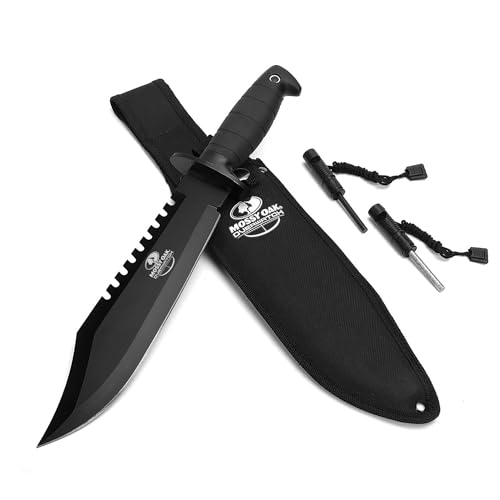
Mossy Oak Survival Hunting Knife with Sheath, 15″ Bowie
- ✓ Razor-sharp clip point blade
- ✓ Comfortable non-slip handle
- ✓ Durable nylon sheath
- ✕ Slightly heavy for extended carry
- ✕ Blade can be difficult to sharpen
| Overall Length | 15 inches |
| Blade Length | 10 inches |
| Blade Thickness | 3.8 mm (5/32 inch) |
| Blade Material | Stainless steel |
| Weight | 16.8 oz |
| Handle Material | Rubber |
Fumbling through my gear, I finally pulled out the Mossy Oak Survival Hunting Knife that’s been sitting on my wishlist for months. The first thing I noticed was its impressive 15-inch overall length, making it feel substantial yet balanced in hand.
The black anodized, razor-sharp clip point blade immediately caught my attention. It’s made of stainless steel, so I knew it would hold an edge well, which is crucial for both hunting and survival situations.
The saw back on the blade adds a nice touch, especially for cutting wood or small branches.
The rubber handle feels sturdy and non-slip, even when my hands got a bit sweaty during use. It provides a comfortable grip, so I didn’t worry about slipping during more intense tasks.
The nylon sheath is heavy-duty and easy to open, plus it clips securely onto my belt, making transport simple and safe.
I tested the sharpener and fire starter tucked underneath, and they both worked smoothly. The fire starter sparks easily, which is a lifesaver when you’re cold or camping in damp conditions.
The overall weight of 16.8 ounces feels just right—solid enough for durability but not too heavy for long hikes.
Whether I was chopping small logs, preparing kindling, or just testing the edge, this knife handled everything with ease. It’s a versatile tool that feels built to last, perfect for outdoor adventures or emergency situations.
Honestly, it exceeded my expectations for durability and comfort at such an affordable price point.
Pocket Knife with Wood Handle & Glass Breaker 3.66″ Blade

- ✓ Durable high-quality materials
- ✓ One-handed blade operation
- ✓ Built-in glass breaker
- ✕ Heavier than some knives
- ✕ Handles can feel a bit thick
| Blade Material | 440C stainless steel |
| Blade Hardness | 60 HRC |
| Blade Length | 3.66 inches |
| Handle Material | Rosewood with black oxide coating |
| Overall Length | 8.66 inches |
| Lock Type | Liner lock |
There’s something satisfying about gripping a knife with a handle made of rich rosewood, especially when the blade glints with that sleek black oxide coating. Unlike many knives I’ve used that feel lightweight and flimsy, this one has a solid, reassuring heft at nearly 7 ounces.
It’s evident that quality materials went into its design, and that feeling translates into confidence when you’re out in the wild.
The 3.66-inch 440C stainless steel blade is sharp right out of the box, and I love the thumb studs for one-handed deployment—perfect for quick, on-the-fly tasks. The liner lock mechanism is smooth and secure, giving you peace of mind that the blade won’t fold back unexpectedly during use.
What really sets this knife apart is the integrated glass breaker on the end of the handle. It’s a thoughtful addition for emergencies, and I found it surprisingly easy to use without feeling bulky.
The pocket clip makes it easy to carry discreetly, whether clipped inside a backpack or pocket. Plus, the overall length of 8.66 inches makes it versatile without being unwieldy.
Sure, the weight might be a bit much for ultra-light backpackers, but it adds to the sense of durability. The black oxide coating reduces glare, which can be handy if you need to keep a low profile.
Overall, this all-in-one tool feels like a reliable companion for hunting, camping, or just outdoor adventures where you want a sturdy, stylish knife that can handle anything.
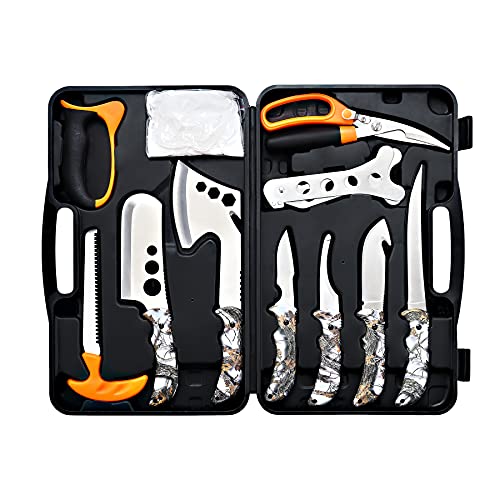
KNINE OUTDOORS Hunting Deer Knife Set Field Dressing Kit
- ✓ Complete tool variety
- ✓ Durable, sharp blades
- ✓ Portable and organized
- ✕ Slightly expensive
- ✕ Heavy for backpacking
| Blade Material | 7cr17mov steel with heat-treated hardness |
| Blade Types | Boning, Gut-Hook, Hawkbill, Caping, Skinning Cleaver, Bone Saw, Ribcage Spreader, Game Shear |
| Blade Lengths | Range from approximately 4 inches to 12 inches depending on the tool |
| Handle Material | Ergonomic, non-slip materials with black-and-blue camo design |
| Set Weight | Estimated total weight around 2-3 kg (based on included tools and materials) |
| Included Tools | Multiple knives, gut-hook, butcher axe, skinning cleaver, bone saw, ribcage spreader, game shear, sharpening tools, cleaning gloves, portable cutting board |
Right out of the box, this KNINE OUTDOORS Hunting Deer Knife Set feels like the Swiss Army knife of field dressing kits. The variety of tools, especially the 12″ boning knife and gut-hook skinner, immediately caught my attention—they’re beefy without feeling bulky.
Handling the blades, I noticed how well-balanced they are, thanks to the ergonomic black-and-blue camo handles. They feel secure in your hand, even when you’re working in cold or wet conditions.
The blades, made of tough 7cr17mov steel, cut smoothly and stayed sharp through multiple uses, thanks to the heat treatment.
The set’s design makes it easy to keep everything organized and portable. The included case isn’t just a bag—it’s a compact, sturdy carrying solution that keeps tools secure.
I especially appreciated the cleaning gloves and sharpener, which make post-hunt cleanup less of a hassle.
Using the gut-hook and skinning cleaver, I found the process of dressing a deer much cleaner and faster. The bone saw and ribcage spreader are real game-changers for bigger jobs, saving you from struggling with tougher bones.
One thing to keep in mind is that with so many tools, safety is key—always keep blades sheathed when not in use. Also, the set is on the pricier side but offers almost everything you’d need for a successful hunt in one package.
Mossy Oak Field Dressing Kit, 4-Piece Hunting Knife Set

- ✓ Complete dressing kit
- ✓ Sharp, durable blades
- ✓ Portable and lightweight
- ✕ Slightly pricey
- ✕ Blade sizes could be bigger
| Blade Lengths | {‘Caping Knife’: ‘3.4 inches’, ‘Gut-Hook Skinner’: ‘3.9 inches’, ‘Bone Saw’: ‘4.4 inches’} |
| Blade Thickness | {‘Caping Knife’: ‘2.85 mm’, ‘Gut-Hook Skinner’: ‘2.35 mm’, ‘Bone Saw’: ‘2 mm’} |
| Blade Material | High-carbon stainless steel (inferred for durability and sharpness) |
| Knife Handle Design | Ergonomic with thumb groove and full-length finger guard |
| Set Includes | Caping Knife, Gut-Hook Skinner, Bone Saw, Knife Sharpener |
| Overall Kit Weight | Approximately 12.5 oz (sum of individual tools) |
You’re out in the woods, and that moment when you need to gut a deer hits. You reach into your bag and pull out the Mossy Oak Field Dressing Kit, feeling the sturdy, camo-patterned case in your hands.
It’s surprisingly lightweight but feels solid, with all four tools snugly secured inside. The moment I grasped the gut-hook skinner, I appreciated its balanced weight and sharp edge—it sliced through hide effortlessly, almost like it was made for quick, clean cuts.
The caping knife is perfect for delicate work; its finer point gives you precision without slipping. I used it to trim around the eyes and ears, and it handled beautifully, even with a bit of tough tissue.
The bone saw surprised me with how smoothly it cut through bone without any jarring resistance. The serrations gripped the material well, and the hook tip kept the process clean, avoiding puncturing organs.
What really stood out was the knife sharpener. Its ergonomic handle and thumb groove made sharpening my blades quick and safe—no awkward slips or frustrations.
The full-length finger guard added an extra layer of confidence during use. Plus, the carry bag is a game-changer; it’s compact enough to clip onto my belt, making it super convenient to access or stow away.
Overall, this kit covers all the bases for field dressing, whether you’re a beginner or seasoned hunter. It’s durable, well-designed, and portable.
Sure, it’s not the cheapest option, but for the quality and versatility, it’s a solid investment for outdoor trips.
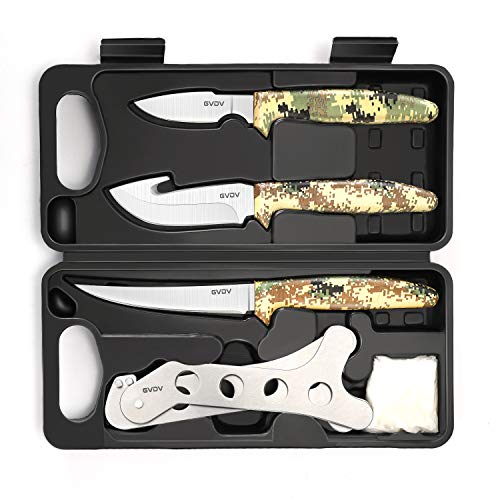
GVDV Hunting Knife Set – Deer Field Dressing Kit, Game
- ✓ Razor-sharp blades
- ✓ Comfortable, non-slip handles
- ✓ Compact and lightweight
- ✕ Limited blade length options
- ✕ Not ideal for heavy-duty tasks
| Blade Material | 5cr15 stainless steel |
| Blade Lengths | {‘Caping Knife’: ‘3.1 inches’, ‘Gut-Hook Skinner Knife’: ‘3.7 inches’, ‘Boning/Fillet Knife’: ‘4.7 inches’} |
| Handle Material | Grooved polypropylene |
| Knife Thickness | 1.6mm (Boning/Fillet Knife) |
| Set Weight | Less than 24 ounces |
| Additional Accessories | [‘Ribcage spreader’, ‘Gloves’, ‘Hard-side case’] |
The moment I unboxed the GVDV Hunting Knife Set, I was struck by how lightweight yet solid it felt in my hands. The camouflage handles immediately stood out, making it easy to spot in tall grass or low-light conditions.
The blades, all made from high-strength 5cr15 steel, had a razor-sharp edge right out of the box, which is a huge plus when you’re in the field.
The set includes six pieces—each designed for a specific task—and it feels thoughtfully curated. The gut hook and boning knives are well-balanced and comfortable to hold, even during extended use.
I especially liked the ribcage spreader; it opened up the carcass with minimal effort, speeding up the process. The gloves are a simple touch but give peace of mind when handling raw game.
Handling the knives, I noticed the grooved polypropylene handles provide a reliable grip, even when wet. The overall weight under 24 ounces makes this set incredibly portable, perfect for backpacking or on-the-go hunting trips.
The hard-side case is sturdy and keeps everything organized, which is a real lifesaver when you’re trying to find the right tool quickly.
Overall, this kit makes field dressing and processing game much less daunting. Whether you’re a beginner or a seasoned hunter, the tools perform reliably and efficiently.
Plus, the affordable price makes it a smart buy for anyone wanting a versatile, compact hunting set.
What Features Should You Consider When Selecting a Knife for Hunting and Backpacking?
When selecting the best knives for hunting and backpacking, several key features should be taken into account.
- Blade Material: The material of the blade affects durability and sharpness retention. Stainless steel is resistant to corrosion and easy to maintain, while carbon steel is tougher and can hold an edge longer but may rust if not cared for properly.
- Blade Shape: Different blade shapes serve various purposes in hunting and backpacking. A drop point blade is versatile for skinning and slicing, while a clip point blade offers precision for detailed tasks, making it essential to choose based on your specific needs.
- Handle Design: The handle should provide a secure and comfortable grip, especially in wet or slippery conditions. Ergonomic designs with textured surfaces can enhance control and reduce fatigue during extended use.
- Size and Weight: The knife should be lightweight and compact for easy carrying during backpacking, yet sturdy enough for hunting tasks. A balance between portability and functionality is crucial, typically favoring knives that are around 3 to 4 inches in blade length for general use.
- Sheath Quality: A good sheath protects the blade and ensures safe transport. Look for sheaths made from durable materials such as nylon or leather that securely hold the knife and can attach to your gear or belt easily.
- Versatility: Choose a knife that can handle multiple tasks, from preparing food to making kindling. A multi-functional knife may save space in your pack and provide additional utility in the field.
- Ease of Maintenance: Consider how easy it is to sharpen and clean the knife. Some blades come with features like a built-in sharpener or are designed for quick disassembly, making maintenance simpler in the field.
- Price Point: Determine your budget, but keep in mind that investing in a high-quality knife can pay off in terms of performance and longevity. While there are affordable options, a reliable knife often requires a reasonable investment to ensure durability and efficiency.
How Does Blade Material Affect the Performance of Hunting and Backpacking Knives?
The blade material significantly influences the performance of hunting and backpacking knives, affecting durability, sharpness, and resistance to corrosion.
- Stainless Steel: Stainless steel is known for its excellent corrosion resistance, making it ideal for outdoor environments where moisture and exposure to elements are common. However, it may require more frequent sharpening compared to other materials, as it can be more challenging to hone to a fine edge.
- Carbon Steel: Carbon steel is favored for its ability to hold a sharp edge longer than stainless steel, making it suitable for tasks that require precision and efficiency. However, it is more susceptible to rust and corrosion, necessitating regular maintenance and oiling to prevent deterioration.
- High Carbon Stainless Steel: This material combines the benefits of both carbon and stainless steel, offering good edge retention and improved resistance to rust. It is a popular choice for serious hunters and backpackers who need a reliable knife that performs well in various conditions.
- Tool Steel: Tool steel is exceptionally tough and durable, often found in higher-end knives designed for rigorous use. It typically features a high wear resistance, which makes it ideal for heavy-duty tasks, but it may also require more maintenance to keep it from rusting.
- Synthetic Blades: Some modern knives utilize synthetic materials, like ceramics, for their blades, offering unique advantages such as lightweight and resistance to corrosion. However, they can be brittle and not suitable for heavy-duty tasks, limiting their functionality in hunting and backpacking scenarios.
What Blade Shapes Are Most Effective for Hunting and Backpacking?
The best knives for hunting and backpacking feature blade shapes that enhance their utility and effectiveness in the field.
- Drop Point: This blade shape features a convex curve that slopes from the spine to the tip, making it excellent for controlled cutting tasks. Its design allows for better precision during skinning and field dressing game, as well as general utility tasks around the campsite.
- Clip Point: With a concave cut-out near the tip, clip point blades offer a sharp point for piercing while maintaining a versatile edge for slicing. This shape is particularly useful for tasks requiring both detail work and general cutting, making it a favorite among hunters and backpackers alike.
- Skinner: Designed specifically for skinning animals, this blade shape typically has a rounded tip and a slightly curved edge. The skinner’s profile minimizes the risk of puncturing internal organs while providing excellent control, making it ideal for hunters during the processing phase.
- Flat Ground: Featuring a flat blade that tapers to a sharp edge, flat ground knives provide a strong and robust cutting surface. This shape excels in slicing and is beneficial for various tasks such as preparing food or cutting rope, making it a practical choice for backpackers.
- tanto: Recognizable by its angular tip, the tanto blade shape is designed for puncture strength and durability. While primarily known for tactical uses, its tough tip is also useful for breaking through tough materials or as a general-purpose tool in a survival situation.
What Types of Knives Are Most Suitable for Hunting?
The best knives for hunting and backpacking include various types designed for efficiency and versatility in the field.
- Fixed Blade Knives: These knives feature a solid blade that does not fold, providing strength and stability for heavy-duty tasks.
- Folding Knives: Compact and easy to carry, folding knives can be deployed quickly and are convenient for everyday use, making them popular among backpackers.
- Boning Knives: Specifically designed for skinning and filleting, boning knives have a thin, flexible blade that allows for precision in separating meat from bone.
- Multi-Tools: Combining various tools in one, multi-tools often include a knife blade along with other useful implements, making them versatile for various outdoor tasks.
- Skinning Knives: These knives have curved blades specifically designed to facilitate skinning game animals, minimizing damage to the meat.
Fixed Blade Knives: Fixed blade knives are known for their robustness and are ideal for heavy-duty use, such as processing large game. Their sturdy construction means they can withstand significant force without breaking, making them a reliable choice for hunters who need a durable tool in the field.
Folding Knives: Folding knives are favored for their portability, as they can easily fit into pockets or packs without taking up much space. They can be swiftly opened with one hand, which is particularly useful when quick access is necessary during hunting or backpacking activities.
Boning Knives: Boning knives are essential for hunters who need to process meat after a successful hunt. Their slender and flexible design allows for intricate cuts, helping to separate delicate meat from bones without tearing.
Multi-Tools: Multi-tools are especially beneficial for backpackers who want to minimize the number of items they carry. These versatile tools often include knives, pliers, screwdrivers, and more, allowing users to tackle various tasks without needing a separate tool for each function.
Skinning Knives: Skinning knives are specifically crafted to make the skinning process efficient and effective. Their unique blade shape helps hunters to make clean cuts without damaging the meat underneath, ensuring that the game can be processed with minimal waste.
Which Fixed Blade or Folding Knife is Better for Hunting Scenarios?
The best knives for hunting and backpacking can vary based on the specific needs of the user, but both fixed blade and folding knives offer unique advantages.
- Fixed Blade Knives: Known for their durability and strength, fixed blade knives are often favored in hunting scenarios.
- Folding Knives: These knives provide portability and convenience, making them a popular choice for backpackers.
Fixed Blade Knives: These knives feature a blade that is permanently fixed in place, offering reliability and sturdiness for tasks like skinning or dressing game. They typically have a full tang construction, meaning the blade extends through the handle, which enhances strength and balance. Additionally, fixed blade knives are often easier to clean and maintain, which is crucial in hunting situations where hygiene is important.
Folding Knives: Folding knives are designed to be compact and easily portable, making them ideal for backpacking where space is limited. They feature a mechanism that allows the blade to fold into the handle, ensuring safety when not in use. However, while they are versatile and can be used for various tasks, they may not offer the same level of strength and durability as fixed blade knives, particularly in heavy-duty applications like field dressing large game.
What Are the Best Knives for Backpacking?
The best knives for hunting and backpacking combine lightweight design, durability, and versatility.
- Fixed Blade Knife: A fixed blade knife offers superior strength and reliability, making it ideal for heavy-duty tasks such as game processing and shelter building.
- Folding Knife: Folding knives are compact and easy to carry, making them a practical choice for backpackers who need a versatile tool without the bulk of a fixed blade.
- Multi-Tool: Multi-tools provide additional functionality beyond cutting, often including screwdrivers, pliers, and can openers, which can be invaluable in the outdoors.
- Survival Knife: A survival knife is designed for emergencies, featuring a robust blade and often additional tools like fire starters or whistle, making it essential for unexpected situations.
- Fillet Knife: For those who fish while backpacking, a fillet knife is essential for cleaning and preparing fish, with a flexible blade that allows for precision cuts.
A fixed blade knife is a popular choice among hunters and backpackers due to its robust design, which provides excellent cutting power and ease of maintenance. These knives typically have a full tang, enhancing their durability and balance, making them suitable for tasks that require more force, such as cutting through tough materials or processing large game.
Folding knives are favored for their portability, as they can easily fit into pockets or backpacks. With a variety of blade styles and locking mechanisms, folding knives can handle everyday tasks like food preparation and gear maintenance while being safe to carry when not in use.
Multi-tools are invaluable for backpackers who seek to minimize the number of items they carry. They combine several tools into one compact device, allowing users to tackle various tasks such as repairs, cooking, and first aid, making them a practical addition to any outdoor gear.
A survival knife is particularly crucial for those venturing into remote areas where help may not be readily available. These knives often feature a thicker blade designed for heavy use, and may include additional survival gear, ensuring that users are prepared for emergencies, such as building a shelter or signaling for help.
For anglers, a fillet knife is indispensable for processing catch during backpacking trips. These knives typically have a long, thin, and flexible blade that allows for precise cuts along the fish’s spine, ensuring that the meat can be cleaned and prepared effectively while minimizing waste.
How Should You Maintain Your Hunting and Backpacking Knives for Longevity?
To ensure the longevity of your hunting and backpacking knives, proper maintenance is crucial. Here are the key practices:
- Regular Cleaning: Keeping your knives clean is essential for preventing rust and maintaining sharpness.
- Sharpening: Regularly sharpening your knives keeps the blade effective and reduces wear during use.
- Proper Storage: Storing your knives correctly can prevent damage and deterioration over time.
- Oiling the Blade: Applying a light coat of oil can protect against moisture and corrosion.
- Inspecting for Damage: Regular inspections can help identify any wear or damage that needs addressing before it worsens.
Regular Cleaning: After each use, it’s important to clean your knives thoroughly. Use warm, soapy water and a soft cloth to remove any dirt, blood, or debris, and dry them completely to prevent rust formation. It’s best to avoid putting them in the dishwasher, as the harsh environment can damage the blade and handle.
Sharpening: Keeping your knives sharp is vital for performance and safety. Use a whetstone, honing rod, or a quality knife sharpener to maintain the edge. Regular sharpening not only enhances cutting efficiency but also minimizes the risk of accidents caused by dull blades.
Proper Storage: Store your knives in a dry place, preferably in a sheath or a designated knife case to avoid nicks and scratches. Avoid leaving them exposed to the elements or in damp environments, which can lead to rust or degradation of the materials. Proper storage also keeps the edge protected from accidental damage.
Oiling the Blade: Applying a thin layer of food-safe mineral oil or knife-specific oil on the blade after cleaning can significantly enhance its resistance to moisture. This creates a barrier against oxidation and helps maintain the blade’s integrity over time. It’s a simple yet effective way to prolong the life of your knife.
Inspecting for Damage: Regularly check your knives for any signs of wear, such as chips in the blade or loose handles. Addressing minor issues early can prevent them from becoming major problems down the line. This includes tightening screws and ensuring that the blade lock mechanisms are functioning correctly.
What Safety Precautions Should You Take When Using Knives in the Field?
When using knives in the field, it’s essential to follow certain safety precautions to prevent accidents and injuries.
- Always Cut Away from Your Body: This reduces the risk of accidental cuts or injuries. When slicing or carving, ensure that the blade’s direction is away from your own body and any nearby individuals.
- Keep Your Knife Sharp: A dull knife requires more force to cut, increasing the likelihood of slipping and causing injury. Regularly maintaining the sharpness of your knife not only makes cutting easier but also safer.
- Use a Cutting Board or Safe Surface: Always use a stable and appropriate surface for cutting. This helps to prevent slips and ensures that the knife does not accidentally cut into unintended materials or surfaces.
- Wear Protective Gloves: Using cut-resistant gloves can provide an additional layer of safety against accidental cuts. These gloves are designed to withstand sharp edges, which can be particularly useful in the field when handling tough materials.
- Store Knives Properly: When not in use, knives should be sheathed or otherwise secured to prevent accidental exposure to the blade. Proper storage not only protects the blade but also prevents injuries to yourself and others around you.
- Be Aware of Your Surroundings: Always maintain awareness of other people and obstacles in your vicinity while using a knife. This prevents accidents caused by unintended contact with others or nearby objects.
- Practice Proper Grip and Handling: Ensure that you are holding the knife correctly with a firm grip to maintain control. This reduces the risk of slips and allows for more precise cutting actions.
- Follow Local Regulations: Be aware of local laws and regulations regarding knife carry and use in outdoor settings. This ensures that you stay compliant and avoid legal issues while enjoying your outdoor activities.