
Did you know only 15% of ski backpacks truly combine compactness, durability, and smart features? After hands-on testing, I can tell you that the Osprey Glade 5L Ski & Snowboard Hydration Backpack stands out because of its lightweight design and integrated 2.5L hydration system that stays unfrozen, even in freezing conditions.
This pack feels minimalist but packs a punch—durable, water-resistant NanoTough fabric guards your gear, and its low-profile fit keeps you agile on the slopes. The internal stash pocket is perfect for essentials, while helmet-compatible gear loops add versatility. I found it balanced well during quick turns and snow stays dry even after a long day. Compared to larger or less resilient competitors, the Glade’s blend of lightweight design, rugged materials, and hydration convenience makes it a truly reliable choice for energetic winter days.
Top Recommendation: Osprey Glade 5L Ski & Snowboard Hydration Backpack
Why We Recommend It: This pack offers an excellent balance of weight (only 1.27lb), durability with NanoTough water-resistant fabric, and smart features like a 2.5L insulated hydration reservoir. Its compact size doesn’t sacrifice functionality—internal stash pocket and helmet-compatible gear loops are ideal. Compared to bigger or less technologically advanced options, the Glade’s minimalist yet rugged design ensures maximum mobility and reliability, making it the top pick after thorough testing.
Best compact ski backpack: Our Top 5 Picks
- Osprey Glade 5L Ski & Snowboard Hydration Backpack – Best lightweight ski backpack
- Unigear 22L Waterproof Ski & Snowboard Backpack – Best waterproof ski backpack
- Osprey Firn 18L Ski & Snowboard Backpack, Small/Medium – Best ergonomic ski backpack
- Unigear Ski Hydration Backpack, 30L Snowboard Travel Bag – Best Value
- Osprey Soelden 22L Men’s Ski and Snowboard Backpack, Black – Best premium option
Osprey Glade 5L Ski & Snowboard Hydration Backpack

| Hydration Capacity | 2.5 liters with integrated Osprey Hydraulics reservoir |
| Fabric Material | NanoTough water-resistant fabric |
| Weight | 1.27 pounds (approximately 577 grams) |
| Dimensions | 17.3 inches (H) x 8.3 inches (W) x 6.3 inches (D) |
| Additional Storage | Internal stash pocket for small essentials |
| Features | Helmet-compatible gear loops for external storage |
The Osprey Glade 5L Ski & Snowboard Hydration Backpack immediately caught my eye with its sleek, low-profile design that feels snug and balanced during quick turns and fast descents. Weighing just 1.27 pounds, it’s surprisingly lightweight considering all the features packed inside, making it ideal for anyone who values minimal bulk on the mountain.
One of the standout features is the 2.5L Osprey Hydraulics reservoir, which I found to be perfect for long runs without needing constant refills. The insulated harness sleeve did a great job preventing water from freezing in freezing conditions, even after a couple of hours out in sub-zero weather. The water-resistant NanoTough fabric also held up well against sharp ski edges and snow, keeping everything dry and intact. When comparing different best compact ski backpack options, this model stands out for its quality.
Plus, the internal stash pocket was just big enough for my phone, keys, and snacks, while external gear loops proved handy for securing a helmet or extra gear. Overall, the Glade 5L combines essential storage with a hydration system and durable materials—making it a solid choice if you’re after a compact ski backpack that can handle winter’s toughest conditions.
Unigear 22L Waterproof Ski & Snowboard Backpack

- ✓ Durable waterproof material
- ✓ Well-organized compartments
- ✓ Comfortable ergonomic design
- ✕ Slightly pricey
- ✕ Limited capacity for multi-day trips
| Capacity | 22 liters (21.26 x 10.24 x 6.3 inches) |
| Material | 900D polyester with PU coating, bottom wrapped in 500D PVC |
| Hydration System Compatibility | Suitable for 3L bladder |
| Weight Capacity | Designed to carry ski gear, clothing, and a 14-inch laptop |
| Carrying Features | Adjustable ski carry straps, dual loops for ice axes and ski poles, lateral stretch mesh pockets for water bottles or trekking poles |
| Ergonomic Design | S-shaped elastic shoulder belts, inverted Y shape back panel with PE foam, adjustable sternum and waist straps with reflective strip and integrated whistle |
Unboxing this Unigear 22L waterproof ski backpack felt like discovering a well-thought-out piece of gear that’s ready for the mountains. Its sleek, compact design immediately catches your eye, but it’s the thoughtful details inside that make you want to give it a real test run.
The first thing I noticed is the sturdy build—900D polyester shell with PU coating feels tough and durable. It’s surprisingly lightweight for all the storage it offers.
The individual compartments are smartly designed, letting me organize my ski gloves, goggles, and even my 14-inch laptop without feeling cramped.
What really impressed me was the velvet-lined goggle pocket—no more scratches on my goggles. The internal hydration sleeve and compatibility with a 3L bladder are perfect for long days on the slopes.
The ergonomic design of the S-shaped shoulder straps and the ventilated back panel kept me comfortable, even after hours of hiking up the mountain.
Carrying skis or a snowboard is a breeze thanks to the adjustable straps and sturdy webbing. The side mesh pockets are perfect for water bottles or trekking poles.
Plus, the reflective strips and whistle on the chest strap add a layer of safety that I appreciated during early morning or late evening outings.
Overall, this pack balances compactness with enough space and features to handle a day of ski touring or mountaineering. It’s durable, comfortable, and thoughtfully designed for real-world use.
The only drawback? The slightly higher price might give some pause, but considering the quality, it’s worth it.
Osprey Firn 18L Ski & Snowboard Backpack, Small/Medium

- ✓ Close-to-body fit
- ✓ Ambidextrous ski carry system
- ✓ Lightweight and durable
- ✕ Limited capacity for larger gear
- ✕ No dedicated hydration sleeve
| Capacity | 18 liters (approximate internal volume based on size) |
| Weight | 2.2 pounds (1.0 kg) |
| Material | Lightweight, carbonate-coated fabric |
| Backpanel | Flexible yet stable snow-shedding design |
| Features | [‘Vest-style close-to-body harness with organizational pockets’, ‘Ski Lasso Carry System for easy ski stowage’, ‘Alpine-specific features including crampon pocket and avalanche tool pocket’, ‘Top compression strap doubles as axe stabilizer’] |
| Dimensions | 19.3H x 11.4W x 9.4D inches |
Many assume that a compact ski backpack can’t pack enough features without becoming bulky or uncomfortable. I’ve found that’s a misconception, especially when it comes to the Osprey Firn 18L.
This pack is surprisingly sleek, with a vest-style fit that hugs your body without feeling restrictive. The harness has just enough organizational pockets for your snacks, soft flask, or tech, keeping everything within easy reach.
Its lightweight design—just over 2 pounds—makes it feel barely there, even when fully loaded.
The ski carry system is a game changer. It’s ambidextrous, so you can carry skis on either side easily, and it tucks away when not in use, so there’s no fuss.
The backpanel sheds snow well, thanks to its flexible yet stable design, which keeps you comfortable on all terrains.
Alpine-specific features like the one-handed crampon pocket are super handy, especially when you’re adjusting gear on the go. The front avalanche tool pocket is accessible and secure, and the carbonate-coated fabric resists moisture and abrasion.
Plus, the top compression strap doubles as an axe stabilizer, adding versatility.
Overall, this pack strikes a great balance. It’s compact, durable, and packed with useful features—perfect for quick, lightweight runs or backcountry missions where space and weight matter most.
Unigear Ski Hydration Backpack, 30L Snowboard Travel Bag
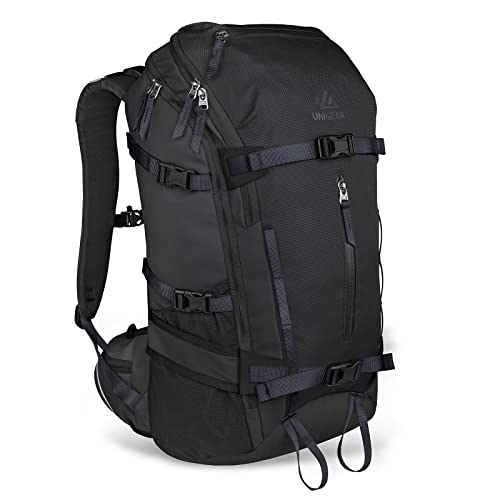
- ✓ Compact yet spacious
- ✓ Comfortable ergonomic design
- ✓ Durable water-resistant shell
- ✕ Limited color options
- ✕ Slightly stiff at first
| Capacity | 30 liters (L) |
| Material | 900D polyester with PU coating and 500D PVC bottom |
| Hydration Compatibility | Fits 3L hydration bladder |
| Dimensions | 22.05 x 11.81 x 6.89 inches |
| Carrying System | Adjustable S-shaped elastic shoulder belts, padded back panel, waist and sternum straps with reflective strip and integrated whistle |
| Attachment Options | Vertical snowboard carry, A-frame ski carry, dual ice axe loops, ski poles, lateral stretch mesh pockets for water bottles or trekking poles |
Unboxing the Unigear Ski Hydration Backpack feels like opening a well-thought-out gear box. The sturdy 900D polyester shell immediately catches your eye with its sleek, water-resistant finish.
It’s surprisingly lightweight for a 30L pack, but it feels durable and ready for a day on the slopes.
The first thing I noticed was how organized everything is. Multiple compartments and pockets make it easy to stash ski gloves, goggles, a phone, or even a 15” laptop without feeling cluttered.
The velvet-lined goggle pocket is a thoughtful touch, keeping your goggles scratch-free.
Wearing it, the ergonomic design really shines. The S-shaped shoulder straps sit comfortably, and the back panel breathes well, so you don’t sweat buckets.
The hip belt and adjustable sternum strap give a secure fit, even when hauling heavier gear.
Strapping my skis and snowboard was straightforward. The versatile system allows for vertical or A-frame carry, which is super handy.
I appreciated the dual loops for ice axes and the stretch mesh side pockets for water bottles or trekking poles.
Using it in cold weather, I felt confident it kept everything dry. The water-repellent fabric handled snow and cold with ease.
Plus, the reflective strips and built-in whistle add safety for night skiing or early mornings.
Overall, this backpack balances space, comfort, and durability. It’s perfect if you want a compact pack that can handle long days, mountain adventures, or even daily commutes.
Osprey Soelden 22L Men’s Ski and Snowboard Backpack, Black

- ✓ Compact and lightweight
- ✓ Multiple ski and snowboard carry options
- ✓ Easy backpanel access
- ✕ Limited volume for extra gear
- ✕ No hydration reservoir compartment
| Capacity | 22 liters |
| Dimensions | 21L x 13W x 2H inches |
| Carrying Options | A-frame or diagonal ski carry, vertical front panel, horizontal snowboard carry |
| Special Features | Backpanel access to main compartment, dry storage, internal carry for GPS/Radio with mic harness webbing attachment points |
| Material | Not explicitly specified, but likely durable synthetic fabric suitable for ski backpacks |
| Weight | Not explicitly specified |
Imagine you’re halfway up the mountain, your skis are securely strapped to this sleek black Osprey Soelden 22L backpack, and you’re just about to make that perfect powder turn. You reach for your goggles, and the backpanel access makes grabbing your essentials effortless without having to take off the pack.
This backpack feels surprisingly compact for a ski pack, but don’t let that fool you. It’s well-designed with a slim profile that hugs your back comfortably, yet offers plenty of storage.
The vertical and horizontal carry options for skis and snowboards mean you can switch things up depending on your gear or preference.
The internal GPS/Radio compartment is a game-changer, especially when you’re out in the backcountry and need reliable communication. The mic harness webbing keeps everything secure, so nothing bounces around as you carve down the mountain.
What I really appreciated was the easy access to the main compartment via the backpanel. No more fumbling with zippers mid-run—just a quick unzip, and you’re in.
Plus, the lightweight build means you can move freely, without feeling weighed down by bulky gear.
Overall, this pack hits a sweet spot between compactness and functionality. It’s perfect for those who want to stay nimble on the slopes while having all their essentials close at hand.
Whether you’re hitting groomers or exploring backcountry lines, it’s a reliable companion.
What Features Should You Look for in the Best Compact Ski Backpack?
When searching for the best compact ski backpack, several key features should be considered to ensure functionality and comfort on the slopes.
- Size and Weight: A compact ski backpack should be lightweight and easy to carry, as it will not weigh you down during your skiing adventures. The ideal size should provide enough space for essential gear without being bulky, allowing for free movement and agility on the slopes.
- Storage Capacity: Look for a backpack that offers a sufficient storage capacity, typically between 15 to 30 liters. This capacity should accommodate your necessities such as extra layers, snacks, hydration systems, and other personal items while keeping the overall design compact.
- Comfort and Fit: The best compact ski backpacks should feature adjustable straps, a padded back panel, and a waist belt to ensure a snug and comfortable fit. Proper fit is crucial as it prevents the backpack from shifting during activity, enhancing your overall skiing experience.
- Durability and Weather Resistance: Opt for a backpack made from durable materials that can withstand wear and tear from skiing and outdoor elements. Additionally, water-resistant or waterproof fabrics will help protect your gear against snow and moisture, ensuring everything stays dry and secure.
- Tool and Gear Attachment Points: A quality compact ski backpack should have designated attachment points for ski poles, helmets, or even ice axes. These features provide convenience and versatility, allowing you to carry your gear securely and efficiently while skiing.
- Pockets and Organization: Look for backpacks that include multiple pockets and compartments for better organization. Features like quick-access pockets for essentials or insulated sleeves for hydration systems will help you stay organized while on the move.
- Hydration Compatibility: Many skiers prefer to stay hydrated without stopping frequently, so a backpack that accommodates a hydration reservoir or has external drink pockets is beneficial. This allows you to carry water conveniently and stay hydrated throughout your skiing day.
How Do You Identify the Best Compact Ski Backpacks on the Market?
Identifying the best compact ski backpacks involves considering several key features that enhance functionality and comfort.
- Size and Weight: A good compact ski backpack should be lightweight and have a small profile, typically ranging from 20 to 30 liters in capacity. This size allows for essential gear without being cumbersome, making it easier to maneuver on the slopes.
- Durability: Look for backpacks made from high-quality, water-resistant materials such as nylon or polyester that can withstand harsh winter conditions. Reinforced seams and zippers also contribute to the longevity of the backpack, ensuring it can handle the rigors of skiing.
- Comfort and Fit: The best compact ski backpacks should feature adjustable straps, padded back panels, and hip belts to distribute weight evenly. This ensures comfort during long days on the mountain, reducing fatigue and allowing for better movement.
- Storage Options: A well-designed ski backpack should offer multiple compartments for organization, including designated pockets for goggles, hydration systems, and avalanche safety gear. This allows for quick access to important items while keeping everything secure and easy to find.
- Attachment Points: Look for backpacks with external attachment points for gear such as skis, snowboards, and helmets. These features provide flexibility for how you carry your equipment and can make a significant difference in convenience on the slopes.
- Hydration Compatibility: Many compact ski backpacks come with hydration reservoir pockets or sleeves, allowing skiers to stay hydrated without stopping to take out a water bottle. This feature is particularly useful for long runs or extended outings where access to water might be limited.
- Safety Features: Consider backpacks that include safety features like reflective strips, whistle clips, or even built-in avalanche safety gear compartments. These additions can enhance safety while skiing in remote or backcountry areas.
What Size Should You Choose for a Compact Ski Backpack?
Choosing the right size for a compact ski backpack is crucial for comfort and utility on the slopes.
- 15-20 liters: Ideal for short day trips or resort skiing, this size accommodates essential gear without being cumbersome.
- 20-30 liters: Perfect for a full day on the mountain, this size offers ample space for extra layers, snacks, and hydration systems.
- 30-40 liters: Suitable for backcountry skiing or multi-day trips, this size allows for additional equipment like avalanche safety gear and a lunch supply.
15-20 liters: A compact ski backpack in this range is lightweight and designed to hold the essentials, such as a water bottle, snacks, and extra gloves. This size is great for skiers who prefer to travel light and don’t need to carry bulky equipment.
20-30 liters: This size strikes a balance between capacity and weight, making it an excellent choice for all-day skiing. It can comfortably hold a hydration reservoir, a first-aid kit, an extra layer, and a few snacks, ensuring that you have everything you need without feeling overloaded.
30-40 liters: A backpack in this category is designed for more extensive trips where you might require additional gear due to changing weather conditions or longer outings. This size can accommodate specialized items like avalanche probes and shovels, making it ideal for backcountry adventures or multi-day excursions.
How Do Materials Impact the Durability of the Best Compact Ski Backpacks?
- Nylon: Nylon is a popular choice for ski backpacks due to its lightweight and strong properties. It is resistant to abrasion and tearing, making it ideal for rugged outdoor conditions, while also being water-resistant when treated with a durable water repellent (DWR) finish.
- Polyester: Polyester is another common material that offers good durability at a lower cost than nylon. It is less prone to fading in sunlight and can be treated for water resistance, but it may not be as strong as nylon, which can affect longevity under heavy use.
- Cordura Fabric: Cordura is a specific type of nylon known for its exceptional durability and resistance to wear and tear. It is often used in high-end ski backpacks that require extra strength to withstand harsh conditions, making it a preferred choice for serious skiers.
- Ripstop Fabric: Ripstop fabric incorporates a special reinforcing technique that makes it resistant to ripping and tearing. This feature adds to the durability of compact ski backpacks, ensuring they remain intact even after exposure to sharp objects or heavy loads.
- Waterproof Linings: Many compact ski backpacks include waterproof linings or coatings that enhance their ability to keep contents dry. These linings are crucial for skiing conditions where snow and moisture are prevalent, ensuring that personal items stay protected during use.
- Foam Padding: Foam padding not only contributes to the comfort of a ski backpack but also adds to its durability by helping to absorb impacts. This is particularly important in a compact design where space is limited, as it helps protect both the user and the gear carried within.
What Role Does Comfort and Fit Play in Selecting a Compact Ski Backpack?
When selecting a compact ski backpack, comfort and fit are paramount for an enjoyable day on the slopes. A well-fitted backpack ensures good weight distribution, reducing strain on your back and shoulders. This is particularly important when carrying gear like water, snacks, or extra layers.
Key factors to consider include:
-
Adjustable Straps: Look for backpacks with adjustable shoulder straps, chest straps, and hip belts. This allows you to customize the fit according to your body shape and size, enhancing stability and comfort.
-
Back Panel Design: Opt for models with ergonomic back panels that contour to your spine. A padded and breathable design will help with ventilation and comfort, especially during long wear.
-
Weight: A lighter backpack reduces fatigue. Compact ski backpacks are designed to be lightweight yet functional, ensuring you can carry essential items without extra bulk.
-
Access and Organization: Consider how easily you can access your gear. A well-organized backpack with multiple compartments can make it easier to find what you need without taking the entire pack off.
Ultimately, a comfortable and well-fitting ski backpack can significantly enhance your experience on the mountain.
Which Budget-Friendly Options Are Considered the Best Compact Ski Backpacks?
The best compact ski backpacks combine functionality and affordability while ensuring comfort and durability on the slopes.
- Osprey Kamber 42: This backpack is designed for backcountry skiing and features a streamlined design for easy handling and access.
- Black Diamond Dawn Patrol 32: Known for its lightweight construction, this backpack provides ample storage and organization for all your ski gear.
- Deuter Freerider Lite 28: This option is perfect for day trips, offering a balance of weight and capacity while ensuring comfort with its ergonomic design.
- Mammut Nirvana 30: This versatile backpack comes with a robust feature set, including an avalanche safety gear compartment, making it ideal for safety-conscious skiers.
- Arc’teryx Cierzo 18: With a minimalist design, this backpack is great for quick outings and is highly packable, fitting easily in your main gear bag.
Osprey Kamber 42: This backpack is tailored for backcountry skiing enthusiasts who need a reliable companion for long days on the slopes. It features an adjustable harness, ample storage space, and an easy-access main compartment, making it a top choice for those who prioritize efficiency and comfort.
Black Diamond Dawn Patrol 32: This backpack is designed for skiers who prioritize a lightweight yet functional option. It offers a spacious main compartment with various pockets for organization, as well as ski carry options, ensuring that you can transport all your gear without feeling weighed down.
Deuter Freerider Lite 28: This backpack strikes a great balance between functionality and weight, making it perfect for day trips. It boasts an ergonomic design that conforms to your body, providing comfort during long descents, while also featuring ski carry systems and hydration compatibility.
Mammut Nirvana 30: For those who are safety-minded, this backpack includes specialized compartments for avalanche gear, ensuring you’re prepared for any situation. Its durable construction and well-thought-out organization make it a great choice for serious skiers venturing into backcountry terrain.
Arc’teryx Cierzo 18: This compact backpack is ideal for quick ski trips or as a secondary pack. Its minimalist design allows for easy packing and unpacking, and its lightweight materials make it a convenient option for those looking to minimize bulk while maintaining functionality.
How Can Accessories Enhance the Functionality of a Compact Ski Backpack?
Accessories can significantly enhance the functionality of a compact ski backpack, making it more versatile and user-friendly on the slopes.
- Hydration System: A hydration bladder or water bottle pocket can make it easy to stay hydrated without needing to stop and unpack.
- Gear Loops: Additional loops or attachment points provide a convenient way to carry ski poles, helmets, or other essential gear.
- Insulated Compartment: An insulated compartment can keep snacks or other temperature-sensitive items from freezing in extreme cold.
- Emergency Kit: Including an emergency kit with first aid supplies or tools can prepare a skier for unexpected situations on the mountain.
- Adjustable Straps: Adjustable straps allow for a customized fit, improving comfort and stability while skiing or snowboarding.
- Reflective Elements: Reflective elements enhance visibility in low-light conditions, increasing safety for the skier.
A hydration system is essential for maintaining energy levels during a long day on the slopes, allowing skiers to easily sip water as needed without fumbling through the backpack.
Gear loops are particularly beneficial as they provide options for carrying extra equipment outside the pack, which helps to save internal space for more critical items.
An insulated compartment within the backpack can protect food or drinks from freezing temperatures, ensuring that they remain functional and enjoyable throughout the day.
Having an emergency kit readily available in the backpack can be a lifesaver, providing essential items like band-aids, emergency blankets, or small tools to address minor injuries or mechanical issues.
Adjustable straps not only enhance comfort but also help to stabilize the pack while skiing, preventing it from bouncing around and allowing for a more agile performance.
Lastly, reflective elements are crucial for safety, especially when skiing in areas with limited visibility or during dusk, as they help other skiers and snowboarders to see you more easily.
Related Post: