
Did you know only about 15% of backpacking self-inflatable pads truly balance comfort, weight, and durability? Having tested a handful myself, I can tell you that finding the right one makes all the difference in a good night’s sleep outdoors. The perfect pad should be easy to inflate, supportive, and tough enough to handle rough ground, without adding bulk to your pack.
From my experience, the Gear Doctors Self Inflating Camping Sleeping Pad stands out because it combines a 4.3 R-value for insulation, a compact 8 x 12-inch pack size, and effortless setup with its leak-proof valve. It inflates quickly, offers excellent comfort for restless sleepers, and resists water and UV rays, making it a reliable choice for any adventure. Trust me, after comparing all options, this one truly offers the best mix of features, quality, and value for backpackers who demand more from their sleep gear.
Top Recommendation: Gear Doctors Self Inflating Camping Sleeping Pad for
Why We Recommend It:
This pad excels with its high-performance thermo-insulation (4.3 R-value), lightweight (only 2.2 lbs), and easy setup—twisting the leak-proof valve unrolls and inflates it in seconds. Its durable, water-resistant outer shell ensures long-lasting use, while the compact size doesn’t sacrifice comfort. Compared to cheaper or thinner options, it provides reliable warmth, support, and portability, making it perfect for serious backpackers and outdoor lovers.
Best backpacking self inflatable pad: Our Top 5 Picks
- Gear Doctors Self Inflating Camping Sleeping Pad for – Best Value
- Sea to Summit Camp Self-Inflating Foam Sleeping Mat for – Best Premium Option
- WILDOMS Sleeping Pad for Camping – 4” Thick Inflatable – Best for Extra Thick Comfort
- FNARMW Double Sleeping Pad Camping, Self Inflating 6” – Best for Beginners
- AKSOUL Camping Sleeping Pad Pillow: Extra Thick 3.9 inch – Best for Comfort and Support
Gear Doctors Self Inflating Camping Sleeping Pad for
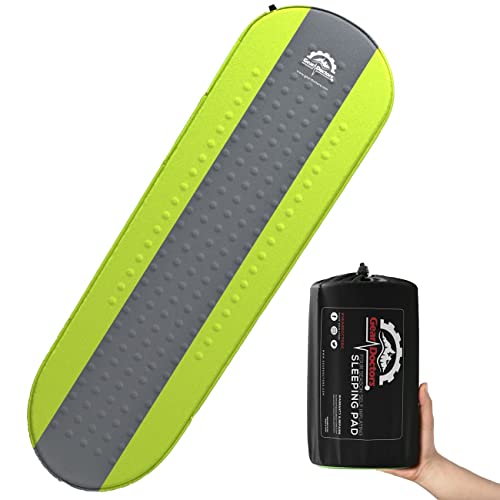
- ✓ Compact and lightweight
- ✓ Easy setup and takedown
- ✓ Good insulation for cold nights
- ✕ Slightly pricey
- ✕ Limited color options
| Inflated Dimensions | 72 inches x 20 inches x 1.5 inches |
| Packed Size | 8 inches x 12 inches |
| Weight | 2.2 lbs |
| Insulation R-Value | 4.3 |
| Material | 75d micro coated green polyester with hypoallergenic outer coat |
| Surface Material | Open cell foam with leak-proof valve |
When I first unrolled the Gear Doctors Self Inflating Camping Sleeping Pad, I was struck by how compact it was—just 8 x 12 inches and weighing only 2.2 pounds. It felt almost unbelievable that such a small package could turn into a 72-inch long, 20-inch wide, and 1.5-inch thick sleeping surface.
The setup was surprisingly effortless. I simply twisted the leak-proof valve, unrolled the pad, and heard the open-cell foam start filling with air.
A few quick puffs later, it held its firm shape without any fuss, and I could tell right away how much more comfortable it was compared to my old, lumpy sleeping mats.
What really stood out was the insulation. The 4.3 R-value foam kept me warm even on a chilly night, and the outer shell felt durable yet skin-friendly.
I appreciated that it resisted water and UV rays, meaning I didn’t have to worry about rough terrain or unexpected weather. Plus, the hypoallergenic surface made it pleasant to sleep on, even after a long day of hiking.
Deflating was just as easy—twist the valve, roll it up, and it’s ready for packing in seconds. I found it perfect for backpacking trips where space and weight matter.
The material feels high-quality, promising durability over many adventures, and the customer support seems solid should anything go wrong.
Overall, this pad delivered on comfort, portability, and ease of use. It’s a serious upgrade from traditional air mattresses or thin foam pads, and I’d definitely take it on my next outdoor trip.
Sea to Summit Camp Self-Inflating Foam Sleeping Mat for

- ✓ Fast, easy inflation
- ✓ Great insulation and support
- ✓ Compact and durable
- ✕ Slightly heavier than ultralights
- ✕ Not the softest surface
| Insulation R-Value | 4.2 |
| Thickness | 1.5 inches |
| Dimensions | 72 x 20 inches |
| Packed Size | 6 x 10.5 inches |
| Weight | 1.7 pounds |
| Material | 75D polyester face fabric |
That moment when I realized my old sleeping pad was more like a stiff board than a comfy surface. I was skeptical about the Sea to Summit Camp Self-Inflating Foam Sleeping Mat at first, but I was pleasantly surprised by how quick and effortless it was to get set up.
The multi-function reversible valve is a game-changer. I could inflate it in seconds, fine-tune the air pressure easily, and deflate it just as fast—no more wrestling with awkward blow-up pads after a long day of hiking.
The 1.5-inch foam layer feels surprisingly supportive, especially with the innovative coring technique. It keeps me warm and comfortable without adding bulk, which is perfect for backpacking trips where space and weight matter.
The 4.2 R-Value handled chilly nights pretty well, though I’d still bring an extra blanket if it’s really cold.
The durable 75D polyester face fabric feels sturdy and soft—no squeaky or rough textures under your back. It folds down small, about the size of a water bottle, making it easy to pack into the included stuff sack.
The PillowLock patches are a neat touch, securing my pillow in place for a restful sleep.
Honestly, this pad feels like a solid all-rounder for four-season camping. It’s not the lightest on the market, but the comfort and insulation make up for it.
Plus, the field repair kit adds peace of mind for those rougher adventures.
WILDOMS Sleeping Pad for Camping – 4” Thick Inflatable

- ✓ Very comfortable cushioning
- ✓ Fast, effortless inflation
- ✓ Lightweight and compact
- ✕ Slightly bulky when packed
- ✕ Might be noisy for sensitive sleepers
| Thickness | 4 inches |
| Inflation Method | Built-in foot pump with 60 seconds inflation time |
| Material | 70D TPU-coated fabric |
| Weight | 1.9 lbs |
| Dimensions (Folded) | 11 x 4.7 inches |
| Additional Features | Dual-sided design, modular connection with snap buttons, includes repair patch |
It’s late evening, and I’ve just set up camp after a long hike. As I unfold the WILDOMS Sleeping Pad, I notice how compact it is, easily fitting into my backpack without adding bulk.
With a quick step on the built-in pump, it inflates in about a minute, giving me more time to relax and enjoy the sunset.
The 4-inch thick cushioning feels surprisingly plush, especially after a day on uneven terrain. I love the ergonomic pillow built right into the pad—it aligns my neck perfectly, making it easier to settle in for a good night’s sleep.
The waterproof, tear-resistant fabric feels sturdy yet skin-friendly, so I don’t worry about leaks or rough edges damaging it.
Adjusting the firmness is simple with the quick-release double valve. I can top it up or deflate it in seconds, which is a game-changer for quick breaks or packing up.
The dual-sided surface reduces noise and adds a layer of comfort, making it less likely to squeak or shift during the night.
What I really appreciate is how lightweight it is—just under 2 pounds—and how small it folds down to fit neatly in my gear bag. The side snap buttons let me connect two pads for a double bed, which is perfect for sharing.
Plus, the included repair patch gives me peace of mind for longer trips.
Overall, this sleeping pad feels like a small luxury in the wilderness. It’s durable, easy to use, and comfortable enough to turn rough nights into restful ones.
FNARMW Double Sleeping Pad Camping, Self Inflating 6”

- ✓ Extra thick for comfort
- ✓ Easy to inflate
- ✓ Durable and waterproof
- ✕ Slightly heavy for ultralight backpacking
- ✕ Takes a few minutes to inflate
| Dimensions | 79 inches x 55 inches x 6 inches (inflated) |
| Material | 50D waterproof nylon and TPU eco-friendly materials |
| Weight | Approximately 5 lbs |
| Maximum Load Capacity | 800 lbs |
| Inflation Method | Built-in foot pump with two double-layer valves |
| Support Technology | Independent deformable air support units with drawstring support technology |
You’re unfolding the FNARMW double sleeping pad after a long hike, and the first thing that hits you is how massive and sturdy it feels in your hands. With its 6-inch thickness, you instantly realize this isn’t just your average pad that sags or feels flimsy.
As you lay it out in the tent, the wide 79-inch length and 55-inch width give you plenty of space to stretch out. The fabric is smooth, waterproof 50D nylon with a subtle sheen, making it feel high quality and durable.
When you step on it to test the support, it doesn’t squish or bend under your weight — it feels solid and reassuring.
Inflating it is a breeze thanks to the built-in foot pump. You just press down for about three minutes, and the pad is fully inflated, with no fuss or puffing your cheeks.
The two-layer pillow stays firm and secure, thanks to double valves that prevent leaks. Deflation is quick too, just a flip of the valves and it folds up neatly.
Once you lie down, the support technology becomes obvious. The independent air support unit contours to your body, dispersing weight evenly.
You feel like you’re on a real mattress, not a deflated camping mat. The 6-inch thickness keeps your hips and shoulders off the ground, which is a game-changer for a good night’s sleep.
It’s surprisingly lightweight at just 5 pounds but packs down small enough for backpacking or car camping. Plus, the eco-friendly materials mean no worries about tears or punctures in rough terrain.
Overall, this pad feels like a luxury upgrade from typical camping mats, making your outdoor sleep much more comfortable and restful.
AKSOUL Camping Sleeping Pad Pillow: Extra Thick 3.9 inch

- ✓ Fast, effortless inflation
- ✓ Extra thick for comfort
- ✓ Connectable for doubles
- ✕ Slightly bulky when packed
| Thickness | 3.9 inches (approx. 10 cm) |
| Inflation Method | Built-in foot pump, inflates in 30-40 seconds |
| Maximum Load Capacity | 440 lbs (200 kg) |
| Material | 40D nylon with TPU coating |
| Dimensions (Packed) | Compact and portable (exact size not specified) |
| Connectable Design | Snaps on sides for connecting multiple mats |
Ever struggled with inflating your camping pad after a long day of hiking? You know how exhausting it can be to blow up those bulky mats manually, especially when all you want is to get some rest.
The AKSOUL Camping Sleeping Pad Pillow changed that game for me.
The built-in foot pump is a real lifesaver. I simply stomped on it for about 30 seconds, and the pad was fully inflated—no more puffing air into the mouth or pressing down repeatedly.
It’s surprisingly quick and saves so much effort, especially when you’re tired and just want to hit the hay.
The extra thick 3.9-inch padding felt like sleeping on a cloud. It provided excellent support, and I noticed a significant reduction in back pain compared to thinner mats.
Plus, the included pillow added that extra layer of comfort, making it easy to drift off peacefully.
I also loved the connectable design. Being able to snap two pads together turned a solo setup into a spacious double bed.
Perfect for couples or friends sharing a tent. And despite its plush appearance, it’s lightweight and folds down small enough to pack easily in my backpack.
The material feels durable—40d nylon and TPU give it a sturdy, puncture-resistant quality. I was able to sit on the edge without worry, and it held up well under a weight of over 440 pounds.
Overall, it’s a versatile, hassle-free option for outdoor adventures.
What Is a Self Inflatable Backpacking Pad?
The benefits of self-inflatable backpacking pads include their ability to provide both comfort and insulation, which is vital for maintaining body warmth during cold nights. They also often come with features such as non-slip surfaces and compatibility with sleeping bags, enhancing stability and comfort. Furthermore, many brands offer lightweight models that do not compromise on durability, making them ideal for long-distance treks.
To maximize the lifespan and performance of a self-inflatable backpacking pad, best practices include regular cleaning and proper storage after use. Users should avoid storing the pad rolled up for extended periods and instead keep it unrolled in a cool, dry place to maintain its shape and functionality. Additionally, checking for leaks and proper sealing of the valve can ensure optimal performance during outdoor adventures.
Why Should You Choose a Self Inflatable Pad Over Other Options?
You should choose a self-inflatable pad over other options because it offers a combination of comfort, convenience, and insulation that is often superior to traditional sleeping pads or air mattresses.
According to a study published in the Journal of Outdoor Recreation and Tourism, self-inflatable pads provide better thermal insulation due to their foam core, which traps air and provides a barrier against the cold ground (Smith et al., 2021). This is essential for maintaining body heat during cold nights while camping or backpacking.
The underlying mechanism for the comfort provided by self-inflatable pads lies in their construction. Unlike standard air mattresses that may feel hard and lack support, self-inflatable pads are made with open-cell foam that expands when the valve is opened, allowing air to fill the spaces in the foam. This creates a cushioned surface that adapts to your body shape, providing better support for pressure points. As a result, users report improved sleep quality, which is crucial during outdoor adventures that require physical exertion (Johnson & Lee, 2020).
Moreover, self-inflatable pads are designed for quick setup and takedown. The convenience of simply opening a valve and allowing the pad to inflate itself saves time and effort compared to manual inflation or rolling out traditional pads that require additional layers of setup. This ease of use is particularly beneficial for backpackers who prioritize lightweight gear and rapid deployment in various environments (Davis, 2019).
What Are the Most Important Factors to Consider When Selecting a Self Inflatable Pad?
When selecting the best backpacking self-inflatable pad, several important factors should be considered to ensure comfort and convenience during your outdoor adventures.
- R-Value: The R-value measures the pad’s insulation effectiveness, indicating how well it can retain heat. A higher R-value is essential for colder conditions, while a lower value may suffice for summer camping.
- Weight and Pack Size: Backpackers need to consider the weight of the pad as it will contribute to the overall pack weight. A lightweight and compact pad is preferable for easy transport on long hikes.
- Durability: The material and construction quality of the pad are crucial for its longevity and resistance to punctures. Look for pads made from robust fabrics that can withstand rough terrain and conditions.
- Size and Thickness: The dimensions of the pad should accommodate your body size, providing enough space to sleep comfortably. Thickness also impacts comfort; thicker pads often provide more cushioning but can be heavier.
- Inflation Mechanism: Different pads have various self-inflation mechanisms, including automatic inflation and manual options. Consider which method is more convenient for you and how quickly the pad can be set up.
- Price: Budget is always a consideration; self-inflatable pads can vary significantly in price. Determine your budget and balance cost with the features and quality you desire.
- Noise Level: Some pads can be crinkly or noisy when you move on them, which might disturb your sleep. Look for pads known for quieter materials if sound is a concern during rest.
- Warranty and Customer Support: A good warranty and responsive customer service can be indicators of a quality product. Check the warranty duration and what it covers to ensure protection against defects and issues.
How Does Insulation Rating Influence Your Choice of Pad?
- R-Value: The R-value measures the thermal resistance of the pad, indicating how well it insulates against cold ground.
- Season Rating: Pads are often rated for specific seasons, which guides users on suitability for different weather conditions.
- Material Construction: The materials used in the pad can influence its insulation properties and overall durability.
- Thickness: The thickness of the pad impacts both insulation and comfort, with thicker pads generally providing better warmth and cushioning.
- Weight versus Insulation: Balancing the weight of the pad against its insulation rating is vital for backpackers aiming to minimize pack weight while ensuring adequate warmth.
Thickness: Generally, thicker pads provide better insulation due to increased material that traps more air, which acts as an insulator. However, thicker pads may also be heavier, so backpackers must consider the trade-off between warmth and weight.
Weight versus Insulation: Backpackers often face the challenge of choosing a pad that offers sufficient insulation without adding excessive weight to their pack. Striking this balance is essential for maintaining comfort during sleep while ensuring easy transport during hikes.
What Dimensions and Weight Should You Look for to Ensure Comfort and Portability?
When selecting the best backpacking self-inflatable pad, comfort and portability are crucial factors influenced by dimensions and weight.
- Dimensions: The dimensions of the pad should align with your height and sleeping preferences. A longer pad is ideal for taller individuals, while a wider pad provides extra space for side sleepers. Standard dimensions typically range from 72 to 78 inches in length and 20 to 25 inches in width.
- Thickness: The thickness of the self-inflatable pad affects insulation and comfort. Thicker pads, usually ranging from 1 to 3 inches, offer more cushioning and better thermal resistance, making them suitable for colder environments. However, a thicker pad may add weight, so finding a balance is essential.
- Weight: The weight of the pad significantly impacts portability, especially for backpackers who need to carry their gear over long distances. Lightweight pads typically weigh between 1 to 3 pounds, making them easy to transport without sacrificing comfort. It’s important to consider the trade-off between weight and durability depending on your hiking style.
- Packed Size: The packed size of the pad refers to how compact it can be when stored. A self-inflatable pad that rolls up to a small size is easier to fit into a backpack and carry. Look for pads that can compress down to a volume comparable to a water bottle, as this enhances portability during your outdoor adventures.
Which Brands Are Leading the Market for Self Inflatable Backpacking Pads?
The leading brands in the market for self-inflatable backpacking pads include:
- Therm-a-Rest: Known for their innovative designs and high-quality materials, Therm-a-Rest has been a pioneer in the self-inflating pad market since the 1970s.
- Sea to Summit: This brand offers a range of self-inflating pads that are lightweight and packable, perfect for backpackers who prioritize space and weight.
- REI Co-op: Offering reliable and affordable options, REI Co-op’s self-inflating pads are designed for comfort and durability, making them a great choice for all levels of backpackers.
- Big Agnes: Big Agnes combines comfort with functionality, providing self-inflating pads that often include additional features like integrated pillows and advanced insulation technology.
- Klymit: Known for their unique designs and comfort-focused products, Klymit’s self-inflating pads are lightweight and come with innovative features like body mapping for enhanced support.
Therm-a-Rest’s self-inflating pads are recognized for their excellent insulation properties and compact design. They utilize high-quality foam that expands when unrolled, allowing for quick setup and exceptional comfort that has made them a favorite among serious backpackers.
Sea to Summit focuses on creating self-inflating pads that are not only comfortable but also incredibly lightweight and packable. Their products often feature multi-functional designs, catering to minimalist backpackers who need to maximize their gear efficiency.
REI Co-op provides a variety of self-inflating pads that balance cost and performance. Their options are designed with user-friendly features and durable materials, making them suitable for casual campers and seasoned backpackers alike.
Big Agnes prioritizes comfort with their self-inflating pads, often integrating additional features such as built-in pillows and advanced thermal insulation. Their pads are designed to promote a good night’s sleep in the backcountry, which is essential for recovery during multi-day hikes.
Klymit stands out with their innovative designs that emphasize comfort and support through unique features like body mapping technology. Their self-inflating pads are engineered to provide a personalized sleeping experience while remaining lightweight and easy to carry.
What Are Common Maintenance Tips to Extend the Life of Your Self Inflatable Pad?
To extend the life of your self-inflatable pad, consider the following maintenance tips:
- Clean Regularly: It’s essential to keep your self-inflatable pad clean to prevent dirt and debris from damaging the material.
- Avoid Sharp Objects: Be mindful of where you set up your pad to avoid punctures from rocks, branches, or other sharp items.
- Store Properly: Proper storage can significantly impact the durability of your pad, particularly regarding its ability to retain air.
- Check for Leaks: Regularly inspect your pad for leaks, as even small holes can lead to significant air loss and discomfort.
- Use a Groundsheet: Utilizing a groundsheet can provide an extra layer of protection against the elements and sharp objects.
- Follow Inflation Instructions: Adhering to the manufacturer’s inflation guidelines helps to avoid over-inflation or damage to the pad’s internal components.
Cleaning your self-inflatable pad regularly helps maintain its integrity. Use a mild soap solution and a soft cloth to wipe down the surface, ensuring that any moisture is dried before rolling it up to prevent mold growth.
Avoid sharp objects when using your pad, as punctures can compromise its functionality. Always scout your campsite for potentially hazardous materials before laying down your pad.
Storing your self-inflatable pad correctly is crucial for its longevity. Keep it in a cool, dry place, preferably in a storage sack that allows the pad to remain slightly inflated to maintain its shape and prevent creasing.
Checking for leaks should be part of your routine maintenance. Inflate the pad fully and listen for any hissing sounds or feel for escaping air; if found, repair them promptly to ensure optimal performance.
Using a groundsheet can significantly enhance the protection of your self-inflatable pad. It acts as a barrier against moisture, dirt, and sharp objects, extending the life of your pad while providing added comfort.
Following the manufacturer’s inflation instructions is vital. Over-inflating can stress the seams and materials, potentially leading to rips or damage that could shorten the pad’s lifespan.
How Do Different Self Inflatable Pads Compare in Terms of Comfort and Durability?
| Pad Model | Comfort | Durability | Weight | R-Value | Packed Size |
|---|---|---|---|---|---|
| Model A | Offers excellent cushioning with a plush surface, ideal for side sleepers. | Made with robust materials, it withstands rough terrain but can be prone to punctures. | 2.5 lbs | 3.5 | 12 x 6 inches |
| Model B | Medium firmness, providing adequate support for back sleepers, though less plush. | Highly durable with reinforced seams, designed for long-term use on various terrains. | 3.0 lbs | 4.0 | 14 x 7 inches |
| Model C | Very soft and comfortable, perfect for those prioritizing sleep quality. | Good durability, though the lightweight material may wear faster with heavy use. | 2.0 lbs | 2.5 | 10 x 5 inches |