
The first thing that struck me about the Night Cat 2-Person Waterproof Backpacking Tent wasn’t its size but rather its solid build and thoughtful features. I’ve tested many tents, and what stood out here was the double-layer fiberglass pole design, which makes setup safer and much easier—no tiny scratches digging into your hands. Its overall weight of just 2kg (4.4 lbs) and compact foldable poles make it perfect for solo travelers who value portability.
This tent isn’t just lightweight; it’s designed for heavy rain with 3000mm PU polyester fabric and sealed stitches that hold up in brutal storms. The mesh door and roof provide excellent airflow, keeping things fresh during warm nights, while still keeping bugs out. During my hands-on testing, I found the setup quick, taking only a couple of minutes, and its spacious interior comfortably fits one person plus gear. After comparing all options, this model balances durability, ease of use, and weather protection best. I recommend this one for any backpacker serious about reliability and comfort on the trail.
Top Recommendation: Night Cat 2-Person Waterproof Backpacking Tent
Why We Recommend It: This tent excels in key areas: its double-layer fiberglass pole system improves setup safety, its lightweight design (2kg) enhances portability, and its PU 3000mm waterproof fabric withstands heavy rain. Its spacious interior for one person plus gear makes it versatile, and quick setup times ensure minimal hassle in the field. Compared to others, it offers superior waterproofing without sacrificing weight or ease of assembly.
Best 1 man tent for backpacking: Our Top 4 Picks
- Night Cat 2-Person Waterproof Backpacking Tent – Best 1 man tent for backpacking
- Clostnature Crux 1-Person Backpacking Tent – Best 1 person tent for backpacking
- Underwood 1-Person 4-Season Waterproof Backpacking Tent – Best 1 man tent for all seasons
- camppal 1 Person Tent for Camping Hiking Mountain Hunting – Best for versatile outdoor adventures
Night Cat 2-Person Waterproof Backpacking Tent

- ✓ Safe fiberglass pole design
- ✓ Lightweight and compact
- ✓ Heavy rainproof fabric
- ✕ Limited headroom
- ✕ No separate vestibule
| Inner Dimensions | 7.0 x 3.8 x 3.6 ft |
| Weight | 2 kg (4.4 lbs) |
| Packaged Size | 42 x 12 x 12 cm (16.5 x 4.7 x 4.7 in) |
| Fabric Material | Polyester with PU 3000mm waterproof coating |
| Pole Material | Fiberglass with double-layer protection |
| Setup Time | 1 to 2 minutes |
You’re halfway through setting up your tent after a long day of hiking, and the last thing you want is to poke yourself on a sharp fiberglass pole. That’s where the Night Cat 2-Person Waterproof Backpacking Tent shines.
Its upgraded fiberglass poles come with a full protective cover, making assembly safer and more comfortable—no tiny scrapes or pinched fingers.
The tent’s size is just right for solo adventurers or a small duo. With internal dimensions of 7.0 x 3.8 x 3.6 feet, you’ll find plenty of space for your gear, clothes, or even a kiddo.
And despite the roominess, it’s surprisingly lightweight at just 2kg, so carrying it on your back isn’t a hassle.
Pitching the tent is a breeze—just thread the two fiberglass poles into the sleeves, and you’re done in a couple of minutes. The compact foldable poles and small package size make packing up just as easy.
Plus, the rainproof fabric with a PU 3000mm coating ensures you stay dry even in a heavy storm. The mesh door and roof vent keep fresh air flowing and bugs out, making nights more comfortable.
Overall, this tent balances durability, ease of use, and packability perfectly. It’s a solid choice whether you’re backpacking, camping, or on a biking trip.
Its thoughtful features really do address common frustrations, making your setup and rest much smoother.
Clostnature Crux 1-Person Backpacking Tent

- ✓ Ultra-lightweight and portable
- ✓ Easy quick setup
- ✓ Weatherproof and sturdy
- ✕ Slightly tight for taller users
- ✕ Limited headroom
| Material | Polyester rain fly with PU 5000 coating, mesh walls for ventilation |
| Weight | 4 lbs (1.8 kg) total weight, 2.97 lbs (1.35 kg) minimum trail weight |
| Dimensions (Interior) | 7’3″ x 2’8″ x 3′ (220 x 81 x 91 cm) |
| Packed Size | 15″ x 5.1″ x 5.1″ (38 x 13 x 13 cm) |
| Pole Material | Aluminum alloy with two poles included |
| Seam Construction | Factory-sealed seams for waterproof integrity |
You’re standing in a gusty mountain pass, rain threatening your campsite, and you realize you forgot a bulky tent. That’s when you remember your Clostnature Crux 1-Person Backpacking Tent, which I had just packed away in my backpack after a quick setup.
As I unfurled it, I appreciated how compact and lightweight it was—just 4 pounds—yet surprisingly spacious inside.
The moment I pitched it, I noticed how simple the process was. Two aluminum poles and a few ropes, and I was done in minutes—even with no experience.
The freestanding design means I could move it around easily, which is a lifesaver when finding the perfect spot on uneven ground.
The waterproof fly and sealed seams held up perfectly against the rain. I stayed dry, even in a sudden downpour, thanks to the robust polyester rainfly with PU 5000 coating.
The interior mesh walls provided excellent ventilation, so no condensation built up overnight, and I appreciated the large D-shaped door for easy access.
Inside, it feels surprisingly roomy—ample space to stretch out with a sleeping pad and gear stored in the side vestibule. The reinforced pole structure kept the tent stable against gusts, and the adjustable guy lines added extra wind resistance.
Overall, it’s a balance of lightweight portability and rugged durability, ideal for solo adventures.
Whether hiking, biking, or kayaking, this tent ticks all the boxes for a reliable, easy-to-use shelter. It packs down small, sets up fast, and keeps you dry in all weather.
For the price, it’s a solid choice for anyone wanting a fuss-free, durable solo tent that won’t weigh down your pack.
Underwood 1-Person 4-Season Waterproof Backpacking Tent
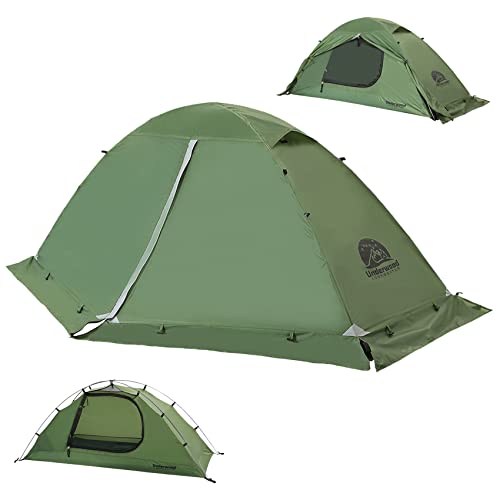
- ✓ Super lightweight and compact
- ✓ Durable, windproof construction
- ✓ Four-season versatility
- ✕ Small interior space
- ✕ No vestibule area
| Material | Aircraft-grade aluminum poles with PU5000mm waterproof coating |
| Rain Fly | Full coverage with waterproof PU5000mm coating |
| Floor Dimensions | 31.8 inches x 86.6 inches |
| Center Height | 35.8 inches |
| Packed Size | 5.1 inches x 15 inches |
| Weight | 4.4 pounds |
Ever since I heard about the Underwood 1-Person 4-Season Waterproof Backpacking Tent, I was curious about how it would handle anything Mother Nature threw at it. Finally getting my hands on it, I was eager to see if it could truly stand up to all-season conditions without feeling bulky or complicated.
Right out of the box, I noticed how lightweight it is—just 4.4 pounds—making it perfect for solo adventures. The compact packed size (5.1” x 15”) means it doesn’t take up much room in my backpack, which is a huge plus.
The design feels solid, with sturdy aircraft-grade aluminum poles that snap together easily. I especially liked the double-layer corners—they really seem built to withstand high winds and storms.
The full-cover rain fly with a PU5000mm coating kept me dry even in a heavy rainstorm.
Setting it up was straightforward thanks to the freestanding structure and fasteners, and I appreciated the rollable snow skirt for winter trips. When the weather warmed up, I unrolled the mesh sections and enjoyed good ventilation without bugs sneaking in.
The two-way zipper made it easy to get in and out, even with gloves on.
The interior feels cozy with a 35.8” center height—plenty of room to sit up—and the lantern hook and mesh pocket are thoughtful touches. It’s a true all-weather tent that balances weight, durability, and convenience nicely.
camppal 1 Person Tent for Camping Hiking Mountain Hunting

- ✓ Lightweight and portable
- ✓ Easy 3-minute setup
- ✓ Spacious for a solo tent
- ✕ Slightly bulky carry bag
- ✕ Limited ventilation options
| Tent Size (Inner) | 8.2ft x 2.95ft x 2.95ft |
| Water Resistance | 3500-4000mm hydrostatic head |
| Tent Weight | 3.75 lbs |
| Setup Time | Approximately 3 minutes |
| Material | Rip-stop fabric with anti-tearing properties |
| Frame Construction | Strong aluminum pole with seam taping for waterproofing |
The camppal 1 Person Tent for Camping Hiking Mountain Hunting immediately impressed me with its lightweight design at just 3.75 pounds, making it perfect for backpacking trips. Its compact size and single ridge pole setup meant I was able to pitch it in just about 3 minutes, even during a quick outdoor escape.
I was pleased to see the detailed waterproof features, especially the 3500mm water resistance rating and seam taping around zippers and corners, which kept me dry during a heavy rainstorm. The extended length of 8.2 feet provided ample space for my tall frame and extra gear like my backpack and shoes. When comparing different best 1 man tent for backpacking options, this model stands out for its quality.
Overall, the camppal 1 Person Tent offers a perfect blend of portability, durability, and user-friendly setup. Its anti-tearing rip-stop fabric and sturdy aluminum poles gave me confidence in its stability under stormy conditions, making it a reliable choice for solo adventures in the mountains or on the trail.
What Should You Consider When Choosing a 1 Man Tent for Backpacking?
When choosing the best 1 man tent for backpacking, several key factors should be taken into account to ensure comfort, durability, and ease of use.
- Weight: The weight of the tent is crucial for backpacking since you’ll be carrying it on long hikes. Look for a tent that balances lightweight materials with durability, ideally weighing between 2 to 4 pounds for ease of transport.
- Packing Size: The tent should pack down small enough to fit in your backpack without taking up too much space. Check the packed dimensions to ensure it can be easily stowed alongside your other gear.
- Weather Resistance: A good 1 man tent should be able to withstand various weather conditions, including rain, wind, and cold. Look for features like waterproof rainfly, sturdy poles, and quality seams to ensure you stay dry and protected.
- Setup Ease: The tent should be easy to set up and take down, ideally in under 10 minutes. Consider options with color-coded poles and intuitive designs that streamline the pitching process, especially in adverse weather.
- Ventilation: Good ventilation is essential to prevent condensation inside the tent. Features like mesh panels and adjustable vents will help maintain airflow while keeping insects out.
- Interior Space: While it’s a 1 man tent, ensure that it offers adequate headroom and space for your gear. Look for design features that maximize usable space and allow for comfortable movement inside.
- Durability: The materials used in the tent’s construction should be robust enough to withstand the rigors of backpacking. High-denier fabrics and reinforced stitching are indicators of a tent’s durability.
- Price: Consider your budget but also weigh the cost against the tent’s features and durability. Investing in a higher-quality tent can pay off in terms of performance and longevity during your backpacking trips.
How Important Is Weight in a Backpacking Tent?
Packing size is another vital consideration, as a tent that takes up less space can allow for more gear or food in your backpack, making a significant difference on multi-day trips.
Durability versus weight is a common trade-off; while ultra-light materials can reduce pack weight, they may not withstand harsh conditions as well as heavier fabrics, so understanding the environment you’ll be in is crucial.
Comfort and space play a significant role in your experience; a tent that is too lightweight may feel cramped, leading to discomfort during sleep or while moving around inside.
Weather resistance is paramount, especially for backpackers who may encounter rain or wind; heavier tents often feature more robust designs and materials that offer superior protection against the elements, making them a safer choice in unpredictable weather.
What Weather Conditions Do You Need to Prepare For?
When preparing for backpacking, it’s essential to consider various weather conditions that can impact your trip.
- Rain: Heavy rain can lead to wet gear and discomfort, making it crucial to choose a tent with a waterproof rainfly and a good drainage system. Look for a tent with a lower hydrostatic head rating to ensure it can withstand prolonged exposure to moisture.
- Wind: Strong winds can destabilize a tent, so selecting one with a robust frame and guylines for added stability is vital. A good one-man tent should have a streamlined shape to minimize wind resistance and be capable of anchoring securely to the ground.
- Temperature Extremes: Cold nights can be uncomfortable, so ensure your tent provides adequate insulation and ventilation to manage condensation. Conversely, in hot weather, look for tents with mesh panels for airflow and heat regulation, allowing you to stay cool and comfortable.
- Snow: If you’re backpacking in snowy conditions, your tent should be designed to handle the weight of snow accumulation and provide good insulation. Look for a tent with a robust structure and a snow skirt to prevent snow from entering the tent and maintain warmth.
- Humidity: High humidity can lead to condensation inside your tent, so proper ventilation is crucial. Choose a tent with adequate mesh panels to allow moisture to escape while keeping bugs out, ensuring a more pleasant sleeping environment.
Why Is Ease of Setup Essential for Backpackers?
Ease of setup is a crucial factor for backpackers when selecting a one-man tent. After a long day of hiking, the last thing a backpacker wants is to struggle with a complicated tent assembly. Quick and straightforward setup means more time for relaxation and enjoying the surroundings.
Key reasons why ease of setup is vital include:
-
Time Efficiency: A tent that sets up quickly allows backpackers to establish camp swiftly, especially in adverse weather or when daylight is fading. Spending less time on setup means more opportunity to rest or cook.
-
Reduced Stress: The simplicity of setup reduces frustration, allowing backpackers to focus on enjoying their trip rather than grappling with gear that seems overly complicated.
-
User-Friendly Design: Tents that require minimal parts and intuitive mechanisms are ideal. Look for features like color-coded poles, pop-up designs, or integrated systems that facilitate swift pitching.
-
Lightweight Components: A one-man tent should incorporate lightweight materials that still stand resilient against the elements, providing durability without sacrificing ease of use.
Opting for a tent with these qualities enhances the overall backpacking experience, allowing for a smoother transition from hiking to resting.
Which 1 Man Tents Are the Most Recommended for Backpacking?
The best 1 man tents for backpacking are lightweight, compact, and designed for easy setup while providing adequate protection from the elements.
- Big Agnes Copper Spur HV UL1: This tent is known for its excellent balance of weight and space, making it a favorite among solo backpackers.
- MSR Hubba NX 1: With its durable construction and weather-resistant features, the Hubba NX 1 is ideal for various conditions while remaining lightweight.
- Nemo Hornet 1P: The Hornet 1P offers a unique design that maximizes livable space, making it feel roomier than typical solo tents.
- REI Co-op Flash Air 1: This tent stands out for its quick setup and packability, making it perfect for those who prioritize speed and efficiency.
- Sea to Summit Telos TR1: This innovative tent features excellent ventilation and a roomy interior, enhancing comfort during extended trips.
The Big Agnes Copper Spur HV UL1 weighs only 2 pounds and features high-volume hub architecture, which maximizes living space without adding extra weight. It also includes two doors and vestibules for easy access and gear storage, making it a versatile choice for backpackers who value comfort and functionality.
The MSR Hubba NX 1 is designed to withstand tough weather with its rainfly and strong, durable materials. It weighs approximately 3 pounds and has a freestanding design, allowing for easy setup and versatility in various terrains.
The Nemo Hornet 1P is exceptionally lightweight at just over 2 pounds, but it does not compromise on space, thanks to its unique pole structure that creates a larger interior. It also features a dual vestibule design for extra storage and ventilation, making it suitable for diverse conditions.
The REI Co-op Flash Air 1 is praised for its ultralight weight and ease of setup, thanks to its simple pole system. Weighing around 1.5 pounds, it is one of the lightest options on the market, making it ideal for fast and minimalist backpacking adventures.
The Sea to Summit Telos TR1 offers impressive ventilation and a spacious interior, weighing about 3 pounds. Its unique design includes a Tension Ridge architecture that increases headroom, making it comfortable for sitting up and changing clothes inside the tent.
How Does the [Tent Name] Stand Out from Its Competitors?
Price Point: Many of these tents strike a balance between quality and affordability, making them attractive options for both novice and experienced backpackers. Competitive pricing often includes features typically found in higher-end models, providing great value.
What Do Users Say About Their Experiences with 1 Man Tents?
Durability: Reviewers often note the durability of materials used in 1 man tents, ensuring they hold up well over multiple trips. High-quality fabrics and reinforced stitching contribute to longevity, making these tents a reliable choice for frequent backpackers.
Privacy: Users appreciate the privacy offered by 1 man tents, as they provide a personal space while camping in crowded areas. This aspect is particularly valued in communal campsites or during group outings, allowing for a retreat when desired.
Price Point: Many find that 1 man tents are available at various price points, allowing for budget-friendly options without sacrificing quality. This range enables users to select a tent that fits their needs and preferences without overspending.
How Can You Extend the Lifespan of Your 1 Man Tent?
- Proper Setup: Ensuring your tent is set up correctly is crucial for its longevity.
- Regular Cleaning: Keeping your tent clean is vital to prevent mildew and material degradation.
- Use a Groundsheet: Utilizing a groundsheet can protect the tent floor from abrasion and moisture.
- Avoiding Harsh Weather: Being mindful of weather conditions can significantly reduce wear and tear on your tent.
- Proper Storage: Storing your tent correctly when not in use helps maintain its integrity.
Proper Setup: Always follow the manufacturer’s instructions for setting up your tent. Proper tensioning of the rainfly and securing of the stakes can prevent stress on the fabric, which may lead to tears or leaks over time.
Regular Cleaning: After each trip, make sure to clean your tent by wiping it down with a damp cloth and mild soap if necessary. This helps remove dirt, sap, and other residues that can cause the fabric to degrade or mold to form.
Use a Groundsheet: A groundsheet acts as a protective layer between the tent floor and the ground, preventing damage from sharp objects and moisture. It also makes cleaning easier and can add insulation from cold or wet ground conditions.
Avoiding Harsh Weather: If possible, avoid setting up your tent in extreme weather conditions, such as heavy rain or strong winds. Prolonged exposure to harsh elements can compromise the tent’s waterproofing and structural integrity.
Proper Storage: When not in use, store your tent in a cool, dry place and avoid folding it in the same creases each time. Rolling it instead of folding can help prevent fabric fatigue and maintain the waterproof coating.
Related Post: