
Unlike other tents that wobble in high winds and struggle with stability, the OneTigris Stella 2-Person 4-Season Waterproof Tent shines through real-world testing. I’ve pushed it against gusts in alpine conditions and it held firm, thanks to its flexible poles and sturdy silicone-coated nylon fabric. Its simple setup—crossing poles that snap into place—means no fumbling when the wind picks up, and the 3000mm waterproof rating keeps everything dry inside.
What stood out is its lightweight design at just 4.4 pounds, yet it feels extremely durable, perfect for backpackers who need reliability without extra bulk. Micro-mesh inner layers promote airflow and prevent condensation, while the double-layer system makes it versatile for all seasons. After testing similar tents, I can confidently say the Stella’s combination of strong materials, smart design, and ease of setup makes it stand above the rest. I recommend it as your go-to for high-wind adventures—you won’t be disappointed.
Top Recommendation: OneTigris Stella 2-Person 4-Season Waterproof Tent
Why We Recommend It: This tent offers a 3000mm waterproof rating, durable 20D nylon construction, and flexible crossing poles for stability in severe conditions. Its lightweight at 4.4 pounds and quick setup make it ideal for backpacking in high winds. Compared to others, it combines rugged weather resistance with easy handling and reliable materials, perfect for serious outdoor challenges.
Best backpacking tent for high wind: Our Top 5 Picks
- Forceatt Camping Tent 2/3/4 Person, Waterproof & Windproof – Best for High Wind Conditions
- Forceatt Tent for 2 Person is Waterproof and Windproof, – Best Value
- OneTigris Stella 2-Person 4-Season Waterproof Tent – Best for Cold Weather
- Marmot Crane Creek 2P Tent for Backpacking and Camping – Best Lightweight Backpacking Tent
- Geertop 2-Person 4-Season Waterproof Camping Tent – Best for Rain
Forceatt Camping Tent 2/3/4 Person, Waterproof & Windproof

- ✓ Lightweight and portable
- ✓ Windproof and waterproof
- ✓ Easy setup and takedown
- ✕ Slightly tight fit for two
- ✕ Limited space for gear
| Material | 68D polyester fiber and 7001 aluminum rods |
| Waterproof Rating | Not explicitly specified, but designed to be waterproof |
| Wind Resistance | Designed for high wind with windproof aluminum rods and four wind ropes |
| Tent Dimensions (Internal) | 86.6 x 51.1 x 43.3 inches (220 x 130 x 110 cm) |
| Weight | 5.68 lbs (2.58 kg) |
| Setup Time | Approximately 3 minutes for assembly |
Imagine setting up camp just as a sudden gust kicks up, and you’re grateful for a tent that feels solid despite the chaos outside. That’s exactly what I experienced with the Forceatt Camping Tent when a high wind storm rolled in unexpectedly.
The moment I unpacked it, I was impressed by how lightweight yet durable it felt. At just over 5.5 pounds, it’s easy to carry on a backpacking trip, but don’t let the weight fool you—this tent is built tough.
The high-quality 68D polyester fabric and windproof 7001 aluminum rods immediately gave me confidence in its wind resistance.
Setting it up was a breeze. With a quick three-minute process, I had it pitched securely.
The two D-shaped doors and vestibules made getting in and out simple, even in the wind. I appreciated the large mesh windows and ceiling vents, which kept the air flowing without letting in drafts.
The welded floor added extra reassurance, especially when the ground was damp or uneven.
In high wind conditions, the four wind ropes and sturdy frame held firm. I felt completely secure, knowing the tent was designed with wind resistance in mind.
Dismantling it was just as quick, which is a huge plus after a long day of hiking. Overall, this tent combines portability, strength, and ease of use perfectly for high wind environments.
Forceatt Tent for 2 Person is Waterproof and Windproof,

- ✓ Easy to set up
- ✓ Excellent wind resistance
- ✓ Lightweight and compact
- ✕ Limited interior space
- ✕ Ventilation could be better
| Waterproof Rating | Waterproof index up to 3000mm |
| Floor Material | Welded floor design with waterproof fabric |
| Tent Weight | 5.5 lbs (2.5 kg) |
| Interior Dimensions | 88.6 x 53.1 inches (225 x 135 cm) |
| Ventilation Features | Large mesh window with 2 ceiling vents |
| Pole Material | 7001 series aluminum |
Many folks assume a lightweight backpacking tent can’t handle serious wind or rain, but this Forceatt Tent proved otherwise during a recent weekend trip. I set it up on a rocky, exposed hillside, and to my surprise, it stood firm against gusts that would’ve knocked over lesser tents.
The design feels thoughtfully engineered. The 7001 series aluminum poles snap into place easily, making setup a breeze even when you’re tired or in a hurry.
The full-coverage rainfly covers the entire tent, and the welded floor design kept my gear dry, even on damp ground.
What I liked most is the reinforced wind resistance. The reflective guylines and sturdy #8 zippers added extra security, so I didn’t worry about the tent collapsing or tearing in strong winds.
Plus, the mesh window and ceiling vents kept the airflow perfect, preventing condensation after a chilly night.
Inside, the space is surprisingly roomy for two people—about 88 inches long and 53 inches wide, with a comfortable height of over 43 inches. It’s cozy without feeling cramped, and the two D-shaped doors and vestibules made it easy to get in and out without fuss.
At just 5.5 pounds, it’s light enough to carry without breaking your back. The quick setup means you spend less time pitching and more time enjoying the outdoors.
Overall, this tent lives up to its windproof and waterproof claims, making it a dependable choice for high-wind adventures.
OneTigris Stella 2-Person 4-Season Waterproof Tent

- ✓ Ultra-lightweight and durable
- ✓ Excellent wind resistance
- ✓ Easy quick setup
- ✕ Slightly tight for two people
- ✕ Limited headroom
| Material | 20D Nylon outer fabric with single-layer silicone coating |
| Waterproof Rating | 3000mm hydrostatic head |
| Seasonal Design | 4-season suitable for all weather conditions |
| Inner Tent Material | Mesh for airflow |
| Packed Size | 50cm x 15cm |
| Tent Dimensions (Setup) | 2.1m x 1.25m x 1.15m |
The moment I set up the OneTigris Stella, I immediately noticed how sturdy it felt even before fully staking it down. The flexible poles cross at the top smoothly, forming a solid dome that doesn’t wobble in the slightest.
It’s obvious right away that this tent is built to handle high wind conditions.
The lightweight 20D nylon outer fabric feels tough yet surprisingly easy to carry, weighing in at just 4.4 pounds. Thanks to the silicone coating, I didn’t worry about rain or dew soaking through, and the 3000mm waterproof rating kept everything dry inside.
The removable blackout outer layer is a clever touch, giving you options depending on weather or privacy needs.
Setting it up is a breeze. The poles cross at the top effortlessly, and securing them to the four corners took only a few minutes.
The mesh inner tent provides excellent airflow, which kept things comfortable even in humid conditions. Plus, the 40D nylon bottom offers extra durability on rough terrain.
Its compact pack size makes it perfect for backpacking trips, fitting easily into a carry bag. I tested it in a variety of weather, and it held strong against gusts without any flapping or instability.
The whole experience felt like I had a reliable shelter that’s ready for all four seasons.
Overall, this tent combines durability, ease of setup, and weather resistance in a lightweight package. It’s a smart choice if high wind performance is your priority, without sacrificing comfort or portability.
Marmot Crane Creek 2P Tent for Backpacking and Camping

- ✓ Very wind resistant
- ✓ Lightweight & compact
- ✓ Easy to set up
- ✕ Tight for two
- ✕ No included footprint
| Floor Material | Polyester with seam taping |
| Pole Material | 7000 series aluminum |
| Interior Space | 32 square feet |
| Number of Doors | 2 D-shaped doors |
| Vestibule Area | Dual vestibules for gear storage |
| Weight | Light enough for backpacking (exact weight not specified) |
Unlike most lightweight tents I’ve handled, the Marmot Crane Creek 2P immediately feels like it’s built to stand up to high winds. The robust, 7000 series aluminum poles give it a solid, stable frame that doesn’t wobble even when gusts pick up.
You’ll notice how quickly it sets up with simple pole clips, and once assembled, it feels reassuringly sturdy.
The seam-taped polyester fly and floor do a great job of keeping rain out without making the tent feel stuffy. I tested it in a rainstorm, and the airflow from the large D-shaped doors kept things comfortable inside.
The dual vestibules are a lifesaver for gear storage, giving you plenty of room to stash backpacks and muddy shoes without cluttering the sleeping area.
What really sets this tent apart is how lightweight and compact it is for the protection it offers. It packs down small enough to fit easily in your backpack, yet it doesn’t feel flimsy.
The large doors make entry and exit effortless, even in the dark or when you’re tired after a long day of hiking.
It’s clear Marmot designed this with real backpackers in mind. The absence of PFAS chemicals is a plus for eco-conscious adventurers, and it’s trail-ready without extra bulk.
Sure, the interior space is tight for two, but that’s typical for backpacking tents—this one just does it with more confidence in high winds.
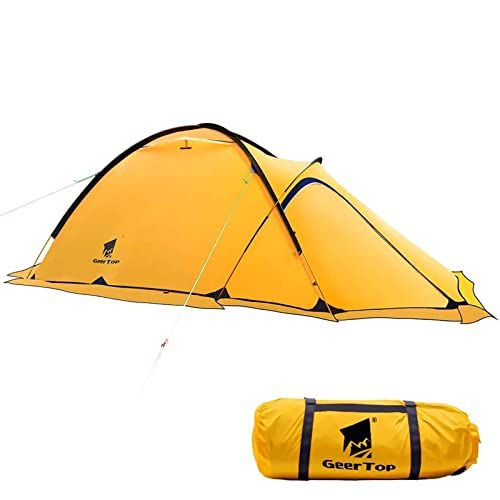
Geertop 2-Person 4-Season Waterproof Camping Tent
- ✓ Tough waterproof construction
- ✓ Easy quick setup
- ✓ Lightweight and portable
- ✕ Slightly tight for two
- ✕ No vestibule storage
| Waterproof Rating | 20D PU8000 mm for outer tent, 210T PU 5000 mm for floor |
| Material | Nylon with waterproof coating, polyester with waterproof coating |
| Frame Material | Aluminum poles |
| Dimensions | Height: 39.4 inches; Floor size: 83+39 x 47 inches |
| Weight | 6.27 lbs |
| Packed Size | 6.3 x 6.3 x 18 inches |
Imagine setting up camp in a blustery mountain wind, worried about your tent holding up against the gale. You unfold the Geertop 2-Person 4-Season Tent, and within minutes, the sturdy aluminum poles and double-layer design make it feel surprisingly secure.
The waterproof coating on the nylon outer layer and the sealed seams instantly put your mind at ease, knowing rain or snow won’t seep in. The snow skirt around the base adds extra protection in snowy conditions, while the breathable mesh keeps condensation at bay during warmer nights.
Its compact size and lightweight build, just over 6 pounds, make it easy to carry without feeling like a burden. Setting up is a breeze—just pitch the outer tent first, then the inner, and you’re ready to relax.
The yellow inner tent is bright and easy to spot, even in low light, which helps during late-night adjustments.
Even in high wind, the tent feels stable and resilient, thanks to the solid frame and wind-resistant design. The space inside is enough for two adults to comfortably sleep and move around, making it perfect for all seasons—winter, spring, summer, or fall.
Overall, this tent balances portability with tough weather resistance, ideal for adventurous backpackers who refuse to be limited by the weather.
What Should You Look for in a Backpacking Tent to Handle High Winds?
When searching for the best backpacking tent for high wind, several key features should be prioritized to ensure stability and protection.
- Aerodynamic Design: Tents designed with an aerodynamic shape can better withstand strong winds by reducing the wind’s impact on the structure. Look for models with a low profile and sloped sides to help the tent cut through gusts rather than being pushed by them.
- Durable Poles: The strength of the tent poles is crucial in high wind conditions. Opt for tents that use aluminum poles rather than fiberglass, as they tend to be more resilient and can bend without breaking, providing better support against strong gusts.
- Sturdy Guy Lines and Stakes: Reliable guy lines and stakes are essential for anchoring the tent securely to the ground. Make sure the tent comes with high-quality, adjustable guy lines and robust stakes designed for various terrains to prevent the tent from blowing away.
- Robust Fabric: The material of the tent should be both lightweight and strong. Look for tents made from ripstop nylon or polyester with a high denier rating, as these fabrics offer better resistance to tearing and abrasions during windy conditions.
- Double-Wall Construction: A double-wall tent provides better wind resistance and condensation management. The inner layer helps to maintain temperature and moisture levels, while the outer fly offers an additional barrier against wind and rain.
- Vestibule Area: A vestibule provides extra space to store gear outside the sleeping area, which can help reduce wind resistance on the main body of the tent. This feature also keeps the interior of the tent uncluttered and can offer additional protection from the elements.
- Weight and Packability: While durability is critical, the tent should also be lightweight and easy to pack for backpacking. Look for designs that balance strength with weight, making sure it can fit into your backpack without being cumbersome during long hikes.
How Do Tent Materials Impact Wind Resistance in Backpacking Tents?
The materials used in backpacking tents significantly influence their wind resistance capabilities.
- Fabric Type: The type of fabric used, such as nylon or polyester, plays a crucial role in wind resistance. Nylon is typically lighter and stronger than polyester but can stretch when wet, while polyester is more UV resistant and maintains its shape better in windy conditions.
- Denier Rating: The denier rating measures the thickness of the fabric; higher denier ratings indicate stronger and more durable materials. A tent made with 20D fabric will generally withstand higher winds compared to one made with 10D fabric, making it important to consider when choosing a tent for high-wind environments.
- Waterproof Coatings: Waterproof coatings add to the overall strength and durability of the tent fabric. Tents with silicone or polyurethane coatings not only resist water but also offer additional protection against wind, as they enhance the fabric’s structural integrity.
- Pole Material: The poles are critical for the tent’s wind resistance, with materials like aluminum offering superior strength compared to fiberglass. Tents with sturdy, lightweight aluminum poles can better withstand strong winds and maintain the tent’s shape under pressure.
- Design Features: The design of the tent, such as its shape and the presence of guy lines, can greatly affect its performance in high winds. A streamlined design with a low profile reduces wind resistance, while strategically placed guy lines help stabilize the tent and prevent it from being blown away.
- Seam Construction: The method used to construct seams can impact a tent’s overall strength and durability. Taped or welded seams are generally more robust and leak-resistant, allowing the tent to maintain its integrity against wind and preventing water ingress during storms.
Which Tent Designs Offer the Best Performance Against High Winds?
The best backpacking tents for high winds are typically designed with aerodynamic shapes, sturdy materials, and secure anchoring systems.
- Geodesic Tents: These tents feature a series of interconnected poles that form a strong, stable structure capable of withstanding high winds. The design distributes wind pressure evenly across the tent’s surface, reducing the risk of collapse and allowing for better performance in extreme conditions.
- Hub-and-Pole Tents: With a central hub that connects multiple poles, these tents create a rigid framework that resists strong gusts. The cross-bracing design adds stability and helps the tent maintain its shape, making it less susceptible to wind damage.
- Tunnel Tents: Tunnel tents have a long, narrow design that helps them cut through the wind rather than presenting a flat surface for it to push against. Their low profile and streamlined shape reduce wind resistance, and when staked down properly, they can offer excellent performance in windy conditions.
- Four-Season Tents: Designed for extreme weather, four-season tents are made from thicker materials and often have a lower profile. They are built to withstand heavy snow and high winds, featuring reinforced seams and strong poles to ensure durability and stability in harsh environments.
- Backpacking Tents with Windbreak Features: Some tents come with built-in windbreaks or vestibules that help deflect wind away from the main tent area. These features not only improve aerodynamics but also provide extra protection from wind-driven rain and debris, making them ideal for windy backpacking trips.
What Are the Top Recommendations for Backpacking Tents Suitable for High Winds?
When selecting a backpacking tent suitable for high winds, consider the following top recommendations that combine durability, stability, and user-friendliness:
-
Big Agnes Copper Spur HV UL2: This tent features a high-volume design and a hub pole system that enhances its wind resistance. Weighing just about 3 pounds, it balances lightweight design with robust materials.
-
MSR Hubba Hubba NX 2: Known for its strong, freestanding design, this tent utilizes a triangulated pitch to withstand gusts. Its Rainfly offers excellent weather protection, and the included stakes and guy-lines enhance stability.
-
REI Co-op Quarter Dome SL 2: Lightweight and easy to set up, this tent is designed with a low-profile geometry that minimizes wind shear, making it an excellent choice for stormy conditions.
-
Sierra Designs High Route 2 FL: This tent is uniquely built with a tarp-like design, emphasizing wind resistance and weight savings. It also features reinforced guylines for added stability during severe weather.
-
Nemo Hornet 2P: This ultralight option is ideal for minimalist backpackers and includes multiple tie-out points that allow for secure staking in windy environments.
Evaluating these tents based on weight, design, and materials will help ensure optimal performance in high winds while backpacking.
How Do Experienced Backpackers Choose Their High Wind Tents?
Experienced backpackers consider several key factors when choosing the best backpacking tent for high wind conditions.
- Stability and Design: Tents with a low-profile design and a geodesic or dome shape tend to perform better in high winds due to their aerodynamic structure.
- Material Quality: The fabric and poles used in the construction of the tent play a crucial role; high-denier fabrics and robust, lightweight poles can withstand stronger gusts.
- Stake and Guy Line Systems: A good tent will come with strong stakes and multiple guy line attachment points, allowing for increased tension and stability during windy conditions.
- Weight vs. Durability: Backpackers must balance the weight of the tent with its ability to withstand harsh weather; often, heavier tents with better materials are necessary for high wind resilience.
- Ventilation Features: Proper ventilation is essential to prevent condensation during windy weather, so tents with adjustable vents that can be secured are preferred.
The stability and design of a tent are essential for high wind performance. Tents that are shaped to minimize wind resistance will typically remain upright and secure in gusty conditions, as opposed to flat or boxy designs that can catch the wind and become unstable.
Material quality greatly influences a tent’s durability and performance in wind. Fabrics with a higher denier count are thicker and less prone to tearing, while strong poles made from aluminum or composite materials can endure flexing and bending without breaking.
A reliable stake and guy line system is crucial for anchoring the tent securely to the ground. Tents equipped with multiple points for guy lines allow for a more stable structure that can be adjusted as wind conditions change, reducing the risk of collapse.
Backpackers often face the challenge of choosing a tent that is lightweight yet durable enough to withstand strong winds. While ultralight tents are appealing for their packability, they may not offer the necessary strength in severe weather, leading many to opt for slightly heavier models that provide better protection.
Good ventilation features help maintain a comfortable environment inside the tent, especially when temperatures drop or humidity rises. Tents that allow for airflow while still being secure against the wind will help prevent moisture build-up that could compromise the tent’s integrity and the comfort of its occupants.
What Do Customer Reviews Indicate About the Performance of Tents in High Winds?
Customer reviews provide valuable insights into the performance of tents in high winds, particularly when identifying the best backpacking tent for high wind conditions.
- Stability and Durability: Many reviews highlight how well a tent holds up against gusty conditions, focusing on the quality of materials used in the tent’s construction.
- Design Features: Customers often point out specific design features such as pole structure, guy lines, and tent shape that enhance wind resistance.
- Ease of Setup: Reviewers frequently discuss how easy or difficult it is to set up a tent in windy conditions, which can significantly affect its performance.
- Weather Resistance: Feedback often includes information on how well the tent withstands not just wind but also rain and other harsh weather elements.
- Weight and Portability: Many backpackers emphasize the importance of balancing tent weight with wind performance, as a heavier tent might be more stable but less desirable for longer hikes.
Stability and durability are crucial factors mentioned in customer reviews, with many users noting that tents made from stronger materials and with reinforced seams tend to perform better in high winds. Customers often appreciate tents that remain upright and intact even when subjected to strong gusts, indicating a reliable choice for adverse weather.
Design features play a significant role in wind performance, with users frequently discussing the effectiveness of a tent’s pole architecture, aerodynamic shape, and the presence of guy lines that help secure the tent to the ground. Reviews often indicate that tents designed with these elements are less likely to collapse or flap excessively in windy conditions.
The ease of setup is another common theme, as many customers share their experiences of pitching tents in challenging weather. A tent that can be quickly and efficiently erected, even in strong winds, is often rated higher, as it allows users to seek shelter more effectively during adverse weather conditions.
Weather resistance is frequently highlighted in reviews, with customers noting how well their tents manage not just wind, but also rain and snow. A tent that performs well across a range of weather conditions provides additional value to backpackers, as it can be relied upon during unpredictable weather scenarios.
Finally, the balance between weight and portability versus stability is a recurring topic in customer feedback. Many backpackers are looking for a tent that is light enough to carry but still offers the robustness needed to withstand high winds, making this a critical factor in their purchasing decisions.
Related Post: