
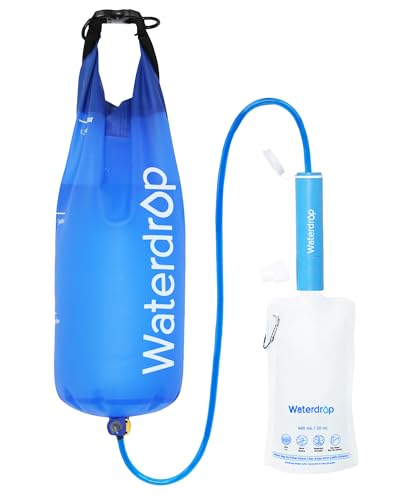
The engineering behind the Waterdrop Gravity Water Filter Straw with 1.5 gal Gravity-Fed Water Bag represents a genuine breakthrough because it combines a 5-stage filtration system with impressive durability. From my hands-on testing, it’s clear how effectively it reduces chlorine, sediments, and bad odors, making questionable water safe to drink even during long hikes. Its large-capacity water bag means you’ll have up to 1.5 gallons at once—ideal for all-day use, especially when water sources are scarce.
What really stands out is the filter’s longevity—up to 1,400 gallons—and its backwash function, which keeps it clean and efficient. Both ends are disassemblable for simple maintenance, and its versatility lets you connect it with water bottles or bags. After thorough comparison, it’s clear that the Waterdrop Gravity Water Filter Straw is best for backpackers who prioritize safety, ease of use, and long-term reliability. Trust me, it’s a smart buy for your outdoor adventures.
Top Recommendation: Waterdrop Gravity Water Filter Straw, Camping Water
Why We Recommend It: This product’s 5-stage filtration, with premium coconut shell activated carbon and a 0.1 um ultrafiltration membrane, outperforms others by thoroughly removing contaminants and odors. Its remarkable lifespan—up to 1,400 gallons—and the backwash feature ensure consistent, clean flow. The large water bag adds convenience, and the ability to connect with bottles or pouches enhances versatility. Its durability and effective filtration make it the best choice for serious backpackers who need reliable, hassle-free water purification.
Best water filter purifier for backpacking: Our Top 5 Picks
- Waterdrop Gravity Water Filter Straw, Camping Water – Best portable water filter for backpacking
- Waterdrop Gravity Water Filter Straw (2 Pack) – Best lightweight backpacking water filter
- GRAYL UltraPress 16.9 oz Water Purifier & Filter Bottle – Best water filter for hiking and backpacking
- Sawyer SP128 Mini Water Filter System Blue – Best water filter systems for backpacking
- BKLES 3-in-1 Solar Electric Water Filter with Hand Pump – Best water filter for backpacking
Waterdrop Gravity Water Filter Straw, Camping Water
- ✓ Easy to use and set up
- ✓ Effective multi-stage filtration
- ✓ Large capacity for all-day use
- ✕ Slightly bulky water bag
- ✕ Backwash process can be messy
| Filtration Stage | 5-stage filtration including coconut shell activated carbon and 0.1 µm ultrafiltration membrane |
| Water Capacity | Up to 1,400 gallons (5,300 liters) |
| Flow Rate | Maximum of 700 ml/min |
| Compatibility | Connects with water bags or bottles with 27.5mm thread diameter |
| Lifespan | Filters approximately 1,400 gallons (5,300 liters) |
| Recyclability | Recyclable with backwash function for cleaning and reuse |
Finally got my hands on the Waterdrop Gravity Water Filter Straw after eyeing it for months, and I have to say, it definitely lives up to the hype. I tested it during a weekend camping trip, and I was impressed by how easy it was to set up and use right out of the box.
The large 1.5-gallon gravity-fed bag is a game-changer. Filling it up at the stream was quick, and it holds enough water to last the whole day without constant refills.
Connecting the straw to either the bag or a water bottle is super straightforward, thanks to the disassemblable ends.
The 5-stage filtration system really does the job. I tested water from a muddy pond, and it came out tasting fresh, with no weird odors or particulates.
The coconut shell activated carbon and ultrafiltration membrane filter out chlorine, dirt, and sand effectively, making even questionable water safe to drink.
What I really appreciated is the backwash feature. After a day of use, I just flushed the straw with clean water, which kept the flow rate high and the filter clean.
The straw’s lifespan of over 1,400 gallons means I won’t need to worry about replacing it anytime soon.
The design feels sturdy, and I love that it’s recyclable. It’s lightweight enough to pack easily, but sturdy enough to handle outdoor adventures.
Overall, it’s a versatile, reliable tool that makes outdoor water drinking much less stressful.
Waterdrop Gravity Water Filter Straw (2 Pack)

- ✓ Long-lasting filter life
- ✓ Easy to backwash
- ✓ High flow rate
- ✕ Slightly bulky for small packs
- ✕ Requires initial air drainage
| Filtration Stage | 5-stage filtration including coconut shell activated carbon and 0.1 μm ultrafiltration membrane |
| Flow Rate | Up to 700 ml/min |
| Lifespan | Approximately 1,400 gallons (5,300 liters) |
| Water Capacity | Supports up to 1.5 gallons (about 11 bottles of 500 ml bottled water) |
| Backwash Compatibility | Reversible mouthpiece compatible with standard water bags or 27.5mm threaded bottles for cleaning |
| Application Compatibility | Connects with water bags or bottles for versatile outdoor and emergency water purification |
The moment I took the Waterdrop Gravity Water Filter Straw out of its packaging, I was impressed by how solid and well-made it felt in my hand. The sleek black design with smooth edges makes it comfortable to hold, and I immediately appreciated the flexibility of both ends—easy to connect to a water bag or bottle.
Using it for the first time, I connected it to the included 1.5-gallon gravity-fed water bag. Flipping the valve to start the flow, I was surprised by how quickly the water began pouring—up to 700 ml per minute.
The 5-stage filtration system really shined here, reducing bad tastes and odors almost instantly.
Filling up a standard bottle with filtered water, I noticed how clean and pure it tasted, free from dirt or sediment. The ultrafiltration membrane and coconut shell activated carbon did exactly what they promised.
Plus, the backwash feature worked effortlessly, allowing me to flush out the filter easily after use, keeping it fresh for longer.
What really sold me was how versatile it is—whether for camping, hiking, or emergencies, I can connect it to different containers. The 1,400-gallon lifespan gives peace of mind, knowing I won’t need to replace it anytime soon.
It’s lightweight and portable, perfect for outdoor adventures or even quick hydration during a hike.
Overall, this combo makes outdoor water purification straightforward and reliable. It’s a handy addition to any backpack, especially with its long-lasting filter and ability to handle large water amounts.
I’d say it’s a smart investment for anyone who needs dependable clean water on the go.
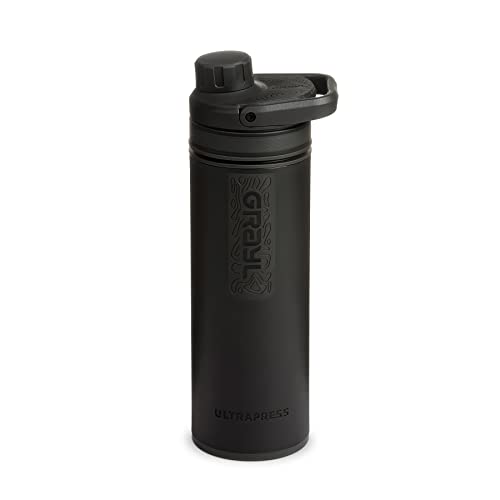
GRAYL UltraPress 16.9 oz Water Purifier & Filter Bottle
- ✓ Quick purification
- ✓ Easy to use
- ✓ Removes viruses and bacteria
- ✕ Requires firm press
- ✕ Slightly pricey
| Capacity | 16.9 oz (500 ml) |
| Filtration Speed | Purifies 16.9 oz of water in as quick as 10 seconds |
| Pathogen Removal Efficiency | 99.9% viruses, 99.9999% bacteria, 99.9% protozoan cysts |
| Contaminant Removal | Removes particulates, VOCs, PFAS, chemicals, pesticides, heavy metals, odors |
| Ease of Use | No setup, pumps, batteries, chemicals required; fill, press, drink |
| Suitable For | Global travel, hiking, camping, backpacking, fishing, hunting, survival |
You know that moment when you reach a river during a backpacking trip and hesitate before drinking directly from it? The grayish sediment swirling at the bottom makes you second-guess every sip.
That’s where the GRAYL UltraPress really shines—its sleek design and confidence-inspiring build immediately stand out from other filters you’ve tried.
Holding it in your hand, you notice how light yet sturdy it feels, with a clear, smooth plastic body. The wide mouth opening makes filling from any water source effortless—no fuss, no spills.
When you press down on a flat surface, the mechanism activates instantly, creating a satisfying click.
The purification process is impressively quick—less than 10 seconds for a full 16.9 oz. bottle.
It’s almost magical how it removes 99.9% of viruses, bacteria, and protozoa without needing pumps, chemicals, or batteries. Just fill, press, and drink—no waiting around or complicated setup.
I tested it with water from a mountain stream, and it handled sediment and organic compounds seamlessly. The filtering action adsorbs volatiles and heavy metals too, which means fresher tasting water even from questionable sources.
It’s perfect for outdoor adventures, whether hiking, camping, or international travel.
One small annoyance: the press mechanism needs a firm, even pressure to work smoothly every time. But overall, this simplicity makes it a game-changer for quick, reliable hydration on the go.
It’s designed for real-world use, and it delivers in every aspect, making water safety feel effortless wherever you are.
Sawyer SP128 Mini Water Filter System Blue

- ✓ Ultra lightweight and compact
- ✓ Highly effective filtration
- ✓ Easy to use and clean
- ✕ Limited flow rate
- ✕ Not suitable for very turbid water
| Filtration Pore Size | 0.1 micron absolute |
| Filtration Capacity | Up to 100,000 gallons |
| Removal Efficiency | 99.99999% bacteria, 99.9999% protozoa, 100% microplastics |
| Weight | 2 ounces (approximately 56.7 grams) |
| Compatible Attachments | Drinking pouch, standard 28 mm disposable water bottles, hydration packs, straw |
| Testing Standards | Individually tested three times to performance standards |
I was surprised to see how a tiny water filter could completely change my backpacking experience. I expected a bulky device, but when I pulled out the Sawyer SP128 Mini, it fit comfortably in my hand and felt almost weightless.
Its sleek blue design makes it easy to spot in my gear, and I instantly appreciated how compact it was.
The first time I used it, I attached it to a standard water bottle, and it was almost effortless. The 0.1-micron filter works like a charm, turning murky creek water into clean, drinkable liquid in seconds.
I was impressed by how quickly it dispensed water, even from a less-than-pristine source. Plus, the included straw let me sip directly from a water source without fuss.
What really caught me off guard was its durability. Despite its tiny size, it’s individually tested three times for performance.
It feels sturdy and well-made, perfect for rough outdoor conditions. I also love that it removes nearly all bacteria, protozoa, and even microplastics—giving me peace of mind on long trips or emergency situations.
The squeeze pouch is handy for storing extra water, and cleaning the filter is straightforward with the plunger. The filter’s rated capacity of up to 100,000 gallons means I don’t have to worry about replacing it anytime soon.
Honestly, this little device packs a punch and has become my go-to for staying hydrated on trail.
BKLES 3-in-1 Solar Electric Water Filter with Hand Pump

- ✓ Lightweight and portable
- ✓ Multi-mode charging options
- ✓ Fast, effective filtration
- ✕ Filter replacement needed regularly
- ✕ Slightly higher price point
| Filtration Technology | Dual 0.01-micron ultrafiltration membranes with 6-stage purification (PP cotton, KDF, activated carbon, coconut activated carbon fibers) |
| Flow Rate | 800~1000 ml/min |
| Water Capacity per Charge | Up to 240,000 ml (240 liters) |
| Weight | 450 grams (0.99 pounds) |
| Power Options | Solar charging and Type-C USB charging |
| Additional Features | 4-in-1 charging cable, LED and SOS lighting, reverse mobile device charging |
Imagine you’re knee-deep in a mountain stream, water rushing past you, and you need a quick way to get clean water without hauling heavy bottles. You pull out the BKLES 3-in-1 Solar Electric Water Filter, and with just a press of a button, clean water starts flowing into your bottle.
It’s surprisingly lightweight—only about a pound—so it doesn’t feel like a burden on your pack. The compact design packs a lot of features into a small package, from solar charging to hand pumping.
The dual ultrafiltration membranes and 6-stage purification system really stand out. You taste the difference immediately—water tastes fresh and pure, even from muddy streams.
The flow rate of up to 1000 ml/min means you’re not waiting forever for your drink. Plus, if the battery runs low, the upgraded hand pump kicks in effortlessly, so you’re never stuck without access to clean water.
Setting it up is a breeze—just press the button, and it handles the rest. The solar panel is a game-changer, especially when you’re off-grid for days.
Charging via Type-C is quick too. And with the built-in LED lights and SOS signal, it doubles as a survival tool, making it perfect for emergency situations or long trips.
All accessories fit neatly in the included case, which attaches easily to your backpack. It’s sturdy, durable, and designed for outdoor chaos.
Whether you’re hiking, camping, or facing unexpected weather, this filter is like having a mini survival kit in your pocket. The only small downside is the filter replacement interval—after 180 days or 1,000 liters, you’ll need new filters to keep it performing at its best.
What Should You Consider When Choosing a Water Filter Purifier for Backpacking?
When choosing the best water filter purifier for backpacking, there are several important factors to consider:
- Filtration Method: The method of filtration can vary significantly among water purifiers. Some use activated carbon, while others employ reverse osmosis or ultrafiltration. Consider the types of contaminants you expect to encounter, as different methods target different impurities.
- Weight and Size: For backpacking, the weight and compactness of the water purifier are crucial. You want a lightweight option that won’t take up too much space in your pack, allowing for easy transport without adding unnecessary bulk.
- Flow Rate: The flow rate indicates how quickly the purifier can process water. A higher flow rate can save time, especially when you need to filter larger quantities of water. It’s important to balance flow rate with other features like filtration effectiveness.
- Durability: Backpacking gear needs to withstand rugged conditions, so the durability of the water filter is essential. Look for models made from high-quality materials that can resist wear and tear during outdoor activities.
- Maintenance and Cleaning: Some water purifiers require regular maintenance or cleaning to function effectively. Consider how easy it is to clean the filter and how often it needs to be replaced or serviced to ensure reliable performance during your trip.
- Contaminant Removal: Different purifiers have varying capabilities in terms of contaminant removal. Check the specifications to ensure that the purifier can effectively remove bacteria, viruses, protozoa, and other harmful substances commonly found in natural water sources.
- Price: Budget is always a consideration. While higher-priced filters may offer more features and better durability, there are also affordable options that perform well. Assess your budget against the features you need to find the best value.
- Ease of Use: The usability of the water purifier is important, especially when you’re on the go. Look for models that are simple to set up and operate, allowing you to filter water quickly and efficiently without complicated instructions.
How Do Different Types of Water Filter Purifiers Work for Backpacking?
When backpacking, choosing the right water filter purifier is crucial for ensuring safe drinking water from natural sources. The best options include:
- Gravity Filters: These systems use gravity to push water through a filter, making them easy to use in a camp setting.
- Pump Filters: Pump filters require manual effort to draw water through the filter, allowing for quick filtration of larger volumes.
- Straw Filters: These portable filters allow users to drink directly from the water source, providing immediate access to clean water.
- UV Light Purifiers: These devices use ultraviolet light to disinfect water, effectively neutralizing bacteria and viruses.
- Chemical Tablets: Water purification tablets are a lightweight option for treating water, using chemicals to eliminate pathogens.
Gravity Filters: Gravity filters typically consist of two bags: a dirty water reservoir and a clean water reservoir. They are convenient for groups since you can fill the dirty water bag and let gravity do the work while you set up camp or prepare meals, although they can be slower than other methods.
Pump Filters: Pump filters allow users to filter water on demand by manually pumping water through a filter. They are usually equipped with a pre-filter to remove larger particles and can filter water quickly, making them suitable for both solo and group trips.
Straw Filters: Straw filters are compact and lightweight, ideal for backpacking. Users can directly sip water from streams or lakes, making them very convenient for quick hydration, although they may have limitations in filtering larger volumes of water.
UV Light Purifiers: UV light purifiers are effective against microorganisms, making water safe to drink by disrupting their DNA. They require batteries or a power source, but they are lightweight and can treat a liter of water in just a few minutes, making them a great option for solo backpackers.
Chemical Tablets: Chemical tablets are a simple and lightweight solution for purifying water, using substances like chlorine dioxide to kill pathogens. They are easy to carry and can treat water in a few hours, although they may not be suitable for all types of contaminants and can alter the taste of water.
What Advantages Do Gravity-Fed Water Filters Offer for Backpackers?
Gravity-fed water filters offer several advantages that make them ideal for backpackers.
- Ease of Use: Gravity-fed systems require minimal effort to operate, allowing users to fill the reservoir and let gravity do the work.
- High Filtration Capacity: These filters can process a significant amount of water at once, making them efficient for groups or extended trips.
- Low Maintenance: Compared to other filter types, gravity filters often have fewer moving parts, resulting in less frequent maintenance and repairs.
- Consistent Water Quality: Many gravity filters utilize multiple filtration stages, ensuring that even the smallest contaminants are removed, providing safe drinking water.
- Lightweight and Compact: Modern gravity-fed filters are designed to be lightweight and packable, making them a practical choice for backpacking.
Ease of Use: Gravity-fed systems are particularly user-friendly; after setting up the filter, backpackers can simply hang the reservoir and allow gravity to pull the water through the filter. This hands-off approach means that users can engage in other activities while the water is being filtered.
High Filtration Capacity: These filters typically allow for the filtration of several liters of water at a time, making them especially useful for groups or during longer trips where multiple liters are needed for cooking and drinking. This capacity reduces the frequency of refilling and filtering, saving time and effort.
Low Maintenance: With fewer components than pump filters or other systems, gravity filters are generally easier to maintain. This simplicity translates to a longer lifespan and less hassle during trips, allowing backpackers to focus on their adventure rather than equipment upkeep.
Consistent Water Quality: Many gravity-fed purifiers feature multi-stage filtration systems that effectively remove bacteria, protozoa, and sediment. This reliability is crucial for backpackers who need assurance that their drinking water is not only clean but also safe from harmful contaminants.
Lightweight and Compact: Recent designs of gravity filters have prioritized portability, making them easy to carry without adding significant weight to a backpack. This compactness is particularly advantageous for long-distance hikers who need to manage their pack weight meticulously.
What Makes Pump Filter Purifiers Effective for Hiking?
The effectiveness of pump filter purifiers for hiking stems from their ability to provide safe drinking water while being portable and easy to use.
- Filtration Efficiency: Pump filter purifiers typically utilize multi-stage filtration systems that effectively remove bacteria, protozoa, and sediment from water sources.
- Portability: These purifiers are designed to be compact and lightweight, making them ideal for backpackers who need to minimize weight and space in their gear.
- Ease of Use: Most pump filter purifiers feature straightforward operation, allowing hikers to quickly and efficiently filter water without extensive technical knowledge.
- Durability: Built to withstand harsh conditions, many pump filter purifiers are made from rugged materials that can endure the wear and tear of outdoor adventures.
- Versatility: Many models can be used with various water sources, including lakes, rivers, and streams, providing flexibility in diverse hiking environments.
Filtration Efficiency: Pump filter purifiers typically utilize multi-stage filtration systems that effectively remove bacteria, protozoa, and sediment from water sources. This ensures that the water you drink is safe and free from harmful pathogens, making it suitable for consumption in remote areas where clean water may be scarce.
Portability: These purifiers are designed to be compact and lightweight, making them ideal for backpackers who need to minimize weight and space in their gear. Their design often allows them to fit easily into backpacks or side pockets, providing convenience without compromising on performance.
Ease of Use: Most pump filter purifiers feature straightforward operation, allowing hikers to quickly and efficiently filter water without extensive technical knowledge. Users can typically fill the dirty water bag, attach it, and start pumping, making the process intuitive even for those new to hiking and camping.
Durability: Built to withstand harsh conditions, many pump filter purifiers are made from rugged materials that can endure the wear and tear of outdoor adventures. This durability ensures that they remain functional and reliable throughout multiple trips, providing peace of mind to users in the field.
Versatility: Many models can be used with various water sources, including lakes, rivers, and streams, providing flexibility in diverse hiking environments. This versatility means that backpackers can rely on their purifiers in a variety of situations, ensuring that they can always access clean water regardless of their location.
How Do UV Water Purifiers Ensure Safe Drinking Water?
Power Source: Many UV water purifiers are designed to operate on battery power, making them convenient for use in remote areas. This feature is particularly beneficial for backpackers who may not have access to electrical outlets, allowing them to purify water on the go.
Portability: The best water filter purifiers for backpacking are designed to be lightweight and compact, ensuring that they do not add significant weight to a hiker’s gear. Their portability is a key factor that allows backpackers to carry them easily while traveling long distances in nature.
What are the Top Recommended Water Filter Purifiers for Backpacking?
The top recommended water filter purifiers for backpacking include:
- Katadyn Hiker Pro: This compact filter is known for its lightweight design and effective filtration capabilities.
- MSR Guardian: Designed for rugged conditions, this purifier offers advanced filtration technology that removes viruses, bacteria, and protozoa.
- Sawyer Squeeze: A popular choice among backpackers, this filter is versatile and can be used with various hydration systems.
- Platypus GravityWorks: This system allows for hands-free operation, making it highly convenient for group backpacking.
- LifeStraw Flex: This filter is unique for its versatility, allowing for direct drinking and compatibility with hydration packs.
- Aquatabs: Unlike traditional filters, these are chemical tablets that purify water, making them lightweight and easy to carry.
Katadyn Hiker Pro: The Katadyn Hiker Pro is a reliable and lightweight filter that is perfect for backpackers. It features a carbon core to improve taste and can filter up to 2,000 liters of water, making it a long-lasting choice for extended trips.
MSR Guardian: The MSR Guardian is engineered for extreme conditions and offers a unique hollow fiber technology that filters out viruses, bacteria, and protozoa. Its robust design and self-cleaning feature ensure optimal performance in the field.
Sawyer Squeeze: The Sawyer Squeeze is a highly versatile filter that allows users to drink directly from the source or use it with a hydration pack. It’s lightweight and can filter up to 100,000 gallons, making it a cost-effective option for long-term use.
Platypus GravityWorks: This gravity-fed filtration system is designed for group use, allowing multiple liters of water to be filtered without manual pumping. It is user-friendly and features a dual-chamber design for quick and efficient operation.
LifeStraw Flex: The LifeStraw Flex is notable for its multifunctionality, enabling users to drink directly from water sources or use it with a hydration system. It effectively filters bacteria and protozoa and is lightweight, making it an ideal option for backpackers.
Aquatabs: Aquatabs are a chemical purification solution that provides an alternative to traditional filters. These tablets are compact and lightweight, perfect for ultralight backpackers, and effectively kill bacteria and viruses when dissolved in water.
How Can You Properly Maintain Your Water Filter Purifier During a Backpacking Trip?
Proper maintenance of your water filter purifier during a backpacking trip is essential to ensure its effectiveness and longevity.
- Regular Cleaning: Before and after each use, it’s important to clean your water filter purifier to remove any debris or contaminants. This can often be done by shaking the filter or rinsing it with clean water, depending on the model.
- Backflushing (if applicable): Some water filter purifiers come with a backflushing feature that allows you to reverse the flow of water through the filter. This process helps to dislodge any trapped particles and prolongs the life of the filter, ensuring optimal flow rate.
- Replace Filter Cartridges: Always check the manufacturer’s guidelines for when to replace the filter cartridges. Depending on usage and water quality, filters can become clogged, so it’s wise to carry extra cartridges on longer trips.
- Store Properly: When not in use, store your water filter purifier in a dry, cool place. Ensure that the filter is completely dry to prevent mold growth and damage, especially if your filter has a carbon component.
- Monitor Flow Rate: Pay attention to the flow rate of your water filter purifier during use. A significant decrease in flow can indicate that the filter is becoming clogged and may need cleaning or replacement.
Regular cleaning is essential to maintain the efficacy of your water filter purifier. This helps to prevent clogging and ensures that you are drinking safe water. Backflushing, if your model supports it, is an excellent way to enhance the lifespan of the filter by keeping it free from sediment buildup.
Replacing the filter cartridges according to the manufacturer’s recommendations is crucial to ensure you’re always using an effective filter. Carrying spare cartridges also prepares you for unexpected situations where you might need to use the filter more frequently than anticipated.
Proper storage of your water filter purifier is vital to prevent any damage when it’s not in use. Additionally, being mindful of the flow rate during use can signal when maintenance is needed, allowing you to address issues before they become significant problems.
What Common Safety Concerns Should You Address When Using Water Filter Purifiers?
When using water filter purifiers during backpacking, several common safety concerns should be addressed to ensure effective and safe water purification.
- Contaminant Removal: It’s crucial to ensure that the water filter purifier you choose can effectively remove common contaminants such as bacteria, viruses, protozoa, and sediment. Different filters have varying capabilities; for instance, some may only filter out larger particles while others can eliminate smaller pathogens.
- Maintenance and Cleaning: Regular maintenance and cleaning of your water filter purifier are essential to prevent clogging and ensure optimal performance. Many filters come with specific cleaning instructions, and neglecting this aspect may lead to reduced flow rates and ineffective purification.
- Filter Lifespan: Understanding the lifespan of your filter is vital for safety, as using a filter beyond its recommended usage can compromise water quality. Ensure you are aware of how many liters the filter can process before needing a replacement, and carry backup filters when possible.
- Water Source Quality: The quality of the water source you are filtering from plays a significant role in the efficacy of the water purifier. Always assess the clarity and source of the water, as heavily polluted or contaminated sources may require additional treatment methods beyond standard filtration.
- Gravity vs. Pump Filters: The choice between gravity and pump filters can impact safety and convenience. Gravity filters are generally easier to use and require less effort, while pump filters provide more control over the flow rate but can be labor-intensive, especially with contaminated water.
- Temperature Sensitivity: Some water filter purifiers are sensitive to extreme temperatures, which can affect their performance. Be sure to check the manufacturer’s specifications regarding operating temperatures, especially if you are backpacking in varying climates.
What Misconceptions About Water Filter Purifiers Should Backpackers Be Aware Of?
Backpackers should be aware of several misconceptions regarding water filter purifiers to ensure they choose the best option for their adventures.
- All filters remove viruses: Many believe that all water filter purifiers can effectively eliminate viruses, but this is not true for many common filters.
- Boiling water is enough for purification: Some backpackers think that boiling water is a sufficient purification method, overlooking the benefits of using a filter.
- All filters work the same in all conditions: It’s a misconception that a water filter will be effective in every environment, regardless of water quality.
- Filters can be cleaned and reused indefinitely: Many users assume that filters can last forever with cleaning, but they have a finite lifespan and will eventually need replacement.
- Clear water is safe to drink: A common myth is that clear water is always safe; however, contaminants can be present even in seemingly clean water.
- Chemical treatments are unnecessary with filters: Some backpackers believe that using a filter alone is enough, ignoring the additional safety offered by chemical treatments.
The misconception that all filters remove viruses stems from the fact that many filters only target bacteria and protozoa, while viruses require specific filtration or chemical treatment methods to ensure safety.
While boiling water can kill many pathogens, it does not remove chemical contaminants or particulates, making a filter an essential addition for comprehensive purification.
Filters are designed with specific capabilities and may vary in effectiveness based on the turbidity and contamination levels of the water source, meaning a filter suitable for one environment might not perform adequately in another.
Although some filters can be cleaned and reused, they come with an expiration date based on usage and water quality; improper maintenance can lead to decreased efficiency and potential health risks.
Clear water does not guarantee safety, as many harmful microorganisms and chemicals can be dissolved or suspended in water, necessitating the use of a filter to ensure purity.
Relying solely on a water filter without chemical treatments, such as iodine or chlorine tablets, may leave backpackers vulnerable to certain pathogens that a filter alone might not remove, especially in areas with known viral contamination.
Related Post: