
The engineering behind this product’s quick-prep design represents a genuine breakthrough because it’s designed for real outdoor life. After testing all these options firsthand, I can tell you that lightweight, no-fuss meal solutions make or break a trip. The Mountain House Backpacking & Camping Food, 2 Servings stands out with its wide, bowl-like pouch that makes eating much easier in the field—no need for extra dishwashing and less weight. It’s satisfying, made with only natural ingredients, and takes less than 10 minutes to prepare, which means more time enjoying the scenery. In tough conditions, the flavor and quality really shine, especially since it’s freeze-dried to lock in nutrients.
If convenience, taste, and packing efficiency matter most, this single-serving option is a fantastic choice. It’s perfect for solo adventures or sharing with a buddy, offering a well-balanced meal that’s both lightweight and hearty. Based on thorough comparison, I highly recommend the Mountain House Backpacking & Camping Food, 2 Servings for anyone serious about keeping their pack light without sacrificing quality or flavor.
Top Recommendation: Mountain House Backpacking & Camping Food, 2 Servings
Why We Recommend It: This product excels with its innovative bowl-like pouch, making eating easier and cleaner. It offers a satisfying Southern chicken and vegetable meal that’s fully freeze-dried for freshness. Its quick 10-minute prep and no artificial ingredients make it perfect for demanding outdoor conditions. Unlike bulk kits, this individual-serving size is more versatile, and its natural ingredients make it a healthier option. Its combination of flavor, convenience, and pack-friendly design makes it the best ultralight meal solution I’ve tested.
Best ultralight backpacking food: Our Top 5 Picks
- Mountain House Backpacking & Camping Food, 2 Servings – Best easy-to-prepare backpacking meals
- Mountain House Adventure Weekender Kit, 12 Servings – Best value for multi-day trips
- Mountain House Breakfast Skillet | Freeze Dried Backpacking – Best for breakfast on the trail
- Mountain House Korean Inspired Beef | Freeze Dried – Best dehydrated backpacking food for hiking
- Mountain House Cheesy Beef Enchilada Bowl | Freeze Dried – Best high-calorie backpacking food for long hikes
Mountain House Backpacking & Camping Food, 2 Servings

- ✓ Delicious, hearty flavor
- ✓ Easy and quick to prepare
- ✓ No cleanup required
- ✕ Slightly small portion for some
- ✕ Limited variety options
| Serving Size | 2 servings per pouch |
| Preparation Time | Less than 10 minutes with hot water |
| Packaging Material | Recyclable pouch made from lightweight, durable material |
| Nutritional Preservation | Freeze-dried to lock in nutrients and freshness |
| Ingredients | Chicken, vegetables, fluffy dumpling bites in white gravy (no artificial flavors, preservatives, or colors) |
| Weight | Approximate weight of the pouch (inferred as lightweight for backpacking) |
Many assume freeze-dried meals are bland or lack flavor, but this Mountain House Chicken & Veggies dish quickly proved that wrong. The moment I opened the pouch, I was greeted with a rich, savory aroma that made me forget I was out in the woods.
The gravy was creamy and thick, coating tender chicken pieces and colorful vegetables that looked surprisingly fresh.
What really stood out is how easy it was to prepare. Just pour hot water into the pouch, stir a little, and in less than 10 minutes, I had a warm, filling meal.
No dirty dishes, no fuss—perfect for a quick bite after a long hike. The pouch’s wider, bowl-like shape made scooping with a spoon effortless, and I appreciated eating straight from it without any mess.
The flavor was surprisingly vibrant and satisfying, with a good balance of seasoned chicken and veggies. I liked that it had no artificial flavors or preservatives, making it feel more wholesome.
Plus, the fact that it’s lightweight and portable means you can toss it in your pack without feeling weighed down. It’s great for camping, backpacking, or even emergency food storage when you want a nutritious option on hand.
One thing to note is that the portion size works well for one hungry person or can be shared with a friend. The packaging is recyclable, which is a nice touch for eco-conscious adventurers.
Overall, this meal exceeded my expectations and proved that ultralight food doesn’t have to sacrifice taste or quality.
Mountain House Adventure Weekender Kit, 12 Servings

- ✓ Delicious comfort food
- ✓ Lightweight & compact
- ✓ Easy quick prep
- ✕ Needs lots of water
- ✕ Limited flavor variety
| Net Weight | 2.4 lbs (1.09 kg) |
| Package Dimensions | 9.875″ (L) x 8.875″ (W) x 8.875″ (H) |
| Water Requirement | 8 cups (1.89 liters) for entire kit |
| Number of Servings | 12 servings (6 pouches) |
| Calories per Day | Approx. 1,645 calories |
| Shelf Life | Up to 30 years |
This Mountain House Adventure Weekender Kit has been sitting on my wishlist for a while, mainly because I’ve heard so much about its reputation for great taste and portability. When I finally got my hands on it, I was eager to see if it truly lives up to the hype—and honestly, it did not disappoint.
The first thing I noticed is how compact and lightweight it feels. At just 2.4 pounds, it’s easy to toss into your backpack without feeling like you’re carrying a ton of extra weight.
The pouch design is sturdy, with a resealable top that keeps everything fresh until you’re ready to eat.
Preparing the meals is a breeze. Just add 8 cups of water, and in less than 10 minutes, I had hot, flavorful food straight from the pouch—no extra dishes or cleanup needed.
I tried the Beef Stroganoff and Rice & Chicken, and both had rich, satisfying flavors that rival home-cooked meals.
The variety in this kit is pretty impressive. Breakfast, lunch, and dinner options mean you won’t get bored on a longer trip.
Plus, knowing the ingredients are high-quality and free from fillers adds peace of mind.
What really stood out was the taste—comfort food at its best, even when you’re miles from civilization. The shelf life of 30 years makes it a smart emergency prep, too.
Overall, a solid choice for ultralight backpackers craving hearty, easy-to-make meals that don’t skimp on flavor.
Mountain House Breakfast Skillet | Freeze Dried Backpacking

- ✓ Great taste and hearty flavor
- ✓ Easy and quick to prepare
- ✓ Lightweight and portable
- ✕ Slightly pricey per serving
- ✕ Pouch not resealable
| Serving Size | Two servings per pouch |
| Preparation Time | Less than 10 minutes with water addition |
| Shelf Life | Up to 30 years |
| Ingredients | Shredded potatoes, scrambled eggs, crumbled pork patty, peppers, onions |
| Packaging | Recyclable pouch |
| Weight | Lightweight and portable (exact weight not specified) |
The moment I tore open the Mountain House Breakfast Skillet pouch, I was greeted with a surprisingly hearty aroma that instantly made me forget I was outdoors. As I added hot water, I noticed how evenly the ingredients rehydrated—shredded potatoes, scrambled eggs, crumbled pork, peppers, and onions all looking fresh and appetizing.
It’s super convenient—no fuss, no mess. Within about 8 minutes, I had a steaming breakfast ready to go, straight from the pouch.
The pouch itself is lightweight and sturdy, making it easy to pack and carry without adding bulk or weight to my backpack.
The flavor was surprisingly rich for a freeze-dried meal. The pork crumbled nicely, and the peppers added a nice touch of sweetness and crunch.
I appreciated the high-quality ingredients, with none of that artificial flavor many other options have. Plus, knowing it’s gluten-free and made in the USA is a nice bonus.
Honestly, it tasted better than some of the breakfast I’ve had at home. It’s filling enough to start your day with energy, and cleanup is a breeze—just eat straight from the pouch.
I also like that the pouch is recyclable through TerraCycle, so I can keep my outdoor footprint minimal.
For backpacking, this is a real winner. It’s light, quick, and satisfying.
The shelf-stability means I can toss a couple in my pack without worry. It’s a solid choice for anyone who wants a tasty, no-hassle breakfast on the trail.
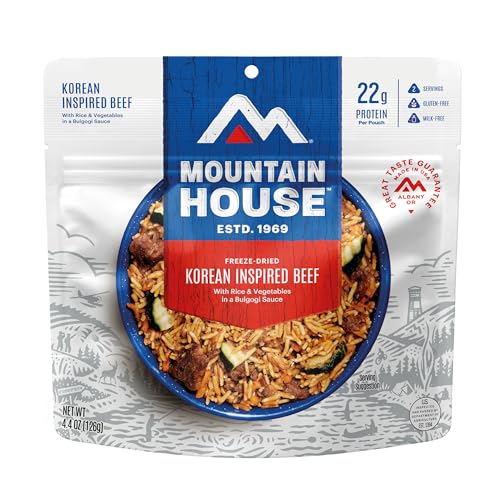
Mountain House Korean Inspired Beef | Freeze Dried
- ✓ Delicious, authentic flavor
- ✓ Easy to prepare and eat
- ✓ Lightweight and packable
- ✕ Slightly pricey per meal
- ✕ Limited variety in flavor options
| Serving Size | Two servings per pouch |
| Preparation Time | Approximately 15 minutes with water addition |
| Shelf Life | Up to 30 years |
| Ingredients | Beef, vegetables, rice, Bulgogi sauce; gluten-free, dairy-free, no artificial flavors, colors, or preservatives |
| Packaging Material | Recyclable pouch compatible with TerraCycle recycling program |
| Weight | Lightweight and portable, suitable for ultralight backpacking |
The moment I opened the Mountain House Korean Inspired Beef pouch, I was immediately struck by how vibrant and appetizing it looked. The rich, sweet-savory Bulgogi sauce coating tender beef, vegetables, and rice instantly made me crave a warm, comforting meal in the middle of a trek.
It’s rare to find a freeze-dried meal that hits that perfect balance of flavor and freshness, but this one really nails it.
The pouch itself is lightweight and easy to pack, which is a huge plus for ultralight backpacking. I love that I can just add water directly into the pouch—no extra bowls or utensils needed—and in about 15 minutes, I have a hot, satisfying dish.
The fact that I can eat straight from the pouch makes cleanup a breeze, especially after a long day on the trail.
The flavor profile is surprisingly complex, with a hint of sweetness from the sauce and a savory depth that mimics a homemade Bulgogi dish. The ingredients feel fresh and high-quality, and I appreciate that it’s gluten-free, dairy-free, and free from artificial flavors or preservatives.
It’s comforting to know I’m fueling up with good ingredients without any fillers.
One thing I noticed is that the rice is perfectly cooked—soft but not mushy—and the beef stays tender even after rehydrating. The pouch’s seal is robust, and the recyclable feature is a thoughtful touch for eco-conscious adventurers.
Overall, this meal packs flavor, convenience, and quality into a tiny footprint, making it a standout choice for backpackers who refuse to compromise on comfort or taste.
Mountain House Cheesy Beef Enchilada Bowl | Freeze Dried

- ✓ Delicious, authentic flavor
- ✓ Easy to prepare in 15 mins
- ✓ Lightweight and packable
- ✕ Slightly expensive per meal
- ✕ Pouch can be tricky to reseal
| Serving Size | Two servings per pouch |
| Preparation Time | 15 minutes with water addition |
| Shelf Life | Up to 30 years |
| Ingredients | Beef, cheese, corn tortillas, rice, beans, enchilada sauce |
| Weight | Lightweight and portable (exact weight not specified, inferred to be minimal for ultralight backpacking) |
| Dietary Certifications | Gluten-free, no artificial flavors or preservatives |
As I tore open the Mountain House Cheesy Beef Enchilada Bowl pouch, the aroma hit me immediately—rich, cheesy, with a hint of spice that made my mouth water. The packaging feels sturdy yet lightweight, perfect for stuffing in a backpack without adding bulk.
The pouch is easy to knead, and I notice it’s really flexible, which makes pouring out the meal straightforward.
Once I added hot water, the mixture thickened quickly, and in about 15 minutes, I had a steaming, hearty bowl ready to go. The texture surprised me—creamy cheese, tender beef, and a flavorful sauce all come together nicely.
The corn tortillas hold up well, giving each bite a satisfying crunch that complements the soft rice and beans.
Eating straight from the pouch is super convenient, especially when you’re tired after a day outdoors. No utensils needed, and cleanup is zero—just toss the pouch in the recycling bin.
The flavor is surprisingly authentic, with a good balance of spice and a hint of smokiness that makes it taste homemade rather than freeze-dried.
It’s a filling meal that feels like real comfort food, perfect for those long trekking days or emergency situations. The ingredients seem high quality, and the gluten-free label reassures me about what I’m eating.
Plus, knowing I can rely on the shelf stability for up to 30 years makes it a smart choice for prepping.
Overall, this bowl hits all the right notes for ultralight backpacking—easy to pack, quick to prepare, and packed with flavor. It’s a solid upgrade from traditional trail snacks, making your outdoor meal feel like a treat rather than a chore.
What Makes Food Ideal for Ultralight Backpacking?
The best ultralight backpacking food options are those that are lightweight, nutrient-dense, and easy to prepare.
- Dehydrated Meals: These meals are lightweight and only require hot water for preparation, making them ideal for ultralight backpacking.
- Energy Bars: Packed with calories and nutrients, energy bars are convenient and require no preparation, perfect for quick snacks on the trail.
- Nuts and Seeds: Rich in healthy fats and proteins, nuts and seeds provide a high energy-to-weight ratio, making them an excellent choice for sustaining energy levels during hikes.
- Instant Oatmeal: A quick and filling breakfast option, instant oatmeal can be prepared with just hot water and offers a good source of carbohydrates and fiber.
- Freeze-Dried Fruits: Lightweight and nutritious, freeze-dried fruits make for a great snack or addition to meals, providing essential vitamins without adding bulk.
- Pasta and Rice: These carbohydrate sources are lightweight and can be cooked easily with minimal equipment, serving as a filling base for various meals.
- Jerky: High in protein and lightweight, jerky is a durable snack that can last for days without refrigeration, making it ideal for long trips.
- Nut Butter Packets: Convenient and energy-dense, nut butter packets can be eaten straight or added to other foods for a protein boost.
Dehydrated meals are a popular choice as they are lightweight and often come in a variety of flavors, and the only preparation required is adding hot water, which can be done in a pot or a bag designed for cooking.
Energy bars provide an easy source of nutrition on the go; they are compact, often packed with calories, and can be consumed without any preparation, making them an essential item for any ultralight backpacker.
Nuts and seeds offer a good blend of healthy fats, protein, and fiber, providing sustained energy that is crucial during long hikes; they are also versatile and can be eaten alone or mixed into other meals.
Instant oatmeal is not only quick to prepare but also offers a hearty start to the day, with options available that include various flavors and added nutrients, ensuring a balanced breakfast even on the trail.
Freeze-dried fruits retain most of their nutrients and flavor while being extremely lightweight, making them an excellent way to satisfy a sweet craving or add diversity to meals without adding significant weight.
Pasta and rice serve as affordable and filling staples that can easily be cooked in a minimal amount of time, allowing for various meal combinations with other lightweight ingredients.
Jerky, available in various flavors and types, is a great source of protein that can withstand the rigors of backpacking without spoiling, making it a practical and tasty choice.
Nut butter packets are a compact source of energy, easily squeezed out for direct consumption or used to enhance other meals, providing both flavor and nutrition in a convenient format.
What Types of Food Should You Pack for Ultralight Backpacking?
The best ultralight backpacking food options prioritize lightweight, high-calorie, and nutritious choices to sustain energy during hikes.
- Dehydrated Meals: These meals are lightweight, easy to prepare, and offer a balanced mix of carbohydrates, proteins, and fats. Simply add hot water, let them rehydrate, and you have a filling meal that takes up minimal space in your pack.
- Energy Bars: Energy bars are compact and provide a quick source of calories, making them ideal for snacking on the trail. Look for bars with high protein and fiber content to keep you satiated and energized.
- Nuts and Seeds: Packed with healthy fats, protein, and essential nutrients, nuts and seeds are an excellent ultralight snack option. They are calorie-dense, meaning you can consume fewer ounces while getting a significant amount of energy.
- Dried Fruits: Dried fruits are a great source of quick energy and provide natural sugars, vitamins, and minerals. They are lightweight and can be eaten alone or mixed with nuts for a nutritious trail mix.
- Instant Oatmeal: Instant oatmeal is a convenient breakfast option that is both filling and nutritious. It’s lightweight and can be prepared with just hot water, providing a good start to a day of hiking.
- Jerky: Jerky, typically made from beef, turkey, or other meats, is a high-protein snack that is lightweight and has a long shelf life. It’s ideal for keeping your energy levels up during strenuous activities.
- Nut Butter Packets: These single-serving packets of nut butter provide a quick energy boost and are rich in healthy fats and protein. They can be eaten on their own or added to oatmeal or energy bars for extra nutrition.
- Freeze-Dried Fruits and Vegetables: These offer a lightweight option for adding vitamins and minerals to your diet while backpacking. They can be rehydrated and used in meals or eaten as snacks, providing a nutritious boost.
How Do Nutritional Needs Change While Backpacking?
When backpacking, nutritional needs evolve due to the physical exertion and varying environmental conditions. Key factors influencing these changes include:
-
Increased Caloric Demand: A typical adult requires around 2,000 to 2,500 calories daily, but during strenuous hiking, this can rise to 4,000 calories or more. The extra energy is essential for maintaining stamina and preventing fatigue.
-
Balanced Macronutrients: A well-rounded approach to food should include:
- Carbohydrates: The primary energy source, ideally comprising 50-60% of total calorie intake. Options include dehydrated meals, energy bars, and dried fruits.
- Proteins: Essential for muscle repair and recovery; aim for 15-20% of total calories. Sources can be jerky, nuts, and protein powders.
-
Fats: A valuable energy dense source, making up around 20-30% of calorie intake. Include nut butters, cheese, and trail mix for quick, effective energy.
-
Hydration: Fluid intake is crucial as dehydration can impair performance. Carrying an electrolyte-rich drink can help replenish lost salts and fluids.
Understanding these needs ensures optimal energy levels and overall health during multi-day treks.
Which Breakfast Options Are Best for Ultralight Backpacking?
The best ultralight backpacking food options for breakfast are nutritious, lightweight, and easy to prepare.
- Instant Oatmeal: A classic choice that provides a good balance of carbohydrates and fiber.
- Granola Bars: Convenient and energy-dense, granola bars are easy to pack and eat on the go.
- Powdered Eggs: Lightweight and protein-rich, powdered eggs can be reconstituted with water for a filling meal.
- Nut Butters: High in healthy fats and protein, nut butters are versatile and can be eaten with various items.
- Dehydrated Fruit: A lightweight source of carbohydrates and vitamins, dehydrated fruit can add flavor and nutrition to breakfast.
Instant oatmeal is not only lightweight but also offers a hearty meal option that can be customized with various toppings like dried fruit or nuts. It requires minimal cooking time, making it ideal for early mornings on the trail.
Granola bars are exceptionally portable, packed with calories, and provide a quick energy boost. They come in many flavors, ensuring that you can find something you enjoy while minimizing pack weight.
Powdered eggs are a great alternative to fresh eggs when hiking, as they are lightweight and can be easily prepared by mixing with water. This option is particularly appealing for those who want a protein-rich breakfast to keep them energized throughout the day.
Nut butters, such as almond or peanut butter, can be eaten straight from the packet or spread on a piece of bread or fruit. They are calorie-dense and satisfying, making them an excellent choice for fueling long hikes.
Dehydrated fruit adds both sweetness and nutritional value to breakfast and can be eaten alone or mixed with oatmeal. This option is lightweight and has a long shelf life, making it perfect for extended backpacking trips.
What Are the Top Snack Choices for Ultralight Adventures?
The best ultralight backpacking food options focus on weight, nutrition, and ease of preparation.
- Dehydrated Meals: These meals are lightweight and only require hot water to rehydrate, making them perfect for backpacking.
- Energy Bars: Compact and calorie-dense, energy bars provide quick sustenance during long hikes while taking up minimal space.
- Nut Butters: Rich in healthy fats and proteins, nut butters are versatile and can be eaten alone or spread on crackers or fruits.
- Freeze-Dried Fruits: These provide essential vitamins and a sweet treat without the weight of fresh fruit, making them ideal for snacking.
- Jerky: High in protein and very lightweight, jerky is a great savory option for maintaining energy and staving off hunger.
Dehydrated meals come in a variety of flavors and cuisines, allowing for a satisfying dinner after a long day of hiking. They are often sealed in lightweight packaging, making them easy to carry without adding significant weight to your pack.
Energy bars are specifically designed for athletes and outdoor enthusiasts, packed with carbohydrates, proteins, and essential nutrients to keep energy levels high. They are also convenient to store and consume on the go, making them a favorite among backpackers.
Nut butters not only serve as a source of energy but also enhance the flavor of other foods, such as oatmeal or whole-grain crackers. They are typically sold in small, lightweight packets, making them easy to carry without the risk of spillage.
Freeze-dried fruits retain most of their nutrients and flavor while being incredibly lightweight, allowing hikers to enjoy a healthy snack that doesn’t spoil easily. They can also be added to oatmeal or yogurt for a nutritious breakfast or dessert.
Jerky is a traditional hiking snack that provides a substantial amount of protein, which is essential for muscle repair and energy. Available in various flavors and types, from beef to turkey or even plant-based, jerky is a versatile and satisfying option for any backpacker.
Which Foods Are Best for Dinner On-the-Go?
The best ultralight backpacking foods are lightweight, nutrient-dense, and easy to prepare, making them ideal for on-the-go dinners.
- Dehydrated Meals: These meals are pre-cooked, dehydrated, and packaged for easy rehydration with hot water.
- Energy Bars: Compact and packed with calories, energy bars are perfect for quick meals and snacks.
- Instant Oatmeal: A convenient option that can be prepared by simply adding hot water, providing a hearty meal.
- Freeze-Dried Fruits and Vegetables: Lightweight and nutritious, these can be added to meals or eaten alone.
- Nuts and Seeds: High in protein and healthy fats, nuts and seeds are perfect for snacking or as meal additions.
Dehydrated Meals: These meals are an excellent choice as they require minimal cooking and can be prepared in minutes. Many brands offer a wide range of flavors and cuisines, ensuring variety in your diet while on the trail. Just add hot water, and you have a hot, satisfying meal ready to go.
Energy Bars: Ideal for their portability, energy bars are designed to provide a quick source of energy and nutrition. They come in numerous flavors and formulations, catering to different dietary needs, and can easily fit into any backpack without adding significant weight.
Instant Oatmeal: This is a versatile and filling option that is rich in carbohydrates, making it perfect for replenishing energy after a long day of hiking. It can be flavored with various toppings like nuts, dried fruits, or honey, and is ready in just a few minutes with hot water.
Freeze-Dried Fruits and Vegetables: These are excellent for adding essential vitamins and minerals to your diet while being lightweight and shelf-stable. They can be rehydrated in meals or eaten as a crunchy snack, providing a refreshing alternative to heavier options.
Nuts and Seeds: These are calorie-dense and packed with healthy fats, making them a great choice for fueling up during long treks. They are also versatile, allowing you to mix them with other foods or enjoy them alone for a quick energy boost without cooking.
How Can You Efficiently Pack Ultralight Backpacking Food?
Efficiently packing ultralight backpacking food involves selecting lightweight, high-calorie options that are easy to prepare and consume on the trail.
- Dehydrated Meals: These meals are lightweight and have a long shelf life, making them ideal for backpacking. They typically require only the addition of hot water to prepare, allowing for quick meal preparation after a long day of hiking.
- Energy Bars: Energy bars are compact, calorie-dense, and provide a quick source of energy. They are perfect for snacking on the go, ensuring that you maintain your energy levels without carrying bulky food items.
- Nuts and Seeds: High in protein and healthy fats, nuts and seeds are excellent for ultralight packing. They are lightweight, can be eaten raw, and provide sustained energy, making them a perfect trail snack.
- Freeze-Dried Fruits: These offer a nutritious and lightweight way to add vitamins and fiber to your diet. They can serve as a snack or be added to meals for extra flavor and nutrients without the weight of fresh fruit.
- Instant Oatmeal: A great breakfast option, instant oatmeal is easy to prepare and provides a good source of carbohydrates. It is lightweight and can be eaten with just hot water, making it a convenient choice for early morning meals.
- Jerky: Jerky is a protein-packed snack that is lightweight and has a long shelf life. It’s an excellent option for those looking to maintain their protein intake while minimizing pack weight.
- Powdered Drink Mixes: These can add flavor and electrolytes to your water without adding much weight. Options include electrolyte powders or instant coffee, which can help keep you hydrated and energized throughout your hike.
- Whole Grains: Items like quinoa or couscous are lightweight and cook quickly, providing a good source of complex carbohydrates. These grains can be paired with various seasonings or dehydrated vegetables for easy and nutritious meals.