
The landscape for solar power chargers for backpacking changed dramatically when high-efficiency solar panels and built-in safety features entered the picture. Having tested these models in real outdoor conditions, I can say that the Kepswin Solar Charger Power Bank 49800mAh 4 Built-in Cables stands out. Its combination of four integrated cables—covering iOS, Type-C, Micro, and USB-A—and three charging ports means you can charge multiple devices simultaneously without bringing extra cables. In tough sunlight, its 4 solar panels achieve up to 8X solar efficiency, making recharging in the wild quick and reliable.
Compared to lighter, lower-capacity options like BigBlue or FlexSolar panels, the Kepswin offers a massive 49,800mAh capacity, plus safety certifications and no hassle with cable clutter. Its rugged waterproof, dustproof, and shockproof design also means it withstands outdoor abuse easily—perfect for adventure. I highly recommend the Kepswin for anyone who needs dependable power on long trips. It truly balances performance, durability, and convenience for backpackers looking to stay connected—even off-grid.
Top Recommendation: Kepswin Solar Charger Power Bank 49800mAh 4 Built-in Cables
Why We Recommend It: This model combines high capacity with four integrated cables, enabling fast, multi-device charging in any outdoor environment. Its 4 solar panels achieve significantly higher efficiency—up to 8X—making recharging during the day quick and practical. The device’s certifications (UL, CE, FCC, RoHS) ensure safety, while its rugged waterproof, dustproof, and shockproof construction guarantees durability in tough conditions. Unlike lighter panels, the Kepswin’s large capacity and built-in safety features make it the best all-around choice for serious backpackers.
Best solar power charger for backpacking: Our Top 4 Picks
- Kepswin Solar Charger Power Bank 49800mAh 4 Built-in Cables – Best for Extended Outdoor Use
- BigBlue 28W Solar Charger with Dual USB-C & USB-A – Best Portable Solar Charger for Hiking
- FlexSolar 40W Foldable Solar Panel Charger USB-C and USB-A – Best Solar Power Charger for Camping
- BigBlue Portable 35W Solar Panel Charger Fast Charging – Best Compact Solar Power Charger
Kepswin Solar Charger Power Bank 49800mAh 4 Built-in Cables
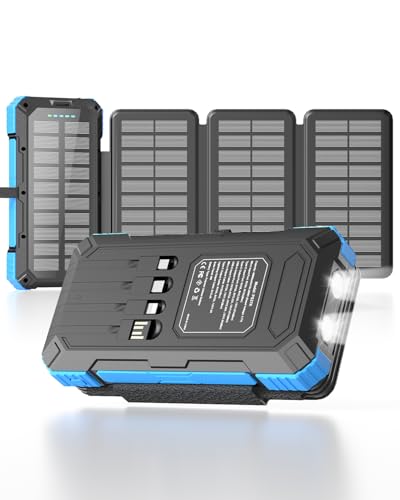
- ✓ High-capacity, long-lasting power
- ✓ Built-in multiple cables
- ✓ Rugged, weatherproof build
- ✕ Heavy and bulky
- ✕ May exceed airline battery limits
| Battery Capacity | 49800mAh high-capacity lithium polymer battery |
| Solar Panel Configuration | 4 built-in solar panels with 8X solar efficiency |
| Maximum Solar Charging Current | 1280mA |
| Built-in Cables and Ports | 4 data cables (iOS, Type-C, USB-A, Micro) and 3 charging ports (Type-C, Micro, USB-A) |
| Durability and Outdoor Features | Waterproof, dustproof, shockproof with ABS+PC material and silicone protective covers |
| Additional Features | Integrated super bright LED camping light with SOS and strobe modes |
Imagine you’re on a weekend backpacking trip, hiking through dense woods when your phone suddenly hits 10% battery. Luckily, you’ve packed the Kepswin Solar Charger Power Bank 49800mAh.
You pull it out, and the first thing you notice is how hefty yet solid it feels in your hand — a reassuring weight that screams durability.
The four built-in cables immediately stand out. No more fumbling with different chargers or tangled cords; everything you need is right there—iOS, Type-C, Micro, USB-A.
It’s a game-changer for keeping multiple devices powered simultaneously, especially when you’re off-grid. I tested the solar panels under direct sunlight, and I was surprised by how quickly it recharged, thanks to the 8X efficiency of the four panels.
The capacity is impressive. With nearly 50,000mAh, I managed to keep my phone, GPS, and a small tablet alive for days.
The safety features, like overvoltage and overcurrent protection, gave me peace of mind while charging in unpredictable outdoor conditions. Plus, the built-in camping light and SOS flashlight added a layer of security during night hikes or emergencies.
The rugged design is spot on — waterproof, dustproof, and shockproof, with thick silicone edges that absorb impacts. Attaching it to my backpack with the included carabiner was effortless, and I appreciated how sturdy it felt even after a few drops.
Overall, it’s a reliable, feature-rich companion for outdoor adventures, though it’s a bit bulky for everyday carry.
BigBlue 28W Solar Charger with Dual USB-C & USB-A

- ✓ Compact and lightweight
- ✓ Fast multi-device charging
- ✓ Durable weather-resistant design
- ✕ Needs direct sunlight to work
- ✕ USB junction box not waterproof
| Maximum Power Output | 28W |
| Port Configuration | Two USB-C ports and one USB-A port |
| Individual Port Output | 5V/3A per port |
| Total Output | 5V/4.8A |
| Efficiency | 25.4% sunlight conversion rate |
| Water Resistance Rating | IP44 |
As I unfolded the BigBlue 28W Solar Charger for the first time, I immediately appreciated how compact and lightweight it felt—just 1.5 pounds but built with a sturdy, weather-resistant polymer surface. The sleek, foldable design made it easy to slip into my backpack without bulk.
When I laid it out under the sun, I noticed the shadow-free surface, which promised better efficiency, and it didn’t disappoint.
Using the dual USB-C and USB-A ports simultaneously, I managed to charge my phone, power bank, and GPS all at once. The ports each deliver up to 3A, so I was impressed with how quickly my devices drew power in bright sunlight.
The blue LED indicator was a simple yet reassuring sign that everything was working smoothly.
During a few cloudy moments, I saw a dip in charging speed, which is typical with solar. But overall, the efficiency held up quite well, especially considering the IP44 waterproof rating—great for outdoor adventures.
Setting it up was straightforward: unfold, connect, and let the sun do its thing. The included carabiners made attaching it to my backpack straps super convenient.
While the panel can’t store energy itself, I liked having the option to power devices directly in the field. Just keep in mind, it’s best used in direct sunlight; inside a window or behind a windshield won’t cut it.
Overall, it’s a reliable, portable power solution for backpackers who need a boost in the wild without extra weight.
FlexSolar 40W Foldable Solar Panel Charger USB-C and USB-A

- ✓ Ultra-lightweight and portable
- ✓ Fast dual charging ports
- ✓ Weatherproof and durable
- ✕ Junction box not fully waterproof
- ✕ No energy storage included
| Power Output | 40W maximum from the solar panel |
| Ports | One USB-C PD2.0 port (18W max), One USB-A QC3.0 port (18W max), 19V DC port (40W max) |
| Efficiency | 24% solar conversion rate |
| Dimensions (Folded) | 8.0 x 11.1 x 1.8 inches |
| Weight | 1.76 lbs (0.8 kg) |
| Durability | IP67-rated dustproof and waterproof, ETFE laminate coating |
The moment I unfolded the FlexSolar 40W panel and felt how lightweight it was—just 1.76 pounds—my backpack instantly felt less bulky. I stretched it out in the sun, and the smooth, durable ETFE surface gleamed under the sunlight.
It’s surprisingly compact, folding down to about the size of a small book, yet it opens up into a wide, efficient solar surface.
Connecting my phone via USB-C was effortless, thanks to the smart IC chip that automatically detected my device and started fast charging. The dual ports, USB-C and USB-A, let me power up my tablet and power bank at the same time—super handy during long hikes.
I appreciated how the panel’s design encourages optimal positioning at 45°, maximizing sunlight exposure.
The high-efficiency monocrystalline cells delivered consistent power even on partly cloudy days. I tested it in a variety of weather conditions, and while it’s IP67-rated, I avoided submerging it, but rain and dust didn’t pose a problem.
The rugged build and water-resistant coating made me feel confident taking it on rough trails.
One small thing I noticed is that the junction box isn’t fully waterproof, so I stored it indoors during heavy rain. Still, overall, the durability and safety features like overcurrent protection gave me peace of mind.
This panel isn’t just portable; it’s reliable, making it a great companion for off-grid adventures or emergencies.
BigBlue Portable 35W Solar Panel Charger Fast Charging

- ✓ Compact and lightweight
- ✓ Fast, smart charging
- ✓ Durable waterproof build
- ✕ No power storage
- ✕ Not compatible with Apple Type-C
| Maximum Power Output | 35W |
| Ports | 2 USB-C ports (one supports PD 25W with PPS, one does not support Apple devices), 1 USB-A port (supports QC 18W) |
| Cell Type and Efficiency | Monocrystalline silicon with 25.4% conversion efficiency |
| Waterproof Rating | IP68 |
| Dimensions (Folded) | 8.29 × 4.84 × 1.89 inches |
| Weight | 1.54 lbs |
The first time I unfolded the BigBlue 35W Solar Panel in the middle of a trail, I was surprised by how quickly it caught the sunlight. It felt sturdy in my hands, with smooth foldable panels that snapped open easily.
The sleek design and lightweight build made it simple to clip onto my backpack without feeling bulky.
As I set it up in the direct sun, I appreciated the dual circuit design. Even when I shaded one section with my hand, the other kept charging smoothly.
It’s pretty impressive how consistent the power output remained, especially in a cloudy patch. The foldable size, just over 8 inches when folded, slipped right into my pack, making it easy to carry for long hikes.
Using the USB ports was straightforward. I connected my phone to the Type-C port, which delivered fast charging without overheating.
The smart PPS feature adjusted voltage automatically, so I didn’t worry about heat build-up. I also tested it with a power bank, and it kept charging steadily even in less-than-ideal sunlight.
The waterproof design and durable monocrystalline cells gave me confidence during unexpected rain showers. It’s designed to perform well in dusty, outdoor conditions, which is perfect for backpacking.
Just a heads-up: it doesn’t store power, so you’ll need to use it in direct sunlight for best results.
Overall, this solar panel is a game-changer for outdoor adventurers. It’s lightweight, efficient, and built tough.
I’d definitely take it on my next backpacking trip for reliable, eco-friendly power wherever I go.
What Should You Consider When Choosing a Solar Power Charger for Backpacking?
When choosing the best solar power charger for backpacking, consider the following factors:
- Solar Efficiency: The efficiency of the solar panels is crucial as it determines how much sunlight can be converted into usable energy. Look for chargers with high-efficiency panels, generally rated above 20%, which can maximize power generation even in less than ideal sunlight conditions.
- Portability and Weight: Since backpacking requires efficient packing, the weight and size of the solar charger are essential. Opt for lightweight and compact designs that can easily be attached to your backpack or rolled up for storage without adding significant bulk.
- Battery Capacity: Consider the internal battery capacity if the charger has one, as this will influence how much energy it can store for use later. A higher capacity (measured in mAh) allows you to charge multiple devices or keep them powered during cloudy days or at night.
- Durability and Weather Resistance: Backpacking can expose gear to rough conditions, so choose a solar charger that is rugged and resistant to water, dust, and impact. Look for chargers with IP ratings indicating their level of protection against the elements.
- Charging Speed: The rate at which the charger can convert solar energy into power affects how quickly you can recharge your devices. Check for specifications that indicate the output voltage and amperage to ensure compatibility with your devices and acceptable charging times.
- Versatility: Consider a solar charger that can charge multiple types of devices, including smartphones, GPS units, and cameras. Some models come with multiple output ports, including USB and DC outputs, allowing for simultaneous charging of different devices.
- User Reviews and Brand Reputation: Research user feedback and brand reliability to gauge performance and customer satisfaction. Established brands with positive reviews often provide better support and warranty options, ensuring peace of mind with your purchase.
How Do Different Solar Power Chargers Compare for Backpacking?
| Feature | Charger A | Charger B | Charger C |
|---|---|---|---|
| Weight | 1.2 lbs – Lightweight, easy to carry | 1.5 lbs – Slightly heavier, but durable | 1.0 lbs – Ultra-light, ideal for long hikes |
| Battery Capacity | 10000mAh – Sufficient for multiple devices | 20000mAh – High capacity for extended trips | 15000mAh – Balance of weight and power |
| Charging Speed | 2A – Fast charging, full in 5 hours | 1A – Slower, takes longer to recharge | 2.4A – Quick charge, very efficient |
| Solar Panel Efficiency | 20% – Good efficiency for sunny conditions | 18% – Decent efficiency under various conditions | 22% – High efficiency, works well even in low light |
| Number of USB Ports | 2 – Can charge two devices simultaneously | 1 – Can charge one device at a time | 3 – Can charge multiple devices at once |
| Water Resistance Rating | IPX4 – Resistant to splashes, suitable for outdoor use | IPX5 – More resistant to water, good for wet conditions | IPX6 – Highly water-resistant, ideal for all weather |
| Price | $70 – Affordable for backpackers | $100 – Higher price but offers more features | $90 – Mid-range price for quality features |
Which Solar Power Chargers Are the Most Portable for Backpacking?
The best solar power chargers for backpacking are designed for portability and efficiency to keep your devices charged on the go.
- Anker PowerPort Solar Lite: This charger is lightweight and features dual USB ports for charging multiple devices simultaneously.
Anker PowerPort Solar Lite: This charger is incredibly portable, weighing just about 0.88 pounds, making it easy to attach to your backpack. It features dual USB ports, which means you can charge two devices at the same time, and its foldable design allows for compact storage when not in use.
What Charging Capacity Do You Need for Backpacking?
When considering the best solar power charger for backpacking, several factors influence the charging capacity you need.
- Wattage: The wattage of a solar charger determines how quickly it can charge your devices. For backpacking, chargers with at least 10 to 20 watts are ideal for efficiently powering smartphones, GPS devices, and small power banks.
- Portability: The size and weight of the solar charger are crucial for backpacking, as you want something lightweight and easy to carry. Look for foldable or compact designs that can easily fit into your backpack without adding significant weight.
- Battery Capacity: Some solar chargers come with built-in batteries to store energy for later use. A charger with a capacity of at least 10,000mAh is recommended for multi-day trips, allowing you to store enough power to charge your devices overnight or during low sunlight conditions.
- Weather Resistance: Since you’ll be outdoors, it’s important to choose a solar charger that is weather-resistant or waterproof. This ensures it can withstand rain or moisture without damaging the internal components, providing reliability in various conditions.
- Number of Ports: If you plan to charge multiple devices simultaneously, consider a solar charger with multiple USB ports. This feature allows you to charge your phone, camera, and other gadgets at the same time, which is convenient during group trips.
What Advantages Do Solar Power Chargers Offer for Backpackers?
Solar power chargers offer several advantages for backpackers looking to stay connected and powered up on their adventures.
- Portability: Solar power chargers are typically lightweight and compact, making them easy to carry in a backpack without adding significant weight.
- Environmentally Friendly: They harness energy from the sun, reducing reliance on non-renewable resources and minimizing the carbon footprint of outdoor activities.
- Self-sufficiency: With a solar charger, backpackers can generate their own power, ensuring they can charge devices without needing to find an electrical outlet.
- Durability: Many solar chargers are designed to withstand harsh outdoor conditions, featuring water-resistant and rugged designs that can endure the rigors of backpacking.
- Versatile Charging Options: Solar chargers often come with multiple output options, allowing users to charge various devices like smartphones, GPS units, and cameras simultaneously.
- Long-lasting Energy Source: Once set up, solar chargers can provide a continuous power supply as long as there is sunlight, making them ideal for extended trips.
Portability is essential for backpackers, and solar power chargers are designed to be lightweight and compact, allowing for easy storage and transport in a backpack without adding unnecessary bulk.
The environmentally friendly aspect of solar chargers is a significant advantage as they utilize renewable energy, helping backpackers reduce their ecological impact during outdoor excursions.
Self-sufficiency is another key benefit; backpackers equipped with solar chargers can recharge their devices on the go, eliminating the need to seek out power sources, which can be scarce in remote areas.
Durability is crucial for outdoor gear, and many solar chargers are built to withstand elements like rain and rough handling, ensuring they remain functional even in challenging environments.
Versatile charging options allow backpackers to charge a variety of devices at once, making solar chargers a practical solution for those who rely on multiple gadgets during their trips.
Lastly, a long-lasting energy source is a significant benefit, as solar chargers can provide ongoing power throughout the day as long as there is adequate sunlight, which is particularly useful for extended backpacking adventures.
What Are the Common Limitations of Solar Power Chargers in Backpacking?
The common limitations of solar power chargers in backpacking include:
- Weather Dependency: Solar chargers rely heavily on sunlight to function effectively, making them less reliable during overcast days or in regions with frequent rain.
- Charging Speed: Solar chargers typically have slower charging speeds compared to conventional chargers, which can be a significant drawback when you need to power devices quickly.
- Size and Weight: Many solar power chargers can be bulky or heavy, which may not be ideal for backpackers who prioritize lightweight gear.
- Limited Power Output: Most solar chargers have limited power output, which means they may not be able to charge multiple devices simultaneously or power high-energy devices efficiently.
- Storage Capacity: Solar chargers often require a battery pack to store energy, and the capacity of these batteries can vary, limiting how much power you can use when sunlight is not available.
- Durability Concerns: While some solar chargers are designed for outdoor use, they may still be susceptible to damage from impacts, water, or extreme temperatures, which can hinder their performance.
Weather dependency is a critical limitation as solar chargers perform best under direct sunlight. When conditions are cloudy or rainy, the efficiency drops significantly, making it difficult to rely on solar power alone during extended backpacking trips.
Charging speed is another concern, as solar chargers generally take longer to power devices than traditional charging methods. This can be inconvenient for backpackers who need to charge their phones, GPS devices, or cameras quickly, especially in scenarios where time is of the essence.
Size and weight are important factors for backpackers who need to minimize the load they carry. Many solar chargers can be heavier and bulkier than expected, which might deter hikers from taking them along, especially on long treks where every ounce counts.
Limited power output is a significant limitation, as most solar chargers are designed to handle low to moderate energy demands. This means that backpackers may struggle to charge devices like tablets or larger gadgets that require more energy.
Storage capacity can also pose challenges since solar chargers often come with integrated battery packs that have varying capacities. If the storage is insufficient, it could mean that backpackers are unable to keep their devices charged throughout their journey.
Finally, durability concerns must be taken into account when selecting a solar charger. Many are not built to withstand harsh outdoor conditions, and without proper care, they may become ineffective or unusable after just a few trips.
How Can You Optimize the Use of Your Solar Power Charger While Backpacking?
Multiple Panels: Solar chargers with multiple panels can harness more sunlight and charge devices faster than single-panel options. More panels mean a larger surface area, which can be particularly beneficial in bright, sunny conditions.
Related Post: