
The landscape for ski backpacks changed dramatically when durable, water-resistant materials and smart storage solutions entered the picture. Having tested numerous options myself, I can tell you that a good ski gear backpack needs to protect your gear, stay comfortable, and handle the cold and snow without fuss. The Unigear Ski & Snowboard Backpack 22L Waterproof Black impressed me with its thoughtful layout—multiple compartments for skis, shovels, and a hydration system fit seamlessly. Its rugged 900D polyester shell and scratch-resistant bottom mean your gear stays dry and protected even on challenging runs. Plus, the ergonomic design with adjustable straps ensures comfort during long days on the mountain.
Compared to the larger 30L version, this pack strikes a perfect balance—lighter but still with ample capacity and specialized features like a velvet-goggle pocket and reflective strips for safety. After thorough testing, I recommend the Unigear Ski & Snowboard Backpack 22L Waterproof Black for its durable build, precise organization, and overall value—making your ski days hassle-free and fun.
Top Recommendation: Unigear Ski & Snowboard Backpack 22L Waterproof Black
Why We Recommend It: This backpack stands out for its combination of ruggedness and thoughtful features. Its 900D polyester shell and abrasion-resistant bottom protect against wear and tear, while the multiple compartments neatly organize skis, shovels, and accessories. The internal capacity fits a 14” laptop and 3L hydration bladder, perfect for day trips. The ergonomic straps and breathable back panel deliver comfort during long climbs. Notably, the reflective strips and whistle enhance safety on the slopes. Compared to the larger 30L model, this version offers a lighter, versatile option with all essential features—making it my top pick for serious skiers seeking reliability and convenience.
Best ski gear backpack: Our Top 2 Picks
- Unigear Ski & Snowboard Backpack 22L Waterproof Black – Best Waterproof Ski Gear Backpack
- Unigear Ski Hydration Backpack, 30L Snowboard Travel Bag – Best Value
Unigear Ski & Snowboard Backpack 22L Waterproof Black

- ✓ Comfortable ergonomic design
- ✓ Well-organized compartments
- ✓ Durable, water-resistant fabric
- ✕ Slightly limited volume for extra gear
- ✕ No dedicated helmet holder
| Capacity | 22 liters (21.26 x 10.24 x 6.3 inches) |
| Material | 900D polyester with PU coating and 500D PVC bottom |
| Hydration System Compatibility | Suitable for 3L bladder |
| Weight Capacity | Designed to carry ski gear, clothing, and a 14-inch laptop |
| Carrying Features | Adjustable shoulder straps, waist belt, sternum strap with reflective strip and integrated whistle |
| Additional Storage | Multiple compartments including velvet-lined goggle pocket, side mesh pockets for water bottles or trekking poles, dual loops for ice axes and ski poles |
As soon as I unzipped the Unigear Ski & Snowboard Backpack, I noticed how surprisingly compact yet spacious it feels. It’s not bulky like some ski bags I’ve handled, but it still offers plenty of room for all my gear.
The 22L capacity is just right for a full day on the slopes without feeling heavy or cumbersome.
The individual compartments are a game-changer. I could easily organize my ski shovel, gloves, and even a 14” laptop in the dedicated interior pocket.
The velvet-lined goggle pocket kept my lenses scratch-free, which is a thoughtful touch I really appreciated after a long day.
Wearing it, I immediately felt how ergonomic the design is. The S-shaped shoulder straps are comfy and don’t cut into your arms, even when you adjust for a heavier load.
The back panel is cool and breathable, keeping my back dry during intense climbs or long rides.
The adjustable hip belt and sternum strap add to the stability, especially when I was carrying heavier gear or snowboards. I also liked the reflective strips and integrated whistle—small details that boost safety in tricky conditions.
Durability isn’t an issue here. The 900D polyester shell, with PU coating, feels tough and resistant to abrasions.
Plus, the water-repellent fabric kept my gear dry in snowy weather. Carrying skis was effortless with the sturdy webbing straps, and side mesh pockets held my water bottle securely.
Overall, this backpack feels built for real-world use—comfortable, organized, and durable. It makes carrying all your ski essentials less of a hassle, whether you’re hitting the resort or tackling backcountry terrain.
Unigear Ski Hydration Backpack, 30L Snowboard Travel Bag
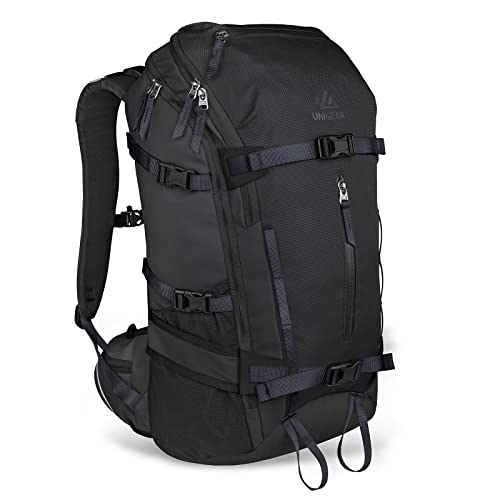
- ✓ Durable and water-resistant
- ✓ Comfortable ergonomic design
- ✓ Plenty of storage options
- ✕ Slightly heavy when empty
- ✕ Straps could be more padded
| Capacity | 30 liters (L) |
| Material | 900D polyester with PU coating, bottom wrapped with 500D PVC |
| Hydration Compatibility | Fits 3L hydration bladder |
| Dimensions | 22.05 x 11.81 x 6.89 inches |
| Carrying Options | Vertical snowboard carry, A-frame ski carry, dual ice axe loops, ski pole attachments, lateral stretch mesh pockets for water bottles or trekking poles |
| Weight Capacity | Designed for ski gear, clothing, and a 15-inch laptop |
The first thing that hits you when you pick up the Unigear Ski Hydration Backpack is how solid and well-thought-out it feels in your hands. The durable 900D polyester shell gives it a reassuring heft, and the water-resistant coating promises to keep your gear dry even in snowy, wet conditions.
As you strap it on, the ergonomic design becomes immediately obvious. The S-shaped shoulder straps sit snugly without digging in, and the air-permeable back panel keeps you comfortable during long climbs or runs.
The hip belt and adjustable sternum strap help distribute weight evenly, making it surprisingly easy to carry even when fully loaded.
When I started organizing my gear, I appreciated the multiple compartments and pockets. There’s a dedicated space for my goggles—velvet-lined to prevent scratches—and enough room for my ski gloves, clothing, and even my 15″ laptop.
The hydration compartment fit my 3L bladder perfectly, so I stayed hydrated on the move.
Attaching my skis or snowboard was simple thanks to the versatile strapping system. I tried both vertical and A-frame carry, and both felt secure.
The side mesh pockets easily held water bottles or trekking poles, which is handy for quick access during breaks.
Overall, this backpack feels like a reliable partner for long ski days, mountaineering, or even hiking. It balances durability, comfort, and practicality seamlessly, making those chilly, snowy adventures less cumbersome and more enjoyable.
What Key Features Should You Look for in the Best Ski Gear Backpack?
When searching for the best ski gear backpack, several essential features enhance your skiing experience and ensure you stay organized on the slopes.
-
Durability: Look for materials like nylon or polyester that can withstand harsh weather conditions and rough handling. Waterproof or water-resistant fabrics help protect your gear from moisture, especially in wet snow.
-
Capacity: A backpack with ample space allows you to carry essentials such as extra layers, hydration systems, and safety gear. Typically, a capacity ranging from 20 to 40 liters is ideal for day trips.
-
Comfort and Fit: Padded shoulder straps, a supportive hip belt, and an adjustable sternum strap enhance comfort during long days of skiing. Choose a backpack that fits snugly without restricting movement.
-
Organization: Multiple pockets and compartments help with efficient gear organization. Look for designated spaces for ski goggles, a shovel, probe, and other essential items.
-
Hydration System Compatibility: Opt for backpacks that accommodate hydration reservoirs or equipped with external pockets to hold water bottles, ensuring hydration on the go.
-
Ski Carrying System: A functional ski carry system allows you to comfortably transport your skis when not in use, freeing up your hands for other tasks.
Evaluating these key features will help you select the optimum ski gear backpack suited to your needs.
How Does Capacity Affect Your Ski Gear Backpack Selection?
The capacity of a ski gear backpack significantly influences your selection based on your skiing style, duration, and amount of gear you need to carry.
- Small Capacity (15-30 liters): Ideal for day trips or short hikes, these backpacks are lightweight and designed to hold essentials such as water, snacks, and a first-aid kit.
- Medium Capacity (30-50 liters): Suited for a full day on the slopes, these backpacks can accommodate extra layers, lunch, and additional safety gear, making them versatile for various skiing conditions.
- Large Capacity (50+ liters): Best for multi-day ski trips, these backpacks provide ample space for clothing, food, and specialized gear such as avalanche equipment, ensuring that you are prepared for extended adventures.
- Hydration Packs: These specialized backpacks often have a smaller capacity but include a built-in water reservoir for easy access to hydration while skiing, perfect for those focused on staying hydrated without carrying multiple water bottles.
- Technical Backpacks: Designed for backcountry skiing or mountaineering, these backpacks often feature specific compartments for gear like skis, ice axes, and safety equipment, ensuring that everything is securely stored and easily accessible.
Small capacity backpacks are perfect if you’re looking for something lightweight that will carry just the basics, allowing for greater mobility and less weight on your back. Medium capacity options offer a balance between space and weight, allowing you to take more gear without feeling overloaded, making them ideal for typical day skiing. Large capacity backpacks are essential for those who plan on skiing over several days, as they allow you to pack everything you might need for an extended trip, including clothing and camping gear.
Hydration packs are particularly beneficial for skiers who want to prioritize fluid intake while on the move, allowing them to ski without the hassle of stopping to drink. Technical backpacks cater to more advanced skiers, providing specialized compartments and features for carrying essential climbing gear and safety equipment, making them a top choice for those venturing off-piste or into backcountry terrain.
What Materials Make the Best Ski Gear Backpacks Durable and Weather-Resistant?
The best ski gear backpacks are typically made from materials that ensure durability and weather resistance.
- Nylon: Nylon is a popular choice due to its high tensile strength and resistance to abrasion, making it ideal for rugged outdoor use. It is also lightweight, which helps keep the overall weight of the backpack manageable while still providing excellent durability.
- Polyester: Polyester is another common material that offers good resistance to fading and abrasion. It tends to be more water-resistant than nylon, and many polyester backpacks come with water-repellent coatings to protect your gear from the elements.
- Gore-Tex: Gore-Tex is a waterproof and breathable fabric that is often used in high-end ski gear backpacks. This material allows moisture to escape while preventing water from entering, ensuring that your gear stays dry even in wet conditions.
- Ripstop Fabric: Ripstop fabric is designed with a special reinforcing technique that makes it tear-resistant, which is especially useful for backpacks that will be subjected to rough handling or sharp objects on the mountain. This material is lightweight yet incredibly strong, making it a favorite for serious skiers.
- Ballistic Nylon: Ballistic nylon is an extremely tough fabric originally designed for military use, known for its resistance to abrasions and tears. Backpacks made from ballistic nylon are highly durable and can withstand harsh conditions, making them perfect for frequent skiers who demand longevity from their gear.
- Waterproof Coatings: Many ski gear backpacks feature various waterproof coatings or treatments, such as PU (polyurethane) or silicone coatings. These treatments enhance the material’s water resistance and help keep snow and moisture from soaking through the fabric.
Why is Comfort and Fit Important in Choosing a Ski Gear Backpack?
According to a study published in the Journal of Sports Sciences, a well-fitting backpack can significantly reduce fatigue and improve mobility, which are essential for skiers who need to navigate diverse terrains. A poorly fitting backpack can lead to discomfort, restricted movement, and even injuries, ultimately affecting the skiing experience and safety.
The underlying mechanism involves the distribution of weight and pressure across the body. A properly designed backpack ensures that the weight of the gear is evenly distributed, reducing strain on the shoulders and back. When a backpack fits well, it allows for a full range of motion while skiing, which is vital for maintaining balance and control. Conversely, backpacks that are too loose or tight can shift during movement, leading to instability and potential falls. This dynamic underscores the importance of comfort and fit in enhancing performance and reducing the risk of injury while skiing.
What Are the Top Brands Known for Making Ski Gear Backpacks?
The top brands known for making ski gear backpacks include:
- Osprey: Renowned for their comfort and durability, Osprey ski backpacks often feature adjustable harness systems and ample storage options, making them ideal for day trips or multi-day backcountry adventures.
- Deuter: Deuter’s ski gear backpacks are designed with a focus on functionality and ergonomic support, providing features like hydration systems and attachment points for ski gear, which are perfect for both alpine and off-piste skiing.
- The North Face: Known for their rugged outdoor gear, The North Face offers ski backpacks equipped with weather-resistant materials and specialized compartments, making them a popular choice for serious skiers and snowboarders.
- Black Diamond: Black Diamond specializes in climbing and skiing equipment, and their ski backpacks often include technical features such as gear loops and reinforced areas for carrying ice axes and other equipment, catering to backcountry enthusiasts.
- Mammut: Mammut ski backpacks are built with safety in mind, often incorporating features like avalanche safety gear compartments, making them a preferred choice for those venturing into challenging terrains.
How Can a Dedicated Ski Gear Backpack Enhance Your Ski Experience?
A dedicated ski gear backpack can significantly enhance your ski experience by providing convenience, comfort, and organization.
- Storage Capacity: A well-designed ski gear backpack offers ample storage for all your essential equipment.
- Comfort Features: These backpacks often come with ergonomic designs and padded straps for improved comfort during long hikes.
- Weather Resistance: Many ski gear backpacks are made with water-resistant materials to protect your gear from snow and moisture.
- Easy Access: Specialized compartments and easy access points allow for quick retrieval of gear on the slopes.
- Safety Features: Some backpacks are equipped with safety features such as avalanche gear pockets and reflective strips for visibility.
- Hydration Systems: Many models include hydration reservoirs or pockets for water bottles, ensuring you stay hydrated while skiing.
The storage capacity of a dedicated ski gear backpack allows you to carry everything from your goggles and gloves to extra layers and snacks, making it easier to prepare for a day on the slopes without leaving anything behind. This organized space helps you keep track of your gear, reducing the hassle of searching for items when you need them most.
Comfort features in ski gear backpacks are designed to alleviate the strain of carrying heavy equipment. With padded shoulder straps, adjustable hip belts, and breathable back panels, these backpacks distribute weight evenly and provide support, making long treks more manageable.
Weather resistance is crucial for protecting your gear from the harsh conditions often encountered in snowy environments. High-quality materials and waterproof zippers prevent moisture from seeping in, ensuring that your gear stays dry and functional throughout the day.
Easy access is a standout feature in many ski gear backpacks, allowing you to quickly grab items without having to unpack everything. Front-loading designs and side pockets make it simple to reach your essentials, so you can spend more time enjoying your skiing experience rather than fumbling with your pack.
Safety features found in some ski gear backpacks can be life-saving, particularly in backcountry skiing. Pockets designed for avalanche safety gear, such as shovels and probes, and reflective strips that enhance visibility in low-light conditions, help ensure you are well-prepared for emergencies.
Hydration systems integrated into ski gear backpacks promote proper hydration, which is essential for maintaining energy levels on the slopes. With built-in reservoirs or designated pockets for water bottles, you can easily sip water without having to stop and dig through your pack.
What Packing Tips Can Help You Maximize Space in a Ski Gear Backpack?
To maximize space in a ski gear backpack, consider the following packing tips:
- Use Compression Bags: Compression bags help reduce the volume of soft items like clothing, allowing you to fit more into your backpack. By squeezing out excess air, these bags can create a tighter, more compact packing solution.
- Pack Strategically: Distribute weight evenly by placing heavier items at the bottom of the backpack and lighter items closer to the top. This not only maximizes space but also enhances comfort during transport.
- Utilize Every Pocket: Make use of all available pockets and compartments for smaller items like goggles, gloves, or snacks. This organization prevents clutter and allows for a more efficient use of space.
- Roll Your Clothes: Rolling clothes instead of folding them can save space and minimize wrinkles. This method also allows for easier access to items without disrupting the entire packing arrangement.
- Layer Your Gear: Layering essential gear, such as base layers and mid-layers, can optimize space. By stacking these items together, you can create a compact bundle that is easy to store and retrieve.
- Choose Multi-Functional Items: Select gear that serves multiple purposes, such as a ski jacket that doubles as an insulated layer. This approach reduces the number of items you need to pack and maximizes space efficiency.
- Leave Out Non-Essentials: Before packing, evaluate and leave behind any non-essential items that can be rented or purchased later. Focusing on what you truly need will help you avoid overpacking and maintain space for crucial gear.
Are There Essential Accessories That Complement a Ski Gear Backpack?
Essential accessories can greatly enhance the functionality and convenience of a ski gear backpack.
- Ski Helmet: A ski helmet is crucial for safety while skiing. It protects your head from potential injuries due to falls or collisions and can often be attached to your backpack for easy transport.
- Ski Goggles: Ski goggles shield your eyes from UV rays and enhance visibility in snowy conditions. They can be stored in an external pocket of the backpack for quick access when you hit the slopes.
- Ski Gloves or Mittens: Keeping your hands warm is vital, and high-quality ski gloves or mittens provide insulation and grip. Many backpacks feature compartments to store these accessories securely when not in use.
- Hydration Pack: Staying hydrated is essential while skiing, and a hydration pack can be integrated into your gear backpack. This allows you to drink water easily without having to stop and unpack your gear.
- Emergency Kit: An emergency kit containing essentials like a first-aid kit, multi-tool, or emergency blanket can be a lifesaver in case of accidents or unexpected situations. Many backpacks have dedicated compartments for such kits, ensuring they are accessible when needed.
- Ski Lock: A ski lock provides security for your equipment when you need to take a break or grab a bite to eat. It can be easily attached to your backpack, allowing you to secure your skis or snowboard without hassle.
- Layering Clothing: Additional layers of clothing, such as thermal tops or windbreakers, can be essential for adapting to changing weather conditions. These can be packed away in your backpack’s designated clothing compartment for convenience.