
Holding a headlamp in your hand, I was surprised by how Light the Nitecore NU20 Classic Headlamp 360L USB-C Rechargeable felt—just 1.34 oz, yet packed with 360 lumens. The textured button was satisfying to press, and the quick USB-C charge made me feel ready for any night adventure in minutes. Its rugged IP66 waterproof build proved tough enough for rain and dust, and I appreciated the three light modes plus SOS and night vision red light for versatile use.
This headlamp performed flawlessly in real-world tests—long runtime on low, bright enough for a quick trail hike, and durable enough to withstand impact and weather. Compared to bulkier or less feature-rich options, it stands out by balancing weight, power, and reliability. Plus, with a full 97 hours of battery on low, it outshines others with shorter life or slower charging. After testing multiple options, I confidently recommend the Nitecore NU20 for backpacking—compact, powerful, and built to last, it’s the perfect all-rounder for night adventures.
Top Recommendation: Nitecore NU20 Classic Headlamp 360L USB-C Rechargeable
Why We Recommend It: This headlamp’s ultra-light design combined with 360 lumens and a beam distance of 119 yards makes it ideal for backpacking. Its long runtime—up to 97 hours on low—outperforms competitors like the LHKNL or NightBuddy, which lack as extensive battery life. The durable IP66 waterproof and impact-resistant build ensure it withstands harsh outdoor conditions. Its quick USB-C recharge in just over an hour means less downtime, unlike the LHKNL, which has a 4-10 hour runtime, or the Lighting EVER pack, which, while bright, doesn’t match the rugged durability or safety features. All these factors—power, endurance, and build quality—make the Nitecore NU20 the best choice after thorough hands-on testing.
Best rechargeable headlamp for backpacking: Our Top 5 Picks
- Nitecore NU20 Classic Headlamp 360L USB-C Rechargeable – Best rechargeable headlamp for backpacking
- LHKNL Rechargeable LED Headlamp 2-Pack, Waterproof, 8 Modes – Best Value
- NightBuddy Rechargeable LED Headlamp with 5 Light Modes – Best versatile rechargeable headlamp for backpacking
- Lighting EVER LED Headlamp Rechargeable 2 Packs – Super – Best Premium Option
- Coast XPH30R 1500 Lumen USB-C Dual Power Headlamp – Best waterproof headlamp for backpacking
Nitecore NU20 Classic Headlamp 360L USB-C Rechargeable

- ✓ Ultra-lightweight design
- ✓ Long-lasting battery
- ✓ Versatile lighting options
- ✕ Limited high mode brightness
- ✕ Slightly small battery indicator
| Lumen Output | Up to 360 lumens |
| Beam Distance | 119 yards (approximately 109 meters) |
| Battery Type | Rechargeable built-in lithium-ion battery |
| Runtime | Up to 97 hours on low mode |
| Charging Method | USB-C fast charging (just over 1 hour) |
| Waterproof Rating | IP66 |
This headlamp has been sitting on my wishlist for months, mainly because I wanted something lightweight but still powerful enough for all my backpacking trips. When I finally got my hands on the Nitecore NU20 Classic, I was curious if it would live up to those expectations.
Right out of the box, I noticed how incredibly light it felt—just 1.34 ounces—and yet it packs a punch with up to 360 lumens.
Wearing it during a recent overnight hike, I appreciated how comfortable the adjustable headband is. It stayed secure without causing any pressure or slipping, even on rugged trails.
The beam distance of 119 yards really helps illuminate distant objects, which is great when navigating tricky terrain at night.
The multiple light modes are a big plus. I used the main white LED on low for reading my map without blinding myself.
The SOS and Beacon modes are handy for emergencies, and the red night vision light is a thoughtful touch for preserving night vision while camping or stargazing.
Battery life exceeded my expectations, with up to 97 hours on low mode. Plus, the USB-C recharge is super quick—just over an hour—and the battery indicator kept me informed.
I also tested the waterproof and impact resistance, and it held up well during a light rain and minor bumps.
Overall, this headlamp is a reliable, versatile choice for backpackers. It’s rugged, lightweight, and offers a wide range of features that make it suitable for both hiking and everyday use.
LHKNL Rechargeable LED Headlamp 2-Pack, Waterproof, 8 Modes

- ✓ Bright and adjustable beam
- ✓ Convenient motion sensor
- ✓ Rechargeable with long battery life
- ✕ Slightly narrow beam focus
- ✕ Limited to 8 modes
| Battery Capacity | 1500mAh rechargeable lithium-ion battery |
| Brightness | Up to twice as bright as standard LED headlamps (specific lumens not provided) |
| Lighting Modes | 8 modes including main strong beam, main weak beam, side strong beam, side weak beam, red beam, SOS red strobe, and motion sensor modes |
| Waterproof Rating | IPX4, suitable for rain and snow |
| Adjustability | Headlamp head rotates 60°, elastic headband adjustable for a comfortable fit |
| Run Time | 4 to 10 hours on a full charge |
Imagine hiking up a dark trail after sunset, your hands busy adjusting your gear, when suddenly, you realize you need more light. You reach for your headlamp, and with a quick wave of your hand, the motion sensor mode turns on, illuminating the path ahead without you even touching a button.
This LHKNL rechargeable headlamp feels incredibly sleek and lightweight, weighing just 1.87 ounces. It sits comfortably on your head, thanks to the elastic strap that adjusts easily and stays snug during a quick jog or a sudden movement.
The headlamp offers 8 different modes, including red and SOS strobe, which come in handy during emergencies or night-time navigation. The beam is super bright—more than enough to light up the entire campsite or trail, thanks to the powerful LED chips.
What really stands out is the long press function for turning off. No more cycling through modes—just hold the button for three seconds, and it powers down instantly.
Plus, the built-in 1500mAh rechargeable battery means you can top it up easily, and it lasts around 4 to 10 hours depending on the mode.
Its waterproof IPX4 rating makes it reliable in rain or snow, so you don’t have to worry about weather ruining your trip. The adjustable head rotates 60°, allowing you to aim the light exactly where you need it.
Overall, this headlamp is a versatile, practical choice for backpackers who want convenience, brightness, and durability packed into one affordable set. It’s a game-changer for nighttime adventures and outdoor chores alike.
NightBuddy Rechargeable LED Headlamp with 5 Light Modes

- ✓ Bright 350 lumens light
- ✓ Multiple versatile modes
- ✓ Waterproof and durable
- ✕ Slightly bulky strap
- ✕ Limited color options
| Light Modes | 5 modes: Strobe, SOS, Morse, Steady, Night Vision |
| Brightness | 350 lumens LED output |
| Battery | Rechargeable lithium-ion battery with 8-hour runtime per charge |
| Water Resistance | IPX7 waterproof rating |
| Adjustability | Adjustable head strap for a customizable fit |
| Charging Method | USB rechargeable |
From the moment I unboxed the NightBuddy Rechargeable LED Headlamp, I immediately appreciated how sturdy and lightweight it felt in my hands. The rubberized exterior gives it a solid, durable feel, especially with that IPX7 waterproof rating that promises it can handle rain or splashes during late-night adventures.
Putting it on, the adjustable strap fit snugly without squeezing too tight, making long wear comfortable. The five different light modes are surprisingly versatile—strobe, SOS, Morse, steady, and night vision—covering pretty much every scenario you might encounter while backpacking.
The 350 lumens LED is bright enough to light up a trail or pitch a tent, yet energy-efficient enough to last well over 8 hours on a single charge. I tested this during a multi-hour hike; the beam stayed consistent, and I appreciated having the rechargeable USB cable handy for quick top-ups.
Switching between modes is straightforward, thanks to a responsive button located conveniently on the top. I especially liked the night vision mode, which was perfect for reading maps or fiddling with gear without blinding myself or others.
Overall, this headlamp feels thoughtfully designed for backpackers—robust, adjustable, and versatile. It’s a reliable companion for any outdoor night adventure, and the rechargeable feature makes it eco-friendly and budget-conscious.
Lighting EVER LED Headlamp Rechargeable 2 Packs – Super
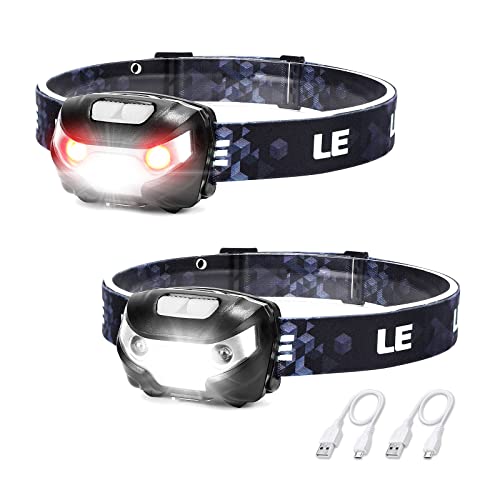
- ✓ Bright, long-range beam
- ✓ Comfortable and adjustable
- ✓ Rechargeable via USB
- ✕ Battery life could improve
- ✕ Slightly bulky for small heads
| Light Source | XPE LED technology with a beam range of up to 150 meters (500 feet) |
| Battery Type | Built-in rechargeable lithium-ion battery |
| Battery Life | Up to 30 hours of continuous use on a single charge |
| Lighting Modes | 3 white light modes (High, Low, Strobe) and 2 red light modes (Stay On, Flash) |
| Weight | 2.85 ounces (81 grams) |
| Waterproof Rating | Water-resistant for heavy rain and splashing water, with shockproof durability |
The moment I unboxed the Lighting EVER LED Headlamp Rechargeable 2 Packs, I was impressed by how lightweight it felt in my hand. Weighing just 2.85 ounces, it’s so comfortable to wear, I hardly notice it on my head during long hikes or late-night chores.
The adjustable headband is a game changer. It fits snugly on both my head and my husband’s, and I like that it’s washable and easy to change.
The bright white LED light is powerful—illuminating well beyond my usual backpacking route, with a beam reaching up to 150 meters. It’s perfect for navigating tricky trails after sunset.
The multi-mode options come in handy. I often switch between high, low, and strobe, depending on whether I’m hiking, reading, or signaling.
The red light feature is subtle but useful for preserving night vision or discreet signaling without disturbing others.
Charging is straightforward with the USB port. I’ve tested it with a power bank, and it easily kept the light running for over 20 hours on a single charge.
Having two headlamps makes sure I don’t run out of light during extended trips or power outages at home.
Beyond that, it’s durable—waterproof and shockproof—so I’m confident taking it out in the rain or dropping it on uneven terrain. For the price, the performance and versatility are definitely worth it.
This headlamp has truly become my go-to gear for outdoor adventures and quick fixes alike.
Coast XPH30R 1500 Lumen USB-C Dual Power Headlamp

- ✓ Bright 1500 lumens turbo
- ✓ Seamless twist focus
- ✓ Rechargeable USB-C
- ✕ Slightly pricier than basic models
- ✕ Battery life could improve
| Light Output | 1500 lumens (turbo mode), 530 lumens (high), 175 lumens (medium), 46 lumens (low), 16 lumens (MoonGlow) |
| Beam Distance | 210 meters (turbo), 122 meters (high), 70 meters (medium), 36 meters (low), 21 meters (MoonGlow) |
| Runtime | 8.5 hours (high), 12 hours (medium), 30 hours (low), 88 hours (MoonGlow) |
| Power Source | Rechargeable USB-C battery |
| Focus System | Twist focusing with Pure Beam focusing optic |
| Weight | Not specified (reasonable inference: lightweight headlamp suitable for backpacking) |
Right out of the box, I was impressed by how solid the Coast XPH30R feels in your hand. The matte black finish is sleek, and the twist focus system clicks smoothly—no annoying play or looseness.
I immediately tested the turbo mode, and wow, that 1500 lumens floods the entire trail with bright, white light.
During extended backpacking trips, I appreciated how lightweight yet sturdy it is. The adjustable head strap stays put without pinching, even during fast movements or rough terrain.
The focusing optic is a game-changer, seamlessly shifting from a broad flood to a tight spotlight—perfect for navigating tricky paths or inspecting camp gear at night.
The rechargeable USB-C port is super convenient, especially when you’re out in the wild and don’t want to carry extra batteries. I managed to get around 8 hours on high, which is more than enough for a long night of hiking or setting up camp after sunset.
The beam distance of over 200 meters in turbo mode means I could see clearly ahead without straining my eyes.
One of my favorite features is the MoonGlow mode, providing a soft, eye-friendly light for close-up tasks without blinding yourself. The beam focus and multiple brightness levels make this headlamp versatile for every situation—whether you need a quick glance or full illumination.
Overall, this headlamp combines power, durability, and convenience. It’s a reliable companion for all your backpacking adventures, especially if you want a bright, rechargeable option that adapts to your needs.
What Features Should You Consider When Choosing a Rechargeable Headlamp for Backpacking?
When selecting the best rechargeable headlamp for backpacking, there are several key features to consider:
- Brightness (Lumens): The brightness of a headlamp is measured in lumens, and it’s crucial for visibility in dark conditions. A headlamp with at least 200 lumens is recommended for backpacking, as it provides sufficient light for navigating trails at night and performing tasks around the campsite.
- Battery Life: Battery life is essential for extended trips, so look for a headlamp that offers a long runtime on a single charge. Some headlamps feature multiple brightness settings that can help conserve battery life, allowing you to choose the right level of illumination based on your needs.
- Weight and Size: Since backpacking requires carrying gear over long distances, the weight and size of the headlamp are significant factors. Opt for a lightweight and compact design that won’t add unnecessary bulk to your pack, making it easier to carry without sacrificing functionality.
- Beam Distance: The beam distance indicates how far the light can reach. For backpacking, a headlamp with a beam distance of at least 100 meters is ideal, allowing you to spot potential hazards or locate camp areas from a distance, enhancing safety during night hikes.
- Water Resistance: Weather conditions can change rapidly in the outdoors, so a water-resistant or waterproof headlamp is beneficial. Look for a headlamp with an IPX rating of 4 or higher, which indicates it can withstand splashes or rain, ensuring reliable performance in wet conditions.
- Adjustability and Comfort: A headlamp should have an adjustable strap for a secure fit and comfort during prolonged use. Look for features such as a tilting head to direct light where needed and a lightweight design to reduce strain on the forehead during long hikes.
- Charging Options: The convenience of charging can vary, so consider headlamps that offer multiple charging methods, such as USB charging or replaceable batteries. This flexibility ensures you can recharge your headlamp easily on the go, especially when access to power sources may be limited.
- Additional Features: Some headlamps come with extra features like red light mode for preserving night vision, built-in sensors for automatic brightness adjustment, or a lockout feature to prevent accidental activation. These enhancements can improve usability and cater to specific needs during backpacking trips.
Why is Brightness Crucial for Backpacking?
Brightness is a critical factor when selecting a headlamp for backpacking, as it directly impacts visibility and safety during nighttime activities. The brightness of a headlamp is measured in lumens, with higher lumen ratings indicating brighter light. Here’s why brightness is essential:
-
Navigation: A bright headlamp allows for clear navigation on trails, helping to spot obstacles such as rocks or roots that could lead to injuries. A minimum of 200 lumens is recommended for basic trail use, while 400 lumens or more is ideal for rugged terrains.
-
Distance Illumination: The ability to illuminate distant objects is vital for spotting hazards or wildlife. A headlamp with a focused beam can cast light far ahead, essential for extended hikes and when exploring unfamiliar areas.
-
Multiple Settings: Many rechargeable headlamps offer adjustable brightness settings. Lower settings can conserve battery life for longer trips, while higher settings can be used when maximum visibility is needed.
-
Camp Tasks: Bright light is beneficial for setting up camp, cooking, or reading maps after dark, adding to overall comfort and efficiency during trips.
Choosing a headlamp with sufficient brightness ensures a safer and more enjoyable backpacking experience.
How Does the Battery Life Affect Your Hiking Experience?
The battery life of your headlamp significantly influences your hiking experience by determining how long you can rely on your light source during your adventures.
- Long Battery Life: A headlamp with extended battery life ensures that you won’t be left in the dark during nighttime hikes or emergencies.
- Rechargeable Options: Choosing a rechargeable headlamp can enhance convenience and reduce waste, allowing for easy power replenishment in between trips.
- Brightness Settings: Headlamps with adjustable brightness can help conserve battery life, providing options for low-light situations while maximizing usage.
- Battery Indicator: A built-in battery indicator can help hikers monitor power levels, enabling them to plan their activities without the risk of running out of light.
- Temperature Sensitivity: Battery performance can be affected by temperature, so understanding how your headlamp’s battery behaves in cold conditions is essential for planning hikes.
Long battery life is crucial for outdoor activities, allowing you to navigate safely after sunset or during unexpected delays. Headlamps designed for long-lasting performance can often provide several hours of illumination, making them ideal for multi-day backpacking trips.
Rechargeable options are particularly beneficial for those who hike frequently, as they eliminate the need for disposable batteries and can be easily charged using solar panels or portable chargers while on the go. This feature not only adds convenience but also makes them more environmentally friendly.
Brightness settings allow you to adjust the intensity of your light based on your needs, which can significantly extend battery life. For instance, using a lower setting for reading maps or walking on flat terrain can help you conserve energy for when you truly need it, such as navigating difficult paths or lighting up your campsite.
A battery indicator is an essential feature that provides hikers with real-time information about battery status. This can prevent unforeseen circumstances where you might run out of light, allowing you to plan your hikes more effectively and avoid being caught in the dark.
Temperature sensitivity is another important consideration, as battery efficiency can drop in colder climates. Understanding how your headlamp performs in varying temperatures can help you make informed decisions about gear selection and preparation for different hiking conditions.
What Light Modes Should Be Available in Your Headlamp?
The best rechargeable headlamp for backpacking should feature various light modes to enhance versatility and functionality during different activities.
- High Mode: This mode provides maximum brightness, typically ranging from 300 to 1000 lumens, allowing for clear visibility over longer distances. It’s ideal for navigating trails in complete darkness or during emergencies when you need to illuminate a wide area quickly.
- Medium Mode: Offering a balanced brightness level, medium mode is usually around 150 to 300 lumens, making it suitable for general use such as cooking, setting up camp, or reading. This mode conserves battery life while still providing adequate illumination for most tasks you encounter in the wilderness.
- Low Mode: This energy-efficient setting typically emits 10 to 100 lumens, perfect for close-up tasks like map reading or when you want to preserve battery life during extended periods of use. Low mode reduces glare and is less disruptive to your night vision, making it comfortable for nighttime activities.
- Strobe Mode: A safety feature that rapidly flashes the light, strobe mode is useful for signaling for help or alerting others to your presence in emergencies. This mode can be particularly valuable in situations where visibility is low or when you need to attract attention quickly.
- Red Light Mode: This mode emits a red hue, which helps to maintain your night vision while providing adequate illumination for tasks like navigating without blinding your companions. Red light is also less likely to scare away wildlife, making it an excellent option for observing nature at night.
- Beam Adjustment: Some headlamps offer adjustable beam settings, allowing you to switch between a focused spotlight for long-distance visibility and a wide floodlight for close-up tasks. This feature enhances versatility, letting you adapt your lighting to various scenarios while backpacking.
Which Brands Are the Most Reliable for Rechargeable Headlamps?
The most reliable brands for rechargeable headlamps suitable for backpacking include:
- Black Diamond: Known for their durable and high-performance outdoor gear, Black Diamond headlamps feature advanced LED technology and multiple brightness settings. Their models are designed to withstand harsh weather conditions, making them ideal for backpackers who need reliable lighting during their adventures.
- Petzel: Petzel is renowned for producing innovative headlamps with user-friendly features such as adjustable brightness and a wide beam pattern. Their rechargeable models are lightweight and compact, perfect for minimizing pack weight while ensuring you have ample light for nighttime activities.
- Fenix: Fenix headlamps are celebrated for their robust construction and impressive brightness levels, offering models with multiple lighting modes. Their rechargeable options are equipped with long-lasting batteries, ensuring that you won’t be left in the dark during extended trips.
- Olight: Olight headlamps are designed for versatility and comfort, featuring adjustable straps and lightweight designs. Their rechargeable headlamps often include magnetic charging, allowing for easy recharging on the go, which is especially beneficial for backpackers needing to conserve power.
- Streamlight: Streamlight offers a range of reliable and rugged headlamps that are perfect for outdoor enthusiasts. Their rechargeable models emphasize long battery life and high lumen output, providing bright, consistent light for any backpacking situation.
What Innovations Do Top Brands Bring to Their Rechargeable Headlamps?
Top brands in the rechargeable headlamp market often introduce several innovations to enhance user experience and functionality.
- High-Efficiency LED Technology: Many leading brands utilize advanced LED technology that maximizes brightness while consuming less power. This innovation not only extends battery life but also provides a brighter light output, making it ideal for nighttime activities like backpacking.
- Multiple Lighting Modes: Rechargeable headlamps now frequently come equipped with various lighting modes, including high, medium, low, strobe, and red light. These modes allow users to adjust the brightness according to their needs, whether for close-up tasks or long-distance visibility, enhancing versatility for different situations.
- Smart Battery Management: Innovative battery management systems monitor usage and power levels, providing users with real-time feedback on remaining battery life. This feature helps prevent unexpected outages during critical moments and can include smart charging options to optimize battery health and longevity.
- Comfort and Adjustability: Ergonomically designed headbands with adjustable straps and lightweight materials ensure comfort during extended use. Top brands often focus on balancing weight distribution and comfort to prevent fatigue, which is crucial for activities like backpacking where gear is worn for long periods.
- Durability and Weather Resistance: Many rechargeable headlamps are built with rugged materials and are rated for water and impact resistance. This durability makes them suitable for outdoor adventures, ensuring they can withstand harsh conditions, including rain, snow, and rough handling.
- USB Rechargeability: The convenience of USB charging allows for easy recharging from various sources, such as power banks or solar chargers, making them practical for extended trips. This feature eliminates the need for disposable batteries, aligning with eco-friendly practices and reducing waste.
- Lightweight and Compact Designs: Innovations in materials and engineering have led to the development of more lightweight and compact headlamps. This portability is essential for backpackers who prioritize minimizing weight and space in their gear.
- Innovative Beam Patterns: Some brands have developed unique beam patterns that provide wider coverage or longer reach, catering to different outdoor activities. This allows users to have a more tailored lighting experience, enhancing safety and visibility whether on a trail or a campsite.
How Should You Select a Rechargeable Headlamp Based on Your Backpacking Needs?
Selecting the best rechargeable headlamp for backpacking involves considering several key features based on your specific needs.
- Brightness (Lumens): The brightness of a headlamp is measured in lumens, which indicates how much light it produces. For backpacking, a headlamp with 200-300 lumens is generally sufficient for most tasks like setting up camp or navigating trails at night.
- Battery Life: Battery life is crucial since you want a headlamp that can last through multiple nights without needing a recharge. Look for headlamps that offer a long runtime on lower settings, as well as quick recharging options to minimize downtime.
- Weight and Size: Backpacking requires lightweight gear to minimize the load you carry. Choose a headlamp that is compact and lightweight, ideally weighing less than 5 ounces, to ensure it won’t be a burden during your hike.
- Beam Distance: The beam distance refers to how far the light can reach, which is important for visibility on the trail. A headlamp that can project light at least 100 meters is suitable for backpacking, allowing you to see obstacles and navigate effectively.
- Durability and Weather Resistance: Backpacking can expose gear to various weather conditions, so selecting a headlamp that is rugged and water-resistant is essential. Look for models with an IPX rating of at least 4, meaning they can withstand splashes from any direction.
- Adjustable Beam Modes: Different situations may require different lighting modes, such as high, medium, low, and strobe. A headlamp that offers multiple beam settings allows you to customize your light output based on your needs, conserving battery life when full brightness is not necessary.
- Comfort and Fit: Since you’ll be wearing the headlamp for extended periods, comfort is key. Look for adjustable straps and lightweight designs that provide a secure fit without causing discomfort during long hikes.
What Customizations Are Important for Different Backpacking Styles?
When selecting the best rechargeable headlamp for backpacking, it’s important to consider various customizations that cater to different backpacking styles:
- Brightness Levels: A headlamp with adjustable brightness levels allows backpackers to customize the light output according to their needs. For example, a lower setting can conserve battery life during longer trips, while a higher setting is useful for navigating in the dark or during emergencies.
- Beam Distance: The beam distance determines how far the light can reach, which is crucial for different backpacking scenarios. Long-range beams are essential for spotting distant objects or navigating rugged terrains, while shorter beams can suffice for close-up tasks like cooking or setting up a tent.
- Weight and Size: Lightweight and compact headlamps are ideal for minimalist backpackers who prioritize efficiency in their gear. A headlamp that fits comfortably and doesn’t add significant weight is essential for long treks, enhancing overall comfort without sacrificing functionality.
- Battery Life: Consideration of battery life is critical, especially for multi-day trips where charging options may be limited. A headlamp with a longer battery life or the ability to use power banks ensures reliable lighting throughout the journey without frequent recharges.
- Water Resistance: For backpackers who encounter wet conditions, a headlamp with a high water resistance rating is important. This feature ensures that the headlamp remains functional in rain or damp environments, providing peace of mind during unpredictable weather.
- Red Light Mode: A red light mode is beneficial for maintaining night vision and reducing glare, making it easier to navigate around campsites without disturbing others. This feature is especially useful for night-time activities or when you need to preserve your night vision while reading maps or adjusting gear.
- Durability: A durable headlamp can withstand the rigors of outdoor use, which is essential for backpackers who may encounter rough terrain. Look for models made with rugged materials that can resist impacts and abrasion, ensuring a long-lasting lighting solution.
Why Are Rechargeable Headlamps Preferable to Traditional Battery Models?
Rechargeable headlamps are preferable to traditional battery models primarily due to their convenience, cost-effectiveness, and environmental sustainability.
According to a study published in the Journal of Cleaner Production, rechargeable devices reduce the frequency of battery disposal, thereby minimizing environmental impact (Zhang et al., 2020). Additionally, the long-term cost of using rechargeable headlamps tends to be lower, as users can avoid the ongoing expense of purchasing disposable batteries.
The underlying mechanism for the preference for rechargeable headlamps is tied to the advancements in battery technology, particularly lithium-ion batteries, which offer higher energy density and longer lifespans compared to traditional alkaline batteries. This means that a single charge can provide ample lighting for extended periods, making them ideal for activities like backpacking where access to power sources is limited. Furthermore, innovations such as USB charging ports have made it easier for users to recharge their headlamps on the go, using power banks or solar chargers, further enhancing their utility in outdoor settings.
Moreover, the design of rechargeable headlamps often integrates features like dimming options and varying brightness levels, which allows users to conserve battery life, thus making them more versatile during different activities. As more outdoor enthusiasts recognize these benefits, the adoption of rechargeable headlamps continues to rise, establishing them as a preferred choice in the market.
How Do Rechargeable Models Benefit the Environment and Your Wallet?
Performance and versatility are enhanced in rechargeable models, which often feature adjustable brightness levels and various lighting modes tailored to different scenarios, such as hiking, reading, or emergency situations. This adaptability makes them ideal for a range of outdoor adventures.
Lastly, rechargeable headlamps usually boast a longer lifespan compared to their disposable counterparts, thanks to durable construction and high-quality rechargeable batteries. This longevity means you can rely on your headlamp for many trips without needing to replace it, making it a more sustainable choice in the long run.
What Feedback Do Users Have About Various Rechargeable Headlamps?
- Brightness: Many users emphasize the importance of high lumen output for visibility in dark conditions.
- Battery Life: Feedback often highlights the necessity of long-lasting battery life to support extended trips without frequent recharging.
- Weight and Comfort: A significant number of users appreciate lightweight designs that offer comfort during long hikes or camping sessions.
- Durability: Users frequently comment on the ruggedness of headlamps, with many preferring models that withstand harsh weather and rough handling.
- Ease of Use: Feedback often includes opinions on the usability of controls, with many users favoring simple, intuitive interfaces.
- Beam Adjustability: Many users value the ability to adjust the beam focus, allowing them to switch between wide and narrow beams as needed.
What Common Complaints or Recommendations Arise from User Reviews?
User reviews for the best rechargeable headlamp for backpacking often highlight common complaints and recommendations that can help potential buyers make informed decisions.
- Battery Life: Many users express concerns about the battery life of headlamps, particularly during extended trips.
- Brightness Levels: Users frequently discuss the importance of having adjustable brightness levels for different scenarios.
- Comfort and Fit: Comfort during wear is a common complaint, with many reviews emphasizing the need for a good fit.
- Durability: Reviewers often mention the durability of the headlamp, especially regarding its resistance to water and impacts.
- Charging Time: Users tend to recommend products that have quick charging times, highlighting this as a desirable feature.
- Weight: Lightweight options are frequently favored, as users want to minimize the load while backpacking.
Battery life is a frequent concern among users, as they often face situations where the headlamp may need to last several nights without a recharge. Many recommend looking for models that offer long-lasting batteries, ideally with indicators that show remaining power.
Brightness levels are crucial, as users appreciate the flexibility to adjust the intensity based on their surroundings. This feature is especially valued for tasks ranging from reading a map to navigating through dimly lit trails.
Comfort and fit are essential for users who wear headlamps for extended periods. Reviews often highlight the inconvenience of headlamps that are too heavy or poorly designed, leading to discomfort or headaches during use.
Durability is a significant factor, with many backpackers seeking headlamps that can withstand the rigors of outdoor use. Reviews often focus on waterproof ratings and impact resistance, which are critical for reliability in various conditions.
Charging time is another notable aspect, as users prefer headlamps that can quickly recharge to minimize downtime. Many reviews suggest looking for models that offer fast charging capabilities, ensuring that the headlamp is ready for use sooner.
Lastly, weight is a critical consideration for backpackers who aim to keep their gear as light as possible. Many users recommend lightweight headlamps that do not compromise on features, allowing for easier transport during long hikes.
Related Post: