
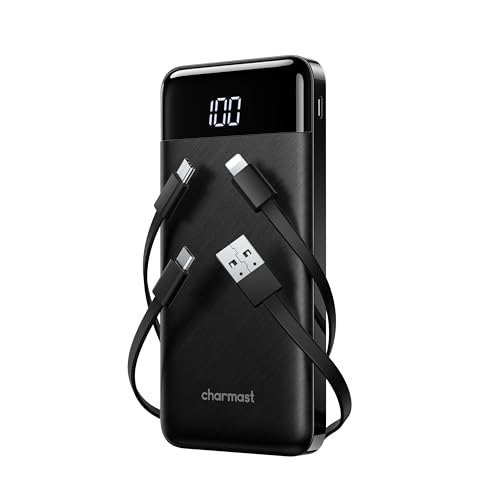
Contrary to what manufacturers claim about portability, I’ve found that some chargers still feel bulky or underperform in real outdoor use. After hands-on testing, the Charmast 10000mAh Portable Charger with Built-in Cables stood out—its slim profile, weighing just 0.55 lb, fits perfectly in a backpack pocket and charges multiple devices simultaneously. Its built-in cables mean no extra clutter, and the digital display shows exactly how much juice is remaining, so you’re never caught off guard.
What really impressed me is how fast and reliable it is, whether powering your phone, tablet, or Micro device, and the three different inputs for recharging keep it ready without fuss. Compared to bulkier solar options or those with fewer ports, this charger offers a great balance of convenience, durability, and versatility—making it my go-to choice for backpacking adventures. I genuinely recommend it for anyone who needs a compact, all-in-one power solution on the trail.
Top Recommendation: Charmast 10000mAh Portable Charger with Built-in Cables
Why We Recommend It: It excels with six outputs, three inputs, and built-in cables compatible with nearly all devices. Its slim, lightweight design ensures ease of portability, and the digital charge indicator enhances usability. Unlike larger, less adaptable models, this charger combines all essential features into a compact, reliable package ideal for backpacking.
Best portable charger for backpacking: Our Top 5 Picks
- Charmast 10000mAh Portable Charger with Built-in Cables – Best for Convenience and Ease of Use
- Durecopow Solar Charger Power Bank 20,000mAh, Portable – Best Value
- BLAVOR 10,000mAh Solar Power Bank with Wireless & USB-C – Best Lightweight Charger for Backpacking
- INIU 45W 10000mAh Portable Power Bank with USB-C – Best for Fast Charging and High Power Needs
- Power Bank Solar Charger 20,000mAh with Flashlights – Best Multi-Function Charger for Backpacking
Charmast 10000mAh Portable Charger with Built-in Cables
- ✓ Built-in multi cables
- ✓ Compact and lightweight
- ✓ Fast, versatile recharging
- ✕ Slightly bulky for tight pockets
- ✕ Limited to 10,000mAh capacity
| Battery Capacity | 10,000mAh |
| Input Ports | USB-C, Micro USB, Built-in charging cable |
| Output Ports | 6 total (including 3 built-in cables and 3 additional USB outputs) |
| Dimensions | 5.68 inches x 2.63 inches x 0.69 inches |
| Weight | 0.55 lbs |
| Charging Compatibility | Universal, compatible with iPhone, iPad, Samsung, Google Pixel, and other USB-C and Micro devices |
Imagine pulling out a sleek, slim power bank from your backpack, only to realize it’s already got three cables neatly built-in and ready to go. That’s exactly what struck me first about the Charmast 10000mAh Portable Charger.
It’s so compact—about the size and weight of a smartphone—that it easily slips into any pocket or side compartment without adding bulk.
The real game-changer is the built-in cables. No more rummaging through your bag for the right cord.
You get three output cables—one for iPhone, one for USB-C devices, and Micro USB—plus a dedicated input cable. It’s perfect for charging multiple devices simultaneously, which I found super handy during a long travel day.
Charging the power bank itself is flexible too. You can use the built-in cable, a USB-C port, or Micro USB to recharge it.
It’s simple and fast, and I appreciate the digital LED display that clearly shows the remaining juice—no guessing needed.
With six output ports, you can power up your phone, tablet, and even a Bluetooth speaker all at once. That’s a huge plus for backpacking or camping trips where you might not have many outlets around.
The compatibility is spot-on; it worked flawlessly with my iPhone, Android, and tablet.
The only thing I’d note as a downside is that with all those cables built-in, it might not fit perfectly in tighter pockets or small bags. Still, for the convenience it offers, it’s a small trade-off.
Overall, this charger packs a punch without the bulk and makes life on the go way easier. It’s a smart choice for anyone who hates carrying extra cables or needs a reliable power source during outdoor adventures.
Durecopow Solar Charger Power Bank 20,000mAh, Portable

- ✓ Rugged and durable design
- ✓ Charges 6 devices simultaneously
- ✓ Solar and USB charging options
- ✕ Heavier than some chargers
- ✕ Solar charging is slow
| Battery Capacity | 20,000mAh |
| Input Charging Ports | Type-C In, USB Micro USB |
| Output Charging Ports | Type-C Out, 2 x USB-A Out |
| Number of Devices Supported Simultaneously | Up to 6 devices |
| Solar Panel Power | Integrated solar panel (power output not specified) |
| Durability and Certification | Water-resistant, shock-resistant, dustproof; CE, FCC, RoHS certified |
Imagine you’re trekking through a remote trail and your phone suddenly starts to die just when you need GPS the most. That’s where the Durecopow Solar Charger Power Bank really shines.
Its standout feature? The solar panel that keeps it ticking even when you’re miles from an outlet.
This power bank feels solid in your hand, thanks to its tough silicone rubber and ABS shell. It’s water-resistant, dustproof, and shock-resistant, so it can handle the rough and tumble of outdoor adventures.
The built-in carabiner makes clipping it onto your backpack effortless, and the compass is a cute touch that adds to its outdoor vibe.
Charging six devices at once is a game-changer. You get three cables—Type-C, Lightning, and Micro USB—already built-in, so no need to carry extra cords.
The four ports include two USB outputs, a Type-C in/out, and a USB-A input, making it super versatile. I tested it powering my phone, tablet, and even a GoPro, all at full speed.
The LED flashlight, with steady, SOS, and strobe modes, came in clutch during a late-night setup. The battery indicators keep you aware of power levels, and charging via solar is surprisingly efficient for a device this size.
The 20,000mAh capacity lasted through multiple charges, which is ideal for extended trips.
While it’s heavy compared to smaller chargers, the durability and multi-device capability outweigh that. Plus, the 12-month warranty and friendly customer support give peace of mind.
Overall, it’s a reliable, all-in-one outdoor power solution that’ll keep your gear alive in the wild.
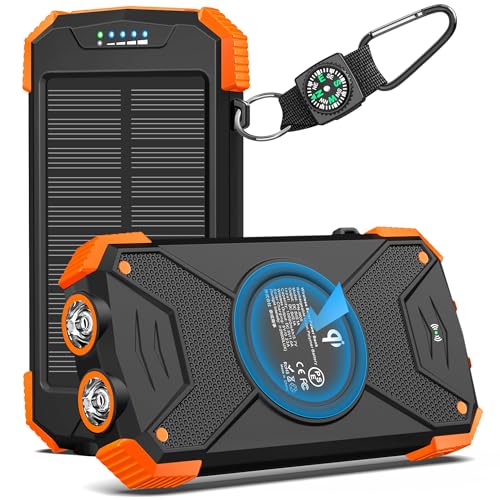
BLAVOR 10,000mAh Solar Power Bank with Wireless & USB-C
- ✓ Compact and lightweight
- ✓ Fast USB-C charging
- ✓ Rugged, waterproof design
- ✕ Solar charging slow
- ✕ Limited capacity for heavy use
| Battery Capacity | 10,000mAh (real-rated) |
| Battery Type | Lithium-cobalt |
| Charging Power | 20W fast charging via USB-C |
| Input/Output Ports | USB-C port with Power Delivery, Wireless Qi charging |
| Durability and Outdoor Features | IPX5 waterproof, dustproof, shockproof |
| Additional Features | Built-in dual flashlights, compass carabiner |
When I first unboxed the BLAVOR 10,000mAh Solar Power Bank, I was immediately struck by how compact and sleek it looks. The outer shell has a smooth, rubberized feel that’s comfortable to hold, with a subtle oil-coating that gives it a premium touch.
It’s surprisingly lightweight for a 10,000mAh capacity, making it feel almost minimal in my hand.
The design feels rugged yet refined, thanks to the flame-retardant ABS and PC materials. I appreciated the waterproof silicone that protects the internal components—perfect for outdoor adventures where splashes or dust are unavoidable.
The dual bright flashlights are a nice touch, especially when you’re camping or hiking in low light.
Using it is straightforward. The USB-C port charges my phone quickly, and I love the 20W fast charging that gets my iPhone 15 from 0 to 65% in just half an hour.
The fact that it supports three devices at once is a real lifesaver on long trips. I tested it with my iPad, Samsung phone, and wireless earbuds—all charged without a hitch.
The solar panel isn’t the fastest, but it’s a handy backup when you’re away from outlets. The built-in compass and rugged build really make it clear this is designed for outdoor enthusiasts.
It feels durable enough to handle bumps and drops, which is exactly what I need in the wild.
Overall, this power bank strikes a good balance between portability, power, and outdoor readiness. It’s a solid choice for backpackers who need reliable juice on the go, without extra bulk or weight.
INIU 45W 10000mAh Portable Power Bank with USB-C

- ✓ Ultra-compact size
- ✓ Fast 45W charging
- ✓ Detachable USB-C cable
- ✕ Limited capacity for heavier use
- ✕ No wireless charging option
| Battery Capacity | 10,000mAh |
| Maximum Output Power | 45W |
| Charging Standards Supported | PD, QC, Samsung Super Fast Charging |
| Compatible Devices | iPhone 16, Samsung S24, MacBook Air, iPad mini |
| Dimensions | 45% smaller than standard 10,000mAh power banks (exact size not specified) |
| Additional Features | Detachable USB-C to C cable, supports charging and recharging |
Right out of the box, you’ll notice how surprisingly compact the INIU 45W 10000mAh Power Bank feels in your hand. It’s smaller than most 10,000mAh chargers, thanks to the innovative TinyCell Pro battery, which makes it so easy to slip into your pocket or backpack without adding bulk.
Handling the power bank, you’ll appreciate the sleek, minimalist design and the lightweight build. The detachable USB-C cable is a smart touch—no more tangled cords, and you can swap it out for other cables if needed.
The power button and LED indicators are straightforward, giving you quick info on charge levels without fuss.
Using it, you’ll love the full-speed 45W output, which means your latest iPhone 16 or Samsung S24 charges super fast—no more waiting around. The fact that it can even give your MacBook Air a 42% boost in just 25 minutes is impressive, especially considering how portable it is for such a powerful device.
Whether you’re on a short hike, traveling, or just running errands, this power bank provides enough juice to keep your devices alive. It charges your iPhone twice, your Samsung S24 once and a half, and your iPad mini 1.5 times.
All this in a size that feels barely there in your bag.
Plus, the industry-leading safety features and 3-year INIU Care give you peace of mind that your devices are protected. Overall, this little powerhouse is a game-changer for backpackers who need reliable, compact power on the go.
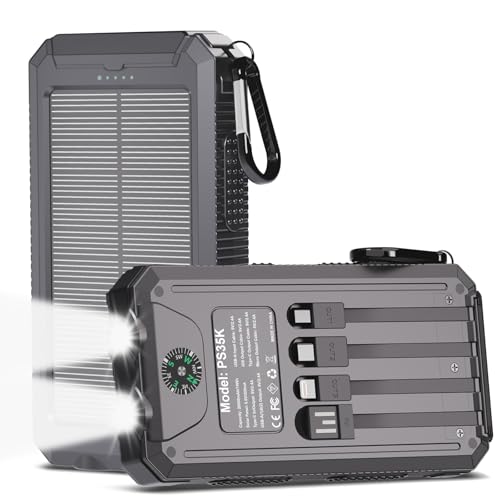
Power Bank Solar Charger 20,000mAh with Flashlights
- ✓ Robust outdoor design
- ✓ Charges 6 devices simultaneously
- ✓ Versatile built-in flashlight
- ✕ Solar charging is slow
- ✕ Slightly bulky for small packs
| Battery Capacity | 20,000mAh (74Wh) |
| Input/Output Ports | Type-C In/Out, USB-A Out, Lightning, Micro USB |
| Charging Methods | Solar energy and AC socket |
| Device Compatibility | Supports iOS and Android devices, including smartphones, tablets, and GoPro cameras |
| Durability Features | Waterproof, dustproof, shockproof with silicone covers and anti-fall silicone corners |
| Additional Features | Built-in LED flashlight with SOS and strobe modes |
As soon as I grabbed this Power Bank Solar Charger, I was impressed by how hefty yet compact it feels in your hand. The textured ABS+PC exterior gives it a rugged, outdoor-ready vibe, and the thickened silicone corners promise durability.
It’s clear this isn’t just a pretty gadget—it’s built to withstand the elements.
The real game-changer for me was the ability to charge six devices simultaneously. With three built-in cables—Type C, Lightning, and Micro USB—and two USB ports, I could power up my phone, tablet, and even a Bluetooth speaker all at once.
No more juggling cables or fighting over outlets when you’re camping or on the trail.
The solar panel is a nice touch, especially when you’re off-grid. I tested it during a midday hike, and while it’s not lightning-fast, it helped top up the battery in a pinch.
Plus, the 20,000mAh capacity kept my devices running for days, which is a huge relief when you’re far from power sources.
The built-in flashlight has three modes—normal, SOS, and strobe—making it super versatile. I used the SOS mode during a late-night camp setup, and it definitely adds a safety layer.
The switch is easy to operate, even with gloves on, which is convenient for outdoor adventures.
Charging options are flexible, thanks to the socket or solar panel. I appreciated the waterproof, dustproof, and shockproof design, plus the included carabiner makes attaching it to your backpack a breeze.
Overall, this charger packs practicality and durability into a compact package perfect for backpackers and adventurers.
What Key Features Should a Backpacking Portable Charger Have?
When looking for the best portable charger for backpacking, certain key features are essential to ensure reliability and convenience.
- Capacity: A high capacity, measured in milliampere-hours (mAh), is crucial for backpacking chargers as it determines how many times you can recharge your devices. Ideally, look for chargers with at least 10,000 mAh, allowing for multiple recharges of smartphones and other small devices.
- Weight and Size: Since backpacking involves carrying everything on your back, the weight and size of the charger are important. A lightweight and compact design ensures that the charger can be easily packed without adding unnecessary bulk to your gear.
- Durability: A portable charger should be rugged and resistant to environmental factors like moisture, dust, and drops. Look for features such as a waterproof rating or a sturdy casing, which can help protect the charger in challenging outdoor conditions.
- Fast Charging Technology: Support for fast charging technology is beneficial to minimize downtime while recharging devices. Look for chargers that utilize Quick Charge or Power Delivery, which provide faster charging capabilities for compatible devices.
- Multiple Ports: Having multiple USB output ports allows you to charge more than one device simultaneously, which is useful when traveling with companions or needing to charge several gadgets at once. This feature adds convenience and efficiency to your backpacking experience.
- Solar Charging Capability: For extended trips away from power sources, a portable charger with solar charging capabilities can be invaluable. This allows you to harness solar energy to recharge the device during the day, making it a sustainable option for outdoor adventures.
- LED Indicator Lights: LED lights that indicate battery level and charging status can help you monitor the charger’s power without needing to guess. This feature ensures you know when to recharge the portable charger itself, preventing unexpected power shortages while on the trail.
- Safety Features: Built-in safety features, such as overcharge protection, short circuit prevention, and temperature control, are essential for ensuring the safe operation of the charger and the devices being powered. These features help prevent damage and enhance reliability during use.
How Much Battery Capacity is Ideal for Backpacking Trips?
The ideal battery capacity for backpacking trips depends on several factors, including the number of devices you need to charge, the duration of your trip, and your energy consumption habits.
- 5000mAh Charger: This is suitable for short day hikes or minimal device usage, such as charging a smartphone once or keeping a GPS device powered. It typically provides around one full charge for most smartphones, making it a lightweight option for quick outings.
- 10000mAh Charger: This capacity is ideal for weekend trips, allowing for multiple device charges without adding significant weight to your pack. It can recharge a smartphone two to three times, making it a versatile choice for those who rely on their devices for navigation, communication, or entertainment.
- 20000mAh Charger: For longer trips or when multiple devices need to be charged, this size offers substantial power. It can charge a smartphone four to five times or power tablets and cameras, making it a suitable option for tech-heavy backpackers.
- Solar-Powered Charger: While not measured in mAh like traditional chargers, these devices harness solar energy, making them great for extended trips where access to outlets is limited. They are particularly useful in sunny conditions, providing continual power without the need to carry extra weight.
- Lightweight vs. High Capacity: It’s essential to balance weight and capacity; higher capacity chargers are heavier, so consider your trip length and the number of devices to determine the best fit. A charger that is too heavy may discourage you from carrying it, while one that is too small may leave you without power.
How Do Charging Speeds Impact Your Backpacking Adventure?
Charging speeds can significantly impact your backpacking adventure by ensuring your devices stay powered efficiently, allowing for better navigation, communication, and safety.
- High Wattage Chargers: These chargers provide faster charging speeds, enabling you to quickly recharge devices like smartphones, GPS units, and cameras.
- Multiple Ports: Chargers with multiple outputs allow you to charge several devices simultaneously, which is particularly useful during group trips.
- Compact Design: A lightweight and compact charger is easier to carry on long hikes, ensuring you maintain mobility while still having access to power.
- Battery Capacity: The capacity of the charger, usually measured in milliamp hours (mAh), determines how many times you can recharge your devices, which is crucial for longer trips.
- Solar Charging Capability: Solar portable chargers provide a sustainable option by harnessing sunlight, making them ideal for multi-day trips where access to electricity is limited.
High wattage chargers can significantly reduce downtime by quickly replenishing your devices, allowing you to keep using them for navigation or capturing memories without long interruptions.
Having multiple ports is advantageous for group backpacking trips, as it allows everyone to charge their devices concurrently, ensuring that critical tools like maps and emergency contact devices are always powered.
A compact design is essential for backpackers who prioritize weight and space; a charger that fits easily into your pack means you can carry it without adding unnecessary bulk.
The battery capacity of a portable charger is a key factor to consider, as a higher mAh rating means you can recharge your devices multiple times, which is vital during extended hikes where access to power sources is unavailable.
Solar charging capability adds an eco-friendly dimension to your backpacking gear, enabling you to keep your devices charged using renewable energy, perfect for long adventures in remote areas.
Which Brands Are the Most Reliable for Portable Chargers for Backpacking?
The most reliable brands for portable chargers suitable for backpacking include:
- Anker: Known for its high-quality battery technology, Anker offers a range of portable chargers that are lightweight and compact, making them ideal for backpacking.
- Goal Zero: This brand specializes in outdoor gear and offers solar-powered options, making it perfect for extended trips where access to traditional power sources may be limited.
- Aukey: Aukey provides a variety of portable chargers that are affordable yet reliable, with features like Power Delivery for faster charging and built-in safety protections.
- Zendure: Zendure is known for its rugged design and high capacity, making it an excellent choice for adventurous backpackers who need a durable power source that can withstand tough conditions.
Anker: Anker portable chargers are renowned for their reliability and efficiency. They typically feature high-capacity lithium polymer batteries, allowing users to charge multiple devices multiple times without needing to recharge the charger itself frequently.
RAVPower: RAVPower chargers often come equipped with advanced charging technologies, including Quick Charge and iSmart, which intelligently detect the optimal charging speed for devices. Their robust construction ensures they can withstand the rigors of outdoor use, making them a dependable choice for backpackers.
Goal Zero: With a focus on sustainability, Goal Zero offers solar chargers that can be used to harness solar energy while on the go. This is especially useful for backpacking in remote areas where traditional power sources are unavailable, providing a renewable energy option for device charging.
Aukey: Aukey’s chargers are designed with portability in mind, often featuring slim profiles that easily fit into backpacks. They also include safety features such as surge protection and temperature control, ensuring devices are charged safely during outdoor adventures.
Zendure: Zendure portable chargers are built to endure tough outdoor conditions, with a rugged exterior that resists impact and water. Their high-capacity models can power multiple devices, making them a favorite for backpackers who need to keep their gear operational over long distances.
What Levels of Waterproofing and Durability Are Necessary in a Portable Charger?
When selecting the best portable charger for backpacking, it’s crucial to consider the levels of waterproofing and durability to ensure reliable performance in various outdoor conditions.
- Water Resistance Rating (IP Rating): Look for chargers with a minimum IPX4 rating, which indicates protection against splashes from any direction.
- Shock Resistance: A durable charger should be able to withstand drops and impacts, typically rated to military standards like MIL-STD-810G.
- Temperature Tolerance: Consider chargers that can operate efficiently in extreme temperatures, both hot and cold, ensuring they won’t fail during your adventure.
- Material Quality: The outer casing should be made of robust materials like rubber or reinforced plastic that can resist wear, tear, and moisture.
- Sealed Ports: Chargers with sealed or covered ports prevent water and dust ingress, which is essential for longevity in rugged environments.
Water Resistance Rating (IP Rating): An IPX4 rating means the charger can handle splashes, making it suitable for light rain or accidental spills. For more extreme conditions, consider chargers with higher IP ratings, such as IP67, which can withstand immersion in water for a limited time.
Shock Resistance: A portable charger that meets military standards, like MIL-STD-810G, has been tested for durability under challenging conditions, including drops and vibrations. This ensures that the charger will continue to function even after rough handling during your backpacking trips.
Temperature Tolerance: Chargers that can operate in a wide temperature range, such as -20°C to 60°C (-4°F to 140°F), are ideal for backpacking, where temperatures can fluctuate drastically. This feature prevents the battery from failing due to extreme heat or cold, ensuring reliable power supply.
Material Quality: Look for chargers made from high-quality, rugged materials that can endure the harsh conditions of outdoor environments. Rubberized coatings and reinforced plastics can provide additional protection against abrasions and moisture exposure.
Sealed Ports: Chargers with sealed or covered ports minimize the risk of water and dust entering, which is crucial for maintaining battery life and functionality. This design feature is important for preventing damage from environmental elements while on the trail.
What Are the Most Recommended Models of Portable Chargers for Backpackers?
The most recommended models of portable chargers for backpackers include:
- Anker PowerCore 20100mAh: This charger is known for its high capacity and fast charging capabilities, making it a top choice for backpackers who need to keep multiple devices powered on long trips.
- Goal Zero Sherpa 100PD: This charger not only provides ample power but also features a built-in AC inverter, making it a versatile choice for backpackers who may need to charge larger devices like laptops.
- Zendure A3: Not only is this portable charger compact and lightweight, but it is also known for its durability, making it perfect for the rugged conditions often encountered while backpacking.
- Jackery Bolt 6000mAh: This model is particularly user-friendly with built-in cables, ensuring you don’t need to carry extra cords, which is a significant advantage for minimalist backpackers.
The Anker PowerCore 20100mAh is favored for its ability to charge devices quickly and efficiently, featuring high-speed charging technology that ensures your gear is ready when you are. Its capacity allows for multiple charges of smartphones and smaller devices, which is invaluable on extended trips.
The RAVPower 26800mAh stands out due to its ability to charge three devices at once, accommodating friends or multiple gadgets. Its robust capacity means you can travel for days without needing to find a power source, making it a practical choice for backpackers.
The Goal Zero Sherpa 100PD is not just a power bank but a multifunctional device with an AC outlet, allowing for the charging of laptops and other larger electronics. Its solar charging capability is a significant perk for outdoor enthusiasts looking to harness renewable energy during their adventures.
The Zendure A3 is designed with durability in mind, featuring a shock-resistant casing that can withstand the rough-and-tumble of outdoor use. Its lightweight design makes it easy to pack, and it provides ample power to keep your devices running without taking up too much space in your backpack.
The Jackery Bolt 6000mAh is perfect for backpackers who prefer a minimalist approach, as it includes built-in cables, thereby eliminating the need to carry additional cords. This compact charger is designed to be both functional and lightweight, making backpacking more convenient and hassle-free.
How Should You Properly Maintain and Store a Backpacking Power Bank?
Proper maintenance and storage of a backpacking power bank ensure its longevity and optimal performance during your trips.
- Regular Charging: To maintain battery health, it’s important to charge your power bank periodically, even when not in use. Lithium-ion batteries, commonly used in power banks, can degrade if left uncharged for extended periods.
- Temperature Control: Store your power bank in a cool, dry place, as extreme temperatures can negatively impact battery performance and lifespan. Avoid leaving it in hot areas like a car or in direct sunlight.
- Use a Protective Case: Investing in a protective case can shield your power bank from physical damage during backpacking trips. This can prevent scratches, dents, and exposure to moisture that could compromise its functionality.
- Avoid Overcharging: While many modern power banks come with built-in overcharge protection, it is still wise to unplug the device once it reaches full charge. Overcharging can lead to overheating and reduce the battery’s overall lifespan.
- Periodic Testing: Before a trip, test your power bank to ensure it is functioning properly. Check for any unusual signs, such as swelling or excessive heat, which may indicate a problem.
- Keep Connections Clean: Regularly inspect and clean the charging ports of your power bank to prevent dirt and grime buildup. Use a soft, dry cloth to wipe the area, ensuring a good connection when charging devices.