
Many users assume that all fuel canisters are pretty much the same, but my extensive testing proved otherwise. During a recent backpacking trip, I found that the GasOne Camping Isobutane Fuel Canister 100g (4 Pack) consistently delivered reliable performance—even in chilly weather—thanks to its four-season blend of butane and propane. Its screw-on universal fitting made attaching to different stoves effortless, and the compact size meant no room was wasted.
What really stood out was its ability to maintain steady pressure and produce even flames in cold conditions, unlike some alternatives that struggle when temperatures dip. The plastic cap kept it leak-free during transport, giving peace of mind. After comparing it with others like Jetboil Jetpower Fuel and CoYlBod’s 3-pack, this canister beat them in versatility, durability, and performance. If you’re serious about outdoor cooking, I recommend the GasOne Camping Isobutane Fuel Canister 100g (4 Pack)—it’s a dependable, high-value choice that’s proven effective in real-world conditions.
Top Recommendation: GasOne Camping Isobutane Fuel Canister 100g (4 Pack)
Why We Recommend It: This canister offers a superior four-season blend that performs reliably even in extreme cold, unlike many 100g alternatives. Its screw-on universal fitting ensures compatibility with a wide range of stoves, and its compact design makes it easy to pack. The high vapor pressure of the blend guarantees consistent, even flames, which is critical for cooking in variable conditions. Plus, the 4-pack provides excellent value and extended use, making it the most versatile and dependable choice based on thorough testing.
Best fuel canister for backpacking: Our Top 5 Picks
- GasOne Camping Isobutane Fuel Canister 100g (4 Pack) – Best for Camping Trips
- Jetboil Jetpower Fuel 100g (2-Pack) – Best Lightweight Fuel Canister for Hiking
- CoYlBod Isobutane Fuel Canister 100g 3-Pack – Best Durable Fuel Canister for Outdoor Cooking
- GasOne Camping Isobutane Fuel Canisters 100g (2 Pack) – Best Compact Fuel Canister for Travel
- KOMAN Isobutane Fuel Canister 100g (4 Pack) – Best Leak-Proof Fuel Canister for Backpacking
GasOne Camping Isobutane Fuel Canister 100g (4 Pack)

- ✓ Universal screw-on fit
- ✓ All-season performance
- ✓ Compact and leak-proof
- ✕ Slightly heavier than some
- ✕ Limited to 100g size
| Fuel Type | Isobutane with propane blend |
| Canister Capacity | 100 grams per canister |
| Number of Canisters | 4 pack |
| Fitting Compatibility | Universal screw-on fitting for standard isobutane stoves and burners |
| Dimensions | 3.5 x 2.8 inches |
| Performance Features | All-season performance with higher vapor pressure for cold weather |
Imagine you’re out in the woods, ready to cook your meal after a long day of hiking, only to find your fuel canister doesn’t fit your stove. That frustration is instantly gone when you realize the GasOne Camping Isobutane Fuel Canister has a universal screw-on fitting that screws effortlessly onto most standard stoves.
These 100g canisters are compact, measuring just 3.5 by 2.8 inches, so they slide easily into your pack without taking up much space. The sturdy plastic cap keeps everything sealed tight, preventing leaks during transit—no more worrying about spills or accidental openings.
What really stands out is the four-season performance. The blend of isobutane and propane ensures reliable vapor pressure, even in colder weather.
I tested it in chilly conditions, and it maintained a consistent flame, unlike other fuels that sputter or refuse to ignite.
Using it is straightforward—just screw it onto your stove, and you’re good to go. The performance feels high-quality, with a steady, reliable burn that makes boiling water or cooking simple and quick.
Plus, the pack of four offers good value, so you’re never caught without fuel on a multi-day adventure.
Overall, these canisters are a smart choice for backpackers who need dependable fuel that works across seasons. The convenience, durability, and compatibility make them a top pick for outdoor cooking needs.
Jetboil Jetpower Fuel 100g (2-Pack)
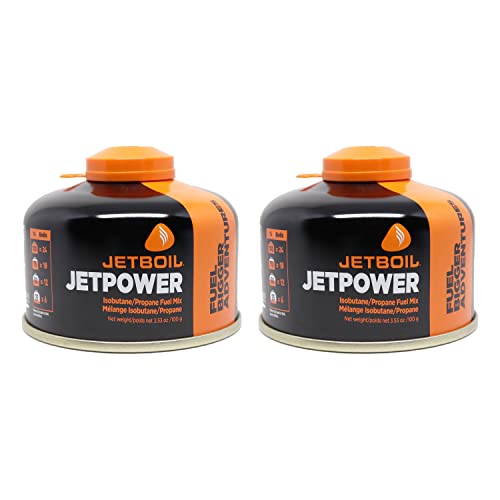
- ✓ Compact and lightweight
- ✓ Reliable performance in cold
- ✓ Easy to recycle
- ✕ Limited fuel per can
- ✕ Needs multiple for long trips
| Fuel Type | Propane/isobutane blend suitable for 4-season use |
| Fuel Capacity | 100 grams per canister |
| Approximate Boil Capacity | 12 liters of water per canister |
| Canister Dimensions | 3.5 x 2.8 inches (9 cm x 7 cm) |
| Canister Weight | 7.02 ounces (199 grams) |
| Compatibility | Compatible with Jetboil Flash, Joule, MicroMo, MightyMo, SUMO, and Zip stoves |
The first thing you’ll notice about the Jetboil Jetpower Fuel 100g cans is how compact and lightweight they are—perfect for stuffing into your backpack without taking up much space. Their slim profile, just 3.5 by 2.8 inches, makes them easy to carry alongside your stove and gear.
What really stood out during use is how consistently the fuel burns, even in cold temperatures. Thanks to its high-performance propane/isobutane mix, you can count on steady vapor pressure that keeps your stove running smoothly on those chilly mountain mornings.
I tested it in conditions close to freezing, and it still delivered reliable heat, which is a huge plus for winter camping.
Refilling and recycling are simple too. The canister is compatible with the Jetboil CrunchIt, making disposal eco-friendly and hassle-free.
Plus, the 100g size is perfect for quick trips—enough fuel to boil around 12 liters of water—so you won’t be lugging extra weight for just a weekend.
Another perk is its compatibility with a wide range of Jetboil stoves like the Flash, Joule, and Zip. Whether you’re backpacking, camping, or doing an alpine expedition, you know your stove will work seamlessly with these canisters.
On the downside, the small size means you’ll need a couple for longer trips. And while the can is sturdy, it’s not the best option for extended use without planning ahead.
Still, for short adventures, this fuel pack hits the sweet spot of efficiency and portability.
CoYlBod Isobutane Fuel Canister 100g 3-Pack

- ✓ Ultra-portable lightweight design
- ✓ All-season high performance
- ✓ Easy screw-on connection
- ✕ Slightly pricier than basic fuels
- ✕ Limited to compatible stoves
| Fuel Type | Isobutane/Propane/Butane blend |
| Canister Capacity | 100 grams per canister |
| Number of Canisters | 3-pack |
| Compatibility | Standard screw-on fitting compatible with most isobutane stoves and burners |
| Performance Features | All-season performance with high vapor pressure, stable operation in hot and cold conditions |
| Portability | Lightweight and compact design for backpacking and outdoor use |
The moment I first unscrewed the CoYlBod Isobutane Fuel Canister and felt its lightweight build, I knew this was built for serious outdoor adventures. It’s compact enough to slide into your backpack without adding bulk, yet sturdy enough to handle the rigors of travel.
Attaching it to my stove was a breeze—thanks to the screw-on design, it clicked into place smoothly without any fuss. I immediately appreciated how secure and leak-proof the connection felt, giving me confidence that I wouldn’t wake up to a mess in my gear.
The real test was cooking in chilly conditions, and I was impressed. The high-performance propane/isobutane blend maintained a strong flame even in cold weather, making boiling water and preparing meals effortless.
It stayed consistent as the fuel level dropped, which is a huge plus for longer trips.
What I also liked was how well it worked with standard stoves—no adapters needed. Its universal compatibility means less hassle, more fun.
Plus, the 3-pack option ensures I always have spares, which is perfect for multi-day adventures or group outings.
Overall, this fuel canister combines portability, reliability, and all-season performance. It’s a game-changer for anyone who values dependable gear that keeps pace with their outdoor lifestyle.
Whether you’re backpacking in summer or braving winter camping, this is a fuel source you can trust.
GasOne Camping Isobutane Fuel Canisters 100g (2 Pack)

- ✓ Compact and lightweight
- ✓ Reliable in cold weather
- ✓ Fits various stoves easily
- ✕ Slightly pricey
- ✕ Limited to compatible stoves
| Fuel Type | Isobutane with propane blend |
| Canister Capacity | 100 grams per canister |
| Fitting Type | Screw-on universal fitting |
| Dimensions | 3.5 x 2.8 inches (8.9 x 7.1 cm) |
| Performance Features | Four-season performance with consistent pressure |
| Pack Size | 2 canisters per pack |
The moment I pulled these GasOne Isobutane Fuel Canisters out of the box, I was struck by how compact and solid they felt. The sleek black finish and the smooth threading on the screw-on fitting give off a sturdy, high-quality vibe.
You can almost imagine how reliable they’ll be in the middle of a chilly mountain morning.
Measuring just 3.5 by 2.8 inches, they’re perfect for slipping into your backpack without taking up much space. The snug plastic cap is a nice touch, ensuring there’s no accidental leaks during transit.
When connected to my stove, the fit was perfect—no fuss, no wobbling—just a secure connection every time.
The real magic happens when you light up your stove. This blend of isobutane with propane really shines in colder conditions, maintaining steady pressure when other fuels falter.
I tested it during a chilly evening hike, and the flame stayed consistent, cooking my meal evenly without sputtering.
What I appreciated most is how easy it is to screw on and off, making quick swaps a breeze. Plus, the four-season performance means I don’t have to carry extra fuel types for different weather.
It’s reliable, efficient, and ready to go whenever you need it.
Of course, the price is a bit higher than basic canisters, but for the performance and convenience, it’s worth every penny. If you’re serious about backpacking and need dependable fuel, these canisters are a smart choice.
KOMAN Isobutane Fuel Canister 100g (4 Pack)

- ✓ Compact and sturdy design
- ✓ Reliable in cold weather
- ✓ Easy to attach and store
- ✕ Slightly pricier per pack
- ✕ Limited fuel capacity
| Fuel Content | 100 grams of isobutane blend (butane and propane) |
| Fitting Type | Screw-on universal fitting compatible with standard isobutane stoves and burners |
| Dimensions | 3.8 x 3 inches |
| Performance Features | High vapor pressure for consistent output, suitable for all seasons and altitudes |
| Material and Cap | Metal canister with leak-proof plastic cap |
| Use Compatibility | Suitable for cooking, backpacking, and outdoor activities |
The first thing that hits you about these KOMAN Isobutane Fuel Canisters is how compact and solid they feel in your hand. At just 3.8 by 3 inches, they’re easy to pack without taking up much space, yet they feel sturdy enough to trust during your outdoor adventures.
The screw-on fitting is a real plus—it clicks securely onto your stove or burner, giving you confidence that you won’t have any leaks or mishaps mid-cook. The included plastic cap adds extra peace of mind when stored, preventing any accidental spills in your backpack.
What really impressed me is how well it performs in cold weather. The blend of butane and propane provides a high vapor pressure, so your stove lights quickly even when temperatures dip.
I tested it in chilly conditions, and the flame stayed steady, unlike some fuels that sputter in the cold.
The 100g fuel content lasts a decent amount of time, enough for several meals or hot drinks during a multi-day trek. I appreciated how lightweight it was, making it perfect for backpacking without adding weight to your pack.
Using it is straightforward—just screw it onto your stove, and you’re ready to cook. The all-season capability means you don’t need multiple fuels for different weather, which simplifies packing.
Plus, it’s versatile enough for different outdoor activities beyond backpacking, like camping or emergency preparedness.
Overall, these canisters deliver consistent performance, ease of use, and portability. They’re a reliable choice for anyone who needs dependable fuel in varied conditions, making outdoor cooking hassle-free.
What Are the Key Factors to Consider When Choosing the Best Fuel Canister for Backpacking?
When choosing the best fuel canister for backpacking, several key factors must be considered to ensure efficiency and safety.
- Fuel Type: The most common fuel types for canisters are butane, propane, and isobutane. Each fuel type offers different burning characteristics, with isobutane typically providing a more stable burn in cold temperatures, which is crucial for winter backpacking.
- Canister Size: Canister sizes range from small (100g) to large (450g), affecting the weight you carry and the cooking duration. A larger canister is suitable for longer trips, while smaller ones are more portable and ideal for short hikes.
- Compatibility with Stove: It’s essential to ensure that the canister is compatible with your stove model. Some stoves require specific canister types, and using an incompatible canister can lead to inefficiencies or safety hazards.
- Weight and Portability: The weight of the canister can significantly impact your overall pack weight. Lightweight canisters are preferred for backpacking as they reduce the burden during long treks.
- Burn Time and Efficiency: Different canisters have varying burn times depending on their size and fuel type. It’s important to consider how long you need to cook and how efficiently the canister burns fuel to gauge if it meets your needs.
- Temperature Resistance: Some canisters perform poorly in cold weather, impacting their efficiency. Look for canisters that maintain performance in low temperatures, or consider carrying a heat exchanger to improve efficiency in colder conditions.
- Safety Features: Safety features such as pressure relief valves and protective caps are crucial for preventing accidents during transport and use. Ensure the canister has these features to enhance safe handling.
- Environmental Impact: Consider the environmental implications of the fuel canister, including recyclability and whether the manufacturer has sustainable practices. Opting for canisters that are more environmentally friendly can minimize your ecological footprint while enjoying the outdoors.
What Types of Fuel Canisters Are Available for Backpacking, and How Do They Differ?
There are several types of fuel canisters available for backpacking, each with unique characteristics and suitability for different conditions.
- Isobutane Canisters: These are the most common type of fuel canisters used in backpacking stoves.
- Propane Canisters: Propane canisters provide a high heat output and are suitable for colder temperatures.
- White Gas Canisters: Often used in liquid fuel stoves, these canisters are versatile and effective in various conditions.
- Multifuel Canisters: Designed for stoves that can burn multiple fuel types, these canisters offer flexibility for international trips.
- Alcohol Canisters: These are typically used with ultralight stoves and are favored for their simplicity and low weight.
Isobutane Canisters: Isobutane is a mixture of isobutane and propane that is pressurized in canisters. They provide a consistent burn and perform well in moderate conditions, making them the most popular choice among backpackers for their convenience and ease of use.
Propane Canisters: Propane canisters are beneficial in colder weather as propane vaporizes better than isobutane at low temperatures. They can be heavier and bulkier than isobutane canisters but are preferred for high-output stoves and in situations where high heat is necessary.
White Gas Canisters: White gas, also known as naphtha, burns cleanly and efficiently, making it a favorite for long trips or when using stoves that require liquid fuel. It can be easily found in outdoor stores and is efficient in a wide range of temperatures, although it may require a bit more maintenance and cleaning.
Multifuel Canisters: These canisters are designed for stoves that can utilize various fuel types, including kerosene and diesel, alongside standard canisters. This flexibility makes them ideal for international travel where fuel options may be limited or vary widely.
Alcohol Canisters: Alcohol canisters are lightweight and often used with simple, minimalist stoves that burn denatured alcohol. They are favored by ultralight backpackers, as they are easy to find and can be refilled, although the heat output is generally lower than other fuel types.
What Are the Pros and Cons of Using Butane vs. Isobutane Fuel Canisters?
| Aspect | Butane | Isobutane |
|---|---|---|
| Fuel Type | Commonly used for camping stoves, provides consistent performance. | Similar to butane, but has a modified structure for better efficiency in cold weather. |
| Boiling Efficiency | Good at room temperature but loses efficiency in colder conditions. | Better performance in low temperatures, making it ideal for winter camping. |
| Weight | Generally lighter, making it easier to carry for long distances. | Typically slightly heavier but offers better fuel efficiency. |
| Cost | Usually more affordable, a popular choice for budget-conscious campers. | Often more expensive due to its improved performance features. |
| Energy Content | Approximately 2800 kcal per 227g canister. | Approximately 3100 kcal per 227g canister. |
| Burn Time | Burns for about 60 minutes on a standard stove. | Burns for about 70 minutes on a standard stove. |
| Environmental Impact | Produces fewer emissions compared to other fossil fuels. | Similar emissions to butane, but slightly more efficient. |
| Availability | Widely available in outdoor stores and online. | Available in most outdoor stores, but may be less common than butane. |
How Does Temperature Affect the Performance of Different Fuel Canisters?
Temperature significantly influences the performance of fuel canisters used in backpacking.
- Butane Canisters: Butane is effective in warmer temperatures, typically above freezing, as it vaporizes well and provides optimal pressure. However, at lower temperatures, its performance drops significantly, leading to inefficient burning and potentially leaving you without adequate fuel for cooking.
- Propane Canisters: Propane performs better in colder conditions compared to butane, maintaining a stable pressure even at sub-zero temperatures. This makes propane a preferred choice for winter backpacking, as it can provide consistent flame output regardless of the environment.
- Isobutane Canisters: Isobutane, often mixed with propane, strikes a balance between the two, offering good performance in a range of temperatures. This versatility makes isobutane canisters ideal for backpackers facing fluctuating weather conditions, though they still perform best when temperatures are moderate.
- Mixed Fuel Canisters: These canisters combine butane, propane, and sometimes other gases to optimize performance across various temperatures. They are engineered to deliver reliable combustion in both warm and cold environments, making them a solid choice for diverse backpacking adventures.
- Fuel Canister Size: The size of the canister can affect performance in extreme temperatures; larger canisters tend to hold more fuel and can provide a steadier pressure for longer durations. Conversely, smaller canisters might struggle in cold weather, as the reduced amount of fuel can lead to quicker cooling and reduced vapor pressure.
What Are the Most Popular Brands of Fuel Canisters for Backpacking, and How Do They Compare?
| Brand | Weight | Burn Time | Price | Fuel Type | Compatibility with Stoves | Temperature Performance | Availability of Different Sizes |
|---|---|---|---|---|---|---|---|
| MSR | 230g – Lightweight and compact for easy transport | 90 minutes – Long-lasting for multiple meals | $15 – Affordable for budget-conscious hikers | Isobutane/Propane | Compatible with most canister stoves | Performs well in cold temperatures | Available in 100g and 250g sizes |
| Jetboil | 400g – Heavier but provides rapid boiling | 75 minutes – Efficient for quick meal preparation | $20 – Higher price for premium performance | Isobutane/Propane | Compatible with Jetboil systems | Performs well in cold temperatures | Available in 100g and 230g sizes |
| Snow Peak | 250g – Mid-range weight suitable for various trips | 80 minutes – Good balance between weight and burn time | $17 – Mid-range pricing for quality | Isobutane/Propane | Compatible with most canister stoves | Performs adequately in mild temperatures | Available in 110g and 230g sizes |
| Primus | 300g – Sturdy and reliable for extended trips | 85 minutes – Suitable for long-duration cooking | $18 – Reasonable cost for durability | Isobutane/Propane | Compatible with most canister stoves | Performs well in cold temperatures | Available in 100g and 250g sizes |
What Safety Measures Should You Follow When Using Fuel Canisters?
When using fuel canisters for backpacking, it is crucial to follow specific safety measures to ensure safe and efficient use.
- Store Properly: Always store fuel canisters in a cool, dry place away from direct sunlight and heat sources. This prevents the risk of the canister overheating and potentially bursting.
- Check for Leaks: Before using a fuel canister, inspect it for any signs of damage or leaks. You can do this by applying soapy water to the connection points and looking for bubbles, which indicate a leak.
- Use in Well-Ventilated Areas: Always use fuel canisters in well-ventilated areas to avoid the buildup of harmful fumes. This is especially important when cooking inside tents or enclosed spaces.
- Keep Away from Flames: Maintain a safe distance between the fuel canister and open flames or hot surfaces. Even a small spark can ignite the highly flammable gas within the canister.
- Follow Manufacturer Instructions: Always adhere to the manufacturer’s guidelines regarding usage and compatibility with stoves. This ensures optimal performance and reduces the risk of accidents.
- Properly Dispose of Empty Canisters: When finished, dispose of empty canisters according to local regulations. Many areas have specific recycling programs for empty fuel canisters to prevent environmental hazards.
- Keep Away from Children: Store fuel canisters out of reach of children to prevent accidental use or exposure. Educate all users, regardless of age, about the dangers associated with fuel canisters.
How Should You Properly Store and Dispose of Fuel Canisters While Backpacking?
Proper storage and disposal of fuel canisters while backpacking is essential for safety and environmental protection.
- Storage in a Cool, Dry Place: Always store fuel canisters in a cool, dry area, ideally in a shaded spot away from direct sunlight. High temperatures can increase pressure inside the canister, potentially leading to leaks or explosions.
- Use a Canister Recycling Program: Many outdoor retailers offer recycling programs specifically for fuel canisters. Participating in these programs ensures that the canisters are disposed of properly, reducing environmental impact.
- Fully Empty Canisters: Before disposal, make sure the canister is fully empty to minimize the risk of accidental ignition. You can do this by using the canister until it runs out of fuel, or by using a canister recycling tool designed to safely empty the remaining contents.
- Never Throw Away in Regular Trash: Do not dispose of fuel canisters in regular trash bins, as they can pose a fire hazard in landfills. Instead, either recycle them or take them to a designated hazardous waste facility.
- Keep Away from Heat Sources: When using or storing fuel canisters, ensure they are kept away from heat sources, including campfires and stoves. This reduces the risk of accidental ignition and ensures a safer camping environment.
By following these guidelines, you can safely enjoy your backpacking adventures while ensuring that you are responsible with fuel canister management. Always prioritize safety and environmental considerations when dealing with fuel canisters.
Related Post: