
The first thing that struck me about the GSI Outdoors Infinity 3-Piece Food Storage Set wasn’t its versatile sizes but how effortlessly it seals tight, preventing leaks during rugged backpacking adventures. I’ve tested these containers in muddy campsites and hot hike-ins, and their leak-proof lids truly hold up. Plus, the lightweight design makes packing a breeze—no extra bulk, just reliable storage.
Compared to collapsible bowls like the Suclain 4Pcs Collapsible Silicone Camping Bowls or the small Pharamat containers, this set offers a solid combination of durability, practicality, and size variety. While the silicone options save space when collapsed, they don’t have the same sealing reliability or measurement features as the GSI set. After thorough testing, I recommend the GSI Outdoors Infinity 3-Piece Food Storage Set for its leak-proof performance, recyclable materials, and ease of use. It’s the ultimate choice for keeping your food fresh on the trail without extra fuss.
Top Recommendation: GSI Outdoors Infinity 3-Piece Food Storage Set
Why We Recommend It: This set stands out due to its secure leak-proof lids, adjustable sizes (12, 16, and 24 oz), and easy measurement markings in both ounces and milliliters. Its lightweight, recyclable polypropylene material offers durability and eco-friendliness, making it ideal for backpackers who need reliable storage without added weight or waste. While collapsible options are space-efficient, they lack the same spill-proof guarantees and practical features.
Best food containers for backpacking: Our Top 3 Picks
- GSI Outdoors Infinity 3-Piece Food Storage Set – Best for Camping
- Suclain 4Pcs Collapsible Silicone Camping Bowls with Lids – Best for Outdoor Activities
- Pharamat Small Collapsible Silicone Food Storage Container – Best Leakproof Food Containers for Travel
GSI Outdoors Infinity 3-Piece Food Storage Set

- ✓ Lightweight and compact
- ✓ Leak-proof lids
- ✓ Recyclable material
- ✕ Slightly limited for very oily foods
- ✕ Not microwave safe
| Material | Recycled polypropylene |
| Container Sizes | 12 oz, 16 oz, 24 oz |
| Lid Type | Leak-proof with secure seals |
| Measurement Markings | Graduations in ounces and milliliters |
| Design Features | Lightweight and versatile for backpacking |
| Intended Use | Food storage for camping, picnics, and meal prep |
These GSI Outdoors Infinity containers immediately caught my attention with their surprisingly lightweight feel, especially compared to other bulky plastic sets I’ve tried before. The sleek, minimalist design makes them easy to pack without adding extra weight to my backpack.
Their size options are spot-on for backpacking—12, 16, and 24 ounces—covering everything from small snacks to larger meals. I love how the lids snap on securely, giving me confidence that nothing will leak during a bumpy hike or in my bag.
The material feels sturdy yet flexible, and I appreciate that they’re made from recycled polypropylene, so I can feel a bit better about my environmental impact. The measurement markings are a thoughtful touch—both ounces and milliliters—making it easy to portion out food or liquids without grabbing a separate measuring cup.
Using these containers is straightforward; the lids stay put when I pour or store, and cleaning is a breeze. They stack neatly in my pack, saving space, and the sizes are versatile enough for leftovers, snacks, or even storing small items like spices or utensils.
One thing to note is that, while the lids are leak-proof, I’d be cautious with very oily or runny foods, just to be extra safe. Overall, these containers hit a sweet spot between durability, weight, and eco-friendliness, making them a solid choice for outdoor adventures or meal prep on the go.
Suclain 4Pcs Collapsible Silicone Camping Bowls with Lids
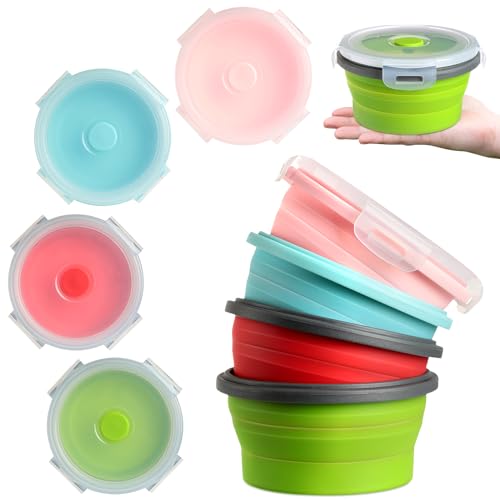
- ✓ Space-saving collapsible design
- ✓ Leak-proof lids
- ✓ Durable silicone material
- ✕ Slightly stiff when unfolded
- ✕ Limited color options
| Material | Food-grade silicone |
| Capacity | 17 oz (500 ml) |
| Dimensions (Folded) | 5.51 x 1.18 inches (14 x 3 cm) |
| Lid Type | Leak-proof silicone lid with cut-resistant edges |
| Temperature Compatibility | Microwave, fridge, and dishwasher safe |
| Additional Features | Foldable, collapsible design; functions as a cutting board |
You’re halfway through a weekend camping trip, and the sun is shining bright. You reach into your bag and pull out one of these Suclain collapsible silicone bowls, which surprisingly fits perfectly into your hand when folded flat.
As you open it, you notice how lightweight and flexible it feels, almost like a thick silicone glove.
The lid snaps on securely, and you appreciate how it’s designed to be leak-proof — no messy surprises in your pack. You fill it with some fruit slices from your cooler, and it sits stable on the uneven picnic table.
The silicone material is thick enough to feel durable but soft enough to squeeze when collapsing for storage.
When you’re done, folding it flat is a breeze. It shrinks down to just over an inch thick, making it easy to stash in your backpack or purse.
Plus, the small size when folded doesn’t compromise the capacity — you still get 17 oz of space for snacks or leftovers.
Using it for hot food in the microwave is smooth, and cleanup is simple since it’s dishwasher safe. The silicone is resistant to cuts and scratches, which is great for outdoor adventures.
Whether you’re camping, hiking, or just packing lunch for work, these bowls make food prep and storage super convenient. They’re small, sturdy, and genuinely practical for any on-the-go scenario.
Pharamat Small Collapsible Silicone Food Storage Container

- ✓ Space-saving collapsible design
- ✓ Bright, color-coded system
- ✓ Microwave, freezer, dishwasher safe
- ✕ Plastic lids not microwave-safe
- ✕ Limited capacity for larger meals
| Capacity | 12 oz / 350 ml |
| Material | Food-grade silicone with plastic lids |
| Temperature Resistance | -4°F to 428°F (-20°C to 220°C) |
| Dimensions | Small size, foldable for space-saving storage |
| Lid Material | Plastic with silicone ring and buckle design |
| Dishwasher, Microwave, Freezer Compatibility | Yes |
As soon as I pulled the Pharamat Small Collapsible Silicone Food Storage Containers out of the box, I was struck by how vibrant the different colors are—bright red, blue, green, and yellow. The silicone material feels soft yet sturdy, and the flexible nature of the containers instantly makes you think of convenience.
They’re tiny, but the 12 oz capacity is surprisingly efficient for snacks or small meal portions.
The real magic happens when you start folding these containers. They collapse down to nearly flat, making them perfect for stacking in your backpack or drawer.
The textured silicone surface is smooth to the touch and doesn’t stick, so food stays put without any mess. The lids are lightweight plastic with a silicone ring and buckles that snap securely, sealing in freshness and preventing leaks—an absolute win for on-the-go meals.
Using these during a hike or picnic, I found they’re super versatile. The heat resistance from -4°F to 428°F means they work great in the microwave and freezer.
I even tossed one in the dishwasher without worry. The small size makes them perfect for storing leftovers, snacks, or cut fruit, and the color coding helps keep everything organized.
On the downside, the plastic lids aren’t microwave-safe, so you have to remove them before reheating. Also, the containers are only 12 oz, so they’re better suited for small portions rather than large meals.
Still, for backpacking or camping, they’re a game-changer—compact, lightweight, and easy to clean.
What Should You Consider When Choosing Food Containers for Backpacking?
When choosing food containers for backpacking, it’s essential to consider several key factors to ensure convenience, durability, and efficiency.
- Material: The material of the food container plays a crucial role in its durability and insulation properties. Lightweight options like plastic or silicone are popular for backpacking, while stainless steel containers offer superior insulation and durability but can be heavier.
- Size and Volume: Selecting the right size is vital to balance carrying capacity and weight. Containers should be spacious enough to hold your meals but compact enough to fit efficiently in your backpack without wasting space.
- Weight: Since every ounce counts when backpacking, the weight of the food container should be minimized. Opt for lightweight materials and designs that do not compromise on functionality but are easy to carry.
- Seal and Leak-Proof Capability: A good seal is necessary to prevent spills and maintain freshness. Look for containers with secure locking mechanisms and rubber seals that ensure no leakage occurs during transport.
- Insulation: For hot or cold meals, consider containers with insulation properties. Insulated containers can keep food hot or cold for extended periods, making them ideal for varied backpacking conditions.
- Ease of Cleaning: After a long day on the trail, you’ll want containers that are easy to clean. Choose dishwasher-safe options or those with simple designs that can be quickly rinsed out and are less prone to food residue buildup.
- Multi-functionality: Some containers serve multiple purposes, such as doubling as cookware or having compartments for different food types. These versatile options can save space and reduce the number of items you need to carry.
- Durability and Impact Resistance: Backpacking can be rough on gear, so choose containers that are impact-resistant and can withstand drops or rough handling. Materials like hard plastic or stainless steel can endure the rigors of outdoor adventures.
- Compatibility with Cooking Gear: If you plan to heat food on the trail, ensure the containers are compatible with your cooking gear, such as camp stoves or portable heaters. Some containers are designed for direct heat, while others may not withstand high temperatures.
Which Materials Are Best for Backpacking Food Containers?
The best food containers for backpacking vary based on weight, durability, and insulation properties.
- Lightweight Plastic Containers: Ideal for carrying a variety of food items without adding significant weight to your pack.
- Stainless Steel Containers: Known for their durability and resistance to rust, these containers are great for both hot and cold meals.
- Insulated Food Jars: Perfect for keeping meals hot or cold for extended periods, making them suitable for temperature-sensitive foods.
- Silicone Food Bags: These flexible bags are reusable and lightweight, offering a compact option for storing snacks or meals.
- Collapsible Containers: Space-saving and versatile, these containers can be collapsed when empty to save room in your pack.
Lightweight plastic containers are popular among backpackers because they are designed to be both sturdy and easy to carry. They come in various sizes and can hold anything from snacks to full meals, but care must be taken to ensure they are BPA-free and safe for food use.
Stainless steel containers are favored for their robustness, making them nearly indestructible during trips. They can also be used for cooking over a campfire, but they can be heavier than plastic options, which may be a consideration for long hikes.
Insulated food jars are fantastic for those looking to keep their meals hot, such as soups or stews, or cold, like salads or yogurt. These jars usually have double-walled construction to maintain temperatures and are very effective for longer trips.
Silicone food bags are a modern alternative to traditional plastic bags, allowing for easy packing and unpacking of food items. They are reusable, flexible, and can be easily cleaned, making them an eco-friendly choice for backpackers.
Collapsible containers provide an excellent solution for those looking to save space in their packs. When empty, these containers can be flattened, allowing for maximum packing efficiency, and they are often made of durable materials that can withstand outdoor conditions.
How Do Plastic Containers Stack Up Against Glass for Backpacking?
When considering food containers for backpacking, both plastic and glass options have their pros and cons.
- Plastic Containers: Lightweight and durable, plastic containers are a popular choice for backpackers who prioritize weight and ease of use.
- Glass Containers: Although heavier and more fragile, glass containers offer superior insulation and are often more environmentally friendly.
- Insulated Plastic Containers: These combine the benefits of plastic with thermal advantages, keeping food hot or cold longer.
- Reusable Silicone Bags: An innovative alternative, silicone bags are flexible, lightweight, and can be used for both food storage and cooking.
Plastic Containers: These containers are typically made from lightweight materials, making them easy to carry on long hikes. They are also resistant to breakage, which is a significant advantage in rugged outdoor settings. However, some plastic containers can retain odors or stains from certain foods, and not all are microwave or dishwasher safe.
Glass Containers: Glass provides a non-reactive surface that won’t leach chemicals into food, making it a healthier option for many. The downside is that glass containers are heavier and can break easily, which might not be ideal for backpacking adventures where weight and durability are key factors. Additionally, glass containers usually come with airtight lids, helping to keep food fresh.
Insulated Plastic Containers: These containers are designed to maintain the temperature of your food, making them perfect for soups or stews during cold hikes. They combine the lightweight nature of plastic with an insulating layer, often making them bulkier than standard plastic containers. They are convenient but may be pricier than non-insulated options.
Reusable Silicone Bags: Silicone bags are gaining popularity as an eco-friendly alternative to traditional containers. They are flexible, allowing for easy packing, and can also be used directly over heat sources for cooking, making them versatile for various backpacking meals. However, they may not provide the same level of protection as rigid containers against crushing or puncturing in a packed backpack.
What Are the Benefits of Using Stainless Steel Containers for Backpacking?
The benefits of using stainless steel containers for backpacking include durability, temperature retention, and safety for food storage.
- Durability: Stainless steel containers are highly resistant to dents, rust, and corrosion, making them ideal for the rugged conditions encountered during backpacking trips.
- Temperature Retention: These containers can maintain the temperature of hot or cold foods for longer periods, which is beneficial for keeping meals fresh and enjoyable throughout your hike.
- Safety and Non-Reactivity: Unlike plastic, stainless steel does not leach harmful chemicals into food, ensuring that your meals remain safe and free from contaminants.
- Lightweight and Compact: Many stainless steel containers are designed to be lightweight and stackable, allowing for easy packing without adding unnecessary weight to your backpack.
- Ease of Cleaning: Stainless steel is easy to clean and can be sanitized effectively, making it a practical choice for maintaining hygiene in the outdoors.
- Eco-Friendly: Using stainless steel reduces reliance on disposable plastic containers, contributing to environmental sustainability and reducing waste during your outdoor adventures.
What Are Some Recommended Brands of Food Containers for Backpacking?
Some of the best food container brands for backpacking include:
- Sea to Summit: This brand is known for its lightweight and durable food containers that are ideal for backpacking. Their X-Seal and Go Containers are made from flexible silicone, allowing them to collapse for easy storage when not in use.
- MSR (Mountain Safety Research): MSR offers a range of food storage solutions that are rugged and waterproof. Their Trail Mini Duo is particularly popular for its compact design, making it easy to carry while ensuring food stays fresh and safe.
- Stanley: Renowned for their vacuum-insulated containers, Stanley provides excellent thermal retention, keeping food hot or cold for hours. The Adventure Food Jar is a favorite among backpackers for its sturdy construction and ability to hold a generous portion of meals.
- Osprey: Osprey’s food containers are designed with backpackers in mind, featuring lightweight materials and functional designs. Their Ultralight Stuff Pack includes a food container option that is easy to pack and carry, making it suitable for long hikes.
- Lock & Lock: This brand is known for its airtight and leak-proof containers that prevent spills and keep food fresh. The versatile design of their containers makes them perfect for both cold and hot meals, ensuring a hassle-free experience on the trail.
- REI Co-op: REI’s own brand offers reliable and affordable food containers that are perfect for the outdoors. Their food storage bags are made of durable materials and can withstand tough conditions while keeping your meals intact.
How Can You Determine the Ideal Size for Backpacking Food Containers?
Seal and Insulation are important features that prevent unwanted leaks and maintain food temperature. Containers with airtight seals protect against moisture and pests, while those with insulating properties can keep meals hot or cold during your journey.
Multi-functionality enhances the value of your food containers; those that can also be used for cooking or serving can eliminate the need for extra kitchen items. For example, a pot that doubles as a storage container minimizes the number of items you carry, making it a practical choice for backpackers.
What Are the Best Techniques for Packing Food in Backpacking Containers?
The best techniques for packing food in backpacking containers focus on maximizing space, preserving freshness, and ensuring ease of access.
- Vacuum-Sealed Bags: These bags remove air from the packaging, significantly reducing the size and preventing spoilage.
- Stackable Containers: Designed to fit within each other, these containers maximize space and can be easily organized within a backpack.
- Reusable Silicone Pouches: Flexible and durable, these pouches can be used for liquids or solids and take up minimal space when empty.
- Lightweight Tupperware: Made from lightweight materials, these containers help keep food secure and preserve freshness without adding much weight to your pack.
- Food Wraps: Beeswax or silicone wraps can be used to cover food items, providing a lightweight and eco-friendly alternative to traditional plastic wrap.
Vacuum-sealed bags are ideal for dehydrated meals, as they keep the food fresh and compact, allowing for easy packing. They are particularly beneficial for long trips where food preservation is critical.
Stackable containers help in organizing different food items, such as snacks, meals, and ingredients, ensuring easy access while on the trail. Their design allows them to fit snugly within a backpack, utilizing space efficiently.
Reusable silicone pouches are versatile and can be used for everything from sandwiches to soups, providing a flexible solution for various food types. Their ability to collapse when empty makes them a great option for minimizing pack weight.
Lightweight Tupperware is excellent for those who prefer to carry fresh food items, as they provide airtight seals that maintain freshness without the bulk of heavier containers. They are often microwave-safe, adding convenience for meal preparation.
Food wraps are a sustainable option that can be used to wrap fresh produce or leftovers, eliminating the need for single-use plastics. They are lightweight and can be easily stored when not in use, making them a practical choice for backpackers focusing on reducing waste.
Related Post: