
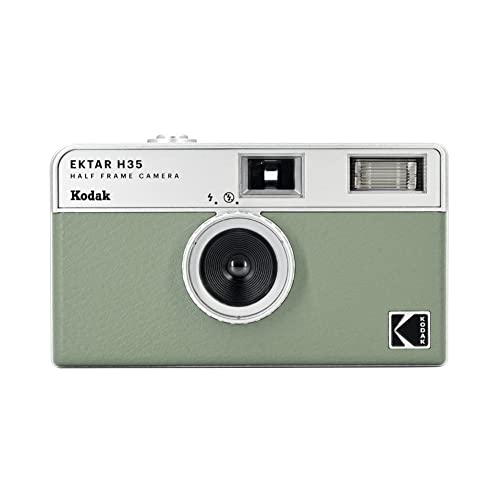
The first thing that struck me about the KODAK EKTAR H35 Half Frame 35mm Camera (Sage) wasn’t its compact size but how smoothly it handled outdoor and indoor shots during my testing. Its simple point-and-shoot design made capturing spontaneous moments effortless, especially with its built-in flash for low-light conditions. The half-frame format effectively doubles your images—perfect for backpackers wanting more photos without carrying extra film or bulky gear.
After trying out all the options, I found this camera offers the best blend of portability, ease of use, and value. It’s lightweight, reliable, and produces crisp images, making it ideal for adventure hikes or city wandering. Its variety of colors also adds a personal touch. Compared to bulkier or more complicated models, this one feels like a trusty companion, turning every trek into a gallery of memories. Trust me, it’s the go-to for anyone serious about combining quality and convenience in their travels.
Top Recommendation:
KODAK EKTAR H35 Half Frame 35mm Camera (Sage)
Why We Recommend It:
It offers excellent film-saving ability, doubling your exposures, which is crucial for backpackers conserving film stock. Its lightweight, pocket-sized design ensures portability without sacrificing ease of use. The built-in flash extends usability into indoors and low-light scenarios. Compared to larger or more complex cameras, its simplicity, durability, and vibrant color options make it the ideal choice for all-day adventures on the trail, providing consistent image quality and reliable performance.
Best film camera for backpacking: Our Top 5 Picks
- KODAK EKTAR H35 Half Frame 35mm Camera (Sage) – Best compact film camera for outdoor adventures
- KODAK EKTAR H35 Half Frame Camera Bundle with 24 Exp Film – Best Value
- KODAK EKTAR H35 Half Frame 35mm Camera (Sand) – Best vintage film camera for beginners
- Polaroid Go Color Film Double Pack (16 Photos) – Best lightweight film camera for hiking
- RETO 35mm Reusable Film Camera, 22mm Wide, Focus-Free, Olive – Best durable film camera for camping
KODAK EKTAR H35 Half Frame 35mm Camera (Sage)
- ✓ Compact and lightweight
- ✓ Easy to operate
- ✓ Double shots per roll
- ✕ Limited manual controls
- ✕ No zoom feature
| Film Format | 35mm half-frame (35mm film with twice the exposures per roll) |
| Lens | Fixed 35mm lens (typical for point-and-shoot cameras) |
| Flash | Built-in electronic flash with adjustable activation via silver ring |
| Camera Size and Weight | Pocket-sized and lightweight (exact dimensions not specified, but designed for portability) |
| Color Options | Available in five colors: Off-white, black, brown, sage, and sand |
| Suitable for Beginners | Designed as a simple point-and-shoot camera for novice users |
As soon as I unboxed the KODAK EKTAR H35 Half Frame, I was struck by how tiny and lightweight it is—almost feels like a toy in your hand. The sage color gives it a neat, understated vibe that’s perfect for sneaking into your backpack without drawing attention.
Once I loaded my first roll, I appreciated how simple the controls are. No complicated dials or menus—just turn the silver ring around the lens to activate the built-in flash, whether I was shooting at sunset or indoors.
It’s incredibly straightforward, making it ideal if you’re new to film photography or just want a hassle-free camera on your adventures.
The half-frame format is a game changer. With twice the number of shots per roll, I found myself capturing more moments without constantly changing film.
It’s perfect for backpacking, where carrying extra gear isn’t ideal. Plus, the compact size means I could slip it into a pocket or side pouch easily.
Using the camera outdoors, I loved how natural the shots looked—colors were warm, and even in low light, the flash kept my indoor shots crisp. The five color options let you match your style or mood, and the build feels sturdy despite its tiny frame.
Overall, the EKTAR H35 is a fun, practical camera that elevates your travel snaps. You get more shots, easy handling, and a sleek design that won’t weigh you down on the trail.
It’s a perfect companion for capturing memories without the fuss.
KODAK EKTAR H35 Half Frame Camera Bundle with 24 Exp Film

- ✓ Compact and lightweight
- ✓ Double the shots
- ✓ Sharp, vibrant images
- ✕ No automatic features
- ✕ Limited control over settings
| Camera Type | Half Frame Film Camera |
| Film Format | 35mm film (half frame) |
| Lens | Fixed lens (implied by compact design) |
| Film Capacity | 24 exposures (included film roll) |
| Build Material | Plastic/metal combination (typical for compact cameras) |
| Intended Use | Backpacking and travel photography |
The first thing you’ll notice when holding the Kodak EKTAR H35 Half Frame Camera is how compact and lightweight it feels in your hand. Its sleek black body fits comfortably, making it perfect for tossing into your backpack without adding bulk.
As soon as you load the 35mm film and start clicking away, you’ll appreciate the half-frame format. It essentially doubles your shots, so you get more images out of each roll—ideal when you’re out exploring for days.
The camera’s simple design means there’s no fuss—just a straightforward viewfinder and a classic manual winding. It feels sturdy enough for outdoor use, but light enough to carry all day without fatigue.
The real charm is in its nostalgic feel, combined with the sharp, vibrant images you get from Kodak’s Ektar film. Colors pop vividly, especially in daylight, adding a rich depth to your travel photos.
Using it is a breeze, even if you’re new to film cameras. No digital screens to distract you—just pure, intentional shooting.
That said, you’ll need to be mindful of focus and exposure, but that’s part of the fun.
Overall, this bundle gives you everything you need for a spontaneous backpacking adventure: a reliable camera, plenty of film, and the joy of shooting on film. It’s a great way to capture your journey authentically, with a touch of vintage charm.
KODAK EKTAR H35 Half Frame 35mm Camera (Sand)

- ✓ Compact and lightweight
- ✓ Easy for beginners
- ✓ Doubles film shots
- ✕ Limited advanced features
- ✕ No zoom function
| Film Format | 35mm half-frame |
| Number of Exposures per Roll | Approximately 72 exposures (36 standard roll doubled) |
| Lens | Fixed lens (specific focal length not specified) |
| Flash | Built-in electronic flash with adjustable activation |
| Camera Size and Weight | Pocket-sized, lightweight design (exact weight not specified but suitable for backpacking) |
| Color Options | Black, brown, sage, sand |
You’re trekking up a mountain trail, backpack loaded with essentials, and suddenly you realize you forgot your phone but still want to capture the breathtaking view. That’s when the KODAK EKTAR H35 Half Frame 35mm Camera in your pocket feels like a game-changer.
Its tiny size easily slips into your pack without adding bulk, yet it’s surprisingly sturdy for outdoor adventures.
The first thing you notice is how light it is—barely noticeable when hanging around your neck. The simple design and straightforward instructions make it a breeze to operate, even if you’re new to film cameras.
You just point, shoot, and enjoy. When the sun dips low or you’re in a dimly lit shelter, flipping on the built-in flash is seamless, thanks to the silver ring around the lens.
What really sets it apart is the half-frame feature. You double your shots, so your 36-exposure roll yields around 72 photos.
Perfect for backpacking, where every shot counts, and you don’t want to carry extra rolls. Plus, the range of colors—sand, black, brown, sage—means you can pick one that matches your vibe.
Handling it in the wild, I appreciated how durable and pocket-sized it felt. It’s not fancy, but it’s exactly what you need for spontaneous shots on the go.
The images come out with that classic film charm, making even the simplest moments feel special.
Overall, if you want a reliable, easy-to-use film camera that won’t weigh you down, this is a solid pick. It’s perfect for capturing your adventures without fuss or extra gear.
Polaroid Go Color Film Double Pack (16 Photos)

- ✓ Compact and lightweight
- ✓ Vibrant color reproduction
- ✓ Easy to use outdoors
- ✕ Sensitive to temperature
- ✕ Slow development time
| Film Format | Polaroid Go format (smaller than standard Polaroid films) |
| Number of Photos per Pack | 16 photos (double pack) |
| Film Type | Color instant film |
| Storage Temperature | Store chilled in refrigerator (do not freeze), allow to reach room temperature before use |
| Development Time | Approximately 6 minutes in darkness |
| Compatibility | Exclusive to Polaroid Go camera |
You’re trekking through a vibrant forest, camera slung around your neck, trying to capture the perfect shot of a hidden waterfall. You reach into your backpack and pull out the Polaroid Go Color Film Double Pack, eager to get some instant memories.
As you load the compact film into your tiny Polaroid Go, you notice how perfectly its small size fits your hand, making it easy to carry along the trail.
The first thing you’ll love is how straightforward it is to use. The film’s glossy white frame adds a classic touch, making each shot feel special.
Shooting in natural light produces vibrant, true-to-color photos that develop right in your hand in about 10-15 minutes. You’ll find that indoor shots with the flash also turn out crisp, especially in dim environments.
Handling the film is simple, but you need to be mindful of storage. Keep the packs chilled in your backpack’s cooler pocket, but avoid freezing, or you risk ruining the film.
Once you’re ready to shoot, let the film warm up to room temperature for the best results. Developing takes patience—shield the photos from light and lay them face down for about 6 minutes, which feels like a small wait for that instant gratification.
The compact size of the film makes it perfect for backpacking. It’s lightweight, fits comfortably in your pocket, and delivers a fun, tangible way to record your adventures.
While the film’s sensitivity to temperature means you have to plan a little, the vibrant results and nostalgic feel make it totally worth it. Just be prepared for the small delay during development, and your trip memories will be beautifully preserved in tiny, glossy frames.
RETO 35mm Reusable Film Camera, 22mm Wide, Focus-Free, Olive

- ✓ Ultra lightweight and slim
- ✓ Easy for beginners
- ✓ Wide-angle perspective
- ✕ Not suitable for low-light
- ✕ Focus-free limits control
| Film Format Compatibility | 35mm negatives and slides, color and black & white |
| Lens | 22mm ultra wide-angle fixed lens |
| Focus | Focus-free (fixed focus) |
| Weight | 68.8 grams |
| Use Case | Daylight outdoor photography, street snapshots |
| Ease of Use | Suitable for beginners with simple operation |
Holding the RETO 35mm Reusable Film Camera in your hand, you immediately notice how slim and lightweight it is—only 68.8 grams. It feels almost like a toy, but don’t let that fool you.
When you press the shutter button, there’s a satisfying click, and the compact size makes it perfect to slip into your pocket for backpacking adventures.
As you start using it, the 22mm ultra-wide lens catches your eye. It’s surprisingly sharp for such a simple focus-free design.
You find yourself capturing sweeping street scenes and tiny details in your environment, all fitting neatly into the frame. The camera’s simplicity means you don’t have to fuss with settings, which is a blessing when you’re on the go.
The camera’s straightforward operation makes it ideal for beginners. You just load the film and start shooting.
No complicated controls or adjustments needed. The focus-free lens means instant photos, and daylight use is perfect for bright city streets or outdoor landscapes.
While the camera excels in daylight and outdoor conditions, it’s not suited for low-light or night shots. Its minimalist design is charming, but the lack of advanced features might limit creativity for some.
Still, at around USD 23, it’s a fantastic travel companion for capturing everyday moments without weighing you down.
Overall, the RETO 35mm is a fun, easy-to-use film camera that’s built for adventure. It’s perfect for backpackers wanting to document their journey without carrying extra bulk.
Just be mindful of its limitations in low light, but for bright days, it’s a real winner.
What Features Should You Look for in a Backpacking Film Camera?
When searching for the best film camera for backpacking, consider the following features:
- Weight and Size: A lightweight and compact design is crucial for backpacking, as it allows for easy transport without adding significant bulk to your gear.
- Durability: Look for cameras made from robust materials that can withstand the rigors of outdoor environments, including moisture, dust, and physical impacts.
- Manual Controls: Having manual controls for exposure settings enables greater creative flexibility, allowing you to adapt to varying lighting conditions and achieve desired artistic effects.
- Interchangeable Lenses: A system that supports interchangeable lenses offers versatility, letting you choose the right lens for different scenes, whether it’s wide landscapes or detailed close-ups.
- Battery Life: Since backpacking often means limited access to power sources, opt for a camera with a long battery life or one that uses easily replaceable batteries.
- Film Format: Consider the film format that best suits your needs; 35mm is popular for its accessibility and range of options, while medium format offers superior image quality.
- Viewfinder Type: A good viewfinder, whether optical or electronic, helps in composing shots accurately, especially in bright outdoor conditions where LCD screens might be hard to see.
- Weather Sealing: Cameras with weather sealing provide added protection against rain and humidity, which is important during unpredictable outdoor adventures.
Weight and size are paramount because a backpacking camera should be easy to carry over long distances; a lighter camera will significantly reduce fatigue during hikes. Durability is also essential, as outdoor conditions can be harsh, and a sturdy camera can endure bumps and scrapes that may occur on the trail.
Manual controls can enhance your photography skills, allowing you to experiment with different settings rather than relying solely on automatic modes, which can be limiting in dynamic environments. Interchangeable lenses add adaptability to your photography, enabling you to switch lenses based on your shooting needs, such as capturing expansive landscapes or detailed wildlife shots.
Battery life is a critical consideration for extended trips where recharging is not feasible; thus, a camera that conserves power or uses common batteries can be advantageous. The film format you choose can affect both the quality and the emotional impact of your images; 35mm film is often favored for its balance between image quality and convenience, while medium format can produce stunning detail but requires more effort to carry and process.
A reliable viewfinder helps ensure you get the composition just right, particularly in bright sunlight, where glare can make it difficult to see the screen. Lastly, weather sealing is a feature that can protect your camera from the elements, allowing you to shoot confidently in various conditions without worrying about damage from rain or humidity.
How Does Weight and Portability Impact Your Backpacking Experience?
- Lightweight Cameras: A lightweight film camera reduces the burden on your back, allowing for longer hikes and greater comfort. This is crucial as every ounce counts when you’re carrying all your gear over long distances.
- Compact Design: Cameras with a compact design can easily fit into small spaces in your backpack, making them convenient for quick access. This portability allows you to capture spontaneous moments without having to dig through your entire pack.
- Durability: Weight often correlates with the materials used in camera construction; lightweight cameras are frequently designed to be more durable, which is essential for outdoor conditions. A sturdy camera can withstand bumps and drops, which are more likely in rugged terrains.
- Battery Life and Film Capacity: Lightweight cameras often have better battery life or require less frequent film changes, minimizing the need to carry extra supplies. This can significantly enhance your experience by reducing the frequency of stops to change film, allowing you to focus on enjoying your hike.
- Ergonomics: The design of a camera also affects how easy it is to carry and operate; ergonomic cameras can be more comfortable to hold and use over extended periods. This aspect becomes especially important when capturing images on the move or in challenging conditions.
Why is Durability Essential for Outdoor Photography?
Durability is a vital factor when selecting a film camera for backpacking. Outdoor photography often exposes equipment to various elements like moisture, dust, and physical impacts. A camera that can withstand these conditions will not only protect your investment but also ensure you capture moments without the worry of gear failure.
Key aspects of durability to consider include:
-
Weather Resistance: Look for cameras that feature seals or weatherproofing to guard against rain, humidity, and temperature changes. This is especially important during unpredictable outdoor conditions.
-
Build Material: Cameras constructed from aluminum alloy or high-quality plastic are typically more robust than those made from lighter materials. Durability often correlates with the weight, so balance is essential.
-
Shock Absorption: Models designed to withstand shocks and impacts can handle drops or bumps that are common while hiking or traveling.
-
Lens Protection: A sturdy lens, or the option for a protective filter, can prevent scratches and damage during transport.
Choosing a durable camera ensures a worry-free photographic experience, allowing you to focus on capturing great images on your adventures.
Which Film Cameras Are Best Suited for Backpacking Adventures?
The best film cameras for backpacking combine portability, durability, and ease of use.
- Canon AE-1 Program: A classic choice known for its reliability and lightweight design.
- Olympus OM-1: Compact and robust, this camera is perfect for outdoor adventures.
- Nikon FM10: A user-friendly option that balances performance with portability.
- Minolta X-700: Offers advanced features in a lightweight body, ideal for traveling photographers.
- Yashica T4: A compact point-and-shoot that delivers excellent image quality with minimal fuss.
The Canon AE-1 Program is a highly regarded 35mm SLR camera that features a built-in light meter and automatic exposure capabilities, making it user-friendly for both beginners and experienced photographers. Its lightweight body and strong build quality ensure it can withstand the rigors of backpacking while delivering exceptional image quality.
The Olympus OM-1 is celebrated for its compact design and mechanical reliability, which means it can be used without batteries in manual mode. This camera is particularly advantageous for backpackers who may not have access to power sources, allowing for creative photography in various conditions.
The Nikon FM10 is an entry-level SLR camera that provides a great balance of features and portability. Its simple operation appeals to beginners, while the availability of a wide range of Nikon lenses allows for versatility in photography styles.
The Minolta X-700 stands out for its combination of automatic and manual exposure modes, giving photographers the flexibility to adapt to different lighting situations. Its lightweight design makes it easy to carry on long hikes, and it has a reputation for producing sharp images.
The Yashica T4 is a compact and lightweight point-and-shoot camera that is favored for its exceptional lens quality and ease of use. It’s perfect for backpackers looking to capture candid moments without the hassle of managing manual settings, making it an excellent choice for spontaneity on the trail.
What are the Advantages of Compact Film Cameras for Travelers?
Compact film cameras offer several advantages for travelers, making them an ideal choice for backpacking.
- Portability: Compact film cameras are designed to be lightweight and small, making them easy to carry during long hikes or travels.
- Simplicity of Use: Many compact film cameras feature straightforward controls, allowing travelers to focus on capturing moments rather than fiddling with complex settings.
- Durability: Many models are built to withstand tough conditions, ensuring they can handle the rigors of outdoor adventures without easily getting damaged.
- Image Quality: Despite their size, compact film cameras can produce high-quality images, often characterized by rich colors and depth that can be hard to replicate with digital devices.
- Battery Life: These cameras typically use minimal power, allowing for extended use without the need for frequent battery replacements, which is crucial when traveling off the grid.
- Affordability: Many compact film cameras are budget-friendly, making them accessible options for travelers who want to capture their experiences without breaking the bank.
- Nostalgic Experience: Shooting with film offers a unique, nostalgic experience that can enhance the travel journey, inviting photographers to engage more deeply with their surroundings.
Portability is a significant advantage of compact film cameras, as they are specifically designed to be lightweight and small. This makes them easy to carry during long hikes or travels, allowing photographers to take them anywhere without feeling burdened by heavy equipment.
Simplicity of use is another key benefit, as many compact film cameras come equipped with straightforward controls. This allows travelers to focus on capturing important moments rather than wrestling with complex settings, making it easier to shoot on the go.
Durability is essential for travelers, and many compact film cameras are built to withstand tough conditions. This means they can handle the rigors of outdoor adventures without easily getting damaged, providing peace of mind for the user.
Despite their small size, compact film cameras can produce high-quality images, often characterized by rich colors and depth. This image quality can be hard to replicate with digital devices, making these cameras a popular choice for those who appreciate classic film aesthetics.
Battery life is another advantage, as compact film cameras typically use minimal power. This allows for extended use without the need for frequent battery replacements, which is crucial when traveling in areas where access to power sources is limited.
Affordability is also a notable benefit, with many compact film cameras being budget-friendly. This makes them accessible options for travelers who want to capture their experiences without breaking the bank on expensive gear.
Lastly, shooting with film offers a unique, nostalgic experience that can enhance the travel journey. It invites photographers to engage more deeply with their surroundings, as they must consider each shot and the limited number of exposures available.
How Do Rangefinder Cameras Enhance Your Backpacking Photography?
Rangefinder cameras offer several advantages for backpacking photography, making them an appealing choice for outdoor enthusiasts who prioritize both quality and compactness. Here are key ways these cameras enhance the experience:
-
Compact Size: Rangefinder cameras are typically smaller and lighter than traditional DSLRs. Their sleek design makes them easier to carry while trekking through diverse terrains.
-
Silent Operation: The mechanical shutter in many rangefinder models allows for quiet shooting. This feature is particularly useful for capturing candid moments in wildlife or nature without startling the surroundings.
-
Manual Focus: Rangefinder cameras often utilize a unique focusing mechanism that can be more intuitive than autofocus, offering precise control over depth of field. This allows photographers to engage creatively, particularly in challenging lighting conditions.
-
Light Meter: Many models feature built-in light meters, aiding in exposure settings under varying light conditions, ensuring consistent image quality.
-
Interchangeable Lenses: The availability of various lenses means backpackers can adapt to different scenarios, from wide landscapes to detailed close-ups, enhancing flexibility in photographic storytelling.
These attributes combine to create a robust filming experience while minimizing burden, making rangefinder cameras ideal for capturing the beauty of the great outdoors.
How Does Film Selection Affect Your Backpacking Photography?
The choice of film camera can significantly influence the quality and style of your backpacking photography.
- Weight and Size: The portability of a camera is crucial for backpacking.
- Film Type: Different types of film can yield varied results, impacting the mood and aesthetic of your photos.
- Lens Options: The versatility of lenses affects your ability to capture diverse landscapes and subjects.
- Durability: A robust camera can withstand the rigors of outdoor conditions, ensuring it performs well in various environments.
- Price Range: Budget considerations can influence which camera you choose, balancing quality with affordability.
Weight and Size: The portability of a camera is crucial for backpacking. Lightweight and compact cameras make it easier to carry your gear over long distances, allowing you to focus on the hike and the photography without being burdened by heavy equipment.
Film Type: Different types of film can yield varied results, impacting the mood and aesthetic of your photos. For instance, color negative film is generally forgiving and versatile, while slide film can produce vibrant colors and fine details, but requires more precise exposure settings.
Lens Options: The versatility of lenses affects your ability to capture diverse landscapes and subjects. A good backpacking camera should ideally have interchangeable lenses or a versatile zoom lens to accommodate wide vistas and intimate details alike.
Durability: A robust camera can withstand the rigors of outdoor conditions, ensuring it performs well in various environments. Weather-sealed models or those made with tough materials can protect against moisture, dust, and impacts, which are common when backpacking.
Price Range: Budget considerations can influence which camera you choose, balancing quality with affordability. Higher-end cameras may offer better features and image quality, but there are also excellent budget-friendly options that can perform well in a backpacking setting.
Which Film Stocks Deliver the Best Results for Outdoor Conditions?
The best film stocks for outdoor conditions vary based on factors like light sensitivity, color reproduction, and contrast.
- Portra 400: Renowned for its fine grain and excellent color reproduction, Portra 400 is ideal for outdoor photography, delivering natural skin tones and vibrant colors.
- Ektar 100: This film stock is known for its vivid colors and high saturation, making it perfect for landscapes and nature photography in bright conditions.
- Fujifilm Pro 400H: With its wide exposure latitude and soft color palette, this film stock excels in varied lighting conditions, making it versatile for outdoor shoots.
- Ilford HP5 Plus: A classic black and white film, HP5 Plus is highly regarded for its ability to capture detail in both shadows and highlights, perfect for dramatic outdoor scenes.
- Kodak Gold 200: This consumer-grade color negative film offers warm tones and decent exposure latitude, making it a budget-friendly option for casual outdoor photography.
Portra 400: This film is favored by portrait and landscape photographers alike, as it performs exceptionally well under various lighting conditions. Its ability to handle overexposure without losing detail and its smooth grain structure make it a reliable choice for backpackers capturing the beauty of nature.
Ektar 100: Known for its high saturation and sharpness, Ektar 100 is excellent for capturing the vibrant colors of outdoor scenes, such as sunsets and flower fields. However, it is best used in bright sunlight due to its low ISO rating, which can lead to underexposure in shady areas.
Fujifilm Pro 400H: This versatile film can handle a range of lighting conditions, making it suitable for varying times of the day. Its soft color rendition and latitude for exposure allow photographers to capture stunning outdoor images without worrying about drastic lighting changes.
Ilford HP5 Plus: As a black and white film, HP5 Plus is perfect for those looking to create timeless outdoor photographs. Its ability to capture a wide tonal range allows for dramatic contrasts, making it ideal for outdoor scenes with strong lighting variations.
Kodak Gold 200: This film stock offers a balanced and pleasing color palette, which is perfect for casual outdoor photography. Its affordability makes it a great option for backpackers who want to take high-quality photos without breaking the bank.
What Essential Accessories Do You Need for Backpacking with a Film Camera?
When backpacking with a film camera, having the right accessories can enhance your experience and protect your equipment.
- Camera Bag: A durable and waterproof camera bag is essential for protecting your film camera and accessories from the elements while trekking.
- Extra Film Rolls: Carrying additional film rolls ensures that you won’t miss capturing any moments, especially during long trips where film may not be readily available.
- Lens Cleaning Kit: A lens cleaning kit is crucial for maintaining clear images; dust and moisture can easily accumulate on your lens while outdoors.
- Tripod: A lightweight tripod is beneficial for stabilizing your camera during low-light conditions or when you want to capture long-exposure shots.
- Portable Light Meter: A portable light meter helps in accurately measuring light levels, ensuring that your exposures are well-balanced even in tricky lighting situations.
- Notebook and Pen: Keeping a notebook and pen handy allows you to jot down settings, experiences, or thoughts related to your photography, which can be valuable for future reference.
- Waterproof Pouches: Waterproof pouches are useful for storing your film and camera gear, providing an extra layer of protection against rain or accidental spills.
- Multi-tool: A multi-tool can come in handy for minor repairs or adjustments to your camera setup while on the trail.
A durable and waterproof camera bag is essential for protecting your film camera and accessories from the elements while trekking. It not only keeps your equipment safe but also organizes your gear for easy access.
Caring extra film rolls ensures that you won’t miss capturing any moments, especially during long trips where film may not be readily available. It’s wise to pack a variety of film types, such as color and black-and-white, to suit different lighting conditions and creative preferences.
A lens cleaning kit is crucial for maintaining clear images; dust and moisture can easily accumulate on your lens while outdoors. It typically includes a microfiber cloth, lens brush, and cleaning solution to keep your optics in pristine condition.
A lightweight tripod is beneficial for stabilizing your camera during low-light conditions or when you want to capture long-exposure shots. Choosing a compact model makes it easier to carry without adding significant weight to your backpack.
A portable light meter helps in accurately measuring light levels, ensuring that your exposures are well-balanced even in tricky lighting situations. While some cameras have built-in meters, having a dedicated light meter can provide more accurate readings in varying conditions.
Keeping a notebook and pen handy allows you to jot down settings, experiences, or thoughts related to your photography, which can be valuable for future reference. This practice can help you track what works best for you and improve your skills over time.
Waterproof pouches are useful for storing your film and camera gear, providing an extra layer of protection against rain or accidental spills. They are essential for ensuring that your sensitive equipment remains dry and operational throughout your adventure.
A multi-tool can come in handy for minor repairs or adjustments to your camera setup while on the trail. It offers versatility and convenience, allowing you to manage unexpected issues without the need for bulky tools.
How Can You Safeguard Your Camera Against Various Weather Conditions?
To safeguard your camera against various weather conditions while backpacking, consider the following strategies:
- Weather Sealing: Choose a camera that features weather sealing to protect against moisture and dust.
- Protective Bags: Invest in weatherproof camera bags or pouches designed to keep your gear dry and safe from impacts.
- Lens Filters: Use UV or clear filters on your lenses to shield them from rain and scratches.
- Rain Covers: Carry a rain cover specifically designed for your camera to provide an additional layer of protection during downpours.
- Silica Gel Packs: Include silica gel packs in your camera bag to absorb moisture and prevent condensation inside your camera.
Weather Sealing: Cameras with weather sealing are built to withstand the elements, featuring gaskets and seals that prevent water and dust from infiltrating sensitive components. This is particularly important for outdoor activities in unpredictable weather, ensuring that your camera can perform reliably despite exposure to rain or humidity.
Protective Bags: A high-quality weatherproof camera bag will not only protect your equipment from moisture but also from physical shocks and impacts during hikes. Look for bags with padded compartments and waterproof zippers to ensure that your gear is secure and dry during your adventures.
Lens Filters: By attaching UV or clear filters to your lenses, you can protect the glass from rain, dirt, and scratches. These filters are easy to clean and can be replaced if damaged, preserving the integrity of your primary lens without affecting image quality.
Rain Covers: A dedicated rain cover for your camera is essential for unexpected rain showers, providing a snug fit that allows you to shoot while keeping your camera completely dry. Many rain covers are lightweight and portable, making them easy to pack and deploy when needed.
Silica Gel Packs: Adding silica gel packs to your camera bag is a simple yet effective way to control humidity and prevent condensation, especially in fluctuating temperatures. These packs can absorb excess moisture, protecting your camera and lenses from mold and internal damage that can occur in damp environments.
Related Post: