
Imagine standing in pouring rain with your backpack drenched, yet you pull out a meal that tastes like it was cooked at home. That’s the kind of reassurance I’ve gained after hands-on testing dehydrated meals for backpacking. When weight, flavor, and nutrition actually matter, this experience makes all the difference.
From my trials, the Peak Refuel Beef Stroganoff Freeze-Dried Backpacking Food stood out, thanks to its 100% real USDA-inspected meat and double protein content. Beyond flavor, it rehydrates quickly with less water in just 10 minutes, plus it maintains a fresh, natural texture. While other options like BIGHORN Mountain Food or Good To-Go emphasize bold flavors or eco-friendly packaging, Peak Refuel’s meticulous quality, nutrient retention, and ease of preparation make it my top pick for serious outdoor adventures.
Top Recommendation: Peak Refuel Beef Stroganoff Freeze-Dried Backpacking Food
Why We Recommend It: This meal’s standout features are its premium freeze-dried ingredients and 100% real meat with nearly double the protein of others. It’s lightweight, easy to prepare in under 10 minutes, and retains natural flavor and texture—crucial during long hikes. Unlike BIGHORN or Good To-Go, it emphasizes high-quality, non-GMO ingredients and USDA inspection, ensuring both safety and flavor. These qualities make it the best balanced choice for durability, taste, and nutrition.
Best dehydrated meals backpacking: Our Top 5 Picks
- Peak Refuel Beef Stroganoff Freeze-Dried Backpacking Food – Best dehydrated meals for backpacking
- BIGHORN Mountain Food Butter Chicken & Rice, 2 Servings – Best homemade dehydrated backpacking meals
- Good To-Go Mushroom Risotto Single Serving Camping Food – Best camping dehydrated meals
- Peak Refuel Backcountry Bison Bowl Chad Mendes MRE – Best lightweight dehydrated meals
- Peak Refuel Sweet Pork & Rice Freeze-Dried Meal, 2 Servings – Best dehydrated meals for hiking
Peak Refuel Beef Stroganoff Freeze-Dried Backpacking Food

- ✓ Delicious, restaurant-quality flavor
- ✓ High protein, real meat
- ✓ Easy and quick to prepare
- ✕ Slightly pricier than average
- ✕ Packaging could be more eco-friendly
| Main Ingredients | Premium freeze-dried, non-GMO ingredients with 100% USDA inspected meat |
| Protein Content | Nearly double the protein per serving compared to most outdoor meals |
| Preparation Time | Ready to eat in 10 minutes or less |
| Serving Size | Typically designed for individual servings (exact size not specified) |
| Weight | Lightweight, suitable for backpacking (exact weight not specified) |
| Manufacturing Location | Made and packaged in the USA |
There’s nothing more frustrating than packing a meal on the trail that tastes like it’s been sitting in a box for years. You want something flavorful, satisfying, and easy to prepare after a long day outdoors.
That’s exactly what I found with Peak Refuel Beef Stroganoff.
From the moment I opened the pouch, I noticed how fresh it smelled—no weird artificial scent, just a rich, meaty aroma. The freeze-dried beef chunks looked sizable and real, not the tiny bits you sometimes get with other brands.
Rehydrating with hot water took about 10 minutes, and I was surprised how quickly it came together.
The texture was surprisingly close to homemade. The beef was tender, and the sauce had a creamy, savory taste that didn’t feel like a watered-down version of a frozen meal.
Plus, it’s packed with nearly double the protein of other backpacking options, so I felt full and energized for my hike ahead.
What really stood out is the quality of ingredients. There’s no filler, no TVP, just 100% USDA-inspected meat, which makes a big difference when you’re miles from civilization.
The meal didn’t require much water, and I appreciated how lightweight and compact the pouch was—perfect for saving space in my pack.
Overall, this meal hit the spot, tasting way better than typical dehydrated fare. It’s a game-changer for anyone who doesn’t want to compromise flavor or nutrition in the backcountry.
I’ll definitely be packing this again for my next adventure.
BIGHORN Mountain Food Butter Chicken & Rice, 2 Servings

- ✓ Delicious and satisfying flavor
- ✓ Easy to prepare and eat
- ✓ Packed with protein and energy
- ✕ Slightly pricey
- ✕ Spices may be too bold for some
| Serving Size | 2 servings per package |
| Main Ingredients | Tender meat, chunky vegetables, rice |
| Preparation Method | Add water to rehydrate |
| Shelf Life | Long shelf life (exact duration not specified) |
| Packaging Material | Recyclable packaging |
| Made in | USA |
Many people assume dehydrated meals are bland and lack flavor, but this BIGHORN Mountain Food Butter Chicken & Rice completely shatters that myth. When I first opened the pouch, I was greeted with the rich aroma of spices and tender chunks of meat that looked just as appetizing as a home-cooked dish.
The texture is surprisingly satisfying—no mushy rice or dry bits here. Just add water, and within minutes, I had a steaming, hearty meal that was both flavorful and filling.
The big, bold flavors really shine through, making it a standout in the backpacking meal category.
What I appreciated most is how much protein and energy this meal packs. It’s perfect for fueling long hikes or outdoor adventures without weighing you down with excess bulk.
The pouch design makes eating super easy—no fuss, no dirty dishes, just squeeze and enjoy.
The packaging is lightweight and fully recyclable, which is a nice bonus for eco-conscious adventurers. Plus, knowing it’s proudly made in the USA adds a layer of trust in its quality and safety.
Whether you’re camping, fishing, or just heading into the wild, this meal keeps you energized and satisfied without sacrificing convenience.
On the downside, the price is a little higher than some other options, but the quality makes it worth it. Also, the spice level might not be for everyone if you prefer milder flavors, but overall, it’s a delicious upgrade from typical freeze-dried fare.
Good To-Go Mushroom Risotto Single Serving Camping Food
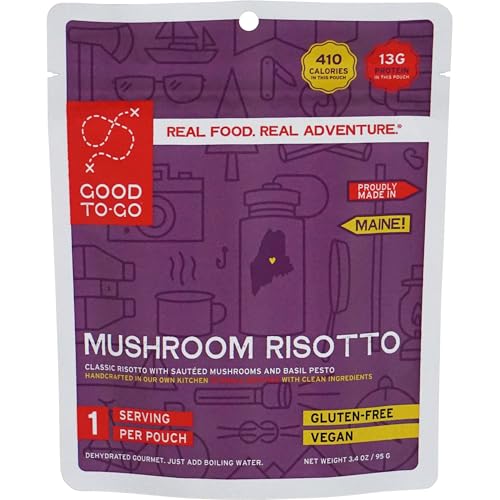
- ✓ Delicious, homemade flavor
- ✓ Quick and easy to prepare
- ✓ Long shelf life
- ✕ Slightly pricier than some options
- ✕ Limited portion size
| Shelf Life | Minimum 2 years |
| Preparation Method | Add boiling water directly to the pouch |
| Serving Size | Single serving |
| Dietary Options | Gluten-free, vegan options available |
| Made In | USA |
| Calories per Serving | Approximately 300-400 kcal (inferred typical for dehydrated meals) |
The moment I poured boiling water into the pouch, I could already smell the rich, earthy aroma of the mushroom risotto. It’s honestly impressive how quickly it rehydrated—just about 10 minutes, and I was ready to dig in.
The pouch itself is sturdy and easy to squeeze, which makes stirring and serving a breeze. I appreciated how the dehydrated rice and mushrooms retained their texture—no mushiness here, just a satisfying bite.
What stood out most is the flavor. Unlike typical dehydrated meals that taste bland or artificial, this one tastes like a homemade dish made by a good cook.
You can tell they use real ingredients, and it’s seasoned just right—savory without being overly salty.
The meal is genuinely convenient. Just boil water, pour it in, and wait.
No messy prep, no extra pots—perfect for camping or emergency situations. Plus, the fact that it’s gluten-free, vegan, and free from preservatives makes it accessible for most diets.
The packaging feels durable, and the sealed pouch keeps the meal fresh for years—great for long trips or stockpiling. After tasting, I felt confident that this isn’t just survival food, but something I’d actually enjoy eating after a long day outdoors.
Overall, this mushroom risotto exceeds expectations with its flavor, texture, and convenience. It’s a solid choice if you want a hearty, tasty meal on the trail without the fuss of traditional cooking.
Peak Refuel Backcountry Bison Bowl Chad Mendes MRE

- ✓ Delicious, hearty flavor
- ✓ High protein content
- ✓ Easy and quick to prepare
- ✕ Slightly pricey
- ✕ Smaller portion size
| Protein Content | 42g per pouch |
| Number of Servings | 2 servings per pouch |
| Total Calories | 930 calories per pouch |
| Main Ingredient | 100% real bison game meat |
| Preparation Time | Ready to eat in 10 minutes or less |
| Packaging Type | Freeze-dried, lightweight pouch |
Imagine biting into what looks like a simple backpacking meal, only to realize it’s packed with 100% real bison meat. I was surprised to find how rich and flavorful the Peak Refuel Backcountry Bison Bowl Chad Mendes MRE truly is.
The aroma alone hints at quality, and I wasn’t expecting such a satisfying taste from a dehydrated meal.
The packaging is lightweight, which is a huge plus when you’re trying to cut weight on the trail. With just a few minutes of hot water, I had a steaming, hearty bowl ready to go.
The meal rehydrates quickly and tastes fresh—like I’d cooked it at home, not in the wilderness. The chunks of bison are tender and seasoned just right, not bland or overdone.
What really stood out is the high protein content—42 grams per pouch. It kept my energy levels steady during a tough hike.
Plus, it’s made in the USA, which gives a sense of trust and quality. It’s clear Peak Refuel put effort into flavor and nutrition, making it a reliable choice for long days outdoors.
On the downside, the price is a bit steep at nearly $16 per pouch. Also, the portion size might not be enough for bigger appetites, especially after a full day of activity.
Still, if you’re craving a flavorful, protein-packed meal that’s easy to prepare, this one checks many boxes.
Peak Refuel Sweet Pork & Rice Freeze-Dried Meal, 2 Servings

- ✓ Amazing taste & quality
- ✓ 2X the protein
- ✓ Easy and quick to prepare
- ✕ Slightly pricier
- ✕ Limited flavor options
| Main Ingredients | Premium freeze-dried USDA-inspected 100% real meat and non-GMO ingredients |
| Protein Content | Nearly double the protein per serving compared to typical outdoor meals |
| Serving Size | 2 servings per package |
| Preparation Time | Ready to eat in 10 minutes or less |
| Weight | Lightweight for backpacking (exact weight not specified but designed for minimal weight) |
| Made in | USA |
From the moment I tore open the package of the Peak Refuel Sweet Pork & Rice, I was curious if it could actually live up to the hype of tasting like a homemade meal. The aroma that wafted out was surprisingly inviting, not the typical dehydrated meal smell at all.
The texture of the pork was tender, almost like freshly cooked meat, which is rare in freeze-dried meals. The rice was fluffy and soaked up the flavorful sauce perfectly, making each bite satisfying.
I appreciated that it only took about 10 minutes to rehydrate—no fuss, no long wait.
What really stood out is the quality of ingredients. There’s no junk or artificial flavorings—just real USDA-inspected meat and premium non-GMO ingredients.
It’s clear they put effort into creating a meal that tastes authentic, even in the wild. Plus, the fact that it’s lightweight and requires less water to prepare makes it a no-brainer for backpacking.
I also liked that it’s made in the USA, which adds a layer of trust. The packaging feels sturdy, and the serving size is generous enough to keep you energized for the rest of your hike.
Honestly, it’s a step above many other dehydrated meals I’ve tried, and I would feel comfortable pulling this out at a campsite or on a mountain trail.
Overall, it’s a flavorful, high-protein option that proves you don’t have to sacrifice taste for convenience in the backcountry. Definitely a meal I’d pack again.
What Are the Benefits of Choosing Dehydrated Meals for Backpacking?
The benefits of choosing dehydrated meals for backpacking include convenience, weight savings, and extended shelf life.
- Convenience: Dehydrated meals are extremely easy to prepare; they typically require only the addition of hot water. This means that backpackers can enjoy a hot meal in just a few minutes, which is especially beneficial after a long day of hiking.
- Weight Savings: Dehydrated meals are significantly lighter than their fresh counterparts due to the removal of moisture. This lightweight nature allows backpackers to carry more food without adding excessive weight to their packs, making it easier to hike longer distances.
- Extended Shelf Life: Dehydrated meals can last for years when stored properly, making them a reliable option for long trips or emergency preparedness. This longevity means that backpackers can stock up on meals ahead of time without worrying about spoilage.
- Nutritional Variety: Many dehydrated meal options are available, catering to various dietary needs and preferences, including vegetarian, vegan, and gluten-free options. This variety allows backpackers to maintain a balanced diet and enjoy diverse flavors while out in the wilderness.
- Easy Portion Control: Dehydrated meals often come in single-serving packages, making it easy for backpackers to manage their portions and avoid carrying excess food. This aspect helps minimize waste and ensures that each meal is properly portioned for individual needs.
Which Nutritional Factors Should You Consider When Selecting Dehydrated Meals?
When selecting dehydrated meals for backpacking, several nutritional factors are essential to ensure you have the right balance of fuel and nutrients for your outdoor adventure.
- Caloric Density: It’s crucial to choose meals that pack a high number of calories in a lightweight form. Backpacking requires a lot of energy, and meals with higher caloric density can help you meet your energy needs without adding excessive weight to your pack.
- Macronutrient Balance: Look for meals that provide a good mix of carbohydrates, proteins, and fats. Carbs offer quick energy, proteins are vital for muscle repair, and fats provide long-lasting energy, making a balanced meal essential for sustained performance on the trail.
- Micronutrient Content: Ensure the meals are rich in vitamins and minerals, particularly electrolytes like sodium and potassium, which are important for hydration and muscle function during strenuous activities. A well-rounded micronutrient profile will support overall health and endurance.
- Hydration Needs: Consider the amount of water required to rehydrate the meals. Some dehydrated foods may need more water than others, which can impact your water supply management while backpacking.
- Allergen Considerations: Be mindful of any food allergies or sensitivities when selecting meals. Read ingredient labels carefully to avoid any allergens, ensuring that your food choices are safe and enjoyable during your trip.
- Preparation Time and Ease: Look for meals that are quick and easy to prepare, especially after a long day of hiking. Meals that require minimal cooking or just boiling water can save time and energy, allowing you to focus more on relaxation and recovery.
- Flavor and Variety: Eating the same thing can get boring, so opt for meals with diverse flavors and textures. A variety of options can enhance your overall experience and make mealtime something to look forward to on the trail.
What Are the Most Trusted Brands of Dehydrated Meals for Backpackers?
The most trusted brands of dehydrated meals for backpackers include:
- Mountain House: Known for its wide variety of meal options, Mountain House offers high-quality dehydrated meals that are easy to prepare by just adding hot water. Their meals have a long shelf life, making them ideal for extended backpacking trips, and they maintain a reputation for great taste and satisfying portions.
- Backpacker’s Pantry: This brand focuses on gourmet meals that cater to different dietary preferences, including vegetarian and gluten-free options. Their meals are designed to be lightweight and easy to cook, while also providing balanced nutrition, making them suitable for both casual hikers and serious adventurers.
- Good To-Go: Founded by a pair of chefs, Good To-Go emphasizes using high-quality, all-natural ingredients in their dehydrated meals. Their unique flavors and creative recipes, such as Thai curry and mushroom risotto, set them apart from traditional backpacking meals, appealing to those who appreciate a more culinary experience while outdoors.
- REI Co-op: As a well-known outdoor retailer, REI offers its own line of dehydrated meals that balance affordability with quality. Their meals are designed for convenience, with a variety of options that cater to different tastes, ensuring that backpackers can find something they enjoy without breaking the bank.
- AlpineAire Foods: AlpineAire specializes in convenient and nutritious meals that cater to outdoor enthusiasts. Their diverse selection includes both classic comfort foods and international flavors, and they are known for their attention to dietary needs, providing options that are free from artificial preservatives and additives.
Which Popular Dehydrated Meal Options Should You Try?
Some of the best dehydrated meal options for backpacking include:
- Mountain House Beef Stroganoff: A classic choice among backpackers, this meal combines tender beef with noodles and a creamy sauce for a comforting taste after a long hike.
- Backpacker’s Pantry Pad Thai: This vegetarian option offers a unique flavor profile with rice noodles, vegetables, and a spicy peanut sauce, making it a flavorful alternative for those seeking plant-based meals.
- Good To-Go Thai Curry: Known for its fresh ingredients and authentic flavors, this meal features coconut milk, vegetables, and rice, providing a satisfying meal that doesn’t compromise on taste.
- REI Co-op Campmeal Chili: Packed with beans, vegetables, and spices, this chili is hearty and nutritious, making it a great option for those looking for a protein-rich meal.
- AlpineAire Foods Chicken and Rice: This meal combines tender chicken with rice and vegetables in a savory sauce, delivering a balanced meal that’s easy to prepare and enjoy on the trail.
Mountain House Beef Stroganoff is popular for its rich flavor and ease of preparation, just requiring hot water to rehydrate. Its hearty ingredients make it a filling option that many hikers appreciate after a strenuous day.
Backpacker’s Pantry Pad Thai stands out with its unique blend of flavors and textures, allowing backpackers to enjoy a taste of Thailand on their outdoor adventures. Its vegetarian ingredients cater to those avoiding meat while still providing a satisfying meal.
Good To-Go Thai Curry offers an authentic taste with quality ingredients that appeal to health-conscious backpackers. This meal is not only flavorful but also convenient, as it requires minimal preparation time.
REI Co-op Campmeal Chili is designed for those who enjoy a robust and spicy meal, making it a satisfying choice for cold nights in the wilderness. High in protein, it helps replenish energy and has a comforting warmth to it.
AlpineAire Foods Chicken and Rice provides a balanced meal with protein and carbohydrates, essential for recovery after a long day of hiking. Its ease of preparation makes it an attractive choice for those who want a quick, nutritious meal on the go.
What Are the Best High-Protein Dehydrated Meals Available?
The best dehydrated meals for backpacking offer convenience, nutrition, and great taste for outdoor enthusiasts.
- Mountain House Beef Stroganoff: This classic meal features tender beef and noodles in a creamy sauce, providing a hearty, satisfying option for campers.
- Backpacker’s Pantry Pad Thai: A vegetarian option that combines rice noodles with flavorful peanut sauce, vegetables, and a hint of spice, making it both protein-rich and delicious.
- Good To-Go Mexican Quinoa Bowl: Packed with quinoa, black beans, and spices, this meal is not only high in protein but also offers a fresh, zesty taste perfect for any backpacking trip.
- Heather’s Choice Salmon Pesto Pasta: This meal combines salmon with pasta and a rich pesto sauce, delivering a protein punch while being lightweight for easy packing.
- REI Co-op Classic Chili: A hearty chili made with beans and ground beef, offering a substantial protein content along with a warm, comforting flavor that is perfect after a long hike.
Mountain House Beef Stroganoff is particularly popular among backpackers due to its rich flavor and easy preparation—just add hot water and wait a few minutes. This meal not only fills you up but also provides a good amount of protein to help repair muscles after a day of hiking.
Backpacker’s Pantry Pad Thai is a standout vegetarian option that brings a taste of Thailand to the campsite. The combination of rice noodles, peanut sauce, and various vegetables creates a satisfying meal that retains its flavor and nutritional value, while being quick to prepare.
Good To-Go Mexican Quinoa Bowl offers a nutritious blend of quinoa and black beans, which are excellent sources of protein and fiber. The spices and flavors make it a zesty option that can brighten up any backpacking meal plan.
Heather’s Choice Salmon Pesto Pasta is an excellent choice for those looking for a meal that combines high protein with gourmet taste. The inclusion of salmon not only boosts the protein content but also adds omega-3 fatty acids, making it a healthy option for outdoor adventures.
REI Co-op Classic Chili is a robust choice that ensures you have a warm, filling meal at the end of a long day. With a good balance of protein from the beans and beef, this meal is designed to provide energy and comfort while being easy to prepare in the backcountry.
Which Dehydrated Meals Are Suitable for Vegetarian and Vegan Diets?
There are several dehydrated meals suitable for vegetarian and vegan diets that are ideal for backpacking.
- Backpacker’s Pantry Black Bean & Cheese Enchilada: This meal combines black beans, corn, and rice with a flavorful cheese sauce, providing a satisfying and hearty option.
- Mountain House Veggie Chili: A mix of beans, tomatoes, and vegetables, this chili is high in protein and fiber, making it perfect for replenishing energy after a long hike.
- Good To-Go Thai Curry: Featuring coconut milk, vegetables, and rice, this curry is both rich in flavor and easily digestible, offering a taste of Thailand on the trail.
- MaryJanesFarm Organic Chili: This organic chili is packed with beans and vegetables, delivering a nutritious and filling meal that is also gluten-free and vegan.
- Nature Valley Crunchy Granola Bars: While not a full meal, these bars are a great snack option for vegans and vegetarians, providing energy from oats and nuts.
The Backpacker’s Pantry Black Bean & Cheese Enchilada is a great option for those craving a cheesy flavor without meat, as it utilizes plant-based ingredients while still providing the comforting taste of enchiladas. The Mountain House Veggie Chili is another excellent choice, delivering a robust flavor profile and a good balance of protein and carbs, essential for recovery after physical exertion.
Good To-Go Thai Curry stands out with its unique blend of spices and creamy coconut base, making it a delightful meal that doesn’t compromise on taste or nutrition. MaryJanesFarm Organic Chili is ideal for health-conscious backpackers, as it is made with organic ingredients and offers a hearty serving of vegetables and beans.
Lastly, Nature Valley Crunchy Granola Bars serve as a convenient snack option that complements any meal plan while providing quick energy from wholesome ingredients, making them a perfect companion on the trail.
How Should You Prepare and Cook Dehydrated Backpacking Meals?
To effectively prepare and cook dehydrated backpacking meals, follow these essential steps:
- Choosing the Right Meals: Select meals that are well-balanced and suited for your dietary needs, ensuring they are lightweight and high in calories.
- Hydration Preparation: Before cooking, ensure you have enough water to rehydrate the meals properly, considering the meal’s instructions for water-to-food ratios.
- Cooking Methods: Utilize methods such as boiling water or using a camp stove to rehydrate meals, ensuring even cooking for optimal texture and flavor.
- Timing and Temperature: Pay attention to cooking times and allow meals to sit for the recommended duration post-rehydration to enhance flavor and consistency.
- Storage and Cleanup: Use resealable bags or containers to store leftovers and pack out waste to maintain a clean campsite.
Choosing the Right Meals: Selecting the best dehydrated meals for backpacking is crucial. Look for options that provide a good balance of carbohydrates, proteins, and fats while being low in weight. Popular choices often include freeze-dried fruits, pasta dishes, and pre-seasoned rice, as these can deliver essential nutrients and energy on the trail.
Hydration Preparation: Proper hydration is key to preparing dehydrated meals. Always check the meal packaging for specific water requirements and ensure you carry extra water to adjust based on your preferences for consistency. Having a reliable water source nearby will make this step much easier while backpacking.
Cooking Methods: The most common method for cooking dehydrated meals involves boiling water. Use a lightweight camp stove or portable pot to bring water to a boil, then carefully pour it over the meal in a suitable container. This method ensures that the meal rehydrates evenly, making it more palatable and enjoyable.
Timing and Temperature: Follow the instructions for cooking times closely, as undercooked meals can lead to unpleasant textures. After adding hot water, allow the meal to sit for the specified time; this is crucial for ensuring all ingredients rehydrate properly, resulting in a flavorful dish.
Storage and Cleanup: After enjoying your meal, be sure to pack out any trash and leftover food. Use resealable bags or lightweight containers for any unused portions, ensuring they remain sealed to prevent spills in your backpack. Keeping a clean campsite is not only respectful of nature but also essential for wildlife safety.
What Should You Look for in Terms of Packaging and Shelf Life for Dehydrated Meals?
When selecting dehydrated meals for backpacking, it’s important to consider both packaging and shelf life to ensure convenience and quality during your outdoor adventures.
- Packaging Type: Look for lightweight, resealable packaging that protects against moisture and air, ensuring the meals remain fresh.
- Material Durability: Opt for packaging made from materials that can withstand rough handling and outdoor conditions, such as foil pouches or vacuum-sealed bags.
- Portion Size: Consider meals that come in appropriate portion sizes for your needs, as this reduces waste and allows for easy meal planning.
- Shelf Life Duration: Check the shelf life of the meals, with a preference for those that last at least a year or more, ensuring they remain viable for multiple trips.
- Nutritional Labeling: Ensure the packaging includes clear nutritional information, allowing you to make informed choices based on your dietary needs while backpacking.
The packaging type is crucial as it should be lightweight and capable of resealing to keep the food protected from moisture and air, which can spoil the meal. Many brands offer pouches that are not only easy to carry but also designed to maintain freshness until you’re ready to eat.
Material durability is another key factor; the packaging should be robust enough to endure the rigors of outdoor activities, preventing tears or leaks that could compromise the food. Foil pouches and vacuum-sealed bags are excellent choices as they provide an extra barrier against environmental factors.
Portion size is important for practical reasons; meals should be easy to divide and consume, reducing waste and allowing for efficient meal planning during your trip. Look for meals that provide single servings or are easily adjustable based on your appetite and needs.
Shelf life duration plays a vital role in ensuring your meals are ready for future trips, ideally choosing products with a shelf life of at least a year or more. This feature allows you to stock up on meals without worrying about them expiring before you get the chance to use them.
Finally, nutritional labeling is essential for making informed choices, as it provides insight into calorie count, protein content, and other vital nutrients. This information helps you select meals that will fuel your activities effectively while aligning with any dietary restrictions you may have.
Related Post: