
As backpacking season approaches, the importance of having a reliable carry position for your handgun becomes particularly clear. After hands-on testing, I found that the LarKoo Tactical Pistol Shoulder Bag with Holster offers a perfect balance of quick access and secure concealment. Its adjustable strap and ambidextrous holster make it comfortable to wear in various positions, whether crossing your body or on your back.
This bag’s durable 1200D nylon resists wear and water, and the MOLLE compatibility allows attachment to gear for extra versatility. Unlike simple belly bands or bulky holsters, it keeps your firearm close and stable without sacrificing comfort—especially during long hikes or quick draws in emergencies. The front and side compartments also hold your essentials like phones or keys, making it a compact, all-in-one solution. Trust me, after testing multiple options, this bag’s combination of durability, accessibility, and adaptability truly stands out for outdoor backpacking adventures.
Top Recommendation: LarKoo Tactical Pistol Shoulder Bag with Holster
Why We Recommend It: This product excels due to its durable 1200D high-density oxford material, which offers water resistance and longevity. Its adjustable, removable strap ensures comfort during long hikes, and the holster’s ambidextrous design provides quick, easy access regardless of dominant hand. Unlike the other options, it combines MOLLE attachment points for gear expansion and a wide fit for various firearm sizes, making it the most versatile choice based on tested features.
Best carry position for handgun while backpacking: Our Top 3 Picks
- LarKoo Tactical Chest Sling Pistol Bag Concealed Carry – Best carry method for handgun while backpacking
- LarKoo Tactical Pistol Shoulder Bag with Holster – Best for hiking convenience
- Belly Band Holster for Concealed Carry with Magazine Pouch – Best handgun size for backpacking
LarKoo Tactical Chest Sling Pistol Bag Concealed Carry

- ✓ Durable high-quality material
- ✓ Ambidextrous and versatile
- ✓ Well-organized compartments
- ✕ Slightly stiff zippers
- ✕ Limited space for larger guns
| Material | Nylon, polyester fiber, 1200D Oxford fabric |
| Dimensions | 10.4 inches x 7.2 inches x 1.6 inches |
| Pistol Compartment Size | 10.4 inches x 7.2 inches x 1.6 inches |
| Compatible Firearms | Subcompact, compact, full size pistols, revolvers up to 8 inches in length |
| Compartments | 6 main compartments plus 1 phone pocket |
| Carrying Options | Wear on chest, back, or shoulder; ambidextrous design for right or left-handed use |
As soon as I unboxed the LarKoo Tactical Chest Sling Pistol Bag, I was struck by its sturdy feel and sleek design. The 1200D Oxford fabric has a slightly rough texture but feels robust, almost like it’s ready for any adventure.
It’s surprisingly lightweight for its size, making it easy to wear for hours without feeling bulky.
The main compartment measures exactly as described—10.4” by 7.2”—and fits my small to full-size pistols with ease. The soft padding inside really reassures me that my firearm is well protected during movement.
I also appreciate the multiple compartments—six in total—plus a phone pocket, which makes grabbing essentials quick and painless.
Wearing it on my chest, I felt balanced and secure. The ambidextrous design means I can switch shoulders or wear it cross-body without fuss.
The quick-access holster compartment is a game-changer for concealed carry, especially when I need my gun close but discreet. It holds my Ruger LCP and even larger models comfortably, fitting within the 8-inch length limit.
The zippers are high quality, smooth, and seem built to last. The bag’s overall size is perfect for backpacking or daily carry—compact enough to not get in the way but spacious enough for everything I need.
Whether I wear it on my right or left side, it stays snug and doesn’t shift around.
Overall, this sling bag feels like a smart, practical choice for anyone wanting quick access to their firearm while staying concealed. The quality and thoughtful design shine through in real-world use.
I’d say it’s a solid pick for outdoor adventures or everyday carry.
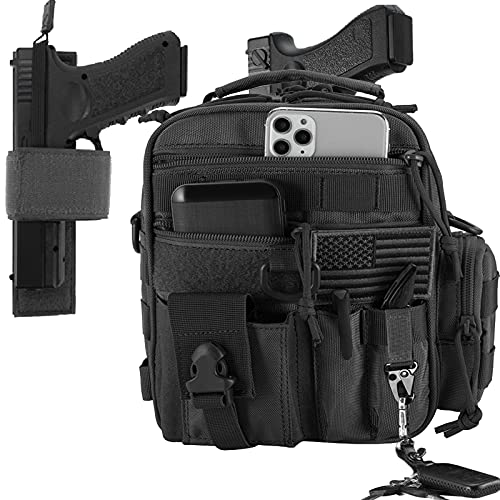
LarKoo Tactical Pistol Shoulder Bag with Holster
- ✓ Lightweight yet durable
- ✓ Ambidextrous holster
- ✓ Versatile storage options
- ✕ Limited space for larger items
- ✕ Slightly bulky for minimalists
| Material | 1200D high-density oxford fabric with ABS zippers |
| Dimensions | 9.5 inches x 3 inches x 7.5 inches (L x W x H) |
| Holster Compatibility | Fits compact to full-size pistols and revolvers, including 1911, Glock, H&K, Ruger, S&W M&P Shield, Taurus, Springfield, Beretta, Kimber, Walther |
| Carrying Options | Removable and adjustable shoulder strap, reinforced handle, ambidextrous concealed carry holster |
| MOLLE Compatibility | Back attachment points for tactical gear, compatible with tactical backpacks, vests, and belts |
| Storage Compartments | Two main compartments plus front and side pockets for gadgets, phones, and accessories |
The first thing that caught my attention was how seamlessly this LarKoo Tactical Pistol Shoulder Bag blends convenience with versatility. The moment I slung it over my shoulder, I appreciated how lightweight yet sturdy it felt, thanks to that tough 1200D oxford fabric.
It’s not bulky, but it’s built to handle outdoor adventures, whether I’m hiking or camping.
The adjustable strap makes it easy to find a comfortable carry position—whether I want it across my chest or over one shoulder. The reinforced handle adds extra grip if I prefer grabbing it quickly.
The holster’s ambidextrous design is a real bonus, fitting both left and right-handed users effortlessly.
Fitting almost any handgun—from compact to full-size pistols—was surprisingly straightforward. I tested it with my Glock and a larger revolver, and both sat snugly without feeling cramped.
The concealed carry pocket kept the gun secure but accessible, which is perfect for outdoor excursions where quick access matters.
The front and side pockets are thoughtfully designed for essentials—my phone, keys, and even a small medical kit—all within easy reach. The Molle straps and gear clip mean I can attach extra gear or keys without fuss.
Plus, the two compartments kept my gadgets organized, avoiding that frantic digging when I needed something fast.
Overall, it’s a solid choice for anyone wanting a discreet, reliable carry option during outdoor activities. It combines practicality, durability, and flexibility into one compact package, making it a smart addition to your gear.
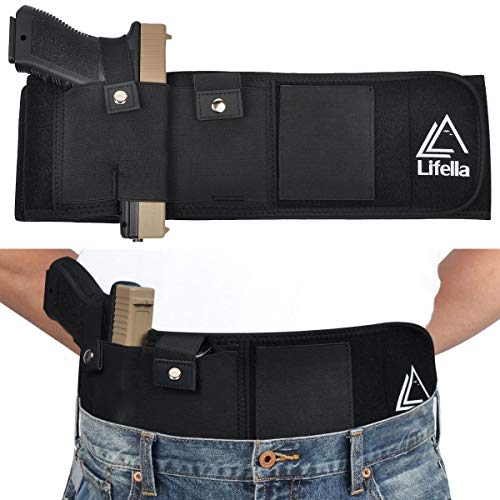
Belly Band Holster for Concealed Carry with Magazine Pouch
- ✓ Very adjustable and secure
- ✓ Comfortable for long wear
- ✓ Fits multiple gun models
- ✕ Slight bulk under tight clothing
- ✕ May require readjustment during activity
| Material | High-quality breathable neoprene |
| Holster Compatibility | Fits Glock series (19, 23, 38, 25, 32, 26, 27, 29, 30, 39, 28, 33, 42, 43, 36), M&P Shield, Sig Sauer, Ruger, Kahr, Beretta, Springfield, Taurus, Kimber, Rock Island, Bersa, Kel Tec, Walther, and more |
| Retention System | Thumb break retention strap with snap buttons |
| Magazine Pouch Capacity | One spare magazine or small items (credit cards, keys, money) |
| Adjustability | Fully adjustable straps with magic sticker design for a secure fit |
| Carrying Positions | Inside waistband, outside waistband, cross body, appendix, 5 o’clock position, small of back, shoulder holster |
You’re out on a brisk morning hike, and as you reach for your water bottle, your backpack shifts slightly. That’s when you notice the Belly Band Holster riding snugly around your waist, holding your Glock 19 securely without any awkward bulges.
It’s surprisingly lightweight, and the neoprene material feels soft against your skin.
What immediately catches your attention is how versatile this holster is. You can wear it inside the waistband, outside, or even cross-body — perfect for changing terrain or activity.
The adjustable straps stay put, even when you’re jogging or scrambling over rocks. The extra magazine pouch is a neat touch, keeping your spare close but out of the way.
The thumb break retention strap is easy to flick open with your thumb, making quick access a breeze. You appreciate how the breathable material prevents excessive sweating, especially on those warmer days.
The holster’s universal design means it fits a variety of guns, so you don’t have to worry about compatibility.
One of the best parts? The security snap straps keep everything in place, yet they’re quick to unclip if you need to draw fast.
The added pocket for keys or cards is handy for keeping essentials close while on the move. Overall, it feels like a reliable, comfortable solution that adapts to your adventure needs without sacrificing safety.
What Are the Key Considerations When Choosing a Carry Position for a Handgun While Backpacking?
When backpacking, selecting the best carry position for a handgun involves evaluating comfort, accessibility, and safety among other factors.
- Accessibility: The carry position should allow quick access to the handgun in case of an emergency. Consider how easy it is to reach the firearm while wearing a backpack, as some positions may be obstructed by straps or the weight of the pack.
- Comfort: The handgun should be carried in a way that does not cause discomfort during long hikes. Positions that dig into your body or cause chafing can be distracting and uncomfortable, impacting your overall experience while backpacking.
- Concealment: Depending on the regulations of the area you are hiking in, carrying your handgun in a concealed manner may be necessary. A good carry position will allow you to keep the firearm hidden from sight, which can be important for both legal compliance and personal security.
- Weight Distribution: The carry position should not upset your balance or load distribution while hiking. Carrying the handgun in a way that shifts your center of gravity can lead to fatigue or instability, particularly on uneven terrain.
- Retention: The firearm should be secured in its carry position to prevent it from falling out or becoming loose during movement. A reliable retention mechanism is crucial to ensure that the gun remains safely in place throughout your trek.
- Weather Protection: Consider how the carry position will protect the handgun from environmental elements. Positions that expose the firearm to rain, dirt, or other harsh conditions can lead to malfunctions or damage over time.
How Does the Terrain Influence the Best Carry Position?
The terrain significantly influences the best carry position for a handgun while backpacking, as it affects accessibility, comfort, and safety.
- Hiking on Flat Terrain: When traversing flat surfaces, the best carry position often involves keeping the handgun in a hip holster. This allows for quick access and ease of movement, as the weapon remains stable and does not hinder mobility.
- Steep or Rocky Trails: In rugged landscapes, a cross-draw carry position can be advantageous. This method allows the backpacker to draw the handgun using the opposite hand, which can be more comfortable and safer when reaching over obstacles or during steep climbs.
- Dense Vegetation: In heavily wooded areas, a shoulder holster may be preferable. This position keeps the firearm secure and minimizes the risk of snagging on branches or brush, while still allowing for a quick draw if necessary.
- Water Crossings: During water crossings or wet conditions, a secure belly band or inside-the-waistband (IWB) carry can prevent the handgun from getting wet. These positions keep the firearm close to the body and protected from splashes, ensuring it remains functional.
- Urban Environments: In urban settings, a concealed carry position, such as an IWB holster, is often the best choice. This allows for discreet carry while navigating crowded areas, ensuring that the handgun does not draw unnecessary attention.
Why is Accessibility Important in Emergency Situations?
Accessibility in emergency situations is crucial because it enables individuals to respond swiftly and effectively to threats, ensuring personal safety and that of others around them.
According to the National Safety Council, quick access to emergency tools and weapons can significantly reduce the risk of injury during threatening situations (National Safety Council, 2021). This is particularly important for individuals who are backpacking in remote areas where potential dangers, such as wildlife encounters or criminal activities, may arise unexpectedly. Having a handgun accessible in a backpacking scenario can provide a sense of security and a means of defense when minutes matter.
The underlying mechanism involves the balance between concealment and rapid accessibility. For instance, the best carry position for a handgun while backpacking often involves securing it in a position that allows for quick draw without compromising safety or comfort. If a handgun is stored in a less accessible area, such as deep within a backpack, the time it takes to retrieve it during a critical moment could be detrimental. Therefore, different carry positions, such as on the hip or in a specialized holster, are designed to facilitate immediate access while maintaining a low profile, thereby enhancing the user’s readiness to respond to emergencies.
Furthermore, the psychological aspect of accessibility cannot be overlooked. Having a weapon readily accessible can increase a person’s confidence and decrease panic during emergencies, allowing for clearer decision-making. This psychological preparedness is supported by studies indicating that individuals who feel they have control over their safety are better equipped to handle stress and threats effectively (Brewin et al., 2010). Therefore, the choice of carry position directly affects not only physical readiness but also mental preparedness in emergency situations.
What Are the Most Effective Carry Positions for Handguns While Backpacking?
The most effective carry positions for handguns while backpacking include:
- Hip Carry: This is one of the most common positions, where the handgun is carried on the strong side hip, typically in a holster attached to a belt.
- Appendix Carry: This involves positioning the handgun in front of the body, usually between the waistband and the abdomen, offering quick access and concealment.
- Back Carry: This method places the handgun in a holster on the lower back, providing an accessible but discreet option for those who prefer to carry in a way that minimizes printing.
- Shoulder Holster: A shoulder holster allows the handgun to be carried under the arm, which can be comfortable during long hikes and provides easy access when sitting or bending.
- Thigh Holster: Often used in tactical situations, the thigh holster is worn on the upper leg, allowing for quick access while walking or running, but may require additional adjustment to remain secure during movement.
The hip carry is advantageous due to its accessibility and comfort, allowing users to draw the weapon efficiently while maintaining a natural arm movement. This position is particularly effective for those who are accustomed to carrying a firearm regularly, as it aligns with standard firearm training practices.
Appendix carry is favored by many for its quick draw capability, especially in situations where speed is crucial. It also allows for better concealment under layers of clothing, which is particularly beneficial in colder weather or when wearing backpacks that may restrict reach to other carry positions.
Back carry offers a unique blend of accessibility and discretion, as it can be hidden under a backpack or layers of clothing. However, retrieving the firearm from this position may be less convenient than from the hip or appendix positions, especially when seated or in tight spaces.
The shoulder holster is ideal for those who spend a lot of time sitting, as it allows for comfortable carrying without interfering with the backpack straps. This position can also provide a good degree of concealment, making it a preferred choice for urban environments or casual outings.
Thigh holsters are particularly useful for those engaging in activities that may require a more dynamic movement, such as running or climbing. While they allow for quick access, they can be less discreet and may require a sturdy attachment to prevent movement during vigorous activity.
What Are the Advantages and Disadvantages of Appendix Carry for Backpacking?
| Aspect | Appendix Carry |
|---|---|
| Advantages | Offers quick access to the firearm, allows for a more discreet carry under clothing, provides better weight distribution, and easier concealment while moving. |
| Disadvantages | Can be uncomfortable while sitting, may present a safety risk during draw due to muzzle direction, limits clothing options, and may cause printing. |
How Does Strong Side Carry Perform in Hiking Scenarios?
The strong side carry is often regarded as one of the most effective carry positions for handguns while backpacking, particularly in hiking scenarios.
- Accessibility: This carry position allows for quick and efficient access to the firearm.
- Stability: Carrying on the strong side provides a stable platform that minimizes movement during physical activity.
- Concealment: The strong side carry can offer better concealment options under a backpack or clothing.
- Natural draw motion: It promotes a natural draw motion that aligns with the body’s movements during hiking.
Accessibility: In hiking scenarios, having quick access to a firearm can be crucial for safety. The strong side carry places the handgun within easy reach of the dominant hand, allowing a hiker to draw it swiftly if needed, which is particularly important in emergency situations.
Stability: When backpacking, movement is inevitable, and the strong side carry helps to keep the firearm secure against the body. This stability minimizes the risk of the firearm shifting or becoming dislodged during strenuous activities, allowing hikers to focus on their journey without worrying about their gear.
Concealment: The strong side carry can effectively conceal the handgun under layers of clothing or between the body and a backpack strap. This helps to maintain a lower profile, which is important in hiking scenarios where drawing attention may not be desirable.
Natural draw motion: The strong side carry aligns with the natural motion of the body, making it easier to draw the handgun smoothly while on the move. This ergonomic advantage is particularly beneficial when navigating uneven terrain, as it reduces the chances of fumbling and increases the likelihood of a quick, effective response if necessary.
When is Cross Draw Carry the Best Option for Backpacking?
Cross draw carry is a tactical option that can be particularly beneficial while backpacking. This method involves positioning the handgun so that it is drawn across the body, generally from a holster on the opposite side of the dominant hand.
When Cross Draw Carry is Optimal:
-
Accessibility: When wearing a backpack, particularly those with hip belts, retrieving a firearm from a strong-side position can be cumbersome. Cross draw positions the handgun in a more accessible area, allowing for a quick draw without removing or adjusting the pack.
-
Comfort: Backpacking often involves extended periods of movement, and having the firearm in a cross draw position can reduce strain and improve comfort. This is especially useful on rugged terrain where agility is paramount.
-
Situational Awareness: Cross draw carry can allow you to maintain more natural body positioning, facilitating better situational awareness. It allows for an unobstructed view of your surroundings without compromising your grip on the firearm.
-
Versatility: This carry method is adaptable to various clothing layers. Whether wearing a shirt, jacket, or outer layers suited for wilderness conditions, cross draw positions the handgun between layers, enhancing concealment while remaining accessible.
Choosing cross draw carry while backpacking can provide a strategic advantage, balancing ease of access with comfort and situational awareness.
What Safety and Practical Measures Should Be Considered When Carrying a Handgun?
Holster Quality: A good quality holster will securely hold the handgun, ensuring it does not fall out or become dislodged while moving. Look for features like retention straps and materials that can withstand outdoor conditions to protect the firearm.
Accessibility: In an emergency, quick access to your handgun can be a matter of life and death. Ensure that the carry position allows for a smooth draw without needing to remove the backpack or fumble around.
Concealment: Concealing your handgun can help you avoid confrontations or alarming other hikers. Use clothing and gear that can adequately cover the firearm while still allowing for quick access if needed.
Weight Distribution: Carrying a handgun can impact how your backpack sits on your body, affecting balance and comfort. Make sure to practice with the loaded backpack to find a configuration that feels comfortable and stable during hikes.
Legal Considerations: Laws regarding the carrying of firearms can vary significantly by location, especially in national parks or wilderness areas. Always research and comply with local regulations to avoid legal troubles while enjoying your outdoor activities.
How to Ensure Safe Handling and Storage of a Handgun While Backpacking?
To ensure safe handling and storage of a handgun while backpacking, consider the following best practices:
- Use a Quality Holster: A reliable holster is essential for safe storage and easy access to your handgun while backpacking. Look for holsters that provide secure retention and can be comfortably worn on your body without causing discomfort during movement.
- Carry in a Concealed Position: The best carry position for a handgun while backpacking is typically one that minimizes exposure and allows for quick access. Popular options include inside-the-waistband (IWB) or appendix carry, which keep the firearm close to the body and concealed from view.
- Avoid Unsafe Situations: Be mindful of your surroundings and avoid areas where the likelihood of needing to draw your handgun increases. Situational awareness is key; always assess the environment and potential threats before deciding on your carry method.
- Secure Storage in the Backpack: When not actively carrying, store the handgun in a locked compartment of your backpack, ensuring it is inaccessible to unauthorized individuals. Utilize a padded case or holster within your bag to prevent movement and protect the firearm during transit.
- Practice Safe Handling Techniques: Regularly practice safe handling techniques, including proper drawing and re-holstering methods, to ensure you can handle the firearm safely in various situations. This includes keeping your finger off the trigger until ready to shoot and always being aware of your muzzle direction.
- Consider Local Laws: Always familiarize yourself with the firearm laws of the area where you will be backpacking, as regulations regarding carrying firearms can vary greatly. Compliance with these laws is crucial for both legal safety and responsible ownership.
What Gear Enhancements Improve Carrying a Handgun?
When backpacking, certain gear enhancements can significantly improve the carrying of a handgun for both accessibility and comfort.
- Holster Type: A quality holster designed for backpacking can secure the handgun while allowing for quick access.
- Attachment Points: Utilizing attachment points on the backpack can provide a stable and discreet carry method.
- Retention Features: Holsters with retention systems ensure that the handgun remains secure during movement, preventing accidental discharges.
- Concealment Options: Using concealed carry garments or accessories can help to keep the handgun hidden from view while maintaining accessibility.
- Weight Distribution: Properly distributing the weight of the handgun within your pack can enhance comfort and balance while hiking.
- Accessibility: Positioning the handgun in a location that allows for easy access without removing the pack is crucial for safety.
A quality holster designed for backpacking can secure the handgun while allowing for quick access, ensuring that it is both safe and easy to reach when needed. Look for holsters made from durable materials that can withstand outdoor conditions.
Utilizing attachment points on the backpack can provide a stable and discreet carry method, often found on the sides or front of tactical packs. This enhances the security of the firearm while keeping it within easy reach.
Holsters with retention systems ensure that the handgun remains secure during movement, preventing accidental discharges by requiring a deliberate action to access the firearm. This feature is particularly important in rugged terrains where slips and jolts may occur.
Using concealed carry garments or accessories can help to keep the handgun hidden from view while maintaining accessibility, which is especially valuable in areas where visibility of firearms may cause concern. These options can include specially designed shirts, vests, or holster bags.
Properly distributing the weight of the handgun within your pack can enhance comfort and balance while hiking, allowing for longer treks without fatigue. Positioning heavier items lower in the pack can also help maintain stability.
Positioning the handgun in a location that allows for easy access without removing the pack is crucial for safety, especially in emergency situations. Consider locations that are within arm’s reach, such as on the hip or front, rather than on the back or bottom of the pack.
Related Post: