
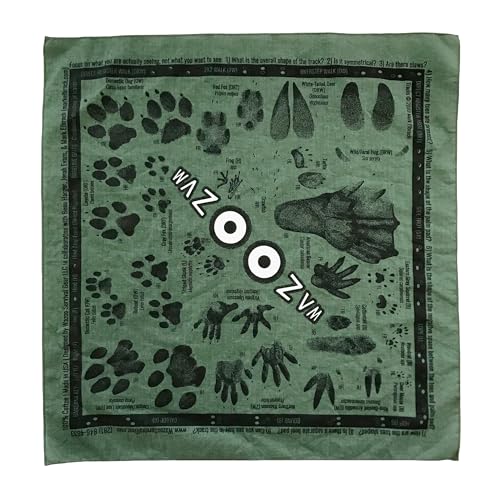
The constant annoyance of trying to quickly identify animal tracks or find a reliable piece of gear that can handle outdoor adventures is finally addressed by the Wazoo Survival Bandana with 21 Animal Tracks, 100% Cotton. I’ve tested it on hikes and trail hunts. Its detailed, to-scale animal tracks are incredibly accurate, helping you learn or teach tracking while worn on your head or neck. The craftsmanship feels durable yet soft, making it perfect for long days outside. Plus, the eye spots add a clever touch for blending in or protecting your eyes during sunny spells.
This bandana combines practicality with educational value. Unlike generic covers, it offers an authentic, detailed visual guide—useful for beginners or seasoned explorers. Its American-made cotton ensures comfort and durability, plus it acts as both a tracker’s tool and a stylish piece. After comparing similar options, it stands out for its detailed tracking features, accuracy, and versatility, making it a smart choice for backpackers who want more than just a fabric on the trail.
Top Recommendation: Wazoo Survival Bandana with 21 Animal Tracks, 100% Cotton
Why We Recommend It: This product excels with its highly accurate, to-scale animal tracks and detailed gaits, aiding learning and tracking skills in the field. Its hand-drawn stippling art enhances detail, making identification easier than with standard bandanas. Additionally, its durable cotton construction handles outdoor conditions well, and the false eyespots add a fun, practical disguise element. Compared to high-vis survival bandanas, this offers more educational and functional benefit, making it ideal for serious backpackers.
Best bandana for backpacking: Our Top 4 Picks
- Wazoo Survival Bandana with 21 Animal Tracks, 100% Cotton – Best for Outdoor Activities
- UST Survival Bandana with Tips, High Vis Orange for Outdoors – Best for Hiking
- GT Bandana 22″x22″ Cotton Camping Headband Beige – Best Versatile Bandana for Camping
- GT Bandana 22″x22″ Vintage Forest Cotton Headband – Best Lightweight Bandana for Travel
Wazoo Survival Bandana with 21 Animal Tracks, 100% Cotton
- ✓ Highly detailed, accurate tracks
- ✓ Versatile wear options
- ✓ Educational and fun
- ✕ Could be thicker for durability
- ✕ Limited to North American animals
| Material | 100% cotton |
| Dimensions | Standard bandana size (approximately 22 x 22 inches) |
| Design Features | Printed with hand-drawn stippling art technique, to-scale animal tracks with gaits, and false eyespots |
| Animal Track Details | 21 North American animal tracks with accurate, to-scale representations and default gaits |
| Manufacturing Origin | Made in the USA |
| Intended Use | Educational tool for tracking, hiking, hunting, and outdoor learning |
That moment when you unfold this Wazoo Survival Bandana and notice how detailed the animal tracks are immediately grabs your attention. The carefully hand-drawn stippling art makes each track pop with a realistic, 3D feel that’s surprisingly vivid for a simple cotton bandana.
I found myself really inspecting the images, comparing them side-by-side, and marveling at the accuracy—these aren’t just doodles, they’re precise representations.
The size and clarity of the tracks are impressive. Each animal’s footprint is to scale, which makes it easier to identify in the wild or on a hike.
The inclusion of default gaits and the “9 Questions to Ask While Tracking” really add depth, turning this into a functional tool and a mini classroom. It’s like having a quick reference guide layered onto your gear, perfect for both beginners and seasoned trackers.
What I love is how versatile it is. You can wear it as a regular bandana, or fold it with the eyes facing outward for a fun, faux-eyed look.
It’s stylish enough to wear around town or on a trail, yet practical enough to use as a quick visual aid in the field. Plus, knowing it’s made from 100% cotton right here in the USA adds a layer of confidence about its quality and durability.
For outdoor lovers, especially those into hunting, hiking, or teaching kids about wildlife, this bandana is a clever, engaging addition to your kit. It sparks curiosity and makes learning about animal tracks accessible and fun.
Honestly, it’s a little piece of wilderness in your pocket, ready to turn any adventure into a learning experience.
UST Survival Bandana with Tips, High Vis Orange for Outdoors

- ✓ Compact and lightweight
- ✓ Bright, high visibility
- ✓ Handy survival info
- ✕ Limited design options
- ✕ Text may wear over time
| Dimensions | 22 inches high x 122 inches wide |
| Weight | 1.3 ounces |
| Material | Cotton |
| Color | High visibility orange |
| Surface Content | Outdoor survival tips and tricks printed on surface |
| Intended Use | Outdoor survival signaling and safety |
As I unfolded the UST Survival Bandana in my hands, I was surprised to find it covered in detailed outdoor tips and tricks—like a mini survival manual. I didn’t expect a simple bandana to double as a quick reference guide, but here we are.
It’s perfect for those moments when you’re out in the wild and need some on-the-spot advice.
The bright high-vis orange color immediately caught my eye. It’s not just for style; it’s designed for signaling, which makes it easy to spot if you get lost.
The dimensions, 22” by 12”, give plenty of surface area for both coverage and information. The material feels sturdy yet lightweight, weighing just 1.3 ounces, so it doesn’t add any bulk to your pack.
Wearing it as a traditional bandana is comfortable, and you can also fold or knot it for different uses. The cotton fabric is durable enough to handle rough conditions and washes well, which is a big plus.
Plus, the information printed on it includes navigation, knots, first aid, and safety tips—stuff you’ll want to remember without digging through a guidebook.
Honestly, I found myself flipping through the tips during breaks, appreciating how handy it would be in real emergencies. It’s a simple, clever addition to any backpacking gear that boosts your confidence in the outdoors.
For just under $9, it’s a small but valuable investment toward preparedness. Plus, it’s versatile enough to be used as a regular bandana or a signaling aid.
GT Bandana 22″x22″ Cotton Camping Headband Beige

- ✓ Soft and breathable cotton
- ✓ Highly versatile design
- ✓ Durable and colorfast
- ✕ Limited color options
- ✕ Might be too large for some
| Size | 22 x 22 inches (standard bandana size) |
| Material | 100% Cotton fabric |
| Design | Camping-themed image with passion and enthusiasm for adventure |
| Intended Use | Versatile as headband, neckerchief, wristband, and face covering |
| Durability | Machine washable, colorfast, and maintains softness after washing |
| Unisex | Suitable for all ages and genders |
The moment I unfolded the GT Bandana and felt the soft, breathable cotton against my fingertips, I knew it was going to be comfortable for a long day of backpacking. I slipped it around my neck, and the fabric immediately felt lightweight yet sturdy, perfect for quick changes or wiping sweat.
The design, featuring a camping scene, instantly brought a touch of adventure to my hike.
What surprised me most was how versatile this bandana is. I used it as a headband to keep hair out of my face during steep climbs, then wrapped it around my wrist for a quick wipe when the sun was blazing.
Its size, 22×22 inches, makes it easy to fold and adapt to different uses without feeling bulky.
It holds up well after a few washes—still vibrant, still soft. The high-quality cotton feels durable but gentle on my skin.
Plus, I appreciated that it never bled or faded, even after tossing it in the wash multiple times. At just under $10, it’s a steal for a multifunctional piece that turns into a face covering or neck gaiter in a pinch.
Overall, the GT Bandana adds a bit of personality and practicality to my outdoor gear. It’s lightweight, stylish, and surprisingly tough, making it a reliable companion for any trail or campsite.
If you’re looking for a simple, effective, and good-looking bandana, this one hits all the right notes.
GT Bandana 22″x22″ Vintage Forest Cotton Headband

- ✓ Durable and soft cotton
- ✓ Vibrant forest design
- ✓ Versatile for multiple uses
- ✕ Slightly larger than needed
- ✕ May fade over many washes
| Size | 22 x 22 inches (standard bandana size) |
| Material | 100% Cotton |
| Design | Forest image with peaceful scenery |
| Intended Use | Unisex, versatile for headband, neckerchief, wristband, face covering |
| Care Instructions | Machine washable, colorfast, maintains softness after washing |
| Durability | Made from high-quality, durable cotton fabric |
Compared to the flimsy, one-size-fits-all bandanas I’ve used before, the GT Bandana 22″x22″ Vintage Forest cotton headband instantly feels sturdier and more substantial in your hand. The fabric has a thick, soft texture that suggests it can handle outdoor adventures without falling apart after a few washes.
The design immediately catches your eye with its peaceful forest scene—perfect for evoking calm during hectic backpacking days. It’s not just stylish; the print is sharp and clear, and the colors stay vibrant even after multiple washes.
That’s a big plus when you’re out in the wild and want your gear to keep looking fresh.
Wearing it as a headband or neckerchief feels comfortable, thanks to the 100% cotton fabric. It’s breathable, not sticky, even during strenuous hikes.
The size is generous enough to double as a face covering if needed, which makes it versatile for various situations on the trail.
What I really appreciated is how well it stays put without slipping, even when you’re sweating or moving briskly. Plus, it’s machine washable and actually gets softer over time, which is rare for budget-friendly options.
At just under ten bucks, it’s a steal for anyone who wants a durable, stylish accessory that can handle the outdoors.
Overall, this bandana combines practicality with a calming aesthetic. It’s a smart choice for backpackers who want something reliable, comfortable, and eye-catching on the trail.
What Makes a Bandana Essential for Backpacking?
A bandana is an essential accessory for backpacking due to its versatility and practicality in various situations.
- Multi-Purpose Use: A bandana can serve multiple functions, such as a headband, sweat rag, or even a makeshift face mask. This adaptability makes it a valuable item in your pack, allowing you to adjust to changing conditions.
- Lightweight and Compact: Bandanas are typically made from lightweight materials, making them easy to carry without adding significant weight to your backpack. Their compact size allows them to fit into any pocket or pouch, ensuring they are always within reach when needed.
- Sun Protection: Wearing a bandana around your neck or on your head can provide an extra layer of protection against the sun’s harmful rays. This can help prevent sunburn, especially in exposed areas, making it an important item for long hikes in sunny conditions.
- First Aid Utility: In emergencies, a bandana can be used as a tourniquet, bandage, or to create a sling. Its absorbent fabric can help control bleeding or secure a wounded area, making it a practical addition to your first aid supplies.
- Cooling Agent: Soaking a bandana in water and wearing it around your neck or on your head can provide a cooling effect during hot weather. This simple method can help regulate body temperature and keep you comfortable while hiking.
- Dust and Debris Shield: A bandana can protect your face and neck from dust, wind, and insects while on the trail. This is particularly useful in arid or windy environments where debris can be irritating or harmful.
What Key Features Should You Look for in a Backpacking Bandana?
When selecting the best bandana for backpacking, consider the following key features:
- Material: Look for lightweight, breathable fabrics such as cotton or moisture-wicking synthetic blends.
- Size: Choose a bandana that is large enough to serve multiple purposes, typically around 20×20 inches.
- Versatility: Ensure the bandana can be used in various ways, such as a headband, face mask, or neck gaiter.
- UV Protection: Opt for bandanas that offer UV protection to safeguard your skin from sun exposure during outdoor activities.
- Easy to Clean: Select a bandana that is machine washable and quick-drying for convenience while on the trail.
The material of the bandana is crucial as it affects comfort and functionality. Lightweight and breathable fabrics like cotton provide comfort, while moisture-wicking synthetic blends help keep you dry and cool during strenuous activities.
Size is important for ensuring the bandana can fulfill its various roles in your outdoor gear. A larger bandana allows for greater versatility, enabling it to be used effectively for different purposes, such as a towel, head covering, or even a pouch for carrying small items.
Versatility is a key feature because a good bandana should be multifunctional. It can serve as protection against dust and sun, or even as a fashion accessory, making it a valuable item in a backpacking kit.
UV protection is essential if you plan to spend significant time outdoors. Some bandanas are specifically designed to block harmful sun rays, helping to prevent sunburn and skin damage during long hikes.
Finally, ease of cleaning is vital when you’re on the move. A bandana that is machine washable and quick-drying ensures that it remains fresh and usable throughout your backpacking trip, making it a practical choice for any adventure.
How Does the Material of a Bandana Affect Its Performance?
The material of a bandana significantly influences its performance in various outdoor activities such as backpacking.
- Cotton: Cotton bandanas are soft, breathable, and highly absorbent, making them ideal for wiping sweat or protecting against the sun. However, they tend to retain moisture and can become heavy when wet, which may not be the best choice for prolonged use in damp conditions.
- Polyester: Polyester bandanas are lightweight, quick-drying, and moisture-wicking, making them suitable for active use in backpacking. They offer durability and UV protection, but may not have the same softness and comfort as cotton, which can affect long-term wearability.
- Microfiber: Microfiber bandanas are incredibly versatile, offering excellent moisture control and a super-soft feel against the skin. They dry rapidly and are often treated to resist odors, making them perfect for extended trips, though they might be less effective at blocking UV rays compared to thicker materials.
- Nylon: Nylon bandanas are known for their strength and resistance to wear and tear, making them a great choice for rugged outdoor conditions. They are lightweight and quick-drying, but can sometimes feel less comfortable against the skin compared to natural fibers, especially in hot weather.
- Blends: Bandanas made from blended fabrics, such as a mix of cotton and polyester, can combine the best features of both materials. They can offer comfort, breathability, and durability, but the performance can vary widely depending on the blend ratio, so testing is essential for finding the right fit for your backpacking needs.
Why is the Size of a Backpacking Bandana Important?
The size of a backpacking bandana is important because it directly affects its versatility and functionality in various outdoor scenarios.
According to a study by the American Hiking Society, the most effective bandanas for backpacking tend to range from 20 to 27 inches square, as they provide ample coverage while remaining lightweight and compact for easy packing. This size allows outdoor enthusiasts to use the bandana for multiple purposes, such as a sun shield, sweat wiper, or emergency tourniquet, making it a multifunctional tool in a hiker’s gear kit.
The underlying mechanism behind the importance of size lies in the balance between portability and utility. A bandana that is too small may not provide adequate coverage or functionality, limiting its usefulness in protecting against sun exposure or absorbing sweat. Conversely, a bandana that is excessively large can become cumbersome to carry and may take up valuable space in a backpack. By choosing a bandana within the optimal size range, backpackers can ensure they have a practical accessory that meets their needs without adding unnecessary bulk.
What Are the Most Useful Applications for a Bandana While Backpacking?
The most useful applications for a bandana while backpacking include:
- Sun Protection: A bandana can be worn as a headband or tied around the neck to shield from the sun’s harsh rays, helping to prevent sunburn.
- Cooling Aid: Soaking a bandana in water and wearing it around the neck can provide a cooling effect in hot weather, making it a practical tool for thermoregulation.
- First Aid: In emergencies, a bandana can serve as a makeshift tourniquet, pressure bandage, or even to clean wounds, showcasing its versatility in first aid situations.
- Dust Mask: When hiking in dusty environments or windy conditions, a bandana can be pulled up over the mouth and nose to filter out dust and debris, improving breathing comfort.
- Gear Organization: Bandanas can be used to tie items together or secure gear to your backpack, keeping your equipment organized and accessible while on the trail.
- Handkerchief: It can serve as a multi-purpose handkerchief for wiping sweat, cleaning hands, or even drying dishes, enhancing hygiene on the trail.
- Signal Flag: In case of emergencies, a brightly colored bandana can be used as a signal flag to attract attention, aiding in rescue efforts.
A bandana is an incredibly versatile tool for backpackers, providing numerous functional uses that can enhance safety, comfort, and convenience during outdoor adventures.
How Can a Bandana Provide Sun Protection During Your Hike?
A bandana can be a versatile accessory for sun protection during your hike, particularly when selected for its material and size.
- Material: The best bandanas for backpacking are often made from lightweight, breathable fabrics such as cotton or synthetic blends.
- Coverage: A larger bandana can provide more coverage, allowing you to shield your neck, face, or head from direct sunlight.
- Moisture-wicking properties: Many bandanas are designed to wick moisture away from the skin, helping to keep you cool while also providing UV protection.
- Versatility: Bandanas can be worn in various ways, such as a headband, neck gaiter, or even a face mask, adapting to different sun exposure situations.
- Style and Visibility: A brightly colored bandana can help increase visibility while hiking, making it easier for others to spot you in the wilderness.
The best bandanas for backpacking are often made from lightweight, breathable fabrics such as cotton or synthetic blends, which offer comfort and help in regulating body temperature. These materials can provide a barrier against harmful UV rays while ensuring that you remain comfortable and dry.
A larger bandana can provide more coverage, allowing you to shield your neck, face, or head from direct sunlight. This is especially important during long hikes when continuous sun exposure can lead to sunburn or heat exhaustion.
Many bandanas are designed to wick moisture away from the skin, helping to keep you cool while also providing UV protection. This feature is crucial during strenuous activities where sweat can accumulate, potentially leading to discomfort.
Bandanas can be worn in various ways, such as a headband, neck gaiter, or even a face mask, adapting to different sun exposure situations. This versatility not only adds convenience but also allows you to customize your protection based on the weather and environment.
A brightly colored bandana can help increase visibility while hiking, making it easier for others to spot you in the wilderness. This added visibility can be particularly beneficial in case of emergencies or if you are hiking with a group.
In What Ways Can a Bandana Help Keep You Cool While Backpacking?
A bandana can be an invaluable accessory for backpacking, helping to regulate body temperature and enhance comfort in various ways.
- Moisture Absorption: A bandana can absorb sweat effectively, preventing it from dripping into your eyes and helping to keep your forehead dry. This feature is particularly useful in hot weather, as it allows you to focus on your surroundings and maintain your hiking pace without discomfort.
- Cooling Effect: When dampened and worn around the neck or head, a bandana can provide a cooling sensation through evaporative cooling. As the moisture evaporates, it draws heat away from your skin, helping to lower your body temperature during strenuous activities.
- Sun Protection: A bandana can be used to shield your neck and head from direct sunlight, reducing the risk of sunburn and overheating. By covering exposed skin, it can minimize UV exposure and help maintain a more comfortable body temperature throughout the day.
- Versatile Usage: Beyond cooling, a bandana can serve multiple purposes such as a headband, face mask, or even a makeshift pouch for carrying small items. This adaptability makes it a practical tool for various situations encountered while backpacking.
- Lightweight and Packable: The compact nature of a bandana makes it easy to carry in your backpack without adding significant weight. Its lightweight fabric ensures that it can be readily accessible whenever needed, making it a convenient choice for any hiking trip.
How Can You Utilize a Bandana for First Aid in the Wilderness?
A bandana can be an incredibly versatile tool for first aid in the wilderness, serving multiple purposes to assist in emergency situations.
- Tourniquet: A bandana can be used as an improvised tourniquet to control severe bleeding. By folding the bandana and tying it tightly above the injury, it can help to restrict blood flow until further medical attention is available.
- Bandage: It can serve as a makeshift bandage to cover wounds or abrasions. The fabric can be wrapped around the affected area to protect it from dirt and further injury, promoting healing in a clean environment.
- Splint: A bandana can be utilized to secure a splint for a suspected fracture. By wrapping the bandana around the splint and the injured limb, it helps immobilize the area to prevent further damage during transport.
- Cold Compress: When soaked in cold water, a bandana can act as a cold compress to reduce swelling or relieve pain. Placing it on the affected area can provide cooling relief until more advanced care can be obtained.
- Signal Flag: In case of an emergency, a brightly colored bandana can be used as a signal flag to attract attention. Its visibility can help rescuers locate you more easily in a wilderness setting.
- Water Filter: A bandana can be utilized to filter debris from water sources. By pouring water through the bandana, larger particles can be caught, making it somewhat safer to drink until proper purification methods can be employed.
What Benefits Do Different Patterns and Colors Offer for Backpacking Bandanas?
The benefits of different patterns and colors for backpacking bandanas include functionality, versatility, and personal expression.
- Color for Visibility: Bright colors like neon orange or yellow enhance visibility, making it easier for others to spot you in outdoor environments.
- Dark Colors for Stains: Darker hues can help mask dirt and stains, making them a practical choice for long trips where cleanliness may be hard to maintain.
- Pattern for Style: Unique patterns allow for personal expression and can make it easier to identify your bandana among others, which is particularly useful in group settings.
- Camouflage for Stealth: Camouflage patterns are beneficial for those looking to blend into natural surroundings, which can be important for wildlife observation or hunting.
- Multi-functional Designs: Bandanas with versatile designs, such as those that can be tied in various ways, provide additional uses like sun protection, face covering, or a makeshift pouch.
- Reflective Elements: Some bandanas come with reflective patterns that enhance visibility at night, providing an added safety feature during nighttime activities.
Bright colors like neon orange or yellow enhance visibility, making it easier for others to spot you in outdoor environments. This is particularly important in areas with high foot traffic or when hiking with a group, as it aids in safety and navigation.
Darker hues can help mask dirt and stains, making them a practical choice for long trips where cleanliness may be hard to maintain. This allows backpackers to maintain a more presentable appearance without the constant worry of dirt ruining the look of their gear.
Unique patterns allow for personal expression and can make it easier to identify your bandana among others, which is particularly useful in group settings. This not only adds a fun element to your gear but also helps in distinguishing your items from those of others.
Camouflage patterns are beneficial for those looking to blend into natural surroundings, which can be important for wildlife observation or hunting. This type of pattern helps reduce visibility to animals, making it easier to engage in stealthy activities.
Bandanas with versatile designs, such as those that can be tied in various ways, provide additional uses like sun protection, face covering, or a makeshift pouch. This adaptability makes them essential pieces of gear for any backpacker.
Some bandanas come with reflective patterns that enhance visibility at night, providing an added safety feature during nighttime activities. This is especially important for those who may be hiking after sunset or setting up camp in low-light conditions.
What Are the Top Recommended Brands of Bandanas for Backpacking?
The top recommended brands of bandanas for backpacking are known for their durability, versatility, and comfort.
- Buff: Buff is renowned for its multifunctional headwear, including bandanas that are made from lightweight, breathable materials. These bandanas are designed to wick away moisture, making them ideal for hot, sweaty conditions, and can also be worn in various styles for sun protection or warmth.
- REI Co-op: REI’s own brand offers durable bandanas that are perfect for outdoor activities. Made from high-quality cotton or synthetic blends, these bandanas are not only absorbent but also quick-drying, providing essential functionality for backpackers who require versatility in their gear.
- Outdoor Research: Outdoor Research bandanas are typically crafted from lightweight, breathable fabrics that are highly packable. They often feature UPF protection against harmful UV rays and are designed to withstand the rigors of outdoor adventures, making them a reliable choice for any backpacker.
- Columbia: Columbia bandanas are known for their innovative fabric technologies that enhance comfort and performance. Many of their bandanas include moisture-wicking properties and quick-drying materials, making them suitable for a variety of outdoor conditions, from intense hikes to casual camping.
- Smartwool: Smartwool specializes in merino wool products, and their bandanas take advantage of the natural benefits of wool, such as temperature regulation and odor resistance. This makes them an excellent choice for backpackers looking for a comfortable and functional accessory that can be used in diverse weather conditions.
How Do You Care for and Maintain a Backpacking Bandana?
Lastly, taking the time to repair any damage can save you the cost of a replacement and is a sustainable practice. Simple sewing or patching can quickly restore a bandana to its former state, ensuring that it remains a reliable tool in your backpacking gear.
Related Post: