
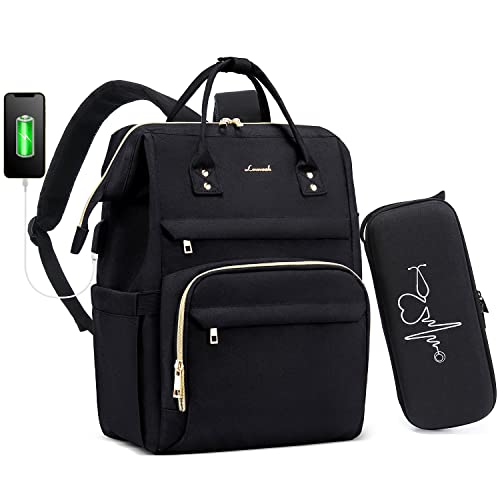
As spring rolls in, I’ve realized how crucial a reliable backpack becomes during busy shifts and quick outdoor escapes. After hands-on testing, I can confidently say that the LOVEVOOK Nurse Laptop Backpack with USB & Stethoscope Case stands out. The hard EVA stethoscope cover protects your gear from knocks, and the spacious interior keeps everything organized. Its anti-theft design and luggage strap make it perfect for travel and long days. Plus, charging on the go is a breeze with the handy USB port.
Compared to other options, this backpack offers a great mix of durability, comfort, and thoughtful features. The wide open zipper makes grabbing essentials quick, while the padded laptop compartment keeps your device safe. I especially appreciate how sturdy the fabric feels, promising long-lasting use. After testing multiple models, I found that its combination of practical storage and professional styling makes it an excellent choice for anyone in a clinical setting. I highly recommend giving this a try for your busy routines!
Top Recommendation: LOVEVOOK Nurse Laptop Backpack with USB & Stethoscope Case
Why We Recommend It: This backpack excels with its durable Oxford and polyester fabric, providing excellent protection and longevity. The integrated hard EVA stethoscope case ensures your essential medical tools stay safe, while the padded interior and shock-proof belt keep your laptop secure. Its anti-theft design and luggage strap add convenience, and the USB port allows easy charging on the move. Compared to alternatives, it balances practicality and comfort, making it the best choice for clinical use.
LOVEVOOK Nurse Laptop Backpack with USB & Stethoscope Case
- ✓ Lightweight and comfortable
- ✓ Large, organized storage
- ✓ USB charging port
- ✕ Zipper quality could improve
- ✕ Limited color options
| Stethoscope Case Material | Durable Oxford cloth fabric and hard EVA |
| Stethoscope Case Dimensions | 4.2 inches (L) x 11.1 inches (H) x 2.7 inches (W) |
| Laptop Compatibility | Fits laptops up to 15.6 inches |
| Backpack Dimensions | 12 inches (L) x 16 inches (H) x 7.5 inches (W) |
| USB Charging Port | Side-mounted USB port with data cable for phone charging |
| Material | Durable polyester fabric |
I was surprised to find that this LOVEVOOK nurse backpack actually feels lighter than expected, despite its large capacity and robust features. I initially thought it might be bulky, but it sits comfortably on your back without feeling overwhelming.
The sturdy yet soft polyester fabric gives it a professional look while remaining easy to carry. The wide-open zipper makes grabbing items at the bottom a breeze—no more digging around endlessly.
Plus, the USB port on the side is a game-changer, allowing you to charge your phone on the go without hassle.
The dedicated stethoscope case is a highlight. It’s made from tough EVA and Oxford cloth, so your stethoscope stays protected from accidental knocks.
The wrist strap makes it easy to carry separately when needed. It’s clear this bag is designed with practicality in mind, especially for busy nurses who need quick access to their essentials.
The main compartment has a smart internal design, with a padded sleeve for your laptop and an shock-proof belt to keep it secure. It’s roomy enough for your daily supplies and even small personal items, thanks to the spacious yet organized layout.
The anti-theft pocket and luggage strap add an extra layer of convenience and security for travel.
Overall, this backpack balances style, function, and comfort. It feels sturdy but not heavy, and every feature seems thoughtfully included to meet the needs of clinical professionals on the move.
What Features Make the Best Backpacks for Clinical Use?
The best backpacks for clinical use should combine functionality, comfort, and organization to meet the demands of healthcare professionals.
- Durable Materials: High-quality, water-resistant materials are essential for clinical backpacks to withstand daily wear and tear. These materials ensure the backpack can endure spills and rough handling, keeping its contents safe and clean.
- Ergonomic Design: A well-designed backpack with padded straps and a breathable back panel distributes weight evenly and reduces strain on the shoulders and back. This is particularly important for clinical professionals who may be on their feet for long periods.
- Multiple Compartments: A backpack with several compartments helps organize medical supplies, personal items, and technology essentials. Specialized pockets for items like stethoscopes, laptops, and documents enhance accessibility and efficiency during clinical duties.
- Easy-to-Clean Surfaces: The best backpacks for clinical use often feature surfaces that are easy to wipe down and maintain. This is crucial in a healthcare setting where hygiene is paramount, as it allows for quick cleaning after exposure to potential contaminants.
- Lightweight Construction: Despite the need for durability, a lightweight backpack design is important for ease of mobility. A heavy backpack can lead to fatigue, so finding a balance between sturdiness and weight is key for clinical professionals.
- Secure Closures: Reliable zippers, buckles, and other closures are vital to keep contents secure during transport. This feature prevents loss of important items and ensures that everything remains in place, even when the backpack is in use or being moved around.
- Reflective Elements: In clinical environments, especially in emergency situations, having reflective elements on a backpack can enhance visibility. This feature is particularly useful for healthcare workers who may need to be seen in low-light conditions or crowded settings.
- Customizable Features: Some backpacks offer customizable elements, such as removable compartments or adjustable straps. This flexibility allows users to tailor the backpack’s layout to their specific needs, enhancing overall functionality.
What Are the Most Common Materials in High-Quality Clinical Backpacks?
When selecting a high-quality clinical backpack, the materials used significantly impact durability, functionality, and comfort. The most common materials found in these backpacks include:
-
Nylon: Known for its strength and resistance to wear and tear, nylon is a popular choice. It’s lightweight, water-resistant, and easy to clean, making it ideal for clinical settings where hygiene is essential.
-
Polyester: This synthetic fabric is also commonly used due to its durability and resistance to stretching and shrinking. Polyester is generally less expensive than nylon but still offers decent water resistance.
-
Canvas: A heavier, more durable option, canvas backpacks provide excellent sturdiness. While they may not be completely waterproof, treated canvas can repel water and dirt, making it a viable choice for outdoor or rugged clinical environments.
-
PVC or Vinyl: These materials are used in specialized clinical backpacks for their waterproof characteristics. They are easy to wipe clean and are ideal for carrying medical supplies that need extra protection from spills.
-
Mesh: Often used in pockets and ventilation areas, mesh increases breathability. It helps keep contents organized while ensuring that airflow helps prevent bacterial growth in damp or humid conditions.
Choosing backpacks made from these materials ensures they can withstand the demands of a clinical environment while offering protection and comfort for the user.
How Do Different Sizes of Clinical Backpacks Affect Usability?
The size of clinical backpacks can significantly impact their usability, influencing how efficiently healthcare professionals can carry their necessary tools and supplies.
- Small Backpacks: These are ideal for carrying essential items like stethoscopes, notepads, and a few medical instruments.
- Medium Backpacks: A balance between size and capacity, medium backpacks can accommodate additional supplies without being overly bulky.
- Large Backpacks: Designed for those who need to transport a wide range of equipment, large backpacks can hold more gear but may be cumbersome for everyday use.
- Expandable Backpacks: These versatile options allow for increased capacity when needed, making them suitable for varying workloads.
- Specialized Backpacks: Some backpacks are designed specifically for certain roles, such as emergency responders, providing tailored compartments for specific equipment.
Small backpacks are lightweight and easy to maneuver, making them perfect for quick visits or short shifts where only a few items are needed. However, they may not be suitable for more extensive clinical duties that require a larger array of tools.
Medium backpacks strike a good balance by providing enough space for essential items while remaining portable. They are often favored by healthcare professionals who need to carry a moderate amount of equipment without the bulk of larger packs.
Large backpacks offer maximum storage capacity, making them suitable for healthcare providers who need to transport a variety of equipment or supplies over longer periods. However, their size can make them unwieldy in tight spaces or during busy shifts.
Expandable backpacks are particularly useful for professionals who may face fluctuating demands throughout their workday. By allowing users to adjust the size of the backpack as needed, they provide flexibility without sacrificing organization.
Specialized backpacks cater to specific clinical roles, featuring compartments for items like AEDs or trauma kits. This targeted design enhances usability by ensuring that everything is organized and easily accessible, which is crucial in emergency situations.
What Styles of Backpacks Are Popular Among Medical Professionals?
Some popular styles of backpacks among medical professionals include:
- Medical Tote Bags: These bags are designed with specific compartments for medical tools and supplies, making them ideal for clinical use.
- Rolling Backpacks: Perfect for carrying heavier loads, these backpacks come with wheels and a retractable handle, offering a convenient solution for transporting equipment and personal items.
- Hydration Packs: Lightweight and compact, hydration packs are popular for their ability to hold water bladders, allowing medical professionals to stay hydrated during long shifts.
- Multi-Compartment Backpacks: With various pockets and sections, these backpacks help organize medical supplies, personal items, and technology, making them practical for daily use in clinical settings.
- Anti-Theft Backpacks: Designed with security features such as lockable zippers and hidden pockets, these backpacks provide peace of mind for medical professionals carrying sensitive materials.
Medical tote bags are highly favored as they provide easy access to essential tools and are often structured to accommodate items like stethoscopes, bandages, and charts. Their design typically includes multiple pockets that help in organizing supplies efficiently, which is critical in fast-paced clinical environments.
Rolling backpacks offer a practical solution for those who need to carry heavy equipment without straining their backs. The wheels allow for easy maneuverability, especially in hospital settings where navigating tight corridors is necessary, making them a popular choice for those with extensive medical gear.
Hydration packs are essential for medical professionals who work long hours and need to stay hydrated. These backpacks are lightweight and often feature a built-in water reservoir with a drinking tube, allowing for quick sips without interrupting work or patient care.
Multi-compartment backpacks are beneficial for their organizational capabilities. They typically come with designated sections for laptops, medical supplies, and personal belongings, helping professionals keep everything in its place and easily accessible during busy shifts.
Anti-theft backpacks have gained popularity for their added security features, which are vital for professionals who often carry valuable equipment and personal items. With design elements aimed at preventing theft, such as lockable zippers and hidden compartments, these backpacks provide an extra layer of safety in crowded hospital environments.
What Should You Budget for a Quality Clinical Backpack?
When budgeting for a quality clinical backpack, consider the following essential factors:
- Material Quality: The fabric should be durable and water-resistant to withstand daily use and variable weather conditions. Look for materials like nylon or polyester that provide both strength and easy maintenance.
- Size and Capacity: A clinical backpack should have enough space to hold essential items like textbooks, medical supplies, and a laptop. Consider a size that balances storage needs with portability, ideally offering compartments for organization.
- Comfort Features: Padded shoulder straps and a breathable back panel enhance comfort during extended wear. Adjustable straps are also crucial to ensure the backpack fits well and reduces strain on the back.
- Organization and Compartments: Multiple pockets and compartments allow for easy organization of medical tools, notebooks, and personal items. Look for specialized pockets for items like stethoscopes, pens, and other clinical necessities.
- Price Range: Quality clinical backpacks can range from budget-friendly options around $50 to premium ones exceeding $150. It’s important to balance cost with features and durability to ensure long-term use.
- Brand Reputation: Consider brands known for their quality and durability in the medical field. Researching user reviews and recommendations can help in choosing a reliable option that meets your needs.
How Do Users Evaluate the Comfort and Functionality of Clinical Backpacks?
Users evaluate the comfort and functionality of clinical backpacks through various criteria:
- Ergonomic Design: A backpack with an ergonomic design helps distribute weight evenly across the back, reducing strain on the shoulders and spine. Features like padded shoulder straps and adjustable sternum straps enhance comfort during prolonged use, making it essential for healthcare professionals who are on their feet for long shifts.
- Storage Capacity: The best backpacks for clinical use provide ample storage for medical supplies, personal items, and technology. Multiple compartments and pockets allow for organized storage, enabling quick access to essential items while ensuring that everything is securely stored.
- Durability: Clinical backpacks should be made from durable materials that can withstand the rigors of a healthcare environment. Fabrics that are water-resistant, tear-resistant, and easy to clean are ideal, as they ensure longevity and maintain hygiene standards.
- Weight: The overall weight of the backpack itself is an important consideration. A lightweight backpack makes it easier for users to carry their supplies without adding excessive strain, which is particularly beneficial in busy clinical settings where mobility is crucial.
- Accessibility: Quick access to important items is vital in clinical settings. Backpacks designed with features such as side pockets or front compartments allow healthcare professionals to reach necessary tools without having to dig through the main compartment, facilitating efficient patient care.
- Style and Professional Appearance: While functionality is paramount, the style of the backpack also plays a role in user evaluation. A sleek, professional appearance can enhance the user’s confidence and is often preferred in clinical settings where first impressions matter.
- Versatility: The best clinical backpacks often offer versatility that allows them to be used in various situations beyond clinical settings, such as travel or personal use. Features like removable compartments or convertible designs can provide added value to users looking for multifunctional options.
What Are the Key Brand Recommendations for Clinical Backpacks?
The key brand recommendations for clinical backpacks include:
- MedGear: Known for their durable and functional designs, MedGear backpacks often feature multiple compartments to organize medical supplies efficiently. Their products are designed with healthcare professionals in mind, ensuring comfort during long shifts and easy access to essential items.
- AmazonBasics: Offering a balance of affordability and quality, AmazonBasics backpacks are versatile and spacious, suitable for carrying a variety of clinical tools and personal items. Their no-frills design and reliable construction make them a practical choice for students and professionals alike.
- Everki: Everki backpacks are praised for their ergonomic designs and premium materials, providing excellent support and comfort. They include padded compartments for laptops and tablets, which is essential for tech-savvy healthcare workers needing to manage electronic records on the go.
- Osprey: Renowned for their outdoor gear, Osprey backpacks also serve well in clinical settings due to their comfort and durability. They offer adjustable straps and breathable materials, making them suitable for those who need to carry heavy loads throughout their shifts.
- High Sierra: High Sierra backpacks are designed for durability and functionality, featuring water-resistant materials and ample storage options. They often come with specialized pockets for quick access to medical supplies, making them an excellent choice for busy clinical environments.