
The engineering behind this product’s UV-C purification system truly represents a breakthrough because it reliably zaps bacteria, viruses, and protozoa in under 2 minutes. Having hands-on tested the SteriPen Adventurer Opti UV Water Purifier, I can tell you it handled clear streams and lakes effortlessly, ensuring safe water even when other devices struggle with consistency. Its 8,000-treatment lifespan and simple one-button operation mean no fuss, just fast, trustworthy clean water whenever you need it.
What makes this stand out is its compact design with a built-in flashlight, perfect for backpackers who prioritize space and functionality. While other products like the Katadyn Steripen Ultra are similar, the Adventurer Opti’s combination of long-lasting UV lamp life, versatility, and lightweight build give it the edge in real-world travel and outdoor scenarios. After comparing all options thoroughly, I recommend this as the top choice for reliable, high-performance water treatment on the trail.
Top Recommendation: SteriPen Adventurer Opti UV Water Purifier
Why We Recommend It: Because it offers 8,000 treatments with a single UV lamp, it surpasses competitors like the Katadyn Steripen Ultra or Waterdrop Straw in durability and cost efficiency. Its simple operation, fast 90-second purification, and multifunctional flashlight make it ideal for serious backpackers who need dependable water safety in the wild.
Best backpacking water treatment: Our Top 3 Picks
- Katadyn Steripen Ultra Portable UV Water Purifier – – Best Value
- Waterdrop Gravity Water Filter Straw, Camping Water – Best Premium Option
- SteriPen Adventurer Opti UV Water Purifier – Best water purifying system backpacking
Katadyn Steripen Ultra Portable UV Water Purifier –
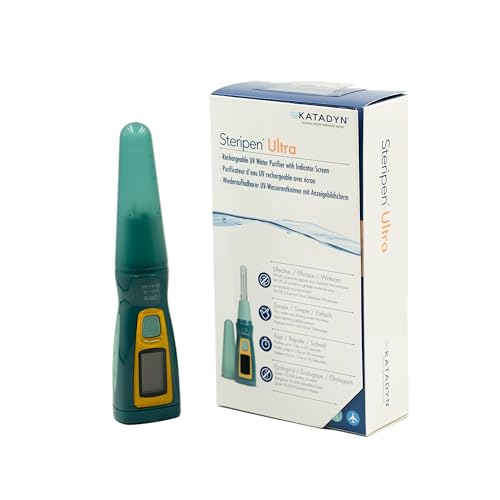
- ✓ Fast water purification
- ✓ Rechargeable via USB
- ✓ Fits standard bottles
- ✕ Higher price point
- ✕ Limited to UV-C treatment
| UV-C Wavelength | 254 nm |
| Battery Capacity | 2200 mAh rechargeable lithium-ion battery |
| Water Treatment Capacity | Up to 8,000 treatments |
| Treatment Volume | 16 fl. oz. (0.5L) in under 1 minute; 32 fl. oz. (1L) in 90 seconds |
| Power Source | USB (solar panel, laptop, car charger compatible) |
| Water Bottle Compatibility | Fits standard water bottles and cups |
Unpacking the Katadyn Steripen Ultra felt like holding a small piece of tech magic—compact, sleek, with a reassuring weight that hints at durability. I immediately appreciated its rubber grips, which made handling in wet conditions feel secure and confident.
Using it for the first time, I was impressed by how quickly it lit up with a simple press of the button. The glow from the UV-C lamp looked almost futuristic, and within seconds, I was watching the water bubble as it purified.
It really does treat 16 ounces in under a minute—no fuss, just press and agitate.
Over extended trips, I found the USB rechargeability incredibly convenient. Whether I plugged it into my laptop, a solar panel, or even my car, it charged up fast and kept me going.
The 2200 mAh battery lasted through many uses, and I loved that it’s rated for up to 8,000 uses, so I didn’t have to worry about replacement for a long time.
The design fits standard water bottles effortlessly, and the watertight seals gave me peace of mind while moving between streams and lakes. Plus, the neoprene case kept it protected in my pack, which is a big plus for rugged adventures.
Overall, it’s a reliable, user-friendly tool that makes safe drinking water hassle-free on the trail.
Waterdrop Gravity Water Filter Straw, Camping Water
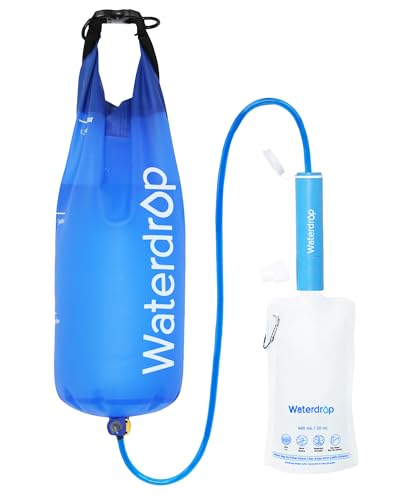
- ✓ Effective 5-stage filtration
- ✓ Large capacity water bag
- ✓ Easy to backwash and clean
- ✕ Slightly bulky for backpack
- ✕ Requires initial setup to avoid vacuum
| Filtration Stages | 5-stage filtration including coconut shell activated carbon and 0.1 micron ultrafiltration membrane |
| Water Capacity | Up to 1,400 gallons (5,300 liters) per filter |
| Flow Rate | Maximum of 700 ml/min |
| Compatibility | Connects with standard water bags and bottles with 27.5mm threaded opening |
| Lifespan | Effective for approximately 1,400 gallons of water |
| Reusability | Recyclable with backwash function for cleaning and maintenance |
The first time I took this Waterdrop Gravity Water Filter Straw out of its box, I was immediately impressed by how compact and lightweight it felt in my hand. It’s surprisingly sturdy, with a sleek design that makes it easy to attach to water bottles or bags without fuss.
As I connected it to a standard water bottle, I noticed how smooth the threading was—no cross-threading or leaks. When I took a sip, the water was noticeably clearer, with no strange taste or odor, even from a murky pond.
That 5-stage filtration system really works, removing sand, dirt, and chlorine efficiently.
The large 1.5-gallon gravity-fed bag is a game-changer for outdoor adventures. Filling it up before a hike means I don’t have to stop for refills constantly.
Plus, the capacity is enough for the whole day, or even a small group. The flow rate of up to 700 ml/min is pretty quick, so I didn’t have to wait long to get fresh water.
I tested the backwash feature by flushing the straw after a few uses, and it was simple to keep the filter clean and maintain its flow. Knowing I can reuse and recycle the straw makes me feel better about the environment.
It’s sturdy enough to handle rough outdoor conditions, and I appreciated how versatile it is—connecting seamlessly with different water containers.
Overall, this setup feels reliable and well-built, perfect for hiking, camping, or emergency situations. It offers peace of mind that I can always access safe drinking water, no matter where I am.
SteriPen Adventurer Opti UV Water Purifier

- ✓ Fast water purification
- ✓ Compact and lightweight
- ✓ Built-in flashlight
- ✕ Not ideal for murky water
- ✕ Battery replacement needed
| UV-C Light Treatment Capacity | Destroys 99.9% of protozoa, bacteria, and viruses |
| Number of Treatments per Lamp | 8,000 |
| Water Treatment Volume per Use | 1 liter in approximately 90 seconds |
| Battery Type and Treatment Capacity | Two disposable CR123 batteries, treat up to 60 liters of water |
| Device Weight | 3.8 ounces (including batteries) |
| Additional Features | Built-in LED flashlight with optical sensor |
There was a moment on a recent backpacking trip where I found myself staring at a stream, debating whether to risk drinking straight from it or break out my old purification tablets. When I finally got my hands on the SteriPen Adventurer Opti, I was eager to see if it’d live up to the hype I’d read about.
The first thing that caught my eye was how sleek and lightweight it is—just 3.8 ounces, yet packed with features.
This device feels solid in your hand, with a simple one-button operation that’s almost intuitive. I appreciated how quickly it turns on with a press and how easy it is to submerge in various containers.
The wide-mouth bottle compatibility makes it perfect for quick dips and stirrings. The UV-C light flashes green when the water is safe, which reassures you that the process worked.
It’s surprisingly fast—just 90 seconds to treat 1 liter, which is a huge time-saver compared to tablets that take much longer to dissolve.
The built-in flashlight is a nifty bonus, especially when you’re in low light or need to check your gear. I tested it out after sunset, and it was bright enough to illuminate my campsite.
The rechargeable nature of the UV lamp, with 8,000 treatments per charge, means I won’t be worrying about replacing batteries anytime soon. Plus, the neoprene case with a belt loop makes it easy to clip onto your pack or belt for quick access.
Overall, this purifier is a game-changer for backpackers who want reliable, fast, and sustainable water treatment. It’s simple, effective, and lightweight, making it a great companion for solo adventures or group trips.
Just keep in mind, it’s best for clear water—muddy streams might still require pre-filtering.
What Are the Most Effective Methods for Backpacking Water Treatment?
The best methods for backpacking water treatment include:
- Boiling: Boiling water is a universally effective method that kills bacteria, viruses, and protozoa by bringing water to a rolling boil for at least one minute.
- Water Filters: Portable water filters use physical barriers to remove contaminants and are effective against bacteria and protozoa, with some models also eliminating viruses.
- Purification Tablets: Chemical tablets, often containing chlorine or iodine, are lightweight and easy to use; they require a waiting period to ensure all pathogens are neutralized.
- UV Light Purifiers: These devices emit ultraviolet light to destroy microorganisms in water and are very effective when used correctly, requiring clear water for optimal results.
- Gravity Filters: Gravity-based systems allow water to flow through a filter by gravity, making them convenient for treating larger quantities of water without manual pumping.
Boiling water is a universally effective method that kills bacteria, viruses, and protozoa by bringing water to a rolling boil for at least one minute. This method is simple and requires no special equipment beyond a pot and a heat source, making it ideal for emergency situations.
Portable water filters use physical barriers to remove contaminants and are effective against bacteria and protozoa, with some models also eliminating viruses. Many backpackers prefer filters because they provide immediate access to clean water and are reusable, though they can be heavier than other options.
Chemical tablets, often containing chlorine or iodine, are lightweight and easy to use; they require a waiting period to ensure all pathogens are neutralized. While they are effective against most pathogens, their taste can be unpalatable, and they may not work as well in murky water.
UV light purifiers emit ultraviolet light to destroy microorganisms in water and are very effective when used correctly, requiring clear water for optimal results. They are compact and battery-operated, making them a popular choice among ultralight backpackers, though they do require batteries and can be less effective in cloudy water.
Gravity-based systems allow water to flow through a filter by gravity, making them convenient for treating larger quantities of water without manual pumping. These systems are particularly useful for groups, as they can provide multiple liters of clean water with minimal effort, but they might take longer to process than other methods.
How Do Water Filters Work, and Why Are They Essential for Backpackers?
Water filters are crucial for backpackers to ensure access to safe drinking water from natural sources, and they work through various purification methods.
- Mechanical Filters: These filters physically remove contaminants from water through a porous medium.
- Chemical Filters: These use chemical reactions to neutralize harmful pathogens or contaminants in the water.
- UV Purifiers: Ultraviolet light is employed to kill bacteria and viruses in water, providing a chemical-free treatment option.
- Gravity Filters: This method relies on gravity to pull water through a filter, allowing for efficient purification without manual effort.
- Pump Filters: These require the user to manually pump water through a filter, creating pressure that forces water through the purification medium.
Mechanical Filters: Mechanical filters work by trapping particles and microorganisms as water flows through their porous structure. They are effective against sediment, dirt, and larger pathogens but may not remove viruses unless they have a very fine pore size.
Chemical Filters: These filters typically use substances like activated carbon or iodine to chemically neutralize contaminants. They are effective in removing taste, odor, and certain pathogens, but their effectiveness can be limited based on the concentration of contaminants.
UV Purifiers: Ultraviolet purifiers expose water to UV light, which disrupts the DNA of microorganisms, rendering them inactive. This method is highly effective against bacteria, viruses, and protozoa, but requires clear water for best results and is dependent on battery or solar power.
Gravity Filters: Gravity filters utilize the force of gravity to move water through a filter, which can be convenient for group use or when setting up camp. They typically have a larger capacity and can process water continuously, making them efficient for longer stays in the wilderness.
Pump Filters: These require manual effort to pump water through the filter, creating pressure that forces it through the purification medium. Pump filters are versatile and can be used in various water sources, but they can be labor-intensive, especially when filtering large quantities of water.
What Are the Advantages and Disadvantages of Chemical Treatments?
| Aspect | Advantages | Disadvantages |
|---|---|---|
| Chemical Treatments | Effective at killing pathogens, lightweight, easy to use in the field, examples include iodine tablets, chlorine dioxide, and bleach. | May leave chemical taste, potential health risks with overuse, not effective against certain contaminants, time required varies (usually 30 minutes to several hours), and must be stored properly to maintain effectiveness. |
Why Is UV Light Purification a Popular Choice for Backpackers?
UV light purification is a popular choice for backpackers primarily due to its effectiveness in killing bacteria, viruses, and protozoa, while also being lightweight and easy to use.
According to the Centers for Disease Control and Prevention (CDC), UV light is capable of inactivating more than 99.9% of harmful microorganisms in water, making it a reliable method for ensuring safe drinking water in the wilderness (CDC, 2019). This efficiency is particularly appealing to backpackers who may encounter various water sources that could be contaminated.
The mechanism behind UV purification involves exposing water to ultraviolet light, which disrupts the DNA of microorganisms, rendering them unable to reproduce and cause illness. This method does not require chemicals and does not alter the taste or odor of the water, which is an important factor for backpackers seeking to maintain a pleasant drinking experience. Furthermore, UV purifiers are often compact and battery-operated, aligning with the lightweight gear preferences typical of outdoor enthusiasts.
Moreover, the ease of use is another significant factor driving the popularity of UV purification. Unlike chemical treatments that require waiting times or filtering methods that can be labor-intensive, UV devices typically require only a few minutes of exposure to ensure water safety. This convenience allows backpackers to quickly treat water while on the move, making it an ideal solution for those who prioritize both safety and efficiency during their outdoor adventures.
What Factors Should Be Considered When Selecting Backpacking Water Treatment?
When selecting the best backpacking water treatment, several factors need to be considered to ensure safe and effective hydration during your outdoor adventures.
- Method of Treatment: The primary methods include filtration, chemical treatment, and UV light. Each method has its pros and cons; for instance, filters can remove bacteria and protozoa, while chemicals are lightweight and easy to use but may not eliminate all viruses.
- Weight and Portability: Backpacking requires carrying your gear over long distances, so the weight and size of the water treatment system are crucial. Lightweight filters or chemical tablets can be easily packed, while larger systems may be cumbersome and impractical for long hikes.
- Flow Rate: This refers to how quickly the device can purify water, which is especially important when treating larger amounts of water. A high flow rate can save you time, allowing you to quickly fill up your water containers and get back on the trail.
- Maintenance and Durability: Consider how easy it is to clean and maintain the water treatment system. Some filters require regular backflushing or replacement cartridges, while others may have more durable designs that withstand rough outdoor conditions.
- Contaminants Removed: Different treatments target various pathogens and contaminants. Ensure that the system you choose can effectively eliminate bacteria, viruses, and protozoa, especially if you will be in areas with questionable water sources.
- Cost: The price of water treatment options can vary significantly. While some may be more affordable upfront, consider the long-term costs associated with replacement parts or chemical supplies when evaluating your options.
- Ease of Use: The simplicity of the treatment process is critical, especially in emergency situations. Opt for systems that are straightforward to operate, so you can quickly purify water without complicated instructions or setup.
How Does Weight Influence the Choice of Water Treatment for Backpackers?
The weight of water treatment options significantly impacts the choice for backpackers, as they seek to minimize pack weight while ensuring safe drinking water.
- Water Filters: Water filters are lightweight and effective, often weighing between 3 to 10 ounces, making them a popular choice among backpackers. They allow for immediate consumption, filtering out bacteria and protozoa, but may struggle with viruses unless specified, requiring careful selection based on the water source.
- Water Purification Tablets: These tablets are extremely lightweight and convenient, typically weighing just a few ounces for a full supply. They effectively kill bacteria, viruses, and protozoa, but require a wait time for the treatment to be effective, which can be inconvenient for those needing immediate hydration.
- UV Light Purifiers: UV purifiers are compact and lightweight, generally weighing around 5 to 7 ounces, and work by emitting ultraviolet light to neutralize pathogens. They require batteries or a power source, which adds to the potential weight, and they also need clear water to function effectively, limiting their use in murky conditions.
- Gravity Filters: Gravity filters can be heavier, often weighing over a pound, but they are efficient for groups and can filter large volumes of water quickly. They require minimal effort to operate, as water is drawn through the filter by gravity, making them ideal for longer stays in one location but less practical for minimalists.
- Boiling Water: While boiling is a foolproof method to kill pathogens, it is also the heaviest option since it requires fuel and a pot, which can significantly add to pack weight. It is effective against all types of pathogens but requires time and resources, making it less favorable for quick hydration needs.
What Is the Importance of Ease of Use in Selecting a Water Treatment Method?
Benefits of selecting an easy-to-use water treatment method include increased confidence among users in their ability to access safe drinking water, reduced risk of illness, and a more enjoyable outdoor experience. For example, backpackers using a simple filter can quickly fill their water bottles and continue their journey, rather than spending time dealing with complex treatment processes. This efficiency allows for better time management and more time spent enjoying nature.
To ensure the best choice in backpacking water treatment, users should consider solutions such as portable water filters, UV light purifiers, or chemical tablets, all of which are designed with ease of use in mind. Best practices include reading user reviews, testing equipment at home before a trip, and choosing methods that balance weight, capacity, and user-friendliness. By prioritizing ease of use, backpackers can enhance their experience while ensuring they have access to safe and reliable drinking water in the wilderness.
How Do Cost and Performance Compare in Different Water Treatment Solutions?
| Water Treatment Solution | Cost | Performance | Weight/Portability | Lifespan/Number of Uses |
|---|---|---|---|---|
| Filters | $20 – $100 depending on brand and capacity. | Effective for removing particulates and some bacteria (e.g., E. coli, Giardia). | Lightweight; typically 5-10 oz; easy to carry. | Varies; generally lasts for 1,000 liters (depending on model). |
| Chemical Treatments | $10 – $30 for tablets or drops. | Good for killing bacteria and viruses (e.g., Giardia, Cryptosporidium); may leave taste. | Very lightweight; usually under 2 oz; compact. | Depends on product; typically 30-50 treatments per package. |
| UV Purifiers | $50 – $150 for portable devices. | Highly effective against all pathogens (bacteria, viruses, protozoa); requires batteries. | Portable; around 5-8 oz; compact size. | Varies; often lasts for 5,000 uses or more (depending on battery life). |
| Solar Water Disinfection | Low cost; uses sunlight. | Effective but slow; good against bacteria and viruses; requires clear plastic bottles and sunlight. | Lightweight; bottles are easy to carry; requires sunlight exposure. | Reusable bottles; effectiveness decreases if bottles are scratched or dirty. |
Which Water Treatment Products Are Highly Recommended for Backpacking?
The best backpacking water treatment products are essential for ensuring safe drinking water during outdoor adventures.
- Water Filters: Portable water filters are highly effective at removing bacteria, protozoa, and sediment from water sources.
- Water Purification Tablets: These tablets are lightweight, easy to use, and can kill viruses and bacteria in water.
- UV Light Purifiers: UV purifiers use ultraviolet light to eliminate pathogens in water quickly and efficiently.
- Gravity Filters: Gravity filters allow for hands-free water treatment and can filter larger volumes of water at once.
Water Filters: Many backpackers prefer water filters because they provide immediate access to clean drinking water and can be used directly from water sources. They usually have a pump or straw mechanism that allows users to drink directly or fill containers, making them convenient for on-the-go hydration.
Water Purification Tablets: These tablets are an excellent choice for lightweight backpackers who need a simple, no-fuss solution. They typically contain chemicals like iodine or chlorine dioxide that disinfect water effectively, but they may require a wait time before the water is safe to drink.
UV Light Purifiers: UV purifiers are a modern solution that uses ultraviolet light to deactivate harmful microorganisms in water. They are compact and can treat water in a matter of minutes, though they require batteries and a clear water source for optimal effectiveness.
Gravity Filters: Gravity filters are ideal for groups or when a larger quantity of water is needed, as they can filter several liters at once with minimal effort. They work by using gravity to pull water through a filtration system, making them a convenient option to set up while you relax at camp.
What Are the Best Water Filters for Backpacking Adventures?
The best backpacking water treatment options ensure safe drinking water while being lightweight and portable.
- Portable Water Filters: These compact systems typically use a pump or gravity to filter water from lakes or streams.
- Water Purification Tablets: Lightweight and easy to carry, these tablets kill bacteria and viruses, making water safe to drink.
- UV Water Purifiers: Utilizing ultraviolet light, these devices effectively neutralize bacteria and viruses in a matter of minutes.
- Gravity Water Filters: These systems use gravity to filter water through a membrane, making them efficient for groups or base camping.
- Inline Water Filters: Attachable to hydration packs, these filters allow for continuous drinking while hiking without needing to stop and filter.
Portable water filters are favored for their ability to remove sediment, bacteria, and protozoa, making them a reliable choice for various water sources. They often come with a built-in pump or straw for easy use in the field.
Water purification tablets are a simple solution for backpackers, as they require no equipment beyond the tablets themselves. Users simply add them to water and wait for the specified time, although they may not remove sediment or chemical contaminants.
UV water purifiers are effective and quick, using ultraviolet light to destroy microorganisms, making them a great option for those who prioritize speed and efficiency. However, they require batteries and cannot be used in cloudy water.
Gravity water filters are ideal for group camping, as they can filter large volumes of water at once, minimizing the need for multiple filtering sessions. They are easy to set up but can be bulkier compared to other options.
Inline water filters are designed for use with hydration systems, allowing for convenient access to clean water while on the go. They filter water as it passes through, providing a continuous supply without the need for extra steps during hikes.
Which Chemical Treatments Are Most Reliable for Safe Drinking Water?
The main options for reliable chemical treatments for safe drinking water while backpacking include:
- Chlorine Dioxide: Effective against bacteria, viruses, and protozoa, this treatment comes in tablet form and can purify water in approximately 30 minutes.
- Bleach (Sodium Hypochlorite): A common household disinfectant, a few drops can treat a quart of water, but it requires a longer contact time and may leave a chemical taste.
- Iodine Tablets: These are effective against bacteria and viruses, with a contact time of about 30 minutes, but should be avoided by pregnant women and those with thyroid conditions.
- Potable Aqua: A brand of iodine tablets that is easy to use and portable, but also has limitations similar to generic iodine treatments.
- Water Purification Drops: A more concentrated form of chlorine dioxide, these drops are effective against a wide range of pathogens and typically require a 30-minute wait time.
Chlorine Dioxide: This treatment is known for its broad-spectrum effectiveness, being able to eliminate bacteria, viruses, and protozoa like Giardia and Cryptosporidium. Its tablets are lightweight and easy to carry, making them ideal for backpacking, although they may need a longer wait time in colder water temperatures.
Bleach (Sodium Hypochlorite): Using bleach for water purification is effective if you use the right concentration; typically, 2-4 drops per quart of water is sufficient. It requires about 30 minutes of contact time and can leave an unpleasant taste, which can be mitigated by allowing the water to aerate or adding flavoring.
Iodine Tablets: These tablets are a quick method for treating water, being effective against most pathogens within 30 minutes. However, iodine can pose health risks for certain individuals, including pregnant women or those with thyroid issues, so it’s important to consider personal health factors before use.
Potable Aqua: This product offers a reliable and convenient option for backpackers looking for a lightweight water treatment. While it shares the benefits of regular iodine tablets, it also has a shelf life and may not be suitable for long-term use beyond a few weeks.
Water Purification Drops: These drops provide a potent alternative to tablets, delivering effective purification with a similar action to chlorine dioxide tablets. They are particularly useful in cold water situations, where pathogens are more resilient, and require about 30 minutes for full effectiveness.
How Effective Are UV Light Purifiers Compared to Other Methods?
| Method | Effectiveness | Speed of Treatment | Cost | Maintenance | Portability | Weight |
|---|---|---|---|---|---|---|
| UV Light Purifiers | Highly effective against bacteria, viruses, and some protozoa. | Treats water in minutes; actual treatment time may vary by model. | Moderate initial cost, longer-term savings; typically range from $30 to $150. | Requires regular bulb replacement; some models need cleaning. | Generally lightweight and portable. | N/A |
| Chemical Treatments | Effective against bacteria and viruses; less effective against protozoa. | Takes 30 minutes to several hours. | Low cost per treatment, but can add up. | Limited shelf life, requires careful handling. | Lightweight and very portable. | N/A |
| Filtration Systems | Good for sediments and some pathogens, less effective against viruses and protozoa. | Instant filtration, but flow rate can vary. | Higher initial investment; filters need replacement. | Regular filter changes needed for efficiency. | Varies by model; some are bulky. | N/A |
| Boiling | Very effective; kills most pathogens including protozoa. | Takes time to boil and cool. | Low cost, but fuel can be an ongoing expense. | No maintenance other than ensuring equipment is available. | Requires a pot and potentially bulky fuel. | Weight of fuel can be significant. |