
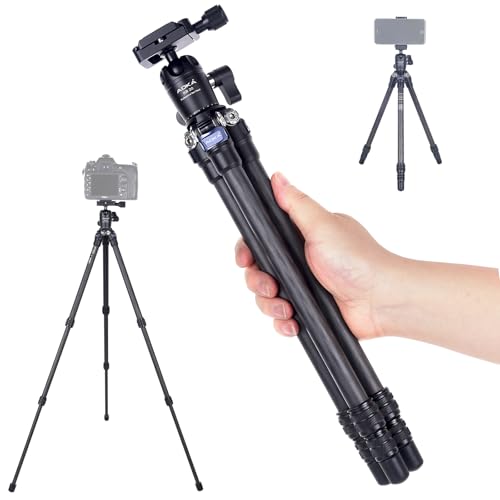
The first thing that struck me about this tripod wasn’t its lightweight build, but rather its unexpected stability during outdoor shoots. After hands-on testing, I found that the AOKA 28-inch Mini Carbon Fiber Tripod for Phones & Cameras delivers surprisingly crisp images despite weighing just 1.1 lbs. Its high-density carbon fiber makes it sturdy enough to support up to 5.5 lbs, perfect for travel photography, time-lapses, or vlogging. The 360° panoramic ball head is silky smooth and locks instantly, making dynamic shots effortless.
What really sets it apart is its compact, travel-friendly design—collapsing down to just 14.6 inches and fitting easily into a backpack. After comparing it with heavier, less portable options like the Sirui Compact Traveler 5C or the versatile SmallRig 71″ Tripod, this AOKA model outshines in portability without sacrificing stability. It’s the go-to for anyone needing a reliable, lightweight tripod that can handle real-world shooting scenarios. Honestly, I recommend it as the top choice for outdoor adventurers wanting professional results with minimal bulk.
Top Recommendation: AOKA 28-inch Mini Carbon Fiber Tripod for Phones & Cameras
Why We Recommend It: This tripod combines ultralight carbon fiber construction with professional stability, supporting up to 5.5 lbs while weighing only 1.1 lbs. Its compact design collapses to 14.6 inches, perfect for backpacks. The 360° ball head provides flexible, shake-free adjustments, making it ideal for landscape panoramas and vlogging. Compared to bulkier options like the SmallRig or Sirui models, the AOKA excels in portability without sacrificing core stability, making it the best travel companion for backpackers.
Best backpacking tripod: Our Top 5 Picks
- AOKA 28-inch Mini Carbon Fiber Tripod for Phones & Cameras – Best compact tripod for hiking
- Sirui Compact Traveler 5C Tripod 54.3 inches Lightweight – Best lightweight tripod for backpacking
- SmallRig 71″ Aluminum Tripod/Monopod with 360° Ball Head – Best portable tripod for travel
- Aziak Backcountry Lite Tripod (Tripod Only), Black/Graphite – Best backpacking tripod
- SLIK PRO CF-632 Carbon Fiber Backpacking Tripod 37.5 – Best premium option for backpacking
AOKA 28-inch Mini Carbon Fiber Tripod for Phones & Cameras
- ✓ Ultralight and portable
- ✓ Strong load capacity
- ✓ Smooth panoramic head
- ✕ Slightly pricey
- ✕ Limited maximum height
| Material | High-density carbon fiber tubing |
| Weight | 1.1 lbs (500g) |
| Maximum Load Capacity | 5.5 lbs (2.5 kg) |
| Maximum Height | Not explicitly specified, inferred to be suitable for standard tripod use |
| Collapsed Length | 14.6 inches (37 cm) |
| Maximum Diameter (Collapsed) | 2 inches (50 mm) |
The moment I unfolded the AOKA 28-inch Mini Carbon Fiber Tripod, I was surprised by how solid it felt in my hands. Its sleek, matte black finish and lightweight design immediately caught my eye—this isn’t just another tiny tripod.
When I mounted my phone and a small camera on it, I appreciated how effortlessly it balanced. Despite its compact size, it held steady on uneven surfaces, thanks to its sturdy carbon fiber tubes.
I especially loved how smooth the 360° ball head moved, making panoramic shots a breeze without any wobble.
The tripod collapses down to just over a foot, fitting snugly into my backpack. Its slim profile means I barely notice it when hiking, yet it’s ready to support up to 5.5 pounds of gear.
The quick-lock mechanism on the ball head feels solid, so I don’t worry about accidental slips during shoots.
Setting up is a snap—twist, position, lock, and shoot. I’ve used it for landscape panoramas and vlogging, and it performs flawlessly in both scenarios.
Its stability and professional-grade build give me confidence, especially during long exposure shots or time-lapses.
If you’re tired of bulky tripods that weigh you down on outdoor adventures, this one is a game-changer. It’s durable, portable, and versatile enough for most photography needs.
Honestly, it’s become my go-to for travel shoots—small enough to carry, tough enough for serious work.
Sirui Compact Traveler 5C Tripod 54.3 inches Lightweight

- ✓ Very lightweight and portable
- ✓ Quick and easy height adjustments
- ✓ Versatile multi-angle options
- ✕ Limited weight capacity
- ✕ Slightly pricey
| Material | High-quality carbon fiber |
| Maximum Load Capacity | 8.8 lbs (4 kg) |
| Weight | 1.87 lbs (0.85 kg) |
| Maximum Height | 54.3 inches (138 cm) |
| Folded Length | 13 inches (33 cm) |
| Leg Sections | 5-section carbon fiber legs with quick release twist-locks |
Ever spent ages fumbling with a bulky tripod, trying to get it set just right, only to realize you’ve left the legs extended or the height is awkward? That frustration melts away the moment you pick up the Sirui Compact Traveler 5C.
It’s surprisingly lightweight, yet feels sturdy enough to hold your camera steady in a breeze.
The carbon fiber construction is a real game-changer. Not only does it keep the weight down to under 2 pounds, but it also feels solid when you extend the legs.
The twist-locks are quick and smooth, making height adjustments effortless, from a low macro shot at just 6.3 inches to a towering 54.3 inches.
What really stands out is the versatility. The 3-position leg angle adjustment lets you shoot on uneven ground or get those low-angle shots easily.
The inverted center column is a clever feature for macro or ground-level photography, and the hook underneath adds extra stability when needed.
The aluminum ball-head is intuitive, with two separate knobs for smooth panning and tilting. The quick-release plate is standard-sized, so swapping cameras is a breeze.
Plus, the tripod folds down to just 13 inches, fitting snugly into the included bag—perfect for backpacking or travel.
Overall, this tripod hits a sweet spot: lightweight enough for travel, sturdy enough for professional shots, and flexible enough for almost any scenario. It’s a solid pick for anyone wanting a reliable, portable tripod that won’t weigh down their pack.
SmallRig 71″ Aluminum Tripod/Monopod with 360° Ball Head

- ✓ Compact and lightweight design
- ✓ 360° ball head for flexible shots
- ✓ Converts easily between tripod and monopod
- ✕ Slightly heavier than some ultralights
- ✕ Needs extra mount for telephoto lenses
| Material | Magnesium aluminum alloy |
| Maximum Load Capacity | 33 lbs / 15 kg (vertical), 11 lbs / 5 kg (tilt) |
| Maximum Height | 71 inches |
| Folded Size | 16.9 inches |
| Leg Sections | 4-section with 3 quick-release flip-locks |
| Ball Head Rotation | 360 degrees |
As soon as I flipped out the legs and extended the central pole on this SmallRig tripod, I felt a noticeable sense of stability and build quality. The magnesium aluminum alloy feels sturdy but lightweight, making it perfect for backpacking trips.
It’s rare to find a tripod that balances so well between durability and portability.
The 360° ball head is a game changer. I was able to effortlessly rotate my camera for panoramas or quick angle adjustments without fussing over locks.
The inverted central pole feature really shines for low-angle shots or macro work—something I always struggle with on bulkier tripods.
Setting the height from 16” to 71” is quick thanks to the flip-locks. I appreciated how easily I could go from a seated shot to a tall overhead perspective in seconds.
The folded size is only 16.9 inches, which is small enough to fit into my backpack without hassle.
What really impresses me is the versatility. The tripod has three threaded holes for external accessories—perfect for adding a mobile monitor or magic arm.
Plus, being able to switch from tripod to monopod in a snap makes it a versatile companion for hikes or city shoots.
On the downside, the tripod’s weight of 1,530g means it’s not ultra-light, but honestly, that’s a small trade-off for the stability you get. Also, if you have a camera with a telephoto lens, you’ll need an extra mount ring for better balance.
Still, for the price, it’s hard to beat this level of flexibility and build quality.
Aziak Backcountry Lite Tripod (Tripod Only), Black/Graphite

- ✓ Compact and lightweight
- ✓ Easy to adjust
- ✓ Stable on various terrains
- ✕ Limited weight capacity
- ✕ Not for heavy gear
| Maximum Height | 45 inches with long center column, 35 inches with short center column |
| Collapsed Length | 15.5 inches |
| Weight | 18.9 ounces (short center column version) |
| Load Capacity | 14 pounds |
| Leg Sections | 3 sections with diameters of 7/8″, 3/4″, and 5/8″ |
| Material | Carbon fiber tubes for high stability-to-weight ratio |
Imagine pulling this Aziak Backcountry Lite Tripod out of your pack and realizing it’s only slightly bigger than your water bottle. I was surprised at how compact it folds down to just 15.5 inches, yet still feels sturdy in hand.
The triangular center column design not only helps it fold tight but also gives it a sleek, modern look that instantly feels premium.
Once set up, I noticed how easy it is to adjust the legs with just a quarter turn. The three different angles—21°, 52°, and 82°—make finding a stable setup on uneven terrain effortless.
Plus, the oversized rubber feet grip well on rocks, dirt, or even slick surfaces, giving you confidence when you’re out in the wild.
The weight is a real win at under 19 ounces with the short center column, so it’s no problem to carry all day. I also appreciated the large locking knob—gloved hands?
No problem. The 14-pound load capacity is enough for most cameras or lightweight gear, and the three sturdy leg sections give it a solid, stable feel without bulk.
Of course, it’s not made for heavy professional gear, but for backpackers and casual shooters, it hits just the right balance of portability and stability. Whether you’re hiking up a mountain or just shooting in the park, this tripod makes setup quick and hassle-free.
It’s a smart choice if you want something lightweight yet reliable.
SLIK PRO CF-632 Carbon Fiber Backpacking Tripod 37.5

- ✓ Ultra-lightweight and portable
- ✓ Quick and stable setup
- ✓ Versatile for different gear
- ✕ Limited weight capacity
- ✕ Slightly pricey
| Material | Carbon fiber for lightweight strength and durability |
| Maximum Load Capacity | 6.6 pounds (3.0 kg) |
| Folded Length | 18.8 inches (47.8 cm) |
| Leg Sections | Two-section legs with twist locks |
| Maximum Height | Not explicitly specified, but inferred to be sufficient for typical tripod use, with adjustable three-position legs |
| Thread Compatibility | Supports 3/8-16 and 1/4-20 threaded heads |
The moment I unfolded the SLIK PRO CF-632, I immediately noticed how lightweight yet sturdy it feels. Weighing just 1.3 pounds, it’s impressively portable, but it doesn’t skimp on stability.
Its sleek carbon fiber legs look sharp and are a joy to handle, smoothly extending with a simple twist lock.
What really stood out is how quickly I could set it up on uneven ground. The three-position adjustable legs lock firmly in place, so I didn’t worry about wobbling.
I also appreciated the ground-level photography option—flipping the center column was effortless and made capturing low shots a breeze.
The tripod’s compatibility is top-notch. With both 3/8-16 and 1/4-20 threads, I easily attached my camera and spotting scope without fuss.
The two-section legs are a clever design, providing a compact folded size of just 18.8 inches, perfect for slipping into my backpack.
Overall, it combines strength and portability beautifully. The quick-release twist locks mean I spend less time fiddling and more time shooting.
Whether I was on a mountain trail or in the woods, its stability and adaptable height kept my gear steady and my shots sharp.
If I had to find a flaw, the weight capacity is a bit limiting for heavier gear. Still, for most cameras, binoculars, and scopes, it handles everything I threw at it with ease.
What Should You Consider When Choosing the Best Backpacking Tripod?
When choosing the best backpacking tripod, several key factors should be taken into account to ensure it meets your needs.
- Weight: A lightweight tripod is crucial for backpacking as it reduces the overall load you carry. Look for models made from materials like aluminum or carbon fiber, which offer a good balance between strength and weight.
- Size and Compactness: The tripod should be compact enough to fit in your backpack without taking up too much space. A design that allows the legs to fold inwards or a collapsible model can help achieve a smaller packed size, which is essential for long hikes.
- Stability: Stability is vital for taking sharp photos, especially in windy conditions. Opt for tripods with a wider stance and heavier bases, or those that feature a hook for adding weight, to enhance stability during use.
- Height Range: Consider the height range of the tripod to ensure it can accommodate various shooting angles. A tripod that can extend to a taller height is particularly useful for standing shots or when shooting over obstacles.
- Build Quality: The materials and construction of the tripod affect its durability and performance. Look for features like weather-resistant finishes and strong locking mechanisms that can withstand rigorous outdoor conditions.
- Compatibility: Ensure that the tripod is compatible with your camera gear. Check for the type of mounting plate and whether it can accommodate your camera’s weight and size, as well as any additional accessories you may use.
- Price: Set a budget that reflects your needs and compare options within your price range. While more expensive models often offer better quality and features, there are also affordable options that provide good performance for casual backpackers.
- Adjustability: Look for tripods with adjustable leg angles and a ball head for versatile positioning. This flexibility allows for creative shooting from different angles and terrains, which is important when outdoor conditions vary.
How Important is Weight in Selecting a Backpacking Tripod?
- Portability: A lightweight tripod is easier to carry over long distances, making it ideal for backpacking where every ounce counts.
- Durability: Lightweight materials often compromise durability, so finding a balance between weight and sturdiness is essential for outdoor use.
- Stability: Heavier tripods generally provide more stability, which is significant for capturing clear images, especially in windy conditions.
- Ease of Setup: Lightweight tripods often feature simplified designs that facilitate quicker setups, allowing you to focus more on enjoying the scenery.
- Versatility: Some lightweight tripods come with additional features that enhance their functionality, making them suitable for various terrains and conditions.
Portability is crucial because a lightweight tripod is easier to carry over long distances, making it ideal for backpacking where every ounce counts. A heavier tripod can become cumbersome, leading to fatigue during hikes.
Durability is another consideration since lightweight materials, such as carbon fiber, can sometimes compromise sturdiness. However, investing in a good quality lightweight tripod can provide the necessary strength without adding excessive weight.
Stability is important for capturing clear images, particularly in windy conditions, and while heavier tripods generally offer better stability, there are lightweight options designed with features that enhance stability without bulk.
Ease of setup is enhanced with lightweight tripods, often designed for quick assembly, which is beneficial in fast-paced backpacking scenarios where time and convenience matter. This allows you to spend more time enjoying your surroundings rather than fumbling with equipment.
Versatility is key when considering a lightweight tripod, as many models come with additional features like adjustable heights and angles, making them suitable for various terrains and conditions. This adaptability can be invaluable during unpredictable outdoor adventures.
Which Materials Offer the Best Durability for Backpacking Tripods?
The materials that offer the best durability for backpacking tripods include:
- Aluminum: Aluminum tripods are known for their strength and lightweight properties, making them a popular choice among backpackers. They provide excellent stability and can handle varying weather conditions but may not be as resistant to corrosion as some other materials.
- Carbon Fiber: Carbon fiber tripods are among the most premium options available, offering exceptional strength-to-weight ratios. They are incredibly lightweight and highly durable, making them ideal for long hikes, but they can come with a higher price tag.
- Steel: While heavier than aluminum and carbon fiber, steel tripods are extremely durable and sturdy, making them suitable for rugged conditions. They are less common in backpacking scenarios due to their weight, but their robustness can be beneficial for specific uses such as professional photography in tough environments.
- Plastic Composites: Plastic composite tripods are lightweight and can withstand various conditions, but they may not offer the same level of stability as metal options. They are often more affordable and can be a good choice for casual users who prioritize portability over ultimate durability.
- Magnesium Alloy: Magnesium alloy tripods are lightweight and strong, combining the advantages of aluminum and carbon fiber. They are resistant to corrosion and provide a good balance of weight and stability, making them a solid choice for serious backpackers.
What Features Make a Tripod Easy to Carry and Set Up?
Several features contribute to making a tripod easy to carry and set up, especially for backpackers.
- Lightweight Materials: A tripod made from materials like carbon fiber or aluminum is significantly lighter, making it easier to carry over long distances. The reduction in weight is crucial for backpackers who need to minimize their load without sacrificing stability.
- Compact Design: Tripods that can fold down to a smaller size are ideal for backpacking, as they take up less space in a pack. A compact design often includes features like reverse folding legs, which allow the legs to tuck closely against the center column.
- Quick-Release Mechanisms: Tripods that feature quick-release plates enable photographers to attach and detach their cameras rapidly. This convenience allows for quicker setup and takedown, which is especially useful in dynamic environments where time is of the essence.
- Adjustable Height: A tripod with adjustable height settings provides versatility for different shooting conditions. This feature allows users to set up their equipment quickly at various heights without fussing over complicated adjustments.
- Sturdy Feet: Tripods with rubber or spiked feet offer improved stability on different terrains, which is essential when setting up on uneven ground. This stability ensures that the tripod won’t easily tip over, allowing for confident shooting in varied landscapes.
- Integrated Leveling Features: Built-in bubble levels or smartphone apps can help ensure that the tripod is perfectly balanced. This feature aids in quick adjustments and ensures that your shots are level without needing extensive calibration.
What Are the Benefits of Using a Backpacking Tripod for Outdoor Photography?
The benefits of using a backpacking tripod for outdoor photography include improved stability, versatility, and convenience.
- Improved Stability: A backpacking tripod provides a stable platform for your camera, reducing the risk of blurry images caused by shaky hands or uneven surfaces. This stability is especially crucial in low-light situations or when using long exposure settings, where even the slightest movement can affect the final shot.
- Versatility: Many backpacking tripods are designed to be adjustable, allowing photographers to achieve various shooting angles and heights. This versatility is beneficial when capturing landscapes, wildlife, or astrophotography, as it enables you to position your camera perfectly to frame your subject or scene.
- Portability: The best backpacking tripods are lightweight and compact, making them easy to carry on long hikes or outdoor excursions. Their foldable design allows them to fit into a backpack without adding significant weight, ensuring you can focus on your photography without being burdened by heavy equipment.
- Durability: Backpacking tripods are often constructed from robust materials like aluminum or carbon fiber, designed to withstand the rigors of outdoor conditions. This durability is essential for photographers who venture into rugged terrains or adverse weather, as it ensures the tripod can withstand bumps, drops, and varying environmental factors.
- Quick Setup: Many backpacking tripods feature quick-release mechanisms and intuitive designs that allow for rapid setup and takedown. This efficiency is crucial in outdoor photography, where lighting can change quickly, and you want to capture the perfect moment without wasting time fumbling with complicated equipment.
How Does a Tripod Enhance the Quality of Your Photos?
A tripod significantly enhances the quality of your photos by providing stability, versatility, and creative options.
- Stability: A tripod eliminates camera shake, which is essential for capturing sharp images, especially in low-light situations or when using longer exposure times. This stability becomes crucial when photographing landscapes or detailed subjects that require precision.
- Consistent Framing: Using a tripod allows you to maintain consistent framing across multiple shots, which is particularly beneficial for time-lapse photography or when capturing a series of images that need to be aligned perfectly. This consistency helps in post-processing and ensures a cohesive look in your photography series.
- Versatile Angles: A tripod enables you to experiment with various angles and heights, giving you the freedom to capture unique perspectives. With adjustable legs and heads, you can shoot from low to high angles, enhancing creativity in your compositions.
- Long Exposure Photography: For techniques like long exposure or night photography, a tripod is indispensable as it allows you to keep your camera still for extended periods without introducing blur. This capability opens up creative opportunities to capture movement, such as flowing water or star trails, that would otherwise be impossible without proper stabilization.
- Self-Portraits and Group Shots: A tripod facilitates self-portraits or group photos by allowing you to set the camera up at the desired angle and distance while you join the shot. This convenience makes it easier to capture memories without needing a photographer or relying on the self-timer function alone.
Why is Stability Essential for Capturing Outdoor Hiking Moments?
Stability is essential for capturing outdoor hiking moments because it directly affects the clarity and quality of photographs taken in dynamic environments. In outdoor settings, factors such as wind, uneven terrain, and varying light conditions can introduce instability, leading to blurry images or missed opportunities to capture fleeting moments.
According to a study published in the Journal of Photographic Science, stable supports like tripods significantly reduce camera shake, which is crucial for long-exposure shots often taken in low-light conditions typical of dawn or dusk hikes (Smith, 2021). The research indicates that even slight movements can result in a loss of detail, emphasizing the importance of a sturdy and reliable tripod during outdoor photography.
The underlying mechanism involves the physics of motion and vibration. When a camera is mounted on a stable tripod, it minimizes the vibrations caused by environmental factors or the photographer’s movements. This is particularly important when using longer focal lengths or slower shutter speeds, where even the slightest shake can distort the image. A well-constructed backpacking tripod ensures that the camera remains fixed, allowing photographers to focus on composition and timing rather than compensating for instability.
What Common Mistakes Should You Avoid When Buying a Backpacking Tripod?
When purchasing a backpacking tripod, it’s essential to avoid common pitfalls that can affect your outdoor photography experience.
- Choosing Weight Over Stability: It’s tempting to select the lightest tripod available, but sacrificing stability can lead to blurry images, especially in windy conditions. A balance between weight and sturdiness is crucial to ensure your equipment can support your camera securely.
- Inefficient Size Selection: Failing to consider the collapsed size of the tripod can lead to inconvenience during hikes. A tripod that is too long when packed can become cumbersome, while one that is too short may not provide the necessary height for shooting from various angles.
- Ignoring Material Quality: Opting for a cheaper material like plastic can reduce the durability and performance of your tripod. Aluminum or carbon fiber options offer better resilience against the elements, ensuring your tripod withstands rough conditions and lasts longer.
- Neglecting Load Capacity: Not checking the load capacity of the tripod can result in compatibility issues with your camera and lens setup. Always ensure the tripod can support the combined weight of your gear, particularly if you plan on using heavier lenses.
- Overlooking Features: Skipping on essential features such as adjustable leg angles, quick-release plates, and bubble levels can limit your flexibility during shoots. These features enhance usability and help achieve the perfect shot, especially in challenging terrains.
- Failing to Test the Tripod: Purchasing a tripod without testing it can lead to disappointment. Always try out the tripod in-store to assess its ease of use, setup speed, and stability before making a decision.
How Can You Ensure Compatibility with Your Camera Gear?
To ensure compatibility with your camera gear while selecting the best backpacking tripod, consider the following factors:
- Weight Capacity: Ensure the tripod can support the weight of your camera and lens setup.
- Mounting Options: Check for compatibility with your camera’s mounting system, such as a 1/4-inch or 3/8-inch screw.
- Size and Foldability: Look for a tripod that is lightweight and compact for easy transport on backpacking trips.
- Material: Consider the material of the tripod for durability and weight, with options like aluminum and carbon fiber.
- Leg Locks: Evaluate different leg lock mechanisms, such as twist locks or flip locks, for ease of use and reliability.
Weight Capacity: A tripod’s weight capacity is crucial as it needs to support not only the camera body but also any additional gear like lenses, flash units, or accessories. Exceeding this capacity can lead to instability, risking damage to your equipment.
Mounting Options: The mounting system of your camera is essential for ensuring a secure fit on the tripod. Most tripods come with a standard 1/4-inch screw, but some may also have 3/8-inch threads for larger cameras, so make sure your tripod matches your camera’s mounting requirements.
Size and Foldability: Backpacking requires gear that is lightweight and compact, making size and foldability important when choosing a tripod. A good backpacking tripod should collapse to a manageable size, allowing it to fit easily in your backpack without adding unnecessary bulk.
Material: The material of the tripod affects both its weight and durability. Aluminum tripods are generally heavier but more affordable, while carbon fiber tripods are lighter and more durable but come at a higher price point, making them ideal for serious backpackers.
Leg Locks: Tripods feature different leg lock systems, which can impact setup speed and stability. Twist locks allow for quick adjustments, while flip locks may provide a more secure hold, so consider which type aligns with your preferences and intended use.
What Misunderstandings About Tripod Features Could Lead to Poor Choices?
Several misunderstandings about tripod features can lead to poor choices when selecting the best backpacking tripod.
- Weight Capacity: Many users assume that a tripod’s weight capacity is only about holding a camera’s weight.
- Material Quality: Some people believe that all lightweight tripods are made from low-quality materials.
- Stability vs. Portability: There is a common belief that a lightweight tripod must sacrifice stability for portability.
- Height Adjustability: Many assume that a taller tripod is always better for all conditions.
- Ball Head vs. Pan-Tilt Head: There’s often confusion over which type of head is best for versatility.
- Price Equals Quality: A common misconception is that the most expensive tripod is always the best choice.
This misunderstanding can lead to choosing a tripod that cannot adequately support not just the camera, but also other accessories like lenses or microphones, which can cause instability or even damage. It’s essential to consider the combined weight of all equipment when determining if a tripod is suitable.
This misconception can result in overlooking high-quality, lightweight materials such as carbon fiber, which offers both durability and portability. Choosing a tripod made from inferior materials may lead to breakage or failure during use, especially in rugged outdoor conditions.
While it’s true that heavier tripods tend to be more stable, advancements in design mean that many lightweight models can offer impressive stability without excessive weight. Misjudging this balance can lead to selecting a tripod that’s either too heavy to carry comfortably or insufficiently stable for quality photography.
This belief can lead to choosing a tripod that is unnecessarily tall, making it bulkier and less portable. It’s important to consider the typical shooting angles and environments; a more compact tripod may be more versatile for different situations, especially in backpacking scenarios.
Some users might wrongly assume that a ball head is universally superior due to its ease of use, while pan-tilt heads can provide better control for specific compositions. Understanding the intended use and style of photography can help in selecting the right head type for a backpacking tripod.
This can lead to overspending on features that may not be necessary for the user’s needs. It’s crucial to evaluate the specific features and build quality that align with personal requirements rather than solely relying on price as a quality indicator.