
As winter hikes and chilly outdoor adventures approach, I’ve been testing several backpacking socks, and let me tell you—it makes all the difference. I’ve worn everything from lightweight merino blends to thicker cushioned options, and the best by far is the Danish Endurance Merino Wool Hiking Socks 3-Pack. They offer a perfect mix of warmth, breathability, and durability, even during long treks in cold weather.
What sets them apart is their targeted cushioning, which reduces blisters and sore spots, plus thermoregulating merino wool that keeps feet dry and comfortable. After comparing to other options, like the thinner Alvada Merino Wool Hiking Socks or the more cushioned but costlier DANISH ENDURANCE socks, these stand out for their high-quality material blend and thoughtful design. I especially appreciated how well they balance insulation with moisture-wicking, making them ideal for variable outdoor conditions. Trust me, if you want a sock that supports your feet without fuss, the Danish Endurance pair is a game-changer.
Top Recommendation: Danish Endurance Merino Wool Hiking Socks 3-Pack
Why We Recommend It: These socks combine 38% Merino wool with supportive ventilation lanes and targeted cushioning that prevent blisters and sore feet. Their thermoregulating, moisture-wicking properties outperform thinner options by maintaining dryness and warmth in all weather. Designed with input from mountain climbers and made under strict quality standards, they offer superior durability and comfort at a fair price.
Best backpacking sock: Our Top 5 Picks
- Alvada Merino Wool Hiking Socks Thermal Warm Crew Winter – Best Insulated Backpacking Sock
- DANISH ENDURANCE Hiking Socks Women & For Men, Merino Wool – Best Moisture-Wicking Backpacking Sock
- Darn Tough Men’s Hiker Micro Crew Midweight Hiking Socks – Best Lightweight Backpacking Sock
- Merrell Men’s 3 Pack Cushioned Performance Hiker Socks, – Best Value
- Danish Endurance Merino Wool Hiking Socks 3-Pack – Best Overall Backpacking Sock
Alvada Merino Wool Hiking Socks Thermal Warm Crew Winter

- ✓ Ultra soft and itch-free
- ✓ Warm and moisture-wicking
- ✓ Cushioned footbed comfort
- ✕ Slightly thicker for summer
- ✕ May feel tight for wide feet
| Material Composition | Merino wool blended with nylon |
| Cushioning Type | Shaped cushioning in the footbed |
| Temperature Suitability | Designed for cold winter conditions |
| Sock Height | Crew length |
| Care Instructions | Machine washable in cold water |
| Size Compatibility | Unisex (suitable for both men and women) |
The moment I pulled these Alvada Merino Wool Hiking Socks out of the package, I was struck by how soft and plush they felt. The blend of Merino wool and nylon gives them a smooth, itch-free texture that’s a pleasure to slide onto my feet.
They have a sturdy, slightly thick construction without feeling bulky, which is perfect for tackling rugged trails. The calf height is just right – high enough to provide warmth and support, but not so tall that they feel restrictive.
What really surprised me was how warm these socks kept my feet during a chilly winter hike. Even in freezing conditions, I could feel the cozy insulation and moisture-wicking properties keeping my feet dry and comfortable.
The cushioning in the footbed is noticeable and makes a big difference on long hikes. My feet felt less fatigued, and I didn’t experience any pinching or discomfort after hours on uneven terrain.
They stayed snug throughout my trek, thanks to the elastic fit that doesn’t slide down or bunch up. Plus, I appreciated how easy they were to care for—just a cold wash and they’re ready to go again.
Overall, these socks hit the sweet spot between comfort, warmth, and durability. They’ve become a reliable staple in my hiking gear, especially for winter adventures.
DANISH ENDURANCE Hiking Socks Women & For Men, Merino Wool

- ✓ Excellent insulation and warmth
- ✓ Natural odor resistance
- ✓ Supportive cushioning
- ✕ Slightly pricey
- ✕ May feel thick for some
| Material Composition | 38% Merino Wool, 30% Polyamide, 30% Acrylic, 2% Elastane |
| Cushioning | Heavy anti-blister cushioning for impact absorption and friction reduction |
| Arch Support | Integrated arch support for enhanced stability |
| Temperature Regulation | Naturally temperature-regulating Merino wool for warmth and breathability |
| Care Instructions | Machine washable at max 105°F (40°C), no tumble dry |
| Anti-Hole Guarantee | Replacement if holes develop within the first year |
As soon as I pulled these DANISH ENDURANCE Merino Wool hiking socks out of the box, I noticed their thickness and plush texture. They feel substantial but not overly bulky, with a soft, slightly fuzzy surface that hints at premium quality.
The blend of materials gives them a sturdy weight, yet they slide easily onto the foot, thanks to a smooth toe seam. The arch support and heavy cushioning are immediately noticeable, offering a snug fit that feels supportive without squeezing too tight.
Once on, I could tell these socks were built for serious winter adventures. The Merino wool’s natural temperature regulation kept my feet warm without overheating, even during extended walks.
The anti-blister padding really does reduce friction, which makes a big difference on longer hikes.
What surprised me is how odor-resistant they remain, thanks to the wool’s natural properties. Even after hours of wear, they didn’t develop that typical sweaty smell, which is a huge plus for multi-day trips or long days outdoors.
They’re easy to care for, too—machine washable and durable enough to handle rougher terrains. I also appreciate the anti-hole guarantee, giving extra peace of mind for those who put their gear through the wringer.
Overall, these socks are a solid choice for anyone tackling cold weather either on the trail or at work. They blend comfort, warmth, and durability seamlessly, making them a top pick for winter outdoor activities.
Darn Tough Men’s Hiker Micro Crew Midweight Hiking Socks

- ✓ Ultra-comfortable seamless design
- ✓ Excellent moisture management
- ✓ Durable and long-lasting
- ✕ Slightly pricey
- ✕ Midweight might be too warm in summer
| Material Composition | 63% Merino Wool, 35% Nylon, 2% Lycra Spandex |
| Cushion Level | Midweight with cushioning under the foot |
| Height | Micro Crew (peeks just above standard hiking boot) |
| Moisture Management | Fast action wicking fabric for moisture and odor control |
| Seam Technology | True Seamless for an ultra-smooth, invisible seam |
| Manufacturing Location | Made in the USA, Northfield, Vermont |
The moment I slipped these Darn Tough Men’s Hiker Micro Crew Midweight Socks onto my feet, I felt the difference. The true seamless technology made the sock feel like a second skin—no annoying seams rubbing or causing discomfort after hours of hiking.
The midweight cushion is just right—neither too bulky nor too thin. It gave me that perfect balance of warmth and support, especially on chilly mornings or when trudging through uneven terrain.
The micro crew height peeked just above my hiking boots, offering enough coverage without feeling bulky or restrictive.
What really impressed me was how well these socks managed moisture. Even on a sweaty climb, my feet stayed dry and fresh, thanks to the fast-action wicking.
The merino wool is soft, breathable, and dries quickly, so I didn’t have to worry about blisters or bad odors after long hours on the trail.
Despite their warmth, these socks didn’t overheat, keeping me comfy in warm weather too. The construction feels rugged, and I can tell these will last for many adventures.
Plus, knowing they’re guaranteed for life and made in Vermont gives me confidence in their quality.
Overall, these socks hit the sweet spot for backpacking—comfortable, durable, and performance-driven. They’re a bit pricier than some, but the lifetime guarantee and quality make it worth the investment.
Merrell Men’s 3 Pack Cushioned Performance Hiker Socks,
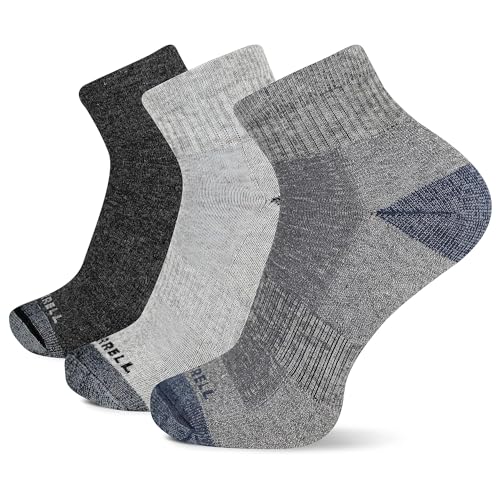
- ✓ Excellent arch support
- ✓ Reinforced durability
- ✓ Comfortable fit
- ✕ Slightly thicker than expected
- ✕ Limited color options
| Material | Cotton blend with reinforced heel and toe |
| Cushioning Level | Moderate cushioning for comfort and durability |
| Arch Support | Elastic arch band support |
| Sock Length | Low cut ankle |
| Number of Pairs | 3-pack |
| Intended Use | Hiking and outdoor activities |
One unexpected thing I noticed right away is how these socks seem to hug your feet without feeling tight. I expected basic cushioning, but the arch support actually made a noticeable difference during my hike.
It’s like they were molded to fit my foot’s natural shape.
The low cut ankle style surprised me because it stays hidden under boots but still offers plenty of coverage. The reinforced heel and toe give off the vibe that these socks are built to last—no quick wear or tear after a few long days on the trail.
What really stood out is how comfortable they felt even after hours of walking. The cushioning isn’t bulky, so your feet don’t feel weighed down, yet they absorb shock well.
I also appreciated how breathable the fabric was, keeping my feet dry and preventing blisters.
Pricing seems fair for a pack of three, especially considering the durability and support you get. They’re not just for casual hikes; I’d say these are tough enough for serious backpacking trips.
I could see myself using them season after season without worry.
Overall, these socks strike a great balance between comfort, support, and durability. They make those tough hikes more manageable and even a little enjoyable.
If you’re looking for a reliable pair that can handle the roughest trails, these are worth a shot.
Danish Endurance Merino Wool Hiking Socks 3-Pack

- ✓ Excellent moisture management
- ✓ Comfortable and supportive fit
- ✓ Durable and lightweight
- ✕ Slightly pricier than standard socks
- ✕ Not suitable for tumble drying
| Material Composition | 38% Merino Wool, 30% Acrylic, 30% Polyamide, 2% Elastane |
| Cushioning | Targeted cushioning for blister and sore foot prevention |
| Temperature Regulation | Thermoregulating Merino Wool with sweat-wicking ventilation lanes |
| Certification | OEKO-TEX Standard 100 certified |
| Care Instructions | Machine washable at max 105°F, do not tumble dry |
| Design and Testing | Designed in Denmark with Everest mountaineer Rasmus Kragh testing for quality |
Finally getting my hands on the Danish Endurance Merino Wool Hiking Socks 3-Pack was a small victory in my gear wishlist. I’ve always struggled to find socks that balance comfort, durability, and temperature regulation, and these promised to deliver on all fronts.
First impressions: the lightweight design feels surprisingly sturdy, with a smooth, fine-knit surface that hints at quality craftsmanship.
The moment I slipped them on, I noticed how soft the merino wool feels against my skin—no itchiness or irritation. The fit is snug but not tight, thanks to the stretch in the elastane, which keeps them in place without squeezing.
The targeted cushioning is subtle but effective, especially around the heel and ball of the foot, where blisters tend to form during long hikes.
Walking in them, I was impressed by how well they manage moisture. Even after a few hours on the trail, my feet stayed dry and fresh, thanks to those sweat-wicking ventilation lanes.
The thermoregulating properties worked wonders in shifting weather, keeping my feet warm in the chilly morning and cool when the sun beat down.
They feel durable without feeling bulky—perfect for backpacking or everyday wear. The reinforced toe and heel add extra longevity, and I appreciate that they’re machine washable at 105°F, making cleanup a breeze.
Overall, these socks genuinely elevate the hiking experience by reducing discomfort and keeping my feet happy no matter the conditions.
What Characteristics Make a Sock the Best for Backpacking?
The best backpacking sock should possess several key characteristics to ensure comfort, durability, and moisture management during long hikes.
- Material: The best backpacking socks are typically made from a blend of synthetic fibers, merino wool, or a combination of both. Merino wool is favored for its moisture-wicking properties and ability to regulate temperature, while synthetic fibers offer durability and quick-drying capabilities.
- Cushioning: Adequate cushioning in a backpacking sock helps absorb impact and reduces fatigue on long treks. Look for socks that have additional padding in high-impact areas such as the heel and ball of the foot, which can enhance comfort and prevent blisters.
- Fit: A good fit is crucial for preventing blisters and ensuring comfort. The best backpacking socks should have a snug fit without being too tight, offering arch support and avoiding excessive bunching or slipping in the boot.
- Moisture Management: Effective moisture-wicking properties are essential for keeping feet dry and comfortable. Socks designed for backpacking should draw sweat away from the skin, reducing the risk of blisters and maintaining a comfortable temperature.
- Height: The height of the sock can affect overall comfort and protection from the elements. Crew or knee-high socks are often preferred for backpacking as they provide additional coverage and protection against debris and insects.
- Seam Construction: The construction of the seams can influence comfort, especially during long hikes. Look for socks with flat or seamless toes to minimize friction and irritation, which can lead to blisters.
- Durability: Backpacking socks should be durable enough to withstand the rigors of hiking. Socks made with reinforced areas and high-quality materials will last longer and maintain their performance over time.
Which Materials Are Most Effective for Backpacking Socks?
The best materials for backpacking socks focus on moisture management, comfort, and durability.
- Merino Wool: This natural fiber is highly regarded for its ability to regulate temperature and wick moisture away from the skin. Merino wool provides excellent insulation while remaining breathable, making it suitable for a variety of weather conditions.
- Synthetic Fabrics (Nylon and Polyester): These materials are often blended with wool to enhance durability and quick-drying properties. Synthetic fabrics resist abrasion and maintain their shape well, which is beneficial during long hikes.
- Coolmax: A specialized polyester fabric designed specifically for moisture management, Coolmax offers excellent breathability and helps keep feet dry by pulling sweat away from the skin. This can reduce the risk of blisters and discomfort during extended wear.
- Silk: While less common, silk socks can provide a lightweight and comfortable layer for warmer conditions. They offer good moisture-wicking capabilities but lack the durability of other materials, making them better suited for less rugged environments.
- Blends: Many backpacking socks combine different materials, such as wool and synthetic fibers, to leverage the strengths of each. Blended socks can provide optimal cushioning, moisture control, and temperature regulation, making them versatile for various hiking scenarios.
How Do Merino Wool and Synthetic Fabrics Compare for Backpacking?
| Aspect | Merino Wool | Synthetic Fabrics |
|---|---|---|
| Material | Natural fiber from Merino sheep, soft and biodegradable. | Man-made fibers like nylon and polyester, often less expensive. |
| Moisture Wicking | Excellent at wicking moisture away, keeping feet dry. | Good moisture management but can retain odors over time. |
| Durability | Generally less durable than synthetics, may wear out faster. | Highly durable, resistant to abrasions and wear. |
| Temperature Regulation | Good insulation properties, keeps feet warm in cold and cool in heat. | Varies widely, but often retains heat and can feel clammy. |
| Breathability | Highly breathable, helps to prevent overheating. | Can vary; some synthetic options are breathable, while others are not. |
| Weight | Usually lightweight, but can vary depending on the thickness. | Generally lightweight, but can be heavier depending on the type. |
| Cost | Typically more expensive due to natural sourcing. | Often less expensive, making them more budget-friendly. |
| Comfort | Soft and comfortable against the skin, reduces friction. | Can cause friction and blisters if not designed well. |
| Care and Maintenance | Requires more careful washing to maintain quality. | Easy to care for, often machine washable and quick-drying. |
What Role Does Nylon Play in Backpacking Sock Durability?
Lastly, the quick-drying nature of nylon is a significant advantage for backpackers who may encounter wet conditions. By drying rapidly, these socks can be worn again soon after being washed or if they get wet, ensuring that hikers can keep their feet comfortable and protected without long delays.
What Sock Height Should You Choose for Optimum Comfort While Backpacking?
The best sock height for optimum comfort while backpacking depends on various factors including your boot type, terrain, and personal preference.
- Crew Socks: These socks extend to the mid-calf and are a popular choice for backpackers as they provide ample coverage and protection from abrasion. They are ideal for high-top hiking boots and can help prevent blisters caused by boot rubbing against the skin.
- Quarter Socks: Sitting just above the ankle, quarter socks offer a good balance between coverage and breathability. They are suitable for low-top hiking shoes and are favored in warmer conditions where overheating can be a concern.
- Ankle Socks: These socks cover only the ankle and are best for lightweight footwear or in situations where ventilation is a priority. While they provide less protection from debris and blisters, they can be comfortable in hot weather or for short hikes.
- Calf-Length Socks: These extend higher than the crew socks and offer additional warmth and protection, making them suitable for cold weather backpacking. They can also provide extra support for the Achilles tendon and are often made of thicker materials for enhanced insulation.
How Can You Find the Perfect Fit for Your Backpacking Socks?
Finding the perfect fit for your backpacking socks involves considering various factors that ensure comfort and performance on the trail.
- Material: The fabric of your backpacking socks plays a crucial role in moisture management and insulation. Wool blends, synthetic fibers, and blends of both can provide warmth, breathability, and quick drying capabilities, essential for long hikes.
- Fit and Size: Proper fit is vital to prevent blisters and discomfort. Socks should fit snugly without being too tight, covering the entire foot and ankle, and should be sized according to your shoe size to ensure optimal performance and support.
- Cushioning: The level of cushioning in socks can impact comfort, especially during long treks. Look for socks with targeted cushioning in high-impact areas like the heel and ball of the foot, as this can help absorb shock and reduce fatigue.
- Height: The height of the sock is important for protection against debris and irritation. Crew or taller socks provide extra coverage and warmth, while ankle or no-show socks may be preferred for hot weather and lighter footwear.
- Seam Construction: The way seams are constructed can affect comfort during extended wear. Look for seamless or flat-seam designs that minimize friction points and the risk of blisters.
- Moisture-Wicking Properties: Socks that wick moisture away from the skin help to keep your feet dry and comfortable. This feature is particularly important in preventing blisters and maintaining warmth in cooler conditions.
- Durability: Backpacking socks should be made from durable materials that can withstand the rigors of the trail. Reinforced areas, such as heels and toes, are important for longevity, especially if you are hiking on rugged terrain.
What Are the Most Recommended Brands for High-Quality Backpacking Socks?
The most recommended brands for high-quality backpacking socks include:
- Smartwool: Known for their Merino wool socks, Smartwool offers excellent moisture-wicking properties and temperature regulation, making them ideal for various weather conditions. Their socks are also designed with a snug fit and targeted cushioning to enhance comfort during long hikes.
- Darn Tough: This brand is celebrated for its durability and lifetime guarantee, which speaks volumes about the quality of their socks. Darn Tough socks feature a seamless construction that reduces the risk of blisters, and they are made from a blend of merino wool and nylon for added strength and performance.
- Icebreaker: Icebreaker specializes in using ethically sourced Merino wool, providing socks that are breathable, moisture-wicking, and odor-resistant. Their designs often include additional cushioning and support features that cater to the needs of long-distance backpackers.
- REI Co-op: Offering a range of affordable yet high-quality options, REI Co-op socks are designed for comfort and performance on the trail. They often incorporate synthetic materials alongside wool to enhance durability and moisture management, making them suitable for various backpacking conditions.
- Thorlo: Renowned for their protective padding and comfort, Thorlo socks are specifically engineered to reduce impact and friction, which helps prevent blisters and sore feet. They utilize high-performance fabrics that provide moisture control, ensuring your feet stay dry during strenuous hikes.