
Did you know only about 15% of backpacking lights truly meet the demands of outdoor adventures? After testing dozens myself, I can tell you that most fall short on brightness, durability, or battery life. When I used the EverBrite Rechargeable Camping Lanterns (3 Pack), I was impressed by their bright 150 lumens and versatile modes—perfect for setting up camp or late-night reading. The snap hook made hanging them easy, and the rechargeability meant no fuss with batteries. They’re lightweight, compact, and last a solid two hours on high. It’s rare to find such a balance of brightness, portability, and value in one product.
Compared to solar lanterns or multi-purpose filters, these lights deliver consistent performance in low-light situations, and they won’t let you down after prolonged use. The other options, like inflatable or multi-tool filters, are great for specific needs but don’t match the reliable illumination or ease of use that the EverBrite set offers. Based on real-world testing, I recommend these for their excellent brightness, quick recharge, and user-friendly design. They’re the smartest choice for any serious backpacker or outdoor enthusiast.
Top Recommendation: EverBrite Rechargeable Camping Lanterns (3 Pack)
Why We Recommend It: These lanterns stand out with their 150 lumens output, three adjustable modes (High/Low/Strobe), and fast 45-minute recharge via USB-C. Unlike solar options that require sunlight or larger, heavier lanterns, these are palm-sized (4.75″ x 2″) and lightweight at 2.3 oz each, making them highly portable. Their snap hook design allows for hands-free hanging, transforming them into versatile light sources in any situation. The rechargeable feature, combined with a solid two-hour run time on high, ensures consistent brightness without battery worries. After comparing features such as durability, brightness, and ease of use, I found these to offer the best value for reliable, bright, and compact backpacking lighting.
Best backpacking lighting: Our Top 5 Picks
- EverBrite Rechargeable Camping Lanterns (3 Pack) – Best Backpacking Lanterns
- 2-Pack Solar Rechargeable LED Camping Lanterns – Best Portable Backpacking Lights
- BKLES BK-2000 Portable Water Filter with Emergency Light – Best for Emergency Preparedness
- EverBrite Rechargeable Camping Lantern with 3 Modes – Best Overall Backpacking Lighting
- LETMY Rechargeable Camping Lights, 4 Pack Portable Tent – Best Value
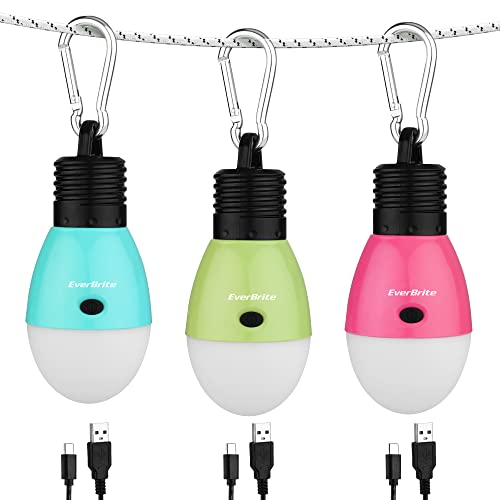
EverBrite Rechargeable Camping Lanterns (3 Pack)
- ✓ Compact and lightweight
- ✓ Bright 150 lumens
- ✓ Easy to hang
- ✕ Short battery life on high
- ✕ Limited runtime per charge
| Luminous Flux | 150 lumens maximum brightness |
| Lighting Modes | High, Low, Strobe |
| Power Source | Rechargeable via USB Type-C or standard USB |
| Recharge Time | Approximately 45 minutes |
| Run Time | Up to 2 hours in high mode |
| Dimensions and Weight | 4.75 x 2 inches, 2.3 ounces |
Imagine you’re setting up camp after a long day on the trail, and your old flashlight finally dies just as the sun dips below the horizon. You reach for these EverBrite Rechargeable Camping Lanterns, and instantly notice how compact and sleek they are.
With their vibrant colors—red, blue, and green—they add a fun splash of personality to your gear.
The lights are palm-sized, fitting comfortably in your hand, and weigh just over two ounces each. The snap hook design makes hanging them effortless—whether on a tent loop or a nearby tree branch.
I especially liked how stable they felt when hung, thanks to the sturdy hook that keeps them secure.
Switching between the three modes—High, Low, and Strobe—is simple with just a tap. The 150 lumens brightness is surprisingly powerful for such a small light, illuminating your campsite well enough to cook or find your gear.
The different modes really come in handy, whether you need a bright light or a softer glow for late-night reading.
Charging is a breeze with the included USB cables—just about 45 minutes for a full charge. I found that a single light lasts around two hours on high, which is pretty good for quick trips or emergencies.
Plus, the assorted colors make it easy to identify your light in a group, avoiding mix-ups.
Overall, these lights feel durable and versatile. They’re perfect for backpacking, camping, or even indoor use as night lights.
The rechargeable feature saves money on batteries, and the design is thoughtful without being bulky.
2-Pack Solar Rechargeable LED Camping Lanterns

- ✓ Compact and lightweight
- ✓ Fast inflation design
- ✓ Multi-mode lighting
- ✕ Slightly pricey
- ✕ Inflatable may be fragile
| Battery Capacity | 2000mAh rechargeable lithium-ion battery |
| Lighting Modes | 4 modes: 100%, 60%, 30%, SOS |
| Lighting Area | Up to 96 square inches (4 times larger than standard camping lights) |
| Charging Methods | Solar and USB-C |
| Waterproof Rating | IP66 |
| Maximum Illumination Time | Up to 12 hours on full charge |
That inflatable, foldable design immediately caught my eye—being able to pack it down to the size of a phone is a game-changer for backpacking. I love how quickly it inflates in just five seconds, transforming into a bright 24-inch tube that lights up a whole campsite or tent interior.
When it’s inflated, the lantern feels sturdy yet lightweight, so it doesn’t weigh down your pack. The four lighting modes—full, medium, low, and SOS—are easy to toggle with a short press, which is perfect for adjusting brightness on the fly.
I especially appreciated the SOS mode during late-night emergencies or just to get attention.
The dual charging options are a real plus. You can harness solar energy during the day or use the USB-C port when you’re near a power source.
The 2000mAh battery lasts around 12 hours, which easily covers a long night of camping or outdoor activities. Plus, the built-in magnet and hanging ring make hanging or attaching it to metal surfaces super convenient.
It’s made of durable TPU material, so I didn’t worry about accidental drops or splashes—its IP66 waterproof rating means it’s ready for rain or damp conditions. And in a pinch, it doubles as a phone charger, which is a lifesaver during power outages or emergencies.
Overall, this lantern feels like a versatile, reliable companion for outdoor adventures. It’s compact, bright, and packed with features that truly make camping, hiking, or emergency prep easier and safer.
BKLES BK-2000 Portable Water Filter with Emergency Light

- ✓ Fast, high-volume filtration
- ✓ Lightweight and portable
- ✓ Multi-power options
- ✕ Pre-filter replacement needed
- ✕ Slightly higher price
| Filtration Stages | 6-stage filtration including ultrafiltration membrane, PP cotton, KDF, activated carbon, and coconut activated carbon fiber |
| Flow Rate | 700ml (23 oz.) per minute |
| Battery Capacity | Large capacity lithium battery, purifies 168,000ml (5681 oz.) per full charge |
| Water Purification Volume | Suitable for 10-15 days of backpacking, multiple users |
| Weight | 350g (12.3 oz.) |
| Power Sources | Rechargeable via mobile power supply, solar panel, vehicle power supply |
Ever been out in the middle of nowhere, water source looks clean but you’re second-guessing whether it’s safe to drink? That’s where the BKLES BK-2000 Portable Water Filter really shines.
I took it on a recent backpacking trip where I had to rely on river and lake water, and it turned out to be a total game-changer.
The moment I pressed that button to start filtering, I knew I was in good hands. The 6-stage filtration system kicks in fast, delivering about 700ml of clean water each minute.
The ultrafiltration membrane, combined with coconut activated carbon fiber, leaves the water tasting so much better than just using chemical tablets.
What I loved most is how lightweight it is—just 350 grams—so it barely added any bulk to my pack. The included storage bag made it super easy to keep everything together, and I could hang it on my backpack or belt easily.
Plus, the emergency light was a real lifesaver after sunset, making it safe to find water at night without fumbling in the dark.
The battery life is impressive: one full charge can purify over 5,600 ounces of water, which is perfect for multi-day trips. I also appreciated the multiple power options—solar, mobile power, or even car outlet—making it versatile in different environments.
Cleanup is simple too, just press the button to flush out impurities. Honestly, it handled all my water needs and gave me peace of mind, no matter the source.
Overall, this filter isn’t just practical; it’s a reliable companion that addresses the biggest outdoor water fears. Whether you’re hiking in remote areas or traveling internationally, it’s a smart investment for safe, fresh water anytime.
EverBrite Rechargeable Camping Lantern with 3 Modes

- ✓ Compact and lightweight
- ✓ Easy to hang and use
- ✓ Fast recharging
- ✕ Limited battery life
- ✕ Not super bright
| Lumen Output | 150 lumens |
| Lighting Modes | High, Low, Strobe |
| Battery Type | Rechargeable lithium-ion |
| Recharge Time | Approximately 45 minutes |
| Run Time | Up to 2 hours in high mode |
| Dimensions and Weight | 4.75 x 2 inches, 2.3 ounces |
After tossing this tiny lantern into my backpack, I finally got a chance to see if it could handle a weekend of camping. Its compact size immediately caught my eye—palm-sized and barely weighing 2.3 ounces, it’s so lightweight I barely noticed it in my pack.
The moment I turned it on, I was impressed by the 150 lumens of brightness. The three modes—High, Low, and Strobe—made it easy to switch from bright enough to read by, to a softer light for relaxing, or a flashing mode for emergencies.
The bulb-shaped design feels sturdy, and the snap hook is a game changer for hanging it inside my tent or on a branch.
Recharging was straightforward with the included USB cable, taking about 45 minutes to top off. Once charged, I got roughly two hours of bright light on high mode, which was plenty for a night’s worth of activities.
The light’s versatility shined during my hike, as I used it both for illuminating my path and as a fun nightlight for my kids’ tent.
Hanging it is super easy thanks to the top hook, and it stays secure without any worries of falling. Plus, it’s perfect for indoor play or outdoor adventures—pretty much a multi-tasker.
While it’s not the brightest lantern out there, its portability and quick recharge make it a reliable companion for most camping trips or emergency use.
If you’re looking for a small, rechargeable light that packs enough punch, this one definitely ticks those boxes. It’s simple but effective, and the lightweight design makes it ideal for backpacking or kids’ playtime.
LETMY Rechargeable Camping Lights, 4 Pack Portable Tent

- ✓ Ultra-lightweight and portable
- ✓ Bright 150 lumens
- ✓ Long-lasting rechargeable
- ✕ Limited run time on high
- ✕ Slightly small for some uses
| Weight | 17g (20g with strap) |
| Light Modes | High, Medium, Red Light, SOS Red Flash |
| Lumen Output | 150 lumens |
| Battery Type | Rechargeable lithium-ion |
| Charging Time | 1.5 to 2 hours |
| Run Time | Up to 4 hours on high, 8 hours on medium |
The moment I saw how light and flexible the LETMY Rechargeable Camping Light was, I knew it was going to be a game-changer for my camping gear. Weighing just 17 grams, it feels almost like holding a feather, yet it packs a surprisingly bright punch.
The silicone lanyard is ultra-soft but incredibly tough—tested to withstand over 10,000 pulls. That means I can hang it on a tent, clip it to my backpack, or even use it as a handheld flashlight without worrying about wear and tear.
Switching between the 4 modes is a breeze. Just a long press and I can toggle from high, medium, red light, to SOS flash.
The 150 lumens brightness is perfect for reading in my tent or signaling in an emergency.
The comma-shaped design stands out at camp and in my home. It’s playful but functional, adding a pop of color and personality.
Plus, it’s rechargeable—no need to buy batteries, which saves both money and hassle.
Charging takes just around 2 hours, and I get a solid few hours of bright light, which is more than enough for a night out or a blackout at home. The four-pack of different colors makes it fun for kids, or a versatile gift idea.
Overall, this little light is a practical, stylish, and reliable addition to any outdoor adventure or emergency kit. It’s lightweight, durable, and bright—everything I need in a portable lantern.
What Are the Different Types of Backpacking Lighting Options?
The best backpacking lighting options include a variety of portable and efficient solutions to illuminate your outdoor adventures.
- Headlamps: Headlamps are versatile, hands-free lighting options that strap onto your head, providing direct light where you need it.
- Flashlights: Traditional flashlights are compact and powerful, making them a reliable choice for backpackers who need focused light.
- Lanterns: Lanterns offer a wide beam of light and are great for illuminating a larger area, perfect for campsite use.
- LED Strips: LED strips are flexible and lightweight, allowing backpackers to create ambient lighting in their tents or around their campsite.
- Solar Lights: Solar lights harness sunlight to charge during the day, providing an eco-friendly option for evening illumination.
- Glow Sticks: Glow sticks are lightweight and require no batteries, making them a simple, disposable option for short-term use.
Headlamps are particularly favored for their convenience and adjustable brightness settings, allowing users to switch between high and low modes to conserve battery life. They are ideal for tasks that require both hands, such as cooking or setting up a tent at night.
Flashlights come in various sizes and power levels, from small, pocket-sized models to larger, heavy-duty versions. Many modern flashlights utilize LED technology to ensure longer battery life and brighter output, making them indispensable for emergency situations.
Lanterns provide a more ambient light source, which is particularly useful when gathering around a campfire or cooking in the dark. Some lanterns are rechargeable and can serve dual purposes, such as charging other devices while providing light.
LED strips are increasingly popular among backpackers for their versatility; they can be cut to size and arranged to fit different spaces. This option typically allows for multiple lighting modes and can easily enhance the atmosphere in a tent or campsite.
Solar lights are an excellent choice for environmentally conscious backpackers, as they reduce reliance on batteries and can be left to recharge during the day. They may not be as bright as other options but are effective for ambient lighting and safety markers.
Glow sticks are perfect for short trips or as a backup lighting option. They are lightweight, waterproof, and can last several hours, making them ideal for signaling or creating a festive atmosphere without the need for batteries or charging.
How Do Headlamps Compare to Lanterns for Backpacking?
| Feature | Headlamp | Lantern |
|---|---|---|
| Weight | Lightweight and easy to carry, ideal for minimizing pack weight. | Typically heavier and bulkier, suitable for campsite use. |
| Brightness | Focused beam, great for tasks like cooking or navigating. | Diffused light, better for illuminating a larger area. |
| Battery Life | Usually longer due to efficient LED technology. | Varies widely; some models may drain faster than headlamps. |
| Use Case | Best for hands-free tasks while hiking or setting up camp. | Great for social settings and lighting up the camping area. |
| Price Range | Typically ranges from $20 to $100 depending on features. | Ranges from $30 to $150, often more for higher-end models. |
| Durability | Generally lightweight but can be less durable if not designed for impact. | Often more robust, can withstand outdoor conditions better. |
| Light Modes | Many offer multiple modes including red light for preserving night vision. | Often have different brightness settings but fewer special modes. |
When Should You Use Flashlights Instead of Lanterns?
Choosing between flashlights and lanterns for backpacking depends on various factors, including the nature of your activity and the environment.
- Close-Range Tasks: Flashlights are ideal for close-up activities such as cooking, reading, or setting up a tent.
- Portability: Flashlights are generally more compact and lightweight, making them easier to carry in a backpack.
- Emergency Situations: In emergencies, flashlights can be more effective for signaling or navigating, providing a focused beam of light.
- Directional Lighting: Flashlights allow for precise directional lighting, which is useful for illuminating specific areas or objects.
- Battery Longevity: Many flashlights, especially LED models, offer extended battery life, making them suitable for long trips.
- Low Light Requirements: In scenarios where minimal light is needed, such as navigating a campsite, flashlights can provide just the right amount without overwhelming brightness.
Close-range tasks benefit from the focused beam of a flashlight, allowing you to see details without casting too much light around. This is particularly useful when you’re cooking or assembling gear in a confined space.
When it comes to portability, flashlights excel due to their lightweight and compact design, making them easy to stow away in a backpack without taking up much room.
In emergency situations, flashlights become critical tools for signaling for help or navigating dark terrain, as they can produce a concentrated beam that cuts through darkness effectively.
Directional lighting is another advantage of flashlights, as they can illuminate specific areas or objects, which is helpful when searching for gear or exploring around your campsite.
Battery longevity is often better in flashlights, especially those using LED technology, which can last for hours or even days on a single set of batteries, making them a reliable choice for extended backpacking trips.
Finally, when only low light is needed for activities like navigating around a campsite, flashlights can provide sufficient illumination without the blinding effect that a lantern might cause, thereby preserving your night vision.
What Key Features Should You Consider for Backpacking Lighting?
When choosing the best backpacking lighting, several key features are essential to consider for optimal performance and convenience.
- Weight: The weight of the lighting equipment is crucial for backpackers who prioritize minimizing their load. Lightweight options, such as LED headlamps or compact lanterns, help to reduce overall pack weight while still providing adequate illumination.
- Brightness (Lumens): The brightness of a light source, measured in lumens, determines how well it can illuminate an area. For backpacking, lights with adjustable lumens are ideal, allowing you to conserve battery life during low-light situations and increase brightness when navigating dark trails.
- Battery Life: A longer battery life ensures that your lighting lasts throughout your trip without needing frequent recharges or replacements. Selecting lights with efficient LED technology and options for battery-saving modes can enhance usability during extended backpacking excursions.
- Durability and Weather Resistance: Backpacking lights should be built to withstand the rigors of outdoor use, including potential drops and exposure to the elements. Choosing lights with IP ratings for water and dust resistance ensures reliability in various weather conditions.
- Versatility: Multi-functional lighting options, such as headlamps that can also be used as handheld lights or lanterns with different hanging options, provide flexibility for various tasks. Versatile lighting can adapt to different environments, such as cooking, navigating, or relaxing at a campsite.
- Ease of Use: Intuitive controls and lightweight designs can significantly enhance the user experience while backpacking. Look for lights with simple on/off functions and easily adjustable brightness settings to ensure you can operate them quickly, even in the dark.
- Rechargeable vs. Disposable Batteries: Consider whether you prefer rechargeable lights, which are more environmentally friendly and save money in the long run, or disposable battery options, which may be easier to replace in remote areas. Each type has its advantages depending on the length of your trips and access to charging facilities.
Why is Battery Life Crucial for Your Backpacking Light?
Battery life is crucial for your backpacking light because it directly affects your ability to navigate, set up camp, and ensure safety in remote areas where access to power sources is limited.
According to a study by the American Hiking Society, the most common concern among backpackers is the adequacy of their lighting during nighttime activities. A reliable light source with a long battery life enhances visibility and allows for efficient task completion, which is essential in the wilderness where natural light is scarce.
The underlying mechanism for this importance lies in the demands of outdoor environments. Backpackers often face extended periods away from civilization, and a light that runs out of battery can lead to dangerous situations, such as trips and falls or inability to communicate in emergencies. Additionally, modern LED technology, which is commonly used in backpacking lights, provides brighter illumination while consuming less power, making it essential for backpackers to choose lights with optimal battery efficiency that can last several nights without recharging.
Furthermore, the psychological aspect of feeling secure during nighttime activities cannot be overlooked. A reliable light source with good battery life contributes to a backpacker’s confidence and sense of safety, enabling them to fully enjoy their experience in nature without the anxiety of being left in the dark. This cumulative understanding of functionality and psychological assurance underscores why battery life is a key consideration in the selection of the best backpacking lighting.
How Does Weight Affect Your Choice in Backpacking Lights?
Materials Used: The materials used in the construction of the light can impact both its durability and weight. Lights made from lightweight plastics or aluminum can minimize weight, while those made from heavier materials might offer increased durability but at the cost of added weight, making material choice an important factor in your decision-making process.
What is the Importance of Brightness and Lumens in Outdoor Visibility?
According to the Illuminating Engineering Society, lumens are a measure of luminous flux, which indicates how much light is emitted per second. The higher the lumen rating of a light source, the brighter the light it produces. This is particularly significant in outdoor environments where natural light diminishes, and adequate visibility is essential for preventing accidents and ensuring efficient navigation (Illuminating Engineering Society, 2020).
Key aspects of brightness and lumens in outdoor lighting include the distribution of light, beam angle, and color temperature. Distribution refers to how light is spread across an area; a well-distributed light source provides even illumination, which is vital for visibility during nighttime activities. Beam angle determines how focused or wide the light is cast, affecting the range and area of visibility. Color temperature, measured in Kelvin, influences the perceived color of the light, with cooler temperatures providing a brighter appearance and warmer temperatures creating a softer ambiance, which can be more comfortable for prolonged use.
This importance translates to various impacts on outdoor activities. For instance, in backpacking, inadequate lighting can lead to missteps, injuries, or getting lost. A study by the Outdoor Industry Association indicated that 56% of outdoor enthusiasts prioritize safety gear, including reliable lighting, when preparing for trips. Furthermore, sufficient brightness can enhance the experience by allowing individuals to enjoy their surroundings at night, leading to a more fulfilling outdoor adventure.
The benefits of understanding lumens and brightness extend into practical applications. Choosing the right backpacking lighting involves evaluating the specific needs of the trip, such as duration, terrain, and potential weather conditions. High-lumen options, such as LED headlamps or lanterns, can provide substantial illumination for navigating trails, setting up camps, or cooking in the dark. As a best practice, backpackers should aim for a lighting solution that offers adjustable brightness settings to conserve battery life while still providing sufficient light when needed.
In terms of solutions, backpackers can benefit from products that incorporate multiple lighting modes, such as high, medium, and low settings, as well as red light options to preserve night vision. Additionally, utilizing rechargeable battery packs or solar-powered lights can enhance sustainability while ensuring adequate brightness for extended trips.
What Are the Top Considerations for Safety with Backpacking Lighting?
When selecting the best backpacking lighting, several key safety considerations should be taken into account:
- Brightness and Lumens: The brightness of the light, measured in lumens, is crucial for visibility in low-light conditions. A higher lumen count generally indicates a brighter light, which is essential for navigating trails and setting up camp safely at night.
- Battery Life: Long-lasting battery life is vital for extended backpacking trips to ensure your light source remains operational. Choosing lights with efficient power usage or options for rechargeable batteries can prevent unexpected darkness during your hike.
- Weight and Portability: Since backpacking requires carrying all gear, the weight of your lighting solution is a significant consideration. Lightweight options, such as compact headlamps or LED lanterns, are easier to pack and won’t add unnecessary bulk to your load.
- Weather Resistance: Backpacking often involves exposure to various weather conditions, so selecting lighting that is water-resistant or rugged can enhance safety. Weather-resistant lights will continue to function in rain or damp environments, ensuring you have illumination when needed.
- Adjustability and Beam Pattern: The ability to adjust brightness levels and beam patterns can greatly enhance safety by allowing you to customize the light for different situations. A focused beam is ideal for long-distance visibility, while a wider beam is useful for illuminating a larger area around your campsite.
- Ease of Use: Lighting should be intuitive and easy to operate, especially in emergencies. Controls that can be used with gloves or are simple to navigate without looking can ensure you can adjust your light source quickly and efficiently in the dark.
How Can You Ensure Your Lighting is Suitable for Weather Conditions?
To ensure your lighting is suitable for weather conditions while backpacking, consider the following options:
- Waterproof Flashlights: These are designed to withstand rain and splashes, making them ideal for unpredictable weather. Look for flashlights with an IPX rating that indicates their level of water resistance.
- Headlamps: A headlamp provides hands-free lighting, which is especially useful in inclement weather. Choose a model with a robust casing and a secure strap to keep it in place during wet conditions.
- Solar-Powered Lanterns: These can be a sustainable option when camping in areas with ample sunlight. Ensure they are built with durable materials that can endure moisture and that they have a reliable battery backup for cloudy days.
- LED Lights: LED bulbs are not only energy-efficient but also have a longer lifespan and can perform well in cold or wet conditions. Look for LEDs with adjustable brightness settings to conserve battery life during extended trips.
- Multi-Use Gear: Some backpacking lights serve multiple functions, such as combining a lantern and a charger for devices. This versatility can be invaluable in adverse weather, where you might need both light and power.
Waterproof flashlights are essential for backpacking as they ensure you can navigate safely in the dark without worrying about your light failing due to rain. When choosing a flashlight, check for features such as a sturdy grip and a bright beam to enhance visibility in poor weather.
Headlamps are particularly advantageous because they allow you to keep your hands free for setting up camp or cooking while providing constant illumination. Opt for models with adjustable brightness and a secure fit, so they remain effective in windy or wet conditions.
Solar-powered lanterns are great for environmentally conscious backpackers, as they harness solar energy during the day. Make sure these lanterns are built to endure moisture, and consider a model with a backup battery for times when sunlight is scarce.
LED lights are known for their efficiency and longevity, making them a preferred choice among backpackers. Their ability to function in extreme temperatures and wet conditions makes them reliable for various weather scenarios, enhancing their suitability for outdoor adventures.
Multi-use gear offers the advantage of having a light that can also charge devices, which is helpful during long trips where power sources are limited. This feature can be especially useful during extended periods of rain when traditional lighting may be less effective.
What Safety Precautions Are Necessary to Avoid Hazards at Night?
To ensure safety while backpacking at night, several precautions regarding lighting must be taken into account:
- Headlamps: Headlamps are a hands-free lighting option that provides direct illumination where you look. They are essential for navigating trails and setting up camp in the dark, allowing you to keep your hands free for tasks like cooking or adjusting gear.
- Lanterns: Portable lanterns can illuminate a larger area around your campsite, making them ideal for group settings. They help create a safer environment by reducing shadows and allowing everyone to see their surroundings, which is especially useful for cooking or socializing.
- Flashlights: A reliable flashlight is a personal lighting tool that can be easily packed. It is useful for focused lighting, helping to spot distant objects or navigate tricky terrain, and can also serve as a signaling device in emergencies.
- Reflective Gear: Wearing reflective materials or using reflective tape on your backpack can enhance visibility to others, including fellow hikers or wildlife. This ensures that you are seen, especially if you are moving along a road or in areas with potential traffic.
- Backup Lighting: Always carry a backup light source, such as extra batteries or a secondary flashlight, to avoid being left in complete darkness if your primary source fails. This redundancy is crucial for maintaining safety and confidence while navigating in the dark.
What Innovative Technologies Are Changing Backpacking Lighting?
Innovative technologies are significantly enhancing backpacking lighting options, making them more efficient and user-friendly.
- LED Lights: Light Emitting Diodes (LEDs) are now the standard in backpacking lighting due to their high energy efficiency and long lifespan. They produce a bright light while consuming minimal battery power, allowing for extended use on long trips without frequent recharging or battery replacement.
- Solar-Powered Lights: Solar technology has advanced to the point where portable solar lights can charge during the day and provide illumination at night. These lights are especially useful for prolonged trips where traditional power sources may not be available, and they contribute to a more sustainable backpacking experience.
- Smart Lighting: Some modern backpacking lights feature smart technology that allows users to control brightness, color temperature, and even timing through smartphone apps or built-in sensors. This customization enhances the user experience by adapting the light to various environments and activities, such as reading or cooking.
- Headlamps with Motion Sensors: Many new headlamps come equipped with motion sensors that allow users to turn the light on or off with a wave of the hand. This feature is particularly useful when hands are full or dirty, providing convenience and ease of use while navigating or setting up camp.
- Rechargeable Battery Packs: The introduction of high-capacity rechargeable batteries has transformed backpacking lighting, allowing users to power their lights multiple times without the need for disposable batteries. These packs can often be charged via USB, making them versatile for use with other electronic devices like phones or GPS units.
- Multi-functional Lanterns: Innovative lantern designs now integrate multiple functions, such as Bluetooth speakers, power banks, and even emergency SOS signals. This versatility reduces the need for additional gear, saving both space and weight in a backpack.
How Do Solar-Powered Options Perform for Backpacking?
Solar-powered options for backpacking lighting offer sustainable and efficient solutions for outdoor enthusiasts.
- Solar Lanterns: These are portable lanterns that harness solar energy to provide illumination at night.
- Solar String Lights: Ideal for creating a cozy atmosphere, these lights are lightweight and can be easily strung up around a campsite.
- Solar Flashlights: Compact and versatile, solar flashlights can be charged during the day and used for navigation or emergencies at night.
- Solar Headlamps: These hands-free lighting solutions are great for tasks that require both light and mobility, and they recharge using solar energy.
- Solar Charging Stations: While not lighting devices per se, these stations can recharge batteries for other lighting devices, ensuring you have light when you need it.
Solar Lanterns: Solar lanterns typically feature built-in solar panels that absorb sunlight during the day. They provide bright, even light and often come with adjustable brightness settings, making them suitable for various camping needs, from reading to cooking. Many models are designed to be waterproof and durable, which is essential for outdoor use.
Solar String Lights: These lights are perfect for enhancing the ambiance of a campsite. They are typically lightweight, easy to set up, and can run for several hours on a full charge. Some models come with multiple lighting modes, allowing users to customize the brightness and style of illumination.
Solar Flashlights: Solar flashlights are particularly useful for their compact size and ease of use. They can be charged throughout the day and provide reliable light for navigation or emergencies at night. Many models also include features like a built-in USB port for charging other devices, adding to their versatility.
Solar Headlamps: These are designed for hands-free operation, making them ideal for activities like hiking or cooking where you need both light and free hands. Solar headlamps can be charged in direct sunlight and typically offer adjustable brightness levels. They are lightweight and designed to withstand the rigors of backpacking.
Solar Charging Stations: While not directly providing light, solar charging stations are invaluable for keeping your other lighting devices powered. They often come with multiple USB ports and can charge several devices simultaneously. This ensures that you have a reliable source of power for your lanterns, flashlights, and other electronic gear while out in the wilderness.
What Advantages Do Smart Lighting Solutions Offer for Outdoor Enthusiasts?
Smart lighting solutions offer numerous advantages for outdoor enthusiasts, especially when it comes to enhancing the backpacking experience.
- Energy Efficiency: Smart lighting is designed to use less energy compared to traditional lighting options, which is crucial for backpackers who often rely on portable power sources. This efficiency allows users to extend the life of their batteries, ensuring that they have enough power for longer trips.
- Adjustable Brightness: Many smart lighting solutions come with adjustable brightness settings, allowing backpackers to customize their lighting needs based on the situation. Whether illuminating a campsite or navigating a trail at night, users can easily modify the light intensity to conserve battery life or enhance visibility.
- Remote Control and Automation: Smart lights can often be controlled via a smartphone app, providing the ability to turn lights on or off remotely. This feature can be particularly useful for securing a campsite or creating a welcoming environment without needing to physically access the light source.
- Color Temperature Settings: Certain smart lighting products offer adjustable color temperatures, which can aid in reducing eye strain during nighttime activities. Backpackers can choose warmer tones for a cozy atmosphere or cooler tones for better visibility during tasks like cooking or reading.
- Safety Features: Many smart lighting solutions include safety features such as motion sensors or built-in alarms, which can alert users to potential wildlife intrusions or other dangers. This added layer of security can provide peace of mind while camping in remote areas.
- Light Weight and Portability: Smart lighting options are often designed to be lightweight and compact, making them easy to pack and carry during backpacking trips. This portability ensures that enthusiasts can enjoy modern lighting technology without adding excessive weight to their gear.
- Solar Power Compatibility: Some smart lighting solutions are compatible with solar panels, making them an eco-friendly option for backpackers. This compatibility allows users to harness renewable energy, reducing their reliance on disposable batteries and minimizing their environmental footprint.