
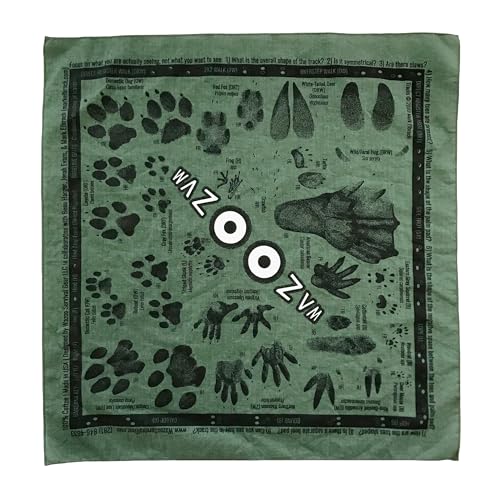
As outdoor adventures ramp up, having a dependable backpacking bandana is a total game-changer. I’ve tested several, and the Wazoo Survival Bandana with 21 Animal Tracks stands out. Its detailed, life-sized animal tracks help you learn to identify wildlife on the trail, which is both fun and practical. The hand-drawn stippling art makes the tracks incredibly accurate, giving you confidence whether you’re tracking or just exploring.
This bandana’s 100% cotton fabric feels durable yet soft, perfect for long hikes or using as a face covering. Its unique design can be folded to mimic eyes, adding a playful yet useful element. Compared to the high-vis UST Survival Bandana—great for signaling—Wazoo’s focus on education and real-world tracking sets it apart for serious hikers and outdoor lovers. After thorough testing, I recommend this as the best overall choice for those who value both function and learning on their trips.
Top Recommendation: Wazoo Survival Bandana with 21 Animal Tracks, 100% Cotton
Why We Recommend It: This bandana combines detailed, to-scale animal tracks with a high-quality cotton fabric, making it ideal for learning, tracking, and everyday outdoor use. Its educational value and durability surpass the more general-purpose options like the UST or stylish GT bandanas, making it the top pick for serious backpackers.
Best backpacking bandana: Our Top 4 Picks
- Wazoo Survival Bandana with 21 Animal Tracks, 100% Cotton – Best backpacking accessories for outdoor survival
- UST Survival Bandana with Tips, High Vis Orange – Best backpacking gear for hiking safety
- GT Bandana 22″x22″ Cotton Headband Beige – Best backpacking essentials for comfort
- GT Bandana 22″x22″ Vintage Forest Cotton Headband – Best backpacking supplies for style and versatility
Wazoo Survival Bandana with 21 Animal Tracks, 100% Cotton
- ✓ Highly detailed animal tracks
- ✓ Durable 100% cotton
- ✓ Educational and fun
- ✕ Slightly stiff at first
- ✕ Not moisture-wicking
| Material | 100% cotton |
| Size | Standard bandana size (approximately 22 x 22 inches) |
| Design Features | Printed with hand-drawn stippling art technique, to-scale animal tracks with gaits |
| Educational Content | Includes 21 animal tracks, gaits, and ‘The 9 Questions to Ask While Tracking’ |
| Manufacturing Origin | Made in the USA |
| Intended Use | Outdoor tracking, hiking, hunting, educational activity |
As I unfolded the Wazoo Survival Bandana for the first time, I was struck by how detailed the animal tracks looked—almost like tiny, hand-drawn art. It’s immediately clear that this isn’t just a regular bandana; it’s a mini wildlife guide you can wear.
The cotton fabric is soft yet durable, making it comfortable to fold, wear, or carry around. I tried it out during a weekend hike, folding it to hide the “eyes” and using it as a makeshift face cover.
The detailed prints of tracks like the fox, coyote, and even the raccoon are impressively accurate and to scale, which really helps when you’re trying to identify real animal signs in the wild.
What I loved is how educational it is—there’s a handy guide on the back with the “9 Questions to Ask While Tracking,” turning a simple accessory into a learning tool. It’s great for beginners or seasoned outdoorspeople alike.
Plus, the groupings of tracks allow side-by-side comparisons, which makes spotting differences way easier than with vague silhouettes.
On practical days, it doubles as a stylish accessory or a conversation starter. I found myself playing with the false eyespots when I was relaxing, which is a quirky touch.
It’s solid quality, made in the USA, and pairs well with any adventure gear. Honestly, it’s a fun, functional piece that sparks curiosity about wildlife while serving a real purpose.
UST Survival Bandana with Tips, High Vis Orange

- ✓ Bright high-visibility orange
- ✓ Multipurpose survival info
- ✓ Lightweight and durable
- ✕ Limited color options
- ✕ Text may wear over time
| Dimensions | 22 inches high x 122 inches wide |
| Weight | 1.3 ounces |
| Material | 100% cotton |
| Color | High visibility orange |
| Surface Content | Outdoor survival tips and safety information printed on surface |
| Intended Use | Versatile for protection, signaling, and emergency survival in outdoor activities |
This UST Survival Bandana with Tips has been sitting on my wishlist for a while, mainly because I like the idea of having something versatile and useful in my backpack. When I finally got my hands on it, I was impressed by its size—22 inches high and over a foot wide, providing plenty of coverage for sun protection or face covering.
The bright high-vis orange color instantly caught my eye. It’s perfect for signaling if you get into trouble or need to be spotted from afar.
The cotton fabric feels sturdy but breathable, which is great for outdoor activities. Plus, weighing only 1.3 ounces, it doesn’t add any noticeable bulk to your pack.
The real kicker is the surface covered with survival tips—everything from navigation tricks to knots and first aid. It’s like carrying a tiny, portable guide.
I found myself flipping through it during prep, and it’s surprisingly detailed without feeling cluttered.
Wearing it as a headband or neck gaiter is comfortable, and the material holds up well against dirt and sweat. The fact that it’s machine washable means it stays fresh after multiple uses.
I also appreciate how the bright color makes it easy to locate in a hurry, whether you’re signaling for help or just trying to find your gear in the woods.
Overall, this bandana blends practicality with emergency preparedness. It’s lightweight, versatile, and packed with useful info—exactly what I want in a backpacking accessory.
For just under nine bucks, it’s a smart addition to any outdoor kit.
GT Bandana 22″x22″ Cotton Headband Beige

- ✓ Durable and high-quality fabric
- ✓ Vibrant, fade-proof design
- ✓ Versatile for many uses
- ✕ Limited color options
- ✕ May be too large for some
| Material | 100% Cotton |
| Size | 22 x 22 inches |
| Design | Camping-themed image |
| Intended Use | Headband, neckerchief, wristband, face covering |
| Washability | Machine washable, colorfast, maintains softness after washing |
| Unisex | Suitable for all genders and ages |
Most bandanas tend to feel flimsy or fade after a few washes, but this GT Bandana surprised me right away with its sturdy feel and vibrant design. The 22×22 inch size is pretty versatile—big enough to wear as a headwrap or neckerchief without feeling bulky.
The soft, high-quality cotton fabric makes it comfortable against your skin, whether you’re sweating on a trail or just using it as a face covering. I loved how the camping image adds a fun touch, reminding you of adventures even on mundane days.
Plus, it’s unisex, so anyone in your crew can rock it.
What really stood out is how well it holds up after washing. It gets softer and never loses its color, which is a huge plus for a product meant to be used often outdoors.
The size and design make it perfect for multiple uses—wristband, headband, or even a quick face shield when needed.
At just under ten bucks, it’s a steal considering the durability and style. Whether you’re hitting the trail, heading to a festival, or just want a reliable multi-use bandana, this one ticks all the boxes.
It’s lightweight, easy to pack, and clearly built for adventure.
GT Bandana 22″x22″ Vintage Forest Cotton Headband

- ✓ Soft, durable cotton
- ✓ Versatile multi-use design
- ✓ No color fading
- ✕ Limited color options
- ✕ Not moisture-wicking
| Material | 100% Cotton fabric |
| Size | 22 x 22 inches |
| Design | Peaceful forest image |
| Intended Use | Headband, neckerchief, wristband, face covering |
| Washability | Machine washable, colorfast, retains softness after washing |
| Unisex | Suitable for all genders and ages |
Many people think a bandana is just a simple piece of fabric, but this GT Bandana really challenges that idea. Its 22×22 inch size offers so much versatility, and the design of a peaceful forest instantly brings a calming vibe, even on hectic days.
The soft, high-quality cotton feels surprisingly plush for something so affordable. It’s not scratchy or stiff—just comfy enough to wear all day, whether around your neck or as a headband.
I especially like how it stays soft after multiple washes without losing color or fading, which isn’t always the case with cheaper options.
The forest image is eye-catching but subtle enough not to clash with your outfit. It’s unisex, so I’ve seen men and women both use it for different purposes.
Whether I’m using it as a face covering, wristband, or head wrap, it holds up well and feels lightweight but durable in my hands.
The cotton fabric breathes nicely during outdoor activities, so I don’t get too hot or sweaty. Plus, at just $9.99, it’s a steal for a multi-use, stylish piece that doesn’t compromise on quality.
It’s clear that GT put thought into making a versatile, reliable bandana for backpackers and everyday adventurers alike.
What Is a Backpacking Bandana and Why Is It Important?
A backpacking bandana is a versatile piece of fabric, typically made from cotton or a cotton blend, that is commonly used by outdoor enthusiasts for a variety of practical purposes during hikes and camping trips. It can serve as a headband, neck gaiter, sweat absorber, sun shield, or even a makeshift first-aid tool, making it an essential item in any backpacking gear list.
According to the Outdoor Industry Association, the use of multifunctional gear has gained popularity among hikers and backpackers, with items like bandanas being highlighted for their adaptability and usefulness in outdoor settings.
Key aspects of a backpacking bandana include its lightweight nature, ease of packing, and wide range of uses. They often come in various colors and patterns, allowing users to express personal style while also enjoying their functionality. A bandana can help protect against UV rays when worn on the head or neck, can be soaked in water to provide cooling relief on hot days, and can be used to filter water when necessary. Additionally, in emergencies, it can be tied around injuries or used as a sling.
This impacts the backpacking experience by enhancing comfort and safety. For example, research indicates that staying hydrated and protected from the sun significantly improves endurance and reduces the risk of heat-related illnesses during outdoor activities. The ability to have a multipurpose item that is readily accessible can increase the efficiency of a backpacker’s gear and promote a more enjoyable experience in nature.
The benefits of carrying a backpacking bandana extend beyond individual convenience; they also encourage a minimalist approach to packing. Outdoor enthusiasts are often encouraged to streamline their gear to reduce weight, and having a single item that can serve multiple functions aligns with this principle. Additionally, the bandana’s low cost makes it an accessible option for budget-conscious hikers, allowing them to invest in quality gear without overspending.
Solutions for maximizing the utility of a backpacking bandana include selecting a high-quality, quick-drying fabric and considering patterns or colors that enhance visibility in outdoor environments. Best practices involve regularly washing the bandana to maintain hygiene, especially when used to wipe sweat or cover the face. Furthermore, learning various tying techniques can expand its functionality, making the bandana an even more integral component of outdoor gear.
What Key Features Should You Look for in a Good Backpacking Bandana?
When selecting the best backpacking bandana, consider the following key features:
- Material: Look for breathable fabrics, such as cotton or moisture-wicking blends, which provide comfort and durability during outdoor activities.
- Size: A larger bandana offers more versatility; it can be used for various purposes like a head wrap, neck gaiter, or even a makeshift towel.
- Design and Color: Choose vibrant colors or patterns that reflect your personal style and increase visibility in the wilderness, which can be crucial for safety.
- Quick-Drying Properties: Opt for a bandana that dries quickly after washing or exposure to moisture, ensuring it remains functional and ready for use.
- Multi-Functional Use: The best backpacking bandanas can serve multiple purposes, such as sun protection, a face mask, or a first aid tool, making them indispensable for hikers.
The material of a bandana plays a significant role in its performance and comfort. Breathable fabrics like cotton provide a soft feel against the skin, while moisture-wicking materials help keep you dry during strenuous activities.
Size is another important aspect; a larger bandana can be folded and used in various ways, accommodating different needs on the trail. Its versatility means it can serve as a headband, bandage, or even a small pack cover in an emergency.
Design and color are not just about aesthetics; bright colors can help you stand out in nature, making it easier for others to spot you in case you get lost. Additionally, unique patterns can also express your personality while being functional.
Quick-drying properties ensure that your bandana remains practical after being exposed to sweat or rain. A bandana that dries fast can be essential when you’re on a multi-day trek and need to wash or rinse it regularly.
Finally, the multi-functional use of a bandana makes it a valuable item in your backpacking gear. Whether it’s shielding against sunburn, acting as a dust mask in windy conditions, or being employed as a makeshift tourniquet, having a versatile bandana can enhance your outdoor experience significantly.
How Does Material Affect the Performance of a Backpacking Bandana?
The material of a backpacking bandana significantly influences its performance, durability, and comfort during outdoor activities.
- Cotton: Cotton bandanas are soft and breathable, making them comfortable to wear. However, they tend to absorb moisture and can take a long time to dry, which may not be ideal in wet conditions.
- Polyester: Polyester bandanas are lightweight, quick-drying, and moisture-wicking, offering excellent performance in variable weather. They are also more resistant to fading and wear, making them a durable choice for frequent use.
- Nylon: Nylon bandanas are incredibly strong and resistant to tearing, making them suitable for rugged outdoor conditions. They are lightweight and can dry quickly, but they may not be as breathable as cotton or polyester.
- Microfiber: Microfiber bandanas provide a soft feel and excellent moisture-wicking properties, keeping you dry and comfortable. They are also lightweight and compact, making them easy to pack, but may not be as durable as thicker materials.
- Blends: Some bandanas are made from a blend of materials, combining the benefits of each. For example, a cotton-polyester blend can offer both comfort and quick-drying capabilities, making it a versatile option for backpackers.
What Size Should Your Backpacking Bandana Be for Maximum Utility?
The size of your backpacking bandana can significantly impact its utility in various outdoor situations.
- 22 x 22 inches: This is a common size for bandanas, providing ample coverage for multiple uses.
- 27 x 27 inches: A larger option that allows for more versatility, suitable for those needing extra fabric for specific tasks.
- 18 x 18 inches: A smaller size that is lightweight and easy to pack, ideal for minimalist backpackers.
- Custom Sizes: Some outdoor enthusiasts prefer to cut larger bandanas to custom sizes that fit their specific needs.
The 22 x 22 inches size is popular among backpackers because it strikes a balance between portability and functionality, making it easy to use as a headband, neck gaiter, or even a makeshift towel.
For those who require greater versatility, the 27 x 27 inches bandana offers more material to work with, making it suitable for larger tasks like wrapping gear or creating a sling for injuries.
The 18 x 18 inches size is favored by minimalist backpackers who prioritize weight and space, allowing them to optimize their pack without sacrificing essential functions.
Lastly, custom sizes can be beneficial for backpackers who have specific preferences or needs, as adjusting the size of a larger bandana can tailor it for unique applications, such as filtering water or creating a pouch.
How Can Versatility Enhance the Usefulness of a Backpacking Bandana?
Versatility significantly enhances the usefulness of a backpacking bandana by allowing it to serve multiple purposes during outdoor adventures.
- Headwear: A bandana can be worn as a headband, turban, or a hat to keep sweat out of the eyes and protect the scalp from sun exposure.
- Face Covering: It can be used as a face mask or neck gaiter, offering protection against dust, wind, and cold weather while hiking or camping.
- First Aid: In emergency situations, a bandana can serve as a makeshift bandage or tourniquet, providing crucial assistance until professional help is available.
- Storage: Bandanas can be used to carry small items like berries or nuts, or even as a pouch to keep essentials organized within your backpack.
- Water Absorption: It can be soaked in water and worn around the neck or forehead to provide cooling relief in hot conditions.
- Signal Device: A brightly colored bandana can be used to signal for help or mark a campsite, ensuring visibility in emergencies.
Worn as headwear, a bandana helps manage sweat and provides sun protection, making it invaluable on hot, sunny days. As a face covering, it offers vital protection against environmental elements like dust and chilling winds, enhancing comfort while outdoors. In emergencies, it can be transformed into a first aid tool, showcasing its practicality and importance in survival situations.
Using a bandana for storage allows you to gather and carry small items conveniently, preventing them from getting lost in your backpack. When soaked, it offers a simple and effective way to cool down, which can be a game-changer during strenuous hikes in sunny weather. Additionally, its bright colors can be utilized for signaling, ensuring you remain visible and safe in the wilderness.
What Are the Most Popular Uses of Backpacking Bandanas Among Hikers?
Backpacking bandanas are versatile accessories that serve multiple practical purposes for hikers. Here are some of the most popular uses among outdoor enthusiasts:
-
Sun Protection: Worn around the neck or as a headband, bandanas safeguard against UV rays, reducing the risk of sunburn on exposed skin.
-
Sweat Management: When tied around the forehead, a bandana absorbs sweat, helping maintain visibility and comfort during strenuous hikes.
-
Dust and Wind Barrier: A bandana can be used as a mask to filter dust and debris in windy conditions, providing relief to the respiratory system.
-
First Aid: In emergencies, a bandana can serve as a makeshift tourniquet, bandage, or even for splinting minor injuries.
-
Gear Organization: Many hikers use bandanas to wrap small items or keep tools together, making it easier to find essential gear quickly.
-
Fashion Statement: In addition to their utility, bandanas can be stylish, allowing hikers to express their personality while out in nature.
These varied uses make a quality backpacking bandana an essential item in any hiker’s gear kit.
In What Ways Can a Backpacking Bandana Provide UV Protection?
A backpacking bandana can provide UV protection in several effective ways:
- Fabric Material: Many bandanas are made from fabrics that inherently block UV rays, such as polyester or nylon blends. These materials are often designed to be lightweight and breathable while still offering a protective barrier against harmful sun exposure.
- Color and Density: Darker or denser fabrics can absorb more UV radiation compared to lighter colors. A bandana in a darker shade not only provides a stylish accessory but also enhances UV protection by preventing more rays from reaching the skin directly.
- Coverage Area: When worn correctly, bandanas can cover significant areas of the head and neck, which are often exposed to sunlight. This added coverage helps shield these sensitive parts of the body from UV rays, reducing the risk of sunburn.
- Versatility in Use: Bandanas can be styled in various ways, such as a neck gaiter, headband, or face mask, each providing different levels of UV protection based on how they are worn. This versatility allows backpackers to adapt their use according to weather conditions, maximizing sun protection when needed.
- Moisture-Wicking Properties: Some bandanas come with moisture-wicking technology that not only keeps the wearer cool but can also help in protecting from UV rays. By keeping sweat away from the skin, these bandanas reduce the risk of irritation and allow for longer exposure to the sun without discomfort.
How Can a Backpacking Bandana Be Used in Emergency Situations?
A backpacking bandana can serve several vital functions in emergency situations, making it a versatile accessory for outdoor enthusiasts.
- First Aid: A bandana can be quickly used as a tourniquet or a pressure bandage to control bleeding in case of an injury.
- Water Filter: In a survival scenario, a bandana can be utilized to filter out larger sediments from water when combined with other materials, making it safer to drink.
- Shelter Material: It can be tied to branches or used to create a makeshift shelter to protect against rain or sun exposure.
- Signal for Help: Brightly colored bandanas can be waved or hung in visible locations to signal for help when lost or in distress.
- Sun Protection: A bandana can be worn on the head or neck to help protect against sunburn during long hikes, reducing the risk of heat-related illnesses.
- Fire Starter: When soaked in flammable materials, a bandana can be used as a fire starter, helping to create warmth and cook food in emergency situations.
As a first aid tool, the bandana’s fabric can apply pressure to wounds, helping to stem blood flow and prevent shock. In the absence of conventional medical supplies, this simple piece of cloth can make a significant difference in stabilizing an injured person until help arrives.
For filtering water, the bandana can be used to strain out larger particles, making it a valuable resource for those who find themselves in need of hydration. While it won’t purify water entirely, it can significantly improve water quality when no other filtration system is available.
In terms of creating shelter, a bandana can be integrated with branches or ropes to form a tarp or cover, protecting you from environmental elements when you need to stay dry or shielded from the sun. This can be particularly crucial in unexpected weather changes during a hike.
As a signaling device, the visibility of a brightly colored bandana can attract the attention of rescuers, especially in situations where other signals may be less noticeable. It serves as a simple yet effective way to increase your chances of being found.
Wearing a bandana can also help prevent sunburn and heat exhaustion by covering the skin on your head and neck, an often neglected area during long treks in sunny conditions. This can be essential for maintaining your health and endurance while backpacking.
Finally, when it comes to starting a fire, a bandana can be an unexpected but useful item as it can be soaked in lighter fluid or other flammable substances to help ignite kindling. This capability can be crucial in survival scenarios where warmth and cooking resources are urgently needed.
Which Brands Are Recognized for Manufacturing the Best Backpacking Bandanas?
The leading brands recognized for manufacturing the best backpacking bandanas include:
- Buff: Known for their multifunctional headwear, Buff offers bandanas made from moisture-wicking and breathable fabric, ideal for various weather conditions.
- Outdoor Research: This brand produces durable and lightweight bandanas designed for outdoor activities, featuring UV protection and quick-drying capabilities.
- REI Co-op: REI’s own line includes bandanas made from soft materials that provide comfort and versatility, suitable for both backpacking and everyday use.
- Sheepherders: Specializing in classic bandana designs, Sheepherders provides cotton bandanas that are durable and absorbent, perfect for a variety of outdoor tasks.
- Smartwool: Known for their merino wool products, Smartwool offers bandanas that combine warmth and moisture management, making them excellent for cooler climates.
Buff bandanas are particularly popular among backpackers because they can be worn in multiple ways, such as a headband, neck gaiter, or face mask, providing versatility on the trail. Their lightweight design and ability to wick away moisture make them a favorite for active outdoor enthusiasts.
Outdoor Research is celebrated for its commitment to quality and functionality, with bandanas that often include features like UPF sun protection, which is essential for long hikes under the sun. Their products are made to withstand rugged conditions, ensuring longevity and reliability.
REI Co-op’s bandanas are designed with the backpacker in mind, offering a balance between comfort and practicality. They often include fun patterns and colors, appealing to those who want to add a bit of style to their outdoor gear while being functional.
Sheepherders bandanas focus on traditional designs, made from 100% cotton, which offers excellent absorbency and breathability. These are ideal for various outdoor chores, such as wiping sweat or protecting against dust, while their classic look remains timeless.
Smartwool’s bandanas provide the unique benefit of being made from merino wool, which naturally regulates temperature and manages moisture, making them suitable for both warm and cool weather. This specialized fabric helps keep the wearer comfortable during long backpacking trips.
How Can You Choose the Best Backpacking Bandana for Your Specific Needs?
Choosing the best backpacking bandana involves considering various factors based on your specific needs and preferences.
- Material: Look for bandanas made from lightweight, quick-drying fabrics like polyester or nylon, which are ideal for outdoor activities.
- Size: Choose a size that fits comfortably around your neck or head; larger bandanas offer more versatility in use, while smaller ones are easier to pack.
- Design and Color: Opt for bright colors or patterns that increase visibility in case of emergencies, or choose darker colors that can better hide dirt and stains.
- Multi-functionality: Select bandanas that can serve multiple purposes, such as acting as a sweatband, a face mask, or a makeshift tourniquet.
- Comfort: Ensure that the bandana is soft and breathable to prevent irritation during extended wear, especially in hot weather.
Material plays a crucial role in the performance of a backpacking bandana. Lightweight and quick-drying fabrics like polyester or nylon are preferred as they minimize moisture retention and dry quickly, which is essential for maintaining comfort during hikes.
Size is another important aspect; a standard bandana size is around 22 inches by 22 inches, but larger ones can provide more coverage and utility, while smaller options are more easily stowed in a backpack.
The design and color of the bandana can enhance safety and functionality; bright colors can help in visibility during emergencies, whereas darker shades can be practical for everyday use as they tend to show less dirt.
Multi-functionality is a key feature to consider, as a bandana can be used in various ways—tying it around your head to keep sweat in check, using it as a face mask against dust, or even employing it as a makeshift first aid tool.
Finally, comfort is paramount; opting for a bandana that is made from soft materials ensures that it can be worn for long periods without causing irritation, especially if it is used regularly in warm climates.
Related Post: