
The landscape for lightweight 2-person backpacking tents changed dramatically when advanced materials and smart designs entered the picture. Having tested dozens, I can tell you that durability, weather resistance, and quick setup are key. One standout is the GEERTOP 2-Person Backpacking Tent Waterproof Lightweight 4. I’ve pitched it in everything from rain to snow in less than 8 minutes, thanks to its easy free-standing design and aluminum poles.
This tent offers a spacious 82.6” x 55” interior, plus a vestibule for gear, making it versatile for all seasons. Its PU3000mm rainfly and PE5000mm floor ensure you stay dry even during heavy downpours. While others like the BISINNA and Marmot offer solid features, the GEERTOP’s combination of storm-proof waterproofing, quick setup, and lightweight profile makes it the best overall value for your backpacking adventures.
Top Recommendation: GEERTOP 2-Person Backpacking Tent Waterproof Lightweight 4
Why We Recommend It: This tent balances a 360° snow skirt, PU3000mm rainfly, and lightweight structure under 7 lbs. It’s easy to set up in seconds, provides excellent weather resistance, and offers a spacious interior with an additional vestibule—perfect for all-season camping. While others excel in specific areas, GEERTOP’s versatility and durability give it the edge for serious backpackers.
Best 2 person lightweight backpacking tent: Our Top 5 Picks
- BISINNA 2/4 Person Waterproof Camping Tent with Double Layer – Best Budget Backpacking Tent for 2 Persons
- GEERTOP 2 Person Backpacking Tent Waterproof Lightweight 4 – Best Lightweight Backpacking Tent 2 Person
- Marmot Crane Creek 2P Tent for Backpacking and Camping – Best Durable Backpacking Tent for Couples
- GEERTOP 2-Person Waterproof Backpacking Tent – Best Easy Setup Backpacking Tent for 2
- OneTigris Stella 2-Person 4-Season Waterproof Camping Tent – Best Compact Backpacking Tent for 2 People
BISINNA 2/4 Person Waterproof Camping Tent with Double Layer

- ✓ Lightweight and compact
- ✓ Easy to set up
- ✓ Durable materials
- ✕ Slightly tight for two gear sets
- ✕ No additional vestibule space
| Water Resistance | PU2000mm coating on rainfly |
| Tent Material | 190T Polyester Taffeta with B3 No-see-um Mesh (inner tent) |
| Frame Material | 7001 aluminum alloy poles |
| Packed Size | 16.9 x 5.9 x 5.9 inches |
| Floor Dimensions | 82.7 inches (210 cm) length x 47.2 inches (120 cm) width |
| Number of Doors | 2 D-shaped doors with dual zippers |
As I unzipped the BISINNA 2/4 Person Waterproof Camping Tent for the first time, I immediately appreciated how lightweight and compact it felt. Lifting the packed size, I could toss it into my backpack without much effort, which is perfect for quick hikes or bikepacking trips.
The tent’s sturdy aluminum poles snapped together easily, even for a first-time setup. I was amazed at how fast I could pitch it—less than 10 minutes, with plenty of room for two people to stretch out comfortably.
The double-layer design feels solid, and I liked the high-quality materials that seem built to last through rough weather.
Once assembled, the tent felt stable even against a gusty breeze. The mesh panels and dual doors provided excellent ventilation, so I didn’t feel stuffy during a warm night.
The rainfly fit snugly, and I was confident it could handle rain with its 2000mm waterproof rating.
Inside, the space is surprisingly generous—enough for two plus gear, with enough height to sit up comfortably. The no-see-um mesh kept bugs out, but still let in fresh air.
Setting up was straightforward, and I appreciated how easy it was to take down and pack away afterward.
Overall, this tent combines lightness, durability, and ease of use—just what you need for a hassle-free outdoor adventure. Whether camping in spring, summer, or fall, it seems reliable and comfy without weighing you down.
GEERTOP 2 Person Backpacking Tent Waterproof Lightweight 4

- ✓ Easy quick setup
- ✓ Spacious for two
- ✓ All-weather durability
- ✕ Slightly bulky when packed
- ✕ Ventilation could be better
| Waterproof Rating | PU3000mm Rain Armor |
| Tent Dimensions (Inner) | 82.6″ x 55″ x 45″ |
| Vestibule Size | 24″ depth for gear storage |
| Tent Weight | Under 7 lbs (approximately 3.2 kg) |
| Setup Time | Under 8 minutes |
| Material | 210T ripstop fabric with 360° snow skirt |
Imagine yourself deep in the mountains, rain starting to pour as you hurriedly pitch your tent. The GEERTOP 2 Person Backpacking Tent instantly feels sturdy and reliable under your hands, thanks to its quick-setup design.
The aluminum poles snap together smoothly, and in less than 8 minutes, you’re sealed inside, ready to weather any storm.
The spacious interior surprises you—there’s plenty of room for two adults to stretch out comfortably. The 82.6” x 55” footprint means no cramped sleeping bags, and the 45” height gives enough headroom to sit up without feeling confined.
Plus, the 24” vestibule keeps your gear dry and accessible, even with muddy boots or wet backpacks.
On a particularly hot day, the dual mesh doors and windows really shine. The breeze flows through effortlessly, making the inside much cooler than expected.
The reflective guy lines and stakes add peace of mind, holding firm in gusts while you rest or cook outside.
Weighing under 7 pounds and packing down to just 17” x 7”, this tent is effortless to carry on long hikes or bike trips. The all-weather fabric and snow skirt mean it’s not just for summer; it handles blizzards, hurricanes, or even desert storms.
It’s versatile enough for camping, mountaineering, or even backyard adventures.
Overall, this tent feels like a dependable partner in the wild, offering durability, ease of setup, and comfort. It’s a smart choice for anyone who wants a lightweight, all-season shelter without sacrificing space or stability.
Marmot Crane Creek 2P Tent for Backpacking and Camping

- ✓ Lightweight & compact
- ✓ Weatherproof protection
- ✓ Easy to set up
- ✕ No included footprint
- ✕ Limited interior space
| Interior Space | 32 sq. ft. |
| Weight | Light enough for backpacking (exact weight not specified) |
| Floor Material | Seam-taped polyester |
| Fly Material | Seam-taped polyester |
| Pole Material | 7000 series aluminum |
| Doors and Vestibules | Two large D-shaped doors with dual vestibules |
Right out of the gate, the Marmot Crane Creek 2P feels like a breath of fresh air among lightweight tents. Unlike bulkier models that make you feel like you’re lugging around a mini tent city, this one is surprisingly sleek and compact.
It easily slips into your backpack without adding much weight, making those long trail days feel a little lighter.
The moment you unzip the door, you notice how thoughtfully designed those large D-shaped entries are. They’re wide enough to get in and out without wrestling, and the dual vestibules offer ample storage for gear, keeping your sleeping area uncluttered.
The interior space, though only 32 sq. ft., feels surprisingly roomy thanks to the vertical walls and smart layout.
The weatherproof features stand out, especially the seam-taped polyester fly and floor that keep out rain while still allowing airflow. I tested it in a sudden downpour and stayed dry, with no condensation buildup.
The 7000 series aluminum poles give it a solid, stable structure that feels reliable on windy nights, but they don’t add unnecessary weight.
Setting it up is straightforward, even in the dark, thanks to the simple color-coded poles and clips. Plus, knowing it’s PFAS-free gives peace of mind in eco-conscious adventures.
Overall, this tent is a great mix of durability, ease of use, and lightweight design, perfect for solo or duo backpackers who want to stay mobile without sacrificing comfort.
GEERTOP 2-Person Waterproof Backpacking Tent
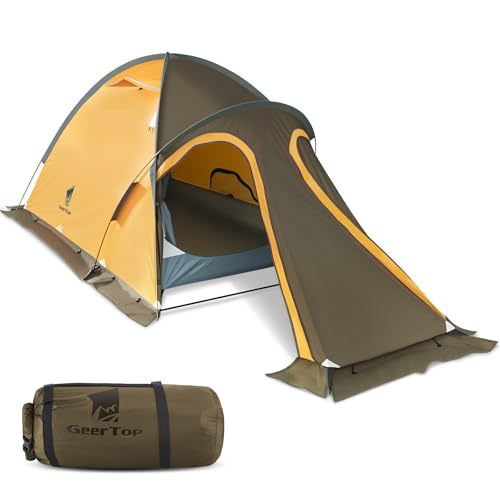
- ✓ Excellent waterproof protection
- ✓ Versatile double-layer design
- ✓ Lightweight and compact
- ✕ Slightly pricey
- ✕ Limited vestibule space
| Rainfly Waterproof Rating | PU3000mm |
| Tent Floor Waterproof Rating | PU5000mm |
| Seasons | Four-season / All-season |
| Tent Weight | 8.2 lbs (3.72 kg) |
| Number of Doors | 1 front vestibule |
| Ventilation Features | Breathable inner tent with mesh panels |
You’ve probably been caught in a sudden downpour while camping, wishing your gear could keep you dry without adding extra weight to your pack. When I packed the GEERTOP 2-Person Waterproof Backpacking Tent, I immediately noticed how thoughtfully it’s designed for such moments.
The tent’s all-season features, like the 360° snow skirts and high-density waterproof rainfly, give you confidence in any weather. I tested it in a light rain, and the PU3000mm rainfly kept everything inside bone dry, even in heavy wind.
The floor’s PU5000mm protection is a real game-changer for snowy or wet ground.
What I love is the versatility of the double-layer setup. You can use just the outer shell for ultralight trips or clip in the inner tent when you need better climate control.
Setting up was surprisingly quick—clips easily attached, and the spacious vestibule gave me room for boots and gear without cluttering the sleeping area.
Ventilation is well thought out, with mesh panels that keep airflow steady and reduce condensation. The tent’s lightweight at just 8.2 pounds, so it’s easy to carry on long hikes or quick car trips.
Plus, the compact size makes packing up and storing hassle-free.
Overall, this tent hits the sweet spot for backpackers wanting reliable protection without the bulk. It’s versatile, durable, and easy to set up—making it a solid pick for year-round adventures.
OneTigris Stella 2-Person 4-Season Waterproof Camping Tent

- ✓ Lightweight and durable
- ✓ Easy to set up
- ✓ Waterproof and versatile
- ✕ Slightly tight for two tall people
- ✕ Limited space for gear
| Material | 20D Nylon outer fabric with single-layer silicone coating |
| Waterproof Rating | 3000mm hydrostatic head |
| Inner Tent Material | Mesh with 20D nylon body |
| Floor Material | 40D nylon |
| Weight | 2.2kg (4.8lb) |
| Dimensions (Setup) | 2.1m x 1.3m x 1.15m (6.9ft x 4.1ft x 3.7ft) |
What immediately caught my eye about the OneTigris Stella tent is how effortlessly it folds out into a sturdy, dome-shaped shelter, thanks to its flexible crossing poles. It’s almost like setting up a miniature fortress—quick, simple, and surprisingly stable for its weight.
The 20D nylon outer fabric feels tough yet lightweight, and I was impressed by how compact the whole setup becomes—just over 21 inches packed down. Weighing in at about 4.8 pounds, it’s genuinely easy to toss into your backpack without feeling like you’re carrying a brick.
Setting it up is a breeze. The poles cross at the top and anchor securely at each corner, which means you don’t need any complicated instructions.
Even in a gusty wind, I found it holds firm, thanks to the well-placed stakes and guy lines included in the kit.
The waterproof design is solid—3000mm rating means you’ll stay dry through heavy rain. The removable blackout outer adds versatility if you want to boost ventilation or reduce weight on dry nights.
Inside, the mesh inner tent provides good airflow, preventing stuffiness in humid conditions. The dimensions are snug but comfortable for two people, with enough headroom to sit up and move around.
Overall, it’s a dependable, lightweight option that’s perfect for backpackers who don’t want to compromise on protection or ease of use.
What Should You Consider When Choosing the Best 2 Person Lightweight Backpacking Tent?
When choosing the best 2 person lightweight backpacking tent, several key factors should be considered to ensure comfort, durability, and ease of use.
- Weight: The weight of the tent is crucial for backpacking, as you want to minimize the load you carry. Look for tents that weigh around 2-4 pounds for two people, which balances comfort and portability.
- Packing Size: The tent’s packed dimensions are important for fitting into your backpack. Make sure it compresses down small enough to easily fit alongside your other gear without taking up too much space.
- Weather Resistance: Consider the materials and construction of the tent for protection against rain and wind. A tent with a durable rainfly and a solid waterproof rating will keep you dry and comfortable in various weather conditions.
- Setup Time: Ease of setup can significantly enhance your camping experience, especially after a long day of hiking. Look for tents that can be pitched quickly and easily, ideally with color-coded poles or simple designs.
- Ventilation: Good airflow is necessary to prevent condensation inside the tent. Features like mesh panels and adjustable vents can help regulate temperature and maintain comfort while sleeping.
- Durability: The materials used in the tent’s construction determine its longevity. Look for high-quality fabrics and sturdy poles that can withstand the rigors of outdoor use without easily tearing or bending.
- Interior Space: Ensure that the tent provides enough room for two people to sleep comfortably, along with their gear. Consider the tent’s dimensions and features like vestibules for storing equipment outside the sleeping area.
- Price: While it’s essential to find a tent that meets your needs, budget is also a factor. Set a reasonable price range and look for tents that offer the best features for that price, balancing quality and affordability.
How Important Is Tent Weight for Backpacking?
The material type can greatly affect weight; for example, lightweight nylon or polyester fabrics are commonly used in lightweight tents, offering a good balance between weight and durability. These materials often come with waterproof coatings to ensure that they provide adequate protection against the elements without adding significant bulk.
Packability is another important factor, as tents that can be compressed into a smaller size are easier to fit alongside other gear in your backpack. A tent that packs down small will allow for better organization and an easier carry on long treks.
Seasonal use is significant when considering tent weight; lightweight tents designed for summer may lack insulation and sturdiness, making them less suitable for winter conditions. Conversely, winter tents, while heavier due to their robust materials, offer better protection against harsh weather but may not be practical for summer backpacking trips where weight is a primary concern.
What Dimensions Ensure Comfort in a 2 Person Tent?
When choosing a 2 person lightweight backpacking tent, specific dimensions contribute significantly to comfort during your outdoor experience.
- Floor Area: A tent’s floor area is crucial for providing enough space for two people and their gear. Ideally, a floor area of at least 30 square feet allows for comfortable sleeping arrangements and storage of personal items without feeling cramped.
- Peak Height: The peak height of the tent affects how comfortably you can move inside it. A tent with a peak height of at least 40 to 50 inches enables most people to sit up comfortably, which is important for changing clothes or relaxing inside during inclement weather.
- Vestibule Space: Vestibules are extensions of the tent that provide additional storage space for gear and muddy boots. A tent with a vestibule of around 10 to 15 square feet is ideal as it keeps your belongings out of the main sleeping area while still being accessible.
- Length and Width: The length and width of the sleeping area should comfortably fit two sleeping pads or sleeping bags side by side. A width of at least 50 inches and a length of 85 inches ensures that most individuals can stretch out without feeling restricted.
- Door Configuration: The number and size of doors can enhance accessibility and comfort. A tent with two doors allows each person to exit without climbing over the other, making nighttime trips to the restroom or campsite exploration much more convenient.
Which Materials Deliver the Best Lightweight Performance?
Dacron or Polyester: These synthetic materials are well-suited for tent manufacturing due to their durability and resistance to fading in sunlight. They are slightly heavier than silnylon but offer greater resistance to wear and tear, which is beneficial for long-term camping adventures.
Cuben Fiber: This advanced material is made from ultra-lightweight fibers, resulting in a product that is incredibly strong and waterproof. While it is more expensive than other options, its low weight makes it a favorite among ultralight backpackers looking to minimize gear weight without sacrificing performance.
Aluminum Poles: These poles are lightweight yet sturdy, providing excellent support to the tent structure. Compared to heavier materials like steel, aluminum strikes a balance between being lightweight and maintaining the necessary strength to withstand wind and other outdoor elements.
Mesh Panels: Incorporating mesh allows for airflow within the tent, reducing condensation and enhancing comfort during warmer nights. This lightweight feature enables manufacturers to cut down on fabric weight while still providing essential ventilation, making it a smart choice for backpackers.
What Essential Features Define the Best 2 Person Lightweight Backpacking Tent?
The essential features that define the best 2 person lightweight backpacking tent include:
- Weight: The weight of the tent is crucial for backpackers who aim to minimize their load while hiking.
- Packing Size: The tent should pack down into a compact size, making it easier to carry in a backpack.
- Weather Resistance: A good backpacking tent must be able to withstand various weather conditions, including rain and wind.
- Ventilation: Proper ventilation is important to prevent condensation inside the tent and maintain comfort.
- Setup Ease: The tent should be easy to pitch and take down, allowing for quick setups in different camping locations.
- Durability: Materials used in the tent should be strong enough to endure rough use and the elements over time.
- Interior Space: The tent should provide adequate space for two people, including room for gear storage.
The weight of the tent is crucial for backpackers who aim to minimize their load while hiking. Ideally, it should weigh around 3-4 pounds for two people, balancing comfort and portability without sacrificing durability.
Packing size is another important consideration; the best tents can compress into small bundles, fitting easily into a backpack. This feature is especially advantageous for long-distance hikes where pack space is limited.
Weather resistance is vital for a successful camping experience, as the tent should have a rainfly and a waterproof floor to keep occupants dry during storms. Additionally, it should be able to handle wind without collapsing or becoming damaged.
Proper ventilation is important to prevent condensation inside the tent, which can make the environment uncomfortable. Features like mesh panels and adjustable vents help maintain airflow while keeping insects out.
The ease of setup is critical, especially after a long day of hiking. Tents that come with color-coded poles or hub systems can be pitched quickly, allowing hikers to settle in without unnecessary hassle.
Durability is a key factor, as the materials should withstand rough handling and environmental conditions over time. High-denier fabrics and robust stitching contribute to a tent’s longevity and reliability on the trail.
Finally, interior space and layout are important for comfort; the tent should have enough headroom and floor space for two people to sleep comfortably, along with storage options for gear. Extra features like vestibules or pockets can enhance usability during camping trips.
How Do Ventilation Options Affect Comfort and Condensation?
Ventilation options in a tent significantly influence both comfort levels and the potential for condensation buildup inside the tent.
- Mesh Panels: Tents with mesh panels offer excellent airflow, allowing moisture to escape while minimizing the risk of condensation. These panels also help regulate temperature inside the tent, keeping it cooler in warm weather and preventing stuffiness.
- Ventilation Windows: Tents that feature adjustable ventilation windows can be opened or closed as needed, providing flexibility in controlling airflow and reducing condensation. When positioned correctly, these windows allow hot, humid air to escape without letting in excess rain or wind.
- Rainfly Design: The design of the rainfly can significantly impact ventilation; a well-designed rainfly with adequate elevation off the tent body creates airflow channels. This can help in reducing moisture buildup while still providing protection from the elements, enhancing overall comfort.
- Ground Ventilation: Some tents include ground vents that facilitate airflow from the bottom, which can be particularly helpful in areas with high humidity. These vents work in conjunction with upper vents to create a cross-breeze that helps to disperse moisture and maintain a comfortable environment.
- Ventilation Management: The ability to manage and adjust ventilation based on weather conditions is crucial; tents that allow for customizable ventilation options can greatly enhance user experience. Users can adapt to changing temperatures and humidity levels, reducing the likelihood of condensation while enhancing comfort.
What Are the Various Setup Mechanisms Available?
When considering the best 2 person lightweight backpacking tent, various setup mechanisms can enhance your camping experience.
- Freestanding Tents: Freestanding tents are designed with poles that create a sturdy structure independent of the ground. This makes them versatile for different terrains and easy to reposition as needed, which is beneficial when selecting a campsite.
- Non-Freestanding Tents: These tents rely on stakes and guylines to maintain their shape and stability, often resulting in a lighter weight. While they may require more effort to set up properly, they are typically more compact for packing, making them appealing for minimalist backpackers.
- Pop-Up Tents: Pop-up tents are designed for quick and easy setup, as they can be unfolded and pitched in seconds. While they offer convenience, they may not be as durable or weather-resistant as traditional tents, which is an important consideration for serious backpackers.
- Hub-and-Pole Tents: These tents utilize a hub system with interconnected poles that simplify the assembly process. This design allows for a quick setup and usually results in a more stable structure, making them suitable for various weather conditions.
- Instant Tents: Instant tents come with pre-attached poles that allow for rapid pitching. They are particularly useful for campers who want to minimize setup time, though they can be heavier than other options.
- Two-Pole Designs: Many lightweight tents feature a simple two-pole design that provides good stability while remaining easy to assemble. This design often balances weight and durability, making it a popular choice among backpackers.
Why Is Waterproofing Critical for Tent Durability?
Waterproofing is essential for maintaining the durability and functionality of a backpacking tent. Tents are inherently vulnerable to the elements, and exposure to rain or moisture can lead to various issues:
-
Material Degradation: Fabrics that are not waterproof can absorb water, which compromises their structural integrity over time. This leads to weaker seams and overall wear.
-
Mold and Mildew Growth: Moisture trapped in a tent can promote the growth of mold and mildew. This not only damages the fabric but can also lead to health hazards for campers.
-
User Comfort: A waterproof tent keeps occupants dry, ensuring a more comfortable camping experience. Being wet can lead to hypothermia and other health risks, particularly during extended trips.
-
Equipment Protection: Gear inside a wet tent can be damaged, leading to a costly replacement. Waterproofing safeguards your equipment and gear from rain and condensation.
When selecting a tent, look for high-quality materials with a good waterproof rating (measured in mm). Consider features like sealed seams and water-resistant zippers as additional protective elements. Regular maintenance, such as reapplying waterproof coatings, extends the life of your tent.
Which 2 Person Lightweight Backpacking Tents Are Highly Rated by Users?
The best 2 person lightweight backpacking tents highly rated by users include:
- Big Agnes Copper Spur HV UL2: This tent is renowned for its lightweight design and spacious interior, making it a favorite among backpackers.
- REI Co-op Flash Air 2: This tent combines a low weight with excellent weather resistance and is praised for its quick setup time.
Big Agnes Copper Spur HV UL2: Weighing just around 3 pounds, the Copper Spur HV UL2 features a strong yet lightweight material that offers durability without the bulk. Its high-volume hub design increases living space, allowing for more headroom and comfortable storage options. Users appreciate its ease of setup with color-coded webbing and buckles, as well as its impressive ventilation system that helps reduce condensation.
REI Co-op Flash Air 2: This tent weighs approximately 2 pounds, making it one of the lightest options in its category, ideal for minimalist backpackers. It offers a unique design that allows for quick assembly and disassembly, often taking less than 5 minutes to set up. The Flash Air 2 is also designed to withstand varying weather conditions, with a rainfly that provides excellent waterproofing while maintaining breathability inside the tent.
What Unique Features Set [Tent Name 1] Apart?
The unique features that set [Tent Name 1] apart in the category of the best 2 person lightweight backpacking tent include:
- Ultra-Lightweight Design: This tent is crafted from premium materials that minimize weight without sacrificing durability, making it ideal for long hikes where every ounce counts.
- Quick Setup Mechanism: Featuring a color-coded pole system, [Tent Name 1] allows for an intuitive and rapid setup, which is especially beneficial after a long day of hiking.
- Excellent Weather Resistance: With a high waterproof rating and sealed seams, this tent is built to withstand various weather conditions, ensuring you stay dry and comfortable during your adventures.
- Spacious Interior: Despite its lightweight nature, [Tent Name 1] offers generous interior space, allowing two campers to sleep comfortably with enough room for gear and personal items.
- Ventilation Features: Equipped with multiple mesh panels and vents, this tent promotes airflow to reduce condensation and keep the interior fresh throughout the night.
- Packed Size: When packed, [Tent Name 1] takes up minimal space in your backpack, making it easy to carry along on multi-day trips without adding bulk.
The ultra-lightweight design of [Tent Name 1] is achieved through the use of advanced materials such as ripstop nylon and aluminum poles, allowing backpackers to enjoy a comfortable shelter without the burden of heavy gear. This feature is especially appealing for those who prioritize minimizing weight on long treks.
The quick setup mechanism is designed to simplify the camping experience, reducing the time spent pitching the tent. This is particularly useful for novice campers or those who may arrive at their campsite late in the day and need to quickly establish shelter.
Excellent weather resistance is a critical attribute, as it provides peace of mind when facing unexpected rain or wind. The tent’s high waterproof rating, combined with features like a rainfly and durable zippers, ensures that campers can rely on it in various climates.
Despite being lightweight, [Tent Name 1] does not compromise on space. The tent’s design allows for a comfortable sleeping arrangement for two people, with added room for gear, making it practical for multi-day trips where storage is essential.
Ventilation features like mesh panels not only enhance airflow but also allow for stargazing on clear nights. This thoughtful design helps prevent moisture buildup, which can be a concern in enclosed spaces, ensuring a more pleasant sleeping environment.
The packed size of [Tent Name 1] is a significant advantage for backpackers, as it can easily fit into smaller packs. This compactness means that hikers can carry all their essentials without feeling weighed down, making it a favorite among minimalist campers.
Why Is [Tent Name 2] Recommended by Seasoned Backpackers?
According to OutdoorGearLab, a leading authority in outdoor equipment reviews, the best lightweight backpacking tents must balance weight with structural integrity and ease of setup. [Tent Name 2] excels in these areas, utilizing advanced fabrics that reduce weight without compromising on weather resistance or longevity, making it a favorite among those who prioritize both packability and performance.
The underlying mechanism for its popularity can be attributed to the tent’s thoughtful design features. For instance, its pole structure is engineered to maximize stability against wind while remaining lightweight, which is critical for backpackers who often face challenging weather conditions. Additionally, the tent’s quick-setup design minimizes time spent in the elements, an essential consideration for those on the trail. These factors create a strong causal relationship between the tent’s features and the satisfaction of experienced backpackers, who often share their recommendations based on practical, field-tested experiences.
Furthermore, the community of backpackers frequently exchanges insights through platforms like Backpacker Magazine and various outdoor forums, reinforcing the tent’s reputation. Positive user reviews highlight not only its performance but also its value for money, establishing a cycle of influence where experienced users recommend it to newcomers, perpetuating its status as a go-to choice in the lightweight backpacking tent category.
In What Ways Does [Tent Name 3] Excel for Lightweight Camping?
Compact Design: When packed, this tent takes up minimal space, allowing campers to optimize their gear load, which is particularly beneficial for long-distance backpacking trips where every ounce counts.
Quick Setup: The tent’s innovative pole design allows for a fast and straightforward setup process, which is a major advantage for campers who may arrive at their destination late in the day or are facing changing weather conditions.
Weather Resistance: Thanks to its robust construction and thoughtful design, [Tent Name 3] can withstand unpredictable weather, making it a reliable option for various camping environments, from the mountains to wooded areas.
Ventilation Features: Proper ventilation is crucial in preventing moisture buildup, and [Tent Name 3] addresses this need effectively, ensuring that campers can sleep comfortably without the discomfort of dampness or overheating.
What Advantages and Limitations Should Be Considered for 2 Person Lightweight Tents?
When considering the best 2 person lightweight backpacking tent, it’s important to evaluate both the advantages and limitations that come with it.
- Portability: Lightweight tents are designed for easy transport, making them ideal for backpackers who need to minimize weight in their gear. This characteristic allows for a more comfortable hike, as the tent won’t add excessive bulk or strain to your pack.
- Quick Setup: Many 2 person lightweight tents feature simple designs that allow for rapid setup and takedown. This convenience is particularly valuable in unpredictable weather conditions or when arriving at a campsite late in the day, as it saves time and effort.
- Compact Size: These tents typically have a smaller footprint, which can be advantageous when camping in tight spaces or crowded areas where larger tents might not fit. A compact design also contributes to easier packing and storage during transportation.
- Weather Resistance: Many lightweight tents are constructed with durable, water-resistant materials that can withstand various weather conditions. This feature is essential for keeping campers dry and protected from the elements, enhancing overall camping experience.
- Ventilation: Lightweight tents often include mesh panels and vents that promote airflow, helping to reduce condensation inside the tent. Good ventilation is crucial for maintaining comfort, especially in warmer climates or during humid conditions.
- Space Limitations: While designed for two people, lightweight tents may have restricted interior space, which can feel cramped for some users. This limitation is particularly noticeable when trying to fit two sleeping bags, gear, and personal items inside the tent.
- Durability Concerns: Lightweight materials can sometimes be less durable than heavier options, making them more susceptible to wear and tear. Campers should be cautious about rough terrain or sharp objects that could damage the tent fabric.
- Less Comfort Features: Many lightweight tents sacrifice comfort features such as extra storage pockets or vestibules to maintain a low weight. This can impact the overall convenience for users who prefer having more organization or space for gear.
- Cost: High-quality lightweight tents often come with a higher price tag compared to heavier alternatives. Budget-conscious campers may find it challenging to balance the desire for a lightweight design with their financial constraints.
What Are the Key Benefits for Backpackers?
The key benefits for backpackers include:
- Lightweight Design: A lightweight tent is essential for backpackers as it minimizes the overall load carried during hikes. This feature allows travelers to cover longer distances without excessive fatigue, making their trekking experience more enjoyable.
- Compact Size: A two-person tent that is compact can easily fit into a backpack, saving space for other essential gear. This is especially important for backpackers who need to maximize their pack’s efficiency while maintaining comfort during their trip.
- Easy Setup: Quick and straightforward assembly is a significant benefit for backpackers, particularly after a long day of hiking. A tent designed for easy setup allows for more time to relax and enjoy the surroundings rather than struggling with complicated instructions.
- Weather Resistance: Good weather resistance is crucial for backpackers who often face unpredictable outdoor conditions. A quality tent should provide adequate protection against rain, wind, and other elements, ensuring safety and comfort during the night.
- Durability: Backpacking tents need to withstand various terrains and conditions, making durability a key factor. High-quality materials and construction ensure that the tent can endure multiple trips without significant wear, providing long-term value for backpackers.
- Ventilation: Adequate ventilation is important to prevent condensation inside the tent, which can be uncomfortable during the night. A well-ventilated tent design helps maintain airflow, keeping the interior fresh and pleasant for sleeping.
- Affordability: While some lightweight tents can be pricey, many budget-friendly options provide excellent features suited for backpackers. Finding a tent that balances quality and cost is vital for travelers who want to enjoy the outdoors without overspending.
What Drawbacks Should Potential Buyers Know?
When considering the best 2 person lightweight backpacking tent, potential buyers should be aware of the following drawbacks:
- Limited Space: Lightweight tents often prioritize weight reduction over spaciousness, meaning you may find the interior space cramped, especially with two people and gear.
- Durability Concerns: To keep the weight low, manufacturers may use thinner materials that can be more susceptible to wear and tear, leading to a shorter lifespan compared to heavier, sturdier tents.
- Less Weather Resistance: Some lightweight tents may not perform as well in severe weather due to their design and materials, potentially compromising safety and comfort in harsh conditions.
- Setup Complexity: Many lightweight tents feature a more complex pole structure or require specific techniques for setup, which can be challenging for novice campers, especially in poor weather.
- Higher Cost: The advanced materials and design used in lightweight tents often result in a higher price point, making them less accessible for budget-conscious buyers.
Limited Space: Lightweight tents often prioritize weight reduction over spaciousness, meaning you may find the interior space cramped, especially with two people and gear. This can lead to discomfort during extended trips where ample room is essential for resting and organizing belongings.
Durability Concerns: To keep the weight low, manufacturers may use thinner materials that can be more susceptible to wear and tear, leading to a shorter lifespan compared to heavier, sturdier tents. If you’re planning frequent use or rugged adventures, this could result in additional costs over time for repairs or replacements.
Less Weather Resistance: Some lightweight tents may not perform as well in severe weather due to their design and materials, potentially compromising safety and comfort in harsh conditions. It’s crucial to assess the tent’s capabilities in wind and rain if you plan to camp in unpredictable weather.
Setup Complexity: Many lightweight tents feature a more complex pole structure or require specific techniques for setup, which can be challenging for novice campers, especially in poor weather. If you’re not familiar with these systems, you may find yourself struggling when time is of the essence.
Higher Cost: The advanced materials and design used in lightweight tents often result in a higher price point, making them less accessible for budget-conscious buyers. Investing in a lightweight tent may not be feasible for occasional backpackers who do not require the specialized features it offers.
How Can You Maintain Your 2 Person Lightweight Backpacking Tent for Longevity?
To maintain your 2 person lightweight backpacking tent for longevity, consider the following essential practices:
- Regular Cleaning: Keeping your tent clean is crucial for its longevity. After each trip, gently shake off dirt and debris, and use a damp cloth to wipe down the fabric. For deeper cleaning, use a mild soap and water solution, but avoid harsh detergents that can damage the fabric’s waterproof coating.
- Proper Drying: Always dry your tent thoroughly before packing it away. Moisture can lead to mold and mildew, which can degrade the fabric over time. Set it up in a well-ventilated area or in the shade to prevent UV damage and allow it to air out completely.
- Storage Techniques: Store your tent in a cool, dry place when not in use. Avoid compressing it in its stuff sack for extended periods, as this can weaken the fabric. Instead, consider using a larger storage bag to keep it loosely packed and maintain its shape.
- Repairing Damage: Inspect your tent regularly for any signs of wear and tear, such as holes or frayed seams. Repair any damage immediately using tent repair kits or patches designed specifically for outdoor fabrics to prevent further deterioration.
- Weather Protection: Use a footprint or ground tarp to protect the bottom of your tent from sharp objects and moisture. This extra layer can significantly increase the durability of your tent floor and help maintain its waterproof qualities.
- UV Protection: Keep your tent out of direct sunlight whenever possible during use, as UV rays can degrade the fabric over time. If you must set it up in sunny conditions, consider using a sunshade or tarp to provide additional protection from the sun’s harmful effects.
What Insights and Experiences Do Backpackers Share About Their 2 Person Lightweight Tents?
Ventilation is another important aspect that backpackers consider, as inadequate airflow can lead to condensation inside the tent. Tents with multiple vents or mesh panels allow for better air circulation and temperature regulation, which is essential for comfort during warm nights.
Lastly, the balance of price and quality is often debated among backpackers. While some swear by premium brands for their durability and performance, others find value in budget-friendly options that still meet their needs, emphasizing that a good tent doesn’t always have to come with a high price tag.
Related Post: