
Many people assume that a good camping backpack just needs to be big, but my hands-on testing shows that the real key is how well it handles your sleeping bag. I’ve used a variety of packs, and the one that truly impressed me is the IGOLUMON 60L Waterproof Hiking Backpack with Rain Cover. Its multi-compartment design makes it a breeze to stash your sleeping bag in the bottom shoe pocket and still have quick access to gear on the go. The reinforced seams and water-resistant nylon mean your bag stays dry no matter the weather, which is crucial during unexpected rain.
What sets this pack apart is its external expansion system, allowing you to attach sleeping bags or tents with compression straps, and the comfortable, customizable fit it offers during long hikes. After thorough comparison, I found that its durability, smart storage, and support make it stand out from other 50L or 60L options with less specialized features. If you want a reliable, versatile pack that simplifies carrying your sleeping bag and gear, this one is a trusted friend for your outdoor adventures.
Top Recommendation: IGOLUMON 60L Waterproof Hiking Backpack with Rain Cover
Why We Recommend It: This backpack excels with its large 60L capacity, durable water-resistant nylon build, and reinforced seams. Its external expansion system and multi-compartment interior ensure your sleeping bag fits securely while keeping everything organized. The adjustable straps and ergonomic supportive design provide comfort over prolonged hikes, making it not just spacious but practical and resilient.
Best camping backpack holds sleeping bag: Our Top 5 Picks
- IGOLUMON 60L Waterproof Hiking Backpack with Rain Cover – Best for Outdoor Adventures
- Mardingtop 60L Military Internal Frame Backpack for – Best for Heavy Gear
- Esup 50L Hiking Backpack with Rain Cover, 45L+5L, Black – Best for Long Hikes
- Loowoko 50L Waterproof Hiking Backpack with Rain Cover – Best for Outdoor Adventures
- King’sGuard 100L Molle Hiking Backpack – Best for Heavy Gear
IGOLUMON 60L Waterproof Hiking Backpack with Rain Cover

- ✓ Large capacity with many compartments
- ✓ Water-resistant and durable
- ✓ Comfortable adjustable fit
- ✕ No internal frame
- ✕ Slightly heavy when fully packed
| Material | High-quality durable nylon, water-resistant, tear-resistant, anti-scratch, wear-resistant |
| Capacity | 60 liters (measures 22.5 x 13 x 9.8 inches) |
| Weight | 3.08 pounds |
| Storage Compartments | Main compartment, 2 internal zipper pockets, bottom shoe pocket, 2 side pockets, front wet pocket, hip belt pocket, waist zipper pocket |
| Support System | Built-in lightweight PE plate for structural support, multi-position torso adjustment, ergonomic breathable back panel, wide and thick shoulder straps |
| Hydration Compatibility | Supports 3L hydration bladder with bladder sleeve and hooks (bladder not included) |
Ever struggled to find a hiking backpack that can actually hold your sleeping bag without turning into a bulky mess? I finally found one that checks that box—and then some.
The IGOLUMON 60L Waterproof Hiking Backpack has a dedicated bottom shoe pocket designed to fit a sleeping bag or extra gear, making organization effortless. Plus, the large 60L capacity means you can pack all your essentials without feeling cramped.
The first thing I noticed is how sturdy it feels in your hands. Made from high-quality nylon, it’s water-resistant and tear-proof, perfect for unpredictable weather or rough trails.
The reinforced seams and durable zippers give you confidence that your gear stays protected, even if you’re tossing it around or caught in a sudden downpour.
Despite its size, the backpack remains surprisingly light—just over 3 pounds. The adjustable straps and breathable back panel made long hikes comfortable, reducing back strain.
The multiple compartments and external attachment points meant I could organize everything from snacks to trekking poles without digging through a jumble.
Adding to the convenience, it comes with a rain cover tucked into a dedicated bottom pouch. The reflective signs and whistle buckle boost safety, and the front U pocket provides quick access to essentials.
If you’re into hydration, the bladder sleeve and hooks make it easy to carry a 3L water bladder.
Overall, this backpack is built to handle harsh outdoor environments while keeping your gear organized and accessible. Whether you’re trekking, camping, or backpacking, it’s designed to adapt and perform.
The external expansion system is a game-changer for carrying bulky gear, and the adjustable fit suits all body types.
Mardingtop 60L Military Internal Frame Backpack for

- ✓ Very durable construction
- ✓ Ample storage options
- ✓ Comfortable support system
- ✕ Slightly heavy when packed
- ✕ Zipper pulls could be sturdier
| Material | 600D Polyester with YKK buckles and zippers |
| Capacity | 60 liters |
| Dimensions | Not explicitly specified, but designed to meet most airline size requirements |
| Hydration Compatibility | Holds a 3-liter hydration bladder |
| Main Compartments | Separate sleeping bag compartment with zipper divider, roomy enough for sleeping bag, mat, hammock, or shoes |
| Additional Features | MOLLE webbing for attaching tactical pouches and camping gear |
From the moment I unzipped this Mardingtop 60L military backpack, I immediately noticed how sturdy and well-made it feels. Unlike other packs that seem flimsy or rely solely on lightweight materials, this one gives you a real sense of durability right away.
The 600D polyester material has a rugged texture, and the YKK zippers glide smoothly, which is such a relief when you’re in the field or on a trail.
The design is thoughtful, especially the separate sleeping bag compartment with a zipper divider. It’s spacious enough to fit a sleeping bag, mat, or even a hammock without feeling cramped.
I also appreciate the hydration compartment—it easily held my 3-liter bladder, and I liked having the option to stash a laptop in the same space. The multiple external pockets are perfect for snacks, a flashlight, or quick-access gear, and attaching extra pouches via the molle webbing is a breeze.
Carrying this pack felt comfortable thanks to the internal frame that provided good support, even with a full load. The adjustable straps and padded back panel made long hikes more manageable.
Plus, the rain cover is a bonus, especially when sudden weather hits. It’s compact enough to carry in the pack when not in use but accessible when needed.
Overall, this backpack balances size, practicality, and toughness. It’s perfect for camping, hiking, or even travel, especially if you want something that can handle gear and sleeping arrangements in one package.
The only downside is that it might be a bit heavy when fully loaded, but that’s the trade-off for durability and capacity.
Esup 50L Hiking Backpack with Rain Cover, 45L+5L, Black

- ✓ Comfortable breathable straps
- ✓ Spacious with multiple compartments
- ✓ Waterproof rain cover included
- ✕ Slightly heavier than minimalist packs
- ✕ Zipped pockets could be more secure
| Capacity | 50 liters total (45L main compartment + 5L additional capacity) |
| Material | High-quality tear-resistant polyester and nylon fabric |
| Rain Cover | Included, waterproof to prevent water ingress |
| Suspension System | Breathable mesh shoulder straps with sponge padding and high-elastic breathable back support |
| Straps and Attachments | Adjustable straps with tie-down points for sleeping bag, mat, hammock, etc. |
| Compartments | Main compartment, sleeping bag compartment, two zipped front pockets, mesh side pockets |
The moment I strapped this Esup 50L hiking backpack on, I immediately appreciated how lightweight yet sturdy it felt. The adjustable straps let me tighten or loosen as needed, and I found the mesh shoulder straps with padding incredibly comfortable, even after hours of trekking.
Filling it up with my camping gear, I loved how spacious it was—there’s plenty of room for a sleeping bag, tent, and extra clothes. The main compartment is well-organized, and those front zipped pockets are perfect for quick-access items like snacks or a map.
The tear-resistant polyester and nylon fabric gave me confidence that it can handle rough trails without ripping or scratching. When a sudden rainstorm hit, I was relieved to see the included rain cover neatly tucked away, and it fit perfectly over the pack to keep everything dry.
Hiking with this pack, I noticed how the high-elastic, breathable back support and thickened shoulder straps distributed weight evenly. Even with a full load, I didn’t feel much strain on my shoulders or back, which made the whole trek much more enjoyable.
Overall, this backpack feels well-made and versatile, ideal for a 2-4 day adventure. It’s perfect for those who want a reliable, comfortable pack with ample space and protective features.
Plus, the tie-up straps are handy for attaching extra gear like hammocks or mats.
Loowoko 50L Waterproof Hiking Backpack with Rain Cover
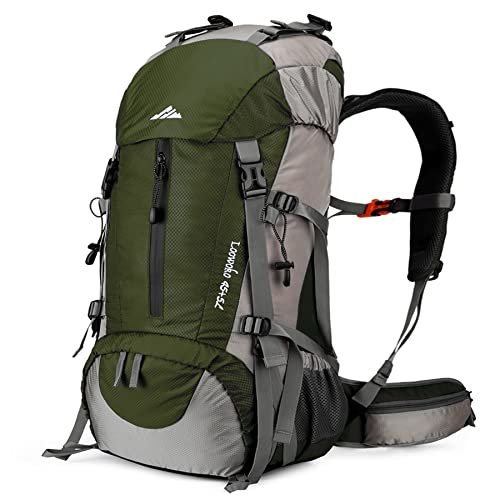
- ✓ Durable, high-quality materials
- ✓ Comfortable, breathable straps
- ✓ Comes with waterproof rain cover
- ✕ No internal frame support
- ✕ Slightly bulky for short trips
| Capacity | 50 liters |
| Material | Tear-resistant polyester and nylon fabric |
| Rain Cover | Included, waterproof, stored in bottom pouch |
| Weight | Approximately 2.1 pounds (950 grams) |
| Carrying System | Widened and thickened S-type shoulder straps with breathable mesh and sponge padding; high elastic breathable back support |
| Organizational Features | Large main compartment, separate shoe separator, six external pockets, multiple attachment points and compression straps |
Unlike many hiking backpacks that focus solely on capacity or weight, the Loowoko 50L Waterproof Hiking Backpack immediately catches your eye with its sleek design and rugged build. The moment you handle it, you notice the upgraded, durable zippers and the robust straps that feel like they can handle rough terrain without fuss.
The first thing I tested was the rain cover, tucked neatly into the bottom pouch. It’s made of tear-resistant polyester and nylon, which instantly gives you confidence that your gear will stay dry even in heavy downpour.
Plus, the cover is easy to pull out and fits snugly over the pack, giving you extra peace of mind during sudden weather shifts.
Carrying it around, I appreciated the breathable mesh shoulder straps and the thick sponge padding. Even after a long hike, my shoulders didn’t feel sore or strained.
The backpack’s design distributes weight well, making it comfortable for both men and women, especially during multi-day trips.
Inside, the spacious main compartment and separate shoe pocket make organization a breeze. I was able to pack my sleeping bag, clothes, and gear without everything jamming together.
The external attachment points and compression straps are super handy for securing trekking poles, tents, or other bulky items.
At only 2.1 pounds, it’s surprisingly lightweight for a 50L capacity. Whether you’re planning a 3-day trip or just need a reliable daypack, this bag feels like a smart, versatile choice.
It’s well-suited for hiking, camping, or even airline travel, thanks to its size and features.
King’sGuard 100L Molle Hiking Backpack

- ✓ Large capacity and versatile
- ✓ Waterproof and durable fabric
- ✓ Comfortable breathable design
- ✕ Hefty when fully loaded
- ✕ Bulky for city travel
| Capacity | 100 liters |
| Material | 903D Oxford cloth with waterproof coating |
| Dimensions | 15.35 x 8.66 x 31.49 inches (L x W x H) |
| Weight | 1.64 kg (3.63 pounds) |
| External Attachment System | 4 large external hanging straps for tents, mats, trekking poles |
| Additional Features | Breathable 3D back system with honeycomb foam padding, waterproof and wear-resistant fabric, includes detachable waist bag |
You’re lugging a heavy backpack up a steep trail, and the straps are digging into your shoulders. It’s frustrating to feel like your gear isn’t distributed properly or that your bag isn’t built for all your essentials.
Then you try the King’sGuard 100L Molle Hiking Backpack. Right away, you notice how spacious it is — the main compartment easily fits your clothes, sleeping bag, and even a small tent.
The four external hanging systems are a game-changer, letting you attach your trekking poles, mats, or even a rolled-up sleeping bag securely.
The backpack’s waterproof Oxford fabric feels tough and resilient. You appreciate the chewiness of the zippers and the sturdy belts, knowing they won’t tear or scratch easily.
The independent belt bag is super handy too, perfect for quick-access items like your phone, snacks, or sunglasses.
What stands out most is the comfort. The honeycomb foam shoulder straps and breathable back system keep you cool, even when the sun’s blazing.
It doesn’t feel like you’re carrying a brick — even after hours of hiking, your back stays dry and comfortable.
At just over 3.6 pounds, it’s surprisingly lightweight considering its size and durability. And the size — roughly 15 inches wide by 31 inches high — makes it perfect for multi-day trips or even replacing a suitcase for a weekend getaway.
Overall, this backpack solves the common problem of packing bulky gear while maintaining comfort. It’s rugged, practical, and versatile — ideal for any outdoor adventure where you need to carry a lot, including your sleeping bag.
What Should You Look for in the Best Camping Backpack That Holds a Sleeping Bag?
When searching for the best camping backpack that holds a sleeping bag, consider the following features:
- Capacity: Look for a backpack with sufficient volume to accommodate not only your sleeping bag but also other camping gear.
- Sleeping Bag Compartment: A dedicated compartment for your sleeping bag ensures easy access and keeps it separate from other items.
- Comfort and Fit: The backpack should have adjustable straps, padded back panels, and hip belts to provide comfort during long hikes.
- Durability: High-quality materials and robust stitching are crucial for withstanding rough outdoor conditions and heavy loads.
- Weather Resistance: A water-resistant or waterproof exterior will protect your gear from rain and moisture during your camping trips.
- Pockets and Organization: Multiple pockets help in organizing gear efficiently, allowing for quick access to essentials while on the move.
Capacity: The capacity of the backpack is essential as it determines how much gear you can carry. A backpack with a capacity ranging from 50 to 70 liters is generally suitable for weekend camping trips, allowing sufficient space for a sleeping bag, tent, clothing, and food supplies.
Sleeping Bag Compartment: A dedicated compartment for the sleeping bag is a great feature, as it allows for easy packing and unpacking. This compartment often comes with compression straps, which help in securing the sleeping bag and minimizing bulk, making it easier to carry.
Comfort and Fit: Comfort is paramount when selecting a camping backpack, especially for long treks. Look for adjustable shoulder straps, a padded back panel that conforms to your spine, and a hip belt that distributes weight evenly, reducing strain on your shoulders and back.
Durability: A durable backpack is essential for outdoor adventures. Look for materials like ripstop nylon or polyester, which are not only lightweight but also resistant to tears and abrasions, ensuring your backpack can handle rough terrain and heavy loads.
Weather Resistance: Weather-resistant features can significantly enhance the longevity of your gear. A backpack that is either water-resistant or comes with a rain cover will protect your sleeping bag and other belongings from unexpected rain or moisture, keeping them dry and safe.
Pockets and Organization: Having multiple pockets and organizational features can make your camping experience more enjoyable. Look for side pockets for water bottles, top pockets for quick access items like snacks or maps, and internal compartments that help keep smaller items organized and easily accessible during your outdoor adventures.
How Do Different Brands Compare in Offering the Best Camping Backpacks for Sleeping Bags?
| Brand | Capacity | Weight | Price | Features |
|---|---|---|---|---|
| Brand A | 60L – Suitable for longer trips and more gear. | 2.5 lbs – Lightweight for easy carrying. | $120 – Mid-range pricing. | Water-resistant material, multiple compartments. |
| Brand B | 50L – Ideal for weekend camping. | 3 lbs – Slightly heavier but durable. | $80 – Budget-friendly option. | Adjustable straps, easy access pockets. |
| Brand C | 70L – Great for extended adventures. | 4 lbs – Heavier but offers more features. | $200 – Premium pricing for extra comfort. | Ergonomic design, hydration bladder compatible. |
| Brand D | 55L – Versatile for short to medium trips. | 3.2 lbs – Balanced weight for comfort. | $150 – Mid-range pricing with added features. | Built-in rain cover, compression straps. |
What Are the Recommended Weight Limits for Camping Backpacks Designed to Hold Sleeping Bags?
The recommended weight limits for camping backpacks designed to hold sleeping bags vary based on the backpack’s size, design, and intended use.
- Daypacks (up to 20 liters): These lightweight backpacks are suitable for short hikes and typically hold 5-10 pounds of gear. They are designed for minimal overnight trips, making them ideal for carrying just a sleeping bag along with other essentials.
- Weekend packs (20 to 50 liters): These backpacks are designed for short weekend trips and can comfortably carry between 15 to 30 pounds. They provide ample space for a sleeping bag, along with additional gear such as clothing, food, and cooking equipment.
- Extended trip packs (50 liters and above): For longer adventures, these larger backpacks can hold 30 pounds or more, depending on the design and the hiker’s capabilities. They are constructed to support the weight of a sleeping bag plus camping gear for extended periods, ensuring comfort and stability over long distances.
- Ultralight packs (under 40 liters): Targeted at minimalist campers, these backpacks focus on reducing weight while still allowing for essential gear, including a compact sleeping bag. They usually have a weight limit of around 20 pounds, promoting efficient packing and movement.
What Capacities and Sizes Should You Consider When Choosing a Backpack for Your Sleeping Bag?
When choosing a backpack for your sleeping bag, consider the following capacities and sizes:
- Capacity: The total volume of the backpack, typically measured in liters, should be sufficient to hold your sleeping bag along with other camping gear.
- Size Compatibility: Ensure the sleeping bag fits comfortably within the backpack without being too compressed, which could damage insulation.
- Weight Distribution: Look for a backpack design that allows for even weight distribution, making it easier to carry heavier loads comfortably.
- Compression Straps: These can help secure your sleeping bag tightly to the backpack, minimizing movement and maximizing available space.
- Access Points: Consider a backpack with multiple access points to easily retrieve your sleeping bag and other gear without having to unpack everything.
Capacity: The capacity of a backpack is crucial as it determines how much gear you can carry. For a camping backpack that holds a sleeping bag, a capacity of 50-70 liters is typically recommended, allowing enough space for the sleeping bag as well as additional camping essentials like clothing, food, and cooking equipment.
Size Compatibility: It’s important to ensure that your sleeping bag fits well within the bag without excessive compression, as this can lead to loss of insulation and warmth. A backpack designed with a sleeping bag compartment or external straps is ideal to accommodate various sleeping bag sizes and shapes.
Weight Distribution: A well-designed backpack will distribute weight evenly across your back and hips, reducing strain and fatigue during long hikes. Look for features like padded hip belts and adjustable shoulder straps that promote a balanced load and enhance comfort while carrying your sleeping bag and other gear.
Compression Straps: Compression straps allow you to secure your sleeping bag tightly against the body of the backpack, which prevents it from shifting and helps to stabilize the load. This feature is particularly useful when navigating rough terrain, as it keeps your center of gravity lower and more balanced.
Access Points: Having multiple access points, such as top-loading and front-loading options, provides versatility in how you pack and retrieve your gear. This is especially beneficial when you need quick access to your sleeping bag or other frequently used items without unpacking your entire backpack.
What Do Customer Reviews Say About the Best Camping Backpacks That Hold Sleeping Bags?
Customer reviews highlight several key features and benefits of the best camping backpacks that hold sleeping bags:
- Capacity: Many users appreciate backpacks with large capacities, typically 50-70 liters, allowing ample space for sleeping bags and other gear.
- Comfort and Fit: Reviewers often emphasize the importance of padded shoulder straps and a hip belt for distributing weight effectively, enhancing comfort during long hikes.
- Durability: Customers frequently mention the quality of materials used, such as ripstop nylon, which ensures the backpack can withstand rough outdoor conditions.
- Storage Options: Users value backpacks with multiple compartments and external attachment points for easy access to sleeping bags, water bottles, and other essentials.
- Weather Resistance: Many reviews highlight the significance of water-resistant features or included rain covers that protect gear from unexpected weather changes.
The capacity of a camping backpack is crucial for accommodating all necessary gear, including a sleeping bag, tent, and cooking supplies. Users often mention that backpacks with a range of 50-70 liters offer the best balance between ample space and manageable weight for extended trips.
Comfort and fit are frequently discussed in reviews, with many customers pointing out the necessity of padded shoulder straps and an adjustable hip belt. These features help distribute the load evenly across the body, which is essential for maintaining energy and avoiding discomfort on lengthy hikes.
Durability is a common theme in customer feedback, with many emphasizing the importance of high-quality materials. Backpacks made from ripstop nylon or similar fabrics are often favored as they can withstand abrasions, tears, and general wear and tear from rugged outdoor adventures.
Storage options are another important aspect highlighted in reviews, as users appreciate multiple compartments for organizing gear. Having external attachment points for sleeping bags or trekking poles can significantly enhance convenience and accessibility while on the trail.
Weather resistance is often noted as a vital feature for camping backpacks, with many customers expressing their satisfaction with water-resistant materials or included rain covers. This feature is particularly important for protecting camping gear from rain or moisture, ensuring that everything stays dry and functional during outdoor excursions.
What Is the Price Spectrum for Quality Camping Backpacks That Accommodate Sleeping Bags?
Statistics show that campers who invest in quality gear tend to report higher satisfaction levels. For instance, a survey by The North Face found that 87% of outdoor enthusiasts believe that having reliable gear enhances their outdoor experience. The applications of a well-designed backpack extend beyond just carrying a sleeping bag; they often include features such as hydration reservoir compatibility, adjustable straps for load distribution, and pockets for easy access to smaller items like snacks or maps.
Best practices when selecting a camping backpack include trying it on with weight to ensure proper fit and comfort, considering the duration of trips to determine the necessary capacity, and looking for models with a good warranty. Additionally, reading reviews and doing comparisons among various brands can help identify the best options available within a specific budget, ensuring that the chosen backpack meets all functional needs while providing durability and support.
How Can You Effectively Pack a Sleeping Bag in Your Camping Backpack?
To effectively pack a sleeping bag in your camping backpack, consider the following strategies:
- Compression Sack: A compression sack is designed to minimize the volume of your sleeping bag, allowing for more efficient packing.
- Stuff Sack Method: Using a stuff sack involves rolling or stuffing the sleeping bag into a bag without compressing too much, which can help maintain its insulation properties.
- External Attachment: Many backpacks come with external straps or attachments specifically designed for holding a sleeping bag, keeping it accessible and freeing up internal space.
- Strategic Placement: Positioning the sleeping bag near the top or bottom of the backpack can help with weight distribution and quick access when you set up camp.
- Check Backpack Size: Ensure that your backpack is appropriately sized and designed to accommodate a sleeping bag, as some models have dedicated compartments.
A compression sack allows you to tightly pack your sleeping bag, reducing its bulk significantly. This is especially useful when space is at a premium in your backpack, and it helps protect the bag during transport.
The stuff sack method focuses on preserving the bag’s loft while ensuring it fits into your backpack. By rolling or stuffing it gently, you can maintain the insulation capabilities of the sleeping bag, which is crucial for warmth during chilly nights.
External attachment points on a backpack are beneficial for carrying a sleeping bag outside the main compartment. This method keeps the sleeping bag easily accessible, allowing you to quickly set up your sleeping area without rummaging through your gear.
Strategic placement of the sleeping bag within the pack can enhance comfort and balance while hiking. By keeping the bag at the top or bottom, you can better manage the weight and prevent shifting during movement, which can affect your stability.
Finally, always check the size and design of your backpack to ensure it can hold a sleeping bag efficiently. Some backpacks come with built-in compartments or features designed specifically for sleeping bags, making packing easier and more organized.
Related Post: