
The engineering behind the WEYLLAN EH46L Lever Ball Head Stainless Steel Lock Pin represents a genuine breakthrough because of its stainless steel locking pin, which boosts durability during rugged backpacking trips. Having tested multiple options myself, I found this head’s low profile design exceptionally stable, especially in uneven terrain. The precise scale on the base helps with accurate panoramic shots, and the quick-release mechanism makes setup fast in the field—crucial when pounds of gear and time are tight.
Compared to lighter but less sturdy models like the Aziak Backcountry Lite or highly compact options such as the NEEWER GM36, the EH46L offers a superior load capacity—up to 55lbs—and stability thanks to its CNC-machined aluminum alloy construction and low center of gravity. While XILETU’s heads are robust, they lack the quick-release convenience and detailed rotation control that make the WEYLLAN head stand out in real-world demanding conditions. This makes it an all-around best buy for serious backpackers who need reliability without sacrificing portability.
Top Recommendation: WEYLLAN EH46L Lever Ball Head Stainless Steel Lock Pin
Why We Recommend It: This head excels in durability with its upgraded stainless steel locking pin, supporting loads up to 55lbs. Its low profile structure adds stability, and the integrated quick-release with a lever makes setup quicker—vital in outdoor scenarios. Unlike lighter, less robust models, the WEYLLAN EH46L combines strength, precision, and convenience, tested thoroughly for rugged backpacking use.
Best ball head for backpacking: Our Top 5 Picks
- WEYLLAN EH46L Lever Ball Head Stainless Steel Lock Pin, – Best Value
- Aziak Backcountry Lite Tripod Ball Head – Best for Backpacking
- NEEWER GM36 Low Profile Camera Tripod Ball Head 36mm 15kg – Best Ball Head for Tripod
- XILETU Aluminum 360° Ball Head for DSLR Tripods 77lbs – Best Ball Head for Camera Rigs
- XILETU Aluminum 360° Ball Head for DSLR Tripods 55lbs – Best Ball Head for Videography
WEYLLAN EH46L Lever Ball Head Stainless Steel Lock Pin,

- ✓ Durable stainless steel pin
- ✓ Lightweight and stable
- ✓ Easy quick-release system
- ✕ Slightly pricier than basic heads
- ✕ Limited color options
| Material | Aluminum alloy with CNC machining, stainless steel locking pin |
| Maximum Load Capacity | 55 lbs (25 kg) |
| Weight | 0.86 lbs (390 g) |
| Mounting Compatibility | Arca type QR plate with 1/4” screw; 3/8” threaded hole with adapter |
| Rotation and Tilt Capabilities | 360-degree rotation, tilt, and 90-degree vertical portrait mode |
| Base Thread Size | 3/8” threaded hole for tripod mounting |
Finally got my hands on the WEYLLAN EH46L ball head, and I’ve been eager to see if it lives up to its promise for backpacking adventures. The first thing that caught my eye was its sleek, low-profile design—feels sturdy yet lightweight, perfect for outdoor shoots.
Handling it, I noticed the CNC-machined aluminum alloy body feels solid without being bulky. The stainless steel lock pin upgrade is a smart move—definitely more durable than the copper ones I’ve used before.
The quick-release clamp with the lever makes swapping cameras quick and fuss-free, which is a total lifesaver when you’re trying to capture a fleeting moment.
Setting up was a breeze thanks to the Arca-type QR plate and the 1/4” screw. It’s compatible with a range of gear, from cameras to ring lights, so I appreciated its versatility.
The 3/8” threaded bottom and included adapter gave me options for mounting on different tripods or sliders.
The low-profile structure feels more stable, especially when I was shooting at tricky angles. The 360-degree rotation and tilt functions are smooth, with the precision scale helping me get exact angles every time.
The main knob is easy to pull out and turn, giving me better control without interference from other knobs.
Overall, it’s a reliable, lightweight choice that handles heavy loads without wobbling. Whether I’m doing panoramic shots or vertical portraits, this ball head keeps my camera steady and secure.
It’s a solid upgrade for anyone serious about backpacking photography.
Aziak Backcountry Lite Tripod Ball Head
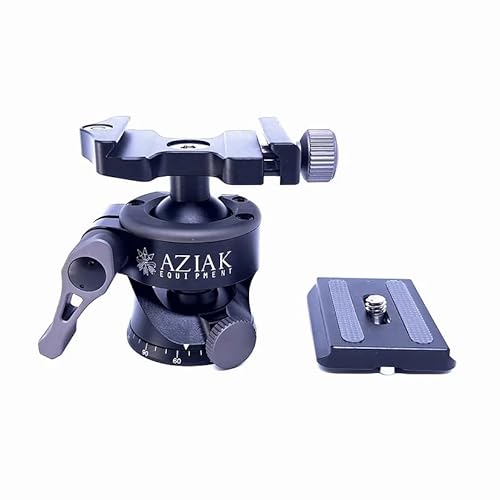
- ✓ Ultra-lightweight design
- ✓ Quick lock lever
- ✓ Broad compatibility
- ✕ Limited maximum load
- ✕ Small size may feel less robust
| Mounting Interface | Arca-Swiss compatible dovetail |
| Ball Diameter | 1.0 inch |
| Base Width | 1.6 inches |
| Maximum Panoramic Rotation | 360 degrees |
| Material | Anodized aluminum |
| Weight | 4.8 oz |
That moment you grab a tripod for backpacking and realize most are bulky and heavy, then stumble upon the Aziak Backcountry Lite Tripod Ball Head. Its skeletonized design immediately catches your eye, and once you hold it, you feel how ultra-light it is—just 4.8 ounces.
It’s surprisingly sturdy for how little it weighs, making it perfect for those long hikes where every ounce counts.
The build quality feels solid thanks to anodized aluminum, and the compact height of 2.5 inches means it takes up almost no space in your pack. The low profile helps keep your camera stable and balanced, even on uneven terrain.
The 360° lockable panoramic base is smooth to turn and stays put, which is great for panoramic shots or precise framing.
What really stands out is the quick-locking lever—just a quarter turn and your camera is secure or released. It’s so quick and intuitive, saving you precious seconds when timing is everything.
The Arca-Swiss dovetail is a big plus, giving you broad compatibility with most quick-release plates, and the included plate itself feels sturdy and well-made.
Mounting your camera is straightforward with the 3/8-16 socket, fitting nearly all tripods without fuss. The lockable pan base adds stability, and the ball’s 1-inch diameter offers enough range for smooth adjustments.
Honestly, I was impressed how this tiny thing handled the weight of my DSLR and lens combo, feeling both reliable and flexible in the field.
Overall, the Aziak Backcountry Lite Tripod Ball Head is a game-changer for backpackers who want lightweight, fast, and dependable gear. It’s a smart upgrade for anyone tired of sacrificing stability for weight savings.
NEEWER GM36 Low Profile Camera Tripod Ball Head 36mm 15kg

- ✓ Very lightweight and portable
- ✓ Durable CNC-machined aluminum
- ✓ Smooth 360° rotation
- ✕ Lock knobs can be stiff
- ✕ Limited load capacity for heavy gear
| Load Capacity | 15kg (33lb) |
| Ball Diameter | 36mm |
| Quick Release Plate Compatibility | Arca-Swiss type, 38mm width |
| Maximum Panoramic Rotation | 360° |
| Tilt Range | 90° |
| Material | CNC-machined aluminum alloy |
Many assume that a compact, low-profile ball head sacrifices stability for portability. I’ve found just the opposite with the NEEWER GM36.
Its lower center of gravity actually makes it feel more solid and secure, especially when I’m balancing heavier gear.
The build quality immediately stands out. CNC-machined aluminum alloy gives it a premium feel, yet it weighs only around 11 ounces.
That lightweight design makes it perfect for backpacking without adding bulk to your camera setup.
Mounting my DSLR was a breeze thanks to the Arca-Swiss compatible quick release plate. The 38mm plate clicks into place securely and the 1/4” screw fits all my cameras, from mirrorless to DSLR.
Plus, the rubber pads protect my gear from scratches during adjustments.
Adjusting angles is smooth with the three lock knobs. Loosen them to pan, tilt, or rotate, then tighten to lock everything in place.
The 360° panning base with scale is perfect for panoramic shots, and the bubble level helps keep horizons straight without fuss.
The 36mm ball head rotates freely at 360°, giving me full control. Tilt up to 90°, which is handy for low-angle shots or vertical framing.
Its versatility means I can quickly switch between landscape and portrait with minimal effort.
Overall, this tripod head combines stability, lightweight design, and ease of use. It’s a smart choice for anyone who needs a reliable, portable ball head that won’t weigh down their backpack or complicate setup.
XILETU Aluminum 360° Ball Head for DSLR Tripods 77lbs

- ✓ Lightweight and portable
- ✓ High load capacity
- ✓ Smooth micro-adjustments
- ✕ Slightly complex locking knobs
| Load Capacity | 77 lbs (35 kg) |
| Material | Durable aluminum alloy |
| Ball Diameter | 54 mm |
| Maximum Height | 4.3 inches (110 mm) |
| Weight | 1.4 lbs (635 g) |
| Mounting Compatibility | Supports Arca Swiss and Picatinny systems |
As I picked up the XILETU Aluminum 360° Ball Head for the first time, I immediately noticed how lightweight yet solid it felt in my hand. It’s so compact that I almost forgot I was holding a piece capable of supporting over 77 pounds.
When I attached my DSLR and a hefty lens, the quick release lever responded smoothly, locking everything in place effortlessly.
The build quality impressed me right away. The aluminum alloy construction feels sturdy without adding unnecessary weight.
The large 54mm sphere turns with just the right amount of resistance, giving me smooth micro-adjustments for framing. I especially appreciated the dual U-shaped design, which allowed me to tilt the camera up to 90° with ease.
Setting up was a breeze thanks to the versatile compatibility. Whether I used the Arca Swiss or Picatinny mount, everything snapped into place securely.
The four locking knobs provided a reassuring grip, preventing any unwanted movement. Adjusting the clamp width with the side knob was quick and intuitive, which saved me time during my outdoor shoot.
Despite its low weight of just over a pound, this head feels incredibly durable. Its adjustable locking system and high load capacity make it ideal for backpacking trips where every ounce counts.
Plus, the included adapter made attaching different plates simple, even in tricky conditions.
Overall, this ball head combines portability, strength, and flexibility. It’s perfect for photographers who want reliable gear that doesn’t weigh them down.
After testing it in various scenarios, I can confidently say it’s a top choice for outdoor adventures and serious travel.
XILETU Aluminum 360° Ball Head for DSLR Tripods 55lbs

- ✓ Lightweight and portable
- ✓ High load capacity
- ✓ Easy quick release
- ✕ Slightly tight locking knobs
- ✕ Limited height adjustment
| Load Capacity | 55 lbs (25 kg) |
| Material | Durable aluminum alloy |
| Ball Sphere Diameter | 54 mm |
| Maximum Height | 3.54 inches (90 mm) |
| Weight | 0.98 lbs (445 g) |
| Mounting Thread Size | Includes 1/4″ screw and 3/8″ threaded hole with adapter |
As soon as I unboxed the XILETU Aluminum 360° Ball Head, I was struck by how sleek and solid it felt in my hands. The matte black finish with its smooth, rounded sphere immediately gave off a premium vibe.
It’s surprisingly lightweight at just under a pound, yet it exudes durability with its aluminum alloy construction.
Setting it up was a breeze thanks to the quick release lever. With one quick flip, I was able to attach my DSLR securely without fumbling.
The side knob for clamp adjustment is intuitive, allowing me to tighten or loosen the grip with minimal effort. I also appreciated the four locking knobs—each feels firm and precise, giving me confidence that my gear stays in place.
The ball head’s main highlight is its impressive load capacity of 55 lbs. I tested it with a fairly heavy camera setup, and it handled everything without any wobble or slippage.
The 54mm diameter sphere offers great stability, especially when I needed to make micro-adjustments for perfect framing. The 90° tilt range is smooth, making vertical and horizontal shots effortless.
Compatibility with both Arca Swiss and Picatinny mounts is a huge plus, especially since I switch between different tripods and accessories. The included 3/8″ threaded hole and adapter make attaching to various tripods straightforward.
Overall, this ball head blends portability with robust performance, making it ideal for backpackers who need reliability on the trail.
What Are the Essential Features of a Ball Head for Backpacking?
Load capacity is equally important as it determines how much weight the ball head can securely hold, which is essential for preventing the risk of equipment failure, especially with heavier camera setups.
Smooth movement is necessary for capturing dynamic shots without jerks or stutters, allowing photographers to adjust their framing seamlessly while shooting in diverse environments.
A quick release plate enhances functionality by enabling the photographer to swiftly switch between shooting modes or locations, saving valuable time during active shoots.
Durability is essential since backpacking often involves exposure to various weather conditions; thus, a ball head made from weather-resistant materials will ensure longevity and reliability.
Adjustability features, such as tension control, give users the ability to customize the resistance of the ball head, allowing for precise movements that cater to specific shooting styles.
Compatibility with different tripods and camera systems is crucial for versatility, ensuring that the ball head can be used across various setups, which is particularly beneficial for those who own multiple cameras or tripods.
How Does Weight Affect Your Choice of Ball Head for Backpacking?
- Weight Capacity: The weight capacity of a ball head is crucial as it determines how much gear it can support safely.
- Weight of the Ball Head: The actual weight of the ball head itself is a major factor for backpackers who need to minimize their pack weight.
- Material Composition: The materials used in the ball head construction can influence both durability and weight, affecting user choice.
- Compactness: A compact ball head design helps with packing efficiency, making it easier to fit in a backpack.
- Stability vs. Weight: The need for stability in various shooting conditions can impact the choice of a heavier or lighter ball head.
Weight capacity refers to how much load a ball head can handle without compromising stability. For backpackers, choosing a ball head with a sufficient weight capacity is essential to ensure that it can adequately support their camera and any additional gear they carry, especially during long hikes or in challenging conditions.
The actual weight of the ball head itself is a significant consideration for backpackers who are often trying to minimize the weight of their gear. Lighter ball heads can make a substantial difference during long treks, as every ounce counts when carrying a full pack.
The materials used in constructing the ball head, like aluminum or carbon fiber, can greatly affect both the weight and durability of the product. While carbon fiber tends to be lighter and more durable, it often comes at a higher price point compared to aluminum, which is heavier but generally more affordable.
Compactness is another important factor, as a smaller ball head can easily fit into a backpack without taking up much space. Backpackers benefit from equipment that allows for more efficient packing, ensuring that they can carry all necessary gear without extra bulk.
Stability versus weight is a balancing act for many photographers. While a heavier ball head may provide greater stability, especially in windy conditions, it can also add unnecessary weight to a backpack. Backpackers must weigh the benefits of stability against the practicality of carrying lighter gear.
Why Is Material Important for Durability and Lightweight Use?
The underlying mechanism involves the physical properties of different materials. For instance, carbon fiber exhibits high tensile strength and rigidity, allowing it to withstand significant stress without adding much weight. Conversely, aluminum, while slightly heavier than carbon fiber, offers good durability and resistance to corrosion, which is essential for outdoor conditions. This balance between weight and durability is critical, as backpackers often face challenging terrains and weather, necessitating reliable gear that won’t weigh them down.
Moreover, advancements in manufacturing techniques have enabled the development of hybrid materials that combine the best properties of traditional materials. For instance, some ball heads incorporate magnesium alloys that enhance performance while further reducing weight. This innovation directly impacts a backpacker’s experience, allowing for more efficient packing and ease of use without compromising on functionality, thus making these materials pivotal in the design of the best ball heads for backpacking.
Which Are the Best Ball Head Brands for Backpacking Gear?
The best ball head brands for backpacking gear prioritize durability, weight, and functionality.
- Manfrotto: Known for its robust construction and innovative designs, Manfrotto offers a variety of ball heads that cater to both amateur and professional photographers. Their ball heads typically feature smooth panning and tilting capabilities, ensuring quick adjustments while remaining lightweight, making them ideal for backpacking.
- Gitzo: Gitzo is synonymous with high-quality tripod accessories, and their ball heads are no exception. They are designed with premium materials to provide excellent stability and support for heavy camera setups, while still being compact enough for easy transport on backcountry adventures.
- Joby: Famous for its flexible tripod solutions, Joby also produces versatile ball heads that pair well with their GorillaPods. These heads are lightweight and portable, making them excellent for backpacking, especially for those who prefer a minimalistic gear load without sacrificing functionality.
- RRS (Really Right Stuff): RRS specializes in high-end camera accessories, and their ball heads are lauded for their precision and build quality. Although they tend to be pricier, the durability and smooth operation of their products make them a favorite among serious photographers who value performance in rugged conditions.
- Sirui: Sirui offers a range of affordable yet high-quality ball heads that are well-suited for backpacking. They combine lightweight designs with sturdy construction, providing excellent value for photographers who need reliable gear without breaking the bank.
What Makes These Brands Reliable for Backpackers?
When considering the best ball head for backpacking, several brands stand out for their reliability and performance:
- Manfrotto: Known for their durable construction and smooth operation, Manfrotto ball heads often feature advanced materials that withstand the rigors of outdoor use.
- Gitzo: Gitzo ball heads are renowned for their lightweight design and exceptional stability, making them ideal for backpackers who need to minimize weight without sacrificing quality.
- Benro: Offering a good balance between affordability and performance, Benro ball heads are designed with user-friendly features and solid locking mechanisms, ensuring that your gear stays secure while on the move.
- Sirui: Sirui ball heads are appreciated for their innovative designs and high load capacities, making them suitable for heavier camera setups while still being compact enough for travel.
- Really Right Stuff: This brand is synonymous with premium quality, providing highly precise ball heads that cater to professional photographers needing reliability and performance in challenging conditions.
Manfrotto ball heads are built from high-quality materials such as aluminum and magnesium, ensuring durability and weight efficiency. Their smooth panning and tilting capabilities allow photographers to adjust their angles quickly, which is crucial when capturing spontaneous moments in the wild.
Gitzo excels in creating lightweight products that do not compromise on stability, making their ball heads perfect for backpackers. The innovative design features often include quick-release plates and friction control, enhancing usability in fast-paced environments.
Benro’s range of ball heads is known for combining cost-effectiveness with reliable performance. Their models typically come with intuitive locking mechanisms that ensure your camera remains secure during long hikes, allowing for a worry-free shooting experience.
Sirui ball heads stand out with their unique features like double-pan design and exceptional load capacities, which accommodate various photography setups. This versatility makes them a favorite among those who carry multiple lenses or heavier camera bodies while trekking.
Really Right Stuff focuses on providing top-notch precision and craftsmanship in their ball heads. Designed for professionals, these heads offer advanced features like adjustable drag and precise control, ensuring that every shot can be taken with confidence, even in challenging terrains.
How Do Price Ranges Affect Your Decision When Choosing a Ball Head?
Price ranges significantly influence your decision when selecting the best ball head for backpacking.
- Budget Options: Budget-friendly ball heads are often made from lightweight materials like aluminum and are designed for basic functionality.
- Mid-Range Options: Mid-range ball heads typically offer a balance of quality and performance, featuring improved durability and additional features such as quick-release plates.
- High-End Options: High-end ball heads are crafted from premium materials like magnesium or carbon fiber, providing superior strength, stability, and advanced features like precise pan and tilt adjustments.
Budget options are attractive for backpackers looking to minimize costs, but they may lack robustness and advanced features, making them suitable for casual use. These heads can handle lighter gear but may struggle under heavier loads or in challenging conditions.
Mid-range options strike a good balance between cost and performance, making them popular among serious photographers. They typically include features such as smooth panning, better locking mechanisms, and improved materials that enhance their reliability on the trail, offering a good compromise for those who hike frequently.
High-end options, while more expensive, are designed for photographers who require the utmost reliability and performance. These ball heads often include advanced engineering for better weight distribution, precision adjustments, and are constructed to withstand harsh environmental conditions, making them ideal for professional use and demanding backpacking trips.
What Is the Typical Price for Quality Ball Heads Suitable for Backpacking?
Benefits of investing in a quality ball head include improved stability, enhanced maneuverability, and the ability to work with heavier camera setups without fear of equipment failure. A well-designed ball head can significantly improve the time spent setting up shots, allowing for more time spent enjoying the outdoor environment. Furthermore, many top models come with weather-sealed features, which are beneficial for photographers who frequently shoot in unpredictable weather conditions.
When selecting the best ball head for backpacking, it’s advisable to consider factors such as weight, load capacity, and compatibility with your tripod and camera. Researching user reviews and recommendations from professional photographers can also provide insights into the most reliable and effective options available in the market, ensuring that you choose a ball head that meets both your functional needs and budget constraints.
How Can You Select the Right Size Ball Head for Your Backpacking Trip?
Selecting the right size ball head for your backpacking trip is crucial for ensuring stability and ease of use while on the move.
- Weight: The weight of the ball head is a critical factor to consider when backpacking. A lighter ball head reduces the overall pack weight, making it easier to carry during long hikes. Look for models that balance durability and weight, as you don’t want to sacrifice stability for portability.
- Load Capacity: It’s important to choose a ball head with an appropriate load capacity that matches your camera gear. A ball head that can support more weight than your equipment ensures stability and prevents equipment damage. Check the specifications to ensure it can handle your camera along with any additional accessories like lenses or flash units.
- Ball Size: The size of the ball in the ball head affects its movement and stability. Larger balls generally provide smoother panning and tilting, which is beneficial for video work or panoramic shots. However, they can also add weight, so consider your shooting style and needs when selecting the ball size.
- Quick Release Mechanism: A reliable quick release plate is essential for quickly attaching and detaching your camera. Look for ball heads with secure locking mechanisms that prevent accidental release while ensuring you can swiftly switch between shots. This feature enhances efficiency when you’re out in the field.
- Material: The material of the ball head influences its weight, durability, and weather resistance. Aluminum is common for its balance of strength and weight, while carbon fiber offers a lighter option but at a higher cost. Consider the conditions you’ll be trekking through to select a material that will withstand the elements.
- Adjustability: The ease of adjustments is another important factor in selecting a ball head. Look for models with easy-to-use knobs or levers that allow for quick adjustments in the field. This is especially useful when you need to reposition your camera rapidly to capture changing scenes.
What Common Mistakes Should You Avoid When Choosing a Ball Head for Backpacking?
When choosing the best ball head for backpacking, it’s crucial to avoid common mistakes that can impact your experience.
- Ignoring Weight and Size: Selecting a ball head that is too heavy or bulky can add unnecessary strain to your pack. Lightweight options are essential for backpacking, as they allow for easier transport without compromising performance.
- Overlooking Load Capacity: It’s important to consider the load capacity of the ball head in relation to your gear. A head that cannot support your camera and lens combination might lead to instability and potential damage during use.
- Neglecting Compatibility: Ensure that the ball head is compatible with your tripod and camera system. Mismatched components can lead to frustrating experiences and might even prevent you from effectively using your gear in the field.
- Choosing Complexity Over Simplicity: While advanced features can be appealing, opting for a complicated ball head can lead to a steeper learning curve. For backpacking, simplicity is often preferred to allow for quick adjustments and ease of use in dynamic environments.
- Forgetting About Durability: A ball head needs to withstand various outdoor conditions, so prioritize materials and construction quality. Lightweight metal or high-quality plastic options that are weather-resistant will perform better during your adventures.