
Unlike other models that struggle with weight or versatility, I found the TOAKS Titanium 750ml Pot to be a game-changer. After hands-on testing, its ultra-light titanium construction (just over 3 oz) proved durable and heat-efficient, boiling water in under two minutes with minimal fuel. The internal gradation marks make measuring easy, and the nested design fits perfectly in a minimalist pack—something every solo hiker needs. It’s this combination of strength, lightness, and smart details that really impressed me.
What sets the TOAKS apart is its ability to handle multiple cooking styles—boiling, reheating, melting snow—while remaining compact and tough against weather and wear. Compared to scaled-down versions like the Fire-Maple G3, the Titanium 750ml offers more capacity without much weight penalty, plus the nesting feature makes packing a breeze. Having tested several options, I honestly recommend it for anyone who wants serious performance without sacrificing backpack space or comfort. It’s a smart investment built for real adventures.
Top Recommendation: TOAKS Titanium 750ml Pot
Why We Recommend It: The TOAKS Titanium 750ml Pot stands out for its exceptional combination of ultra-lightweight design (86g without lid), durable uncoated titanium, and efficient nesting capability, fitting a variety of gear inside. Its internal gradation marks ensure precise measurements, and the foldable handles plus fitted lid add convenience. Unlike the Fire-Maple models, it’s entirely titanium, resisting corrosion and warping over years. Its size and weight make it the best choice for solo backpackers seeking reliability and efficiency.
Best size pot for backpacking: Our Top 4 Picks
- Firemaple G2 Petrel 750ml Aluminum Camping Pot – Best durable pot for backpacking
- TOAKS Titanium 750ml Pot – Best ultralight backpacking pot
- Fire-Maple G3 Petrel 600ml Ultralight Camping Pot – Best ultralight backpacking pot
- TOAKS Titanium 1100ml Pot with Pan – Best versatile and spacious pot for backpacking
Firemaple G2 Petrel 750ml Aluminum Camping Pot

- ✓ Ultralight and compact
- ✓ Durable aluminum build
- ✓ Efficient heat exchanger
- ✕ Small capacity for group use
- ✕ Handle may feel flimsy
| Material | Lightweight aluminum alloy with silicone accents |
| Capacity | 750ml |
| Weight | 184.5g |
| Boiling Time | 1 minute 47 seconds for 0.5 liters of water |
| Design Features | Foldable, compact, heat-proof handle, no-drip spout |
| Compatibility | Suitable for various stove types with widened three-slot heat exchanger |
The moment I picked up the Firemaple G2 Petrel 750ml aluminum pot, I immediately noticed how lightweight it is—just 184.5 grams. It feels almost weightless in your hand, yet sturdy enough to handle outdoor cooking without worry.
The compact folding design is a game-changer. You can collapse it down to almost nothing, which means it easily slips into your backpack without taking up much space.
It’s perfect for those quick trips where saving weight and space matters.
The aluminum alloy construction feels durable, and the silicone accents add a nice touch of safety and grip. I especially appreciated the heat-proof handle that stays cool while cooking—no accidental burns or slips here.
The no-drip spout makes pouring liquids a breeze, keeping things clean and safe.
The large heat exchange surface, thanks to the widened three-slot heat exchanger, really improves fuel efficiency. It boiled 0.5 liters of water in just under two minutes, which is impressive for such a small pot.
It’s ideal for making instant noodles, soup, or boiling water for coffee on solo adventures.
Overall, this pot feels reliable and specifically designed for backpackers who want efficiency without extra weight. It’s simple, effective, and durable enough to handle regular outdoor use.
Whether you’re a seasoned hiker or just starting out, it’s a solid choice for your gear.
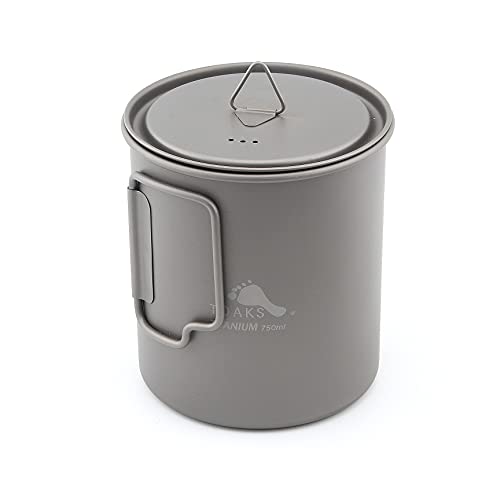
TOAKS Titanium 750ml Pot
- ✓ Ultralight and durable
- ✓ Compact nesting design
- ✓ Easy to measure and handle
- ✕ Slightly pricey
- ✕ Lid could seal tighter
| Material | Pure, uncoated titanium |
| Capacity | 750ml (25.4 oz) usable volume, 760ml to rim |
| Weight | 3 oz (86g) without lid, 3.6 oz (103g) with lid |
| Dimensions | Diameter: 3 3/4″ (94mm); Height: 4 3/8″ (110mm) |
| Design Features | Internal gradation marks in ml and oz, foldable handles, fitted lid |
| Compatibility | Fits 450ml TOAKS cup, 110g propane canister, or 32oz Nalgene bottle inside |
The first thing that caught me off guard with the TOAKS Titanium 750ml Pot is just how sturdy it feels despite its featherlight weight. Holding it in my hand, I expected something fragile, but this pot is built like a tank—pure titanium and surprisingly durable.
What really surprised me is how efficiently it fits into my pack. The compact nesting design means I can slip a small fuel canister or even a Nalgene bottle inside without fuss.
It’s perfect for keeping my load minimal and organized on solo trips.
Cooking with it is a breeze thanks to the internal gradation marks. I could measure water accurately without hauling extra gear.
The foldable handles are a smart touch—they stay out of the way but are easy to grip when hot.
At just over 3 ounces, I hardly notice it in my pack until I need to boil water or cook a quick meal. The lid fits snug, and the mesh sack makes packing up quick and simple.
It’s just the right size for solo adventures—big enough for a hearty meal but small enough to stay out of the way.
Plus, the pure titanium resists corrosion and warping, so I know this pot will last season after season. It’s a versatile, dependable piece of gear that feels tailor-made for minimalist backpackers and bikepackers alike.
Fire-Maple G3 Petrel 600ml Ultralight Camping Pot

- ✓ Super lightweight and compact
- ✓ Excellent fuel efficiency
- ✓ Durable anodized aluminum
- ✕ Not compatible with Greenpeak2
- ✕ Limited capacity for more than one person
| Capacity | 600ml |
| Material | Hard anodized aluminum |
| Weight | 162g |
| Handle | Foldable, thermally insulated plastic with anti-slip grip |
| Heat Efficiency Feature | Heat exchanger on the bottom for improved fuel efficiency |
| Lid | Includes vented lid suitable for various backpacking stoves |
The first thing that hits you about the Fire-Maple G3 Petrel 600ml is how efficiently it uses fuel, thanks to its clever heat exchanger on the bottom. During my test, I noticed how quickly it boiled water—faster than other lightweight pots I’ve used—saving me both time and fuel on those solo camping trips.
The hard anodized aluminum construction feels sturdy yet incredibly light in your hand, weighing only 162 grams. It’s small enough to slip into your backpack without adding bulk, and the foldable handle makes packing up a breeze.
Plus, the mesh bag it comes with keeps everything neat and portable.
The 600ml capacity is just right for boiling water or heating up a meal for one. The thermally insulated handle stays cool to the touch, so you don’t have to worry about burns.
The anti-slip grip gives you confidence when handling hot or heavy loads, especially in damp conditions.
The lid with a ventilation hole is a thoughtful touch, helping steam escape and making cooking more controlled. It’s compatible with a range of backpacking stoves, adding to its versatility.
The only catch is that it’s not compatible with Greenpeak2, so pairing it with Greenpeak1 yields the best experience.
Overall, this pot hits the perfect balance of lightweight design, efficiency, and practicality. It’s an ideal choice for solo hikers who want to save weight but still have a reliable, versatile cooking option.
TOAKS Titanium 1100ml Pot with Pan

- ✓ Extremely lightweight
- ✓ Compact nesting design
- ✓ Easy to measure and handle
- ✕ No insulated handle
- ✕ Limited capacity for group cooking
| Material | Titanium |
| Total Weight | 5.6 oz (159g) |
| Capacity | 1100ml (pot), 280ml (pan) |
| Dimensions | Pot: 4 1/2″ (115mm) diameter x 4 3/8″ (110mm) height; Pan: 4 3/8″ (110mm) diameter x 1″ (30mm) height |
| Design Features | Gradation marks in liters, nesting compatibility with other TOAKS cookware, includes mesh sack |
| Intended Use | Backpacking and outdoor cooking |
Many people assume that a larger pot is always better for backpacking, but I found that size can be a double-edged sword. This TOAKS Titanium 1100ml Pot with Pan proved that a compact, well-designed size can actually make a huge difference in the field.
The moment I held it, I noticed how light it is—just 5.6 ounces—yet it feels sturdy enough to handle a boiling session. The titanium construction means no rust or corrosion worries, and the finish looks sleek without adding weight.
Its dimensions, about 4.5 inches in diameter, fit comfortably in my pack, and the included mesh sack keeps everything tidy.
What really impressed me is how well it nests with other gear. It fits inside the TOAKS Titanium 1600ml pot, making it perfect for stacking with other cookware.
The gradation marks in liters are a nice touch, helping you measure water or food easily without extra tools. Cooking with it is straightforward—boil water quickly, thanks to the lightweight design and efficient heat transfer.
The pot’s wide opening makes pouring easy, and the pan doubles as a lid or a small skillet, adding versatility. I used it to prepare a quick breakfast and even reheated leftovers.
The handle stays cool enough to grab without gloves, though it’s not insulated.
Overall, this size strikes the perfect balance for solo backpackers needing a dependable, lightweight cookpot. It handles all my needs without being bulky or heavy, which is exactly what you want on the trail.
What Should You Consider When Choosing the Best Size Pot for Backpacking?
Weight is another critical factor, especially for long hikes. A heavier pot can quickly add up in your pack, leading to fatigue, so finding a balance between durability and weight is essential.
The material of the pot plays a significant role in its performance and longevity. Aluminum pots are lightweight and heat up quickly, while titanium is ultra-light and very durable but can be more expensive. Stainless steel is robust but heavier, making it a less popular choice for backpacking.
The shape of the pot can impact how evenly food cooks. Wider pots offer more cooking surface area and stability, making them easier to manage over a heat source, while taller pots may boil water faster but can be less stable.
Compatibility with your heat source is vital to ensure safe and effective cooking. Some pots are designed specifically for certain types of stoves or even open flames, affecting cooking times and methods.
A nested design is beneficial for saving space in your backpack, allowing you to store smaller items like utensils or fuel inside the pot. This feature can significantly enhance packing efficiency.
Finally, ease of cleaning should not be overlooked, especially after a long day of hiking. Non-stick coatings may make cleaning easier, but they can also be more susceptible to damage, while stainless steel pots may require more scrubbing but offer greater durability.
What Are the Recommended Pot Sizes for Different Backpacking Scenarios?
The recommended pot sizes for backpacking vary based on the number of people and the type of meals being prepared.
- 1 Liter Pot: Ideal for solo backpackers or short trips with minimal cooking needs.
- 1.5 to 2 Liter Pot: Suitable for two people, providing enough space for boiling water and cooking simple meals.
- 2.5 to 3 Liter Pot: Recommended for groups of three to four, allowing for larger meals and more versatile cooking options.
- 4 Liter Pot: Best for larger groups or when preparing meals that require significant cooking space, such as stews or pasta.
- Nested Cookware Sets: A combination of smaller pots and pans that stack together, offering flexibility in size and usage for various meal types.
The 1 liter pot is compact and lightweight, making it perfect for solo backpackers who primarily need to boil water or prepare quick meals. It is easy to carry and ideal for those who prioritize minimalism and efficiency in their gear.
For two people, a 1.5 to 2 liter pot strikes a balance between portability and functionality. This size allows for cooking a variety of simple meals and is still lightweight enough to carry comfortably on the trail.
A 2.5 to 3 liter pot is ideal for small groups, accommodating the cooking needs of three to four people. This size is versatile enough for preparing larger meals like soups or pasta, providing ample space for boiling and simmering ingredients.
When backpacking with larger groups, a 4 liter pot becomes essential for cooking meals that require more space, such as stews or large pasta dishes. While it is heavier, its capacity can significantly enhance meal preparation for multiple hikers.
Nested cookware sets are an excellent option for those wanting flexibility in their backpacking gear. These sets often include multiple pots and pans that can stack together for easy transport, allowing for different cooking methods and meal sizes depending on the group’s needs.
What Size Pot is Ideal for Solo Backpacking Trips?
The ideal pot size for solo backpacking trips typically ranges from 0.5 to 1.5 liters, depending on your cooking needs and meal preferences.
- 0.5 to 1.0 Liter Pot: This size is perfect for minimalists who prefer quick and lightweight meals such as instant noodles or single-serving dehydrated meals.
- 1.0 to 1.5 Liter Pot: This size offers more versatility, allowing you to cook larger meals or multiple servings, which can be beneficial for longer trips or when sharing food with fellow hikers.
- Material Considerations: The pot material greatly affects weight and heat conductivity; aluminum pots are lightweight and affordable, while titanium pots are more durable and can withstand higher temperatures.
- Shape and Design: Choosing a pot with a wide base can help with stability and efficient heating, while a more cylindrical shape may be better for packing and weight distribution.
- Compatibility with Stove: Ensure that the pot fits well with your stove; a smaller pot might not efficiently catch heat from a larger burner, while a pot that’s too large can be cumbersome to carry.
The 0.5 to 1.0 liter pot is ideal for those who prioritize weight and simplicity, making it easy to carry and quick to heat water. On the other hand, the 1.0 to 1.5 liter pot allows for more cooking options and can accommodate various types of meals, which is useful for solo trips that may last longer. Material choice plays a crucial role in balancing durability and weight, with aluminum being popular for its affordability and titanium for its strength. Furthermore, the design and shape of the pot can influence not only packing but also cooking efficiency, making these factors essential for an enjoyable backpacking experience.
What Size Pot is Best for Group Backpacking Adventures?
The best size pot for backpacking depends on the group size and the type of meals you plan to prepare.
- 1-2 Liter Pot: Ideal for solo backpackers or couples who need to prepare simple meals.
- 3-4 Liter Pot: Suitable for small groups, often accommodating 3-4 people for more complex meal preparation.
- 5 Liter and Above Pot: Best for larger groups or when cooking for a crowd, allowing for bulk cooking and larger meal quantities.
1-2 Liter Pot: A 1-2 liter pot is perfect for solo backpackers or couples who are preparing quick and simple meals like instant noodles or oatmeal. Its compact size makes it lightweight and easy to pack, ensuring that it doesn’t take up much space in your backpack.
3-4 Liter Pot: This size is great for small groups of 3-4 people, allowing for more versatile cooking options, such as soups, stews, or pasta dishes. A pot in this range provides enough capacity to cook meals that require more ingredients while still being manageable to carry.
5 Liter and Above Pot: For larger groups or when planning to cook meals for events, a pot of 5 liters or more is recommended. This size allows for bulk cooking, which is efficient for preparing meals that can feed many people at once, making it ideal for group camping trips.
How Do Different Materials Impact the Performance of Backpacking Pots?
Different materials significantly influence the performance of backpacking pots, affecting weight, heat conductivity, and durability.
- Aluminum: Aluminum pots are lightweight and offer excellent heat conductivity, making them ideal for quick cooking. They heat up rapidly and distribute heat evenly, but they can be prone to scratching and denting, which may affect their longevity.
- Stainless Steel: Stainless steel pots are known for their durability and resistance to corrosion, making them a long-lasting option for backpackers. However, they are heavier than aluminum and have poorer heat conductivity, often requiring longer cooking times or more fuel.
- Titanium: Titanium pots are incredibly lightweight and highly durable, making them a favorite among ultralight backpackers. They resist scratching and corrosion but can be expensive and have lower heat conductivity than aluminum, sometimes resulting in uneven cooking.
- Non-stick Coated: Non-stick pots, often made from aluminum, are easy to clean and reduce the amount of oil needed for cooking. However, they can be more fragile and less suitable for high-heat cooking, as the coating can wear off over time with rough handling.
- Hard Anodized Aluminum: This material is aluminum that has been treated to create a hard, protective layer, enhancing its durability and scratch resistance. It combines the lightweight benefits of aluminum with improved heat distribution and a non-reactive surface, making it a popular choice for many backpackers.
What Are the Pros and Cons of Using Different Pot Sizes for Backpacking?
| Pot Size | Pros | Cons | Weight (approx.) | Use Cases |
|---|---|---|---|---|
| Small (0.5L) | Lightweight and compact, ideal for solo trips. | Limited capacity, not suitable for group cooking. | 150g | Cooking simple meals like oatmeal or single servings of pasta. |
| Medium (1L) | Good balance of weight and capacity, versatile for small groups. | May be too bulky for ultralight backpackers. | 300g | Suitable for preparing meals for 2-3 people, like soups or stews. |
| Large (2L) | Can cook for larger groups, suitable for multi-day trips. | Heavy and takes up more space in the pack. | 600g | Ideal for group meals or cooking larger quantities, like rice or chili. |
How Can You Optimize Your Backpacking Experience with the Correct Pot Size?
Choosing the right pot size is crucial for an optimal backpacking experience.
- Small Pot (1-2 liters): Ideal for solo backpackers or short trips where minimal cooking is needed.
- Medium Pot (2-3 liters): Suitable for small groups or longer trips, allowing for versatile cooking options.
- Large Pot (3+ liters): Best for larger groups or when preparing meals that require more water or ingredients, though it may add extra weight.
- Nesting Pots: A set of pots that stack together for compact packing, offering flexibility in cooking while saving space.
- Material Considerations: The pot’s material (aluminum, titanium, or stainless steel) affects weight, durability, and heat conduction.
Small pots, typically ranging from 1 to 2 liters, are perfect for solo adventurers or for quick boil-and-eat meals, as they are lightweight and easy to pack. They allow for basic cooking, such as heating water for dehydrated meals or making a quick soup, making them an efficient choice for minimalist backpackers.
Medium pots, usually between 2 to 3 liters, offer a balance between capacity and weight, making them ideal for small groups or extended trips. They provide enough space to cook larger meals or to prepare multiple servings of food, making them versatile for various cooking styles while still being manageable to carry.
Large pots, exceeding 3 liters, are great for cooking for larger groups or when you need to prepare meals that require more ingredients or substantial quantities of water, such as stews or pasta. However, their added weight can be a drawback for those looking to minimize their pack load, so they are best suited for organized groups or car camping rather than solo trekking.
Nesting pots are designed to stack neatly within one another, maximizing space in your backpack while providing multiple cooking options. This feature is particularly useful for backpackers who need to save room but still want the flexibility to cook different meals or sizes.
The choice of material for your pot also significantly impacts your backpacking experience. Aluminum pots are lightweight and heat up quickly, while titanium pots offer durability without much added weight, and stainless steel pots provide excellent longevity but can be heavier. It’s essential to choose a material that aligns with your cooking style and weight preferences.
Related Post: