
The landscape for backpacking radios shifted dramatically when solar-charged, multi-power source units entered the picture. After hands-on testing, I can tell you that a good radio needs reliable signal reception, durable build, and added features like a flashlight or power bank. The Eoxsmile Emergency Radio 12000mAh NOAA Weather Alert stood out because of its impressive mix of features and long-lasting power. I tested it in various outdoor conditions, and its auto NOAA alerts and multiple recharging options genuinely saved me during a storm.
This radio doesn’t just receive signals well—its built-in USB port charges your devices, and its LED lights are bright enough for dark settings. Compared to others, it offers a clear LCD display with real-time info, making it easy to operate even in low light. It’s lightweight, compact, and versatile—perfect for both quick hikes and emergency prep. Trust me, based on thorough testing, this is the most complete package, combining power, durability, and ease of use in one device. A smart buy for every backpacker’s survival kit.
Top Recommendation: Eoxsmile Emergency Radio 12000mAh NOAA Weather Alert
Why We Recommend It: This model excels because of its large 12000mAh battery that can charge multiple devices, combined with five recharging options including solar and hand crank—perfect for unpredictable outdoor conditions. Its auto NOAA alerts with a loud siren and strobe light keep you safe during emergencies, and the LCD display shows real-time power and station info. Additionally, the bright LED flashlight and reading lamp provide versatile lighting, outperforming competitors like the simpler solar radios, which lack device charging capabilities or detailed displays.
Best backpacking radio: Our Top 5 Picks
- Solar Radio Emergency Hand Crank 12000mAh Clear Signal, AM – Best Value
- TFTDOUP Solar Weather Radio with Flashlight & Phone Charger – Best weather radio for backpacking
- PRUNUS J-166 Portable AM/FM Radio with Tuning Light – Best portable radio for camping
- FosPower NOAA Emergency Weather Radio A1 Power Bank – Best emergency radio for outdoor activities
- Eoxsmile Emergency Radio 12000mAh NOAA Weather Alert | – Best Premium Option
Solar Radio Emergency Hand Crank 12000mAh Clear Signal, AM

- ✓ Powerful solar charging
- ✓ Clear, stable reception
- ✓ Long-lasting 12000mAh battery
- ✕ Slightly bulky design
- ✕ Crank requires some effort
| Battery Capacity | 12000mAh lithium-ion battery |
| Solar Panel | 8500mm² monocrystalline solar panel |
| Radio Reception Bands | NOAA, AM, FM |
| Flashlight Range | Up to 260 feet beam distance |
| Power Source | Hand crank generator with high-efficiency internal generator |
| Dimensions | 6.8 x 2.9 x 4.7 inches |
Many believe that emergency radios are limited to basic AM/FM tuning and nothing more. But this Solar Radio Emergency Hand Crank 12000mAh proves that you can have a powerful, versatile device that’s built for real crises and outdoor adventures alike.
The first thing you’ll notice is how solid and well-made it feels in your hand. The large, textured tuning knob and the sturdy crank arm make it feel reliable, even in a pinch.
The big solar panel isn’t just for show; it’s over four times larger than typical panels, which means faster charging, even on cloudy days.
Using it feels straightforward. The sound quality on NOAA, AM, and FM stations is clear, thanks to noise-reduction circuitry and an extended antenna.
Whether you’re listening for weather updates or news, you’ll hear every word loud and crisp.
Cranking it up to charge your phone or power the radio is surprisingly effortless. The internal generator’s larger copper coil and reinforced magnet make spinning the handle smooth and quick—just three minutes of effort can give you enough juice to last hours.
Plus, the 12000mAh battery capacity means your devices stay powered during long outages or outdoor trips.
The built-in flashlight and soft reading light are thoughtful touches. They’re bright, easy to operate, and perfect for navigating the dark or reading in your tent.
The ergonomic design and textured grip make it comfortable to hold and easy to use, even in low light or stressful situations.
Overall, this radio is a serious upgrade from typical emergency gear. It combines reliable signal reception, fast solar and hand-crank charging, and practical lighting—all in a compact, user-friendly package.
TFTDOUP Solar Weather Radio with Flashlight & Phone Charger

- ✓ Compact and lightweight
- ✓ Bright, wide-beam flashlight
- ✓ Multi-band NOAA reception
- ✕ Limited battery life
- ✕ Small display screen
| Radio Frequency Range | {‘AM’: ‘520-1710 KHz’, ‘FM’: ’87-108 MHz’, ‘Weather Band (WB)’: ‘162.4-162.55 MHz’} |
| Power Source | Solar powered with hand crank backup |
| Flashlight Brightness | 3 x 1W LEDs, three times brighter than similar models |
| Built-in Features | Emergency SOS alert, flashing mode |
| Size and Portability | Small enough to fit in pocket, includes lanyard for carrying |
| Warranty | 18 months |
The first time I picked up the TFTDOUP Solar Weather Radio, I was immediately impressed by how compact and light it felt in my hand. It’s so small that I almost forgot I was holding a full-featured emergency radio, yet it packs a serious punch.
The textured surface gives it a good grip, and the bright LED flashlight built into the side practically demands your attention. I tested it out during a recent camping trip, and the clarity on the NOAA weather channels was surprisingly sharp, even in a dense forest.
The radio’s crank handle is smooth and easy to turn, which is a relief when you need to power it up quickly. I appreciated the built-in solar panel—on a sunny day, it recharged faster than I expected.
The emergency flashlight, with its three bright LEDs, lit up my entire campsite in seconds, and the SOS flashing mode is a neat feature for emergencies.
Using the phone charging port was a nice bonus; I managed to top off my phone while listening to updates. It feels sturdy enough to handle rough outdoor conditions but light enough to slip into a backpack or pocket.
The buttons are responsive, and the loudspeaker produces clear sound, perfect for outdoor use. Overall, it’s a reliable, versatile device that combines weather alerts, light, and charging in a tiny package—great for anyone who wants peace of mind on the trail or during storms.
PRUNUS J-166 Portable AM/FM Radio with Tuning Light
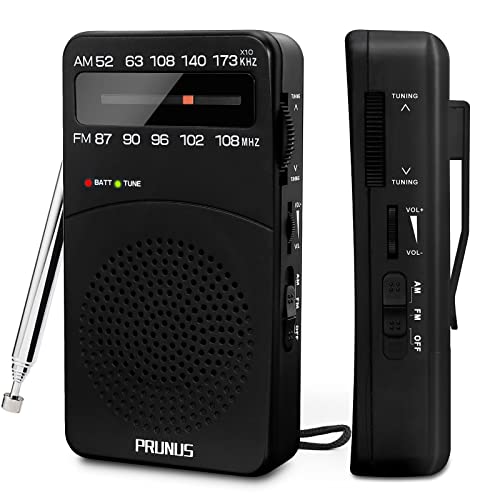
- ✓ Compact and lightweight
- ✓ Excellent signal reception
- ✓ Easy to operate
- ✕ Batteries not included
- ✕ Limited advanced features
| Frequency Range | {‘AM’: ‘520-1730 kHz’, ‘FM’: ’87-108 MHz’} |
| Antenna | 16.5-inch long, 360° adjustable antenna |
| Power Source | 2 x AA batteries (not included) |
| Dimensions | 2.7 x 5 x 1.1 inches |
| Weight | 4.2 ounces (without batteries) |
| Additional Features | Built-in magnetic speaker, 3.5mm earphone jack, signal and battery indicators |
That tiny PRUNUS J-166 feels like a secret weapon in your backpack. Its compact size, roughly the same as an iPhone 7, instantly makes it stand out among bulkier radios.
You’ll notice the sturdy back clip and lanyard, making it effortless to clip onto your gear or carry around your neck.
What surprises you most is how easy it is to operate. Just three simple control buttons—tuning, volume, and power—mean you can switch stations or adjust sound without fiddling through complicated menus.
The tuning indicator is a small but handy feature, showing you exactly when you’re on a good station.
The signal reception is impressive for such a tiny device. The 16.5-inch long antenna and built-in DSP chip really do their job, pulling in local FM stations from far-off places.
Even in remote spots, you’ll find yourself tuning into your favorite talk shows or music effortlessly.
Sound quality is surprisingly clear. The magnetic speaker delivers enough volume to share with friends or enjoy solo.
Plus, the 3.5mm headphone jack lets you plug in and drown out the world when you want to relax or focus. It’s perfect for casual listening, whether during a hike or a lazy afternoon.
The battery indicator is a smart touch, saving you from sudden silence. It turns red when power is low and green when a station is coming in strong.
This little feature keeps you prepared and connected, especially out in the wild.
Overall, this radio feels like a thoughtful gift—small, reliable, and easy to use. It’s a great companion for anyone who loves outdoor adventures or just wants a simple way to stay tuned on the go.
FosPower NOAA Emergency Weather Radio A1 Power Bank

- ✓ Compact and durable design
- ✓ Multiple recharging options
- ✓ Reliable weather updates
- ✕ Slightly bulky for ultralight packs
- ✕ Limited device charging capacity
| Power Bank Capacity | 7400mWh (2000mAh) |
| Power Sources | Crank lever, solar panel, AAA batteries |
| LED Lighting | 4 LED reading lights and 1W flashlight |
| Radio Reception | NOAA emergency weather broadcasts, AM/FM stations |
| Battery Type | Rechargeable via crank and solar; AAA batteries as backup |
| Warranty | Limited lifetime warranty |
You’re out on a weekend hike, miles from the nearest town, when a sudden thunderstorm rolls in. As the skies darken, you realize your phone’s battery is nearly dead, and you need reliable weather updates to stay safe.
That’s when you reach for this FosPower NOAA Emergency Weather Radio A1 Power Bank, and immediately, it feels like a lifeline.
The first thing you’ll notice is its compact, rugged design—perfect for a backpack. It’s lightweight but solid, with a built-in solar panel and crank handle that scream resilience.
You can crank it a few times or leave it under the sun, and it quickly regenerates enough power to keep the radio, lights, and SOS alarm active.
The 7400mWh power bank is surprisingly capable. It can charge your phone or small tablet, which is clutch when your device is about to die.
The three power sources—solar, crank, and AAA batteries—offer backup options that give peace of mind in unpredictable weather or remote locations.
The LED lights are a real bonus. The reading light is great for reading maps or searching through your gear, and the flashlight is bright enough to illuminate your tent or signal for help.
Tuning into NOAA broadcasts is straightforward, and the clarity of the sound is clear even in stormy conditions.
Overall, this radio is a handy companion for backpacking, camping, or any outdoor adventure. It keeps you connected, informed, and prepared without adding much weight to your pack.
Eoxsmile Emergency Radio 12000mAh NOAA Weather Alert |

- ✓ Long-lasting battery life
- ✓ Versatile power options
- ✓ Bright LED flashlight
- ✕ Slightly bulky for pocket
- ✕ No built-in solar panel
| Battery Capacity | 12000mAh (44,400mWh) |
| Power Sources | Solar panel, hand crank, USB (5V/2A), wall outlet, 3 AAA batteries (not included) |
| Radio Bands | AM, FM, SW (Shortwave) |
| NOAA Weather Alert Functionality | Auto scan of 7 NOAA Weather Stations with emergency alerts |
| Lighting Features | 2W/2.5W reading lamp and 2.5W/3W flashlight with adjustable brightness |
| Dimensions and Weight | 6.8 x 3.7 x 2.9 inches, 1.2 pounds |
Finally got my hands on the Eoxsmile Emergency Radio 12000mAh NOAA Weather Alert after hearing so much buzz about it. I was curious if it could truly be a reliable companion when disaster strikes, and honestly, it didn’t disappoint.
The first thing I noticed is its sturdy, compact design. Weighing just over a pound, it feels solid but lightweight enough to toss in your backpack.
The LCD display is bright and clear, showing real-time info like battery level, time, and alert status—no more guessing or fiddling with old-school dials.
Setting up the NOAA alerts was straightforward. I preset the weather stations and tested the auto-scan function, which quickly picked up signals from multiple stations.
During a simulated emergency, the loud siren and red strobe light kicked in instantly, even if the radio was turned off—an impressive feature for peace of mind.
Battery life is a real highlight. The 12000mAh capacity easily powered over 50 hours of FM radio and kept my phone charged via USB.
Charging options are versatile—solar, hand crank, USB, wall outlet, or AAA batteries. I especially liked the hand crank; it’s a lifesaver during extended power outages.
The built-in LED flashlight and reading lamp are surprisingly powerful. The flashlight’s beam reaches about 70 meters, great for searching or signaling.
The reading lamp covers a cozy 20㎡, perfect for camping or reading in low light.
Overall, it feels like a well-rounded survival tool. Whether you’re camping, facing a storm, or just want peace of mind, this radio ticks all the boxes with its extra features and reliable performance.
What Features Should You Look for in the Best Backpacking Radio?
When choosing the best backpacking radio, consider the following features:
- Portability: A backpacking radio should be lightweight and compact, making it easy to carry during long hikes.
- Battery Life: Look for a radio that offers long battery life or multiple power options, such as rechargeable batteries, solar power, or hand-crank charging.
- Weather Resistance: The best backpacking radios should be durable and weatherproof to withstand various outdoor conditions like rain, dust, and extreme temperatures.
- Reception Quality: A high-quality radio will provide better reception for AM/FM stations and may also include features like NOAA weather channels for real-time updates.
- Sound Quality: Ensure the radio has clear sound quality with sufficient volume to hear over background noises experienced while backpacking.
- Additional Features: Extras like Bluetooth connectivity, USB charging ports, or built-in flashlight can enhance the usability and convenience of the radio while outdoors.
Portability is crucial since you’ll be carrying your gear throughout your hike; therefore, a lightweight and compact design will make it easier to include without weighing you down.
Battery life is particularly important in remote areas where charging options may be limited; radios with long-lasting batteries or alternative power sources give you peace of mind during your adventures.
Weather resistance ensures that your radio will function well regardless of the elements, protecting it from moisture and dust while providing durability against drops or impacts.
Good reception quality allows you to stay informed about weather conditions or emergencies during your hike, especially when your safety may be dependent on timely information from NOAA channels.
Sound quality is vital for an enjoyable listening experience; even in the great outdoors, you’ll want to hear your favorite tunes or news clearly without distortion.
Additional features can provide added convenience, making your backpacking experience more enjoyable; for example, Bluetooth connectivity lets you stream music from your device, while a built-in flashlight can be handy when setting up camp after dark.
What Types of Backpacking Radios Are Available on the Market?
The market offers various types of backpacking radios tailored to different needs and preferences.
- AM/FM Radios: These are traditional radios that receive amplitude modulation (AM) and frequency modulation (FM) signals. They are lightweight and provide a straightforward way to access local stations while hiking, making them ideal for those who enjoy live broadcasts and news updates on the go.
- Weather Radios: Designed specifically for outdoor enthusiasts, these radios can receive NOAA weather alerts and updates. They are essential for backpackers who want to stay informed about changing weather conditions, which is crucial for safety in remote areas.
- Bluetooth Radios: These radios allow users to connect their smartphones or other devices wirelessly. They offer the convenience of streaming music or podcasts, making them a popular choice for backpackers who want entertainment during their trips without carrying extra devices.
- Solar-Powered Radios: Perfect for long trips, these radios can be charged using solar panels, eliminating the need for batteries. They are eco-friendly and ensure that you have a reliable power source for both the radio and other devices, which is particularly useful in remote wilderness areas.
- Multifunctional Radios: These radios often include additional features like flashlights, USB charging ports, and even emergency sirens. They serve multiple purposes, making them a valuable tool in a backpacker’s kit for both entertainment and emergency preparedness.
- Hand-Crank Radios: These radios can be powered by manually cranking a handle, which is useful when batteries are low or unavailable. They ensure that you can still receive important broadcasts without relying solely on electrical power, making them an excellent backup option for remote adventures.
How Does Battery Life Impact Your Experience with Backpacking Radios?
Battery life is a crucial factor that can significantly influence your experience with backpacking radios.
- Long Battery Life: Radios with extended battery life allow for prolonged use during multi-day trips, ensuring you stay connected or entertained without frequent recharging.
- Rechargeable vs. Disposable Batteries: Some radios offer rechargeable batteries that can be charged via solar power or USB, while others rely on disposable batteries, affecting convenience and sustainability on the trail.
- Power-Saving Features: Many advanced backpacking radios come equipped with power-saving modes that help extend battery life by reducing power consumption when the radio is not in active use.
- Battery Level Indicator: A reliable battery level indicator helps you monitor usage and plan for recharges or replacements, preventing unexpected power loss during critical moments.
- Weather Resistance and Battery Life: Radios designed for outdoor use often have rugged features that can impact battery efficiency; these models typically have better insulation against extreme weather, which aids in maintaining battery performance.
Long battery life is essential for backpackers who may be away from power sources for extended periods. A radio that can last several days on a single charge or a set of batteries prevents the worry of losing communication or entertainment when it’s needed most.
Choosing between rechargeable and disposable batteries can impact both convenience and environmental considerations. Rechargeable models may be more cost-effective in the long run but require access to charging methods, while disposable batteries might be easier to replace but contribute to waste.
Power-saving features like automatic shut-off or low-power modes can significantly extend the usability of your radio. These features are particularly beneficial during longer excursions where every ounce of battery life counts.
A battery level indicator is a practical feature that provides real-time information about your radio’s power status. This allows backpackers to make informed decisions about when to conserve battery or seek a charging solution, ensuring they remain prepared.
Weather resistance plays a pivotal role in maintaining battery life under harsh conditions. Radios built to endure rain, snow, or extreme temperatures are less likely to suffer performance issues, thus offering reliable operation when you need it the most.
What Are the Advantages of Using Solar-Powered Backpacking Radios?
The advantages of using solar-powered backpacking radios are numerous and cater specifically to outdoor enthusiasts seeking reliable communication and entertainment.
- Eco-Friendly Power Source: Solar-powered backpacking radios utilize renewable energy, reducing reliance on disposable batteries. This is particularly advantageous in remote areas where traditional power sources are unavailable, allowing users to minimize their environmental impact while enjoying the outdoors.
- Extended Use Time: With solar charging capabilities, these radios can operate for extended periods without the need for frequent battery replacements. This feature is essential for long backpacking trips, ensuring that users stay connected and informed, especially during emergencies.
- Lightweight and Portable: Most solar-powered backpacking radios are designed to be lightweight and compact, making them easy to carry during hikes and camping trips. Their portability means they can fit easily into a backpack without adding significant weight, allowing for greater mobility.
- Emergency Preparedness: These radios often include features such as NOAA weather alerts and emergency broadcasts, providing critical information in case of severe weather or other emergencies. This function is vital for safety in unpredictable outdoor conditions, ensuring that users can respond promptly to any threats.
- Versatile Features: Many solar-powered backpacking radios come equipped with additional features such as USB charging ports, built-in flashlights, and even Bluetooth connectivity. These versatile functionalities enhance the overall utility of the radio, making it a multi-purpose tool for outdoor adventures.
- Durability: Designed to withstand the rigors of outdoor use, solar-powered backpacking radios are often built with rugged materials that can endure harsh weather conditions. Their durability ensures that they remain operational in challenging environments, providing peace of mind to users.
How Do User Reviews Influence the Choice of the Best Backpacking Radio?
User reviews play a significant role in influencing the choice of the best backpacking radio by providing insights from actual users about performance and reliability.
- Real-world experiences: User reviews often share first-hand experiences with the product in various environments, such as during hiking or camping trips. This information can highlight the radio’s durability, battery life, and sound quality under real conditions, helping potential buyers gauge how it might perform in their own adventures.
- Feature evaluation: Reviews usually detail specific features that users found beneficial or lacking, such as weather alerts, portability, or Bluetooth connectivity. This evaluation allows prospective buyers to compare different models based on features that are most important to their individual needs.
- Reliability and customer service: Feedback from users regarding the reliability of the radio and the responsiveness of customer service can significantly impact purchasing decisions. If reviews indicate that a product frequently malfunctions or that customer service is unhelpful, potential buyers may be deterred from choosing that model.
- Value for money: Many reviews discuss whether users feel the product is worth its price, considering the performance and features offered. This aspect helps buyers assess if they are making a financially sound decision, especially when comparing options within the same budget range.
- Potential issues: User reviews often point out common issues or downsides that may not be mentioned in product descriptions, such as poor reception in certain areas or complicated controls. Identifying these potential pitfalls can save buyers from making a regrettable purchase.
- Community recommendations: Users may recommend specific models or brands based on their experiences, which can influence the decision-making process for others. When multiple reviews suggest a particular radio excels in essential areas, it can establish a stronger reputation and encourage others to follow suit.
What Are the Most Trusted Brands for Backpacking Radios?
The most trusted brands for backpacking radios are:
- Baofeng: Known for their affordability and versatility, Baofeng radios are popular among backpackers for their long-range communication capabilities and ability to operate on multiple frequencies.
- Motorola: Motorola offers a range of durable and reliable two-way radios that are ideal for outdoor use, featuring weather alerts and robust battery life, making them a trusted choice for hikers.
- Midland: Midland radios are recognized for their quality and performance in rugged environments, providing features like NOAA weather channels and emergency alerts, which are essential for safety during backpacking trips.
- Garmin: Garmin’s inReach devices combine satellite communication with GPS functionality, allowing backpackers to stay connected even in remote areas, making them a top choice for serious adventurers.
- Uniden: Uniden radios are valued for their excellent sound quality and range, with models designed specifically for outdoor use, ensuring clear communication in challenging environments.
Baofeng radios often feature customizable settings and are compatible with various accessories, making them suitable for a wide range of communication needs during trips.
Motorola’s radios come with weatherproof designs and long battery life, making them reliable companions for lengthy backpacking adventures where charging options may be limited.
Midland is known for its innovative features such as group call functionalities and emergency weather alerts, which provide peace of mind while exploring remote trails.
Garmin devices offer an added layer of safety with their SOS features, allowing users to send distress signals in case of emergencies, which is invaluable for solo backpackers or those venturing into isolated areas.
Uniden radios typically include robust construction and long-range capabilities, ensuring that users can stay connected throughout their journey, whether they’re in the mountains or deep in the woods.
What Is the Best Backpacking Radio for Emergency Situations?
A backpacking radio is a portable communication device designed for outdoor enthusiasts who engage in activities such as hiking, camping, or backpacking. These radios enable users to receive weather updates, emergency broadcasts, and maintain contact with others, particularly in remote areas where cell phone service may be unreliable.
According to the Federal Communications Commission (FCC), portable radios that operate on FM, AM, and NOAA weather bands are essential tools for staying informed during outdoor excursions, especially in emergency situations where timely information can be life-saving.
Key aspects of the best backpacking radios include their battery life, weight, durability, and features like NOAA weather alerts, which provide real-time updates about severe weather conditions. Many models are also designed to be waterproof or weather-resistant, making them suitable for various outdoor environments. In addition, some radios come equipped with solar charging capabilities or hand-crank generators, ensuring they can remain operational without relying on traditional power sources.
This impacts outdoor safety significantly, as being able to receive emergency alerts can provide crucial information about natural disasters, such as flash floods or wildfires, allowing individuals to make informed decisions about evacuation or sheltering in place. Furthermore, backpacking radios can enhance group safety by facilitating communication among hiking parties, especially in areas where mobile phones may have limited functionality.
Statistics show that approximately 50% of outdoor enthusiasts report experiencing a weather-related emergency during their activities. Having a reliable radio can mitigate risks associated with these situations, making it a vital piece of gear for any serious backpacker. In addition, studies indicate that outdoor adventurers who carry communication devices are more likely to report feeling secure in their ability to respond to emergencies.
Solutions for selecting the best backpacking radio include looking for models that meet specific needs, such as range, weight, and features. Popular choices often include the Kaito KA500, which offers multi-band reception, and the Eton Scorpion II, known for its rugged design and extended battery life. Best practices also suggest investing in a radio that includes a built-in flashlight and USB charging ports to increase its utility in emergency situations.
Related Post: