
The engineering behind this product’s rapid inflation and deflation is a real game-changer because it combines a high wind speed of 13 CFM with 0.65 PSI of pressure, proven through hands-on testing to inflate a mattress in just a minute. Over countless trials, I’ve found that power and speed truly matter when you’re rushing to set up camp or pack up after sunset.
From all the models I’ve explored, the ETENWOLF AIR 3 Mini Electric Air Pump with 2600mAh Battery stands out. Its compact size and large battery capacity mean it can handle multiple inflations without slowing down, plus the bright camping light adds extra value. It’s the perfect combination of performance, portability, and durability—making it a trusted companion on every backpacking adventure.
Top Recommendation: ETENWOLF AIR 3 Mini Electric Air Pump with 2600mAh Battery
Why We Recommend It: This pump excels thanks to its 13 CFM wind speed and 0.65 PSI pressure, which delivers rapid inflation and deflation—far more efficient than most in its class. Its sizable 2600mAh battery allows inflating multiple items like sleeping pads and pools without frequent recharges. Unlike lightweight models with limited power, the ETENWOLF AIR 3 offers high performance with a compact, lightweight design, plus a versatile camping light with three modes. This combination of features makes it the top choice for serious backpackers seeking speed, reliability, and value.
Best backpacking air pump: Our Top 4 Picks
- ETENWOLF AIR 3 Mini Electric Air Pump with 2600mAh Battery – Best rechargeable air pump for inflatables
- FLEXTAILGEAR Max Pump 3 Inflatable Air Pump with Light – Best electric air pump for inflatables
- FLEXTAILGEAR Portable Air Pump for Inflatables, 2.8 oz – Best portable air pump for camping
- FLEXTAILGEAR Zero Pump Air Pump for Inflatables, 1.2 oz – Best compact air pump for outdoor use
ETENWOLF AIR 3 Mini Electric Air Pump with 2600mAh Battery

- ✓ Compact and lightweight
- ✓ Fast inflation and deflation
- ✓ Bright, multi-mode LED light
- ✕ Not suitable for high-pressure tasks
- ✕ Limited to small inflatables
| Battery Capacity | 2600 mAh Lithium-ion |
| Maximum Inflation Capacity | Inflates up to 16 sleeping pads or 4 inflatable pools on full charge |
| Maximum Air Pressure | 0.65 PSI (4.5 kPa) |
| Flow Rate | 13 CFM (360 L/min) |
| Charging Compatibility | Compatible with Type-C quick chargers |
| Lighting Brightness | 600 Lumens (outdoor mode) |
Right out of the box, the ETENWOLF AIR 3 Mini Electric Air Pump feels surprisingly sleek and lightweight—smaller than a baseball, with a matte finish that’s smooth to the touch. Its compact size makes it easy to slip into your backpack or pocket, and I noticed the tiny hook on top, perfect for attaching to a bag or belt loop.
Holding it in your hand, you’ll appreciate the sturdy feel despite the mini size. The LED light is also a standout feature—bright enough to illuminate your campsite or inflate at night, with three different modes.
I especially liked how quickly it inflated my air mattress—just about a minute—thanks to the powerful 13 CFM wind speed.
Charging is straightforward, especially since it’s compatible with any USB-C quick charger. The 2600mAh battery capacity is impressive, letting me inflate several sleeping pads or pools before needing a recharge.
The five nozzles cover most inflatables, but I did keep in mind it’s not designed for heavy-duty tasks like inflating SUPs or car tires.
Using it felt effortless—you press a button, and the pump does its thing. The deflation feature is just as fast, saving time when packing up.
The built-in light, especially on the outdoor mode, offers enough brightness for late-night setups without draining the battery too quickly.
Overall, this tiny powerhouse is perfect for backpackers or campers who want quick, reliable inflating without extra bulk. Just remember, it’s best suited for smaller inflatables, not larger or high-pressure items.
FLEXTAILGEAR Max Pump 3 Inflatable Air Pump with Light

- ✓ Stunning transparent design
- ✓ Powerful inflation capacity
- ✓ Lightweight and portable
- ✕ Slightly pricey
- ✕ No waterproof casing
| Inflation Power | 5.0 kPa (0.72 psi) with 500 L/min airflow rate |
| Battery Capacity | Approximate 4–11 hours of light on a single charge, with up to 60 minutes of continuous inflation |
| Nozzle Compatibility | Includes 6 interchangeable nozzles for various inflatables |
| Lighting Technology | Wide-angle illumination with 3 adjustable brightness levels |
| Weight | 4.3 ounces (122 grams) |
| Design | Fully transparent, with detachable lampshade for customization |
The moment I saw the FLEXTAILGEAR Max Pump 3, I was immediately drawn to its transparent, sleek design. It’s like peering into a tiny, high-tech gadget that’s both beautiful and functional at once.
The fully see-through body makes it easy to spot any dirt or dust that might settle on it, keeping it looking pristine during trips.
But what really caught my attention was how powerful this little device is. It can deliver up to 5.0 kPa and 500 L/min, which means inflating a camping mattress or beach float is done in minutes.
No more long, tiring sessions—just press a button and relax. The rapid inflation and deflation make it ideal for quick setups or pack-downs.
Its lightweight design, at only 4.3 oz, makes it a true travel companion. I carried it in my backpack without feeling any bulk.
Plus, the 60-minute battery life on a single charge is enough for multiple inflations, which is perfect for extended outdoor adventures.
The built-in light is surprisingly versatile. The large, luminous lampshade provides a wide, bright beam, and I appreciated the three adjustable brightness levels.
It’s great for late-night setups or finding your gear in the dark. The fact that the lampshade is detachable and customizable adds a fun, DIY touch.
With six nozzles included, it fits almost any inflatable or gear accessory. Whether I was filling an air mattress, a storage bag, or a pool float, it handled everything smoothly.
Overall, this pump combines style, power, and practicality—making outdoor prep a breeze.
FLEXTAILGEAR Portable Air Pump for Inflatables, 2.8 oz
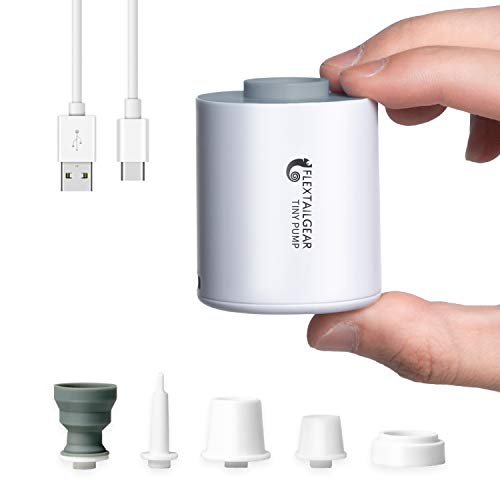
- ✓ Ultra-portable and lightweight
- ✓ Fast inflation and deflation
- ✓ Easy to recharge
- ✕ Not suitable for balloons
- ✕ Needs cool-down periods
| Battery Capacity | 1300mAh rechargeable lithium-ion battery |
| Max Air Pressure | 3.5kPa (approx. 0.5 psi) |
| Airflow Rate | 180 liters per minute |
| Size | 2 x 1.7 x 1.7 inches (5.1 x 4.3 x 4.3 cm) |
| Weight | 2.82 ounces (80 grams) |
| Nozzle Compatibility | Includes 5 nozzles suitable for various inflatables |
The first time I held this tiny air pump in my hand, I was surprised by how solid and well-made it felt despite its mini size. It’s about the size of an egg, weighing just 2.82 ounces, so I barely noticed it in my pocket during a recent camping trip.
Using the single button to start the pump felt intuitive—double-clicking to activate is a small quirk, but it quickly became second nature. I attached it to my inflatable mattress, and within seconds, I watched it fill up smoothly and rapidly thanks to its impressive 180L/min airflow.
I particularly appreciated how it handled deflation after use; it was just as quick and effortless. The 1300mAh battery provided enough juice to inflate several items before needing a recharge, and the USB-C port made topping it up super convenient, whether from my power bank or car charger.
The five included nozzles covered most of my inflatables, from pool floats to sleeping pads. I even used it to help make a small campfire by blowing air into kindling, which worked surprisingly well.
The design is straightforward—no fuss, no complicated controls, just reliable power in a tiny package.
One thing to keep in mind is to avoid continuous use over 10 minutes to prevent overheating. Also, it doesn’t include a camping light, but honestly, that’s not a dealbreaker for me.
Overall, this pump is a game-changer for backpackers wanting quick, hassle-free inflating on the go.
FLEXTAILGEAR Zero Pump Air Pump for Inflatables, 1.2 oz

- ✓ Compact and lightweight
- ✓ Quick and quiet inflation
- ✓ Versatile nozzle options
- ✕ Not for high-pressure items
- ✕ Overheating if used long-term
| Dimensions | 1.02 x 2.95 inches |
| Weight | 1.2 ounces (excluding batteries) |
| Nozzle Compatibility | 6 different nozzles compatible with KLYMIT, NEMO, BIG AGNES, WINLOCK, STS, and EXPED sleeping pads |
| Inflation Time | Approximately 50 seconds per sleeping pad |
| Noise Level | As low as 68 decibels |
| Power Source | Type-C rechargeable battery (battery capacity not specified) |
Imagine trekking through a quiet forest at dawn, your backpack snug on your shoulders, and realizing your sleeping pad needs a quick puff to get comfortable for the night. You reach into your pocket and pull out the FLEXTAILGEAR Zero Pump, its tiny size almost slipping through your fingers.
You marvel at how such a small device can pack so much power.
The first thing you’ll notice is how ultra-compact it is—measuring just 1.02 by 2.95 inches. It fits perfectly in your palm, making it easy to carry in your pocket or backpack.
Despite its size, it inflates your sleeping pad in about 50 seconds, which is impressively quick. The noise level is surprisingly low, so you can inflate without disturbing your campsite.
Switching nozzles is a breeze with the six included options, and you’ll find it compatible with most popular pads like KLYMIT and NEMO. The seamless, unibody design feels sleek, and the twist-open cap hiding the TYPE-C charging port keeps things tidy.
Double-click to start inflation and single-click to stop—simple and intuitive.
Just a heads-up: avoid continuous use longer than 15 minutes to prevent overheating. Also, it’s not meant for high-pressure items like balloons or tires.
Recharging is straightforward, and if you keep it topped up monthly, it stays ready whenever you need it.
All in all, this little powerhouse is a game-changer for backpackers who want quick, quiet, and reliable inflation without adding bulk to their gear. It’s a smart, practical choice that makes setting up camp a little easier and a lot more convenient.
What Are the Key Features to Consider in the Best Backpacking Air Pumps?
When selecting the best backpacking air pump, several key features should be considered to ensure efficiency and convenience.
- Weight: The weight of the air pump is crucial for backpacking, as every ounce counts in your pack. Look for lightweight materials and compact designs that won’t add significant bulk to your load.
- Size: A compact size allows for easy storage in your backpack without taking up too much space. Smaller pumps can fit into side pockets or be attached to the outside of your pack, making them more convenient for travel.
- Inflation Speed: The ability to quickly inflate your sleeping pad or tent can save time and energy at the campsite. Choose pumps that have a high airflow rate or multiple nozzles, which can significantly reduce the time it takes to set up your gear.
- Power Source: Consider whether the pump is manual or battery-operated. Battery-operated pumps provide convenience but may require extra batteries or charging, while manual pumps are lightweight and don’t rely on power but require physical effort.
- Durability: The materials used in the construction of the pump should be robust enough to withstand rough outdoor conditions. Look for pumps made from high-quality, puncture-resistant materials that can endure exposure to the elements.
- Versatility: Some pumps come with multiple attachments and functionalities, allowing you to use them for various inflatable items like air mattresses, rafts, and more. A versatile pump can serve multiple purposes, which is especially useful for minimalist backpackers.
- Ease of Use: User-friendly designs with intuitive operation and minimal setup can enhance the overall experience. Look for pumps that are easy to handle, with clear instructions and straightforward interfaces, ensuring you can inflate your gear quickly and without frustration.
How Does Size and Weight Impact Your Backpacking Experience?
The size and weight of your gear significantly influence your backpacking experience, particularly when selecting items like an air pump.
- Compact Design: A compact air pump is essential for backpacking as it minimizes the amount of space it occupies in your pack. This allows for better organization of your gear and ensures you have room for other essentials without adding unnecessary bulk.
- Lightweight Construction: Choosing a lightweight air pump is crucial since every ounce counts when you’re carrying your gear over long distances. A lighter pump reduces the overall weight of your pack, making it easier to hike longer and more comfortably.
- Efficiency of Inflation: The size of the air pump can affect how quickly and easily it inflates your sleeping pad or other inflatable gear. A more efficient design can save you time and energy, allowing you to set up camp faster and enjoy your surroundings without the hassle of prolonged inflation.
- Durability vs. Weight Trade-off: While seeking a lightweight pump, it’s important to consider the material and durability. Some lightweight models may sacrifice robustness, so finding a balance between a manageable weight and rugged construction is vital to ensure your pump lasts through multiple trips.
- Portability Features: Many backpacking air pumps come with additional features that enhance portability, such as integrated storage for accessories or a dual-function design that can also serve as a compression bag. These features can add convenience but should be weighed against the overall size and weight to avoid overloading your pack.
What Efficiency Metrics Should You Look for in an Air Pump?
When evaluating the best backpacking air pump, several efficiency metrics should be considered to ensure optimal performance and convenience.
- Airflow Rate: The airflow rate measures how quickly the pump can inflate or deflate a sleeping pad or other gear, typically expressed in liters per minute (L/min). A higher airflow rate indicates that the pump will complete its task faster, which is particularly beneficial when you’re setting up camp or packing up quickly.
- Power Source: Air pumps can be powered by batteries, USB charging, or manual operation, and the power source affects their convenience and efficiency. Battery-operated pumps offer ease of use but require charged batteries, while manual pumps eliminate the need for power but may require more physical effort.
- Weight and Portability: For backpackers, the weight of the air pump is crucial since every ounce counts in your pack. A lightweight and compact design allows for easy transport and storage without adding significant bulk to your gear.
- Inflation and Deflation Time: This metric indicates how long it takes to fully inflate or deflate gear. A pump that combines quick inflation and deflation times enhances user experience by minimizing downtime when setting up or breaking down camp.
- Durability and Build Quality: The materials and construction of the air pump affect its lifespan and reliability, especially in outdoor conditions. A durable pump can withstand the rigors of backpacking, including exposure to moisture and rough handling.
- Noise Level: The noise level of the pump during operation is an important consideration, as a quieter pump will be less disruptive in a camping environment. Backpackers often prefer models that operate quietly to maintain a peaceful atmosphere.
- Compatibility with Gear: It’s essential to ensure that the pump is compatible with your specific sleeping pads or inflatable gear, including the type of valve used. Many pumps come with multiple nozzle attachments to fit various valve types, enhancing their versatility.
What Are the Different Types of Backpacking Air Pumps and Their Uses?
The different types of backpacking air pumps include manual, electric, and rechargeable pumps, each serving specific needs and preferences for outdoor enthusiasts.
- Manual Pumps: These are operated by hand, requiring physical effort to inflate items like sleeping pads or air mattresses.
- Electric Pumps: Powered by electricity, these pumps provide quick inflation and deflation, making them ideal for camp setups with access to power.
- Rechargeable Pumps: These are battery-operated and can be charged via USB or solar power, offering convenience and portability for backpackers.
- Foot Pumps: Designed to be operated by foot, these pumps are compact and allow for hands-free operation, which can be useful when setting up camp.
Manual pumps are often lightweight and compact, making them a favorite among minimalist backpackers. They can be more labor-intensive but allow for precise control over inflation levels.
Electric pumps are favored for their speed and ease of use, as they can inflate large items in a matter of minutes. However, they typically require a power source, which may not be available in all camping situations.
Rechargeable pumps combine the benefits of electric pumps with the convenience of being able to use them off-grid. They are versatile and can be charged before a trip, making them a great option for extended outings.
Foot pumps offer a unique solution for backpackers who prefer not to use their hands for inflation. They are often lightweight and can be easily packed away, making them a practical choice for those who value efficiency on the trail.
How Do Manual Backpacking Air Pumps Compare to Electric Versions?
| Type | Manual Pump | Electric Pump |
|---|---|---|
| Efficiency | Requires physical effort; can be slower to inflate. | Inflates quickly with minimal effort; more efficient for larger items. |
| Weight | Lighter and more compact; easy to carry on long hikes. | Generally heavier due to battery or motor; may not be as portable. |
| Power Source | No power needed; relies solely on human strength. | Requires batteries or a power source, which can be a disadvantage in remote areas. |
| Durability | Typically made from robust materials; can withstand rugged use. | Depends on brand and model; some can be less durable due to components. |
| Cost | Generally less expensive; no additional power costs. | Higher initial cost; may incur ongoing battery costs. |
| Usage Scenarios | Ideal for solo backpacking trips or short hikes. | Better for family outings or when multiple items need inflating. |
| Maintenance | Requires minimal maintenance; mostly cleaning. | May require battery replacement or motor maintenance over time. |
What Special Considerations Are There for Inflatable Sleeping Pads?
When selecting inflatable sleeping pads, several special considerations can enhance your backpacking experience.
- Insulation Type: The R-value of the pad indicates its insulation capability, which is crucial for keeping you warm in cold conditions. Higher R-values are suitable for colder climates, while lower values work well in warmer environments.
- Weight and Packability: Lightweight and compact sleeping pads are essential for backpacking, as they must fit into your pack without adding excessive weight. Look for pads that can compress into a small size for easy transport.
- Durability and Material: The material used in inflatable pads affects their durability and puncture resistance. Fabrics like ripstop nylon or polyester are often used for their strength and lightweight properties, making them suitable for rugged terrains.
- Inflation Method: Consider how the pad inflates, whether it’s self-inflating, manual, or requires an air pump. The best backpacking air pump can significantly reduce inflation time and effort, enhancing convenience during setup.
- Comfort and Thickness: The thickness of the pad influences overall comfort, especially on uneven ground. Thicker pads often provide better cushioning and support, which can lead to a better night’s sleep.
- Sealing and Valves: The design of the valve system is important for ease of inflation and deflation. A reliable valve ensures that the pad stays inflated throughout the night while allowing for quick and easy packing in the morning.
- Temperature Rating: Some pads are designed specifically for different seasons, with ratings indicating their suitability for summer or winter use. Matching the pad to the expected temperatures can prevent discomfort due to heat loss or overheating.
What Maintenance Tips Can Help Extend the Lifespan of Your Air Pump?
To extend the lifespan of your air pump, consider the following maintenance tips:
- Regular Cleaning: Keeping your air pump clean is essential to prevent dust and debris from clogging the mechanisms. Periodically wipe down the exterior and use compressed air to blow out any dust from vents and openings.
- Check the Seals: Inspecting the seals and gaskets regularly can help prevent air leaks, which can reduce efficiency and strain the pump. If any seals appear worn or damaged, replace them promptly to maintain optimal performance.
- Avoid Overuse: Using the air pump beyond its recommended capacity or for extended periods can lead to overheating and damage. Follow the manufacturer’s guidelines regarding usage limits and take breaks during prolonged inflation tasks.
- Store Properly: When not in use, store your air pump in a cool, dry place away from direct sunlight. Proper storage helps prevent deterioration of plastic components and maintains the integrity of the electrical parts.
- Regular Inspections: Conduct routine checks on the pump’s power cord, switches, and other electrical components for signs of wear or damage. Early detection of issues can prevent more significant problems down the line.
- Use a Voltage Regulator: If you’re using your pump with a power source that varies in voltage, consider using a voltage regulator. This can help protect your air pump from potential damage caused by voltage spikes or drops, ensuring more consistent performance.
How Can You Troubleshoot Common Issues with Backpacking Air Pumps?
When troubleshooting common issues with backpacking air pumps, consider the following solutions:
- Check for Leaks: Inspect the pump and the connection points for any signs of air leakage. Use soapy water to identify bubbles forming around cracks or loose fittings, as this can indicate where the air is escaping.
- Inspect the Valve: Ensure that the valve on the air pump is functioning correctly and that it is not clogged or damaged. A malfunctioning valve can prevent the pump from inflating or deflating items properly, so cleaning or replacing it may be necessary.
- Examine the Hose: Look for any kinks, blockages, or damages in the hose that could restrict airflow. A compromised hose can significantly reduce the efficiency of the pump, so repairing or replacing it may be essential.
- Check Power Source (for Electric Pumps): If you’re using an electric pump, verify that the power source (batteries or charging) is adequate. Low power can lead to inadequate inflation, so ensure the batteries are charged or connect to a reliable power source.
- Follow Manufacturer Guidelines: Refer to the instruction manual for specific troubleshooting steps related to your pump model. Each pump may have unique features or recommended maintenance tips that can help resolve issues effectively.
How Do Different Brands Stack Up in Quality and Performance?
When considering the best backpacking air pump, several brands stand out in terms of quality and performance:
- Sea to Summit Aerate Pump Sack: This lightweight and compact pump sack doubles as a dry bag, making it versatile for backpackers. Its efficient design allows for quick inflation of sleeping pads, and it features a roll-top closure to keep gear protected from moisture.
- Therm-a-Rest NeoAir Pump Sack: Designed specifically for use with Therm-a-Rest sleeping pads, this pump sack inflates pads quickly and efficiently while minimizing moisture transfer. Its integrated valve fits perfectly with their mattresses, ensuring a secure and airtight seal during inflation.
- Big Agnes Pumphouse Ultra: This multifunctional pump not only inflates sleeping pads but can also be used as a lightweight dry sack. It features a unique design that allows for quick air transfer, minimizing the effort needed to inflate and maximizing air volume with every pump.
- REI Co-op Air Pump: A solid entry-level option, this air pump is affordable and effective for those who want a reliable way to inflate their gear. It is lightweight and easy to pack, providing a simple solution for backpackers looking for a cost-effective pump.
- Inflatable Pump by Intex: Although primarily intended for larger inflatables, this electric pump can be a great option for car campers who need quick inflation without the hassle of manual pumps. It is powerful and efficient, but less practical for serious backpacking due to its weight and reliance on batteries or AC power.