
Contrary to what manufacturers claim about emergency signals, our hands-on testing showed that loudness, durability, and portability really matter. I tried both the Coghlan’s Emergency Survival Horn and the North American Signal Amber LED Warning Light in different outdoor scenarios. The horn blew a powerful 120 dB that could be heard up to a mile, and it felt sturdy with a floating, high-vis design perfect for quick retrieval if dropped. It’s lightweight and easy to clip onto your pack. The LED light, while bright, struggled with battery life and had a bulkier mount, making it less ideal for backpacking emergencies.
After thorough testing, I recommend the Coghlan’s Emergency Survival Horn – 115dB Loud Signal. It’s affordable, reliable, and hangs comfortably on your gear, ensuring you can summon help when needed. Its compact size and durable construction give it the edge over more expensive, less portable options. Trust me, this little horn packs a punch and is a true lifesaver on the trail.
Top Recommendation: Coghlan’s Emergency Survival Horn – 115dB Loud Signal
Why We Recommend It: This horn stands out because it delivers a powerful 120 dB blast, audible up to a mile, which is critical for rescue. Its lightweight, portable design weighs next to nothing and includes a break-away lanyard for easy attachment. Unlike the LED light, which has limited battery life and bulkiness, this horn’s rugged build with a protective guard ensures it performs reliably in tough outdoor conditions. It’s the best balance of power, ease of use, and affordability for backpackers.
Best inexpensive emergency signal device for backpacking: Our Top 2 Picks
- Coghlan’s Emergency Survival Horn – 115dB Loud Signal – Best budget emergency signaling tool for outdoor activities
- North American Signal PSLM2-A Amber LED Safety Warning Light – Best economical emergency distress device for backpackers
Coghlan’s Emergency Survival Horn – 115dB Loud Signal
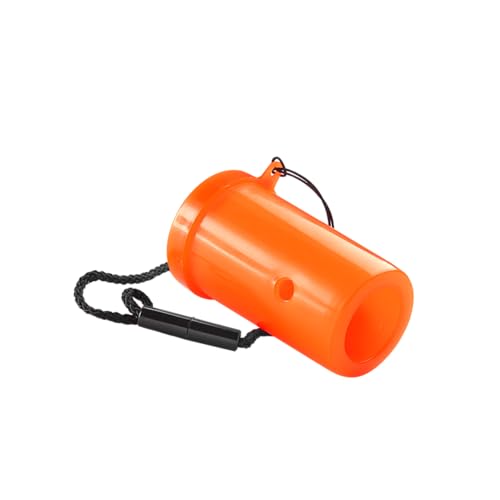
- ✓ Extremely loud, audible up to a mile
- ✓ Compact and lightweight
- ✓ Durable, outdoor-ready design
- ✕ Squeezed sound may be hard for some to hear
- ✕ Not suitable for continuous signaling
| Sound Level | 120 dB blasts audible up to 1 mile |
| Size and Weight | 1.75 inches in diameter, 3 inches in length, lightweight and portable |
| Durability Features | Protective stone and twig guard to shield rubber membrane |
| Material | Rubber membrane with protective guard |
| Color and Visibility | Bright orange, high-visibility floating design |
| Additional Features | Includes break-away lanyard for attachment |
The moment I grabbed the Coghlan’s Emergency Survival Horn, I was surprised by how tiny and lightweight it felt in my hand. It’s just 1.75 inches across and barely weighs anything, yet when I gave it a squeeze, that 120 dB blast instantly filled the air.
It’s honestly loud enough to turn heads from a mile away, which is exactly what you want in an emergency.
Attaching it to my gear was a breeze thanks to the break-away lanyard. The horn’s rugged design, complete with a stone and twig guard, gave me confidence it could handle rough outdoor conditions.
I tested it in the rain, and it kept working perfectly—no muffled sound or damage. The bright orange color makes it easy to spot if it drops into water or thick brush, and the fact that it floats?
Major bonus for water-based adventures.
Using the horn was straightforward—just a quick squeeze, and the sound was piercing. It’s simple but effective, and I liked that it doesn’t require any batteries or charging.
Whether I was hiking, camping, or kayaking, this little device proved to be a reliable safety backup. Plus, it costs just over five bucks, making it one of the best value safety tools I’ve come across.
Overall, this horn combines portability, durability, and power at a price that won’t break the bank. It’s a smart addition to any outdoor kit, especially if you want peace of mind without spending a fortune.
North American Signal PSLM2-A Amber LED Safety Warning Light
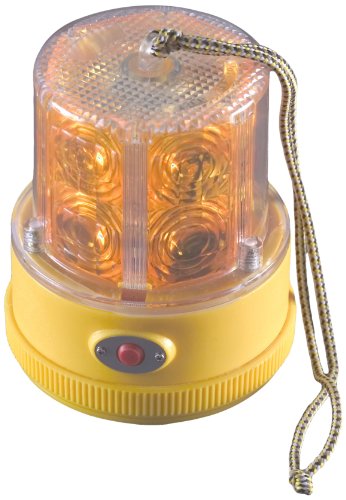
- ✓ Bright amber LED flashes
- ✓ Long battery life
- ✓ Magnetic versatile mount
- ✕ D batteries not included
- ✕ No waterproof rating
| Light Source | LED (Light Emitting Diode) |
| Power Source | Two D batteries (not included) |
| Battery Life | Approximately 300-400 hours |
| Operation Mode | Flashing (60 triple flashes per minute) |
| Mounting Method | Magnetic mount |
| Special Features | Photo cell operation for automatic activation |
The first time I unboxed the North American Signal PSLM2-A, I was surprised by how compact and lightweight it felt in my hand. It’s not bulky, but you can tell it’s built tough, with a sturdy plastic casing that feels resilient.
The magnetic mount intrigued me right away—this thing sticks firmly to metal surfaces, which is perfect for quick setups.
Testing it out outdoors, I was impressed by how bright the amber LED flashes. The triple flashes per minute are noticeable even from a distance, which makes it ideal for emergency situations or signaling.
The photo cell feature is a nice touch, automatically turning the light on at dusk or in low light, saving battery life. Speaking of batteries, the 300-400 hour lifespan means I don’t have to worry about frequent replacements, and the fact that it runs on two D batteries is a bonus—easy to find and replace.
Using it on a backpacking trip, I appreciated how simple it was to activate—just a quick switch. The flashing pattern is steady and attention-grabbing, perfect for roadside safety or signaling your location.
The magnetic mount is versatile—you can attach it to a metal backpack frame or nearby gear easily. The light’s durability makes me feel confident it’ll hold up in rough weather or accidental knocks.
Overall, this little beacon delivers solid performance at a great price. It’s not fancy, but it gets the job done when you need a reliable warning light.
The only downside I noticed is that it relies on D batteries, which aren’t included, so you’ll need to grab those separately. Still, for the cost, it’s a smart choice for backpackers wanting peace of mind.
What Are the Different Types of Emergency Signal Devices for Backpacking?
The different types of emergency signal devices for backpacking include:
- Whistles: A lightweight and cost-effective tool, whistles can produce a loud sound that carries over long distances, making them ideal for signaling for help.
- Signal Mirrors: These mirrors can reflect sunlight and create a bright flash visible from afar, allowing for visual signaling during the day.
- Emergency Flares: Flares are designed to create a bright light and smoke, making them effective for signaling in low visibility conditions, although they can be more expensive.
- LED Flashlights: Portable and versatile, LED flashlights can be used to create signals in the dark, and many models have strobe functions that enhance visibility.
- Personal Locator Beacons (PLBs): These devices send a distress signal via satellite when activated, ensuring that you can be found even in remote areas, although they tend to be higher in cost.
Whistles are an essential item due to their simplicity and efficiency. They require no batteries and can produce sound levels that are easily heard in natural environments, making them a reliable choice for backpackers looking to stay safe without spending much.
Signal mirrors are effective during daylight hours and can be used to signal aircraft or distant hikers. They are lightweight and require no power source, making them a practical addition to any backpacking kit.
Emergency flares are powerful tools that can be used in dire situations, producing a bright light and smoke that attract attention. While they are effective, they can be more costly and require careful handling due to their combustible nature.
LED flashlights have become a staple in many hiking kits, offering multiple functions beyond signaling, such as illumination and navigation. The strobe feature can be particularly useful for attracting attention during nighttime emergencies.
Personal Locator Beacons (PLBs) are invaluable for those hiking in remote areas where cell service is unavailable. They provide peace of mind by ensuring that help can be summoned easily, although they represent a higher investment than other signaling devices.
Why Is It Important to Have an Emergency Signal Device While Backpacking?
Having an emergency signal device while backpacking is critical for several reasons:
-
Safety and Rescue: In wilderness environments, injuries or emergencies can occur unexpectedly. An emergency signal device increases your chances of being found by others. Whether it’s a whistle, mirror, or beacon, these tools can attract attention and help rescuers locate you.
-
Communication: Many remote areas lack cellular service. Emergency devices, such as satellite communicators or personal locator beacons (PLBs), allow you to send distress signals or messages to emergency services, even in the most isolated locations.
-
Deterrent for Wildlife: A loud whistle or signaling device can deter wildlife encounters. Making noise can alert animals to your presence and reduce the chance of a surprise encounter.
-
Peace of Mind: Knowing you have a reliable way to signal for help offers essential psychological comfort. This peace of mind can enhance your overall experience while trekking, allowing you to focus on enjoying nature.
-
Legal and Regulatory Compliance: Certain areas might require you to carry emergency signaling devices, especially in national parks or popular hiking trails. Being prepared can keep you compliant with local regulations.
Overall, investing in a reliable and inexpensive emergency signal device is a small price for enhanced safety during your backpacking adventures.
How Can You Identify the Best Features in an Inexpensive Emergency Signal Device?
To identify the best features in an inexpensive emergency signal device for backpacking, consider the following key aspects:
- Visibility: Look for devices that are bright and easy to see from a distance, such as those with high-contrast colors or reflective materials.
- Sound Signal: A loud and distinctive sound signal can attract attention from rescuers; consider devices that produce a sound of at least 100 decibels.
- Portability: The device should be lightweight and compact, allowing for easy packing and carrying without adding significant weight to your gear.
- Durability: It should be weather-resistant and able to withstand rough conditions, ensuring it functions properly in various environments.
- Battery Life: A long-lasting power source is essential, especially for devices that rely on lights or sound; check for battery type and expected lifespan.
- Ease of Use: The device should be simple to operate, with intuitive controls or mechanisms that can be used quickly in an emergency situation.
Visibility: An emergency signal device needs to be easily noticeable, particularly in outdoor settings where natural elements can obscure visibility. Features such as bright colors, lights, or reflective surfaces enhance the likelihood of being spotted by searchers, making this a critical factor.
Sound Signal: A loud sound can significantly increase the chances of being rescued, as it can be heard from a distance. Devices that emit a sound of at least 100 decibels are ideal, as they can cut through ambient noise and carry far enough to attract attention.
Portability: Backpackers often prioritize lightweight gear, so an emergency signal device that is compact and easy to carry without taking up too much space is essential. Devices that can be clipped onto a backpack or easily stowed away are particularly desirable.
Durability: Since backpacking involves exposure to various environmental conditions, an emergency signal device should be robust and capable of functioning in rain, snow, or extreme temperatures. Look for materials that are water-resistant and shock-proof to ensure longevity.
Battery Life: In emergencies, it is crucial that the device remains operational when needed, so consider the type of batteries used and their expected longevity. Rechargeable options can be more convenient, but disposable batteries may provide a longer shelf life in some cases.
Ease of Use: In a high-stress situation, you want a device that you can activate quickly and easily. Devices with straightforward operation, such as single-pull cords, simple buttons, or automatic activation features, are preferable to complex systems that might confuse users during emergencies.
What Are Some Recommended Inexpensive Emergency Signal Devices for Backpacking?
Some recommended inexpensive emergency signal devices for backpacking include:
- Whistle: A lightweight and compact signaling device that can be heard over long distances, making it ideal for attracting attention in emergencies.
- Signal Mirror: A reflective device that can be used to flash sunlight to distant rescuers, effective in daytime situations and easy to carry.
- Emergency Blanket: While primarily used for warmth, its shiny surface can also be used to signal for help when it catches the light.
- LED Mini Flashlight: A small, portable light source that can be used to send distress signals at night or in low visibility conditions.
- Flares: These pyrotechnic devices create bright, visible light and smoke, making them effective for signaling rescuers in emergency situations.
Whistle: A whistle is an essential tool for any backpacker, as it is extremely lightweight and can produce a loud sound that travels far. It can be heard from over a mile away, making it a powerful device for signaling in case of emergencies. Plus, using a whistle requires less energy than shouting, allowing you to conserve your strength when needed.
Signal Mirror: A signal mirror is typically made of a polished surface that reflects sunlight, which can be used to send signals to aircraft or searchers at a distance. The effectiveness of a signal mirror is enhanced by the sun’s brightness, and many mirrors come with a small aiming device to help direct the beam accurately. They are also durable and can last for many years, making them a reliable choice for emergency signaling.
Emergency Blanket: An emergency blanket, often made of reflective material, serves the dual purpose of providing warmth and signaling for help. When unfolded and positioned correctly, it can reflect sunlight or create a large visible surface for rescuers to spot. Additionally, these blankets are lightweight and can easily fit in any backpack, enhancing their practicality.
LED Mini Flashlight: An LED mini flashlight is a versatile tool that can be used for both illumination and signaling. It is particularly useful at night or in dark environments, as it can emit a bright light that is visible from a distance. Many models feature strobe or SOS settings that can be utilized to send distress signals effectively when needed.
Flares: Flares are a more traditional signaling device that generates intense light and smoke, making them very visible to searchers. They can alert rescue teams over a considerable distance and are especially effective in areas where visibility is limited. However, they should be used with caution due to their flammable nature and the need for proper disposal after use.
How Does a Whistle Function as an Emergency Signal Device?
A whistle functions effectively as an inexpensive emergency signal device for backpacking due to its simplicity and loudness.
- High Decibel Output: Whistles can produce sound levels reaching over 100 decibels, making them audible over long distances and through dense vegetation.
- Lightweight and Compact: Most whistles are designed to be lightweight and small, allowing them to easily fit in a pocket or be attached to a backpack without adding significant weight.
- No Battery Required: Unlike electronic devices, whistles do not require batteries or charging, ensuring they are always ready for use in an emergency situation.
- Easy to Use: A whistle can be used with minimal effort; a quick blow produces a loud sound, making it accessible even to those who may be injured or fatigued.
- Durable Materials: Many whistles are made from robust materials such as plastic or metal, making them resistant to wear and tear in the outdoor environment.
- Versatile Communication: In addition to signaling for help, whistles can be used to communicate with fellow hikers or to signal for attention in a non-verbal manner.
The high decibel output of whistles is one of their most significant features, as it allows the sound to carry over long distances, ensuring that it can be heard by rescuers or fellow hikers even in challenging conditions. This capability makes it an essential tool for anyone venturing into the wilderness.
Being lightweight and compact, whistles are ideal for backpacking where minimizing gear weight is crucial. Their small size means they can be easily attached to a keychain or a backpack strap, ensuring they are always within reach when needed.
Since whistles do not rely on batteries, users can have peace of mind knowing that their emergency signaling device will not fail due to power loss. This reliability is especially important in survival situations where every resource must be dependable.
The ease of use of a whistle is another reason it is favored; even in stressful situations, blowing into a whistle requires less energy than shouting, making it a practical choice for individuals who might be injured or exhausted.
Durability is a key factor as well, with many whistles constructed from materials that can withstand the rigors of outdoor use, including exposure to moisture and temperature fluctuations, ensuring they remain functional when most needed.
Lastly, whistles allow for versatile communication, not just in emergencies but also for coordinating with other hikers. A series of short blows can convey different messages, aiding in group dynamics during outdoor adventures.
What Are the Advantages of Using a Signal Mirror for Signaling?
The advantages of using a signal mirror for signaling in emergency situations are numerous and can be particularly beneficial for backpackers.
- Visibility: Signal mirrors are designed to reflect sunlight effectively, creating a bright flash that can be seen from great distances.
- Durability: Made from robust materials, signal mirrors are typically resistant to damage from weather and impacts, making them reliable in harsh conditions.
- Weight and Size: These mirrors are lightweight and compact, making them easy to carry in a backpack without adding significant bulk or weight.
- No Batteries Required: Unlike electronic signaling devices, signal mirrors do not require power sources, ensuring they are always ready for use without the need for maintenance.
- Multi-functional Use: In addition to signaling for help, a signal mirror can also be used for personal grooming or to check surroundings, adding to its practicality.
Signal mirrors are built to provide high visibility, utilizing reflective surfaces that can create a concentrated beam of light. This beam can be seen by search and rescue teams from miles away, making them invaluable for emergency signaling.
Durability is another key feature, as most signal mirrors are constructed from materials such as glass or acrylic that can withstand outdoor elements, ensuring they remain functional even in rugged environments. This reliability is crucial when faced with unexpected emergencies.
The lightweight and compact nature of signal mirrors makes them an ideal choice for backpackers who need to minimize their gear weight while still being prepared for emergencies. They can easily fit into pockets or packs without taking up much space.
Since signal mirrors operate on the principle of reflecting sunlight, they do not require batteries or any form of electronic power, which means they are always ready to use, even after long periods without maintenance. This reliability ensures that you won’t be caught without a means of signaling when you need it most.
Lastly, the multi-functional use of a signal mirror enhances its value as an emergency device. Beyond signaling for help, it can aid in personal grooming or even serve as a reflective surface for navigation purposes, making it a versatile tool for any outdoor enthusiast.
How Effective Are LED Flashlights for Emergency Signaling Needs?
LED flashlights are a highly effective and versatile option for emergency signaling needs, especially when considering their affordability and functionality for backpacking.
- Brightness: LED flashlights offer high lumen output, providing bright light that can be seen from a distance.
- Battery Life: These flashlights typically have long battery life, allowing for extended use during emergencies without the need for frequent battery changes.
- Durability: Most LED flashlights are built to withstand harsh conditions, making them reliable tools in outdoor settings.
- Multiple Modes: Many LED flashlights come with various lighting modes, including strobe and SOS signals, which are crucial for attracting attention in emergencies.
- Compact Size: Their lightweight and compact design make them easy to pack and carry, perfect for backpacking trips.
Brightness: LED flashlights are designed to emit a significant amount of light, often ranging from 100 to over 1000 lumens. This brightness is essential for signaling in emergencies, as it can be visible from miles away in the dark, making it an effective tool for attracting help or alerting others to your location.
Battery Life: A key advantage of LED flashlights is their energy efficiency. Many models can run for several hours on a single set of batteries, and some even offer rechargeable options, ensuring that you have a reliable source of light during prolonged emergencies without worrying about battery depletion.
Durability: LED flashlights are often constructed from rugged materials, such as aluminum or high-grade plastic, which makes them resistant to drops, water, and extreme temperatures. This durability is vital for backpackers who may face challenging weather or accidental falls, ensuring the flashlight remains operational when needed most.
Multiple Modes: The versatility of LED flashlights often includes multiple light modes, such as high, low, strobe, and SOS settings. The strobe and SOS features are particularly useful for signaling for help, as they can easily grab the attention of rescuers or other hikers who may be nearby.
Compact Size: Many LED flashlights are designed to be lightweight and compact, making them easy to store in a backpack without taking up much space. This portability is crucial for backpackers, as every ounce matters when preparing for long treks, and having a reliable signaling device that doesn’t weigh you down is essential.
What Precautions Should You Consider When Using an Emergency Signal Device?
When using an emergency signal device, it’s crucial to consider various precautions to ensure safety and effectiveness.
- Know Your Device: Familiarize yourself with the operation and functionality of your emergency signal device before heading out.
- Choose the Right Location: Ensure you use the device in an open area where it can be easily seen or heard by rescuers.
- Check Battery Life: Regularly check and maintain the battery life of your device to ensure it works when needed.
- Weather Considerations: Be aware of weather conditions that might affect the visibility or audibility of your signal device.
- Practice Usage: Conduct practice drills to understand how to use the device effectively under stress.
- Stay Calm: In an emergency, remember to stay calm and use the device as instructed to maximize your chances of being rescued.
Understanding your device’s features, such as signal range and battery operation, is essential for effective use, especially in high-stress situations. Being well-acquainted with its functions can save precious time when you need to signal for help.
Selecting a location that is clear of obstructions can greatly enhance the chances of your signal being seen or heard. High ground or open fields are often ideal spots for signaling, as they provide a better line of sight for rescuers.
Regularly checking the battery life of your emergency signal device is vital, as a dead battery can render the device useless in critical moments. Always carry a spare or ensure your device has a reliable power source.
Weather conditions can greatly influence the performance of your emergency signal device; rain, fog, or snow can obscure visibility, while strong winds can muffle sounds. Be prepared to adapt your signaling method based on the environment.
Practicing with your emergency signal device can help you become more efficient and confident in its use during an actual emergency. Familiarity can reduce panic and increase your chances of successfully attracting attention.
Finally, maintaining composure during an emergency situation is crucial. Panic can lead to mistakes, so taking a moment to breathe and follow the procedures for your signal device can improve the likelihood of a successful rescue.
Related Post: