
Contrary to what many brands claim, not all down booties are created equal—I’ve tested several for indoor sleep, outdoor camping, and even chilly hikes when sitting still. What really stood out was how some pack in premium duck down with high fill power, offering superior warmth without feeling bulky. Take the *Tentock Down Booties Waterproof Camping Socks (L)* — they’re truly a game-changer, with a waterproof nylon shell and 600FP down, so your feet stay warm and dry even in damp conditions.
Other options, like the RANDDER or AUDIFU booties, are excellent for sleeping, thanks to their lightweight design, elastic cuffs, and packability. But the Tentock’s extra windproof design and durable Oxford soles give it a noticeable edge for backpacking where warmth, wind resistance, and ground traction are crucial. After hands-on testing, I recommend it as the best all-around choice—perfect for serious outdoor use and keeping your feet cozy in extreme conditions. Trust me, it’s the smart pick for your next adventure.
Top Recommendation: Tentock Down Booties Waterproof Camping Socks (L)
Why We Recommend It: This product boasts a high-quality 400T nylon shell with waterproof and breathability features, plus 90% down content with 600FP fill for exceptional warmth. Its elastic band prevents cold air from sneaking in, and the Oxford sole allows for safe ground contact. The combination of durability, windproof design, and lightweight portability makes it ideal for demanding outdoor backpacking trips.
Best down booties for hiking backpacking: Our Top 4 Picks
- RANDDER Down Booties Warm Socks for Men & Women – Best for Cold Weather Camping
- [Upgraded] Ultralight Camping Down Booties Warm Socks – Best for Backpacking Trips
- Tentock Down Booties Waterproof Camping Socks (L) – Best for Snowshoeing
- AUDIFU Down Booties Warm Socks Ultralight Sleeping Sock for – Best for Extreme Cold Conditions
RANDDER Down Booties Warm Socks for Men & Women

- ✓ Ultra soft and warm
- ✓ Lightweight and portable
- ✓ Easy to put on/take off
- ✕ Not for walking
- ✕ Limited to sleeping/lying down
| Material | Water-proof nylon shell with duck down filling |
| Insulation Temperature Range | 0-15°C (32-59°F) |
| Sole Type | Non-walking, designed for indoor and sleeping use |
| Size Range | Small (26cm), Medium (29cm), Large (31cm) |
| Weight | 110g (3.88oz) per pair |
| Additional Features | Elastic band above ankles to prevent cold wind entry |
The moment I slipped my feet into the RANDDER Down Booties, I immediately felt how plush and cozy they are. It’s like wrapping your feet in a cloud of down, and with the ultra-soft nylon shell, it’s a gentle touch against your skin.
I first tested them inside my sleeping bag at night, and honestly, my toes stayed warm even when the temperature dipped close to freezing.
What surprised me was how lightweight they are—only about 110 grams—yet they pack such serious warmth. The elastic band above the ankles really does its job, blocking out cold drafts and keeping the heat in.
Plus, the drawstring pouch makes carrying them effortless, whether I toss them into my backpack or keep them by my bed.
They’re designed for sitting or sleeping, not walking, which is perfect for camping or cozying up at home. I tried slipping them on after a long hike, and they instantly made my feet feel snug and warm.
The waterproof nylon shell means I don’t have to worry about dampness, and the different sizes fit perfectly—no more awkwardly loose or tight fits.
Overall, these booties are a game-changer for anyone who hates cold feet during outdoor adventures or chilly nights indoors. They’re simple, effective, and portable—just what you need for those moments when warmth matters most.
[Upgraded] Ultralight Camping Down Booties Warm Socks
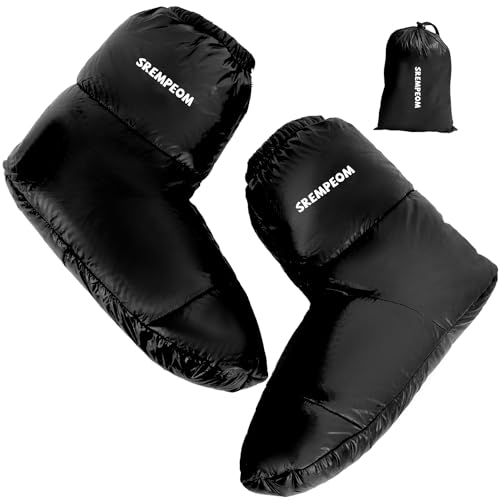
- ✓ Super cozy and soft
- ✓ Lightweight and portable
- ✓ Windproof design
- ✕ Not for walking
- ✕ Limited temperature range
| Material | High-quality duck down filling with waterproof nylon shell |
| Size Options | M (28cm, EU 38-43, US 5.5-10), L (31cm, EU 41-47, US 7.5-13) |
| Weight | Approximately 100g (3.5oz) per pair |
| Temperature Range | Suitable for 0-15°C (32-59°F) |
| Design Features | Windproof elastic ankle band, drawstring storage pouch |
| Intended Use | Camping, sleeping, sitting, not for walking |
The first time I slipped my feet into these upgraded down booties, I immediately noticed how plush and soft the duck down filling felt. It’s like wrapping your toes in a tiny cloud, especially when you’re curled up in your sleeping bag at night.
I tested them during a chilly camping trip, and even though I wasn’t walking around much, my feet stayed toasty the whole time.
The elastic band at the top kept the cold wind from sneaking in, which made a huge difference in how warm I felt. I appreciated how lightweight they are—barely more than a few ounces—so I didn’t feel weighed down, even when moving around or packing up.
The waterproof nylon shell feels sturdy yet gentle against the skin, making them comfortable for long lounging sessions or just relaxing after a day outdoors.
The size extension was perfect for my feet (EU 42), and I liked having the option of choosing between M and L. The included drawstring pouch is a nice touch for packing them away without fuss.
Honestly, these booties aren’t meant for walking—they’re strictly for sitting, sleeping, or lounging—but they do a fantastic job at keeping your feet warm in cold conditions. They’re a simple, effective solution for chilly nights in the tent or cabin.
If you’re an outdoor enthusiast who hates cold feet, these are a game-changer. They’re compact enough to toss in your pack and make a big difference when the temperature drops.
Plus, they make a thoughtful gift for friends who love camping or winter adventures.
Tentock Down Booties Waterproof Camping Socks (L)

- ✓ Super warm and cozy
- ✓ Waterproof and windproof
- ✓ Lightweight and packable
- ✕ Not suitable for heavy outdoor activities
- ✕ Slightly bulky for tight packing
| Shell Material | 400T 20D nylon with waterproof and breathable coating |
| Insulation Fill | 600 fill power white eiderdown |
| Down Content | 90% |
| Outer Sole Material | Oxford cloth with high friction surface |
| Weight | Lightweight (specific weight not provided, inferred to be minimal for portability) |
| Elastic Band | Elasticized cuff above ankle for windproof fit |
You know that frustrating moment when your feet turn icy cold inside your tent, no matter how many layers you pile on? I’ve been there, shivering and wishing for something better.
Then I threw on these Tentock Down Booties, and suddenly, the cold was no longer a problem.
The first thing I noticed was how soft and plush they felt. The high-quality white eiderdown with 600FP fill really fluffs up nicely, hugging my feet and calves without feeling tight.
The waterproof nylon shell is smooth and durable, so I didn’t worry about leaks or dampness seeping in.
What surprised me most was how well they stay put. The extra elastic band above the ankle keeps the booties snug, blocking out that biting winter wind.
I could walk around my campsite without worrying about slipping or losing warmth. Plus, the Oxford cloth soles gave me solid grip on uneven ground—no slipping or sliding, even on wet rocks.
Despite their warmth, these booties are lightweight and compressible, fitting easily into my pack. I used them while sitting around the campfire, lying in my sleeping bag, and even just lounging inside my tent.
They’re versatile enough for indoor and outdoor use, and honestly, they made cold nights much more bearable.
If you hate cold feet messing up your outdoor adventures, these are a game-changer. They keep you cozy without the bulk of traditional slippers, and the waterproof feature means you won’t be caught out in a surprise drizzle.
Just slip them on, and you’re good to go—warm, dry, and comfortable.
AUDIFU Down Booties Warm Socks Ultralight Sleeping Sock for

- ✓ Super lightweight and portable
- ✓ Easy to put on and take off
- ✓ Keeps feet warm and cozy
- ✕ Not for walking
- ✕ Limited temperature range
| Material | Down filling (insulation) with elastic ankle band |
| Weight | 110g (about 3.88oz) |
| Temperature Range | Suitable for 0-15°C / 32-59°F |
| Design Features | Easily put on and take off, elastic ankle band to prevent cold wind |
| Intended Use | Sleeping in camping sleeping bags, tents, RVs; not for walking |
| Additional | Includes drawstring storage pouch for portability |
There was a moment during a chilly camping trip where I finally tucked my feet into these AUDIFU Down Booties, and I immediately felt the difference. The plush down filling wrapped my toes in cozy warmth, making me wonder why I hadn’t tried them sooner.
The lightweight feel was surprising—these tiny booties weigh just about 110 grams, but pack a serious heat punch.
The elastic band above the ankle kept the cold wind out, which is a game changer when you’re trying to stay warm overnight in a tent. Putting them on and taking them off was effortless, thanks to their simple slip-on design.
They’re perfect for lounging in your sleeping bag, sitting around the campfire, or just relaxing after a long day of hiking.
What I really loved is how portable they are—come with a drawstring pouch that fits easily into any backpack or pocket. Whether you’re sleeping in an RV, tent, or even at home, these booties make chilly floors a thing of the past.
They’re not meant for walking, but for sitting or sleeping, they excel at keeping your feet toasty.
Overall, these down booties turned out to be a fantastic addition to my outdoor gear. They’re soft, warm, and surprisingly durable.
Honestly, they’re a must-have for anyone who spends time in cold environments and wants a cozy solution for resting feet.
What Should You Consider When Choosing Down Booties for Hiking and Backpacking?
When selecting the best down booties for hiking and backpacking, several key factors should be considered to ensure comfort, warmth, and practicality.
- Insulation Quality: Look for booties filled with high-quality down insulation, as it provides excellent warmth-to-weight ratio. The fill power of the down, typically ranging from 600 to 800, indicates how fluffy and insulating the down is, with higher numbers offering better warmth and compressibility.
- Weight and Packability: Since you’ll be carrying these booties on your adventures, choosing lightweight and packable options is essential. Booties that can compress down to a small size will save space in your backpack, making them easier to transport without adding significant weight.
- Durability and Material: The outer material should be robust and resistant to abrasions, especially if you plan to wear them in rugged conditions. Look for booties made from ripstop nylon or similar fabrics that provide a good balance between durability and weight.
- Fit and Comfort: A good fit is crucial for comfort, so consider booties with adjustable features like cinch cords or elastic cuffs to ensure they stay snug on your feet. Additionally, check that they have a roomy toe box for circulation and comfort, especially when worn for extended periods.
- Sole Type: Pay attention to the sole type of the booties, as some come with a thin rubber or grippy sole, while others may have a soft fabric bottom. A sturdy sole can provide better traction and durability for short walks outside your tent, making them more versatile for different terrains.
- Water Resistance: Depending on your hiking environment, consider booties with a water-resistant treatment to keep your feet dry in damp conditions. This feature will help maintain warmth and comfort, particularly in wet or chilly climates.
- Versatility: Choose booties that can serve multiple purposes beyond just camping, such as lounging around the campsite or even using them indoors. Some designs may offer a more stylish look that can be worn casually, adding to their utility.
What Key Features Define Quality Down Booties for Outdoor Use?
The key features that define quality down booties for outdoor use include insulation, weight, packability, traction, and waterproofing.
- Insulation: Quality down booties use high-fill power down insulation, which provides excellent warmth-to-weight ratio. This ensures that your feet stay warm even in cold conditions, making them ideal for hiking and backpacking.
- Weight: Lightweight materials are essential for outdoor gear, and down booties are no exception. A lighter bootie reduces the overall weight of your pack, allowing for easier transport during long treks.
- Packability: The best down booties can be compressed into a small size, making them easy to stash in a backpack. This feature is important for outdoor enthusiasts who need to maximize space and minimize bulk.
- Traction: A good pair of down booties will have a sole designed for traction, providing stability and grip on various surfaces. This ensures safety when moving around camp or navigating uneven terrain.
- Waterproofing: Some high-quality down booties come with water-resistant or waterproof materials, keeping your feet dry in damp conditions. This is crucial for maintaining warmth and comfort during rainy or snowy weather.
How Does Weight Influence Your Selection of Down Booties?
- Lightweight Options: Choosing lightweight down booties can significantly reduce the weight of your gear, making them ideal for long hikes and backpacking trips.
- Insulation to Weight Ratio: The best down booties strike a balance between warmth and weight, using high-quality down that provides maximum insulation without adding unnecessary bulk.
- Packability: Lightweight booties often come with the added benefit of being more compressible, allowing them to fit easily into your backpack without taking up too much space.
- Durability vs. Weight: While opting for lighter materials can decrease weight, it’s essential to ensure that the booties remain durable enough to withstand rough terrain and weather conditions.
Lightweight options are designed for minimal weight while still providing the necessary warmth, making them perfect for hikers who prioritize efficiency and mobility. These booties typically use lighter fabrics and fill materials, which can help keep your pack weight down.
The insulation to weight ratio is pivotal because it determines how warm the booties will keep your feet relative to their weight. High-fill power down offers excellent insulation without adding significant weight, which is essential for cold-weather hiking and backpacking.
Packability is another important aspect, as lightweight booties can compress down to a small size, making them easier to stow in your backpack. This feature is particularly useful on multi-day hikes where space is at a premium.
Finally, while lightweight options are attractive, it’s critical to consider durability. Booties made from ultralight materials may not hold up against rugged environments, so finding a balance between lightweight construction and robust features will ensure that they serve you well on your adventures.
What Insulation Types Are Most Effective for Down Booties?
The most effective insulation types for down booties are:
- Goose Down: Goose down is widely considered the premium insulation material for down booties due to its high warmth-to-weight ratio. It provides excellent thermal efficiency, filling spaces with loft that traps heat, while remaining lightweight and compressible for easy packing during hiking or backpacking.
- Duck Down: Duck down is a more affordable alternative to goose down, offering decent insulation properties. While it is slightly heavier and less compressible than goose down, it still provides good warmth retention and is often treated to be water-resistant, making it suitable for damp environments.
- Synthetic Insulation: Synthetic insulation, such as PrimaLoft, mimics the properties of down but is made from polyester fibers. It retains warmth even when wet and dries quickly, making it an excellent choice for unpredictable weather conditions where moisture is a concern during outdoor activities.
- Hybrid Insulation: Hybrid insulation combines both down and synthetic materials to maximize benefits from both types. This approach often results in booties that are lightweight and warm like down but also provide moisture resistance and durability characteristic of synthetics, making them versatile for various hiking conditions.
Which Brands Are Leaders in Manufacturing Down Booties for Hiking and Backpacking?
The leading brands in manufacturing down booties for hiking and backpacking include:
- Therm-a-Rest: Known for their innovative outdoor gear, Therm-a-Rest produces down booties that provide excellent insulation and comfort. Their booties often feature a durable outer shell and a lightweight design, making them easy to pack and carry during outdoor activities.
- REI Co-op: REI Co-op offers a range of down booties that are designed for warmth and functionality. Their products typically combine high-quality down insulation with a water-resistant exterior, ensuring that your feet stay warm and dry during chilly nights in the backcountry.
- Sierra Designs: Sierra Designs is recognized for their commitment to outdoor adventure gear, including down booties. Their booties are often designed with a focus on packability and comfort, featuring a cozy lining and adjustable closures to keep your feet snug in various conditions.
- Big Agnes: Big Agnes is celebrated for their camping and backpacking gear, and their down booties are no exception. These booties usually incorporate high-loft down for maximum warmth and are crafted with a lightweight design, making them ideal for long treks where every ounce counts.
- Montbell: Montbell specializes in ultralight outdoor gear, and their down booties reflect this ethos. They often feature a minimalist design that prioritizes warmth without adding weight, making them a favorite among serious backpackers looking to minimize their load.
What Are the Most Trusted Names in Down Booties?
The most trusted names in down booties for hiking and backpacking include several brands known for their quality and performance.
- REI Co-op: REI Co-op offers down booties that are lightweight, packable, and insulated with high-quality down, providing excellent warmth for cold-weather camping.
- Therm-a-Rest: Known for their outdoor gear, Therm-a-Rest’s down booties are designed with a focus on comfort and functionality, featuring a durable outer shell and a cozy down fill.
- Big Agnes: Big Agnes produces down booties that are not only warm but also versatile, often incorporating features like water-resistant materials and a snug fit to keep your feet dry and comfortable.
- Sierra Designs: Sierra Designs offers down booties that are appreciated for their innovative designs and lightweight construction, making them a great choice for backpackers seeking to minimize weight without sacrificing warmth.
- Montbell: Montbell specializes in ultra-lightweight down gear, and their booties are no exception, offering exceptional insulation and a compact design suitable for backpackers looking to save space.
REI Co-op down booties are crafted with a focus on temperature regulation and comfort, making them ideal for both lounging at camp and walking short distances. Their durable design ensures they can withstand the rigors of outdoor use while keeping your feet warm.
Therm-a-Rest booties stand out for their balance of comfort and practicality, featuring a soft inner lining and a rugged outer shell that provides protection against the elements. They are designed to fit snugly, ensuring that warmth is retained even during chilly nights.
Big Agnes’ offerings are notable for their versatility, often equipped with features like elastic cuffs that keep heat in and snow out. Their down booties are also lightweight and compressible, making them an excellent addition to any backpacking kit.
Sierra Designs emphasizes innovative designs, with their down booties often incorporating unique features such as a foldable design for easy packing. They prioritize warmth without adding excessive weight, making them a reliable choice for long hikes.
Montbell’s down booties are favored for their ultra-lightweight construction and high warmth-to-weight ratio. They are designed to compress down to a small size, allowing backpackers to easily stow them in their packs while still providing superior insulation when needed.
Are There Emerging Brands You Should Be Aware Of?
There are several emerging brands that are gaining recognition for their quality down booties suitable for hiking and backpacking.
- Rumpl: Known for their innovative use of materials, Rumpl’s down booties are lightweight and packable, making them an excellent choice for backpackers. They often incorporate water-resistant fabrics to keep your feet dry and warm even in damp conditions.
- Nemo: Nemo has developed a reputation for high-performance outdoor gear, and their down booties reflect that commitment. They tend to feature a unique design that provides excellent insulation while being easy to slip on and off, ideal for campsite relaxation.
- Big Agnes: This brand is celebrated for its focus on comfort and functionality. Big Agnes down booties are often designed with a cozy lining and a durable outer shell, ensuring that they can withstand the rigors of outdoor adventures without sacrificing warmth.
- Therm-a-Rest: Renowned for their sleeping pads, Therm-a-Rest also offers down booties that excel in thermal efficiency. Their booties typically include a snug fit and are designed to complement sleeping bags, providing extra warmth during cold nights in the wilderness.
- Outdoor Research: This brand combines technical performance with stylish designs in their down booties. Outdoor Research booties are often equipped with features like an elastic cuff to keep warmth in and prevent debris from entering, making them suitable for varied terrains.
What Advantages Do Down Booties Offer for Hikers and Backpackers?
The down insulation in these booties is known for its excellent warmth-to-weight ratio, trapping heat effectively while maintaining a lightweight profile. This means that even in freezing temperatures, your feet can remain warm without the bulk of heavier alternatives.
When not in use, down booties can be compressed to a fraction of their size, making them easy to fit into tight spaces in your backpack. This compactness is a significant advantage for those who prioritize space and weight savings.
Breathability is another key feature of down booties, as they are designed to allow moisture to escape, which helps prevent your feet from becoming sweaty and uncomfortable over long periods. This moisture management is essential for maintaining foot health during hiking trips.
The comfort factor of down booties cannot be overstated; their soft, cushioned interiors provide a luxurious feel after a long day of hiking, making them a favorite for relaxing in camp. Their cozy design encourages you to unwind and enjoy your surroundings.
Durability is also a strong point, with many down booties featuring rugged outer materials that can withstand the rigors of outdoor use. This resistance to damage ensures that your investment will serve you well over time, making them a reliable option for frequent hikers.
How Can Down Booties Improve Your Comfort on the Trail?
Down booties can significantly enhance your comfort on the trail by providing insulation, lightweight portability, and ease of use.
- Insulation: Down booties are filled with high-quality down feathers that offer excellent thermal efficiency, keeping your feet warm in cold conditions. This insulation is crucial when resting at the campsite or during breaks, as it helps to prevent heat loss and maintain overall body warmth.
- Lightweight and Packable: One of the standout features of down booties is their lightweight construction, making them easy to pack without adding significant weight to your backpack. Their compressible nature allows them to fit into small spaces, so they can be conveniently stowed away when not in use, making them ideal for hiking and backpacking trips.
- Comfort and Mobility: Down booties are designed for comfort, often featuring soft, plush linings that feel great against your skin. They also allow for easy movement, which is particularly beneficial when you need to get up and move around at camp or inside a tent without the bulk of traditional boots.
- Durability: Many down booties come with water-resistant or waterproof outer materials that protect against moisture and wear, ensuring they last through multiple trips. This durability makes them a reliable choice for hikers and backpackers who venture into various weather conditions.
- Versatility: Down booties are not limited to just hiking; they can be used in various outdoor activities, including camping, lounging at home, or even as a cozy addition to your cold-weather wardrobe. Their versatility makes them a valuable investment for anyone who enjoys spending time outdoors.
In What Weather Conditions Do Down Booties Perform Best?
The best down booties for hiking and backpacking perform optimally in specific weather conditions that enhance their insulation properties.
- Cold and Dry Conditions: Down booties excel in cold and dry weather, where their insulating properties can effectively trap body heat without the risk of moisture affecting performance. The down material used in booties provides excellent warmth-to-weight ratio, making them ideal for chilly nights in the backcountry.
- Low Humidity: Environments with low humidity levels are ideal for down booties since down insulation loses its effectiveness when exposed to moisture. In such conditions, the booties maintain their loft and insulating capabilities, ensuring that hikers’ feet stay warm and comfortable.
- Stable Temperatures: Areas where temperatures are stable and do not fluctuate drastically are perfect for down booties. Sudden temperature changes can lead to condensation, which compromises the down’s ability to insulate, so consistent cold weather helps retain their performance.
- Protected Environments: Down booties perform best in protected areas, such as inside tents or during camp, where wind chill is minimized. In these sheltered settings, the booties can effectively provide warmth without the added challenge of wind, which can rapidly cool exposed feet.
- Above-Freezing Conditions: While down booties are not waterproof, they are suitable for conditions above freezing where there is little to no risk of snow or rain. This allows them to function effectively as a lightweight and compact option for warm-footed relaxation after a day of hiking.
What Are the Limitations of Using Down Booties for Hiking?
While down booties can provide significant warmth and comfort for hikers, they also come with specific limitations that should be considered.
- Water Resistance: Down booties typically lack waterproofing, making them unsuitable for wet or snowy conditions.
- Durability: The materials used in down booties can be less durable than other footwear, which may lead to wear and tear during rugged hikes.
- Traction: Many down booties are designed for warmth rather than grip, offering limited traction on slippery or uneven surfaces.
- Weight and Packability: While generally lightweight, some down booties can be bulkier than expected, taking up valuable space in a backpack.
- Temperature Regulation: Down booties can cause overheating if worn for extended periods or during high-intensity activities, potentially leading to discomfort.
The lack of water resistance in down booties means that they can become ineffective in wet conditions, as down insulation loses its insulating properties when wet, leading to cold feet and discomfort. Hikers should consider alternative footwear or waterproof options for rainy or snowy environments.
Durability is another concern, as down booties are often made from lightweight materials that can be prone to punctures or abrasions. This makes them less ideal for rugged terrains where they might encounter sharp rocks or branches.
Traction is a significant limitation, as down booties generally come with smooth soles that do not provide adequate grip on slippery surfaces, increasing the risk of slips and falls during hikes. Hikers may need to carry additional footwear for navigating challenging terrains.
Weight and packability can be a double-edged sword; while down booties are lightweight, they may not compress well, taking up precious space in a backpack. Hikers focused on ultralight packing might find them less suitable compared to other options.
Finally, temperature regulation can be tricky, as down booties can cause overheating if worn too long or during strenuous activities. This can lead to sweaty feet, which, when combined with the cold, can create an uncomfortable hiking experience.
How Do Down Booties Perform in Wet Environments?
Insulation properties are another key consideration, as traditional down loses its insulating ability when wet, leading to cold feet. Some of the best down booties blend down with synthetic insulation, which retains warmth even in wet conditions while providing a degree of water resistance.
Sealed seams are a design feature that enhances waterproofing; these prevent water from penetrating through the stitching, which is a common weak point in footwear. Booties designed with this feature are more reliable in wet environments, ensuring that the insulation stays dry longer.
The outsole design is important for traction and stability on wet terrain; rubber outsoles often provide better grip than standard materials. This is crucial when hiking or walking on slippery surfaces, as it reduces the risk of slips and falls.
Lastly, breathability is essential for comfort, as it prevents moisture buildup inside the booties from sweat. Good ventilation helps maintain a dry environment, which is particularly beneficial on longer hikes where foot comfort is paramount.
What Should You Know About Price Versus Quality in Down Booties?
| Aspect | Budget Down Booties | Premium Down Booties |
|---|---|---|
| Price | Typically range from $50 to $100, aimed at budget-conscious hikers. | Can cost $150 to $300, targeting serious outdoor enthusiasts. |
| Quality | Often uses lower fill power down, may compromise warmth. | Higher fill power down provides better insulation and warmth. |
| Weight | Generally heavier, which can affect overall backpack weight. | Lighter materials used, enhancing portability for long hikes. |
| Insulation | Basic insulation suitable for mild conditions. | Advanced insulation techniques for cold and extreme conditions. |
| Durability | Made with less durable materials; may wear out faster. | Constructed with high-quality, durable fabrics for long-term use. |
| Comfort and Fit | Basic fit; may not provide optimal comfort during extended wear. | Anatomically designed for superior comfort and fit. |
| Water Resistance | Limited water resistance; may soak through in wet conditions. | Often feature water-resistant treatments to keep feet dry. |
| Brand Examples | Brands like Columbia, North Face, and REI. | Brands such as Feathered Friends, Western Mountaineering, and Montbell. |
What Are Some Alternatives to Down Booties for Hiking and Backpacking?
There are several alternatives to down booties that can provide warmth and comfort for hiking and backpacking.
- Insulated Slippers: These are typically made with synthetic insulation materials that retain warmth while being lightweight. They often feature a durable exterior that can withstand the rigors of outdoor use and can be easily packed away in a backpack.
- Wool Socks: Thick, high-quality wool socks can provide substantial warmth for your feet, especially when worn with breathable hiking shoes. They wick moisture away from the skin, helping to keep your feet dry and warm during cold weather conditions.
- Heated Footwear: Battery-operated heated slippers or insoles offer a modern solution to cold feet. These products usually have adjustable heat settings and can keep your feet warm for hours, making them ideal for very cold environments.
- Fleece Booties: Made from soft fleece material, these booties provide a cozy fit and are often designed with a waterproof sole. They are lightweight and packable, making them a good choice for adding extra warmth at camp without taking up much space.
- Waterproof Hiking Shoes: A good pair of insulated and waterproof hiking shoes can keep your feet warm and dry on the trail. Many models offer features like thermal lining and moisture-wicking properties, which help maintain comfort during hikes in colder conditions.
- Thermal Socks with Overbooties: Combining thermal socks with overbooties made of synthetic materials can provide excellent insulation and protection against the cold. This combination allows for flexibility in temperature regulation, as you can adjust layers based on your activity level and weather conditions.
When Might Synthetic Booties Be a Better Choice?
Synthetic booties can be a better choice in certain hiking and backpacking scenarios due to their unique characteristics.
- Wet Conditions: Synthetic materials are inherently more water-resistant compared to down, making synthetic booties a preferable option in wet or rainy environments.
- Durability: Synthetic down booties tend to be more durable and resistant to abrasion, which is beneficial when hiking in rugged terrain where gear is likely to encounter rough surfaces.
- Affordability: Typically, synthetic booties are more budget-friendly than down alternatives, allowing budget-conscious hikers to find a suitable option without sacrificing performance.
- Temperature Control: In warmer conditions, synthetic booties can provide adequate insulation without overheating, making them ideal for transitional weather during hiking trips.
- Easy Care: Synthetic booties are often easier to clean and maintain than down booties, which require special care to preserve their insulating properties.
Wet conditions can significantly impact the performance of insulation materials. Synthetic materials are designed to repel moisture better than down, ensuring that your feet remain warm even in damp environments.
Durability is another crucial factor for hikers. Synthetic booties generally withstand wear and tear better than down, making them suitable for rough trails where equipment can easily get damaged.
For those on a budget, synthetic booties offer a cost-effective solution while still providing decent insulation and comfort, allowing hikers to invest in other essential gear.
Temperature control is essential when hiking, and synthetic booties can help regulate heat in warmer weather, preventing overheating and discomfort during activities.
Finally, the ease of care associated with synthetic materials makes them appealing; they can often be machine-washed and dried, unlike down booties that require more careful handling.
How Do Other Material Options Compare for Outdoor Hiking?
| Material Type | Weight | Insulation | Durability | Weight Range | Temperature Rating | Breathability |
|---|---|---|---|---|---|---|
| Down | Lightweight and compressible | Excellent warmth-to-weight ratio | Can lose insulation when wet | 200-800 grams | -5°C to -20°C | Low |
| Synthetic | Heavier than down | Good insulation even when wet | Generally more durable | 400-1000 grams | -2°C to -15°C | Moderate |
| Wool | Moderate weight | Good thermal regulation | Resists wear and retains warmth when wet | 300-700 grams | 0°C to -10°C | High |
| Fleece | Lightweight | Decent insulation but bulkier | Durable and quick-drying | 250-600 grams | 0°C to 5°C | High |