
Unlike other tarps that feel flimsy or struggle in heavy rain, I found that the FREE SOLDIER Waterproof Camping Tarp 10×10.5ft Brown truly stands out. After testing it in stormy weather and rough setups, I realized its 210T ripstop polyester fabric with a 2500 PU waterproof rating offers impressive durability and rain protection. It’s strong enough to handle wind and punctures, yet easy to set up with reinforced seams and multiple guy points.
What really caught my eye is its versatility—able to double as a ground cover, sunshade, or hammock shelter. It packs compactly into its stuff sack, making it perfect for on-the-go adventures. After thorough comparison, this tarp’s heavy-duty build and value for money make it my top pick. It’s a dependable gear upgrade for anyone seeking reliable protection without breaking the bank.
Top Recommendation: **FREE SOLDIER Waterproof Camping Tarp 10×10.5ft Brown**
Why We Recommend It: This tarp excels with its 210T ripstop polyester fabric, reinforced with heat sealing, and a 2500 PU waterproof coating, offering top-tier rain and UV protection. Its large size (10.5×10.5 ft) covers more, and the reinforced seams and multiple grommet points ensure stability during stormy weather. Compared to others, it provides the best combination of durability, coverage, and ease of setup, giving you long-lasting, reliable outdoor shelter at an unbeatable price.
Best cheap backpacking tarp: Our Top 5 Picks
- FREE SOLDIER Waterproof Camping Tarp 10×10.5ft Brown – Best waterproof backpacking tarp
- JAICOM Waterproof Camping Tarp 10x10ft Rain Fly for Outdoors – Best budget backpacking tarp
- FREE SOLDIER Waterproof Camping Tarp 10×10.5ft Green – Best waterproof backpacking tarp
- Rain Fly 12×10 Lightweight Survival Camping Tarp; 100% – Best Value
- Unigear Hammock Rain Fly Tarp 9.8×9.8ft Waterproof UV 3000mm – Best compact backpacking tarp
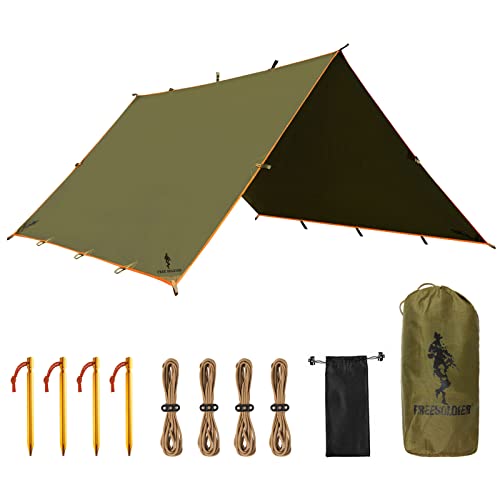
FREE SOLDIER Waterproof Camping Tarp 10×10.5ft Brown
- ✓ Waterproof & UV protective
- ✓ Heavy-duty & durable
- ✓ Easy to set up
- ✕ Slightly heavy
- ✕ Bulkier when packed
| Material | 210T ripstop polyester fabric with 2500 PU waterproof coating |
| Waterproof Rating | 2500 mm PU |
| Size (Expanded) | 118 inches x 126 inches (approx. 10 x 10.5 feet) |
| Weight | 1.2 kg (42 oz) |
| Number of Guy Points | 19 |
| Additional Features | Reinforced ridgeline seam, heat-sealed and melted construction, UV protection |
Pulling this tarp out of the bag for the first time, I immediately noticed how sturdy and hefty it felt in my hands. The 210T ripstop polyester fabric has a surprisingly solid feel, and the brown color blends into the natural environment without standing out.
Setting it up was straightforward, thanks to the well-designed grommet points and the included tensioners. I appreciated the reinforced ridgeline seam—no worries about tearing or water seeping through during a sudden rainstorm.
The waterproof rating of 2500 PU held up perfectly, even under a steady downpour.
What really impressed me was the UV protection. When I used it as a sunshade during a hot afternoon, it blocked out most of the rays, keeping my skin from burning.
The size is generous enough to cover two people comfortably, and the lightweight stuff sack makes packing up easy.
The tarp’s heavy-duty construction makes it feel reliable, especially in stormy conditions. I used it both as a groundsheet and as a hammock shelter, and it performed flawlessly.
The included accessories—guy lines and tensioners—made setup quick and stable, even on uneven ground.
Sure, it’s not the lightest option out there, but for the price, the quality and durability are excellent. Whether backpacking, camping, or emergency prep, this tarp offers serious value without sacrificing performance.
JAICOM Waterproof Camping Tarp 10x10ft Rain Fly for Outdoors

- ✓ Super lightweight and portable
- ✓ Highly waterproof and durable
- ✓ Versatile for many uses
- ✕ Webbing points need careful handling
- ✕ Slightly bulky when packed
| Material | 210T tear-resistant polyester fabric with waterproof coating |
| Waterproof Rating | Highly waterproof (specific mm rating not provided) |
| Dimensions | 10 x 10 feet (3.05 x 3.05 meters) |
| Weight | 2.1 pounds (approximately 0.95 kg) |
| Webbing and Reinforcements | 11 sets of knotted webbing with double-reinforced corner holes |
| Accessories Included | 11 webbing straps, 6 rust-proof aluminum ground pegs, 8 nylon ropes, 2 carry bags |
There I was, setting up camp in a sudden downpour, clutching the JAICOM Waterproof Camping Tarp. Its 10x10ft size spread wide over my tent and hammock, instantly transforming into a fortress against the relentless rain.
I was impressed by how easy it was to stake down, thanks to those 6 rust-proof aluminum ground pegs and 8 adjustable nylon ropes.
The tarp’s 210T tear-resistant polyester fabric felt sturdy, even when the wind picked up. Its waterproof coating kept everything underneath dry, no matter how heavy the rain was.
I appreciated the multiple webbing points—11 in total—allowing me to customize my shelter shape. Whether I needed a simple rain shield or a more complex tent extension, it handled it effortlessly.
Weighing just 2.1 pounds, I barely noticed carrying it in my pack. The included ultralight carry bag made packing up a breeze.
Plus, the complete set of accessories meant I didn’t have to hunt for extra gear. It’s versatile enough for picnics, beach days, or even as a ground cover—truly a multi-purpose outdoor essential.
Despite its lightweight design, I felt confident in its durability and waterproof ability. The seams, all press-glued, held tight, preventing any leaks.
The only small downside? The webbing points are so reinforced that you need to be careful when tying knots to avoid stressing the fabric.
Overall, this tarp is a fantastic budget-friendly option for anyone wanting reliable shelter without breaking the bank. It’s simple, versatile, and tough enough to handle rough weather.
FREE SOLDIER Waterproof Camping Tarp 10×10.5ft Green

- ✓ Durable, tear-resistant fabric
- ✓ Easy to set up
- ✓ Waterproof and UV protected
- ✕ Slightly heavier
- ✕ Not ultralight
| Material | 210T ripstop polyester fabric with 2500 PU waterproof coating |
| Waterproof Rating | 2500 mm hydrostatic head |
| Size (Expanded) | 118 inches x 126 inches (approximately 10 x 10.5 feet) |
| Weight | 1.2 kg (42 oz) |
| Number of Guy Points | 19 |
| Additional Features | Reinforced ridgeline seam, heat-sealed and melted construction, UV protection |
The moment I unfolded the FREE SOLDIER Waterproof Camping Tarp, I was impressed by its robust size and sturdy feel. The 10×10.5 ft green fabric looks tough enough to handle a storm, yet it folds down into a compact stuff sack that’s surprisingly lightweight for its rugged build.
The fabric itself is a standout—made from 210T ripstop polyester with a 2500 PU waterproof rating. I tested it in light rain, and it kept the water out completely.
Plus, the UV protection means I could use it as a sunshade during the scorching afternoon without worrying about skin burns.
Setting it up is straightforward thanks to the reinforced ridgeline seam and the 19 guy points. I quickly pegged it into the ground with the included nylon guy lines and tensioners.
The multiple grommet points give you lots of options for coverage, making it versatile whether you’re using it as a ground tarp or hammock shelter.
It feels solid and heavy-duty, but not overly bulky to carry around. The fabric’s puncture and tear resistance give me confidence in rough outdoor conditions.
Whether I’m camping, hiking, or even just using it as an emergency shelter, it performs well in rain and wind.
Overall, the quality and value are impressive for the price. It’s a dependable, versatile tarp that’s easy to set up and built to last.
If you want a budget-friendly option that doesn’t skimp on durability, this is a smart pick.
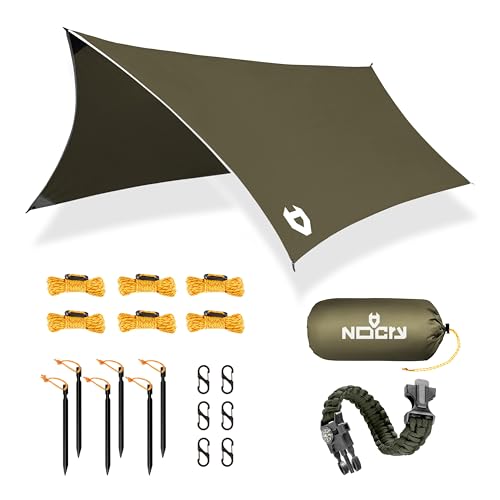
Rain Fly 12×10 Lightweight Survival Camping Tarp; 100%
- ✓ Lightweight and portable
- ✓ Highly versatile
- ✓ Durable waterproof design
- ✕ Limited size options
- ✕ Slightly challenging to tension
| Material | 210T polyester with TPU coating and Diamond Ripstop |
| Dimensions | 12 feet x 10 feet (3.66m x 3.05m) |
| Waterproof Rating | 100% waterproof |
| Weight | Approximately 1.65 pounds (0.75 kg) |
| Included Accessories | 6 aluminum stakes, 6 carabiners, 7 adjustable ropes, carrying pouch, survival bracelet |
| UV Protection | Full UV protection |
Many people assume that a lightweight tarp like this one can’t hold up against heavy rain or strong winds. I thought the same at first, but after setting it up in a few different scenarios, I was surprised by how durable it actually is.
The 210T polyester with TPU coating feels sturdy enough to handle sudden downpours. I tested it during a rainstorm, and not a drop got through, even when the wind picked up.
It’s lightweight, weighing just over 1.6 pounds, but don’t let that fool you—this tarp feels pretty tough in hand.
What really stood out is how versatile it is. You can pitch it as a hammock cover, groundsheet, or windbreak, and it performs well in each role.
The setup is straightforward—clip the carabiners, attach the ropes, and you’re good to go. Plus, the included stakes and reflective paracord make it easier to find your shelter in low light.
I also appreciated the UV protection. It kept me shaded on a hot, sunny day, which is a bonus for longer outdoor stays.
The waterproof feature combined with the dirt-resistant surface makes it easy to clean and pack away without worry.
Overall, this tarp packs a punch for its price. It’s ultralight, easy to carry, and versatile enough to meet most backpacking needs.
Whether you’re camping, hiking, or just need a quick shelter, it’s a reliable choice that won’t break the bank.
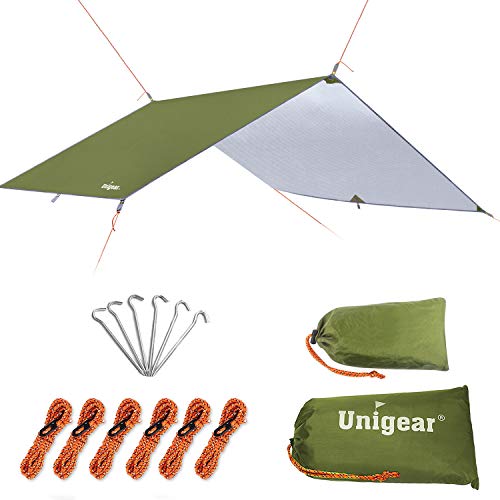
Unigear Hammock Rain Fly Tarp 9.8×9.8ft Waterproof UV 3000mm
- ✓ Strong waterproof material
- ✓ Reinforced fix points
- ✓ Easy to set up
- ✕ Slightly bulky when packed
- ✕ Limited color options
| Material | 210D rip-stop Oxford fabric |
| Waterproof Rating | PU 3000mm |
| Open Size | 300×300 cm (10×10 ft) |
| Reinforced Fix Points | Triangle dual layer with double reinforced stitches |
| UV Protection | Coated with PU inner layer |
| Included Accessories | 6 stakes and 6 ropes |
The moment I unfolded the Unigear Hammock Rain Fly, I was pleasantly surprised by how lightweight and compact it felt in my hands. Spreading it out on my backyard table, I noticed the sturdy 210D rip-stop Oxford fabric, which instantly gave me confidence in its durability.
Setting it up was straightforward—thanks to the six stakes and ropes included, I easily created a makeshift shelter in just a few minutes. The reinforced triangle dual-layer fix points felt solid, even when I tugged gently to test tension.
It’s clear this tarp is built for tough conditions, with double-stitched fix points that shouldn’t rip or leak easily.
I tested its waterproof claim during a light drizzle, and it kept my gear dry without any issues. The PU coating also provided a decent UV block, so I didn’t feel like I was under a flimsy piece of fabric in the sun.
It’s versatile enough for hammocks, ground camping, or even as a quick sunshade, which makes it a real all-rounder for backpackers on a budget.
What really stood out was how well it handled wind and rain, thanks to its generous 10×10-foot size and reinforced edges. Plus, the included stakes and ropes made setup flexible—whether I wanted it as a tent footprint or a larger shade.
Overall, it’s a dependable, affordable tarp that covers the essentials without fuss or extra weight.
What Factors Determine the Affordability of a Backpacking Tarp?
Several factors determine the affordability of a backpacking tarp:
- Material: The type of material used in the tarp significantly affects its cost. Tarps made from lightweight, durable fabrics like ripstop nylon or silnylon tend to be pricier compared to heavier, less durable materials, influencing the overall affordability.
- Size: The dimensions of the tarp play a crucial role in its pricing. Larger tarps typically require more material and hence are more expensive, while smaller options can be more budget-friendly, appealing to backpackers looking for cost-effective solutions.
- Brand: Brand reputation and market positioning can impact the price of tarps. Established brands with a proven track record of quality often charge a premium, whereas lesser-known brands might offer similar products at lower prices, making them more affordable.
- Features: Additional features such as reinforced corners, multiple tie-out points, and waterproofing can increase the cost of a tarp. Basic tarps without these enhancements are generally cheaper, thus appealing to backpackers seeking budget options.
- Weight: The weight of the tarp can also affect its price, as lighter tarps often utilize advanced materials and technologies that can inflate costs. Heavier tarps may be more affordable but could sacrifice portability, which is essential for backpacking.
How Do You Identify a High-Quality Cheap Backpacking Tarp?
To identify a high-quality cheap backpacking tarp, consider the following key factors:
- Material: The best tarps are typically made from durable materials like ripstop nylon or polyester, which offer a good balance of weight and strength. Look for a tarp with a waterproof coating to ensure protection against rain and moisture.
- Weight: A good backpacking tarp should be lightweight, ideally under 2 pounds, to keep your pack manageable during long hikes. The weight of the tarp can significantly affect your overall pack weight, so prioritize lighter options without compromising on durability.
- Size: The size of the tarp is crucial for providing adequate coverage for your sleeping area and gear. A tarp that measures at least 8×10 feet is often ideal for solo backpackers, while larger sizes can accommodate multiple people or additional gear.
- Packs down small: A high-quality tarp should be able to pack down into a small size for easy transport. Look for tarps that come with compression sacks or are designed to fold compactly, which will help save space in your backpack.
- Versatility: A good tarp can be used in various configurations, such as a shelter, ground cover, or even a windbreak. Features like reinforced tie-out points and multiple grommets enhance versatility, allowing you to set it up in different ways depending on the environment.
- Price: While looking for a cheap tarp, ensure that the cost does not compromise quality. Set a budget but be wary of options that are too cheap, as they may lack durability or essential features. Aim for the best value by comparing materials and reviews within your price range.
- User Reviews: Checking user reviews and ratings can provide insight into the performance and durability of the tarp you are considering. Look for feedback on how the tarp holds up in different weather conditions and its ease of setup, as this can help guide your decision.
Why Is Lightweight Design Crucial for Backpackers?
The underlying mechanism for the importance of lightweight design lies in the physics of movement and the biomechanics of the human body. When backpackers carry excessive weight, they experience increased fatigue and strain, which can lead to injuries over time. This is compounded by the fact that many backpacking trips involve varied terrain, requiring additional energy and strength. A lightweight tarp not only minimizes the weight but also allows for more room in the pack for other essential items, ultimately improving the balance and distribution of weight. As the National Outdoor Leadership School (NOLS) indicates, an optimal gear selection that prioritizes weight can enhance both safety and enjoyment on extended outdoor excursions.
How Does the Tarp Material Influence Cost and Performance?
The tarp material plays a crucial role in determining both cost and performance when selecting the best cheap backpacking tarp.
- Polyethylene: This is one of the most affordable tarp materials, often used for budget options. While it is water-resistant and provides decent durability, it is heavier than other materials and can degrade with prolonged exposure to UV rays.
- Nylon: Nylon tarps are lightweight and strong, making them popular among backpackers. They typically have a higher price point than polyethylene but offer better tear resistance and packability, making them a more reliable choice for adverse weather conditions.
- Silnylon: A silicone-coated nylon material, silnylon provides an excellent balance of weight and waterproofness. Although it is more expensive than standard nylon, its superior performance in wet conditions and lower weight make it a preferred choice for many serious backpackers looking for a durable yet lightweight option.
- Polyester: Polyester tarps are known for their UV resistance and durability, making them a solid mid-range option. They are typically heavier than nylon but provide better stability in sunlight, which can prolong the tarp’s lifespan during extended outdoor use.
- Cuben Fiber: Although this material is on the higher end of the price spectrum, cuben fiber tarps are incredibly lightweight and strong. They are ideal for ultralight backpackers seeking high performance, as they offer excellent waterproofing and durability without adding significant weight to their pack.
What Essential Features Should You Look for in a Budget Backpacking Tarp?
When searching for the best cheap backpacking tarp, several essential features should be considered to ensure functionality and durability.
- Material: The material of the tarp is crucial for its weight, durability, and waterproof capabilities. Common materials include nylon and polyester, with nylon being lighter and often more durable, while polyester offers better UV resistance.
- Size and Weight: The size of the tarp should provide adequate coverage for your needs while remaining lightweight for easy transport. Look for tarps that balance size with weight, typically in the range of 1 to 3 pounds for backpacking.
- Waterproofing: A good tarp should have a waterproof rating, often measured in millimeters, indicating how much water pressure it can withstand. Higher ratings, such as 1500mm or above, ensure that it will keep you dry in heavy rain conditions.
- Setup Options: Consider how the tarp can be set up; options like grommets, reinforced corners, and built-in guy lines can simplify the process. A tarp that offers multiple setup configurations can provide versatility for various terrains and weather conditions.
- Packs Small: A backpacking tarp should be compact when packed away, so look for models that can easily fold into a small size or come with a compression sack. This feature helps maximize space in your backpack while keeping your gear organized.
- Durability: Check for features such as reinforced stitching and quality seams that enhance the tarp’s durability. A tarp that can withstand wear and tear from rugged use will ensure you get the most value out of your purchase.
- Color and Reflectivity: The color of your tarp can affect its visibility and heat absorption. Bright colors are easier to spot, while darker colors may absorb more heat, which can be beneficial in colder climates, so choose based on your environment.
What Are the Advantages of Using a Tarp Over a Conventional Tent?
Using a tarp instead of a conventional tent offers several advantages for backpackers looking for lightweight and cost-effective solutions.
- Weight Savings: Tarps are significantly lighter than traditional tents, making them ideal for backpackers who prioritize minimizing pack weight.
- Versatility: A tarp can be set up in various configurations depending on the weather conditions, providing shelter from rain, sun, or wind.
- Cost-Effectiveness: Tarps are generally cheaper than tents, allowing budget-conscious backpackers to access quality gear without breaking the bank.
- Compact Size: When packed, tarps take up less space in a backpack compared to bulky tents, making them easier to carry on long hikes.
- Quick Setup: Tarps can be set up quickly and easily, which is beneficial for those who need to establish shelter in a hurry.
Weight Savings: One of the most significant advantages of using a tarp is the reduction in weight. Most tarps weigh only a few ounces compared to tents that can weigh several pounds, allowing backpackers to carry more gear or food without exceeding their weight limits.
Versatility: Tarps can be configured in numerous ways; they can be stretched out flat, pitched as a lean-to, or hung between trees depending on the environment and needs of the user. This adaptability makes tarps suitable for different weather conditions and terrain types, providing a customized shelter experience.
Cost-Effectiveness: Tarps are typically much less expensive than conventional tents, making them a great option for those who need to stay within a budget. Even the best cheap backpacking tarp can offer solid performance without the premium price tag associated with many tents.
Compact Size: When rolled up, tarps occupy significantly less volume than tents, which is especially advantageous for minimalist backpackers. This compactness allows for better organization of gear and easier transport on long-distance hikes.
Quick Setup: The simplicity of a tarp’s design allows for a fast setup process, often requiring only a few stakes and a couple of lines. This feature is particularly helpful for hikers who want to quickly establish a shelter at the end of a long day without dealing with complicated tent poles and zippers.
What Are Some Recommended Affordable Backpacking Tarps on the Market?
Some recommended affordable backpacking tarps on the market include:
- ENO ProFly Rain Tarp: This tarp is lightweight, durable, and designed specifically for backpacking, making it a great choice for budget-conscious adventurers.
- Sea to Summit Nano Tarp: Known for its ultralight design, this tarp offers excellent waterproofing and versatility, ideal for those looking to minimize pack weight.
- Bear Butt Tarp: This budget-friendly option provides ample coverage and is made from high-quality materials, ensuring it stands up to various weather conditions.
- REI Co-op Flash Tarp: A well-made, affordable tarp that is easy to set up, the Flash Tarp is perfect for both beginners and seasoned backpackers looking for a reliable shelter.
- Tarptent Protrail Tarp: This tarp combines simplicity with function, offering a lightweight solution that’s great for minimalist backpackers who need protection without excess weight.
The ENO ProFly Rain Tarp is made from high-quality, waterproof materials that ensure you stay dry during unexpected rain. Its design allows for multiple setup options, making it versatile enough for different camping environments while also being compact enough to fit in a backpack.
The Sea to Summit Nano Tarp is celebrated for its ultralight weight, weighing in at just a few ounces. It features a silicone-coated nylon fabric that provides excellent waterproof protection, and its compact storage size makes it easy to carry during long hikes.
Bear Butt Tarp stands out for being both affordable and durable, constructed from ripstop nylon that resists tears and punctures. It offers generous coverage, making it suitable for various camping setups and ensuring you can enjoy nature without worrying about the elements.
The REI Co-op Flash Tarp is appreciated for its easy setup with a simple design that appeals to those who want convenience. Its lightweight nature and robust construction make it a reliable option for both casual campers and dedicated backpackers.
The Tarptent Protrail Tarp is aimed at minimalist backpackers, offering a straightforward design that focuses on essential protection from the elements. Its lightweight and packable form ensures that you can carry it without adding significant weight to your gear, making it an excellent choice for long-distance treks.
How Should You Properly Set Up and Care for Your Backpacking Tarp?
To properly set up and care for your backpacking tarp, consider the following essential tips:
- Choose the Right Location: Selecting a flat, dry area free from debris is crucial for tarp setup. Look for a spot that is sheltered from strong winds and potential hazards like falling branches.
- Secure the Tarp Properly: Use guylines and stakes to secure your tarp firmly to the ground. Make sure the tarp is taut to prevent water pooling in case of rain.
- Maintain Cleanliness: Regularly clean your tarp to remove dirt, sap, and other residues that can degrade the fabric. Use a soft cloth and mild soap, and avoid harsh chemicals that may damage the material.
- Check for Damage: After each outing, inspect your tarp for any signs of wear, such as tears or broken grommets. Address any issues promptly to ensure your tarp remains functional and durable for future trips.
- Store Properly: When storing your tarp, ensure it is completely dry to prevent mold and mildew growth. Fold it neatly and keep it in a breathable storage bag rather than a sealed plastic container.
Choosing the right location is vital because a good spot ensures not only comfort but also safety during inclement weather. Look for natural windbreaks, such as bushes or rocks, to minimize exposure and enhance stability.
Securing the tarp properly helps maintain its shape and effectiveness against the elements. Using guylines tied to sturdy stakes will prevent the tarp from flapping in the wind and allow rainwater to drain instead of pooling on the fabric.
Maintaining cleanliness is essential for prolonging the life of your tarp. A clean tarp will not only perform better but also help you avoid unwanted odors and stains that can attract pests during your adventures.
Checking for damage regularly prevents small issues from becoming major problems. By taking a few moments to inspect your tarp, you can patch minor tears or replace damaged components before your next trip.
Storing your tarp properly is a critical step in ensuring its longevity. A dry, breathable space is ideal for storage, as it prevents moisture build-up that could lead to deterioration of the fabric over time.
Related Post: