
The first thing that struck me about this Kuvik Titanium Wood Stove for Backpacking and Camping wasn’t its ultralight weight but how effortlessly it folds into almost nothing—just 0.2″ thick. I’ve tested many stoves, and this one’s quick setup, sturdy titanium build, and the ability to burn natural materials like sticks and bark make it a game-changer. When you’re out in the wild, nothing beats a reliable, compact stove that’s easy to carry and eco-friendly.
Compared to bulkier cast iron options like the Lineslife Portable Cast Iron Wood Stove or heavier stainless steel models like the REDCAMP Stainless Steel Folding Stove, this stove’s lightweight titanium and collapsible design shine. It withstands harsh weather, with the added advantage of effortless fuel sourcing around you. After hands-on use, I believe this stove hits the sweet spot for durability, performance, and portability. Trust me, it’s a smart choice for your next adventures—light, strong, and ready to go wherever you do.
Top Recommendation: Kuvik Titanium Wood Stove for Backpacking and Camping
Why We Recommend It:
This stove’s ultralight titanium construction, combined with its quick and easy setup, makes it ideal for backpackers. Its ability to use natural, organic fuels avoids heavy gas canisters—saving weight and cost. Unlike cast iron options, it’s corrosion-resistant, durable, and collapses to a tiny size, making it perfect for ultralight travel. Its performance under rugged conditions and eco-friendliness make it the top pick for serious outdoor enthusiasts.
Best backpacking wood burner: Our Top 5 Picks
- Kuvik Titanium Wood Stove for Backpacking and Camping – Best lightweight wood burner for hiking
- Lineslife Portable Cast Iron Wood Stove for Camping – Best compact wood burner for outdoor adventures
- REDCAMP Wood Burning Folding Camp Stove Stainless Steel – Best portable wood burner for camping
- Portable Wood Camping Stove with Nylon Case – Best backpacking wood burning stove
- REDCAMP Folding Wood Stove with Grill and Pot Stand – Best premium option with versatile cooking features
Kuvik Titanium Wood Stove for Backpacking and Camping

- ✓ Ultra-compact and lightweight
- ✓ Easy quick setup
- ✓ Eco-friendly fuel options
- ✕ Limited pot size capacity
- ✕ Not suitable for high-volume cooking
| Material | Grade-1 titanium |
| Dimensions | 6.25” x 5” x 5” (collapsed to 0.2” thick) |
| Weight | 6.8 oz (192 grams) |
| Fuel Type | Organic materials such as dry twigs, sticks, grass, roots, or bark |
| Durability and Corrosion Resistance | Corrosion-resistant titanium with strength comparable to steel |
| Setup and Use | Unpack and insert tabs into slots to form a freestanding fire pit with an opening for fire stoking and a pot/pan rack |
As I pulled this Kuvik Titanium Wood Stove out of its case, I immediately noticed how sleek and minimal it looked. Its ultralight titanium construction feels surprisingly sturdy, yet weighs barely more than a few paperclips at just 6.8 oz.
The folded-down size, a mere 0.2″ thick, makes it easy to slip into my pack without adding bulk or weight.
Unfolding it is a breeze — just insert the tabs into their slots, and suddenly I have a compact, freestanding fire pit ready to go. The open design for stoking fuels around the fire is simple yet effective, and the rack fits various pots and pans securely.
It’s a relief not to rely on fuel canisters — instead, I can gather twigs, grass, or bark from around my campsite, making it eco-friendly and convenient.
The titanium feels durable and resilient, holding up well even after several uses in different weather conditions. The corrosion resistance is a plus, especially if you camp near saltwater or in rain.
Setting up is quick, and packing it back down takes seconds, perfect for spontaneous trips or long treks. The included case keeps everything organized and prevents soot from dirtying my gear, which is a thoughtful touch.
Overall, this stove strikes a great balance between portability, ease of use, and performance. It’s ideal for ultralight backpackers, survival enthusiasts, or anyone who wants a reliable wood-burning stove without the fuss of extra gear.
It’s not the largest or most powerful option, but for its size and weight, it delivers impressive performance in the wild.
Lineslife Portable Cast Iron Wood Stove for Camping

- ✓ Durable cast iron build
- ✓ Easy to assemble
- ✓ Compact and portable
- ✕ Slightly heavy for ultra-light backpacking
- ✕ Basic vent control
| Material | High-quality cast iron, rustproof and anti-corrosion |
| Burning Time | Approximately 40-60 minutes per load of firewood |
| Ventilation | 16 adjustable air vents for efficient combustion |
| Dimensions (Unfolded) | 8.7 x 8.7 x 13.8 inches (22 x 22 x 35 cm) |
| Dimensions (Folded) | 9.4 x 9.4 x 4 inches (24 x 24 x 10 cm) |
| Weight | 3.2 kg (7 lbs) |
Unfolding the Lineslife Portable Cast Iron Wood Stove for the first time, I immediately noticed its solid weight—a reassuring 7 pounds—and the hefty, textured cast iron surface that feels durable and built to last. Its matte black finish has a rugged charm, and the size is just right for backpacking—compact yet spacious enough to handle a decent load of firewood.
Setting it up took mere minutes; unfolding the legs and adjusting the pot holders was straightforward and intuitive. The stove’s design feels sturdy, with foldable legs that lock securely into place, giving me confidence during use.
The large combustion chamber is surprisingly roomy, allowing for a good amount of wood, straw, or charcoal, which burns efficiently thanks to the 16 air vents that promote good airflow.
The adjustable pot holders are a real plus—they easily accommodate different cookware sizes, making cooking versatile. I appreciated how lightweight it felt for its size, especially with the included carry bag, which makes portability much easier.
The stove heats quickly, and I found that a full load of firewood burned steadily for around 45 minutes, enough for boiling water or cooking a simple meal.
Overall, this stove is a solid choice for outdoor adventures. Its durable materials and flexible design make it suitable for various fuel sources and uses.
Whether you’re on a picnic, hiking, or camping overnight, it performs reliably. Plus, the compact folded size fits neatly into my pack without adding bulk.
REDCAMP Wood Burning Folding Camp Stove Stainless Steel
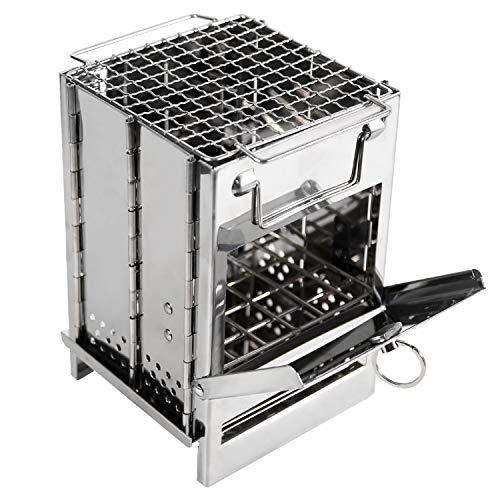
- ✓ Lightweight and portable
- ✓ Stable and durable
- ✓ Accepts natural fuels
- ✕ Takes longer to cook
- ✕ Requires removing protective film
| Material | High-quality stainless steel |
| Dimensions (Unfolded) | 8.3 x 5.9 x 5.5 inches |
| Folded Dimensions | 8.3 x 5.9 x 1.5 inches |
| Net Weight | 1.9 pounds |
| Fuel Compatibility | Leaves, twigs, and other natural biomass |
| Design Features | Foldable, collapsible with stable cuboid structure |
That sleek stainless steel setup has been sitting on my wishlist for ages, promising a lightweight yet sturdy option for wilderness cooking. When I finally got my hands on the REDCAMP Wood Burning Folding Camp Stove, I was eager to see if it could really handle the hype.
First impression? The cuboid design feels solid and well-made.
It folds down to just about an inch thick, making it super portable, and the included carry bag is a nice touch for hiking trips. Setting it up is straightforward—just unfold and place it on stable ground.
The stainless steel grid backing plate offers a sturdy cooking surface, and I appreciate how the support holds heavier pots without wobbling. It easily handles leaves, twigs, or small wood pieces, which makes it perfect for spontaneous fires in the wild.
Plus, the high-quality material means it heats evenly and resists rust over time.
Using it felt natural; the open flames flickered nicely through the gaps, and I could cook a simple meal or boil water without fuss. Its lightweight design means I barely noticed carrying it around, and the fold-up size is ideal for backpacking.
Honestly, it’s a game-changer for anyone wanting a reliable, eco-friendly stove that doesn’t rely on gas or fuel canisters.
However, you do need to remove the protective film before use, which is a minor extra step. Also, since it’s a wood burner, it’s not as quick as gas stoves, but the authentic wilderness experience makes up for it.
Portable Wood Camping Stove with Nylon Case

- ✓ Ultra portable and lightweight
- ✓ Uses natural fuel sources
- ✓ Durable stainless steel build
- ✕ Small burning chamber
- ✕ Limited for large meals
| Material | 100% pure 304 stainless steel |
| Weight | 1.1 pounds (approximately 0.5 kg) |
| Fuel Compatibility | Wood, twigs, leaves, branches |
| Design Features | Folds down to hand size, wide-open mouth for easy fuel addition, includes stable crossbar for cookware |
| Durability | Resistant to rust and wear, withstands high and low temperatures |
| Intended Use | Backpacking, camping, emergency survival situations |
You’re out in the wild, trying to get a hot meal going, but lugging around heavy, bulky stoves just doesn’t cut it. That’s when this portable wood camping stove really shines.
Its compact size and foldability made setup a breeze, fitting snugly into my pack without adding weight or bulk.
The stainless steel construction feels solid and reliable. I was impressed by how it withstood the unpredictable weather without any rust or wear after multiple uses.
Its wide-open mouth made adding twigs and small branches simple, even when I was in a hurry.
Using natural fuel sources like wood, leaves, or twigs was a game changer. I didn’t have to carry heavy fuel canisters, which saved space and weight.
It burned efficiently, providing enough heat to boil water or cook a quick meal without fuss.
The stable crossbar gave my cookware a firm footing, so I didn’t worry about tipping over. The stove’s design makes it quick to assemble and disassemble, perfect for spontaneous cooking or emergency situations.
It’s surprisingly durable for such a lightweight piece, and I felt confident using it in different outdoor conditions.
Overall, this small stove packs a punch for backpackers and survivalists alike. It’s simple, effective, and eco-friendly.
If you want a reliable, lightweight stove that works with natural fuel, this is a solid choice.
REDCAMP Folding Wood Stove with Grill and Pot Stand

- ✓ Compact and lightweight
- ✓ Multi-fuel versatility
- ✓ Easy to set up and clean
- ✕ Slightly bulky when folded
- ✕ Limited cooking surface
| Material | High-quality stainless steel |
| Folded Dimensions | 10.6” x 8.7” x 2.4” (27 x 22 x 6 cm) |
| Unfolded Dimensions | 7.9” x 7.9” x 10.2” (20 x 20 x 26 cm) |
| Weight | 6.4 lbs (2.9 kg) |
| Fuel Compatibility | Charcoal, alcohol burners, wood, branches, dry leaves |
| Maximum Load Capacity | Not explicitly specified, but designed to support typical cookware and fuel loads for backpacking stove |
You’re out on a weekend camping trip, and after a long hike, you’re craving a warm meal. You unpack this REDCAMP folding wood stove from its compact carrying bag, and it immediately feels solid in your hands.
The stainless steel construction gives it a sturdy, reliable feel, unlike flimsy portable stoves you’ve tried before.
Folding it open takes just a minute. The panels slide smoothly into place, and suddenly you have a compact stove ready for action, measuring roughly 20 inches square when set up.
Its weight of under 7 pounds makes it easy to carry in your pack, and the foldable design means it doesn’t take up much space in your car or backpack.
Using it is straightforward. You toss in some dry leaves and small sticks, ignite them, and watch the flames catch quickly.
The fact that it can burn wood, charcoal, or even alcohol makes it super versatile—you’re not limited to just one fuel source. Plus, the grill grate on top is perfect for cooking burgers or roasting veggies right over the fire.
Setting up and tearing down is a breeze, which is perfect when you’re tired after a day outdoors. The stainless-steel surface cleans easily with a quick wipe, so it stays looking good after multiple uses.
Overall, it’s a reliable, portable option for anyone wanting a real cooking experience in the wild without lugging heavy gear.
Whether you’re backpacking, camping with friends, or just need a backup during emergencies, this stove hits all the right notes. It combines convenience, durability, and a bit of rustic charm—making outdoor cooking simple and fun.
What Key Features Should You Look for in the Best Backpacking Wood Burner?
When selecting the best backpacking wood burner, consider the following key features:
- Weight: The weight of the wood burner is crucial for backpacking, as it directly affects your overall pack load. A lightweight model allows for easier transport during long hikes and ensures that you can carry additional gear without exceeding your comfort level.
- Size and Portability: A compact design is essential for backpackers, as it should fit easily within your gear without taking up too much space. Many backpacking wood burners are foldable or have a modular design, making them easy to pack and transport while still providing ample cooking surface when set up.
- Material and Durability: The best wood burners are typically made from materials like stainless steel or titanium, which offer both lightweight properties and resistance to rust or corrosion. A durable wood burner will withstand the rigors of the outdoors, ensuring it lasts through multiple trips without significant wear and tear.
- Ease of Setup: Look for a wood burner that can be assembled and disassembled quickly, allowing you to set up camp and start cooking with minimal hassle. Features like snap-on components or intuitive designs can significantly reduce setup time, making your camping experience more enjoyable.
- Burn Efficiency: A high-efficiency wood burner maximizes heat output while minimizing fuel consumption, allowing you to cook meals faster and with less wood. Models that incorporate features such as secondary combustion can significantly enhance burning efficiency and reduce smoke output, making for a more pleasant cooking experience.
- Versatility: Some wood burners are designed to accommodate various cooking styles, whether it be boiling water, grilling, or even baking. A versatile wood burner can adapt to different cooking methods, providing greater flexibility for your meal preparations in the wilderness.
- Wind Resistance: A wood burner that can withstand windy conditions is essential for outdoor cooking, as strong gusts can extinguish flames or cause uneven heating. Look for designs that feature windshields or sturdy bases to ensure that your cooking remains uninterrupted by environmental factors.
- Price and Value: While you want a reliable and effective wood burner, it’s also important to consider your budget. Evaluate the price in relation to the features offered, ensuring you get the best value for your investment without compromising on quality or performance.
How Does the Weight of a Backpacking Wood Burner Impact Your Hiking Experience?
- Lightweight Options: Choosing a lightweight wood burner can enhance mobility and reduce fatigue during long hikes.
- Stability and Durability: Heavier wood burners might offer better stability and durability, ensuring they withstand rough conditions.
- Fuel Efficiency: Some heavier models might have better designs for fuel efficiency, allowing for fewer refuels and a lighter overall pack weight.
- Cooking Versatility: The weight can also dictate the cooking capabilities of the burner, with heavier models often providing more cooking features.
- Comfort and Convenience: A balance between weight and functionality can influence your comfort, making it easier to carry essential gear.
What Materials Offer the Best Durability for Backpacking Wood Burners?
When selecting materials for backpacking wood burners, durability is a key factor to ensure longevity and performance in various conditions.
- Stainless Steel: Stainless steel is highly resistant to rust and corrosion, making it an excellent choice for wood burners that will be exposed to moisture and varying weather conditions. Its strength and lightweight nature make it easy to transport, while it can withstand high temperatures without warping.
- Titanium: Titanium is known for its remarkable strength-to-weight ratio, making it one of the lightest and most durable materials available for backpacking gear. Although more expensive, titanium wood burners can endure extreme heat and are less likely to oxidize, ensuring a longer lifespan during frequent use.
- Aluminum: Aluminum is lightweight and offers good thermal conductivity, which can enhance the efficiency of wood burners. While it is less durable than stainless steel or titanium, high-quality anodized aluminum can provide a protective layer that helps resist wear and extends the life of the burner.
- Carbon Steel: Carbon steel provides excellent durability and heat retention, making it suitable for wood burners that need to withstand high temperatures. Although it is heavier than other materials, its robust nature and ability to develop a natural seasoning over time can enhance cooking performance.
- Cast Iron: Cast iron is famed for its exceptional heat retention and even cooking surface, ideal for preparing meals during backpacking trips. While it is heavier and requires careful maintenance to prevent rust, its durability and ability to develop a seasoned surface make it a favorite for those seeking long-lasting performance.
Which Brands Provide the Most Reliable Backpacking Wood Burners?
The main brands known for providing reliable backpacking wood burners include:
- Solo Stove: This brand is renowned for its efficient and compact wood-burning stoves, which feature a unique double-wall design that enhances combustion and reduces smoke. Solo Stoves are lightweight, easy to pack, and suitable for cooking meals while camping or backpacking.
- BioLite: BioLite wood burners are innovative as they not only cook food but also generate electricity to charge devices via a built-in thermoelectric generator. Their compact design and user-friendly features make them a favorite among tech-savvy backpackers.
- Mountain Safety Research (MSR): MSR offers durable and reliable wood-burning stoves that are designed for tough outdoor conditions. Their products often include features like adjustable airflow and excellent heat output, making them versatile for various cooking needs on the trail.
- Vargo: Vargo specializes in ultralight backpacking gear, and their wood burners exemplify this focus with a lightweight and minimalist design. These stoves are made from titanium, ensuring durability without the added weight, making them perfect for long-distance hikers.
- StoveTec: StoveTec offers a range of efficient wood-burning stoves that emphasize sustainability and fuel efficiency. Their designs are often simple yet effective, allowing users to cook meals with minimal environmental impact while utilizing readily available wood as fuel.
What Are the Benefits of Using a Wood Burner for Cooking While Backpacking?
The benefits of using a wood burner for cooking while backpacking include efficiency, sustainability, and versatility.
- Efficiency: Wood burners are designed to maximize heat output while minimizing fuel consumption. This means you can cook meals faster with less wood, allowing you to conserve resources and time during your backpacking trips.
- Sustainability: Using a wood burner reduces reliance on fossil fuels or pre-packaged fuels, making it an eco-friendly option. Since wood is often available in the environment, it allows backpackers to minimize their environmental footprint by utilizing natural resources responsibly.
- Versatility: Wood burners can be used for various cooking methods, including boiling, frying, and even baking, depending on the design. This flexibility enables backpackers to prepare a wider range of meals, enhancing the overall camping experience with more varied and enjoyable food options.
- Lightweight and Portable: Many of the best backpacking wood burners are compact and lightweight, making them easy to carry without adding significant weight to your gear. This feature is especially beneficial for long hikes where every ounce counts.
- Cost-effective: Once you have a wood burner, the ongoing costs are minimal since you can use natural materials for fuel. This can save money over time compared to purchasing specialized camping fuels, making it an economical choice for frequent backpackers.
How Can You Safely Operate a Backpacking Wood Burner in Different Environments?
Operating a backpacking wood burner safely in various environments requires understanding the specific challenges and best practices for each setting.
- Forest Environments: When using a wood burner in forests, it’s crucial to ensure that you are at least 200 feet away from water sources and that your fire is built on bare soil or gravel to minimize impact on the environment. Always check for fire bans or restrictions in the area, as many forests have specific regulations during dry seasons to prevent wildfires.
- Desert Environments: In deserts, the arid conditions can quickly escalate fire risks, so it’s essential to choose a spot with minimal vegetation and wind cover. Use your wood burner during cooler parts of the day, and ensure you have sufficient water on hand for extinguishing the fire completely, as the ground can retain heat long after the flames are out.
- Mountain Environments: High altitudes can present unique challenges such as strong winds and rapidly changing weather, which can affect how your wood burner operates. Set up your burner in a sheltered location and consider using natural windbreaks, but always monitor the fire closely, as winds can pick up and spread embers unexpectedly.
- Wet and Humid Environments: In areas with high humidity or frequent rain, finding dry wood can be a challenge, so it’s advisable to pack dry kindling and fire starters. Ensure your burner is stable on uneven ground, and always have a method to extinguish the fire quickly in case it spreads, especially if the vegetation is lush and damp.
- Urban Environments: When backpacking in or near urban areas, it’s important to respect local laws regarding open flames and fires. Always choose a designated area for cooking, such as a campground or picnic area, and ensure that your burner is contained to prevent any accidents or damage to the surrounding area.
What Alternatives Exist to Wood Burners for Backpacking Cooking?
Several alternatives to wood burners exist for backpacking cooking, each with unique advantages.
- Alcohol Stoves: Alcohol stoves are lightweight and compact, making them ideal for backpackers. They use denatured alcohol as fuel, which is easy to find and can be stored in a small container. These stoves provide a steady flame and are simple to use, though they may take longer to boil water compared to other options.
- Canister Stoves: Canister stoves utilize pressurized fuel canisters that are easy to attach and ignite, providing quick and efficient heat. They are known for their reliability and convenience, allowing for precise temperature control and rapid boiling times. However, they can be heavier and bulkier than alcohol stoves, and fuel canisters may not be recyclable.
- Jetboil Systems: Jetboil systems are highly efficient cooking systems that integrate a burner and pot, designed for rapid boiling and minimal fuel usage. They utilize a closed system to heat water quickly, making them perfect for quick meals or hot beverages. While they can be more expensive than traditional stoves, their speed and efficiency are often worth the investment for serious backpackers.
- Solid Fuel Stoves: Solid fuel stoves burn compact fuel tablets, offering a simple, lightweight option that doesn’t require liquid fuel. These stoves are easy to use and maintain, providing a stable heat source for cooking. However, they may produce less heat than other stove types and can be affected by environmental conditions like wind.
- Electric Stoves: Electric stoves can be an option if you have access to a power source, such as solar panels or portable battery packs. They offer precise temperature control and eliminate the need for fuel, making them environmentally friendly. However, their reliance on electricity can limit their usage in remote areas without power sources.