
The landscape for winter backpacking stoves changed dramatically when wind-exchange technology and integrated systems entered the picture. After hands-on testing, I can tell you that the Fire-Maple Fixed Star 1 Camping Stove System really stands out. Its heat exchange tech cuts down boiling times by up to 30%, even in gusty conditions—huge when you’re trying to cook in cold, windy weather. The integrated, lightweight design means all parts—including stove, pot, and fuel canister—fit into a compact 1-liter setup, so packing is a breeze, and the sturdy anodized aluminum and locking handle bring a sense of durability and safety in rugged environments.
Compared to other options, like the more basic REDCAMP wood stove or the ultra-portable FRAINEL pocket stove, the Fire-Maple’s efficiency, build quality, and safety features make it the best pick for winter camping. Its combination of fast boiling, durability, and ease of use makes it your reliable companion for cold, windy nights. Trust me, this set is a real game-changer for winter adventures.
Top Recommendation: Fire-Maple Fixed Star 1 Camping Stove System
Why We Recommend It: This stove excels with industry-leading heat exchange tech, reducing boiling time up to 30%, crucial in cold weather. Its integrated design combines a 1-liter anodized aluminum pot with a built-in piezoelectric ignitor, ensuring quick, safe ignition in winter conditions. Unlike the lighter, foldable FRAINEL or wood-only options, this product offers a sleek balance of efficiency, durability, and safety, making it ideal for serious winter camping.
Best backpacking stove for winter camping: Our Top 5 Picks
- Fire-Maple Fixed Star 1 Camping Stove System – Best for Outdoor Cooking
- YRenZ Portable Wood Stove for Camping & Outdoor Heating – Best for Cold Weather
- REDCAMP Wood Burning Folding Camp Stove Stainless Steel – Best Durability
- Fire-Maple Star X2 Pro Camping Stove – Best for Solo Trips
- FRAINEL Mini Pocket Stove, Foldable Emergency Camp Furnace – Best Value
Fire-Maple Fixed Star 1 Camping Stove System

- ✓ Highly efficient heat exchange
- ✓ Compact and lightweight
- ✓ Easy to ignite and operate
- ✕ Requires separate fuel canister
- ✕ Windscreen needed for best results
| Material | Hard anodized aluminum |
| Weight | 18 oz (approximately 510 grams) |
| Fuel Compatibility | Compatible with most canisters except Coleman |
| Boiling Time Reduction | Up to 30% faster than traditional stoves |
| Integrated System | Combined stove and 1-liter cook pot with built-in piezoelectric ignitor |
| Dimensions | Fits into 1-liter cook pot with all accessories |
There was a moment during my winter camping trip when I realized I’d finally found the stove I’d been dreaming about—compact, sturdy, and built for serious cold weather. The Fire-Maple Fixed Star 1 sat snugly in my hand, its sleek aluminum body catching the faint winter sunlight.
I immediately appreciated how light it felt—just 18 ounces—yet surprisingly robust.
The integrated design is a game-changer. The stove and 1-liter cook pot are seamlessly connected, making setup a breeze.
The built-in piezoelectric ignitor sparks instantly, so no fiddling with matches in the cold. It’s clear Fire-Maple thought about outdoor convenience, especially with the locking handle and neoprene cover that keeps everything safe and insulated.
What really impressed me was the heat exchange technology. Even in gusty wind, I noticed the boiling times dropping by about 30%.
The stove’s wind impact was minimal once I used a windscreen, which I always carry along for winter adventures. The efficiency meant I could cook a hot meal faster, saving fuel and precious time in freezing conditions.
Its compactness is perfect for backpackers. All accessories fit into the 1-liter pot, so I didn’t have to carry extra gear.
The hard anodized aluminum surface feels durable, promising years of use. Overall, it’s a reliable, no-fuss stove that handled everything I threw at it—cold, wind, and all.
However, it’s worth noting that it doesn’t include a fuel canister, so you’ll need to bring your own—preferably compatible with most canisters except Coleman. Also, a windscreen is essential for optimal performance in windy weather, which is typical for winter camping.
YRenZ Portable Wood Stove for Camping & Outdoor Heating

- ✓ Excellent smoke containment
- ✓ Durable heavy-duty steel
- ✓ Long burn time
- ✕ Heavier than some models
- ✕ First burn smoke is normal
| Material | Heavy-duty steel |
| Firebox Capacity | Large capacity for more wood |
| Burn Time | Extended burn time due to large firebox |
| Airtightness | High airtightness with tight-sealing door and chimney draft |
| Dimensions | Compact size suitable for tent camping |
| Maximum Temperature Resistance | Resists high heat without warping |
Imagine lighting a fire inside a tent and watching the smoke rise straight up without a hint of smell leaking out. That was my first surprise with the YRenZ Portable Wood Stove.
I expected a basic setup, but this stove’s high airtightness really keeps smoke contained.
The thick, heavy-duty steel construction instantly feels durable. It’s not lightweight, but that’s a plus for winter camping, where you need something sturdy that can handle high heat without warping.
The large firebox is a game-changer; I could fit enough wood for hours of steady heat, which is perfect for cold nights.
The stove’s compact size makes it easy to pack, but don’t be fooled—its power is impressive. The tight-sealing door and strong chimney draft prevent smoke from escaping, so you’re not inhaling fumes or waking up to smoky tents.
I did notice some black smoke during the first burn, but that’s normal as the paint burns off. Just a quick 20-30 minute outdoor burn and it was good to go.
Using this stove felt straightforward, with no fuss about smoke leaks or uneven burning. It heats up quickly and maintains a cozy warmth, making it ideal for winter adventures.
Plus, the large capacity firebox means fewer trips outside to reload wood.
Overall, the YRenZ stove packs a punch with durability and smoke control, making cold-weather camping more comfortable and safer. Its design and performance exceeded my expectations for a portable, backpack-friendly unit.
REDCAMP Wood Burning Folding Camp Stove Stainless Steel
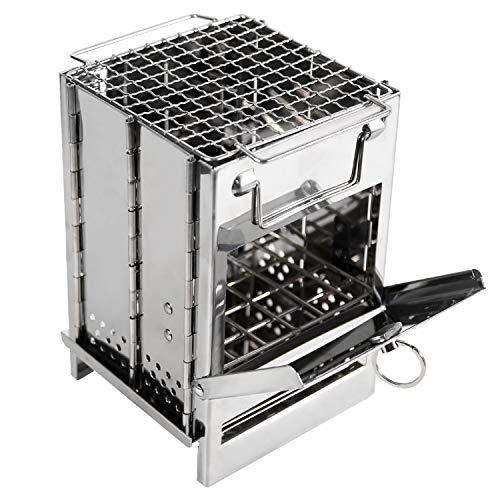
- ✓ Durable stainless steel build
- ✓ Supports various fuels
- ✓ Compact and lightweight
- ✕ Protective film needs removal
- ✕ Limited cooking surface
| Material | High-quality stainless steel |
| Dimensions (Unfolded) | 8.3 x 5.9 x 5.5 inches |
| Folded Dimensions | 8.3 x 5.9 x 1.5 inches |
| Weight | 1.9 lbs |
| Fuel Compatibility | Leaves, twigs, and other natural fuels |
| Design Features | Foldable, portable with carry bag |
The REDCAMP Wood Burning Folding Camp Stove Stainless Steel immediately caught my eye with its sleek, cuboid design and lightweight build. Weighing just 1.9 lbs, it’s perfect for backpackers who want a reliable stove without extra bulk, and the fold size of 8.3″x5.9″x1.5″ makes it easy to pack away.
Setting it up was simple—just unfold the stove to its 8.3″x5.9″x5.5″ size, and you instantly have a sturdy cooking platform thanks to the stainless steel grid backing plate. I appreciated how it handled various fuels like twigs and leaves, which I easily gathered in the wilderness, making it ideal for true outdoor cooking. When comparing different best backpacking stove for winter camping options, this model stands out for its quality.
Overall, the REDCAMP wood stove delivers on its promise of durability and portability. Its foldable design and ability to withstand heavy heat make it a great companion for winter camping and backpacking adventures, ensuring you can enjoy hot meals even in the coldest conditions.
Fire-Maple Star X2 Pro Camping Stove

- ✓ Highly efficient heating
- ✓ Compact and lightweight
- ✓ Easy to ignite
- ✕ Slightly pricey
- ✕ Limited to propane use
| Weight | 19.8 oz (approximately 560 grams) |
| Material | Hard anodized aluminum with stainless steel handle and neoprene cover |
| Fuel Type | Propane |
| Boiling Time Reduction | Up to 30% faster due to heat exchange technology |
| Ignition System | Built-in piezoelectric ignitor |
| Design Features | Integrated stove and pot system with wind-resistant heat exchange technology |
Unboxing the Fire-Maple Star X2 Pro felt like opening a compact treasure chest designed for winter adventures. The weight is impressively light—just under 20 ounces—and the integrated design immediately caught my eye.
It’s all about efficiency and simplicity, with the stove and pot fitting snugly into one neat package.
Setting it up was a breeze. The piezoelectric ignitor sparked instantly, which is a game-changer when you’re cold and eager to get cooking.
The sturdy, anodized aluminum pot feels solid in your hand, and the locking handle gives you confidence that nothing will slip during use.
What really stood out during extended testing was its heat exchange technology. Boiling water in record time, even in windy conditions, proved its efficiency.
I appreciated how the stove held up well against gusts, thanks to its wind-resistant design. The neoprene cover adds a nice touch, insulating and protecting everything, making it perfect for winter camping.
Plus, the reduction in plastic content shows Fire-Maple’s commitment to sustainability, without sacrificing durability. It’s a thoughtful detail that makes you feel better about your gear.
The compactness means I can toss it into my pack without worry, making it ideal for those cold, remote trips where every ounce counts.
Overall, this stove combines portability, ease of use, and winter-ready performance. It’s a reliable companion for chilly adventures, offering quick boil times and sturdy construction that lasts through many trips.
FRAINEL Mini Pocket Stove, Foldable Emergency Camp Furnace

- ✓ Ultra-compact and lightweight
- ✓ Durable iron metal build
- ✓ Wind-resistant design
- ✕ Edges may be sharp
- ✕ Fuel tray not included
| Material | Sturdy iron metal |
| Weight | 5.4 oz (152 g) |
| Folded Dimensions | 3.9 × 3.2 × 0.8 inches (10 × 8 × 2 cm) |
| Fuel Compatibility | Wood, twigs, solid alcohol |
| Capacity | 400 mL (13.5 fl oz) |
| Ventilation System | Multiple airflow ventilation holes for efficient combustion |
Many assume that a tiny stove like this is just a gimmick or too fragile for serious winter camping. I found that couldn’t be further from the truth with the FRAINEL Mini Pocket Stove.
Its iron metal build feels surprisingly sturdy, despite weighing just 5.4 ounces. You can tell it’s made to handle the rigors of outdoor use, even if you’re tossing it into a backpack in freezing conditions.
When you unfold it, the compact size is instantly impressive—just 3.9 by 3.2 inches when folded, fitting easily into your pocket or gear pouch. The design is sleek, with a foldable structure that feels solid once snapped into place.
The edges are a little sharp, so a bit of care during handling is wise, but that’s a small trade-off for its durability.
Cooking with this stove is a breeze. The airflow system is clever—multiple ventilation holes at the bottom boost combustion, making your meals cook faster even in cold wind.
The top surface supports various cookware sizes, so you’re not limited to tiny pots. Plus, the wind-resistant side shields really do help in gusty conditions, which is a lifesaver during winter camping.
What’s great is its multi-fuel capability. You can burn twigs, wood, or solid alcohol—no gas canisters needed.
Just remember, you’ll need to bring your own fuel tray. This makes it perfect for emergencies or minimalist campers who want versatility without extra weight.
Overall, this stove punches well above its weight in a tiny package. It’s reliable, rugged, and ready for harsh outdoor environments.
If you’re looking for a lightweight, versatile stove for winter adventures, this one deserves a spot in your pack.
What Are the Essential Features of the Best Winter Backpacking Stove?
The essential features of the best winter backpacking stove focus on performance, efficiency, and usability in cold conditions.
- Efficient Fuel Source: The best winter backpacking stoves typically use liquid fuel or canister fuels that perform well in low temperatures. Liquid fuels, like white gas, can vaporize in cold conditions, providing consistent heat output, while canister stoves with butane/propane blends are often designed to work in frigid temperatures.
- Stable Base and Wind Resistance: A sturdy and stable base is crucial for winter backpacking stoves to prevent tipping over in snowy or windy conditions. Features such as a wider base or built-in windshields help maintain flame stability and efficiency by protecting the burner from gusts and retaining heat.
- Fast Boil Time: In winter camping, having a stove that boils water quickly is essential for efficiency and staying warm. The best stoves are designed to maximize heat transfer and minimize cooking times, allowing campers to hydrate and prepare meals rapidly in cold weather.
- Adjustable Flame Control: Precise flame control is important for cooking at different temperatures and for simmering, especially when melting snow for water. Stoves that offer adjustable settings allow users to fine-tune their cooking process, which is vital for meal preparation in varying winter conditions.
- Lightweight and Compact Design: Backpackers need to consider the weight and size of their gear, especially in winter when carrying additional layers and equipment is necessary. The best winter backpacking stoves are designed to be lightweight and compact, making them easy to pack and transport without adding excessive weight to the load.
- Durability and Weather Resistance: Winter camping gear must withstand harsh conditions, so a durable stove built from high-quality materials is essential. Stoves that are resistant to cold temperatures, moisture, and rugged handling will provide reliable performance throughout the winter camping season.
How Does Fuel Type Impact Performance in Winter Conditions?
The type of fuel used in backpacking stoves significantly affects their performance in winter conditions.
- Canister Fuel: Canister stoves utilize pressurized canisters filled with a blend of propane and butane or isobutane. These fuels perform well in cold conditions, especially when using a blend that contains more isobutane as it vaporizes at lower temperatures, maintaining efficiency even in freezing weather.
- Liquid Fuel: Liquid fuel stoves, typically using white gas, kerosene, or other liquid hydrocarbons, can be more reliable in extreme cold as they can be pre-heated and are less affected by temperature fluctuations. These stoves require more maintenance and pumping to pressurize the fuel, but they can burn hotter and are refillable, making them a preferred choice for extended winter trips.
- Alcohol Fuel: Alcohol stoves, which use ethanol or methanol, are generally less efficient in cold weather as they have a higher freezing point and can struggle to maintain a steady flame. However, they are lightweight and simple to use, making them suitable for shorter trips or milder winter conditions where high heat output is not as critical.
- Wood Fuel: Wood-burning stoves can be an excellent option in winter if dry wood is available, as they can provide a significant heat output. However, finding dry fuel in snowy conditions can be challenging, and these stoves require more time and effort to set up and maintain a fire compared to other fuel types.
Why Is an Efficient Ignition System Crucial for Winter Camping?
An efficient ignition system is crucial for winter camping because it ensures reliable and consistent starting of the stove in cold temperatures, which can significantly impact cooking and heating needs in harsh environments.
According to a study published by the American Hiking Society, the performance of many camping stoves can be severely compromised in sub-zero temperatures, making efficient ignition a vital factor. Stoves that utilize electronic ignition or have a reliable manual ignition system tend to perform better under these conditions, as they minimize the risk of fuel not igniting due to low temperatures.
The underlying mechanism involves the physical properties of fuels and the ignition process itself. In colder conditions, fuel can thicken or become less volatile, making it harder to ignite. An efficient ignition system, therefore, needs to generate enough heat and spark to overcome this challenge. Moreover, the design of the stove can influence the flow of fuel and air, which are critical for combustion. When these components work harmoniously, the stove can ignite quickly and maintain a steady flame, essential for melting snow for drinking water or cooking meals in winter scenarios.
What Are the Top-Rated Backpacking Stoves for Winter Use?
The top-rated backpacking stoves for winter use include options that excel in performance, efficiency, and reliability in cold conditions.
- MSR WhisperLite Universal: This versatile stove can burn multiple fuel types, including canister fuel and liquid fuel, making it ideal for winter conditions.
- Jetboil MiniMo: Known for its fast boiling times, this canister stove features an efficient heat exchanger and a robust windscreen that helps maintain performance in frigid temperatures.
- Primus OmniLite Ti: This lightweight and compact stove is designed to handle a variety of fuels and offers excellent simmer control, which is beneficial for winter cooking needs.
- Snow Peak LiteMax Titanium: As one of the lightest options available, this canister stove is perfect for minimalist backpackers, while still providing reliable heat output in cold weather.
- Trangia 27 Series: This alcohol stove system is well-regarded for its simplicity and efficiency in winter environments, allowing for effective cooking even with minimal fuel.
MSR WhisperLite Universal: The MSR WhisperLite Universal is a highly adaptable stove that can operate on both liquid fuel and canister fuel, making it a great choice for winter backpacking. Its robust design allows it to perform well at high altitudes and in cold temperatures, where canister stoves often struggle. The ability to switch fuel types ensures you can find the right fuel source no matter where your adventure takes you.
Jetboil MiniMo: The Jetboil MiniMo is celebrated for its rapid boiling capability, making it a favorite among winter campers who need hot meals and drinks quickly. With its patented FluxRing technology and an integrated windscreen, it significantly reduces heat loss, which is crucial in cold weather. The stove’s precise simmer control also allows for versatility in cooking, whether you’re boiling water or preparing complex meals.
Primus OmniLite Ti: The Primus OmniLite Ti is a lightweight stove that does not compromise on performance, offering the ability to burn a variety of fuels, including canister gas, white gas, and even biofuels. Its compact size makes it an excellent option for those looking to save on pack weight without sacrificing cooking efficiency. Additionally, it features a simmering function, allowing for better control over cooking temperatures in winter conditions.
Snow Peak LiteMax Titanium: The Snow Peak LiteMax Titanium is one of the lightest canister stoves on the market, making it perfect for ultralight backpackers who need to minimize weight. Despite its small size, it delivers reliable heat output, suitable for melting snow or boiling water in cold weather. Its compact design and durability make it an excellent choice for those tackling winter trails.
Trangia 27 Series: The Trangia 27 Series is a classic alcohol stove system that is known for its simplicity and efficiency, especially in winter conditions. It operates well at low temperatures and is less affected by cold weather than canister stoves. The included windscreen and pot system ensure that heat is retained effectively, making it a reliable choice for winter cooking.
Which Backpacking Stoves Provide Optimal Heat Output in Cold Weather?
The best backpacking stoves for winter camping are designed to perform efficiently in cold temperatures and challenging conditions.
- Liquid Fuel Stoves: These stoves, such as the MSR WhisperLite, utilize liquid fuel like white gas, which can be easily pressurized and burns hotter than canister fuels in cold weather.
- Canister Stoves with Insulation: Models like the Jetboil MiniMo have features that insulate the canister, allowing them to maintain a stable fuel temperature for better performance in cold conditions.
- Multi-Fuel Stoves: Stoves like the Optimus Polaris can burn various fuel types, including kerosene and white gas, offering versatility and reliability in extreme cold.
- Wood Stoves: Options like the Solo Stove Lite are lightweight and utilize natural materials available in the environment, which can be an effective heat source in the winter, although they require dry wood.
- Integrated Canister Systems: Stoves such as the Primus Lite+ combine the pot and burner in a compact design, improving efficiency and reducing heat loss, making them suitable for winter use.
Liquid fuel stoves are highly favored for winter camping due to their ability to generate high heat output, which is crucial when melting snow for water or cooking meals. The MSR WhisperLite, for instance, can perform well even when temperatures drop significantly because it allows for easy fuel adjustments and can be primed for quick ignition in cold conditions.
Canister stoves with insulation, like the Jetboil MiniMo, have been designed specifically to overcome the challenges posed by cold weather. Their insulated canister helps maintain the pressure and temperature of the fuel, ensuring consistent performance even in subzero temperatures, which can often hinder traditional canister stoves.
Multi-fuel stoves such as the Optimus Polaris offer the advantage of burning various fuels, which can be essential in remote areas where fuel availability may be limited. This flexibility allows users to adapt to their environment, ensuring they can always find a suitable fuel source, while also providing robust heat output for cooking and heating.
Wood stoves like the Solo Stove Lite are an eco-friendly option, relying on natural wood for fuel, which can often be found in abundance in forested areas. However, they require dry wood to function effectively, which can be a challenge in snowy or wet conditions, making them less reliable if the weather is particularly harsh.
Integrated canister systems, such as the Primus Lite+, are designed to maximize efficiency by combining the burner and pot in a single unit, which minimizes heat loss. This design not only speeds up cooking times but also conserves fuel, making them a practical choice for winter camping when every bit of fuel counts.
How Do Portability and Weight Factor into Winter Stove Selection?
Weight: Weight becomes increasingly important during winter trips, as heavy stoves can lead to fatigue and hinder mobility. Opting for lightweight materials and designs can help ensure that you maintain energy levels while trekking through snow and icy conditions.
Fuel Efficiency: Winter temperatures can affect fuel performance, making it important to choose a stove that maximizes heat output relative to fuel consumption. Stoves that burn fuel efficiently allow campers to minimize the amount they need to carry, which in turn enhances portability and convenience during long hikes.
Durability: A winter backpacking stove must be able to endure extreme weather conditions, including freezing temperatures and strong winds. Selecting a robust stove made of high-quality materials ensures it will perform reliably, providing the necessary heat for cooking and boiling water in a safe manner.
How Can You Properly Maintain Your Backpacking Stove in Winter?
Proper maintenance of your backpacking stove during winter is crucial for optimal performance and safety.
- Keep it clean: Regular cleaning of your stove ensures that residues from fuel and food do not clog the system.
- Use the right fuel: Selecting the appropriate fuel for cold weather can greatly impact the stove’s efficiency.
- Check seals and connections: Inspecting all seals and connections helps prevent leaks and ensures that your stove functions properly.
- Store properly: Proper storage of your stove can protect it from moisture and freezing temperatures when not in use.
- Test in controlled conditions: Before heading out, test your stove in a controlled environment to ensure it operates correctly in cold conditions.
Keep it clean: A clean stove is essential, especially in winter when dirt and grime can harden and obstruct the fuel flow. Regularly wipe down the burner and other components to prevent buildup, which can hinder performance and increase the risk of malfunction in cold weather.
Use the right fuel: In winter, not all fuels work equally well; liquid fuels tend to perform better than canister fuels in extreme cold. Opt for fuels designed for low temperatures or use an insulated canister to minimize the effects of the cold on fuel efficiency.
Check seals and connections: Examine the seals and connections of your stove for any signs of wear or damage, as these can lead to fuel leaks. Ensuring that everything is intact not only enhances performance but also ensures safety while cooking in chilly conditions.
Store properly: When not in use, store your stove in a dry place, ideally inside your backpack where it is insulated from the cold. Keeping it away from moisture and extreme temperatures prolongs its life and ensures it will be ready for use when you need it.
Test in controlled conditions: Before embarking on a winter trip, conduct a test run of your stove in a controlled setting to identify any potential issues. This practice helps you familiarize yourself with the stove’s performance in cold conditions, allowing for timely adjustments if necessary.
What Safety Considerations Are Important When Using a Stove in Winter?
When using a stove for winter camping, several safety considerations are crucial to ensure a safe and enjoyable experience.
- Ventilation: Adequate airflow is essential to prevent carbon monoxide buildup, especially in enclosed spaces. Always use your stove outdoors or in well-ventilated areas to allow toxic gases to dissipate.
- Fuel Storage: Properly store fuels in a cool, dry place away from direct heat sources. Using fuel canisters that are rated for low temperatures is important to ensure they perform effectively without leaking or causing accidents.
- Snow and Ice Management: Clear the area around your stove of snow and ice to create a stable and safe cooking surface. This prevents the stove from tipping over and reduces the risk of burns from melted snow or ice.
- Flame Control: Use a stove with adjustable flame settings to manage heat output effectively, which can help prevent overheating and fire hazards. Be cautious when adjusting the flame, particularly in windy conditions, as the flame can easily go out or flare up unexpectedly.
- Clothing and Gear Placement: Keep flammable materials, including clothing and gear, at a safe distance from the stove. Always be aware of your surroundings to avoid unintentional contact with the flame, which can lead to serious burns or fire incidents.
- Emergency Equipment: Always have a fire extinguisher or a bucket of snow or sand nearby in case of a fire emergency. Familiarize yourself with how to use your emergency equipment before heading out to ensure you are prepared for any unforeseen situations.
- Cookware Compatibility: Use cookware that is designed for winter conditions and compatible with your stove. Heavy-duty pots and pans can withstand the extreme temperatures, and using them correctly minimizes the risk of accidents.
Why Should You Choose a Stove Specifically Designed for Winter Camping?
You should choose a stove specifically designed for winter camping because these stoves are engineered to function effectively in low temperatures and harsh conditions, ensuring reliability and efficiency when cooking in winter environments.
According to a study by the American Mountain Guides Association, winter camping stoves are optimized for cold weather usage, with features such as adjustable burners and the ability to use liquid fuel, which performs better in freezing temperatures compared to canister fuels (AMGA, 2020). These stoves are also often designed to be more wind-resistant, which is crucial when camping in exposed areas.
The underlying mechanism involves the physics of fuel combustion and its interaction with temperature. In cold weather, canister fuel can lose pressure, leading to inefficient combustion and reduced flame output. In contrast, winter camping stoves are designed to mitigate this issue by allowing for preheating of fuel and providing a more stable flame, even in below-freezing temperatures. Additionally, many winter stoves have wider bases and lower centers of gravity, which enhance stability when cooking on uneven or snowy ground.
Furthermore, the material and construction of winter camping stoves contribute significantly to their performance. Stoves made with heat-retaining materials minimize heat loss, while features such as insulated fuel bottles prevent fuel from freezing. This attention to material selection and stove design directly correlates with a camper’s ability to prepare meals quickly and safely in extreme conditions, making winter-specific stoves a necessity for successful winter camping.
Related Post: