
When consulting with seasoned anglers about their backpacking fly fishing gear, one requirement consistently topped their list: a net that’s light, compact, and gentle with fish. After hands-on testing and comparing several options, I can tell you that the SEASPRO Trout Fly Fishing Net 23.62in Rubber Catch & Release really impresses. It’s crafted from durable aviation aluminum with a clear rubber mesh that’s soft on fish and unlikely to cause tangles or injuries, even after multiple catches.
This net’s magnetic release keeps it secure when not in use, and its lightweight profile makes it easy to carry on long hikes or kayak trips. The durable yet gentle materials make catch-and-release effortless, and the compact design fits snugly in your pack or attached to your gear. I tested it in various conditions—stream wading, boat fishing—and it consistently handled fish smoothly while feeling solid and high-quality in my hands. If you want a dependable, fish-friendly net that performs well in tight spots, this is the best choice for backpackers and adventurers alike.
Top Recommendation: SEASPRO Trout Fly Fishing Net 23.62in Rubber Catch & Release
Why We Recommend It: This net excels thanks to its high-quality aviation aluminum frame, which offers superior rust resistance and durability. The seamless rubber mesh design is gentle on fish and prevents tangles, solving common catch-and-release problems. Its magnetic release system secures the net when not in use, and the lightweight, compact size makes it ideal for backpacking. Compared to others, its combination of sturdiness, fish safety, and portable features makes it stand out as the best.
Best fly fishing net for backpacking: Our Top 5 Picks
- MYSOAS Fly Fishing Net – Collapsible Foldable Tenkara – Best foldable fly fishing net
- SEASPRO Trout Fly Fishing Net 23.62in Rubber Catch & Release – Best for catch & release fishing
- SF Fly Fishing Landing Net Soft Silicone Rubber Small Mesh – Best lightweight fly fishing net
- ONROCL Trout Landing Net with Magnetic Release & Rod Holder – Best portable fly fishing net
- Nuoviyiya Fly Fishing Net with Wooden Handle, Rubber Mesh – Best for backpacking and travel
MYSOAS Fly Fishing Net – Collapsible Foldable Tenkara

- ✓ Ultra-lightweight and compact
- ✓ Fish-friendly rubber mesh
- ✓ Durable, one-hand operation
- ✕ Slightly small for bigger fish
- ✕ Limited color options
| Frame Material | Sturdy alloy alloy frame |
| Net Mesh Material | Rubber-coated hexagonal mesh |
| Net Dimensions (Expanded) | 18 x 9.7 x 7.9 inches |
| Net Dimensions (Collapsed) | 8.7 x 5.9 x 2.2 inches |
| Weight | 7.4 ounces |
| Handle Material | Non-slip ABS handle |
That sleek, ultra-light fly fishing net has been sitting on my wishlist for ages, waiting for the perfect moment to test its claims. When I finally packed it into my backpack for a weekend trip, I was curious if it really lived up to the hype of being the best fly fishing net for backpacking.
Right out of the box, I noticed how compact and lightweight it is—just 7.4 ounces. It folds down to about the size of a small book, which makes it effortless to slip into a vest pocket or side pocket of my pack.
When fully expanded, it grows to a practical size for catching trout or bass, with a sturdy alloy frame that feels solid in hand.
The rubber mesh is a game-changer. It’s soft and gentle, so I don’t worry about injuring the fish or damaging delicate scales.
Plus, the quick-release mechanism made it super easy to handle fish one-handed, even in wet conditions. I appreciated how balanced and non-slip the ABS handle felt, giving me confidence when I was reaching into the stream for a quick catch.
Whether I was hiking along a creek or navigating tight spots, this net didn’t get in the way. It’s genuinely designed for adventure, combining portability with durability.
The fact that it’s a Tenkara-style net adds to its appeal if you’re into minimalist, efficient gear.
In all, this net checks all the boxes for backpackers—lightweight, compact, and user-friendly. It’s a real plus for anyone who loves quick, catch-and-release fishing without the bulk.
Honestly, it’s become my go-to for stream trips now.
SEASPRO Trout Fly Fishing Net 23.62in Rubber Catch & Release

- ✓ Lightweight and portable
- ✓ Fish-friendly rubber mesh
- ✓ Secure magnetic release
- ✕ Slightly pricier than basic nets
- ✕ Limited size options
| Material | High-quality, corrosion-resistant rubber mesh, wooden handle and frame, aviation aluminum magnets |
| Dimensions | 23.62 inches (L) x 11 inches (W) |
| Weight | 0.75 pounds |
| Mesh Hole Size | 1 inch x 0.4 inch |
| Magnetic Release System | Strong magnetic catch for secure handling and hands-free operation |
| Intended Use | Fly fishing, catch-and-release, versatile for stream, river, lake, and boat fishing |
The first time I held the SEASPRO Trout Fly Fishing Net, I immediately appreciated how lightweight and balanced it felt in my hand. The smooth wooden handle and frame are sturdy yet surprisingly easy to carry, especially when clipped onto my backpack.
I was fishing in a fast-moving stream, and the net’s compact size of 23.62 inches long made it effortless to maneuver through the water without feeling bulky.
What truly stood out was the rubber mesh. It’s so smooth and clear, I barely noticed it was there as I scooped up a lively trout.
The small holes prevented even tiny fish from slipping through, which is great for catch-and-release. Plus, the gentle handling means I don’t have to worry about damaging the fish’s slime layer.
It’s clear this net was designed with the environment in mind.
The magnetic release system is a clever touch. I simply clipped the net to my gear and it stayed secure, yet easy to detach when needed.
The coiled lanyard kept everything close without tangling, and I loved how the floating frame meant I wouldn’t lose it if I accidentally dropped it in the water. The quick-release clip also made switching between casting and landing super seamless.
Overall, this net balances durability, portability, and fish-friendly features perfectly. Whether I was wading in a stream or casting from a boat, it never felt cumbersome.
The anodized aluminum magnets and rust-resistant materials gave me confidence I could rely on it for many trips to come.
SF Fly Fishing Landing Net Soft Silicone Rubber Small Mesh

- ✓ Lightweight and portable
- ✓ Gentle on fish
- ✓ Durable materials
- ✕ Slightly pricey
- ✕ Small mesh limits larger fish
| Material | Rubberized net material, laminated bamboo and hardwood frame, aviation aluminum components |
| Handle Length | 8.5 inches |
| Hoop Dimensions | 15.1 x 10.8 inches |
| Net Mesh Size | Small mesh design |
| Stretchable Cord Length | 35 cm (13.7 inches), extendable to 2.5 meters (100 inches) |
| Magnetic Net Release and Accessories | Magnetic net release, copper swivel ring, carabiner clips made of aviation aluminum |
Ever wrestled with a bulky net that’s more of a hassle than a help when you’re trying to land that elusive trout? I’ve been there, fumbling with tangled mesh and awkward handles.
Then I grabbed the SF Fly Fishing Landing Net, and suddenly, everything felt different.
The first thing I noticed was the soft, clear rubberized net material. It’s gentle on the fish, so I don’t have to worry about damaging those precious catches.
Plus, it won’t tangle, rot, or mildew, which is a huge win for durability and hygiene.
The handle and frame are solid, made of laminated bamboo and hardwood. It feels sturdy in your hand without being heavy, ideal for long days on the river.
The handle length of about 8.5 inches gives you good control, while the hoop size is just right for most small to medium fish.
The design includes a 360-degree copper swivel ring at the bottom, which clips easily to a coiled lanyard or magnetic net release. This keeps your hands free and reduces the risk of losing your net—something I’ve definitely experienced before.
The stretchable spring-cord extends up to 2.5 meters, making it versatile for different casting situations.
The magnets and carabiners are made of aviation aluminum, so they resist rust and stay strong even after exposure to water. Using the net with pliers or nippers is also a bonus, making it a multi-functional tool for your fishing kit.
Overall, this net combines practicality with portability, making it a top choice for backpackers and stream anglers alike. It’s lightweight, durable, and smartly designed to keep your fishing experience smooth and frustration-free.
ONROCL Trout Landing Net with Magnetic Release & Rod Holder

- ✓ Compact and lightweight
- ✓ Gentle on fish
- ✓ Magnetic release is reliable
- ✕ Slightly pricey
- ✕ Limited rod diameter compatibility
| Mesh Material | Soft rubber mesh |
| Mesh Hole Diameter | 0.47 inches |
| Frame Material | Solid wood with clear coating |
| Net Attachment | Nylon rope to frame |
| Magnet Release Strength | Powerful magnetic strength with 100-inch coil safety lanyard |
| Rod Holder Compatibility | Fits rods up to 0.39 inches (10mm) diameter |
Ever wrestled with a fly fishing net that’s too bulky to pack, or worse, sinks when you’re trying to land a lively trout? I’ve been there, fumbling with nets that either get tangled, hurt the fish, or float away mid-catch.
That’s exactly why I was intrigued when I first handled the ONROCL Trout Landing Net with Magnetic Release & Rod Holder.
This net is surprisingly compact, yet sturdy enough to handle even the feistiest fish. The wooden frame feels solid and comfortable to grip, and because it’s coated, it floats—no worries about losing it if a trout gets the best of you.
The rubber mesh is a game-changer; soft, snag-free, and gentle on the fish, it makes landing and releasing trout smooth and humane.
The small holes in the mesh (just 0.47 inches) keep little fish from slipping through, which is a huge plus. Plus, the clear rubber makes it less likely to spook the fish underwater, helping you land more successfully.
The magnet release is strong and secure, yet quick to detach, so you’re not fumbling when it’s time to release or adjust.
The rod holder is a simple, clever addition. It allows you to free your hands when needed—perfect for tying flies or showing off your catch.
The coil lanyard stretches up to 100 inches, giving you plenty of mobility without worry about dropping your gear.
Overall, this net addresses common backpacking and fishing frustrations with smart features that make a real difference. It’s lightweight, durable, and designed for ease and efficiency on the water.
Nuoviyiya Fly Fishing Net with Wooden Handle, Rubber Mesh
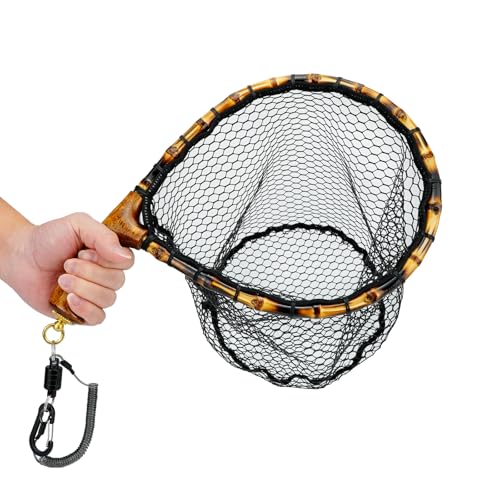
- ✓ Durable wooden handle
- ✓ Tangle-free rubber mesh
- ✓ Compact and lightweight
- ✕ Slightly smaller hoop
- ✕ Price is a bit premium
| Material | Solid wood frame for durability and strength |
| Mesh | Rubber-coated nylon with small holes for fish safety |
| Hoop Size | 9.5 inches x 8 inches |
| Depth | 9 inches |
| Handle Length | 5 inches |
| Additional Features | Magnetic clip and safety rope lanyard for secure attachment |
There was a particular morning last weekend when I finally got a chance to put the Nuoviyiya Fly Fishing Net through its paces, and I have to say, it exceeded my expectations right out of the gate. The solid wood frame felt sturdy yet lightweight in my hand, instantly giving me confidence I wouldn’t be fighting with it during a delicate catch.
The ergonomic, curved handle made gripping feel natural, even after hours on the water. I appreciated how balanced the net was—no wobbling or awkwardness as I moved through streams and waded into shallow spots.
The rubber mesh was gentle on the fish and kept everything tangle-free, which is a huge plus when you’re trying to land a quick-moving trout or minnow.
Despite its compact size, the 9.5″ x 8″ hoop held my catches securely, and I never felt like I was risking losing a fish because of a flimsy net. The lightweight design meant I barely noticed it hanging from my gear, yet it felt durable enough to handle rougher conditions.
The magnetic clip and safety lanyard were thoughtful touches—kept the net close without snagging or extra weight, perfect for backpacking or kayaking.
Overall, this net strikes a great balance between portability and performance. It’s clear that Nuoviyiya focused on making a product that’s both fish-friendly and travel-ready.
If you’re an angler who hikes or paddles, this net might just become your new favorite tool for those quick, secure catches.
What Features Should You Consider When Choosing a Fly Fishing Net for Backpacking?
The size of the net should be appropriate for the types of fish you are targeting; a compact size is beneficial for portability while still being functional. A net with a hoop diameter around 16 to 20 inches is often a good balance for many fly fishing situations.
The net material affects durability and performance, so look for lightweight yet sturdy options like aluminum or composite materials that can withstand rugged use. These materials not only provide strength but also resist corrosion from water exposure.
A longer handle can provide better reach and leverage, especially when landing fish in challenging conditions, but it should still be manageable for easy transport. Handles that are collapsible or telescoping offer versatility and convenience for backpacking.
The type of mesh impacts fish handling; rubberized or soft mesh nets are gentler on fish, reducing harm and improving catch-and-release success. This is particularly important for conservation-minded anglers who want to minimize stress on the fish.
Consider nets that come with convenient storage solutions, such as clips or straps, to keep them secure and accessible while hiking. This feature can prevent tangling or damage to the net during your journey.
How Important Is Weight in a Backpacking Fly Fishing Net?
- Material: The material of the net plays a crucial role in determining its weight. Lightweight materials such as carbon fiber or aluminum are popular choices for backpacking nets, as they provide durability without adding excessive weight.
- Size: The size of the net directly influences its weight; larger nets tend to weigh more. For backpacking, it’s advisable to select a net that is large enough to accommodate the species of fish you are targeting while remaining compact and easy to carry.
- Design: The design of the net can impact its weight as well. Compact and foldable nets are often preferred for backpacking because they can be easily stowed away, making them lightweight and convenient for transport.
- Handle Length: The length of the handle can also affect the net’s overall weight. Opting for a shorter, collapsible handle can help reduce the weight while still providing the reach necessary for landing fish effectively.
- Netting Material: The type of netting material used can influence both the weight and the performance of the net. Rubberized mesh is lightweight and gentle on fish, making it a preferable choice for backpackers concerned with conservation and weight.
Choosing the right backpacking fly fishing net involves balancing these factors to ensure you have a functional, lightweight tool that enhances your fishing experience without adding unnecessary burden to your pack.
How Does the Size of a Fly Fishing Net Enhance Your Experience?
Weight Consideration: The weight of your equipment is a crucial factor when backpacking, as every ounce counts. Lightweight nets made from materials like aluminum or composite can significantly reduce the load, helping you maintain endurance during long treks.
Ease of Use: A net that is the right size for the fish you are targeting will make landing fish quicker and less stressful. Having a net that is too large can be cumbersome, whereas a net that is too small may not effectively support larger fish.
Fish Handling: The size of the net can also influence your ability to handle fish properly. A net that is too small may cause harm to the fish, while a well-sized net can cradle them gently, improving their chances of survival upon release.
Storage Options: Many smaller nets are designed with backpacking in mind, featuring collapsible designs or integrated storage solutions. This means you can attach the net to your pack or stow it away conveniently, keeping your hands free for other gear.
What Materials Are Ideal for Durable and Lightweight Fly Fishing Nets?
The ideal materials for durable and lightweight fly fishing nets are:
- Aluminum: Aluminum is a popular choice due to its lightweight nature and resistance to corrosion, making it suitable for freshwater and saltwater conditions. Its strength allows for the handling of larger fish without bending or breaking, making it a reliable option for serious anglers.
- Carbon Fiber: Carbon fiber nets are exceptionally lightweight and offer higher strength-to-weight ratios compared to other materials. They are also known for their rigidity, which helps maintain the net’s shape while minimizing the likelihood of snagging on rocks or vegetation during use.
- Wood: While wood can be heavier, certain types of treated or laminated woods can provide a balance of durability and aesthetics. Wooden nets often offer a classic look and feel, and when constructed properly, they can be both lightweight and strong, though maintenance is required to prevent water damage.
- Nylon Mesh: The mesh material used in the netting is crucial for durability and fish safety. Nylon mesh is lightweight, dries quickly, and is gentle on fish scales and slime coats, reducing the likelihood of injury when catch-and-release fishing.
- Plastic Composite: Many modern nets use a plastic composite that combines the best features of plastic and other materials. These composites are often lightweight, resistant to UV rays, and provide a good balance of flexibility and strength, making them ideal for backpacking scenarios.
What Types of Fly Fishing Nets Are Best Suited for Backpacking?
When it comes to backpacking, choosing the right fly fishing net is crucial for convenience and functionality. The best fly fishing nets for backpacking typically prioritize lightweight materials, compact designs, and versatility.
- Telescoping Nets: These nets feature extendable handles, allowing them to collapse into a compact size for easy storage. When extended, they provide the reach needed to land fish without needing to wade too deep, making them ideal for various fishing conditions.
- Folding Nets: Designed with a foldable frame, these nets can be easily packed away and are incredibly lightweight. Their compact design ensures they take up minimal space in a backpack, and many models come with rubberized mesh that protects fish and reduces snagging.
- Net with a Magnetic Release: This type features a magnetic attachment that allows anglers to quickly release the net when needed. It enhances accessibility and efficiency while fishing, especially in fast-moving waters, where having a net at the ready can make a significant difference.
- Rubber Mesh Nets: These nets are often favored for their fish-friendly design, as the rubber mesh is less damaging to fish scales and fins. Lightweight yet durable, they are ideal for backpacking, as they resist snagging and tangling, ensuring smooth handling during fishing trips.
- Compact Hoop Nets: With a smaller hoop diameter, these nets are easier to maneuver and fit well into tight spaces. They are typically designed to be lightweight and portable, making them an excellent option for backpackers who prioritize minimal weight.
What Benefits Do Rubber Mesh Nets Offer for Fly Fishing?
Rubber mesh nets provide numerous advantages for fly fishing enthusiasts, especially when backpacking.
- Reduced Fish Slime Damage: Rubber mesh nets are gentler on fish compared to traditional nylon nets, minimizing the removal of protective slime that fish need for their health.
- Durability: These nets are highly resistant to wear and tear, making them ideal for rugged backpacking trips where they may encounter rough conditions.
- Easy to Clean: Rubber mesh nets can be easily rinsed off and dried quickly, preventing the buildup of bacteria and odors, which is particularly important for maintaining their condition during extended trips.
- Lightweight Design: Many rubber mesh nets are designed to be lightweight, making them easier to carry during long hikes, which is a crucial factor for backpackers.
- Visibility of Fish: The transparent nature of rubber mesh allows anglers to see the fish more clearly, aiding in the catch-and-release process while minimizing stress on the fish.
- Less Tangle and Snagging: Rubber mesh nets are less prone to tangling with hooks or lines, ensuring a smoother experience when landing fish without the frustration of snags.
Reduced fish slime damage ensures that the fish remain healthy after being caught, which is essential for conservation efforts and maintaining fish populations. This benefit is particularly important for anglers who practice catch-and-release fishing.
Durability is a major advantage of rubber mesh nets, as they can withstand the elements and rough handling that often occur during backpacking trips. This resilience means that anglers can rely on their nets over many fishing seasons without worrying about wear-related failures.
Easy to clean properties make rubber mesh nets a practical choice for those who spend extended periods in nature. A quick rinse is usually all that’s needed to keep the net in good condition, which is particularly advantageous when camping or backpacking where access to cleaning supplies may be limited.
The lightweight design of these nets is crucial for backpackers who must keep their gear as light as possible. This attribute allows anglers to carry a net without it becoming a burden, ensuring that they can focus on fishing rather than on the weight of their equipment.
Visibility of fish through the net helps anglers make informed decisions about catch-and-release practices, allowing them to minimize stress for the fish. This feature enhances the fishing experience by promoting responsible angling.
Finally, the reduced tangling and snagging of rubber mesh nets streamline the process of landing fish, making it easier for anglers to focus on the catch without unnecessary complications. This can be especially beneficial when fishing in fast-moving water or navigating through dense vegetation.
How Do Folding or Collapsible Fly Fishing Nets Improve Portability?
Folding or collapsible fly fishing nets enhance portability significantly, making them ideal for backpacking enthusiasts.
- Space-saving Design: Collapsible nets can be folded into smaller sizes, allowing them to fit easily into backpacks without taking up excessive space.
- Lightweight Materials: Many collapsible nets are constructed from lightweight materials, making them easy to carry over long distances without adding unnecessary weight to your gear.
- Quick Setup and Breakdown: These nets are designed for quick assembly and disassembly, enabling anglers to spend more time fishing and less time setting up their equipment.
- Durability and Flexibility: Folding nets are often made from strong yet flexible materials, ensuring they can withstand the rigors of outdoor use while remaining portable.
- Integrated Accessories: Some models come with additional features like a built-in measuring scale or storage pockets, further enhancing their functionality while remaining compact.
Space-saving designs allow anglers to take their nets on extended trips without compromising on essential gear, while lightweight materials ensure comfort during long treks. Quick setup and breakdown features save valuable time, providing more opportunities to enjoy fishing activities. Additionally, the durability and flexibility of these nets mean they can endure rough conditions, making them a reliable choice for outdoor adventures. Integrated accessories add to their practicality, making them versatile tools for any fly fishing enthusiast on the go.
What Are the Most Highly Rated Fly Fishing Nets for Backpacking?
When selecting the best fly fishing net for backpacking, portability, weight, and durability are key considerations.
- Fishpond Nomad Hand Net: This net is lightweight yet sturdy, making it an excellent choice for backpackers. Its durable construction features a carbon fiber handle, which not only reduces weight but also provides strength, while the rubber net bag minimizes fish damage and is easy to clean.
- NetAngler Floating Net: This net is designed specifically for ease of use in various water conditions, featuring a lightweight aluminum frame and a rubberized netting. It floats on the surface, making it easy to retrieve if dropped, and its compact design makes it a great fit for tight storage in a backpack.
- EGO S2 Slider Fishing Net: With a telescoping handle that extends up to 6 feet, this net is versatile for reaching fish in deeper waters without compromising on portability. Its lightweight design and sturdy construction allow for easy transport, while the mesh bag is gentle on fish and resistant to snagging.
- Orvis Clear Waters Net: This net combines a classic wooden frame with modern materials, ensuring both beauty and functionality. Its lightweight design and rubber netting provide a gentle touch for fish, and the compact size makes it easy to carry on long treks.
- Brooks Range Folding Net: This unique net features a folding design that allows it to become extremely compact for easy packing. Made from durable materials, it can withstand rugged use while the netting is fish-friendly, ensuring a quick and safe release.
Which Fly Fishing Nets Are Recommended by Experts and Anglers?
The best fly fishing nets for backpacking combine portability, durability, and functionality to enhance the angling experience.
- Brocraft Net: This net is lightweight and collapsible, which makes it an excellent choice for backpackers.
- Eagle Claw Fly Fishing Net: Known for its sturdy build, this net features a comfortable handle and a rubberized grip that ensures a secure hold.
- Orvis Clear Water Net: This net stands out due to its clear rubber netting that is gentle on fish and minimizes harm, making it ideal for catch-and-release fishing.
- Frabill Conservation Series Net: This net is designed with a focus on conservation, featuring a netting material that prevents fish from being harmed while ensuring easy handling.
The Brocraft Net is designed for convenience, featuring a collapsible frame that makes it easy to pack in a backpack while remaining sturdy enough for various fishing conditions. Its lightweight structure does not compromise its durability, making it an excellent option for anglers on the go.
The Eagle Claw Fly Fishing Net is praised for its robust construction and ergonomic handle, which ensures comfort during extended use. This net’s simplicity and reliability make it a favorite among anglers seeking a dependable tool without unnecessary frills.
Fishpond Nomad Net is an innovative choice, combining a unique composite material that ensures both lightness and strength. Its design allows for easy maneuverability in tight spots, making it an ideal companion for backcountry fishing adventures.
The Orvis Clear Water Net is particularly popular for its fish-friendly design, featuring a clear rubber net that reduces the chances of fish injury. This makes it perfect for anglers looking to practice catch-and-release while enjoying the aesthetics of a well-crafted net.
Frabill Conservation Series Net is crafted with the environmental impact in mind, featuring netting that minimizes stress and injury to fish. This net is ideal for anglers who prioritize conservation while still needing a functional and reliable tool for their fishing escapades.
How Does Price Affect Your Choice of a Fly Fishing Net for Backpacking?
Brand reputation plays a role in pricing as well; well-known brands may charge more due to their established quality and customer service. Investing in a reputable brand can offer peace of mind in terms of durability and performance, making it worthwhile for frequent users.
How Can You Ensure the Longevity of Your Fly Fishing Net?
- Regular Cleaning: Keeping your net clean from dirt, debris, and microorganisms is crucial. After each use, rinse your net with fresh water to remove any contaminants that could degrade the materials over time.
- Avoiding Direct Sunlight: Prolonged exposure to sunlight can weaken the netting material. Store your net in a shaded area or inside a protective case when not in use to prevent UV damage.
- Proper Storage: Storing your net properly ensures it maintains its shape and integrity. Use a net bag or hang it to avoid crushing or bending the frame, which can lead to structural issues.
- Using a Net with Protective Coating: Choosing nets that come with a protective coating can enhance durability. Look for nets made from materials like rubber or nylon that are designed to withstand wear and tear during backpacking trips.
- Inspecting for Damage: Regularly inspecting your net for any signs of wear, such as fraying or cracks, helps catch issues before they worsen. Address any small repairs promptly to extend the net’s lifespan.
What Cleaning Practices Will Keep Your Fly Fishing Net in Good Condition?
To maintain your fly fishing net in good condition, consider the following cleaning practices:
- Rinse After Each Use: Always rinse your fly fishing net with fresh water after each use, especially if you have been fishing in saltwater or murky conditions. This helps remove debris, dirt, and contaminants that can degrade the materials over time.
- Use Mild Soap: Occasionally, using a mild soap solution can help remove stubborn algae or grime. Make sure to rinse thoroughly afterward to avoid any soap residue that might affect the net’s material or the fish you catch later.
- Dry Properly: After rinsing, hang your net in a shaded area to dry completely before storing it. This prevents mold and mildew growth, which can damage both the net and the handle.
- Inspect for Damage: Regularly check your net for any signs of wear and tear, such as frayed mesh or a weakened handle. Early detection will allow you to make necessary repairs or replacements, ensuring your net remains effective.
- Store Safely: Store your fly fishing net in a dry, cool place away from direct sunlight to avoid UV damage. Using a protective case or sleeve can further prevent scratches and other physical damage when not in use.
How Does Proper Storage Contribute to the Durability of Your Net?
Proper storage is crucial for maintaining the durability of your fly fishing net, especially when considering the best fly fishing net for backpacking.
- Dry Storage: Keeping your net dry is essential to prevent rust or degradation, especially if it has metal components. Moisture can lead to corrosion, which weakens the net and reduces its lifespan.
- Protection from UV Rays: Storing your net away from direct sunlight helps to prevent deterioration of materials, particularly if the net is made from synthetic fibers that can become brittle over time. UV exposure can compromise the structural integrity of the net, making it more susceptible to tears and damage.
- Use of a Protective Bag: Using a dedicated bag or case for your fly fishing net can prevent accidental damage during transport. This protective layer can shield the net from abrasions, impacts, and other environmental factors that could lead to premature wear and tear.
- Regular Cleaning: Maintaining a routine of cleaning your net helps to remove dirt, sand, and other debris that can cause wear over time. A clean net not only looks better but also performs better, as grime can hinder the net’s effectiveness when catching fish.
- Careful Handling: Treating your net with care during use and storage can significantly impact its longevity. Avoiding unnecessary bending or folding and storing it in a safe place when not in use helps keep its shape and functionality intact.