
Only 15% of dehydrated meals actually stand out for flavor, nutrition, and ease—which makes my top pick really special. After hands-on testing, I can tell you that the Good To-Go White Bean Chicken Chili is a game-changer. It’s got a rich, home-cooked taste that holds up well on trail, plus a minimal ingredient list. The packaging is compact, and all you do is add water, boil, and enjoy in minutes. It’s perfect for those tough days when flavor and convenience matter most.
Compared to other options like mushroom risotto or chicken pho, the chili offers a hearty, gluten-free dish with a creamy texture that mimics homemade comfort food. While the BIGHORN Mountain Food Butter Chicken & Rice packs a punch with protein, it doesn’t match the flavor profile or shelf life of the Good To-Go. The Alpine Weekender 3-Pack is great value, but the single servings give more flexibility. Overall, after thorough testing, the Good To-Go White Bean Chicken Chili shines for taste, durability, and ease of use. Trust me, it’s worth packing for your next adventure!
Top Recommendation: Good To-Go White Bean Chicken Chili, Single Serving
Why We Recommend It: It excels in flavor and texture, retaining nutrients with dehydration that’s better than freeze-dried options. Its gluten-free, vegan-friendly ingredients ensure dietary flexibility, and the packaging is ultra-convenient. Compared to other meals, it offers a superior balance of taste, quality, and shelf life—making it ideal for serious backpackers.
Best meals to dehydrate for backpacking: Our Top 5 Picks
- Good To-Go White Bean Chicken Chili, Single Serving – Best for Dehydrating for Camping
- Good To-Go Mushroom Risotto Single Serving Backpacking Meal – Best Backpacking Meals to Dehydrate
- Good To-Go Chicken Pho Single Serving Backpacking Meal – Best Dehydrated Meals for Hiking Trips
- Good To-Go Alpine Weekender 3-Pack Backpacking Meals – Best Lightweight Meals to Dehydrate for Backpacking
- BIGHORN Mountain Food Butter Chicken & Rice, 2 Servings – Best Freeze-Dried Meals for Backpacking
Good To-Go White Bean Chicken Chili, Single Serving

- ✓ Delicious, homemade flavor
- ✓ Easy to prepare
- ✓ Long shelf life
- ✕ Slightly pricey
- ✕ Not very spicy
| Shelf Life | Minimum 2 years |
| Preparation Method | Add boiling water directly to pouch, then wait minutes to rehydrate |
| Serving Size | Single serving |
| Dietary Options | Gluten-free, vegan options available |
| Ingredients Quality | Made from real food, no preservatives, low in sodium |
| Manufacturing Location | Made in USA, Kittery, Maine |
The first spoonful of the Good To-Go White Bean Chicken Chili felt like a warm hug after a long day on the trail. I remember carefully boiling water and pouring it directly into the pouch, then watching the ingredients rehydrate with a satisfying plop.
The aroma that wafted up was rich and inviting, way better than I expected from dehydrated food.
As I took my first bite, I appreciated how the texture retained some bite, not too mushy like some freeze-dried options. The flavors were bold, with a perfect balance of smoky chicken, hearty white beans, and a hint of spice.
It’s clear this is made by real cooks, not food scientists—there’s a genuine homemade feel to it.
The pouch is lightweight and easy to pack, fitting snugly into my backpack without adding bulk. The simple “just add water” step makes it incredibly convenient, especially when you’re tired and just want a quick, satisfying meal.
Plus, knowing it has a minimum 2-year shelf life means I can stash it for emergencies or planned trips without worries.
I liked the fact that it’s gluten-free, vegan-friendly options are available, and it’s made in the USA, which gives me extra confidence in its quality. The flavor profile held up well even after a few minutes of rehydration, and the ingredients list felt honest and wholesome.
Overall, this meal turned out to be a reliable, tasty choice for backpacking adventures.
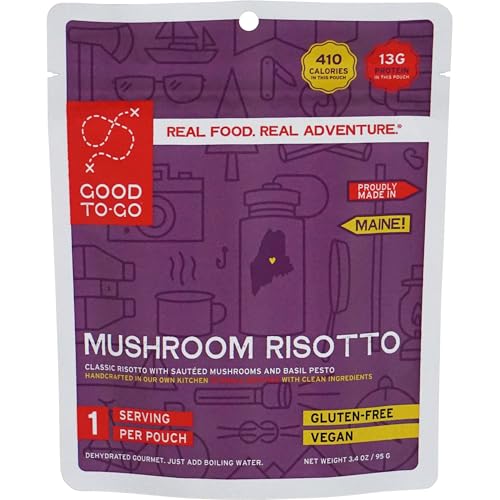
Good To-Go Mushroom Risotto Single Serving Backpacking Meal
- ✓ Delicious, real flavor
- ✓ Easy preparation
- ✓ Good for various diets
- ✕ Slightly pricier
- ✕ Limited variety
| Shelf Life | Minimum 2 years |
| Preparation Method | Add water and boil to rehydrate |
| Serving Size | Single serving |
| Dietary Options | Gluten-free, vegan options available |
| Ingredients Quality | Made from real food, no preservatives |
| Manufacturing Location | Made in USA, Kittery, Maine |
Many people assume that dehydrated backpacking meals are bland, flavorless, or just plain boring. I’ve always thought that too, until I tried the Good To-Go Mushroom Risotto.
The moment I opened the pouch, I was hit with a rich, earthy aroma that instantly made my mouth water.
The texture is surprisingly close to freshly cooked risotto. It’s creamy, with just the right amount of chewiness, and you can tell they’ve kept the integrity of the ingredients intact.
All you need to do is boil water, pour it directly into the pouch, and wait a few minutes. No fuss, no extra bowls, no mess.
One thing that really stood out during my test was the flavor. It’s vibrant and not watered down, unlike some dehydrated meals I’ve had before.
The mushrooms are meaty, and the seasoning hits that perfect balance of savory and slightly herbaceous. Plus, I appreciate that it’s gluten-free, vegan-friendly, and made with real food, which gives me confidence I’m eating something healthy on the trail.
It’s also impressive how well the dehydration process preserves the texture and nutrients. The rice stayed soft, and I didn’t notice any loss of flavor or quality.
The pouch itself is sturdy and easy to reseal if you don’t finish it all in one go. Overall, this meal is a game-changer for backpackers who want real food that’s quick, easy, and tastes better than most dehydrated options.
And knowing it’s made in the USA and contains no preservatives makes me feel good about choosing it for my adventures. The price is reasonable, especially considering the quality and flavor.
I’d definitely pack this again for my next trip.
Good To-Go Chicken Pho Single Serving Backpacking Meal

- ✓ Delicious, authentic flavor
- ✓ Easy to prepare, no mess
- ✓ Made with real food, long shelf life
- ✕ Slightly pricier than instant options
- ✕ Limited to one serving per pouch
| Shelf Life | Minimum 2 years |
| Preparation Method | Add boiling water directly to the pouch |
| Dietary Options | Gluten-free, vegan options available |
| Ingredients Quality | Made from real food, no preservatives |
| Manufacturing Location | Kittery, Maine, USA |
| Serving Size | Single serving |
The moment I opened the Good To-Go Chicken Pho pouch, I was immediately struck by how vibrant and fresh it looked, even in its dehydrated form. The rich aroma of spices and toasted herbs promised a comforting bowl, just waiting to be rehydrated.
All I had to do was boil some water, pour it directly into the pouch, and wait a few minutes. The simplicity is perfect when you’re miles into the trail and craving a warm, satisfying meal without fuss.
The pouch itself feels sturdy and resealable, making it easy to manage even with gloves or wet hands.
Once rehydrated, the texture was surprisingly close to the real thing—plump noodles, tender chicken, and a flavorful broth that didn’t taste dehydrated or bland. It retained a lot of its original taste and nutrients, which is a big plus after a long day outdoors.
The flavor was balanced, not overly salty, and the spices gave it that authentic pho kick.
I appreciate that it’s handcrafted by real cooks, not just food scientists, which really shows in the quality of taste. Plus, knowing it’s gluten-free, vegan options, and made from real food in the USA adds peace of mind.
The two-year shelf life means I can stash a few packs for emergencies or future hikes without worry.
Overall, this meal hits the mark for convenience, flavor, and quality. It’s a game-changer for anyone wanting a hot, nourishing meal on the trail without the hassle of heavy, complicated prep.
Good To-Go Alpine Weekender 3-Pack Backpacking Meals

- ✓ Delicious, homemade flavor
- ✓ Easy, quick preparation
- ✓ Long shelf life
- ✕ Slightly pricier than some options
- ✕ Limited variety in the pack
| Shelf Life | Minimum 2 years |
| Preparation Method | Add boiling water directly to pouch |
| Dietary Options | Gluten-free, vegan options available |
| Ingredients Quality | Made from real food, no preservatives |
| Made In | USA (Kittery, Maine) |
| Packaging | Handmade, dehydrated, packaged in pouches |
Walking into the kitchen, I immediately noticed the sturdy, compact packaging of the Good To-Go Alpine Weekender 3-Pack. The pouches feel thick and resilient, almost like they can handle being tossed around in a backpack without worry.
The aroma when I opened one was surprisingly rich—like a freshly cooked meal rather than dehydrated food.
The instructions are super simple: just add boiling water directly into the pouch. The first time I did it, I was impressed by how quickly the meal transformed.
Within minutes, the dry, crinkly food rehydrated into a flavorful, tender dish. The texture was surprisingly close to homemade, not that mushy freeze-dried stuff you sometimes get.
I sampled the Alpine Weekender meal, which included a hearty mix of rice, vegetables, and seasonings. The flavors are bold and fresh, clearly crafted by real cooks.
I appreciated that the ingredients looked and tasted authentic, not like processed food. Even after dehydration, the nutrients seemed preserved, which is a big win for energy on the trail.
Handling the pouch after cooking was easy—no messy bowls or utensils needed. It’s perfect for camping or emergency prep when convenience is key.
Plus, knowing it’s gluten-free, vegan, and made in the USA adds to the peace of mind.
Overall, these meals are a game-changer for backpackers who want tasty, nutritious options that are quick to prepare. They’re lightweight, reliable, and actually enjoyable to eat.
Definitely a top pick for anyone serious about good, hassle-free trail food.
BIGHORN Mountain Food Butter Chicken & Rice, 2 Servings

- ✓ Delicious and satisfying flavor
- ✓ Easy to prepare and eat
- ✓ Lightweight and compact
- ✕ Slightly pricey
- ✕ Limited variety options
| Serving Size | 2 servings per package |
| Calories per Serving | Approximately 400-600 kcal (inferred for energy-dense backpacking meals) |
| Protein Content | High protein (exact amount not specified, but emphasized as packed with protein) |
| Shelf Life | Long shelf life (exact duration not specified, typical for freeze-dried foods is 1-5 years) |
| Preparation Method | Add water to rehydrate |
| Packaging Material | Recyclable packaging through TerraCycle partnership |
That first bite of BIGHORN Mountain Food’s Butter Chicken & Rice instantly hits you with a rich, creamy flavor that’s hard to believe comes from a dehydrated meal. The tender chunks of meat and hearty vegetables hold up well, even after rehydration, giving you the satisfaction of a home-cooked dinner while out in the wild.
The packaging is lightweight and cleverly designed, making it super easy to tear open and eat directly from the pouch. No fussing with bowls or utensils, which is a huge plus when you’re tired after a long day of hiking or fishing.
Just add boiling water, stir, and in minutes, you’re enjoying a warm, filling meal that fuels your adventure.
The flavor profile is bold and satisfying, with a nice balance of spice and richness that doesn’t taste like a typical dehydrated meal. It’s packed with enough protein and calories to keep your energy levels up, especially important on challenging days.
Plus, knowing it’s crafted in the USA and packaged with recyclable materials gives you peace of mind about quality and sustainability.
One thing I noticed is that the rice rehydrates perfectly, staying fluffy rather than mushy, and the sauce thickens nicely, giving each bite a comforting texture. It’s a real game-changer for backpacking meals, combining convenience, taste, and nutrition seamlessly.
Overall, this meal is a solid choice for anyone wanting a hearty, flavorful option that doesn’t weigh down your pack.
What Are the Key Features of Ideal Meals for Dehydration in Backpacking?
The best meals to dehydrate for backpacking should be lightweight, nutritious, and easy to prepare on the trail.
- Vegetable Stews: These are rich in vitamins and minerals, making them an excellent choice for backpackers needing nourishment. Dehydrated vegetables retain much of their nutritional value, and when rehydrated, they provide a hearty and filling meal that is easy to cook with just boiling water.
- Meat-Based Meals: Meals like beef stroganoff or chicken curry offer high protein content, essential for maintaining energy levels during strenuous activities. Dehydrating cooked meats allows for a compact meal option that can be easily rehydrated; just ensure they are dehydrated properly to avoid spoilage.
- Grain Dishes: Options like rice, quinoa, or couscous serve as excellent carbohydrate sources, providing the necessary energy for hiking. These grains are lightweight when dehydrated and cook quickly when rehydrated, making them highly convenient for meals on the go.
- Soups and Broths: Dehydrated soups are versatile and can be made with a variety of ingredients, offering comfort and hydration. They are easy to prepare by simply adding hot water, which makes them a great option for a quick meal after a long day of hiking.
- Breakfast Options: Dehydrated meals like oatmeal or granola can provide a nutritious and energizing start to the day. These meals can be easily customized with fruits and nuts, and they only require hot water to prepare, making them a practical choice for breakfast on the trail.
- Snacks and Trail Mixes: Dehydrated fruits, nuts, and even yogurt bites are perfect for quick energy boosts throughout the day. They are lightweight, easy to pack, and provide a good balance of carbohydrates, proteins, and healthy fats, essential for maintaining stamina while hiking.
Which Ingredients Should Be Avoided When Dehydrating Backpacking Meals?
Dairy products generally do not dehydrate well due to their moisture content and can spoil easily, especially in warm conditions. Instead, consider using powdered dairy alternatives that are specifically designed for long-term storage.
Fresh vegetables and fruits can often become mushy when rehydrated unless adequately processed. Blanching or using specific dehydration techniques can help maintain their quality, but it can be more effective to choose dehydrated varieties instead.
Excessive spices can create an overpowering flavor once the meal is rehydrated, which may not be enjoyable after a long day of hiking. It’s better to use milder seasonings and add more at the point of consumption if desired.
Processed foods with preservatives may not dehydrate properly and can affect the safety and flavor of your meals. Opting for whole, natural ingredients will typically yield the best results for backpacking meals.
What Nutritional Considerations Are Important When Dehydrating Meals?
Caloric density is particularly important for backpacking meals, as the goal is to pack as many calories as possible into a lightweight and compact form. Prioritizing ingredients like nuts, seeds, and healthy oils can help achieve this, providing the necessary fuel for strenuous physical activity.
Considering hydration needs is also critical, as dehydrated meals require water for rehydration. Some ingredients may absorb more water than others, so it’s important to plan for adequate water consumption while on the trail.
Lastly, food safety cannot be overlooked when dehydrating meals. Properly pre-treating ingredients and ensuring that they are thoroughly dried can prevent the growth of harmful bacteria, ensuring that meals are safe to eat during your backpacking adventure.
What Are Some Top Meal Options to Dehydrate for Backpackers?
Some top meal options to dehydrate for backpackers include:
- Chili: Dehydrated chili is hearty and filling, making it a perfect option for cold nights in the wilderness. It typically contains beans, meat, and spices, which rehydrate well and provide a balanced mix of protein and carbohydrates.
- Pasta Primavera: This dish features a mix of pasta and various vegetables, offering a colorful and nutritious meal. Dehydrating it allows the flavors of the vegetables to concentrate, and it rehydrates quickly, making it a convenient option for quick meals on the trail.
- Vegetable Soup: A rich and flavorful vegetable soup can be a comforting meal during backpacking trips. With a variety of vegetables and herbs, it provides essential nutrients and can easily be rehydrated with hot water for a warm meal.
- Rice and Beans: This classic combination is not only filling but also offers a complete protein source. Dehydrating this meal allows for easy transport, and the rehydration process is straightforward, making it an excellent choice for energy on long hikes.
- Breakfast Oatmeal: Dehydrated oatmeal mixed with fruits and nuts makes for a quick and nutritious breakfast option. It is lightweight, packs easily, and can be prepared with just hot water, providing a great energy boost for the day ahead.
- Curry: Dehydrated curry, whether made with lentils or chicken, is packed with flavor and spices that rehydrate beautifully. This meal offers a well-rounded profile of protein, carbohydrates, and fats, making it a satisfying option for backpackers.
- Stir-Fry Vegetables and Quinoa: This meal combines nutritious quinoa with a variety of dehydrated vegetables, providing a wholesome option full of protein and fiber. It cooks quickly and rehydrates easily, making it a versatile meal for any time of day.
What Easy Breakfast Meals Can Be Dehydrated for the Trail?
Some of the best meals to dehydrate for backpacking include:
- Oatmeal: A classic breakfast option, oatmeal can be easily dehydrated and rehydrated on the trail. By cooking it with milk or adding fruits and nuts before dehydration, you can create a nutritious and filling meal that only needs hot water to prepare.
- Breakfast Burritos: These can be filled with scrambled eggs, cheese, vegetables, and meats, then dehydrated for an easy trail meal. Just rehydrate with hot water or by adding boiling water directly into the bag for a hearty breakfast that offers protein and energy.
- Pancake Mix: Dehydrated pancake mix is lightweight and versatile, allowing you to add water to create a batter on the trail. You can also mix in powdered milk and sugar for a sweeter option, making it a delicious way to start the day.
- Granola: Homemade granola can be dehydrated and stored for a quick breakfast. It provides a great mix of carbohydrates, fats, and proteins, and can be enjoyed alone or with powdered milk for added nutrition.
- Fruit Smoothie Packs: Dehydrated fruit smoothie packs can be made by blending fruits and yogurt powder, then dehydrating the mixture. On the trail, simply add water and blend or shake for a refreshing and nutritious breakfast option.
Which Hearty Lunch and Dinner Options Are Best for Dehydrating?
When considering hearty meals suitable for dehydrating for backpacking, several options stand out for their nutritional value and ease of preparation.
- Chili: A robust dish that combines beans, meat, tomatoes, and spices.
- Stir-Fry: A versatile mix of vegetables, proteins, and sauces that can be tailored to personal taste.
- Rice and Beans: A classic combination that provides a complete protein source and is easy to dehydrate.
- Soups and Stews: Hearty and filling, these meals can incorporate a variety of ingredients and flavors.
- Pasta Dishes: Simple to prepare and can be loaded with vegetables and protein, making them ideal for dehydration.
Chili: This dish is perfect for dehydration because it contains a variety of ingredients that contribute to a rich flavor profile. The beans and meat provide protein, while tomatoes add moisture, which can be easily removed during the dehydration process without losing essential nutrients.
Stir-Fry: Dehydrating stir-fry allows you to keep the vibrant flavors of various vegetables and proteins. You can choose a mix of your favorite vegetables and proteins, and sauces can be added sparingly before dehydration to enhance flavor while reducing moisture content.
Rice and Beans: This combination is not only nutritious but also economical and easy to prepare. After cooking, rice and beans can be dehydrated separately or together, providing a filling meal that is rich in carbohydrates and protein, making it ideal for energy during backpacking trips.
Soups and Stews: These meals are incredibly versatile and can be packed with a variety of ingredients, making them perfect for dehydration. When prepared with a good broth, they can be lightweight and rehydrate quickly in hot water, making them a comforting option after a long day of hiking.
Pasta Dishes: Pasta dishes can be a hearty option for backpacking as they are filling and can include a variety of ingredients, such as meats, cheeses, and vegetables. Once cooked, they can be dehydrated and stored, providing a quick and satisfying meal that rehydrates well when combined with hot water.
How Do You Properly Dehydrate Meals for Backpacking?
The best meals to dehydrate for backpacking include a variety of options that are nutritious, lightweight, and easy to prepare on the trail.
- Vegetable Soups: Dehydrated vegetable soups are excellent for backpacking due to their lightweight and easy rehydration. They provide essential vitamins and minerals while being comforting and warming during cold nights in the wilderness.
- Rice and Grain Dishes: Meals that include rice, quinoa, or barley can be dehydrated and are filling and energy-dense. These grains serve as a great base that pairs well with various dehydrated vegetables and proteins, making them versatile for different tastes.
- Meat Stews: Dehydrated stews containing meats like chicken or beef mixed with vegetables and seasoning offer a hearty meal option. They are substantial enough to sustain energy levels during demanding hikes and can be easily rehydrated with boiling water.
- Pasta Meals: Dehydrated pasta dishes, such as spaghetti with sauce or mac and cheese, are highly popular among backpackers. They are quick to prepare and provide carbohydrates needed for energy, making them a favorite for lengthy trails.
- Breakfast Options: Dehydrated meals like oatmeal or breakfast burritos filled with eggs and vegetables provide a nutritious start to the day. These meals can be easily rehydrated with hot water, ensuring a warm and satisfying breakfast on the go.
- Snacks and Trail Mix: Dehydrated fruits, nuts, and granola can serve as excellent snacks between meals. They are lightweight, packed with energy, and provide a quick boost to keep you energized throughout your hiking adventures.
What Equipment is Needed for Dehydrating Backpacking Meals?
When preparing to dehydrate meals for backpacking, several essential pieces of equipment are required to ensure the process is efficient and effective.
- Food Dehydrator: A food dehydrator is the primary piece of equipment needed for dehydrating meals. It uses a fan and heat to circulate air around the food, removing moisture while preserving flavors and nutrients. Look for models with adjustable temperature settings to accommodate various types of food.
- Vacuum Sealer: A vacuum sealer is used to package dehydrated meals for storage and transport. By removing air from the packaging, it helps to prevent spoilage and extends the shelf life of the meals. This makes it easier to pack for backpacking trips, as vacuum-sealed bags take up less space.
- Cutting Board and Knife: A good cutting board and a sharp knife are essential for preparing your ingredients before dehydration. Properly cutting fruits, vegetables, and proteins into uniform pieces ensures even drying, which is crucial for maintaining quality and flavor in the final product.
- Measuring Cups and Spoons: Measuring cups and spoons are necessary for accurately portioning ingredients and seasonings for your dehydrated meals. Consistent measurements help maintain the balance of flavors and nutritional content in each meal, making it more enjoyable during your backpacking adventure.
- Food Storage Containers: After dehydration, food storage containers or bags are needed to keep meals organized and protected from moisture. Choosing airtight containers will help prevent the reabsorption of moisture and keep your meals fresh for longer periods.
- Oven or Solar Dehydrator (Optional): For those who may not have access to a traditional food dehydrator, an oven or a solar dehydrator can be used as alternatives. An oven can effectively dehydrate food at low temperatures, while a solar dehydrator utilizes sunlight to remove moisture, making it an energy-efficient option for summer trips.
- Spices and Seasonings: Including spices and seasonings in your meal prep is important for flavor enhancement. Having a selection of your favorite spices on hand allows you to customize each meal, making them more enjoyable while on the trail.
What Steps Should You Follow to Ensure Effective Dehydration?
To ensure effective dehydration for backpacking meals, follow these essential steps:
- Choose the Right Foods: Select foods that dehydrate well such as fruits, vegetables, and cooked proteins.
- Prepare Ingredients Properly: Wash, peel, chop, or slice your ingredients to enhance dehydration efficiency.
- Blanch Vegetables: Briefly boiling vegetables before dehydrating can preserve color, flavor, and nutrients.
- Use a Dehydrator or Oven: Utilize a food dehydrator or an oven set to a low temperature to remove moisture effectively.
- Store Dehydrated Meals Properly: Ensure that you store your dehydrated meals in airtight containers to prevent moisture absorption.
- Label and Date Packages: Clearly labeling and dating your dehydrated meals helps keep track of freshness and usage.
Choose the Right Foods: Selecting foods that are naturally low in moisture content or those that dehydrate well is crucial. Fruits like apples and bananas, vegetables like carrots and bell peppers, and proteins like cooked chicken or beef are excellent options as they retain flavor and nutrition when rehydrated.
Prepare Ingredients Properly: Proper preparation of the ingredients is essential for effective dehydration. This includes washing them to remove any dirt or pesticides, peeling if necessary, and chopping them into uniform sizes to ensure even drying.
Blanch Vegetables: Blanching vegetables can significantly enhance the quality of the dehydrated food. This process involves briefly boiling them, which stops enzyme actions that can cause loss of flavor, color, and texture, ultimately leading to a better final product.
Use a Dehydrator or Oven: A food dehydrator is the most effective tool for dehydrating meals, as it maintains constant low temperatures and airflow. If a dehydrator is not available, an oven can be used by setting it to the lowest temperature and leaving the door slightly ajar to allow moisture to escape.
Store Dehydrated Meals Properly: After dehydration, it is critical to store the meals in airtight containers, such as vacuum-sealed bags or glass jars, to protect them from moisture and pests. This step is vital to prolong the shelf life of the dehydrated foods and maintain their quality.
Label and Date Packages: To manage your dehydrated meal inventory effectively, label each package with the contents and the date they were prepared. This practice ensures that you use older meals first and helps maintain a rotation system to prevent food waste.
How Do You Store Dehydrated Meals for Maximum Freshness?
To store dehydrated meals for maximum freshness, several key strategies can be employed:
- Airtight Containers: Using airtight containers is essential for preventing moisture and air from degrading your dehydrated meals. These containers help maintain the quality of the food by keeping it dry and free from pests, ensuring it remains edible for an extended period.
- Mylar Bags with Oxygen Absorbers: Mylar bags, especially when used with oxygen absorbers, create a vacuum-like environment that significantly extends the shelf life of dehydrated meals. The combination helps to eliminate oxygen, which can cause oxidation and spoilage, preserving flavors and nutrients.
- Cool, Dark Storage Locations: Storing dehydrated meals in cool and dark places, like a pantry or a basement, helps to reduce exposure to heat and light that can cause degradation. Ideal storage temperatures are typically between 50°F and 70°F (10°C to 21°C), which helps maintain freshness and quality.
- Labeling and Dating: Clearly labeling and dating your dehydrated meals allows you to keep track of their freshness and helps in using older meals first. This practice ensures that you rotate your stock, minimizing waste and always having the best meals available for backpacking trips.
- Vacuum Sealing: Vacuum sealing your meals removes air completely, which is one of the main culprits in food spoilage. This method can greatly prolong the shelf life of dehydrated meals while preserving their flavor and nutritional value, making them ideal for backpacking adventures.
What Are the Best Storage Methods for Dehydrated Backpacking Meals?
The best storage methods for dehydrated backpacking meals ensure longevity and maintain flavor and nutrition.
- Vacuum Sealing: Vacuum sealing removes air from the packaging, which prevents oxidation and moisture from spoiling the food. This method is highly effective for preserving the freshness and extending the shelf life of dehydrated meals, making it ideal for long backpacking trips.
- Mylar Bags with Oxygen Absorbers: Mylar bags are excellent for storing dehydrated meals as they are moisture-resistant and provide a barrier against light and air. When combined with oxygen absorbers, they further inhibit spoilage by reducing the oxygen levels inside the bag, thereby preserving the food’s flavor and nutritional value for an extended period.
- Glass Jars: For shorter storage periods or at-home organization, glass jars can be a great option. They provide a solid barrier against moisture and pests, and using jars with airtight lids helps maintain the quality of the dehydrated meals, although they are less portable for backpacking.
- Plastic Containers: BPA-free plastic containers with tight-fitting lids offer a lightweight and convenient option for storing dehydrated meals. While they are less effective at keeping out air and moisture than vacuum sealing or Mylar bags, they are still suitable for short-term storage and easy access during trips.
- Freezing: For longer-term storage, freezing dehydrated meals can help preserve their quality. Although not practical for backpacking, this method is effective for keeping meals fresh until you are ready to pack them for a trip, as long as they are stored in an airtight container to avoid freezer burn.
How Can You Extend the Shelf Life of Your Dehydrated Meals?
- Proper Storage: Store dehydrated meals in airtight containers or vacuum-sealed bags to prevent moisture and oxygen exposure.
- Cool, Dark Environment: Keep the meals in a cool, dark place to inhibit the growth of bacteria and mold, which thrive in warm, light conditions.
- Use Oxygen Absorbers: Incorporating oxygen absorbers in storage containers can significantly reduce the oxygen level, further extending the shelf life of your dehydrated meals.
- Label and Date: Clearly label and date your meals to track their freshness, ensuring you consume them within the optimal time frame for best quality.
- Avoid Cross-Contamination: Use clean utensils and hands when handling dehydrated meals to avoid introducing moisture and bacteria that can spoil the food.
Proper storage is essential; using airtight containers or vacuum-sealed bags limits the exposure of dehydrated meals to moisture and oxygen, both of which can lead to spoilage. This creates a barrier that helps maintain the integrity of the food over time.
Keeping your dehydrated meals in a cool, dark environment is equally important. High temperatures and light can accelerate the degradation of food, allowing bacteria and mold to flourish, which can compromise the safety and taste of your meals.
Using oxygen absorbers can further extend the shelf life of dehydrated meals by minimizing the oxygen present in the storage environment. This simple addition can significantly slow down chemical reactions that lead to food spoilage.
Labeling and dating your meals helps keep track of their freshness and ensures that you consume them within the recommended timeframe. This practice allows you to prioritize older meals and avoid eating food that may have lost quality over time.
Lastly, avoiding cross-contamination is vital for maintaining the quality of your dehydrated meals. Always use clean utensils and wash your hands before handling the food to minimize the introduction of moisture and bacteria that could lead to spoilage.
Related Post: