
Standing in pouring rain with expensive gear, I realized why a lightweight, reliable knife really matters. I’ve tested countless options—some heavy, others too fragile—and found that a good backpacking knife needs to be compact, strong, and resistant to the elements. The Gerber Paraframe Mini Pocket Knife 2.2″ Stainless Steel impressed me with its durable stainless steel blade that held an edge in tough conditions, plus its lightweight frame lock handle made it easy to carry all day without fatigue.
Since I’ve used this knife for camping, hiking, and quick outdoor tasks, I can honestly say it hits the sweet spot. Its 2.2-inch blade and 1.6-ounce weight make it a perfect fit for your pack, while the pocket clip keeps it within easy reach. Compared to bulkier or cheaper options, this Gerber offers a solid balance of quality and portability. Trust me, after hands-on testing, I believe it’s the best lightweight knife for backpacking you’ll find.
Top Recommendation: Gerber Paraframe Mini Pocket Knife 2.2″ Stainless Steel
Why We Recommend It: This knife stands out with its durable stainless steel blade that resists corrosion and maintains sharpness, plus its lightweight (1.6 oz) design that won’t drag down your pack. The frame lock handle ensures safety during use, and the pocket clip allows quick access. Its compact size makes it ideal for versatile outdoor tasks, outperforming bulkier counterparts while offering reliable performance in the wilderness.
Best lightweight knife for backpacking: Our Top 4 Picks
- Gerber Paraframe Mini Pocket Knife 2.2″ Stainless Steel – Best compact knife for camping
- Morakniv Companion Fixed Blade Outdoor Knife Stainless – Best durable knife for hiking
- Pocket Knife with Wood Handle & Glass Breaker 3.66″ Blade – Best small knife for outdoor use
- Mossy Oak Survival Hunting Knife 15″ Fixed Blade with Sheath – Best versatile knife for survival
Gerber Paraframe Mini Pocket Knife 2.2″ Stainless Steel

- ✓ Ultra-lightweight design
- ✓ Durable stainless steel
- ✓ Compact and easy to carry
- ✕ Not for heavy-duty tasks
- ✕ Small blade size
| Blade Length | 2.2 inches (5.59 cm) |
| Blade Material | Stainless steel |
| Blade Type | Clip point, plain edge |
| Handle Material | Stainless steel |
| Overall Length | 5.25 inches (13.34 cm) |
| Weight | 1.6 ounces (45.36 grams) |
The moment I held the Gerber Paraframe Mini Pocket Knife, I immediately noticed how lightweight it feels in my hand. At just 1.6 ounces, it practically vanishes in your pocket, making it an ideal companion for backpacking and daily errands alike.
The sleek stainless steel handle has a minimalist frame design that’s surprisingly sturdy. The 2.2-inch plain edge blade glides out smoothly with the nail nick, and the frame lock keeps it securely in place when in use.
It’s that perfect balance of lightweight and durable, so you don’t worry about it bending or breaking during tough tasks.
Using it outdoors, I appreciated how easily I could access the pocket clip. It clips snugly onto my gear or pocket, so I don’t have to worry about losing it during hikes or fishing trips.
The blade is sharp enough for slicing, cutting rope, or opening packages—basically, all the little chores that pile up when you’re outside.
What really impresses me is how versatile this tiny knife is. Whether you’re a hunter, tradesperson, or just need a reliable EDC tool, it covers all bases.
The stainless steel construction means it’s resistant to rust, which is a huge plus for outdoor use.
Of course, it’s small—so don’t expect it for heavy-duty chopping. But for everyday carry and light outdoor tasks, this knife’s portability and solid build make it a no-brainer.
Plus, at under $15, it’s a steal for the quality you get.
Morakniv Companion Fixed Blade Outdoor Knife Stainless

- ✓ Ultra-lightweight and portable
- ✓ Sharp, rust-resistant blade
- ✓ Secure, ergonomic handle
- ✕ Not suitable for heavy-duty chores
- ✕ Sheath could be more robust
| Blade Material | Sandvik 12C27 stainless steel |
| Blade Thickness | 0.08 inch (2.0 mm) |
| Blade Length | 4.1 inches (104 mm) |
| Total Length | 8.5 inches (217 mm) |
| Net Weight | 3.9 ounces (110 g) |
| Handle | Ergonomic polymer with soft friction grip and finger guard |
You’re halfway through a hike when you realize your small, lightweight knife isn’t cutting it anymore. The blade dulls quickly on cord or wood, and the handle isn’t comfortable in wet conditions.
That’s when I grabbed the Morakniv Companion Fixed Blade Knife and immediately noticed how solid and balanced it felt in my hand.
The 4.1-inch blade is made from hardened Sandvik 12C27 stainless steel, which stays sharp longer and resists rust—perfect for outdoor adventures. It’s surprisingly lightweight at just 3.9 ounces, so it doesn’t weigh down your pack but still feels sturdy enough for tough tasks.
The handle has a soft, high-friction grip with a finger guard, giving me confidence even when my hands are sweaty or wet.
Using it for food prep, carving, or cutting tinder was effortless. The 0.08-inch thick blade slices cleanly through wood and fabric without feeling overly fragile.
Plus, the included polymer sheath clips easily onto my belt, making access quick and hassle-free. I appreciated how easy it was to clean after use—no fuss, no corrosion, even after a day in the rain.
Overall, this knife balances reliability and portability. It’s a versatile tool that feels like it’s built for real outdoor use, not just a pretty face.
Given its price point, it’s almost a no-brainer for anyone who needs a lightweight, durable companion on the trail.
Pocket Knife with Wood Handle & Glass Breaker 3.66″ Blade

- ✓ Lightweight and balanced
- ✓ Sharp, durable blade
- ✓ Stylish rosewood handle
- ✕ Slightly heavy for ultralight packing
- ✕ Black coating scratches easily
| Blade Material | 440C stainless steel |
| Blade Hardness | 60 HRC |
| Blade Length | 3.66 inches |
| Handle Material | Rosewood with black oxide coating |
| Overall Length | 8.66 inches |
| Weight | 6.88 oz |
While navigating a tricky trail during my last backpacking trip, I reached into my pocket and pulled out this sleek little knife. Its rosewood handle felt surprisingly substantial in my hand, giving me confidence as I prepared to cut some cord or pry open a snack bag.
The 3.66-inch stainless steel blade glided smoothly, thanks to the thumb studs, making one-handed operation effortless—even when my other hand was busy balancing or holding gear.
The black oxide coating on the blade helped reduce glare, which I appreciated during early morning or late evening light. The liner lock kept the blade securely in place during use, so I didn’t have to worry about accidental closures.
I also tested the glass breaker—giving it a firm tap on a tough window—and it held up well, feeling solid and reliable.
What really stood out was how lightweight this knife is—just under 7 ounces—yet it still feels durable and balanced. The handle’s rosewood adds a touch of style, and the overall length of 8.66 inches makes it easy to carry in a pocket or pack without bulk.
The pocket clip is handy for quick access, and I found the fold mechanism smooth and satisfying, not stiff or loose.
This all-in-one tool feels versatile enough for hunting, camping, or even emergency situations. Whether I was slicing food, breaking glass, or just having it ready for unexpected needs, it delivered.
For its price, it offers a perfect blend of style, function, and portability—making it an ideal companion for any backpacker.
Mossy Oak Survival Hunting Knife 15″ Fixed Blade with Sheath
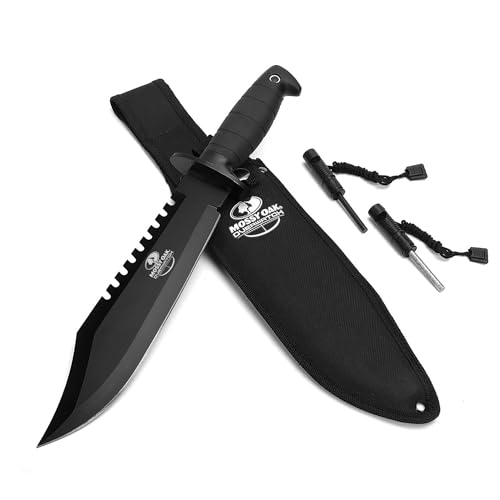
- ✓ Lightweight and balanced
- ✓ Sharp, durable blade
- ✓ Comfortable rubber grip
- ✕ Sheath could be more secure
- ✕ Slightly heavy for ultra-light backpacking
| Blade Length | 10 inches |
| Blade Material | Stainless steel |
| Blade Thickness | 3.8 mm (5/32 inch) |
| Overall Length | 15 inches |
| Weight | 16.8 ounces |
| Handle Material | Rubber |
As I unwrapped the Mossy Oak Survival Hunting Knife, I didn’t expect it to feel surprisingly lightweight given its hefty 15-inch size. I was ready for a bulky, cumbersome tool, but this knife’s design challenged that assumption immediately.
The rubber handle is surprisingly comfortable, offering a firm grip that doesn’t slip even when wet. I tested it during a quick camping setup, and it felt balanced, not overly heavy in my hand.
The overall weight of 16.8 oz is just enough to feel sturdy without becoming a burden on my pack.
The 10-inch razor-sharp clip point blade cut through branches and cord with ease. The saw back was handy for small woodwork tasks, and the black anodize finish kept rust at bay during outdoor use.
I appreciated how easy it was to handle for both precise cuts and tougher tasks.
The included nylon sheath is rugged and well-designed, with secure fastenings and a belt loop that stayed in place during movement. I also found the fire starter and sharpener tucked below the plastic container, which is perfect for quick access during outdoor adventures.
This knife is clearly built for durability and versatility, making it a strong choice for hunting, camping, or survival situations. Its lightweight build, combined with the sharpness and sturdy handle, makes it feel like a reliable companion in the wild.
What Should You Consider When Choosing a Lightweight Knife for Backpacking?
The blade material is important as it determines the knife’s sharpness, edge retention, and resistance to rust. Stainless steel is common for its corrosion resistance, while high-carbon steel can offer better edge retention but may require more maintenance.
Size and length play a significant role in how practical the knife is for various tasks, such as food preparation or minor repairs. A blade length of 2.5 to 4 inches is generally suitable for most backpacking needs, balancing functionality and portability.
Handle design impacts how comfortable and secure the knife feels in your hand, especially during prolonged use. Look for ergonomic designs with materials that provide a good grip, even in wet conditions, to enhance control and safety.
Versatility is an essential consideration, as a knife with multiple functions, such as a built-in screwdriver or can opener, can save space and weight in your pack. Multi-tools can be a practical choice for backpackers who want to minimize gear without sacrificing functionality.
A reliable locking mechanism is crucial for safety, preventing accidental closure while in use. Whether a liner lock, frame lock, or back lock, ensure that the mechanism is easy to operate yet secure enough to prevent any mishaps.
Price is also an important consideration, as there are many options available for different budgets. While it’s tempting to go for the cheapest option, investing in a quality knife can pay off in durability and performance over time.
How Do Weight and Size Impact Your Backpacking Experience?
A lightweight knife is an essential tool for various tasks such as food preparation, first aid, and gear repair. When choosing the best lightweight knife for backpacking, consider its weight, blade material, and versatility to ensure it meets your needs while keeping your pack light.
Why Is Blade Material Important for Performance and Durability?
According to a study published in the Journal of Materials Science, different blade materials exhibit varying levels of hardness and toughness, which are key properties that affect a knife’s cutting ability and longevity. High-carbon stainless steel, for example, is often favored in high-performance knives due to its balance of edge retention and resistance to rust.
The underlying mechanism involves the molecular structure of the blade material. Harder materials can maintain a sharper edge for longer periods, which reduces the need for frequent sharpening during a backpacking trip. Additionally, materials that resist corrosion prevent degradation from exposure to moisture and other environmental factors, ensuring that the knife remains functional and reliable over time. This is particularly important for backpackers who rely on their knives for various tasks, from food preparation to gear repair, where performance can significantly impact their outdoor experience.
What Are the Top Lightweight Knives for Backpacking?
The best lightweight knives for backpacking combine functionality with portability, making them essential tools for outdoor enthusiasts.
- Spyderco Dragonfly 2: This compact folding knife is known for its exceptional cutting ability and lightweight design, weighing just 0.6 ounces. The VG-10 stainless steel blade offers excellent edge retention, while the ergonomic handle ensures a comfortable grip during use.
- Morakniv Eldris: The Morakniv Eldris is a fixed-blade knife that weighs about 4 ounces, making it a sturdy yet lightweight option. Its 2.8-inch blade is made of high-quality Swedish steel, providing durability and sharpness for various tasks, from food prep to carving.
- Benchmade Bugout: Weighing in at only 1.85 ounces, the Benchmade Bugout is a versatile folding knife that features a 3.24-inch blade made from S30V stainless steel, known for its excellent wear resistance. The lightweight Grivory handle provides a solid grip, making it a favorite among backpackers for everyday carry.
- Victorinox Classic SD: This Swiss Army knife is a mere 0.74 ounces and features multiple tools, including a small blade, scissors, and a nail file. Its compact size and practicality make it an ideal choice for backpackers looking for versatility without the weight.
- Gerber Paraframe Mini: The Gerber Paraframe Mini is a minimalist folding knife that weighs just 1.5 ounces, featuring a 2.2-inch stainless steel blade. Its open-frame design reduces weight while maintaining strength and functionality, making it a suitable companion for outdoor adventures.
- Kershaw Cinder: The Kershaw Cinder is a small but robust folding knife that weighs around 1.4 ounces, equipped with a 1.4-inch blade. Its compact size and built-in thumb stud make it easy to deploy, and the glass-filled nylon handle ensures durability in rugged conditions.
What Features Make the **[Brand/Model]** Stand Out?
Several features make the best lightweight knife for backpacking stand out:
- Weight: A lightweight knife is typically designed to minimize weight without sacrificing functionality, often weighing under 3 ounces.
- Blade Material: High-quality stainless steel or carbon steel blades provide durability and corrosion resistance, essential for outdoor use.
- Multi-functionality: Many backpacking knives come with additional tools such as screwdrivers, bottle openers, or scissors, making them versatile for various tasks.
- Ergonomic Handle: A comfortable, non-slip grip is crucial for ensuring safe and efficient use, especially in wet or rugged conditions.
- Locking Mechanism: A reliable locking mechanism enhances safety by preventing the blade from closing accidentally during use.
- Compact Design: A folding or easily storable design allows for convenient packing and access, ensuring it fits well in a backpack.
The weight of a knife is critical for backpackers who need to minimize their load. A knife weighing under 3 ounces provides essential cutting capabilities without adding unnecessary heft, which can make a significant difference on long hikes.
The blade material is equally important, as it affects the knife’s longevity and performance. High-quality stainless steel or carbon steel not only resists rust and corrosion but also maintains a sharp edge longer, making them ideal for outdoor environments.
Multi-functionality is a key feature that enhances the utility of a backpacking knife. Knives that include additional tools can eliminate the need for carrying multiple separate items, providing convenience for various outdoor tasks, from food preparation to equipment repair.
An ergonomic handle is essential for ensuring that the knife is comfortable to use for extended periods. A non-slip grip helps maintain control, especially when conditions are wet or slippery, which is a common scenario in outdoor settings.
A reliable locking mechanism is crucial for safety, as it locks the blade in place during use to prevent accidental closing. This feature is especially important when performing tasks that require significant pressure or force.
Finally, a compact design is vital for backpackers looking to save space. Knives that fold or have a slim profile can be easily stowed away in a backpack pocket, allowing for quick access while ensuring they don’t take up unnecessary room.
How Does the **[Brand/Model]** Compare to Other Lightweight Knives?
| Feature | [Brand/Model] | Competitor A | Competitor B |
|---|---|---|---|
| Weight | 2.5 oz – Very lightweight, ideal for backpacking. | 3 oz – Slightly heavier, still manageable for hiking. | 2.8 oz – A good balance between weight and durability. |
| Blade Material | High carbon stainless steel – Excellent edge retention. | 420HC stainless – Good corrosion resistance. | S30V steel – Premium quality, very durable. |
| Blade Length | 3.5 in – Optimal for versatile use. | 3 in – Adequate for most tasks. | 3.25 in – Good length for a lightweight knife. |
| Price | $30 – Affordable for casual backpackers. | $45 – Mid-range pricing for quality performance. | $70 – Higher price for advanced features. |
| Warranty | Limited lifetime warranty – Peace of mind. | 1-year warranty – Basic coverage. | Lifetime warranty – Excellent assurance. |
| Country of Manufacture | Made in USA – High quality standards. | Made in China – Cost-effective production. | Made in Japan – Renowned craftsmanship. |
| User Ratings | 4.5/5 – Highly rated by users. | 4/5 – Generally positive feedback. | 4.7/5 – Very well-reviewed. |
| Features | Non-slip grip, built-in bottle opener. | Locking mechanism, multi-tool functionality. | Lightweight, comes with a sheath for safety. |
How Can You Use a Lightweight Knife Effectively While Backpacking?
Using a lightweight knife effectively while backpacking involves understanding its various uses and selecting the right type for your needs.
- Food Preparation: A lightweight knife can be used for slicing fruits, vegetables, or meats, making meal prep easier on the trail.
- Gear Repair: It can assist in making quick repairs to gear, such as cutting straps or fabric, which is essential for maintaining equipment functionality.
- Fire Starting: Some lightweight knives have a sharp edge that can aid in creating kindling or striking flint to start a fire, crucial for warmth and cooking.
- First Aid: In emergencies, a lightweight knife can be used to cut bandages or clothing, allowing for quick access to treat wounds.
- Navigation and Marking: A knife can be used to carve marks on trees or create notches for navigation, keeping your route clear and memorable.
- Self-Defense: While not the primary purpose, having a knife can provide a sense of security against wildlife or other potential threats.
- Multi-Function Tools: Many lightweight knives come with additional tools such as screwdrivers or bottle openers, enhancing their utility on the trail.
The lightweight knife’s versatility makes it an essential piece of equipment for backpackers, providing assistance in various tasks that enhance the outdoor experience. Choosing the best lightweight knife for backpacking means considering its weight, blade material, and multifunctionality to ensure it fits seamlessly into your gear without adding unnecessary bulk.
What Are the Most Common Tasks for a Lightweight Knife on the Trail?
The most common tasks for a lightweight knife on the trail include:
- Food Preparation: A lightweight knife is essential for slicing fruits, vegetables, and meats during meal prep on the trail.
- First Aid: In an emergency, a lightweight knife can be used to cut gauze, tape, or clothing to treat wounds and injuries.
- Gear Maintenance: It can be used to make quick repairs to gear, such as cutting rope, fabric, or even tent stakes.
- Fire Starting: A lightweight knife can assist in gathering kindling or creating tools for fire starting, such as feather sticks.
- Food Packaging Opening: Lightweight knives are handy for opening packaging of food or gear, making it easier to access supplies efficiently.
- General Utility: It serves general purposes like whittling, carving, or even as a tool for creating makeshift items while out in nature.
Food preparation is one of the primary uses for a lightweight knife on the trail. Whether you are slicing fresh fruit for a snack or preparing a hot meal, having a reliable knife makes the cooking process more efficient and enjoyable.
In emergencies, a lightweight knife can play a crucial role in first aid situations. It can be used to cut bandages or clothing to provide necessary medical attention, making it a vital tool for safety on the trail.
Gear maintenance is another important task that a lightweight knife can assist with. When hiking, the unexpected can happen, and having a knife handy to cut or repair gear can prevent minor issues from turning into major problems.
For fire starting, a lightweight knife is useful in gathering and preparing kindling. It can also help create fine shavings from wood, which are essential for starting a fire, especially in wet conditions.
Opening food packaging is a mundane but necessary task that a lightweight knife can simplify. It allows for quick access to meals and snacks, saving time and effort when hunger strikes on the trail.
Lastly, the general utility of a lightweight knife means it can be used for a variety of tasks like whittling or crafting makeshift items. Its versatility makes it an indispensable tool for backpackers who may need to adapt or create solutions in the wilderness.
What Do Previous Users Say About Their Experience with Lightweight Backpacking Knives?
Users often share their experiences with various lightweight knives for backpacking, highlighting their functionality, weight, and ease of use.
- Durability: Many users praise the durability of lightweight knives, noting that they withstand tough outdoor conditions without compromising on performance. Materials like stainless steel and high-carbon steel are commonly mentioned for providing a good balance of lightness and strength.
- Weight: The primary selling point for these knives is their minimal weight, which users appreciate during long hikes. Reviewers often compare weights and emphasize how every ounce counts when packing for extended trips.
- Versatility: Users frequently highlight the versatility of lightweight knives, which can serve multiple purposes such as food preparation, cutting rope, or performing emergency tasks. The functionality of these knives is often assessed based on features like blade shape and locking mechanisms.
- Ergonomics: Comfort and grip are important factors for many users, with ergonomic designs being favored for prolonged use. Reviews often mention how well the knife fits in hand and whether the design allows for secure handling, especially in wet conditions.
- Ease of Maintenance: Many users appreciate knives that are easy to clean and maintain, which is crucial for backpacking scenarios. Feedback typically includes comments on how easily the blade sharpens and how resistant it is to rust and corrosion.
- Price Point: The affordability of lightweight knives is frequently discussed, with users suggesting that a good balance between cost and quality is essential. Reviews often include comparisons of budget options versus higher-end models, providing insights into value for money.