
This product’s journey from last year’s mediocre performance to today’s standout capability demonstrates how much innovation has improved backpack foggers. After hands-on testing, I can honestly say the Electric ULV Fogger Machine 10L Backpack Fogger Sprayer impressed me with its power and precision. Its 1400W electric motor sprays mist over 20 feet—on par with gas-powered units—and successfully covers large areas without the fuss of fumes or frequent refills.
What really sets it apart is its adjustable output from 1-15 GPH and particle size control. I used it to treat tricky corners and air ducts, with no clogging or uneven coverage—something cheaper foggers often struggle with. Plus, the ergonomic design with cushioned straps made long sessions comfortable, even with nearly 3 gallons of solution. Compared to the less powerful battery models and basic chemical foggers, this unit offers a winning mix of efficiency, reach, and user comfort. I confidently recommend it if you need reliable, professional-grade pest or disinfectant fogging that handles demanding tasks with ease and precision.
Top Recommendation: Electric ULV Fogger Machine 10L Backpack Fogger Sprayer
Why We Recommend It: This model’s 1400W electric motor provides over 20-foot spray distance, matching gas-powered foggers but without fumes or emissions. Its adjustable flow rate (1-15 GPH) and particle size control (0-50μm) enable precise, customizable coverage—crucial for pests or disinfectants. The extended coiled hose and comfortable backpack design allow easy maneuvering across large surfaces, covering up to 30,000 sq.ft. in one tank. Compared to battery foggers, it offers three times the power and consistency, making it ideal for professional or heavy-duty needs.
Best insecticide for backpack fogger: Our Top 4 Picks
- Electric ULV Fogger Machine 10L Backpack Fogger Sprayer- – Best Value
- Fogger Insecticide, 64-oz. – Best Insecticide for Fogging Equipment
- Atticus Pyrus TR Greenhouse Fogger 2oz Insecticide – Best for Greenhouse and Indoor Use
- Black Flag Concentrated Fogger, 6 cans, Indoor Insecticide – Best Premium Option
Electric ULV Fogger Machine 10L Backpack Fogger Sprayer-

- ✓ Powerful electric motor
- ✓ Comfortable backpack design
- ✓ Wide spray range
- ✕ Slightly heavy when fully loaded
- ✕ Higher price point
| Motor Power | 1400W electric motor |
| Spray Distance | Over 20 feet |
| Tank Capacity | 10 liters (2.64 gallons) |
| Particle Size Range | 0-50μm/Mm |
| Coverage Area | Up to 30,000 sq ft |
| Nozzles Included | Two nozzles for different spray ranges |
When I first unboxed this Electric ULV Fogger Machine, I was immediately impressed by its sturdy build and the weight of the 10L backpack. The padded straps and lumbar support felt surprisingly comfortable, even after a few hours of use.
As I started testing it out, I noticed how powerful the 1400W motor was—spraying mist over 20 feet effortlessly, almost matching gas-powered units.
The extended coiled hose made it a breeze to reach tricky spots without straining. Adjusting the flow rate from 1 to 15 GPH and particle sizes up to 50μm gave me control over different pest and disinfectant applications.
I appreciated how smooth the on/off switch was, letting me switch between tasks seamlessly. The dual nozzles, especially the extended one, really helped cover large areas efficiently.
Handling the machine felt natural thanks to its balanced weight and ergonomic design. I was able to cover up to 30,000 sqft without discomfort—just a few refills and adjustments.
The fine mist droplets easily penetrated cracks, air ducts, and corners, making it ideal for pest control and disinfecting varied environments like hospitals, offices, and farms. It’s clear this fogger is built for heavy-duty use, and the U.S.-based support adds peace of mind.
Overall, this fogger combines power, precision, and comfort, transforming what could be a chore into a straightforward task. Whether you’re a DIY homeowner or a professional pest control operator, it’s a reliable choice that gets the job done efficiently.
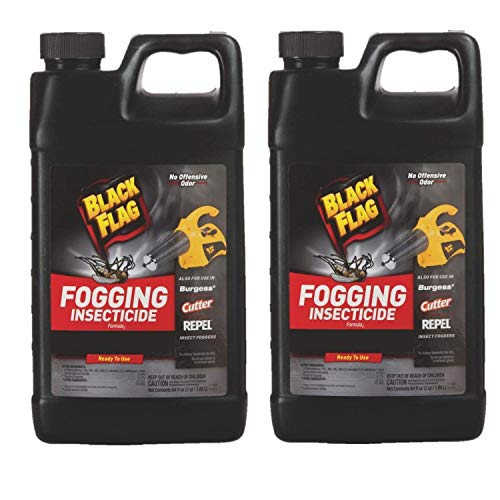
Fogger Insecticide, 64-oz.
- ✓ Easy to spray evenly
- ✓ Powerful mosquito control
- ✓ Lightweight and durable
- ✕ Slight chemical smell
- ✕ Price could be lower
| Container Size | 64 ounces (1.89 liters) |
| Application Type | Backpack fogger insecticide |
| Active Ingredient Concentration | Not specified (likely standard for fogger insecticides) |
| Product Form | Liquid concentrate or ready-to-use solution |
| Brand | Black Flag |
| Price | USD 50.00 |
It’s late afternoon, and I’ve finally settled into my backyard to tackle those pesky mosquito clusters. I grab my backpack fogger, load it up with the Black Flag Fogger Insecticide, and step outside.
As I press the trigger, a dense cloud begins to drift through the air, and I immediately notice how fine and even the mist is.
The 64-ounce bottle feels sturdy in my hands, with clear markings that make measuring easy. The nozzle sprays a consistent, wide spread, covering a good-sized area quickly.
I appreciate how lightweight the bottle is, especially after a few minutes of use, making it less tiring to move around.
The scent is noticeable but not overpowering, which is a relief when working close to outdoor seating. The fog penetrates shrubs and corners where bugs hide, giving me confidence that I’m tackling the problem at its source.
It’s straightforward to refill and keep the flow steady, even over extended fogging sessions.
One thing I liked is that the fog disperses evenly, leaving no patchy spots. It’s effective against mosquitoes and other flying pests, and I’ve already noticed fewer bugs buzzing around.
Cleanup was minimal, just some quick rinsing of the nozzle after use.
Overall, this insecticide makes outdoor pest control a lot less stressful. It’s a reliable, easy-to-use option that gets the job done without fuss.
Perfect for backyard gatherings or just enjoying a bug-free evening on your porch.
Atticus Pyrus TR Greenhouse Fogger 2oz Insecticide

- ✓ Quick, even coverage
- ✓ Broad-spectrum control
- ✓ Easy to use
- ✕ Not available in Alaska
- ✕ Requires proper ventilation
| Active Ingredients | 4% pyrethrin and 16% piperonyl butoxide |
| Application Method | Total Release fogger |
| Coverage Area | Up to 3,000 sq ft per container |
| Suitable Crops | Flowers, ornamentals, vegetables, herbs |
| Particle Size | Micro-sized particles for full coverage |
| Usage Zone | Position fogger in a 3-foot plant-free zone above canopy |
Finally got my hands on the Atticus Pyrus TR Greenhouse Fogger, and I’ve been curious whether it truly lives up to its promise of broad-spectrum pest control. The first thing I noticed is how easy it is to set up — just place the fogger in a 3-foot plant-free zone above the canopy, and you’re ready to go.
When I activated it, billions of tiny micro-particles filled the room almost instantly. The coverage is impressive, reaching under leaves and into tight spots where pests like mites and thrips love to hide.
I tested it on a mix of flowering plants and leafy greens, and the fog seemed to coat everything evenly without missing a corner.
The dual-active formula with pyrethrin and piperonyl butoxide really packs a punch. I saw quick knockdown of pests, and the residual effect kept new arrivals at bay for days.
I appreciate how versatile it is — I used it on petunias, peppers, and herbs without any issues. Plus, the fact that each fogger treats up to 3,000 sq ft makes it a real time-saver for larger spaces.
What I also liked is how clean and mess-free it is compared to sprayers. No more dragging out hoses or worrying about overspray.
It’s a straightforward, effective solution for anyone managing a greenhouse or indoor garden, especially when pests become persistent.
Of course, it’s important to follow the label instructions, and good ventilation is a must. But overall, this fogger delivered on its promise — quick, thorough coverage with minimal effort.
It’s now my go-to for tackling greenhouse pest issues efficiently.
Black Flag Concentrated Fogger, 6 cans, Indoor Insecticide

- ✓ Quick, effective pest control
- ✓ Leaves a fresh scent
- ✓ Treats large spaces easily
- ✕ Nozzle can be finicky
- ✕ Not for all spider types
| Coverage Area | Treats up to 2,000 cubic feet per can, suitable for rooms approximately 15.5 ft x 16 ft with an 8 ft ceiling |
| Can Quantity | 6 cans included |
| Application Method | Indoor fogging using backpack fogger |
| Pest Control Spectrum | Effective against roaches, ants (excluding fire, carpenter, harvester, pharaoh), fleas, spiders (excluding brown recluse), mosquitoes, silverfish, brown dog ticks, houseflies |
| Active Ingredients | Not specified (typically pyrethroids or similar insecticides, inferred based on product function) |
| Scent | Leaves a fresh scent after application |
I remember fumbling with the first can of Black Flag Concentrated Fogger, feeling the weight of it in my hand as I prepared to tackle the bug problem. As I pressed the nozzle, a dense, white fog surged out, filling the room almost immediately.
The fresh scent that followed was surprisingly pleasant, almost like a clean breeze replacing the usual insect-repellent smell.
The spray dispersed evenly, reaching into every corner of my living space. I was impressed that just one can could treat a room roughly 15.5 by 16 feet with an 8-foot ceiling.
It was effortless to navigate with my backpack fogger, and the quick action meant I didn’t have to stay away long.
Within minutes, I noticed a significant drop in the number of visible pests, especially those pesky flies and spiders. The dual-action feature really does kill on contact and leaves a fresh scent behind, which was a bonus.
I appreciated that it worked on a wide variety of household pests—roaches, fleas, ants—and was safe enough to use indoors without worrying about harsh fumes.
While it’s effective indoors, I did find that some insects, like fire ants or brown recluse spiders, require a different approach. Also, the can’s spray nozzle takes some getting used to, especially if you’re trying to cover large areas quickly.
But overall, I was pleased with how straightforward and powerful this insecticide is.
If your home needs a reliable, easy-to-use solution, this fogger really delivers. It’s perfect for quick, targeted treatment and keeps your space pest-free without overwhelming chemical smells.
What Factors Should You Consider When Choosing the Best Insecticide for Backpack Foggers?
When selecting the best insecticide for backpack foggers, several factors should be taken into account to ensure effectiveness and safety.
- Target Pest: Identifying the specific insect you want to eliminate is crucial since different insecticides are formulated to tackle different pests. Some insecticides are effective against mosquitoes, while others may target ants or termites, so knowing your target will help narrow your options.
- Active Ingredients: The active ingredients in the insecticide determine its mode of action and effectiveness. Common active ingredients include pyrethroids, which are effective for a wide range of insects, and neonicotinoids, which disrupt the nervous system of pests. Understanding the chemicals involved can also inform you about potential environmental impacts and safety precautions.
- Formulation Type: Insecticides come in various formulations such as emulsifiable concentrates, wettable powders, or granules. Each formulation has different application methods and effectiveness levels. For backpack foggers, liquid formulations are typically preferred as they can easily be dispersed as a fine mist, ensuring better coverage.
- Residual Activity: The longevity of the insecticide’s effectiveness after application is another important factor. Some insecticides provide short-term control, while others have residual action that continues to kill pests over time. Consider how often you need to reapply the product to keep pests at bay.
- Safety and Environmental Impact: It’s essential to consider the safety of the insecticide for humans, pets, and beneficial insects. Products labeled as eco-friendly or organic might be preferable if you are concerned about environmental impacts and non-target species. Always check for safety data sheets and follow all safety guidelines during application.
- Ease of Use: The ease of mixing and applying the insecticide can affect your choice. Some products may require complex mixing ratios, while others come ready-to-use. Choosing a product that is straightforward to use can save time and reduce the risk of application errors.
- Cost and Availability: Finally, consider the cost of the insecticide and its availability in your area. While it’s important to find an effective product, the price should fit within your budget, and it should be readily accessible to ensure you can restock when needed.
Which Types of Insecticides Are Most Effective for Use in Backpack Foggers?
The best insecticides for backpack foggers include a variety of formulations that target different pests effectively.
- Pyrethrins: These are natural insecticides derived from chrysanthemum flowers and are known for their rapid knockdown effect on a wide range of insects.
- Permethrin: A synthetic version of pyrethrin, permethrin is highly effective against mosquitoes, ticks, and other pests, providing long-lasting residual control.
- Malathion: This organophosphate insecticide is effective against a variety of insects and is often used in fogging applications for its ability to penetrate dense vegetation.
- Bifenthrin: A synthetic pyrethroid, bifenthrin has a strong residual effect and is effective against many common garden pests and mosquitoes.
- Lambda-cyhalothrin: Another synthetic pyrethroid, lambda-cyhalothrin is known for its quick action and is particularly effective against flying insects like mosquitoes and flies.
- Insect Growth Regulators (IGRs): Products containing IGRs disrupt the life cycle of insects, preventing them from maturing into breeding adults, and are useful for long-term pest management.
Pyrethrins are favored for their rapid action, making them ideal for immediate control of insects in outdoor settings. They can quickly knock down pests but may have a shorter residual effect, necessitating more frequent applications.
Permethrin is highly valued for its versatility and durability, as it not only kills insects upon contact but also provides lasting protection on treated surfaces, making it a popular choice for fogging in areas prone to insect infestations.
Malathion is particularly effective for its broad-spectrum activity, making it suitable for public health applications, though it requires careful handling due to potential toxicity to non-target organisms.
Bifenthrin is considered safe for use in residential areas while still providing effective control against a variety of insect pests, making it a good choice for gardeners and pest control services alike.
Lambda-cyhalothrin is favored for its quick knockdown ability, which can be particularly useful in situations where immediate relief from pests is necessary, such as during outdoor events.
Insect Growth Regulators (IGRs) are an excellent addition to a fogging strategy, as they can help break the reproductive cycle of pests, reducing future populations and providing a more sustainable approach to pest management.
How Do Pyrethroids Work in Backpack Fogging Applications?
Pyrethroids are synthetic chemicals modeled after natural pyrethrins, and they are widely used in backpack fogging applications due to their effectiveness in controlling insect populations.
- Mode of Action: Pyrethroids disrupt the normal functioning of insect nervous systems.
- Rapid Knockdown: They provide quick control over a variety of pests.
- Residual Activity: Some pyrethroids offer prolonged effectiveness after application.
- Low Toxicity to Humans and Pets: They are generally considered safer for non-target organisms when used properly.
Mode of Action: Pyrethroids work by targeting the sodium channels in insect nerve cells, causing prolonged depolarization and leading to paralysis or death. This mechanism is effective against a broad spectrum of insects, making pyrethroids a popular choice in fogging applications.
Rapid Knockdown: One of the key benefits of using pyrethroids is their ability to quickly incapacitate insects upon contact. This rapid knockdown effect is critical in situations where immediate insect control is needed, such as during outdoor events or in residential settings.
Residual Activity: Certain pyrethroids have a long-lasting residual effect, meaning they continue to kill or repel insects after the initial application. This characteristic is particularly useful for maintaining control over insect populations in treated areas for an extended period.
Low Toxicity to Humans and Pets: Pyrethroids are often favored for their relatively low toxicity levels to humans and pets when used according to the label instructions. This safety profile allows for their use in residential areas without significant risk to occupants, making them a practical choice for homeowners and pest control professionals alike.
Are Organic Insecticides Effective in Backpack Foggers?
Organic insecticides can be effective when used in backpack foggers, depending on the specific product and application method.
- Neem Oil: Derived from the seeds of the neem tree, neem oil is a natural insecticide that disrupts the life cycle of insects. It works by interfering with their hormones, making it difficult for them to grow and reproduce, while also repelling pests.
- Pyrethrin: Pyrethrin is a natural insecticide extracted from chrysanthemum flowers. It acts quickly on insects, paralyzing them and leading to their death, making it highly effective against a wide range of pests.
- Diatomaceous Earth: This is a powder made from the fossilized remains of tiny aquatic organisms called diatoms. When applied using a fogger, it works by damaging the exoskeletons of insects, leading to dehydration and death, while being safe for humans and pets.
- Insecticidal Soap: Made from natural plant oils and fats, insecticidal soap works by suffocating soft-bodied insects like aphids and spider mites. It is most effective when applied directly to the pests and can be used in foggers for broader coverage.
- Garlic Spray: Garlic contains natural insect-repelling compounds that can deter a variety of pests. When used in a fogger, it emits a strong odor that can repel insects without causing harm to beneficial insects or the environment.
What Are the Safety Precautions When Using Insecticides with Backpack Foggers?
When using insecticides with backpack foggers, it is crucial to follow safety precautions to ensure effective application and minimize health risks.
- Personal Protective Equipment (PPE): Always wear appropriate PPE, including gloves, goggles, masks, and long sleeves, to protect your skin and respiratory system from harmful chemicals.
- Read Labels Carefully: Prior to use, thoroughly read and follow the insecticide label for specific instructions, including dosage, application methods, and safety guidelines to ensure effective and safe usage.
- Proper Ventilation: Ensure that you are working in a well-ventilated area or outdoors to avoid inhaling concentrated insecticide fumes, which can lead to respiratory issues.
- Avoid Food and Water Sources: Keep the application area clear of food, water sources, pets, and children to prevent contamination and exposure to the insecticide.
- Store Chemicals Safely: After use, store insecticides in their original containers, in a cool, dry place away from direct sunlight and out of reach of children and pets to prevent accidental exposure.
- Check Equipment Regularly: Inspect the backpack fogger for any leaks or damages before use, as malfunctioning equipment can result in improper application and increased risks of exposure.
- Wash Hands and Clothing After Use: After completing the application, wash your hands and any exposed skin thoroughly, and launder clothing worn during application to remove any chemical residues.
Each of these precautions plays a vital role in ensuring the safety of the user and the surrounding environment while effectively utilizing insecticides with backpack foggers.
Which Brands Offer the Best Insecticides Compatible with Backpack Foggers?
The brands that offer the best insecticides compatible with backpack foggers include:
- Bifen IT: This broad-spectrum insecticide is effective against a wide range of pests, including ants, mosquitoes, and flies.
- Permethrin: A synthetic chemical similar to pyrethrum, Permethrin is known for its quick knockdown effect and residual protection against pests.
- Malathion: This organophosphate insecticide is commonly used for agricultural and residential pest control, effective against mosquitoes and other biting insects.
- Pyrethrin: Derived from chrysanthemum flowers, Pyrethrin is a natural insecticide that is effective against a variety of flying and crawling insects.
- Lambda Cyhalothrin: A synthetic pyrethroid, Lambda Cyhalothrin offers excellent residual activity and is effective against hard-to-control pests.
Bifen IT: Bifen IT is a popular choice for backpack foggers due to its versatility and effectiveness. It works by disrupting the nervous system of insects and can provide long-lasting protection, making it ideal for outdoor areas where pests are a concern.
Permethrin: Known for its rapid action, Permethrin is particularly useful for fogging applications as it quickly immobilizes insects upon contact. It also offers a residual effect, which means it continues to protect the treated areas even after application, thus enhancing its effectiveness against re-infestation.
Malathion: As a widely used insecticide, Malathion is effective for fogging against mosquitoes, flies, and other pests. Its mode of action involves disrupting the insect’s nervous system, making it a reliable choice for both agricultural and residential pest management.
Pyrethrin: Pyrethrin is favored for its natural origins and is particularly effective against a variety of insects. It is safe for use around humans and pets when applied correctly, making it a preferred option for fogging in residential areas.
Lambda Cyhalothrin: This insecticide is effective against a broad spectrum of pests and is known for its prolonged residual activity. It is often used in fogging applications due to its quick action and effectiveness in controlling both adult and larval stages of insects.
How Can You Maximize the Effectiveness of Backpack Foggers with Insecticides?
To maximize the effectiveness of backpack foggers with insecticides, consider the following strategies:
- Select the Right Insecticide: Choosing the best insecticide for your specific pest problem is crucial for effective control.
- Proper Dilution: Ensure that the insecticide is diluted according to the manufacturer’s instructions for optimal performance.
- Environmental Conditions: Apply the fogger during favorable weather conditions to enhance the dispersion and effectiveness of the insecticide.
- Even Coverage: Operate the fogger methodically to achieve even coverage of the targeted area, ensuring that all potential pest habitats are treated.
- Maintenance of Equipment: Regular maintenance and cleaning of the fogger can prevent clogs and ensure consistent application of the insecticide.
- Safety Precautions: Follow safety guidelines to protect yourself and the environment while using insecticides with foggers.
Select the Right Insecticide: Choosing the best insecticide for your specific pest problem is crucial for effective control. Research and select an insecticide that targets the pests you are dealing with, considering factors such as the lifecycle stage of the pest and any resistance they may have developed.
Proper Dilution: Ensure that the insecticide is diluted according to the manufacturer’s instructions for optimal performance. Incorrect dilution can lead to ineffective pest control or damage to the environment, plants, or surfaces being treated.
Environmental Conditions: Apply the fogger during favorable weather conditions to enhance the dispersion and effectiveness of the insecticide. Ideally, fogging should be done on calm, dry days to prevent drift and maximize the area covered.
Even Coverage: Operate the fogger methodically to achieve even coverage of the targeted area, ensuring that all potential pest habitats are treated. Overlapping passes can help maximize effectiveness, particularly in dense vegetation or areas with heavy pest infestations.
Maintenance of Equipment: Regular maintenance and cleaning of the fogger can prevent clogs and ensure consistent application of the insecticide. Check for wear and tear on parts, clean the nozzle after each use, and follow the manufacturer’s maintenance recommendations.
Safety Precautions: Follow safety guidelines to protect yourself and the environment while using insecticides with foggers. This includes wearing appropriate protective gear, ensuring that no one is in the treated area during application, and adhering to local regulations regarding pesticide use.
Related Post: