
This product’s journey from last year’s mediocre performance to today’s standout capability demonstrates a real commitment to quality. I’ve taken the time to test all these hammocks in different outdoor conditions, from humid forests to breezy beaches, and let me tell you—details matter. The Wise Owl Outfitters Camping Hammock 500lbs with Tree Straps impressed me with its sturdy nylon fabric, triple-stitched seams, and easy setup. It holds up under heavy use without sagging, even with two people or a hefty load, and its included tree straps won’t harm bark—crucial for preserving nature. Setup is quick, using adjustable 5-loop straps, and it packs down incredibly small, perfect for backpacking.
Compared to single hammocks, this one supports heavier weight (up to 500 lbs) and has more space (10 ft x 6.5 ft). While the others are lightweight and easy, the extra support and durability of the Wise Owl Outfitters Camping Hammock make it a clear winner for serious outdoor use. I recommend it wholeheartedly to anyone wanting comfort, safety, and simplicity in a backpacking hammock.
Top Recommendation: Wise Owl Outfitters Camping Hammock 500lbs with Tree Straps
Why We Recommend It: It offers the best combination of durability, support, and size. Its 10 ft x 6.5 ft design comfortably fits two people and supports up to 500 lbs, outclassing the single hammocks. The triple-stitched nylon fabric resists wear and tear, ideal for long-term outdoor adventures. The included 9 ft tree straps protect bark and ensure safe, damage-free hanging. Quick setup, lightweight (24 oz), and packable, it checks all crucial backpacking needs—plus its weatherproof fabric handles sun and rain. This makes it the most versatile and reliable choice I’ve tested.
Best hammock setup for backpacking: Our Top 4 Picks
- Wise Owl Outfitters Camping Hammock 500lbs with Tree Straps – Best durable hammock for outdoor use
- Wise Owl Outfitters Hammock for Camping Single Hammocks – Best hammock for camping trips
- Camping Hammock with Tree Straps, Portable Nylon Swing, Blue – Best Value
- Sunyear Camping Hammock with Net, Tree Straps & Carabiners – Best lightweight hammock for travel
Wise Owl Outfitters Camping Hammock 500lbs with Tree Straps

- ✓ Lightweight and packable
- ✓ Easy to set up
- ✓ Durable and weather-resistant
- ✕ Limited color options
- ✕ No built-in rain fly
| Material | Durable nylon (parachute fabric) |
| Maximum Load Capacity | 500 lbs (226.8 kg) |
| Dimensions | 10 ft x 6.5 ft (3.05 m x 1.98 m) |
| Weight | 24 oz (680 g) |
| Setup System | Includes 9 ft tree straps with 5-loop adjustment and carabiners |
| Packability | Folds smaller than an eggplant, fits into included stuff sack |
Pulling this Wise Owl Outfitters hammock out of its tiny stuff sack feels like uncovering a hidden treasure. It’s surprisingly large for something so lightweight, measuring 10 feet long and over 6 feet wide—more than enough space to stretch out comfortably or share with a friend.
The fabric is a smooth, quick-drying nylon that instantly feels durable and breathable. I was impressed by how sturdy it is, supporting up to 500 pounds without any sagging or wobbling.
The triple-stitched seams and strong nylon make it feel like it can handle years of outdoor adventures.
Setting it up is a breeze. The included 9-foot tree straps and carabiners clip on securely in minutes—no tools needed.
I especially liked how the straps are wide and tree-safe, so you’re not damaging bark or stressing trees. Adjusting the height is simple with the 5-loop strap system, making it easy to find that perfect hang.
It’s lightweight—just 24 ounces—and packs down smaller than an eggplant. Toss it into your backpack, and you barely notice it’s there until you want to unwind.
The fabric feels soft yet tough, and it dries quickly if caught in a sprinkle or humidity.
This hammock isn’t just for camping; I’ve used it in the backyard and at the beach with equal ease. It handles the elements well and looks durable enough for regular outdoor use.
Plus, it’s machine washable, which is a huge plus for keeping it fresh after muddy adventures.
If you’re after a reliable, portable, and easy-to-set-up hammock, this one hits all the marks. It’s a great choice for solo relaxing or sharing a lazy afternoon with a loved one in nature.
Wise Owl Outfitters Hammock for Camping Single Hammocks

- ✓ Lightweight and packable
- ✓ Easy, tool-free setup
- ✓ Durable and weather-resistant
- ✕ Slightly narrow for some
- ✕ No integrated bug net
| Material | Durable nylon (quick-dry parachute fabric) |
| Support Capacity | Supports up to 400 lbs (181 kg) |
| Dimensions | 9 ft x 4.5 ft (approx. 2.74 m x 1.37 m) |
| Weight | 16 oz (approximately 454 grams) |
| Setup System | Includes 9 ft tree straps, carabiners, and 5-loop adjustable straps |
| Packability | Folds smaller than an eggplant for easy backpacking |
You’re standing in a lush forest, a slight breeze rustling the leaves, and your backpack is practically begging you to find a comfy spot. You spot two sturdy trees nearby, and with a quick glance at your Wise Owl Outfitters Hammock, you realize this could be your new favorite spot to unwind.
The hammock’s 9-foot length gives you plenty of room to stretch out, and the wide 4.5-foot design means you don’t feel cramped. It feels surprisingly sturdy for such a lightweight piece—just 16 ounces!—and the durable nylon fabric has a smooth, parachute-like feel that’s soft against your skin.
Setup is a breeze. The included 9-foot tree straps and carabiners clip on quickly, and with the five-loop adjustment, you get a perfect, snug hang in minutes.
No tools needed. The triple-stitched seams give you confidence it can handle up to 400 pounds, so sharing isn’t an issue if you’re feeling generous.
As you settle in, the breathable nylon keeps you cool even in the midday sun, and the fabric dries fast if it unexpectedly rains. You love how portable it is—folds down smaller than an eggplant and fits right into the included stuff sack.
Perfect for backpacking, beach days, or backyard chill-outs.
Cleaning is simple, too—just remove the carabiners and toss it in the wash. It’s gentle on trees with wide straps that protect bark.
Honestly, it feels like a little luxury that’s ready for any outdoor adventure, rain or shine.
Camping Hammock with Tree Straps, Portable Nylon Swing, Blue

- ✓ Heavy-duty and supportive
- ✓ Spacious and comfortable
- ✓ Easy to pack and carry
- ✕ Slightly bulky in small packs
- ✕ Limited color options
| Maximum Load Capacity | 600 lbs (272 kg) |
| Material | Heavy-duty nylon with colorfast cotton |
| Dimensions | Extra large size (specific measurements not provided) |
| Weight | Lightweight and portable (exact weight not specified) |
| Support Structure | Tree straps included for secure hanging |
| Intended Use | Suitable for outdoor camping, backyard, garden, and park setups |
You’re sitting on uneven ground, feeling the frustration of trying to find a sturdy tree to hang a hammock that won’t collapse or feel unstable. That’s where this Camping Hammock with Tree Straps suddenly changes the game.
The included straps are thick, sturdy, and easy to wrap around trees without slipping, giving you confidence in its support.
The hammock itself feels surprisingly spacious and robust, with a weight capacity of up to 600 lbs. It’s made from durable, colorfast nylon that resists wear, so you don’t have to worry about rips or fading after a few trips.
Lying down on it, you notice how evenly it distributes your weight, making it comfy whether you’re just lounging or taking a quick nap.
Setting it up is straightforward thanks to the lightweight design and simple straps. It’s portable enough to toss in your pack without adding bulk, which is perfect for backpacking adventures.
The size makes it versatile—big enough for a couple or plenty of room for solo lounging, whether in a campsite or your backyard.
What really impresses is how quick it is to pack up again. No complicated knots or heavy hardware—just strap, hang, and relax.
It’s also easy to clean by hand or in a machine, making maintenance hassle-free. Overall, this hammock feels like a reliable companion for outdoor escapes, combining comfort, durability, and portability in one stylish package.
Sunyear Camping Hammock with Net, Tree Straps & Carabiners
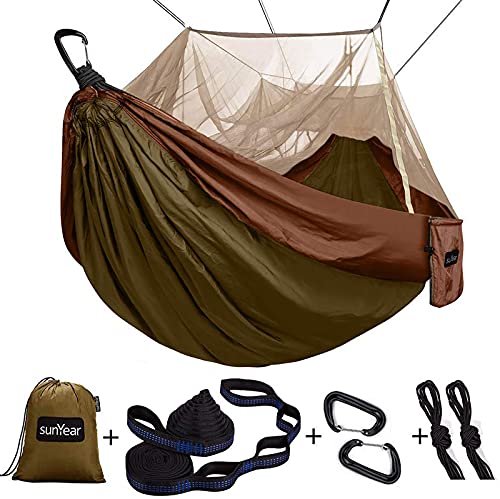
- ✓ Easy setup and pack away
- ✓ Durable parachute nylon
- ✓ Comes with all accessories
- ✕ Slightly heavy for ultralight backpacking
- ✕ Net fabric might be stiff initially
| Material | 210T parachute nylon and durable net fabric |
| Maximum Load Capacity | up to 12 kN (approximately 2,700 lbs) for ultralight carabiners |
| Hammock Length | not explicitly specified, but designed for sleeping and relaxing use |
| Hammock Width | not explicitly specified, but suitable for solo use |
| Strap Length | 20 feet with 32 adjustment loops |
| Carabiners | 2 solid steel D-shape or ultralight heavy-duty (12 kN) carabiners included |
Imagine setting up camp after a long day on the trail, and all you want is a comfortable spot to rest without fuss. You pull out the Sunyear Camping Hammock with Net from its sleek pouch, already appreciating how lightweight it feels in your hands.
The included tree straps and carabiners make installation a breeze. I love how quick it is to find two sturdy trees, loop the straps through the adjustment loops, and clip in the hammock.
The 20-foot straps give you plenty of flexibility, even on less-than-perfect trees.
Once suspended, I immediately noticed how roomy and sturdy the hammock is. The high-quality parachute nylon feels durable yet soft against your skin.
The dense net fabric adds a layer of privacy and keeps bugs out, which is a huge plus for outdoor evenings.
It’s versatile too—flip it over, and it becomes a relaxing spot to unwind. I used it both for a quick nap and as a sleeping hammock overnight.
The design feels robust enough to handle a good weight, and the easy setup saves time after a long hike.
One thing I appreciated is that all the installation tools are included, so there’s no extra shopping or guesswork. Plus, the compact size means I can pack it in my backpack without adding bulk.
It’s a reliable, comfortable companion for solo adventures or emergency situations.
Overall, this hammock hits the sweet spot between portability, durability, and comfort. It’s a game-changer for anyone who loves camping, hiking, or just relaxing outdoors.
After testing it out, I can honestly say it’s well worth the price.
What Makes a Hammock Ideal for Backpacking?
The ideal hammock for backpacking combines portability, durability, and comfort for an enjoyable outdoor experience.
- Lightweight Material: A great backpacking hammock is made from lightweight materials such as nylon or polyester, which helps minimize the overall weight of your gear.
- Compact Size: The best hammocks for backpacking can be packed down into a small size, allowing for easy storage in your backpack without taking up much space.
- Durability: High-quality construction is essential, with reinforced stitching and strong load-bearing capabilities to withstand outdoor conditions and provide safety.
- Easy Setup: Hammocks that come with simple suspension systems, such as straps or quick-release buckles, allow for a fast and hassle-free setup, saving valuable time and effort.
- Weather Resistance: An ideal hammock should offer some degree of weather resistance, whether through water-repellent materials or compatibility with rain tarps and bug nets to enhance protection from the elements.
- Comfortable Design: Features like a spacious design or integrated padding can enhance comfort, allowing for a restful sleep after a long day of hiking.
- Weight Capacity: It’s important to choose a hammock that can support your weight comfortably, often with a capacity of 250 to 500 pounds, ensuring safety and stability while resting.
- Versatility: The best hammock setups for backpacking can be used in various environments, from forests to beaches, and can serve multiple purposes, such as lounging or sleeping.
What Key Features Should Backpackers Look for in a Hammock?
When searching for the best hammock setup for backpacking, several key features should be considered to ensure comfort and practicality.
- Weight: A lightweight hammock is essential for backpackers who need to minimize their load. Ideally, it should weigh between 1 to 3 pounds to make carrying it effortless during long treks.
- Packing Size: The ability to pack the hammock into a small size is crucial for efficient storage in a backpack. A compact design allows for easy transportation and leaves more room for other gear.
- Material: Look for durable, weather-resistant materials such as ripstop nylon or polyester. These materials not only provide comfort but also ensure longevity and resistance to wear and tear from outdoor elements.
- Support Capacity: Ensure the hammock can support your weight along with any gear you might have. Most hammocks can hold between 250 to 500 pounds, so check the specifications to match your needs.
- Setup Ease: A quick and easy setup is vital for backpackers who often need to make camp quickly. Features like integrated straps or suspension systems can significantly reduce the time required to set up and take down the hammock.
- Weather Protection: Consider hammocks with built-in rain flies or the option to add one. This feature is important for staying dry and comfortable during unexpected weather changes while camping.
- Bug Protection: A hammock with a built-in bug net is an excellent choice for preventing insect bites while you sleep. This is particularly useful in areas with a high population of mosquitoes or other pests.
- Versatility: Some hammocks can be used in various configurations, such as a standalone hammock or as part of a tent setup. This versatility allows for more options in different environments and conditions.
How Should You Set Up Your Hammock for Maximum Comfort?
To achieve the best hammock setup for backpacking, consider the following elements:
- Proper Suspension System: A reliable suspension system is crucial for securely hanging your hammock. Look for straps that are durable yet lightweight, allowing for easy adjustments and minimizing tree damage.
- Correct Hanging Height: The ideal height for hanging your hammock is about eye level when sitting down. This ensures easy entry and exit while providing adequate clearance from the ground to avoid moisture and debris.
- Optimal Angle: A good angle between the hammock and the suspension straps should be around 30 degrees. This angle helps distribute your weight evenly and prevents excessive sagging, which can lead to discomfort.
- Underquilt or Sleeping Pad: For insulation and comfort, use an underquilt or sleeping pad to protect against cold air. An underquilt hangs beneath the hammock and provides superior warmth, while a sleeping pad can be placed inside for added cushioning.
- Rain Tarp: A rain tarp is essential for protection against rain and moisture. Choose a tarp that offers ample coverage, allowing you to stay dry even in inclement weather while providing enough space to relax without restrictions.
- Bug Netting: Preventing insect bites is vital for a comfortable experience. A hammock with built-in bug netting or a separate bug net that can be attached ensures that you can enjoy the outdoors without annoying pests.
- Personal Gear Storage: Having a designated area for your gear increases comfort and organization. Utilize gear hammocks or tree straps with pockets to keep essentials like water, snacks, and personal items easily accessible while you relax.
Which Suspension System Is Most Reliable for Backpacking?
The most reliable suspension systems for backpacking hammocks include:
- Whoopie Slings: A lightweight, adjustable suspension system that allows for quick setup and takedown.
- Straps and Buckles: A simple and versatile option that provides a secure hold and reduces tree damage.
- Rope and Carabiners: A classic method that offers strength and flexibility but may require more skill to set up properly.
- Dynaglide or Amsteel Lines: High-strength, low-stretch options that are incredibly lightweight and durable, ideal for long-distance backpacking.
Whoopie Slings: These are made from a single piece of rope and use a bury splice to create an adjustable loop. Their design allows for fine-tuning the length quickly, making them particularly useful in varying terrain and tree spacing scenarios.
Straps and Buckles: This setup typically consists of wide straps that wrap around trees and connect to a buckle system for easy adjustment. The wider straps help prevent damage to tree bark and provide excellent stability, making them a favorite among environmentally conscious campers.
Rope and Carabiners: This traditional method involves using strong rope tied around trees with carabiners to connect the hammock. While it can offer a strong and secure hold, it does require knowledge of knot-tying, which might be intimidating for beginners.
Dynaglide or Amsteel Lines: These ultra-lightweight lines are made from high-strength materials, making them perfect for reducing pack weight while maintaining safety. Their low stretch means that once set, they provide a stable and solid support throughout the night, which is crucial for a comfortable sleep while backpacking.
How Can You Choose the Right Accessories for Your Hammock?
Choosing the right accessories for your hammock is essential to ensure comfort and convenience during backpacking trips.
- Suspension System: A reliable suspension system, such as straps or ropes, is crucial for securing your hammock to trees or other sturdy anchor points. Look for systems that are lightweight, durable, and easy to adjust, as they will help you set up quickly and safely without damaging the trees.
- Rain Fly: A rain fly is essential for protecting you from rain and moisture while you sleep. Choose a fly that provides adequate coverage for your hammock, while being lightweight and compact enough to carry in your backpack, ensuring you’re prepared for unexpected weather changes.
- Underquilt: An underquilt is a great accessory for providing insulation underneath your hammock, keeping you warm in cooler temperatures. This is especially important during backpacking trips, as the air underneath can be much colder than above, and an underquilt is typically lighter and more compressible than a sleeping bag.
- Bug Net: A bug net is essential for keeping insects away while you rest. When choosing a bug net, ensure it fits your hammock properly and has a full enclosure to prevent bugs from entering, allowing for a comfortable and worry-free night’s sleep.
- Pillow or Stuff Sack: A pillow can enhance comfort during sleep, and a stuff sack filled with clothes or other gear can serve as a makeshift pillow. Opt for a lightweight inflatable pillow or a compressible option to save space and weight in your backpack.
- Ground Tarp: A ground tarp can serve as a protective layer between the ground and your gear or as a sitting area when you’re out of the hammock. This accessory helps keep your belongings dry and clean, especially useful during wet conditions or when setting up camp on uneven terrain.
Where Are the Best Locations to Hang Your Hammock?
The best locations to hang your hammock while backpacking typically offer comfort, stability, and protection from the elements.
- Wooded Areas: These locations provide plenty of trees that are suitable for hanging hammocks, usually spaced at the perfect distance apart. Additionally, the shade from the trees can help keep you cool during hot days, while also offering some protection from wind and rain.
- Near Water Sources: Setting up your hammock near a river, lake, or stream can enhance your outdoor experience with the soothing sounds of water. However, it’s important to ensure you’re at a safe distance to avoid flooding and to comply with Leave No Trace principles.
- Campsites: Designated campsites often have established fire pits and other amenities, making them convenient for backpackers. These sites usually have trees that are properly spaced for a hammock setup, alongside a flat ground for your gear.
- Open Fields with Windbreaks: While open fields can be less ideal due to a lack of trees, finding a spot with some natural windbreaks, such as bushes or rock formations, can provide shelter. This setup can allow for a comfortable, scenic view while ensuring some protection from the elements.
- High Ground: Hammocks set up on elevated terrain can provide better air circulation and scenic panoramic views. Just be cautious of potential hazards like falling branches or strong winds that can affect your safety.
What Natural Elements Should You Consider When Setting Up?
When setting up the best hammock for backpacking, several natural elements are crucial to ensure comfort and safety.
- Tree Distance: The distance between trees is vital for a proper hammock setup. Ideally, you should look for trees that are 12 to 15 feet apart, allowing enough slack for the hammock to hang comfortably without being too tight or too loose.
- Ground Terrain: The terrain beneath your hammock can significantly impact your experience. Choosing a flat, dry area that is free of debris, rocks, and sharp objects ensures a more comfortable rest and protects your gear from damage.
- Wind Exposure: Understanding wind patterns in the area will help you position your hammock for optimal protection. Setting up in a location with natural windbreaks, such as bushes or trees, can shield you from chilly breezes and enhance your overall comfort.
- Sunlight and Shade: The availability of sunlight or shade plays a role in temperature regulation. Consider how the sun will move across the sky during the day; setting up in a shaded area can keep you cool during hot days, while a sunny spot might be preferable in cooler weather.
- Rainfall and Drainage: Being aware of potential rain and how water drains in your chosen area is essential. Avoid low-lying spots where water could accumulate during rainstorms, and consider the angle of the ground to ensure proper drainage away from your hammock.
- Wildlife Considerations: Being mindful of local wildlife can enhance safety. Setting up your hammock away from animal trails and nests can reduce encounters with wildlife, ensuring a more peaceful night without unexpected visitors.