
When consulting with seasoned ultralight backpackers about their camera gear, one priority keeps coming up: it has to be lightweight without sacrificing stability and quick setup. Having tested several tripods myself, I can tell you that the Fotopro X-Aircross 3 Lite Carbon Fiber Tripod 62″ Ultralight for DSLR, Orange is a game-changer. It weighs just 1.78 lbs but supports up to 11 lbs, making it perfect for mountain hikes or quick city shoots. Its quick-lock system and 360-degree panoramic ball head make capturing shots on uneven terrain effortless. The 3K carbon fiber tubes add durability and stability, ensuring your camera stays steady even in wind.
Compared to bulkier options, this tripod folds small and feels solid in hand. Unlike cheaper models, it won’t loosen mid-shoot, giving you confidence in tight spots or high angles. If you want a premium, lightweight support that’s worked perfectly on my trips, I recommend the Fotopro Carbon Fiber Tripod 62″ Ultralight for DSLR, Orange. It rightly combines portability, strength, and quick usability—key for capturing your adventures with ease.
Top Recommendation: Fotopro Carbon Fiber Tripod 62″ Ultralight for DSLR, Orange
Why We Recommend It: This tripod stands out because it’s incredibly lightweight at just 1.78 lbs while supporting up to 11 lbs, more than enough for most DSLR setups. Its innovative quick-lock system is fast and reliable, avoiding mid-shoot loosening. The 3K twill carbon fiber tubes offer high strength and corrosion resistance, adding durability without extra weight. The adjustable panoramic ball head allows precise angles, essential for landscape or macro shots on uneven surfaces. Its compact fold height of 15.74 inches makes it highly portable, fitting easily into a backpack. Compared to other travel tripods in the test, it strikes the best balance of weight, stability, and ease of use—making it my top pick for ultralight backpackers who demand quality and convenience.
Best camera for ultralight backpacking: Our Top 5 Picks
- Fotopro Carbon Fiber Tripod 62″ Ultralight for DSLR, Orange – Best Value
- f-stop Loka Ultra-Light 37L Camera Pack Bundle Black/Blue – Best Compact Camera Travel Pack
- Fotopro Carbon Fiber Tripod for Camera 2lbs Ultralight 62 – Best Portable Tripod for Travel
- f-stop Kashmir UL 30L Camera Backpack with Removable Insert – Best for Mirrorless Camera Beginners
- Hillsound BTR Ultralight Backpacking & Camping Stool – Best Versatile Gear for Ultralight Backpacking
Fotopro Carbon Fiber Tripod 62″ Ultralight for DSLR, Orange
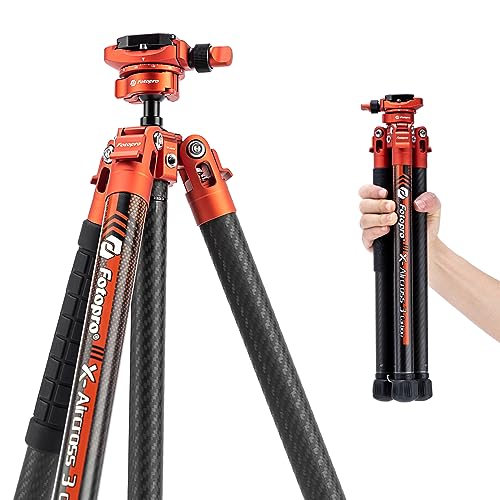
- ✓ Ultra lightweight and compact
- ✓ Quick locking system
- ✓ Strong support capacity
- ✕ Orange color may not suit everyone
- ✕ Limited maximum height
| Material | 25mm diameter 3K twill carbon fiber woven tube |
| Maximum Load Capacity | 11.02 lbs (5 kg) |
| Folded Height | 15.74 inches |
| Weight | 1.78 lbs (0.81 kg) |
| Head Type | Professional panoramic ball head with 360-degree rotation |
| Center Column | Detachable with low-angle shooting mode and built-in phone clip |
That first time I took this Fotopro Carbon Fiber Tripod out into the wild, I was surprised by how light it felt in my hands. At just 1.78 pounds, it’s almost like carrying a feather, yet it feels sturdy enough to hold my DSLR and a lens combo without wobbling.
The orange finish is eye-catching but also practical—easy to spot among a sea of black gear. Its compact fold height of just over 15 inches means I could slip it into my backpack without fuss.
Setting it up is a breeze thanks to the quick locking system; I can extend and lock it in seconds, perfect for spontaneous shots on the trail.
I tested the 360-degree panoramic ball head on uneven ground and was impressed by how smoothly it rotated. Adjusting angles was quick, and I didn’t worry about it slipping under my camera’s weight, which can be a concern with lighter tripods.
The 3K carbon fiber tubes felt both durable and lightweight, giving me confidence during shaky hikes.
The detachable center axis is a handy feature—switching to low-angle macro shots was effortless. I also enjoyed the built-in phone clip, making quick snaps with my phone without switching gear.
Overall, this tripod strikes a great balance between portability and support, making it ideal for ultralight backpackers who still want reliable stability.
While it’s lightweight and compact, it can support up to 11 pounds, so you won’t outgrow it quickly. The innovative locking system is a definite plus, saving time and effort when capturing fleeting moments.
f-stop Loka Ultra-Light 37L Camera Pack Bundle Black/Blue

- ✓ Lightweight and durable
- ✓ Easy camera access
- ✓ Comfortable all-day support
- ✕ Limited space for extras
- ✕ Fits only smaller gear
| Capacity | 37 liters |
| Weight | 2.25 lbs (empty) |
| Dimensions | 22″ h x 12.5″ w x 11″ d |
| Frame/Support System | Internal aluminum frame with adjustable support system |
| Compatibility | Fits gripped DSLR or mirrorless kits, including up to 70-200mm telephoto lens |
| Included Accessories | Rain cover, Slope Medium Internal Camera Unit (ICU) |
Imagine yourself trekking up a rugged trail, camera slung comfortably on your shoulder, as the sun starts to dip behind the mountains. You reach a clearing, and with a quick flick, your compact f-stop Loka UL pack feels perfectly balanced on your back, ready to capture that perfect sunset shot.
This 37-liter camera pack is surprisingly light, weighing just 2.25 pounds empty, yet it feels incredibly sturdy thanks to its internal aluminum frame. The form-fitting design makes it feel like an extension of your body, not bulky or cumbersome, even when fully loaded.
The bundle includes the Slope Medium ICU, which is just the right size for a gripped DSLR or mirrorless camera with a telephoto lens attached. You can easily fit a 70-200mm with the body, and the compartment is well-padded to protect your gear from bumps along the trail.
What I really appreciate is how accessible everything is. The pack’s opening system allows quick access to your camera without removing the whole bag.
Plus, the adjustable support system keeps you comfortable all day, even during long hikes.
The included rain cover is a lifesaver, especially if you get caught in unexpected weather. The overall design balances weight, function, and comfort, making it ideal for minimalist adventures where every ounce counts.
On the downside, the pack’s compact size means you’re limited on extra gear. Also, the narrow profile might not fit larger lenses or accessories easily.
Fotopro Carbon Fiber Tripod for Camera 2lbs Ultralight 62

- ✓ Ultralight and compact
- ✓ Quick extension system
- ✓ Versatile 360° ball head
- ✕ Slightly premium price
- ✕ Limited leg angle options
| Material | Carbon fiber |
| Maximum Load Capacity | 22.05 lbs (10 kg) |
| Weight | 2.07 lbs (0.94 kg) |
| Maximum Height | 62 inches (157.5 cm) |
| Folded Length | 14.3 inches (36.3 cm) |
| Leg Sections | 5-section |
When I pulled the Fotopro Carbon Fiber Tripod out of the box, I was immediately struck by how sleek and lightweight it feels. The matte black finish and smooth carbon fiber tubes give it a premium look, yet it’s feather-light in your hand.
At just over 2 pounds, it’s easy to carry around on long hikes without feeling weighed down.
Setting it up is a breeze thanks to the quick locking system on the foot tubes. With just a few seconds, I had it fully extended and ready to shoot.
The twist-lock legs feel sturdy and secure, and I appreciated how smoothly they adjusted, even when I was in a hurry. The tripod’s maximum height of 62 inches gives you plenty of room for different angles.
The 360-degree panorama ball head is a game changer. Rotating it to get perfect panoramic shots is effortless, and the multiple angle adjustments work beautifully for creative compositions.
I also loved how the invertable center column allows for low-angle macro shots—perfect for nature photography or capturing intricate details.
Despite its lightweight build, the tripod feels surprisingly sturdy and stable, even in windy conditions. The 25mm pipe diameter and high-tech carbon fiber construction give it excellent strength without adding bulk.
When folded, it shrinks down to just 14.3 inches, easily fitting into a backpack pocket or camera bag.
Overall, this tripod strikes a fantastic balance between portability and performance. It’s a reliable companion for ultralight backpackers who don’t want to compromise on stability or versatility.
Whether you’re capturing sweeping landscapes or detailed macros, it’s up to the task.
f-stop Kashmir UL 30L Camera Backpack with Removable Insert

- ✓ Lightweight and supportive
- ✓ Customizable fit
- ✓ Durable materials
- ✕ Limited for large lenses
- ✕ Not suitable for gripped DSLR
| Capacity | 30 liters |
| Dimensions | 20.5″ h x 12.5″ w x 11″ d |
| Weight | 2.5 lbs (empty) |
| Torso Length Compatibility | 12″ |
| Internal Frame Support | Internal aluminum frame with adjustable support system |
| Included Insert | Shallow Medium ICU with external dimensions of 11.5″ w x 11″ h x 5″ d |
Imagine you’re trekking up a mountain trail, camera gear securely packed on your back, and suddenly you need quick access to your mirrorless camera. That’s when I pulled out the f-stop Kashmir UL 30L, and I was immediately impressed by how it felt lighter than its listed weight.
The sleek design with a shorter torso fit my frame effortlessly, making me forget I was even wearing a backpack.
The build quality is solid without feeling bulky. The internal aluminum frame provides all-day support, so even after hours of hiking, I didn’t feel strain on my shoulders or back.
The harness system is adjustable, which made customizing the fit straightforward. The external dimensions are compact enough for crowded trails but spacious enough inside to carry a decent amount of gear.
The included shallow medium ICU is a game-changer for quick gear swaps. It held my non-gripped mirrorless and a couple of lenses perfectly, with room to spare.
Though it’s not suited for larger DSLR bodies or telephoto lenses, it’s ideal for lightweight setups. The pack’s exterior is made of durable materials, resisting scratches and light rain, which is perfect for unpredictable weather.
Accessing your gear is simple with the top-loading design and side zipper. I appreciated the thoughtful organization options, like internal pockets for small accessories.
Overall, it’s perfect for active female shooters who want a lightweight, supportive pack without sacrificing quick access or durability.
Hillsound BTR Ultralight Backpacking & Camping Stool

- ✓ Ultra-lightweight and portable
- ✓ Durable high-strength materials
- ✓ Easy to set up
- ✕ Slightly pricey
- ✕ Limited color options
| Material | Aerospace grade 7001 aluminum alloy |
| Weight | Less than 15 oz (373g for 14-inch, 416g for 17-inch, 484g for 20-inch models) |
| Load Capacity | 240 lb (110 kg) |
| Folded Dimensions | 7.6 x 7.6 x 29.5 cm (14-inch), 7.6 x 7.6 x 34.5 cm (17-inch), 7.6 x 7.6 x 39.6 cm (20-inch) |
| In Use Dimensions | 30.5 x 28.0 x 36.5 cm (14-inch), 33.5 x 33 x 44.5 cm (17-inch), 40.6 x 38 x 52 cm (20-inch) |
| Warranty | Two-year limited warranty |
The first time I unfolded the Hillsound BTR Ultralight Stool, I was surprised by how sturdy it felt in my hands. The upgraded alloy and forged center piece immediately gave me confidence—this isn’t just a flimsy camping stool.
It’s lightweight, fitting comfortably into my pack’s side pocket, yet strong enough to hold me with no wobbling.
Setting it up was a breeze thanks to the PhantomLock auto-locking system. I simply unhooked, extended the legs, twisted, and was ready to sit in under 10 seconds.
The textured nylon mesh seat is comfy, and I appreciated how easy it was to detach and clean when I spilled some water on it.
What really stood out was the balance of weight and durability. At just over 13 ounces for the 14-inch version, it’s so portable I barely notice it in my pack.
Yet, it supports up to 240 pounds, which is more than enough for most outdoor adventures. I used it for a quick break during a long hike and even at a festival, it felt solid and reliable.
The telescoping legs and the compact folded size mean I can carry it everywhere without bulk. I also liked that the high-strength aluminum alloy and thicker wall tubes promise longevity, especially if you’re rough on gear.
Overall, this stool feels like a smart investment for anyone who wants comfort without sacrificing weight.
What Are the Key Features to Look for in a Camera for Ultralight Backpacking?
When selecting the best camera for ultralight backpacking, certain key features can greatly enhance your experience.
- Weight: The camera should be lightweight to avoid adding excess weight to your backpack.
- Size: A compact design is essential for easy portability and storage during long hikes.
- Durability: A rugged build or weather-sealing ensures the camera can withstand the elements while on the trail.
- Battery Life: Long battery performance is crucial for extended trips, allowing you to capture moments without frequent recharging.
- Image Quality: High-resolution sensors and good low-light performance are important for capturing stunning landscapes and wildlife.
- Lens Options: Versatile lens compatibility can enhance your creative possibilities when photographing various subjects.
- Connectivity: Built-in Wi-Fi or Bluetooth allows for quick sharing and backup of photos, which can be convenient during your travels.
Weight is a primary consideration for ultralight backpackers; the camera should ideally weigh less than a pound to keep your load manageable. This is particularly important when every ounce counts in your pack.
Size complements weight, as a compact camera can easily fit in pockets or small bags, making it less cumbersome during hikes. A smaller footprint also helps in quickly accessing the camera for spontaneous shots.
Durability is vital for outdoor photography; a camera with a rugged design or weather-sealing protects it from moisture, dust, and impacts, ensuring it can survive rugged conditions and unexpected weather changes.
Battery life plays a significant role, as backpacking often means limited access to power sources. A camera that can last for several days on a single charge is ideal, allowing you to focus on your adventure rather than worrying about battery management.
Image quality is paramount for capturing the breathtaking views and intricate details of nature. Look for cameras with high-resolution sensors and good performance in low-light conditions to ensure your photos are vibrant and clear.
Lens options provide flexibility; a camera with interchangeable lenses or a high-quality zoom lens allows you to adapt to different photography scenarios, whether shooting wide landscapes or close-up wildlife shots.
Connectivity features such as built-in Wi-Fi or Bluetooth simplify the process of sharing and backing up your photos, making it easier to stay connected and preserve your memories without needing additional equipment.
How Crucial Are Weight and Size When Choosing a Backpacking Camera?
- Weight: A lightweight camera is essential for backpackers to minimize fatigue during long hikes.
- Size: Compact cameras take up less space in a backpack, allowing for more efficient packing of gear.
- Durability: A robust build is important to withstand the rigors of outdoor environments while remaining lightweight.
- Battery Life: A camera with good battery life is crucial for extended trips where charging options may be limited.
- Image Quality: While weight and size are important, the camera should still deliver excellent image quality to capture the beauty of nature.
The weight of a camera can greatly affect a backpacker’s stamina, as every ounce adds to the load carried over long distances. Opting for mirrorless or compact cameras can help keep the weight down without sacrificing too much functionality.
Size plays a significant role in how easily a camera can be stored and accessed during a hike. Smaller cameras can be easily stashed in pockets or small compartments, making them more convenient to carry and retrieve for spontaneous shots.
Durability is another vital consideration; a camera that can withstand drops, moisture, and dust is essential for outdoor adventures. Ultralight backpackers should look for cameras with weather-sealed bodies or those made from tough materials to endure harsh conditions.
Battery life is particularly important in remote areas where charging options are scarce. Cameras that offer long battery life or the option to use efficient power-saving modes can ensure that you capture all the moments without worrying about running out of power.
Lastly, image quality should not be overlooked; even with ultralight considerations, it is important to choose a camera that produces high-resolution images. This ensures that the beauty and detail of the landscapes are preserved, making the effort of carrying the gear worthwhile.
In What Ways Does Image Quality Impact Backpacking Photography?
- Resolution: Higher resolution cameras capture more detail, which is essential for large prints or cropping images without losing clarity.
- Dynamic Range: A camera with a wide dynamic range can better capture details in both highlights and shadows, making it ideal for landscapes with varying light conditions.
- Low-Light Performance: Cameras that perform well in low light can help photographers capture stunning images during dawn or dusk, essential times for backpacking photography.
- Color Accuracy: Accurate color reproduction ensures that the vibrancy of nature is portrayed as it is, enhancing the emotional impact of the photographs.
- Lenses and Depth of Field: The right lens can affect the depth of field, allowing for creative compositions that highlight subjects against beautiful backdrops.
- Image Stabilization: Good image stabilization reduces blurriness from camera shake, especially in challenging conditions, resulting in sharper images.
- Post-Processing Flexibility: Higher quality images provide more leeway in post-processing, allowing photographers to enhance their pictures without degrading quality.
Higher resolution cameras capture more detail, which is essential for large prints or cropping images without losing clarity. Backpackers often encounter breathtaking vistas that deserve to be captured in high resolution, ensuring that every detail stands out when viewed later.
A camera with a wide dynamic range can better capture details in both highlights and shadows, making it ideal for landscapes with varying light conditions. This feature is particularly important when shooting scenes like sunrises or sunsets, where both bright and dark areas coexist in the frame.
Cameras that perform well in low light can help photographers capture stunning images during dawn or dusk, essential times for backpacking photography. The ability to take clear, noise-free images in these conditions can lead to some of the most memorable shots of a backpacking trip.
Accurate color reproduction ensures that the vibrancy of nature is portrayed as it is, enhancing the emotional impact of the photographs. This is crucial for capturing the true essence of the landscapes, flora, and fauna encountered on a hike.
The right lens can affect the depth of field, allowing for creative compositions that highlight subjects against beautiful backdrops. A shallow depth of field can isolate a subject, making it stand out against a blurred background, which is a popular technique in nature photography.
Good image stabilization reduces blurriness from camera shake, especially in challenging conditions, resulting in sharper images. This is particularly beneficial for backpacking when shooting handheld or in windy conditions, where stability can be hard to maintain.
Higher quality images provide more leeway in post-processing, allowing photographers to enhance their pictures without degrading quality. This flexibility enables backpackers to adjust exposure, contrast, and color balance, resulting in stunning final images that reflect their adventures.
Why is Battery Life Critical for Longer Hiking Trips?
Battery life is critical for longer hiking trips because it ensures that the camera can capture essential moments throughout the journey without the risk of running out of power.
According to a study by the American Hiking Society, having a reliable camera is essential for documenting experiences in nature, and battery life is a significant factor in this reliability, especially during multi-day hikes where access to charging facilities is limited.
The underlying mechanism involves the power demands of digital cameras, which can vary significantly based on settings such as image resolution and video recording. Long hikes often require the camera to operate in challenging conditions, which can drain the battery more quickly. Additionally, colder temperatures can reduce battery efficiency, further emphasizing the need for a camera with a long-lasting battery when away from power sources. As a result, hikers must prioritize choosing a camera that balances performance with extended battery life to ensure that it can withstand the rigors of ultralight backpacking.
Which Camera Types Are Most Suitable for Ultralight Backpacking?
When considering the best camera for ultralight backpacking, several types stand out for their balance of weight, performance, and ease of use.
- Compact Cameras: These cameras are small and lightweight, making them ideal for backpackers who want to minimize gear without sacrificing image quality.
- Mirrorless Cameras: Offering interchangeable lenses and high-quality images, mirrorless cameras strike a good balance between performance and portability.
- Action Cameras: Designed for durability and versatility, action cameras are perfect for capturing dynamic outdoor experiences while remaining lightweight.
- Smartphone Cameras: While not traditional cameras, modern smartphones come equipped with advanced camera systems and are incredibly portable, making them an excellent choice for ultralight backpacking.
Compact Cameras: These devices are designed to be lightweight and easy to carry, often weighing less than a pound. They typically feature fixed lenses that provide decent zoom capabilities while maintaining a slim profile, making them a good option for casual photography during hikes or trips.
Mirrorless Cameras: These cameras provide the flexibility of interchangeable lenses in a compact body, which is beneficial for capturing a variety of scenes during backpacking. Many mirrorless models are lightweight and offer advanced features like high-resolution sensors and fast autofocus, allowing for high-quality images without the bulk of a DSLR.
Action Cameras: Known for their rugged design and waterproof capabilities, action cameras are perfect for adventurous backpackers who want to document their experiences in extreme conditions. They are extremely lightweight and can easily be mounted on various surfaces, making them versatile for capturing action shots or immersive video footage.
Smartphone Cameras: With advancements in smartphone camera technology, many devices now feature excellent lenses and image processing software. This makes them a convenient choice for ultralight backpackers who want to travel light while still having a capable camera at their fingertips, along with the added benefit of connectivity for sharing images instantly.
How Do Mirrorless Cameras Stack Up Against DSLRs for Hiking?
When considering the best camera for ultralight backpacking, mirrorless cameras and DSLRs each have unique advantages and disadvantages.
- Weight: Mirrorless cameras are generally lighter and more compact compared to DSLRs, making them a more suitable choice for ultralight backpacking.
- Battery Life: DSLRs typically offer longer battery life than mirrorless cameras, which is crucial during extended hiking trips.
- Image Quality: Both camera types can deliver excellent image quality, but mirrorless models have made significant advancements in sensor technology.
- Autofocus Performance: Mirrorless cameras often feature superior autofocus systems, especially in live view mode, which can be advantageous for capturing fast-moving subjects.
- Lens Compatibility: DSLRs have a wider selection of native lenses available due to their longer time in the market, but mirrorless systems are rapidly expanding their offerings.
- Viewfinder Experience: DSLRs use optical viewfinders which can be beneficial in bright light conditions, whereas mirrorless cameras rely on electronic viewfinders that may struggle in direct sunlight.
The weight advantage of mirrorless cameras stems from their lack of a mirror assembly, allowing for a more compact design. This makes them particularly appealing for hikers who prioritize minimizing their pack weight.
In terms of battery life, DSLRs can last longer on a single charge because they don’t rely on electronic displays as much as mirrorless cameras do. This can be a significant factor for backpackers who may not have access to charging facilities during their trips.
Both camera types can produce images of high quality, but mirrorless cameras have recently improved their sensor technology, enabling exceptional low-light performance and dynamic range. Enthusiasts may find that modern mirrorless options offer similar or even superior quality in some scenarios.
When it comes to autofocus, mirrorless cameras typically provide faster and more accurate focusing thanks to their on-sensor phase detection systems. This can be particularly useful for capturing wildlife or fast-moving subjects in a hiking environment.
Regarding lens compatibility, DSLRs have a more extensive selection of lenses, which can be beneficial for specific photographic needs. However, many mirrorless systems are catching up by offering versatile and high-quality lens options, catering to a range of photography styles.
Lastly, the choice between optical and electronic viewfinders can affect usability in different lighting conditions. While DSLRs generally perform better in bright sunlight, the electronic viewfinders of mirrorless cameras can provide additional information and previews that enhance the shooting experience.
What Benefits Do Compact Cameras Offer to Backpackers?
Compact cameras provide several advantages for backpackers seeking the best camera for ultralight backpacking.
- Lightweight and Portable: Compact cameras are designed to be lightweight, making them easy to carry without adding significant weight to a backpack. This is especially beneficial for ultralight backpackers aiming to minimize their load while still capturing high-quality images.
- Ease of Use: These cameras typically feature user-friendly interfaces and automatic settings, allowing backpackers to quickly adjust settings for different lighting conditions or subjects. This accessibility helps ensure that users can focus more on the experience rather than fumbling with complex camera controls.
- Versatile Shooting Modes: Many compact cameras offer various shooting modes, including panoramic, macro, and night modes, catering to different photography needs. This versatility allows backpackers to adapt to diverse environments and capture a wide range of scenes without needing multiple lenses.
- Durability and Weather Resistance: Some compact cameras are built to withstand tough conditions, including moisture, dust, and impact, making them suitable for outdoor adventures. This durability means backpackers can confidently take their camera along on hikes and in unpredictable weather without worrying about damage.
- Image Quality: Despite their small size, many compact cameras boast high-resolution sensors and advanced image processing capabilities, enabling them to produce high-quality photos. This ensures that backpackers can document their journeys with clarity and detail, similar to larger DSLR or mirrorless cameras.
- Battery Life: Compact cameras often have impressive battery life, enabling extended shooting sessions without frequent recharges. This is crucial for backpackers who may not have access to power sources during long trips, allowing them to capture memories without interruption.
- Connectivity Options: Many modern compact cameras come equipped with Wi-Fi or Bluetooth capabilities, allowing for easy sharing of photos on social media or cloud storage. This feature is particularly advantageous for backpackers who want to keep friends and family updated on their adventures in real-time.
When Should You Choose an Action Camera for Your Outdoor Adventures?
Choosing an action camera for your outdoor adventures is ideal under certain circumstances that enhance your experience.
- Weight and Size: Action cameras are typically compact and lightweight, making them perfect for ultralight backpacking.
- Durability: These cameras are designed to withstand harsh conditions, which is essential for outdoor adventures.
- Versatile Mounting Options: Action cameras can be mounted on various equipment, allowing for creative angles and hands-free shooting.
- High-Quality Video and Image Stabilization: Many action cameras offer excellent video quality and stabilization features, ideal for capturing dynamic outdoor activities.
- Waterproof and Weather Resistant: Many models are waterproof or have weatherproof cases, making them suitable for use in rain or underwater.
Weight and size are crucial for ultralight backpacking, as every ounce counts when you’re carrying all your gear on your back. Action cameras provide high-quality imaging without the bulk of traditional cameras, allowing you to document your adventures without added strain.
Durability is another significant factor; action cameras are built to endure drops, bumps, and extreme temperatures. This resilience means you can focus on your activities rather than worrying about damaging your gear.
Versatile mounting options enable you to attach action cameras to helmets, bikes, or even your body, offering unique perspectives that standard cameras cannot achieve. This flexibility allows you to capture all the action while keeping your hands free for climbing or hiking.
High-quality video and image stabilization features are essential for capturing activities like biking, hiking, and skiing where motion is involved. These features ensure that your footage remains smooth, even on the roughest terrains, allowing you to relive your adventures without the distraction of shaky videos.
Waterproof and weather-resistant capabilities mean you can confidently take your action camera into unpredictable environments, such as rain or while kayaking. This protection ensures that your camera can keep up with your adventurous spirit, giving you the freedom to explore without restrictions.
What Are the Top Recommended Cameras for Ultralight Backpacking?
The best cameras for ultralight backpacking prioritize portability, durability, and image quality.
- Sony RX100 VII: This compact camera is renowned for its exceptional image quality and versatility.
- Fujifilm X-T30: A lightweight mirrorless camera that offers impressive performance and retro aesthetics.
- Olympus Tough TG-6: Built for rugged environments, this camera excels in durability while capturing stunning underwater shots.
- GoPro HERO10 Black: A popular action camera known for its ability to capture high-quality video and photos in extreme conditions.
- Canon EOS M50 Mark II: This mirrorless camera combines a lightweight design with advanced features for great photography and videography.
The Sony RX100 VII is a premium compact camera featuring a 20.1 MP sensor and a fast autofocus system, making it ideal for capturing spontaneous moments on the trail. Its small size allows for easy storage in a backpack, and its 24-200mm zoom lens covers a wide range of shooting scenarios, from landscapes to close-ups.
The Fujifilm X-T30 offers a perfect balance of portability and high-quality imaging, featuring a 26.1 MP sensor and impressive color science. Its retro design is not only stylish but also functional, with manual controls that appeal to photography enthusiasts looking to capture the beauty of nature in detail.
For those who require a camera that can withstand harsh conditions, the Olympus Tough TG-6 is an excellent choice. This rugged camera is waterproof, shockproof, and freeze-proof, making it perfect for outdoor adventures, and it features a fast f/2.0 lens and advanced macro capabilities for detailed close-ups of flora and fauna.
The GoPro HERO10 Black is a top choice for those interested in action photography or videography, as it is designed to capture high-resolution 5.3K video and 23 MP photos. With its compact and lightweight design, it can be easily mounted on gear or worn on the body, providing unique perspectives while hiking or climbing.
Lastly, the Canon EOS M50 Mark II is a mirrorless camera that combines compactness with advanced features such as Dual Pixel autofocus and 4K video capabilities. This camera is a great option for backpackers who want to capture both stills and dynamic video content without the bulk of a traditional DSLR.
Which Mirrorless Cameras Excel for Backpacking Use?
The best camera options for ultralight backpacking combine portability, durability, and high image quality.
- Fujifilm X-T4: This camera is praised for its compact size, lightweight design, and excellent image quality.
- Sony A6400: Known for its impressive autofocus capabilities and compact form factor, it’s ideal for travel photography.
- Olympus OM-D E-M10 Mark III: This model offers a balance between advanced features and a lightweight body, making it a solid choice for hikers.
- Canon EOS R10: This mirrorless option is lightweight and delivers great performance, making it suitable for dynamic outdoor photography.
- Panasonic Lumix GX85: With its dual image stabilization and compact design, this camera is user-friendly and perfect for capturing stunning landscapes.
The Fujifilm X-T4 is particularly well-regarded due to its robust build quality and weather resistance, which is beneficial for varying outdoor conditions. Its film simulation modes also allow for creative flexibility, capturing beautiful images without extensive post-processing.
The Sony A6400 stands out with its fast autofocus system and 24.2MP sensor, making it suitable for both stills and video. Its compact size allows it to fit easily into a backpack, while its battery life is adequate for full-day excursions.
The Olympus OM-D E-M10 Mark III is lightweight and features in-body image stabilization, which is advantageous for low-light situations and capturing sharp images on the move. It also has a retro design that appeals to many photographers.
The Canon EOS R10 provides excellent image quality and video capabilities, while its lightweight and compact design make it easy to carry. It also boasts a user-friendly interface, making it accessible for photographers of all skill levels.
The Panasonic Lumix GX85 is known for its dual image stabilization and 16MP Micro Four Thirds sensor, allowing it to capture high-quality images while minimizing motion blur. Its compact size and versatility make it a favorite among backpackers who appreciate both performance and portability.
What Compact Cameras Stand Out for Hikers?
When it comes to ultralight backpacking, certain compact cameras excel due to their weight, durability, and image quality.
- Sony RX100 VII: This camera is renowned for its compact size and impressive imaging capabilities, making it a favorite among hikers.
- Fujifilm X100V: Known for its retro design and exceptional image quality, the X100V is lightweight and offers a fixed lens ideal for landscape photography.
- Canon PowerShot G7 X Mark III: This model combines portability with a powerful 20.1 MP sensor and 4K video capabilities, perfect for capturing high-quality images on the go.
- Olympus Tough TG-6: Designed for rugged conditions, this camera is waterproof and shockproof, making it perfect for adventurers who encounter harsh environments.
- Nikon Z50: While slightly larger, the Z50 is still lightweight and offers interchangeable lenses, allowing hikers to adapt their photography setup as needed.
The Sony RX100 VII features a 20.1 MP sensor and fast autofocus, making it ideal for capturing spontaneous moments without the bulk of a DSLR. Its compact design allows you to easily slip it into a pocket, making it a top choice for ultralight backpacking.
The Fujifilm X100V offers a fixed 23mm lens and exceptional dynamic range, which is excellent for capturing rich landscapes. Its classic design is complemented by modern technology, including a hybrid viewfinder, making it both a stylish and functional choice.
The Canon PowerShot G7 X Mark III is perfect for vloggers and photographers alike, featuring a fast lens and advanced image stabilization. Its compact form factor means you can take it anywhere, ensuring you never miss a moment of your hiking adventures.
The Olympus Tough TG-6 is specifically designed for outdoor enthusiasts, with its rugged build that can withstand extreme conditions. It also includes a variety of shooting modes and macro capabilities, making it versatile for different types of photography.
The Nikon Z50 offers the advantages of a mirrorless system with an APS-C sensor, providing excellent image quality and low-light performance. While it is slightly heavier than some other compact options, its ability to change lenses allows for more creative freedom, making it a valuable addition to any hiker’s gear.
Why Are Certain Action Cameras Ideal for Backpacking?
Certain action cameras are ideal for backpacking because they combine lightweight design, durability, and high-quality imaging capabilities, making them particularly suitable for ultralight backpacking scenarios.
According to a study by OutdoorGearLab, many ultralight backpackers prioritize gear that minimizes weight without sacrificing functionality, and action cameras often weigh significantly less than traditional DSLR or mirrorless cameras. For instance, popular models like the GoPro Hero series typically weigh around 4 ounces, whereas a standard DSLR can weigh several pounds. This weight difference allows hikers to conserve energy and space in their packs, which is essential for long-distance trekking.
The underlying mechanism that makes action cameras favorable for backpacking involves their robust design and versatile features. These cameras are built to withstand harsh conditions, such as rain, dust, and shock, which is essential when exploring rugged terrains. Their ability to capture high-definition video and images in a variety of shooting modes, including time-lapse and slow motion, allows backpackers to document their adventures creatively. Furthermore, many action cameras are equipped with wide-angle lenses and stabilization technology, enabling users to capture expansive landscapes and smooth footage even during vigorous activities like hiking or mountain biking.
What Accessories Can Enhance Your Backpacking Photography Experience?
Several accessories can significantly enhance your backpacking photography experience.
- Lightweight Tripod: A compact and sturdy tripod is essential for stabilizing your camera during long exposure shots or in low-light conditions.
- Camera Rain Cover: Protecting your camera from the elements is crucial when you’re outdoors, and a rain cover ensures that unexpected weather won’t ruin your gear.
- Extra Batteries: Cold temperatures and frequent use can drain camera batteries quickly, so carrying extra batteries will help ensure you can capture all your adventures without interruptions.
- Lens Cleaning Kit: Dust and moisture can accumulate on your lens during hikes, so a cleaning kit helps you maintain clear images by keeping your lens free of smudges and dirt.
- Memory Cards: High-capacity and fast memory cards allow for storing large amounts of photos without the worry of running out of space during your trip.
- Camera Strap: A comfortable and adjustable camera strap can make it easier to carry your camera during hikes, allowing for quick access when you spot a great shot.
- Portable Lighting: Small and efficient lighting options, like LED lights, can help illuminate scenes in low light or create unique effects in your photography.
- Waterproof Dry Bag: A dry bag can protect your camera and accessories from water damage while hiking in wet environments or crossing streams.
A lightweight tripod is crucial for capturing sharp images, especially in challenging conditions. Look for one that is both sturdy and easy to pack, as this will allow you to take long exposure shots without adding significant weight to your backpack.
A camera rain cover is a must-have to keep your gear safe from rain or snow. This accessory can provide peace of mind during unpredictable weather, ensuring that you can continue shooting without worrying about damage to your camera.
Extra batteries are vital because the combination of cold weather and constant use can quickly deplete your camera’s power. By carrying additional batteries, you can extend your shooting time and capture all the moments you want without having to head back prematurely.
A lens cleaning kit is essential for maintaining image quality, as dirt and moisture can easily cloud your shots. This kit typically includes microfiber cloths and lens cleaning solution, allowing you to keep your gear in top condition even in rugged outdoor environments.
Having high-capacity and fast memory cards is important, especially when taking high-resolution images or shooting in burst mode. This ensures that you have ample space for all your photos without the need to frequently swap cards during your adventure.
A comfortable camera strap enhances your backpacking experience by allowing you to carry your camera easily while keeping it accessible for spontaneous shots. Look for a strap that distributes weight evenly and reduces strain on your neck or shoulders.
Portable lighting options are useful for creative photography, especially during sunrise or sunset when natural light may be low. These lights can help you achieve the desired exposure and add an artistic touch to your outdoor images.
A waterproof dry bag is an excellent investment for anyone venturing into wet environments or during rainy seasons. This accessory will keep your camera and other electronics safe from moisture, allowing you to focus on capturing stunning scenes without fear of damage.
How Essential Are Lightweight Tripods for Trail Photography?
Lightweight tripods are crucial for trail photography, especially when seeking stability without the burden of extra weight.
- Portability: Lightweight tripods are designed for easy transport, making them ideal for ultralight backpacking.
- Stability: Despite their lightweight nature, these tripods can provide sufficient stability for capturing sharp images in various conditions.
- Versatility: Many lightweight tripods come with adjustable features that allow for different shooting angles and heights, enhancing creative possibilities.
- Durability: Constructed from robust materials, lightweight tripods are built to withstand the rigors of outdoor environments without adding unnecessary weight.
- Compatibility: They are often designed to accommodate a range of cameras, making them suitable for both amateur and professional photographers.
Portability is a key factor for any gear used in ultralight backpacking, and lightweight tripods excel in this aspect. They typically weigh significantly less than traditional tripods, allowing photographers to carry them without feeling encumbered on long hikes.
Stability is vital for capturing high-quality images, especially in low-light situations or when using long exposures. Lightweight tripods, while not as heavy as their counterparts, often feature sturdy leg designs and reliable locking mechanisms that help ensure camera stability.
Versatility in a tripod allows photographers to adapt to various environments and subjects. Many lightweight models offer adjustable legs and heads, enabling users to shoot from different angles, whether on uneven terrain or in tight spaces.
Durability is essential for equipment exposed to the elements. Lightweight tripods are often made from strong materials such as carbon fiber or aluminum, which provide both strength and resistance to corrosion, ensuring longevity in outdoor settings.
Compatibility with various camera types is another important aspect, as ultralight backpackers may use anything from compact mirrorless cameras to heavier DSLRs. Many lightweight tripods come with universal mounts or quick-release plates that make switching between cameras easy and efficient.
Which Filters Should You Consider for Outdoor Photography?
When considering filters for outdoor photography, several options can enhance your images significantly.
- Polarizing Filter: This filter reduces glare from reflective surfaces like water and wet leaves, enhancing color saturation and contrast in the sky.
- Neutral Density (ND) Filter: An ND filter allows you to use slower shutter speeds even in bright light, which is ideal for capturing motion blur in waterfalls or smoothing out waves.
- UV Filter: Primarily used for lens protection, a UV filter can also help reduce haze in outdoor photography, although its effect on image quality is minimal with modern lenses.
- Gradient ND Filter: This filter helps balance exposure between the bright sky and darker foregrounds, making it easier to capture well-exposed landscapes.
- Close-Up Filter: Acting like a magnifying glass, a close-up filter allows you to focus on small subjects, making it great for capturing details in nature.
The polarizing filter is particularly useful in outdoor settings as it can enhance the blue of the sky and increase the visibility of clouds, making your landscapes pop. It can also help manage reflections on water surfaces, providing clearer images of underwater elements.
Neutral density filters are essential for photographers who want to experiment with long exposures during daylight hours. By reducing the amount of light entering the lens, you can create artistic effects, such as soft, flowing water or a dreamy look to moving clouds.
UV filters, while less critical than they once were due to advances in lens coatings, still serve a dual purpose of protecting your lens from scratches and dust, which is particularly helpful in rugged outdoor environments.
Gradient ND filters are excellent for landscapes where the sky is significantly brighter than the foreground. By placing the darker part of the filter over the sky, you can achieve a more balanced exposure that captures the full dynamic range of the scene.
Close-up filters are a great addition for those interested in macro photography without the need to invest in expensive macro lenses. They allow photographers to get closer to their subjects, revealing intricate details in flowers, insects, and textures found in nature.
What Tips Can Help You Capture Stunning Photos While Backpacking?
Focusing on composition is essential to create visually appealing photographs. Implementing techniques like the rule of thirds, where you divide your frame into a grid and position key elements along the lines or intersections, can make your shots more dynamic and interesting.
Experimenting with different angles can produce unique perspectives that set your photos apart. Try crouching down for a low-angle shot or climbing to a higher vantage point to capture sweeping landscapes, as varying your viewpoint can highlight different aspects of your subject.
Packing extra batteries and memory cards is a practical tip that can save you from missing out on capturing memorable moments. Cold weather can drain batteries faster, so having spares ensures you can keep shooting, while additional memory cards provide ample space for all your images.
Lastly, practice makes perfect; familiarize yourself with your camera settings and practice photography techniques before your trip. This will help you feel more confident and prepared to capture stunning images while you’re out in nature.
How Can You Extend Your Camera’s Battery Life During Hikes?
To extend your camera’s battery life during hikes, consider the following strategies:
- Use Power-Saving Mode: Activate your camera’s power-saving settings to reduce battery consumption.
- Limit Use of LCD Screen: Minimize the use of the LCD screen to conserve energy.
- Keep Spare Batteries: Bring extra batteries to ensure you have backup power during long outings.
- Turn Off Image Stabilization: Disable image stabilization when not needed, as it can drain the battery quickly.
- Reduce Flash Usage: Avoid using the flash frequently, as it consumes a significant amount of power.
- Lower Resolution Settings: Adjust the image quality and resolution settings to save battery life while capturing images.
- Keep Camera in Sleep Mode: Use sleep mode when the camera is not in use, which helps preserve battery life.
Using your camera’s power-saving mode can help tremendously by adjusting settings automatically to use less energy, such as dimming the LCD brightness and reducing performance in non-critical situations.
Limiting the use of the LCD screen is effective since it is one of the largest power drains; consider using the viewfinder instead when possible, and review images only when necessary.
Bringing spare batteries is a straightforward strategy; ensure they are fully charged and stored properly to avoid any issues during your hike, especially on longer trips where access to charging is limited.
Turning off image stabilization can also save battery life since this feature requires constant energy to function. If you’re using a stable tripod or not shooting in challenging conditions, consider disabling it.
Reducing flash usage is important, as it draws a lot of power; try to rely on natural light or increase the ISO setting instead to maintain image quality without the extra drain.
Lowering the resolution settings will result in smaller file sizes, which not only saves space on your memory card but also requires less power for processing, making it a practical choice for extended hikes.
Keeping your camera in sleep mode when not in use is beneficial; this allows it to quickly wake up when you need it while consuming minimal power during idle times.
What Techniques Can Improve Your Photography Skills in Nature?
Several techniques can significantly enhance your photography skills in nature, especially when considering the best camera for ultralight backpacking.
- Understanding Natural Light: Mastering how to use natural light can dramatically improve your images. The golden hour, shortly after sunrise and before sunset, offers soft, warm tones that can enhance landscapes and subjects.
- Composition Techniques: Applying rules like the rule of thirds or leading lines can create more engaging photographs. These techniques help guide the viewer’s eye through the photo, highlighting the main subject while incorporating the surrounding environment.
- Experimenting with Perspectives: Changing your viewpoint can lead to unique and interesting compositions. Whether it’s shooting from ground level or a higher vantage point, varying your perspective can help capture the essence of a scene in ways that are often overlooked.
- Using a Tripod: A tripod is essential for maintaining stability in low-light conditions or when capturing long exposures. This can be particularly useful in nature photography to achieve sharp images without motion blur, especially in landscapes or when photographing water.
- Focusing on Details: Close-up photography can reveal the beauty of nature that might otherwise be missed. By using macro techniques, you can capture intricate details of flowers, insects, or textures of rocks, providing a different perspective on the natural world.
- Post-Processing Skills: Learning to edit your photos can significantly enhance their final look. Utilizing software to adjust exposure, contrast, and color balance can help bring your images to life, making them more vibrant and appealing.
- Practicing Patience: Nature photography often requires waiting for the right moment. By being patient and observing your surroundings, you can capture wildlife in action or the perfect lighting conditions that can transform an ordinary scene into something extraordinary.