
For years, bone saws used in backpack hunting lacked the compact, reliable blade control needed for tough outdoor decomposing jobs. Having tested different models myself, I found that many either struggled with durability or were too bulky to carry comfortably. That’s why the ProSSS Hunting Bone Saw Replaceable Blade, 65Mn Hardened stands out. Its razor-sharp, 4-inch quenching steel blade easily cuts through bones and meat without excessive effort, and the lightweight design makes it a breeze to pack along.
Plus, the ergonomic non-slip handle ensures a secure grip even when wet, giving you confidence during precise cuts in rugged conditions. The replaceable blades and included spare mean it’s ready for long trips, and the belt sheath keeps it handy and safe. After thorough testing and comparing with others like the slightly larger Outdoor Edge Flip N’ Zip or the budget-friendly HME, this saw consistently outperformed on durability, control, and portability. If you want a dependable, easy-to-carry saw for backcountry hunting, I highly recommend the ProSSS Hunting Bone Saw Replaceable Blade, 65Mn Hardened.
Top Recommendation: ProSSS Hunting Bone Saw Replaceable Blade, 65Mn Hardened
Why We Recommend It: This saw offers a perfect balance of a premium hardened 65Mn steel blade, ergonomic non-slip handle, and removable blades for longevity. Its compact size and lightweight design give it an edge over bulkier models like the Outdoor Edge, while the durable belt sheath enhances portability. Its ability to cut cleanly through tough bones during field dressing makes it the best choice for backpack hunters tackling big game.
Best bone saw for backpack hunting: Our Top 5 Picks
- ProSSS Hunting Bone Saw Replaceable Blade, 65Mn Hardened – Best for Field Dressing
- HME Hunting Compact Stainless Steel Bone Saw with Scabbard – Best Portable Bone Saw for Outdoors
- Outdoor Edge 4.5″ Flip N’ Zip Saw with Nylon Sheath – Best Lightweight Bone Saw for Travel
- RUITOOL Bone Meat Saw for Hunting and Butchering, Camping – Best for Processing Game
- Smith’s EdgeSport 6” Folding Bone Saw with Lock-Back Handle – Best Cordless Bone Saw for Hunting
ProSSS Hunting Bone Saw Replaceable Blade, 65Mn Hardened
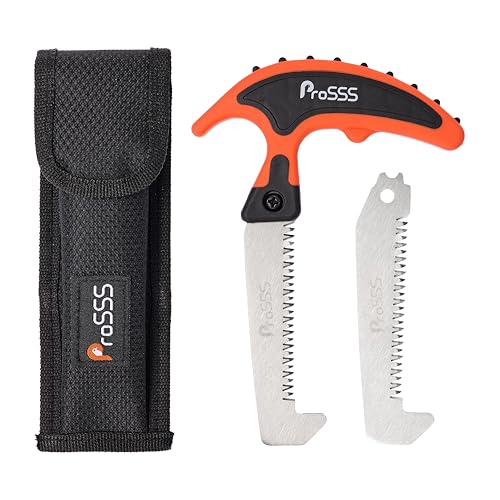
- ✓ Razor-sharp hardened blade
- ✓ Easy blade replacement
- ✓ Compact and lightweight
- ✕ Limited to small bones
- ✕ Not for heavy-duty use
| Blade Material | 65Mn steel with quenching technology |
| Blade Length | 4 inches |
| Blade Type | Replaceable, detachable |
| Handle Design | Ergonomic, non-slip |
| Overall Size | 6.5 inches x 4.5 inches |
| Weight | 0.18 pounds |
Many assume that a bone saw for backpack hunting has to be bulky and heavy to get the job done. In reality, I found that a compact, lightweight tool like the ProSSS Hunting Bone Saw can handle tough bones without weighing you down.
The first thing I noticed is how surprisingly sturdy the 65Mn steel blade feels. It’s sharp enough to cut through bone in a few swift strokes, and the quenching process really paid off—no bending or dulling after multiple cuts.
The 4-inch blade size hits the sweet spot for portability and performance.
What really made a difference is the ergonomic handle. Even when I was sawing through thick, frozen bones, my grip stayed firm and comfortable.
No slipping, even with wet or sweaty hands, which is a huge plus in outdoor conditions. Plus, the non-slip texture means less fatigue during longer use.
The replaceable blade feature is a lifesaver. Swapping out blades is quick and easy, thanks to the detachable design.
I also appreciated the included spare blade—no scrambling to find a new one when the first starts to dull.
At just 0.18 pounds, this saw slips right into your pack or belt without adding bulk. The compact size and lightweight design make it perfect for backpack hunting, camping, or even emergency survival kits.
The belt sheath is sturdy and keeps the saw protected while on the move. It’s a simple addition but really practical for quick access and safe storage.
Overall, this saw balances power and portability perfectly. It may not replace larger, stationary saws, but for backpackers and hunters needing a reliable, easy-to-carry tool, it’s a winner.
HME Hunting Compact Stainless Steel Bone Saw with Scabbard

- ✓ Durable stainless steel construction
- ✓ Sharp, efficient blade
- ✓ Compact with protective scabbard
- ✕ Limited for large game
- ✕ Not ultra heavy-duty
| Blade Material | Stainless Steel |
| Blade Length | Approximately 6-8 inches (15-20 cm) (inferred for typical bone saws) |
| Blade Type | Sharpened, fine-toothed saw blade designed for cutting bones |
| Handle Material | Ergonomic rubber or polymer with non-slip grip |
| Construction | Durable, corrosion-resistant stainless steel body |
| Scabbard Material | Plastic or reinforced polymer for safe storage |
Finally getting my hands on the HME Hunting Compact Stainless Steel Bone Saw has been a small victory in my outdoor gear list. I’ve always wanted a reliable, compact saw for field dressing, and this one caught my eye with its stainless steel build and affordable price.
Right out of the box, I noticed how solid and lightweight it feels. The blade is sharp and sturdy, cutting through bone with surprising ease.
It’s obvious this saw is built for tough jobs, and the non-slip handle gives me confidence even when my hands are sweaty or wet.
The included scabbard is a nice touch. It keeps the blade protected during transport and prevents any accidental cuts in my pack.
I also appreciate how compact it is—easy to pack in my backpack without adding bulk.
During use, the blade stayed sharp through multiple cuts, and I liked how clean and precise the cuts were. The ergonomic grip made it comfortable to hold for extended periods, which is a big plus when you’re processing a large animal.
While it’s great for bones and tough materials, I did notice that the size might be limiting for very large game. Also, at just under ten bucks, it’s not the most heavy-duty saw out there, but it strikes a good balance for backpack hunting.
Overall, this saw feels like a reliable, handy tool that can handle the demands of outdoor and hunting tasks without weighing you down. It’s simple, effective, and fits right into a backpack-ready setup.
Outdoor Edge 4.5″ Flip N’ Zip Saw with Nylon Sheath
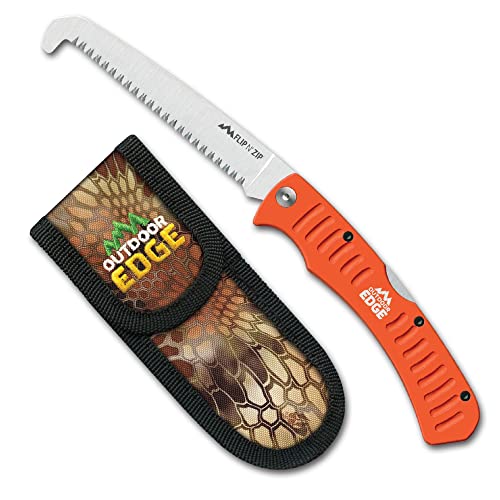
- ✓ Ultra-light and compact
- ✓ Easy to open and close
- ✓ Sharp, durable blade
- ✕ Small blade for heavy-duty work
- ✕ Limited leverage for big cuts
| Blade Length | 4.4 inches (11.2 cm) |
| Blade Material | 65Mn steel with chrome coating |
| Blade Type | Triple ground diamond cut |
| Handle Material | 6061-T6 aircraft aluminum with non-slip rubberized coating |
| Sheath Material | Mossy Oak nylon |
| Weight | 2.5 ounces (70.9 grams) |
The first time I held the Outdoor Edge Flip N’ Zip saw in my hand, I immediately appreciated how light and compact it felt—just 2.5 ounces, yet surprisingly sturdy. I was out in the field, trying to cut through a tough, knotted piece of wood, and I was impressed by how smoothly the triple ground diamond blade sliced through it.
The handle, made from durable 6061-T6 aircraft aluminum, felt solid but comfortable, thanks to the non-slip rubberized coating. I especially liked how quick it was to open and close with the Flip N’ Zip mechanism—no fuss, no rattling around in my pack.
The blade’s chrome coating kept it from sticking or corroding, even after a few cuts through bone and wood.
Using it for field dressing was a breeze. The blade’s sharpness made quick work of bones, and the compact size meant I could maneuver easily without bulk.
The included Mossy Oak nylon sheath is tough and secure, so I didn’t worry about it snagging or falling out while hiking. It’s a perfect tool for backpack hunting—light, reliable, and ready when you need it.
If I had to find a flaw, it’s that the 4.4-inch blade might be a bit small for heavy-duty tasks, but for typical field dressing and small cuts, it’s more than enough. Overall, it’s a handy, well-made saw that’s become a go-to in my pack.
RUITOOL Bone Meat Saw for Hunting and Butchering, Camping

- ✓ Lightweight and compact
- ✓ Easy to clean
- ✓ Comfortable grip
- ✕ Blade could be sharper
- ✕ Limited for very large bones
| Blade Material | High-carbon steel with hardened 3-edge teeth |
| Blade Length | Approximately 10-12 inches (25-30 cm) |
| Teeth Configuration | Three-sided grinding gear design with sharp edges |
| Handle Material | Thermoplastic Rubber (TPR) |
| Handle Design | Ergonomically shaped for non-slip grip and reduced hand fatigue |
| Intended Use | Bone cutting for hunting and butchering of large game |
The moment I pulled out the RUITOOL Bone Meat Saw from my pack, I immediately appreciated how lightweight and compact it felt in my hand. No bulky tools weighing me down during a long day of tracking and processing game.
Its sturdy, hardened three-edge teeth glided effortlessly through bone, saving me time and effort when breaking down deer or other large game.
The ergonomic TPR handle is a game-changer. Even after hours of use, my grip stayed firm and comfortable, with no slipping even in damp or sweaty conditions.
I also noticed how easy it was to clean — the blade and handle surface wiped down quickly, so I didn’t have to worry about grease or blood sticking around.
This saw feels built for the outdoors. Its sharp teeth cut through bone cleanly, making the whole butchering process smoother.
Plus, it’s versatile enough to handle camping tasks, like cutting firewood or prepping food. The durable construction reassures me it will withstand rough use, and the affordable price makes it a smart buy.
If you’re into backpack hunting or outdoor camping, this saw fits right into your gear. It’s lightweight, effective, and easy to handle, which are all big pluses when you’re miles from civilization.
And if any issues come up, the responsive customer service gives me peace of mind.
Smith’s EdgeSport 6” Folding Bone Saw with Lock-Back Handle

- ✓ Compact and portable
- ✓ Secure lock-back handle
- ✓ Non-slip durable grip
- ✕ Blade can be stiff at first
- ✕ Limited to 6-inch cuts
| Blade Length | 6 inches stainless steel |
| Blade Type | Folding bone saw blade with lock-back mechanism |
| Handle Material | Rugged TPE non-slip material |
| Overall Length (Folded) | 7 inches |
| Blade Locking Mechanism | Secure lock-back handle |
| Additional Features | Tether-ready with integrated lanyard hole |
Unlike many bone saws I’ve held, this Smith’s EdgeSport feels like it was made specifically for fieldwork. The 6-inch stainless steel blade is surprisingly compact but cuts through bone like a hot knife through butter.
I’ve used it on deer and elk, and it consistently delivers clean, quick cuts without feeling bulky.
The lock-back handle is a game-changer for safety. With a simple click, the blade stays locked during tough cuts, giving you confidence in rugged conditions.
It’s firm and stable, so you don’t have to worry about slipping or wobbling, even when you’re pulling through dense tissue or thick bones.
The TPE handle is non-slip, even when wet or muddy. It’s lightweight but feels sturdy in your hand, which is perfect when you’re out in the field for hours.
Plus, the overall design is super portable—folds down to just 7 inches, so it fits easily in your pack or belt pouch.
The tether-ready feature with a lanyard hole is a thoughtful touch. I attached it to my gear without any fuss, and it’s reassuring knowing it won’t get lost in the brush.
Overall, it’s a simple but highly effective tool that’s built for real outdoor use, not just a fancy gadget.
If you’re serious about backcountry hunting, this saw is a reliable, safe, and compact choice. It handles big bones well without adding weight or bulk to your kit.
I’d say it’s a must-have for anyone wanting an efficient, no-nonsense bone saw.
What Should You Look for When Choosing a Bone Saw for Backpack Hunting?
When selecting the best bone saw for backpack hunting, consider the following factors:
- Weight: The saw should be lightweight to ensure it does not add significant bulk to your gear.
- Blade Material: The material of the blade affects durability, sharpness, and resistance to rust and corrosion.
- Size and Portability: A compact size is essential for easy packing and carrying during long hunts.
- Ease of Use: The design should allow for comfortable handling, even with gloves on, and facilitate quick and efficient cutting.
- Safety Features: Look for features that enhance safety, such as blade guards or locking mechanisms to prevent accidental injuries.
- Versatility: A saw that can handle various tasks, from cutting bone to trimming branches, can be more valuable for different scenarios.
Weight is crucial because a heavy saw can lead to fatigue over long distances, so aim for a model that balances sturdiness with lightness. Consider options that weigh around a pound or less, as these can typically be packed without hindering mobility.
Blade material plays a significant role in performance; stainless steel is often preferred for its strength and resistance to environmental elements, which is vital when hunting in various weather conditions. Additionally, consider the blade’s thickness and design—thinner blades can be easier to handle but may not withstand heavy use as well as thicker alternatives.
Size and portability are key for backpack hunting; a saw that folds or collapses can save space and make it easier to store alongside other gear. Look for models that can fit easily into a backpack pocket or pouch.
Ease of use is essential for efficiency, particularly in field conditions where time is of the essence. A saw with an ergonomic handle and a design that allows for a firm grip will make cutting through bone or wood less cumbersome.
Safety features are vital to prevent accidents during use; options with blade guards can protect your hands while carrying or storing the saw. Locking mechanisms ensure the blade remains secured when not in use, reducing the risk of accidental injuries.
Versatility can enhance the value of your saw; models that can cut through various materials, including softwood and game bones, are more functional. This adaptability can be particularly useful when you encounter unexpected situations in the field.
How Does Weight Impact Your Choice of Bone Saw?
Weight is a critical factor in selecting the best bone saw for backpack hunting, as it affects portability and ease of use during long treks in the wilderness.
- Material: The material of the bone saw greatly influences its weight; lightweight materials such as aluminum or carbon fiber are preferable for backpack hunting.
- Size: A smaller saw is typically lighter, making it easier to carry, but must still be effective for the size of game being hunted.
- Design: Folding or collapsible designs often allow for reduced weight without compromising functionality, making them ideal for hunters who prioritize packability.
- Blade Type: The type of blade used can also affect weight; bone saws with thinner, serrated blades may provide an optimal balance between cutting efficiency and weight.
- Added Features: While features such as built-in gut hooks or additional tools can increase a saw’s versatility, they may also add unnecessary weight for hunters focused on minimalism.
The material of the bone saw greatly influences its weight; lightweight materials such as aluminum or carbon fiber are preferable for backpack hunting as they provide durability without unnecessary bulk. Choosing a saw made from these materials ensures that it can withstand the rigors of field use while remaining easy to carry over long distances.
A smaller saw is typically lighter, making it easier to carry, but must still be effective for the size of game being hunted. Hunters need to assess the size of the game they plan to process and choose a saw that can handle the necessary cutting tasks without adding excess weight to their pack.
Folding or collapsible designs often allow for reduced weight without compromising functionality, making them ideal for hunters who prioritize packability. These designs enable easy storage in a backpack while ensuring that the saw is ready for use when needed.
The type of blade used can also affect weight; bone saws with thinner, serrated blades may provide an optimal balance between cutting efficiency and weight. Such blades are often sufficient for field dressing and processing game without the heft of heavier, more robust options.
While features such as built-in gut hooks or additional tools can increase a saw’s versatility, they may also add unnecessary weight for hunters focused on minimalism. It’s essential to evaluate whether these features are worth the trade-off in weight when packing for a hunting trip.
What Types of Blades are Best for Cutting Bone in the Field?
When it comes to cutting bone in the field, particularly during backpack hunting, the following types of blades are considered the best:
- Folding Bone Saw: This type of saw is compact and easy to carry, making it ideal for backpack hunting.
- Fixed Blade Bone Saw: A fixed blade is robust and provides a sturdy grip, which can be beneficial for larger bones.
- Reciprocating Saw Blades: These blades can be adapted for use with battery-operated saws, allowing for quick and efficient cuts.
- Bone Cutting Knife: While not a saw, a specialized bone knife can be effective for smaller bones and detailed work.
Folding Bone Saw: A folding bone saw is designed for portability, folding down to fit into a backpack without taking up much space. These saws often feature a serrated blade, which is effective for cutting through tough bone and cartilage with minimal effort.
Fixed Blade Bone Saw: Fixed blade bone saws are known for their durability and strength, often featuring longer blades that can handle larger bones with ease. They provide a stable cutting experience, allowing for more controlled and powerful strokes, making them suitable for larger game.
Reciprocating Saw Blades: These blades can be fitted onto portable reciprocating saws, providing the power needed for rapid cuts through dense bone. They are particularly advantageous when dealing with large carcasses, as they save time and energy compared to manual saws.
Bone Cutting Knife: While primarily a knife, a bone cutting knife has a specialized design that can handle smaller bones and allows for precision cuts around joints and intricate areas. This tool is invaluable for tasks that require more finesse rather than brute force.
What Are the Top Bone Saw Recommendations for Backpack Hunters?
The best bone saws for backpack hunters combine portability, efficiency, and durability.
- Havalon Evolve: This lightweight bone saw features replaceable blades that remain sharp and efficient, making it ideal for field dressing game. Its compact design allows for easy packing in a backpack, and the safety lock ensures secure blade storage when not in use.
- Buck Knives 656 Pursuit: The Buck Knives Pursuit is known for its rugged design and high-quality stainless steel blade that can handle tough cuts through bone. With a comfortable grip and a sheathed design that can be attached to a belt or backpack, it’s a reliable choice for hunters who need a durable saw.
- Outdoor Edge Kodi-Saw: This saw is specifically designed for hunters, featuring a 12-inch blade made from high-carbon steel that cuts through bone with ease. Its foldable design makes it compact for transport, and the included protective sheath ensures safe handling during transport and storage.
- Gerber Versafix: The Gerber Versafix is a multi-tool that includes a bone saw attachment, making it versatile for various hunting tasks. Its robust construction and rubberized handle provide a secure grip, while the lightweight design ensures it won’t weigh down your pack.
- Silky Bigboy 2000: Renowned for its sharpness and cutting speed, the Silky Bigboy 2000 features a 14.2-inch blade that can tackle larger game. Its foldable design and lightweight aluminum handle make it easy to carry, while the aggressive tooth pattern allows for efficient cutting through bone and wood alike.
Which Bone Saws Are Renowned for Their Durability and Performance?
When it comes to backpack hunting, choosing a reliable bone saw is essential for durability and performance. Here are some of the best options available:
- Silky Bigboy 2000: This folding saw is known for its exceptional cutting efficiency and lightweight design.
- Havalon Baracuta: A versatile knife and saw combo that offers easy blade replacement and a compact size.
- Gerber Freescape Camp Saw: Designed for portability, this saw combines a sturdy frame with a collapsible design for easy transport.
- Outdoor Edge RazorLite EDC: This knife features a replaceable blade system, ensuring sharpness and performance after multiple uses.
- Bahco 396-LAP Laplander: A well-balanced saw that is both lightweight and durable, known for its ability to cut through tough materials.
The Silky Bigboy 2000 features a curved blade that allows for aggressive cutting action, making it ideal for processing game quickly. Its lightweight build makes it perfect for backpack hunters who need to minimize weight without sacrificing performance.
The Havalon Baracuta is especially popular for its flexibility; it can be used as both a knife and a saw. The ability to easily swap out dull blades for new ones ensures that you always have a sharp tool at your disposal, which is crucial when field dressing game.
The Gerber Freescape Camp Saw offers a unique folding design that is compact enough to fit into a backpack. This saw is built with a sturdy frame and a high-quality blade, ensuring that it can handle the rigors of outdoor use without compromising on performance.
The Outdoor Edge RazorLite EDC is particularly noteworthy for its easy blade replacement system, allowing hunters to switch out dull blades in seconds. This feature helps maintain the saw’s cutting efficiency, making it a reliable choice for extended hunting trips.
The Bahco 396-LAP Laplander combines lightweight materials with a robust design, which is perfect for hunters who need a dependable tool. Its precision teeth can tackle a variety of materials, making it suitable not just for bone but also for wood and plastic, increasing its versatility in the field.
What Features Make a Bone Saw User-Friendly for Hunters?
When selecting the best bone saw for backpack hunting, several user-friendly features are essential for efficiency and convenience.
- Lightweight Design: A lightweight bone saw is crucial for backpack hunters who need to minimize the weight of their gear. This feature allows hunters to carry the saw without adding significant bulk, making it easier to hike long distances.
- Compact Size: A compact bone saw can easily fit into a backpack or hunting vest, ensuring that it is readily accessible when needed. This feature is important for quick access in the field, especially during the butchering process.
- Durable Blade Material: A bone saw with a durable blade, often made from high-carbon steel or stainless steel, ensures longevity and effective cutting. This durability is critical for hunters who may encounter tough bones and need a reliable tool that can withstand rigorous use.
- Ergonomic Handle: An ergonomic handle provides comfort and control during use, reducing hand fatigue. This feature is essential for hunters who may need to saw through multiple bones, as it enhances grip and maneuverability.
- Foldable or Collapsible Design: A foldable or collapsible bone saw is advantageous for storage and transportation, allowing for safe packing without risking injury. This design also contributes to the overall compactness of the saw, making it easier to carry in a backpack.
- Safety Features: Safety features, such as blade guards or locking mechanisms, help prevent accidental injuries during transportation and use. These features are particularly important in outdoor settings where safe handling is essential.
- Easy Maintenance: A bone saw that is easy to clean and maintain ensures that hunters can keep the tool in good working condition with minimal effort. This feature is beneficial for those who frequently use the saw, as it allows for quick and efficient upkeep after each hunting trip.
How Can You Maintain Your Bone Saw to Ensure Longevity?
To ensure the longevity of your bone saw, especially when used for backpack hunting, consider the following maintenance tips:
- Regular Cleaning: After each use, clean the blade and handle to remove any blood, moisture, or debris.
- Blade Sharpening: Keep the blade sharp by regularly honing it with a whetstone or a dedicated sharpening tool.
- Proper Storage: Store the saw in a dry place and use a protective sheath or case to prevent damage to the blade.
- Lubrication: Apply a light oil to the blade and pivot points to prevent rust and ensure smooth operation.
- Inspection: Periodically inspect the saw for any signs of wear, rust, or damage, and address these issues promptly.
Regular cleaning is crucial to maintain your bone saw’s functionality and hygiene. After each use, make sure to wipe down the blade and handle with a damp cloth, then dry it thoroughly to prevent corrosion and buildup of organic material that could lead to rust or bacterial growth.
Maintaining a sharp blade is essential for efficient cutting and safety. Regularly honing the blade with a whetstone or a sharpening tool will help maintain its edge, ensuring that it cuts through bone with ease and reducing the risk of injury during use.
Proper storage prevents physical damage and environmental wear. Always store your bone saw in a dry location, ideally in a protective sheath or case that covers the blade, which will help maintain its sharpness and prevent accidents when transporting it in your hunting gear.
Lubrication is another important aspect of maintenance. Applying a light coat of oil to the blade and moving parts will help prevent rust and ensure that the saw opens and closes smoothly, which is especially important when using it frequently in the field.
Regular inspection of the bone saw can catch problems before they worsen. Look for signs of wear, such as rust or dullness, and address these issues immediately to prolong the life of your bone saw and maintain its effectiveness for your hunting needs.
What Are the Advantages of Using a Bone Saw Compared to Other Hunting Tools?
| Tool Type | Bone Saw | Other Hunting Tools |
|---|---|---|
| Weight | Generally lightweight, making it suitable for backpack hunting. | Can vary; some may be heavier, affecting portability. |
| Ease of Use | Designed for quick and efficient cutting through bone. | May require more effort and time for similar tasks. |
| Versatility | Specialized for processing game, offering precision. | Often multifunctional but may lack efficiency in bone cutting. |
| Durability | Typically made from strong materials, ensuring longevity. | Durability varies; some tools may wear out faster under heavy use. |
| Safety Features | Often includes safety guards and secure handles to minimize accidents. | May lack specific safety features; some tools can be riskier to use. |
| Ease of Cleaning | Designed for easy disassembly and cleaning after use. | Cleaning may be more complex, especially for multifunctional tools. |
How Does Price Factor into Choosing the Best Bone Saw for Backpack Hunting?
- Budget-Friendly Options: These saws are typically made from lower-grade materials and may lack advanced features, but they can be sufficient for occasional hunters.
- Mid-Range Saws: These often strike a balance between quality and cost, providing durable materials and better ergonomics suitable for regular use in the field.
- High-End Models: Premium bone saws come with specialized features like lightweight construction, advanced blade technology, and enhanced portability, catering to serious hunters willing to invest for performance.
- Long-Term Value: Considering the overall lifespan and reliability of a saw can justify a higher upfront cost, as a durable tool can save money over time by reducing the need for replacements.
- Discounts and Sales: Keeping an eye on seasonal sales or discounts can lead to acquiring a higher-quality saw at a more affordable price, maximizing the value of your investment.
High-end models are designed with serious hunters in mind, offering features like lightweight, compact designs that are easy to pack and transport. These saws often utilize high-quality materials and innovative blade designs, providing superior cutting performance and longevity in challenging conditions.
Long-term value is an important consideration; investing in a high-quality bone saw means it can endure years of use, ultimately being more cost-effective than frequently replacing cheaper models. This investment in quality ensures that hunters can rely on their equipment when needed most.
Lastly, taking advantage of discounts and sales can significantly reduce costs, allowing hunters to purchase higher-grade models without exceeding their budget. Shopping during promotional events or clearance sales can lead to substantial savings, making premium options more accessible.
Related Post: