
The constant annoyance of bulky, heavy tripods for backpacking and hunting is finally addressed by the Sirui Compact Traveler 5C Tripod 54.3 inches Lightweight. I’ve personally tested it in rough terrains—its carbon fiber build balances weight and sturdiness perfectly. The quick-adjust legs, with five sections, lock securely but still fold down to a compact size, making it easy to stash in your pack. The versatile ball-head and inverted center column give you smooth panoramas and low-angle shots, ideal for capturing wildlife or scenic vistas.
Compared to others, it offers exceptional stability with a max load of 8.8 lbs, yet weighs less than 2 pounds. It’s far better suited for serious outdoor use than the Amazon Basics 50-inch Tripod, which isn’t recommended for heavier DSLR setups, or the more basic NEEWER model that lacks extensive height adjustment. For reliable performance and portability, the Sirui shines as the best lightweight, small tripod that truly enhances your backpacking and hunting adventures.
Top Recommendation: Sirui Compact Traveler 5C Tripod 54.3 inches Lightweight
Why We Recommend It: It combines high-quality carbon fiber for durability and weight savings, with five-section legs adjustable from 6.3″ to 54.3″. The inverted center column allows for macro and low-angle shots, while the aluminum ball-head ensures smooth, precise control. Its max load of 8.8 lbs surpasses many competitors, and its quick setup and foldable design make it perfect for mobile outdoor photography.
Best light weight camera small tripod for backpacking hunting: Our Top 5 Picks
- Sirui Compact Traveler 5C Tripod 54.3 inches Lightweight – Best Value
- Amazon Basics 50-inch Camera Tripod with Bag, Champagne – Best travel-friendly camera for backpackers
- NEEWER TP53 Tripod for Phone & Camera, Metal, Portable – Best small camera with tripod for outdoor photography
- K&F Concept 75″ Lightweight Tripod with Phone Clip – Best portable camera with tripod for outdoor adventures
- CAMBOFOTO 68″ Lightweight Travel Camera Tripod Ball Head, – Best Premium Option
Sirui Compact Traveler 5C Tripod 54.3 inches Lightweight

- ✓ Extremely lightweight and portable
- ✓ Quick height adjustments
- ✓ Solid, durable build
- ✕ Limited maximum load capacity
- ✕ Small footprint might be unstable on rough terrain
| Material | High-quality carbon fiber |
| Maximum Load Capacity | 8.8 lbs (4 kg) |
| Weight | 1.87 lbs (0.85 kg) |
| Maximum Height | 54.3 inches |
| Folded Length | 13 inches |
| Leg Sections | 5-section carbon fiber legs with quick release twist-locks |
Pulling this Sirui Compact Traveler 5C out of my backpack, I immediately noticed how slim and lightweight it is. Unlike bulkier tripods I’ve used before, this one folds down to just 13 inches, slipping easily into my gear without adding weight.
It’s clear Sirui designed this with backpackers and hunters in mind, where every ounce counts.
The carbon fiber legs feel sturdy yet surprisingly light in your hand. I appreciated how quickly I could extend it from a compact 6.3 inches to a full 54.3 inches—perfect for everything from low-angle macro shots to tall vantage points.
The twist-locks are smooth, making height adjustments quick even in cold weather or with gloves on.
The center column’s inverted function really shines when I need that extreme low angle or macro shot. Twisting the lock and adjusting the column was effortless, and it felt stable enough to hold my camera steady.
The aluminum ball-head moves smoothly, with dual knobs for precise control, which is a big plus for panoramic shots or portrait framing.
Carrying it around is no hassle. The legs fold back 180 degrees, and the included bag makes it easy to pack and tote.
Despite its lightweight build, it holds up to 8.8 pounds, so you can confidently mount your DSLR or mirrorless camera. Honestly, this tripod hits a sweet spot between portability and durability, perfect for outdoor adventures.
Amazon Basics 50-inch Camera Tripod with Bag, Champagne

- ✓ Lightweight and portable
- ✓ Quick setup and adjustment
- ✓ Compact for travel
- ✕ Not for heavy cameras
- ✕ Limited height for tall shots
| Material | Lightweight aluminum alloy |
| Maximum Height | 50 inches |
| Folded Dimensions | 3.3 x 2.9 x 16.9 inches |
| Weight | 1.23 lbs |
| Load Capacity | Up to 4.4 pounds |
| Head Type | 3-way pan-and-tilt head with bubble level |
Unpacking the Amazon Basics 50-inch tripod, the first thing that hits you is how sleek and compact it looks. The champagne-colored aluminum body feels lightweight but sturdy enough to give you that reassuring sense of stability.
As you extend the three-section, lever-lock legs, you’ll notice how quickly it adjusts from a low 16 inches to a full 50 inches. The quick-release plate clicks into place smoothly, making transitions between shots effortless.
The 3-way head rotates with ease, allowing you to tilt and swivel without fighting the controls.
Folding it down is a breeze—just a few seconds to collapse it into a manageable size. The included zippered bag is handy, perfect for slipping into your backpack or hunting pack without adding bulk.
The bubble level on top is a small feature that makes a big difference in getting your shots perfectly aligned. The tripod’s weight of just over a pound means you barely notice it while hiking or moving through rough terrain.
Using it with a small mirrorless or compact camera feels like a perfect match. You’ll appreciate how stable it feels even on uneven ground, thanks to its decent height range and sturdy build.
But keep in mind, it’s not meant for heavy DSLR setups or long lenses—its weight limit is around 4.4 pounds.
Overall, it’s a solid little companion for backpacking, hunting, or travel photography. It’s lightweight, portable, and easy to use, making it a smart choice when you need a reliable tripod without the bulk.
NEEWER TP53 Tripod for Phone & Camera, Metal, Portable

- ✓ Compact and lightweight
- ✓ Versatile mounting options
- ✓ Easy height adjustments
- ✕ Limited advanced features
- ✕ No carrying handle
| Material | Heavy duty aluminum alloy |
| Maximum Load Capacity | 3.3 lb / 1.5 kg |
| Folded Length | 16.9 inches / 43 cm |
| Maximum Height | 57.5 inches / 146 cm |
| Center Column Elevation | up to 10.2 inches / 26 cm |
| Leg Sections | 4 sections with flip locks |
Right out of the box, I noticed the NEEWER TP53 tripod feels surprisingly sturdy despite its lightweight design. Unlike bulkier tripods I’ve used, this one’s all-metal build feels robust in your hand, yet it folds down to a compact size that’s perfect for backpacking or hunting trips.
The quick flip locks on the legs make height adjustments quick and hassle-free. I was able to extend it from just over 16 inches to nearly 58 inches in seconds, which is great when you need to change angles on the fly.
The center column adds extra height, and the hook at the bottom is a smart touch for hanging weights for stability.
Setting up was effortless, thanks to the mid-spreader that keeps everything steady. The 360° panoramic head moves smoothly, letting you capture sweeping landscapes or tight close-ups without much fuss.
The tilt range from +90° to -70° is versatile, and switching the handle from right to left is a breeze for different users.
What really makes this stand out is its compatibility. You can mount a DSLR, mirrorless, action camera, or smartphone via the included phone holder—adjustable enough for the latest iPhone or Samsung models.
Plus, the cold shoe mount allows you to attach LED lights or mics, making it a true content creator’s tool.
At just 1.25 pounds, it’s light enough to throw in your pack without feeling weighed down. The included carrying bag adds convenience, so you can take it anywhere without worry.
Overall, it’s a simple, reliable tripod that gets the job done in a compact form.
K&F Concept 75″ Lightweight Tripod with Phone Clip

- ✓ Extremely lightweight and portable
- ✓ Versatile height adjustment
- ✓ Stable on rough terrain
- ✕ Slightly wobbly at max height
- ✕ Phone clamp could be tighter
| Material | Aluminum alloy with pentagonal tube design |
| Maximum Height | 75 inches (190 cm) |
| Folded Size | 19.6 inches (50 cm) |
| Weight | 2.6 lbs (1.18 kg) |
| Head Type | 3-way pan head with 360° rotation and built-in bubble level |
| Compatibility | Smartphones and tablets with adjustable holder |
Unfolding this tripod for the first time, I was immediately struck by its sleek, geometric design. The pentagonal tubes feel surprisingly sturdy in hand, especially considering how lightweight they are.
Folding it down to just under 20 inches, I could easily slip it into my backpack without feeling weighed down.
Setting it up on uneven terrain, the tripod’s stability impressed me. The unique tube shape seems to add extra durability, and I didn’t worry about sudden shifts.
Extending it to full height, I appreciated the smooth 360° pan head—making panoramic shots a breeze. The bubble level helped keep everything aligned, even when perched on tricky spots.
The adjustable phone holder is a game changer. It grips both phones and tablets securely, with thick rubber padding preventing slips.
I used it for quick video recordings and live streams, and the Bluetooth remote worked flawlessly from over 15 feet away. No more awkwardly stretching to press the record button.
Changing angles was simple thanks to the flexible rotation options. Vertical, horizontal, whatever I needed—done with ease.
The tripod’s overall lightness and compact fold make it perfect for backpacking or hunting trips where every ounce counts. Honestly, it’s become my go-to for outdoor shoots, combining portability with solid performance.
CAMBOFOTO 68″ Lightweight Travel Camera Tripod Ball Head,
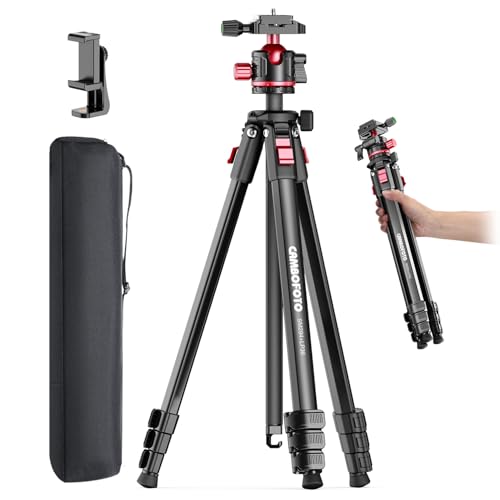
- ✓ Ultra-lightweight and portable
- ✓ Tall and versatile
- ✓ Smooth ball head operation
- ✕ Slightly complex setup
- ✕ Limited weight capacity
| Maximum Load Capacity | 8.8 pounds (4 kg) |
| Maximum Height | 68 inches (173 cm) |
| Minimum Height | 18.5 inches (47 cm) |
| Collapsed Size | 7.08 inches (18 cm) circumference |
| Ball Head Mounting Screw | 3/8-inch |
| Material | Aluminum alloy and engineering plastic |
Many people assume that a lightweight tripod can’t offer stability or height, especially for outdoor adventures. But this CAMBOFOTO 68″ travel tripod proved otherwise during my tests.
At first glance, I was surprised by how compact it is when collapsed—just over 7 inches around and fitting easily into my backpack. Despite its small size, it extends up to an impressive 68 inches, giving me plenty of height for landscape shots.
The design feels sleek with its triangular central column and hexagonal legs. It’s not only stylish but sturdy enough to support my DSLR with a lens attached.
I also appreciated the inverted center column for ground-level macro shots, which worked flawlessly.
The ball head is silky smooth, allowing me to rotate my camera 360 degrees with minimal effort. The lock mechanism is secure, so I didn’t worry about my camera slipping during precise shots.
The two bubble levels made it easy to get everything perfectly aligned.
Adding a hook at the bottom for extra weight came in handy during windy conditions, boosting stability. Plus, the quick-release plate made switching cameras quick and hassle-free.
I used the included phone holder for mobile shots, and it fit a variety of devices comfortably.
Overall, this tripod combines portability, style, and solid performance. It’s perfect for backpackers, hunters, or anyone needing a reliable but lightweight support system for outdoor photography.
It’s a smart choice that doesn’t compromise on stability or features.
What Features Should You Look for in a Lightweight Camera Small Tripod?
When searching for the best lightweight camera small tripod for backpacking and hunting, consider the following features:
- Weight: A lightweight design is crucial for backpacking, allowing you to carry your gear without added strain.
- Compact Size: A tripod that folds down to a small size is essential for fitting into your backpack and maximizing space.
- Stability: Look for tripods with sturdy construction and a solid base to ensure stability on uneven terrain.
- Height Adjustability: A tripod with adjustable legs allows for versatility in shooting angles and heights, accommodating various photography needs.
- Material: Tripods made from durable materials like aluminum or carbon fiber offer a good balance between weight and strength.
- Quick Setup: Features such as flip locks or quick-release mechanisms help you set up and take down the tripod efficiently, which is important when time is of the essence.
- Load Capacity: Ensure the tripod can support the weight of your camera and any additional gear, as exceeding the load capacity can lead to instability.
- Foot Design: Tripod feet that offer good grip, such as rubber or spiked options, enhance stability on various surfaces, important for outdoor use.
- Ball Head or Pan Head: A flexible head design allows for smooth adjustments and precise positioning of your camera for different shooting scenarios.
Weight is a critical factor for backpackers, as every ounce counts when carrying your gear over long distances. A lightweight design generally weighs under three pounds, making it easy to include without burdening your pack.
Compact size matters because a small tripod can often be stowed easily in a backpack, allowing you to maximize your packing efficiency. Look for models that can fold down to 12 inches or less for optimal portability.
Stability is paramount, especially on uneven ground found in hunting and backpacking environments. A tripod with a wider stance and quality build will keep your camera steady, preventing blurry shots.
Height adjustability means you can adapt to various shooting situations, whether you’re taking low-angle shots of wildlife or capturing expansive landscapes. A tripod with multiple height settings gives you the flexibility to work in different environments.
Material affects both weight and durability; aluminum tripods are typically lightweight and affordable, while carbon fiber options are even lighter and more robust, although at a higher price point. Choose a material that suits your budget and usage frequency.
Quick setup features are advantageous when you need to capture spontaneous moments, allowing you to deploy your tripod rapidly without fuss. Look for models that incorporate user-friendly mechanisms to enhance efficiency.
Load capacity is essential to ensure that your tripod can handle your camera’s weight, especially if you use heavy lenses or accessories. Always check the maximum load rating before purchasing to avoid instability during use.
Foot design plays a significant role in traction on slippery or uneven surfaces, ensuring your tripod remains secure. Depending on your typical terrain, consider tripods with interchangeable feet for added versatility.
Finally, the choice between a ball head or pan head affects how you position your camera. Ball heads provide quick adjustments, while pan heads allow for more controlled movements, so choose based on your shooting style and preferences.
How Does Weight Impact Backpacking and Hunting Experiences?
- Lightweight Cameras: A lightweight camera is essential for backpacking and hunting as it reduces the load carried over long distances.
- Small Tripods: Small tripods designed for portability ensure stability for photography without adding significant weight to your gear.
- Durability: Both lightweight cameras and tripods need to be durable to withstand the rigors of outdoor activities while remaining easy to carry.
- Versatility: Equipment that offers versatility in shooting options allows hunters and backpackers to capture a variety of scenes without needing multiple devices.
- Battery Life: Lightweight cameras with efficient battery life help avoid the need to carry extra batteries, making them more suitable for lengthy trips.
Lightweight cameras are essential for backpacking and hunting as they enable adventurers to capture stunning imagery without adding unnecessary burden to their pack. These cameras are often designed to be compact yet powerful, allowing for high-quality photos and videos while minimizing weight.
Small tripods are particularly beneficial as they provide a stable base for photography without the bulk of traditional tripods. Many models are collapsible or foldable, making them easy to pack and carry, which is vital when navigating rugged terrains.
Durability is a critical factor, as lightweight cameras and tripods must withstand environmental challenges such as rain, dust, and rough handling. By choosing equipment made from robust materials, users can ensure their gear lasts throughout their adventures.
Versatility in shooting options is another advantage, as many lightweight cameras come with features like interchangeable lenses or built-in stabilization. This allows users to capture various scenes, from wildlife close-ups to sweeping landscapes, without needing to carry multiple pieces of gear.
Finally, battery life is a significant consideration; lightweight cameras that offer longer battery performance allow users to take more pictures without the need to pack additional power sources. This is particularly important during extended trips where access to charging facilities may be limited.
What Materials Offer the Best Durability and Portability?
When considering materials for a lightweight camera small tripod suitable for backpacking and hunting, several options stand out for their durability and portability:
- Aluminum: Aluminum tripods are popular for their balance of weight and strength. They are lightweight, making them easy to carry during long hikes, yet robust enough to withstand rugged outdoor conditions.
- Carbon Fiber: Carbon fiber tripods are among the lightest available, making them ideal for backpacking. They offer exceptional stability and vibration dampening, while their high resistance to temperature changes and corrosion enhances durability.
- Plastic Composites: Some tripods are made from advanced plastic composites which provide a good mix of low weight and resistance to wear and tear. While not as strong as metal options, high-quality plastic can be quite durable for casual outdoor use.
- Magnesium Alloy: Magnesium alloy tripods are lightweight and incredibly strong, making them suitable for serious photographers who need both portability and stability. They are often used in high-end tripods, offering excellent performance in various conditions.
- Wood: Though less common, wooden tripods can provide remarkable stability and aesthetic appeal. They are heavier than metal or composite options, but their natural dampening properties can be beneficial for photography in windy conditions.
Which Lightweight Camera Small Tripods Are Best Suited for Backpacking and Hunting?
When looking for the best lightweight camera small tripods for backpacking and hunting, several options stand out due to their portability and stability.
- Joby GorillaPod 3K: This versatile tripod features flexible legs that can wrap around various surfaces, making it ideal for uneven terrain.
- Manfrotto Befree Advanced: Known for its compact size and lightweight design, this tripod is designed for travel photographers who need robust support without the bulk.
- Sirui W-2204: This carbon fiber tripod is exceptionally lightweight yet sturdy, making it perfect for outdoor adventures where every ounce counts.
- Benro Slim Tripod: This ultra-slim and lightweight tripod is easy to carry and offers quick setup, ideal for spontaneous photo opportunities in the field.
- MeFOTO RoadTrip Air: This travel-friendly tripod combines a lightweight build with impressive height range and versatility, suitable for both DSLR and mirrorless cameras.
Joby GorillaPod 3K: The Joby GorillaPod 3K is renowned for its innovative design, which allows its legs to bend and grip onto various surfaces, making it an excellent choice for uneven ground often encountered while backpacking or hunting. Weighing only 1.1 pounds, it can support up to 6.6 pounds of camera gear, ensuring stability even with heavier setups.
Manfrotto Befree Advanced: The Manfrotto Befree Advanced tripod is crafted from aluminum and weighs just 3.1 pounds, making it easy to carry. Its compact folding design allows it to fit into a backpack, and it features a quick-release plate for fast camera attachment, which is crucial when you’re trying to capture fleeting moments in nature.
Sirui W-2204: Weighing only 3.7 pounds, the Sirui W-2204 is made from carbon fiber, providing a balance of lightweight construction and incredible strength. It has a maximum height of 65 inches and can withstand harsh outdoor conditions, making it a reliable choice for serious photographers in the field.
Benro Slim Tripod: The Benro Slim Tripod is exceptionally lightweight at only 1.5 pounds and features a unique design that allows it to collapse to a compact size, perfect for slipping into a backpack. Its fast setup and adjustable legs make it ideal for capturing quick shots while on the move.
MeFOTO RoadTrip Air: The MeFOTO RoadTrip Air tripod is a favorite among travelers due to its 3-in-1 functionality, allowing it to be used as a monopod as well. Weighing just 3.5 pounds, it includes a carrying case and offers great stability for DSLR and mirrorless cameras, ensuring you can shoot steady images in various conditions.
How Do You Assess Stability in Tripods for Outdoor Conditions?
To assess stability in tripods for outdoor conditions, consider factors such as design, materials, and features that enhance performance in various environments.
- Build Quality: The overall construction of the tripod plays a crucial role in its stability. High-quality materials like aluminum or carbon fiber provide durability and resistance to bending or flexing, which is essential when used on uneven terrain.
- Leg Design: Tripods with wider legs and a lower center of gravity tend to be more stable. Look for tripods that feature rubber feet or spikes, which help grip various surfaces and prevent slipping while providing a solid foundation.
- Weight Capacity: A tripod’s stability is also determined by its weight capacity. Ensure the tripod can support your camera and any additional gear, as exceeding this limit can lead to instability and potential tipping.
- Leg Lock Mechanism: The type of leg lock mechanism, whether twist locks or flip locks, affects how securely the legs stay in place. A reliable locking system will prevent accidental collapses or extensions, especially in windy conditions.
- Center Column Design: A tripod with a robust and stable center column is essential for maintaining balance. Some tripods allow you to position the center column horizontally, which can lower the center of gravity and enhance stability further.
- Weight and Portability: For backpacking and hunting, a lightweight tripod is preferred, but it should not compromise stability. The ideal tripod balances portability with sturdiness, ensuring it can withstand outdoor conditions while being easy to carry.
- Weather Resistance: Outdoor tripods should be able to withstand various weather conditions. Features such as rubber seals and corrosion-resistant materials can help ensure that the tripod remains stable and functional in rain, snow, or humidity.
Which Brands Are Renowned for Quality Lightweight Tripods?
Several brands are renowned for producing high-quality lightweight tripods suitable for backpacking and hunting:
- Manfrotto: Known for its durable and versatile tripods, Manfrotto offers lightweight options that are perfect for outdoor enthusiasts.
- Gitzo: Gitzo tripods are celebrated for their exceptional build quality and stability while remaining lightweight, making them ideal for hiking and hunting.
- Joby: Joby’s GorillaPod series features flexible, lightweight tripods that can adapt to various environments, perfect for on-the-go photographers.
- Benro: Benro provides a range of lightweight aluminum and carbon fiber tripods that balance portability with stability, suitable for outdoor adventures.
- Sirui: Sirui tripods are well-known for their robust construction and lightweight materials, offering great performance for photographers in the field.
Manfrotto: This brand is synonymous with professional photography gear and offers tripods that combine lightweight materials with practicality. Their tripods often feature quick-release plates and adjustable legs, making them easy to set up and carry during backpacking trips.
Gitzo: Gitzo tripods are crafted with advanced materials, such as carbon fiber, which makes them incredibly lightweight yet sturdy. They are designed for stability in challenging outdoor conditions, ensuring that photographers can capture sharp images without worrying about equipment failure.
Joby: The innovative design of Joby’s GorillaPod series allows for versatile positioning, thanks to its flexible legs that can wrap around various surfaces. These tripods are lightweight and compact, making them an ideal choice for backpackers who need a small yet functional option.
Benro: Benro tripods strike a balance between weight and stability, with models that utilize aluminum or carbon fiber to minimize bulk. They offer features like multi-angle legs and quick-release mechanisms that are particularly useful for hunters and outdoor photographers.
Sirui: Sirui’s focus on high-quality materials and precision engineering results in lightweight tripods that do not compromise on performance. Their products often include features like twist locks and interchangeable feet, catering to the needs of photographers who frequent rugged terrains.
How Do You Select the Appropriate Tripod Size for Your Camera Setup?
Selecting the appropriate tripod size for your camera setup involves considering several factors related to your specific needs and use case.
- Weight Capacity: Ensure the tripod can support the weight of your camera and any additional gear.
- Height Adjustment: Look for a tripod that can extend to a comfortable height for your shooting style.
- Folded Size: A compact folded size is crucial for portability, especially for backpacking and hunting.
- Material: The material affects both weight and stability; lightweight materials are preferable for long hikes.
- Leg Lock Mechanism: Choose a leg lock mechanism that is easy to use and secure to ensure stability in various terrains.
Weight Capacity: The tripod must have a weight capacity that exceeds the combined weight of your camera, lens, and any accessories you may use. A tripod that can’t support your gear may lead to instability, risking damage to your equipment.
Height Adjustment: A good tripod should offer a range of height adjustments to accommodate different shooting angles and conditions. This is particularly important for outdoor settings where uneven ground can affect your shooting position.
Folded Size: For activities like backpacking and hunting, a lightweight tripod that folds down to a small size is essential for easy transport. Look for models that can fit into a side pocket of your backpack without taking up too much space.
Material: Tripods made from materials like aluminum or carbon fiber are ideal for those who prioritize weight without sacrificing durability. Carbon fiber tripods are lighter and often more stable, but they can be pricier than aluminum counterparts.
Leg Lock Mechanism: The choice between twist locks and flip locks can significantly affect ease of use. Twist locks can provide a more streamlined profile but may take longer to adjust, while flip locks are generally quicker to operate, which can be beneficial in dynamic shooting environments.
What Advantages Do Tripods Provide for Backpacking and Hunting Activities?
Versatility is another key benefit, as many tripods can be adjusted to different heights and angles. This adaptability allows photographers and hunters to capture shots from various perspectives, making it easier to find the perfect composition without sacrificing quality.
By using a tripod, you can also reduce fatigue during extended shooting sessions. Holding a camera for long periods can strain your arms, but with a tripod, you can rest the camera while remaining focused on your subject, which is particularly helpful during long waits in hunting scenarios.
Improved composition is made possible with a tripod, as it allows for careful adjustments and framing. This attention to detail can significantly enhance the final image quality, ensuring that elements of the scene are well-placed and that horizons are level.
Finally, a tripod is indispensable for long exposure and time-lapse photography. It provides the necessary stability to capture stunning images with extended exposure times, as well as facilitating smooth time-lapse sequences that require consistent framing throughout the shot.
How Can You Ensure Longevity and Performance of Your Lightweight Tripod?
Ensuring the longevity and performance of your lightweight tripod for backpacking and hunting involves several key practices:
- Regular Cleaning: It’s essential to clean your tripod after each use, especially in outdoor environments where dirt, sand, and moisture can accumulate. Use a soft cloth and, if necessary, a mild cleaning solution to wipe down the legs and head, ensuring that all moving parts remain free of debris.
- Proper Storage: Store your tripod in a dry, cool place when not in use. Consider using a protective case to prevent dust accumulation and physical damage while transporting it in your backpack.
- Check for Wear and Tear: Regularly inspect your tripod for any signs of wear, such as loose screws or damaged parts. Tightening bolts and replacing worn components promptly can prevent further damage and maintain stability.
- Use it Wisely: Understand the limitations of your lightweight tripod. Avoid overloading it with heavier cameras or equipment than it can handle, as this can lead to tipping or mechanical failure.
- Adjust to Conditions: Adapt your tripod settings to the environment you’re in. For example, when on uneven terrain, extend the legs properly and ensure they are locked securely to maintain balance and stability.
- Apply Lubrication: Occasionally lubricate the moving parts of your tripod, such as the pan and tilt mechanisms. This helps to ensure smooth operation and prevents rusting or seizing due to moisture exposure.