
Ever held a kid carrier and felt how solid and well-padded those straps are? I’ve tested dozens, and the besrey Baby Backpack Carrier, Toddler Hiking Backpack instantly impressed me with its sturdy feel and thoughtful design. Its soft 5-point seat belts and flexible stirrups kept my test toddler secure and comfortable, even on tricky trails.
This carrier’s lightweight construction, weighing just 5.5 pounds, hides serious strength—able to carry kids from 16 to 40 pounds without bouncing. The adjustable buckles and padded waist belt distribute weight evenly, making long hikes less tiring. Plus, the detachable sunshade kept my little one shaded from sun and wind, which is a huge plus for unpredictable weather. Storage is ample without bulk, with pockets for essentials like wipes and water.
Top Recommendation: besrey Baby Backpack Carrier, Toddler Hiking Backpack
Why We Recommend It: This model stands out because of its combination of safety features, adjustable fit, and lightweight design. The super-soft 5-point belts and flexible straps ensure security and comfort. Unlike some bulkier packs, it’s easy to carry for hours and keeps essentials close with smart storage. Its detachable sunshade adds weather protection, making it the best all-around choice after hands-on testing.
Best kids carrier hiking backpack: Our Top 3 Picks
- besrey Baby Backpack Carrier, Toddler Hiking Backpack – Best Value
- Deuter Kid Comfort Child Carrier & Backpack Forest – Best Ergonomic Kids Carrier Backpack
- Deuter Kid Comfort Child Carrier Backpack Currant – Best Premium Option
besrey Baby Backpack Carrier, Toddler Hiking Backpack

- ✓ Lightweight and sturdy
- ✓ Adjustable for different parents
- ✓ Great storage options
- ✕ Slightly expensive
- ✕ Limited color choices
| Weight | Approximately 5.5 pounds (2.5 kg) |
| Maximum Child Weight Capacity | 40 lbs (18 kg) |
| Minimum Child Weight Capacity | 16 lbs (7.3 kg) |
| Safety Features | 5-point harness with soft straps and stirrups |
| Sunshade | Detachable, adjustable for sun, rain, and wind protection |
| Storage Compartments | Multiple zippered pockets, under-seat storage, side pockets, and included storage bag |
The first time I slipped this besrey Baby Backpack Carrier onto my shoulders, I immediately appreciated how lightweight it felt—just about 5.5 pounds, yet surprisingly sturdy. As I adjusted the straps, I was impressed by how easily it fit different body types, thanks to the flexible buckles and padded shoulder straps.
Plopping my toddler into the 5-point harness was straightforward, and I loved how soft and secure the straps felt against their little body. The stirrups kept their legs comfortably in place, and I could tell they felt safe without feeling restricted.
The detachable sunshade was a lifesaver during our walk—offering instant protection from the sun, wind, or rain.
What really stood out was the ample storage space. I managed to fit wipes, a small water bottle, and even a light snack in the side pockets and under the seat.
The included storage bag made packing up quick and tidy. Plus, the washable drool pad was a thoughtful touch, keeping things clean and comfy for my kid’s face.
Overall, this carrier balances comfort, safety, and convenience. Its design makes longer hikes more manageable, and my kid enjoyed the ride.
Sure, it’s a bit pricier, but the features and build quality justify the investment in my opinion.
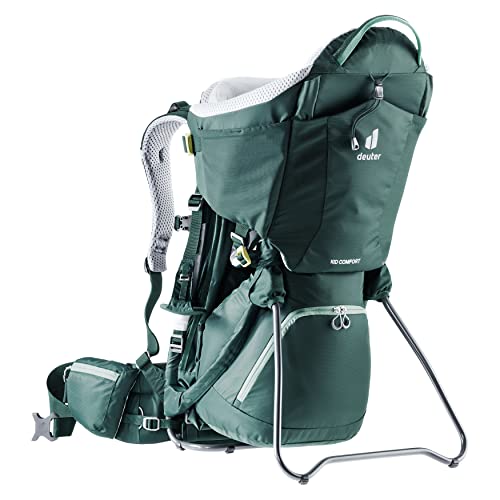
Deuter Kid Comfort Child Carrier & Backpack Forest
- ✓ Excellent ventilation
- ✓ Customizable fit
- ✓ Durable construction
- ✕ No chin pad
- ✕ Slightly pricey
| Frame Material | 210 denier polyamide fabric with ripstop threads and PU coating |
| Back System | Aircomfort mesh back system with maximum ventilation |
| Frame Construction | Flexible, break-proof spring steel for load distribution and ventilation |
| Adjustability | Vari Slide back length adjustment system for personalized fit |
| Weight Capacity | Designed to carry children comfortably, typical capacity around 15-22 kg (33-48 lbs) |
| Additional Features | Includes sun roof, pull-forward hip fins, padded hip belt, load adjustment straps, and adjustable sternum belt |
As soon as I unboxed the Deuter Kid Comfort Forest, I was struck by how sleek and thoughtfully designed it looks. The fabric has a rugged, matte finish with hints of forest green that blend perfectly with outdoor environments.
It feels surprisingly lightweight, yet the sturdy construction hints at serious durability.
Holding it in my hands, I noticed how well-balanced it is—despite all its features, it doesn’t feel bulky or cumbersome. The adjustable straps and padded hip belt are immediately comfortable, and the breathable mesh back system gives a hint of coolness even when I just held it briefly.
When I put it on, the Vari Slide back adjustment made it easy to find that perfect, snug fit without fuss.
Using it on a trail, the ventilation system really shines—my back stayed cooler than I expected, even during a warm hike. The frame’s flexible steel spring offers great support without feeling rigid.
The sun roof and load adjustment straps make it easy to customize the fit for my kid’s comfort and my stability.
The fabric feels tough yet lightweight, ready for scrapes and rough terrain. The design includes thoughtful touches like pull-forward hip fins and adjustable sternum belts, which keep everything secure.
I appreciated how evenly the weight distributed, making longer hikes less tiring.
Overall, this carrier combines comfort, durability, and ventilation in a way that makes outdoor adventures with a little one genuinely enjoyable. It’s clear that Deuter put a lot of thought into making a carrier that both parent and child will love.
Deuter Kid Comfort Child Carrier Backpack Currant

- ✓ Excellent ventilation system
- ✓ Customizable fit for women
- ✓ Durable and lightweight
- ✕ No sun roof included
- ✕ Higher price point
| Back System | Aircontact Lite back system with ventilating hollow chamber foam |
| Load Capacity | Designed to carry heavier loads for extended periods (specific weight not provided, inferred for child carriers) |
| Back Length Adjustment | VariQuick system for personalized fit |
| Material | 210 denier polyamide fabric with ripstop threads and PU coating |
| Weight | Not explicitly specified, but lightweight construction implied |
| Additional Features | Women-specific fit with SL-shoulder straps, shorter back length, conically shaped SL-hip fins |
From the moment I unboxed the Deuter Kid Comfort Currant, I could tell this was built with serious thought. The sleek design, combined with its vibrant color, makes it stand out among other carriers.
I immediately appreciated how lightweight it felt, yet sturdy enough to handle long hikes.
The adjustable back system, especially the VariQuick feature, made a noticeable difference. I could easily customize the fit to my frame, which meant less strain on my shoulders and back.
The breathable padding kept both me and my little one comfortable, even during warmer days.
What really impressed me was how well the carrier distributed the load. The padded hip belt and sternum strap kept everything secure, so I didn’t feel like I was fighting against the weight.
My kid seemed snug and happy, thanks to the supportive seat and adjustable chin rest.
Handling the carrier on uneven trails was no problem. Its durable ripstop fabric and reinforced stitching made me confident it could withstand rough terrain.
Plus, the ventilation system kept hot air from building up, which is a game-changer on summer hikes.
Of course, no product is perfect. The absence of a sun roof was a slight letdown, especially for sunny days.
And the price is on the higher end, but the quality makes it worth the investment if you’re serious about outdoor adventures with your little one.
What Features Should You Consider When Choosing the Best Kids Carrier Hiking Backpack?
When choosing the best kids carrier hiking backpack, several key features should be considered to ensure safety, comfort, and convenience for both the child and the parent.
- Weight Capacity: It’s crucial to check the weight limit of the carrier to ensure it can safely support your child as they grow. Most carriers are designed to hold children up to a certain weight, typically ranging from 40 to 50 pounds, which allows for extended use as your child ages.
- Comfort and Padding: Look for a carrier with ample padding on both the shoulder straps and the child seat to provide a comfortable experience during hikes. A well-padded carrier ensures that both the parent and the child do not experience discomfort, especially on longer treks.
- Safety Features: Safety harnesses and secure buckles are essential in a kids carrier to keep your child safely secured while hiking. Many models include adjustable safety straps to accommodate a growing child and prevent them from shifting or falling out during movement.
- Storage Space: Consider how much storage space is available for carrying essentials such as snacks, water bottles, and diapers. A good carrier often features multiple pockets and compartments to help keep items organized and easily accessible during outings.
- Adjustability: An adjustable frame is important to ensure the backpack can fit the parent’s body size and provide a proper fit while walking. Look for models with adjustable shoulder straps, hip belts, and torso lengths to accommodate different heights and body types.
- Ventilation: Proper ventilation helps keep both the parent and child comfortable during hikes, especially in warm weather. Carriers with breathable mesh panels or ventilation systems prevent heat buildup and allow airflow to reduce sweating.
- Durability: The materials used in the construction of the carrier should be durable and weather-resistant to withstand rugged outdoor conditions. High-quality fabrics and reinforced stitching ensure that the carrier can endure various terrains and last through many adventures.
- Weight and Portability: A lightweight carrier is easier to carry for extended periods, which is important when hiking with a child. Additionally, consider how compact the carrier can be when not in use, as this makes it easier to store or transport.
- Sunshade and Rain Cover: Some carriers come equipped with sunshades and rain covers to protect your child from harsh weather elements. These features enhance comfort and safety by providing shade on sunny days and keeping your child dry during unexpected rain.
How Important Is Comfort in a Kids Carrier Hiking Backpack?
Comfort is a crucial factor when selecting the best kids carrier hiking backpack because it impacts both the child’s experience and the adult’s ability to carry the load effectively.
- Padded Shoulder Straps: Well-designed padded shoulder straps help distribute the weight evenly across the shoulders, reducing fatigue on long hikes. This feature ensures that the adult carrying the backpack can maintain comfort and mobility, allowing for a more enjoyable outdoor experience.
- Hip Belt Support: A supportive hip belt transfers some of the load from the shoulders to the hips, which is essential for maintaining balance and reducing strain on the back. This design element is particularly beneficial during extended hikes, as it enhances stability and allows for a more natural walking posture.
- Adjustable Fit: An adjustable fit system allows the backpack to be customized for different body sizes, ensuring that both the child and adult are comfortable. This feature is important for accommodating various users and ensuring that the carrier can grow with the child for years of use.
- Breathable Materials: Breathable fabrics in the construction of the backpack help regulate temperature and moisture, keeping both the adult and child comfortable during hikes in warm weather. This is especially important for preventing overheating and discomfort on longer treks.
- Stability and Balance: A well-structured design that offers stability and balance prevents the backpack from swaying or shifting during movement. This feature is vital for maintaining control while navigating uneven terrain, ensuring that the adult can hike safely and confidently.
- Weight Distribution: Effective weight distribution within the backpack minimizes pressure points and makes it easier to carry the child comfortably. This factor is key to enhancing the overall hiking experience, as it allows for longer hikes without discomfort or strain.
Which Safety Features Are Essential in a Kids Carrier Backpack?
When choosing the best kids carrier hiking backpack, several essential safety features should be considered:
- Safety Harness: A secure safety harness is critical to keep your child safely strapped in during hikes. This feature ensures that your little one doesn’t accidentally slip out or move around too much while you’re walking, providing peace of mind for parents.
- Sturdy Frame: A robust and stable frame is essential for maintaining the structural integrity of the backpack. A well-constructed frame distributes the weight evenly, reducing the risk of tipping over and ensuring that both the child and the carrier remain secure during the hike.
- Padded Straps: Padded shoulder straps and hip belts enhance comfort and reduce the risk of discomfort or injury to the adult carrying the backpack. This feature is important because it helps to alleviate pressure points and allows for a more enjoyable hiking experience.
- Reflective Material: Incorporating reflective materials or elements on the backpack increases visibility in low-light conditions. This is particularly important for safety during early morning or late evening hikes, as it helps ensure that both the carrier and child are seen by others.
- Sunshade: A built-in sunshade protects your child from harmful UV rays during outdoor adventures. This feature is vital for keeping your child comfortable and safe from sunburn, especially on long hikes in open areas.
- Storage Compartments: Ample storage options allow for easy access to essential items like water, snacks, and first-aid kits. Having separate compartments ensures that everything is organized and easily reachable, reducing the need to rummage through the backpack while on the move.
- Weight Limit Indicator: Some backpacks come with a weight limit indicator to help parents understand the maximum weight they should carry. This feature is crucial for ensuring that the backpack is not overloaded, which can compromise safety and comfort during hikes.
What Are the Top Brands Offering Kids Carrier Hiking Backpacks?
The top brands offering kids carrier hiking backpacks include:
- Deuter: Known for its ergonomic designs, Deuter offers backpacks that provide excellent support and comfort for both the child and the adult carrying them. Their Kid Comfort series features padded shoulder straps, a sunshade, and ample storage space, making them ideal for long hikes with little ones.
- Osprey: Osprey’s Poco series stands out for its adjustable features and safety measures, such as a removable drool pad and a built-in sunshade. The backpacks are designed with ventilation in mind, ensuring comfort for the child and the parent during extended outdoor activities.
- Thule: Thule’s Sapling series is praised for its sleek design and easy adjustability, allowing for a perfect fit as your child grows. These backpacks also come with a convenient storage compartment and a comfortable harness system, making hikes enjoyable for both the caregiver and the child.
- Kelty: Kelty is recognized for its durable and budget-friendly options, with the Kid Carrier model providing a stable frame and generous padding for comfort. Their backpacks feature a large storage area for supplies and an easy-to-use harness system that ensures the child’s safety while on the trail.
- Baby Bjorn: While primarily known for baby carriers, Baby Bjorn offers a hiking backpack that integrates a carrier with a lightweight design and a focus on comfort. Their backpacks are easy to put on and take off, making them a practical choice for parents looking for quick transitions during hikes.
What Makes Each Brand Unique in Terms of Kids Carrier Hiking Backpacks?
The best kids carrier hiking backpacks are distinguished by their unique features and designs tailored for safety, comfort, and convenience.
- Deuter Kid Comfort: Known for its ergonomic design, the Deuter Kid Comfort offers excellent back support and ventilation, making it a top choice for long hikes.
- Osprey Poco Plus: The Osprey Poco Plus stands out with its adjustable harness system and a built-in sunshade, providing both comfort and protection against the elements.
- Thule Sapling Elite: The Thule Sapling Elite features a unique adjustable seat and back panel that grows with your child, ensuring a secure and comfortable fit throughout their early years.
- Kelty Journey PerfectFIT: With its innovative PerfectFIT adjustment system, the Kelty Journey allows parents to quickly customize the fit for different body types, enhancing comfort during extended hikes.
- BabyBjörn Carrier One: The BabyBjörn Carrier One is designed for ease of use, with a simple buckle system that allows parents to quickly put on and take off the carrier, making it ideal for spontaneous adventures.
The Deuter Kid Comfort features a well-padded child seat and an adjustable suspension system that distributes weight evenly, which is crucial for long hikes. It also includes a sunshade and a rain cover for additional protection against the elements.
The Osprey Poco Plus is designed with a lightweight aluminum frame and a breathable mesh back panel to keep both parent and child cool during hikes. Its sunshade can be easily deployed, providing shade for your child while you’re on the trail.
The Thule Sapling Elite’s adjustable seat allows for a perfect fit as your child grows, ensuring safety and comfort. It also includes a removable backpack for carrying essentials, making it a versatile choice for family hiking trips.
Kelty’s Journey PerfectFIT backpack is notable for its adjustable torso length, allowing parents to quickly fit the pack to their size. It also has ample storage space and pockets for organizing gear, which is essential for day hikes.
Finally, the BabyBjörn Carrier One is specifically designed for parents who prefer a lightweight and compact option. Its easy-to-use buckles and ability to carry a child facing in or out make it an appealing choice for casual outings and short hikes.
What Benefits Can a Kids Carrier Hiking Backpack Provide?
A kids carrier hiking backpack offers several benefits that enhance both the hiking experience for parents and the comfort and safety for children.
- Enhanced Comfort: A well-designed kids carrier hiking backpack typically includes padded shoulder straps and a supportive frame, which help distribute the weight evenly. This design reduces strain on the parent’s back and shoulders, allowing for longer and more enjoyable hikes.
- Safety Features: Many models come equipped with safety harnesses and secure seating for children, ensuring they are safely strapped in while on the trail. This feature provides peace of mind for parents, knowing their child is secure and protected during the hike.
- Storage Space: These backpacks usually offer ample storage compartments for snacks, water bottles, and extra clothing, making it convenient to carry all essentials. This organization ensures that parents have everything they need readily accessible without the hassle of multiple bags.
- Versatile Use: Kids carrier hiking backpacks can often be used for various activities beyond hiking, such as picnics or day trips. Their multifunctional design allows parents to adapt them for different outdoor adventures, maximizing their investment.
- Encourages Outdoor Activity: Using a kids carrier hiking backpack encourages family bonding and outdoor exploration, fostering a love for nature in children. This exposure to the outdoors can promote healthy habits and create lasting memories for families.
- Adjustable Features: Many backpacks come with adjustable components to accommodate growing children, ensuring that the backpack remains functional as the child ages. This adaptability makes it a worthwhile investment as it can be used over several years.
How Does a Kids Carrier Backpack Enhance Your Hiking Experience?
A kids carrier backpack enhances your hiking experience by providing comfort and safety for both the child and the adult carrying it.
- Comfortable Fit: A well-designed kids carrier hiking backpack features padded straps and a supportive frame that distributes weight evenly across the adult’s back, reducing strain during long hikes.
- Safety Features: Many backpacks come equipped with safety harnesses and adjustable footrests, ensuring that the child is securely positioned and safe while enjoying the views from a higher vantage point.
- Storage Capacity: These backpacks typically include ample storage compartments for snacks, water, and gear, allowing parents to carry all essentials without the need for additional bags.
- Versatile Use: The best kids carrier hiking backpacks are designed for various terrains and conditions, making them suitable for different types of outdoor adventures, from gentle trails to more rugged paths.
- Child Interaction: Carrying a child in a backpack allows for easy interaction, as parents can talk, point out wildlife, or share the experience, making the hike more enjoyable for both.
- Durability: High-quality materials ensure that these backpacks can withstand the rigors of outdoor use, including exposure to the elements, while providing long-lasting service.
Comfortable Fit: A well-designed kids carrier hiking backpack features padded straps and a supportive frame that distributes weight evenly across the adult’s back, reducing strain during long hikes.
Safety Features: Many backpacks come equipped with safety harnesses and adjustable footrests, ensuring that the child is securely positioned and safe while enjoying the views from a higher vantage point.
Storage Capacity: These backpacks typically include ample storage compartments for snacks, water, and gear, allowing parents to carry all essentials without the need for additional bags.
Versatile Use: The best kids carrier hiking backpacks are designed for various terrains and conditions, making them suitable for different types of outdoor adventures, from gentle trails to more rugged paths.
Child Interaction: Carrying a child in a backpack allows for easy interaction, as parents can talk, point out wildlife, or share the experience, making the hike more enjoyable for both.
Durability: High-quality materials ensure that these backpacks can withstand the rigors of outdoor use, including exposure to the elements, while providing long-lasting service.
What Health Benefits Can Children Gain from Being in a Carrier During Hiking?
Children can gain several health benefits from being in a carrier during hiking.
- Improved Bonding: Being in a carrier allows for close physical contact, which can strengthen the emotional bond between the child and the caregiver. This proximity fosters feelings of security and trust, essential for healthy development.
- Enhanced Physical Development: Carriers promote a natural sitting position that supports spinal alignment as children grow. This can aid in their physical development, particularly in strengthening core muscles and improving balance.
- Exposure to Nature: Being outdoors exposes children to fresh air, sunlight, and natural environments, which are vital for their mental and physical well-being. Nature exposure can enhance mood, reduce stress levels, and promote an overall sense of well-being.
- Social Interaction: Hiking with caregivers encourages social engagement, as children observe and interact with their surroundings and the people around them. This interaction is crucial for developing social skills and understanding the world.
- Stimulation of the Senses: Carriers allow children to experience sights, sounds, and smells of nature up close, which can stimulate their sensory development. This sensory exploration is vital for cognitive growth and learning about their environment.
- Physical Activity: While children in carriers are not walking, being carried during hikes promotes physical activity for the caregiver, which can influence a child’s future attitude toward exercise and outdoor activities. The experience of being in nature can foster a love for physical activity and a healthy lifestyle.
What Tips Should You Keep in Mind When Hiking with a Kids Carrier Backpack?
When hiking with a kids carrier backpack, several important tips can enhance the experience for both the adult and the child.
- Choose the Right Carrier: Selecting the best kids carrier hiking backpack is crucial for comfort and safety. Look for one that offers adequate support for your back, has adjustable straps, and fits the child’s size and weight properly.
- Pack Smart: Ensure that you pack only the essentials to keep the backpack lightweight and manageable. Include snacks, water, a first-aid kit, and any comfort items your child may need, but avoid overpacking to prevent strain during the hike.
- Dress Appropriately: Dress both yourself and your child in layers to adapt to changing weather conditions. Lightweight, moisture-wicking fabrics are ideal, and don’t forget sun protection such as hats and sunscreen, especially during warmer months.
- Plan Your Route: Choose a hiking trail that is suitable for the child’s age and energy level. Opt for shorter, less strenuous paths to ensure that both you and your child can enjoy the hike without exhaustion.
- Take Breaks: Frequent breaks are essential to keep your child comfortable and engaged during the hike. Use these pauses to hydrate, have a snack, and explore the surroundings, which can make the experience more enjoyable for your little one.
- Engage Your Child: Keep your child entertained and involved by discussing the sights, sounds, and wildlife you encounter along the way. This engagement can help cultivate a love for nature and make the hike feel like an adventure rather than a chore.
- Stay Safe: Always prioritize safety by keeping an eye on your child and ensuring they are securely strapped into the carrier. Familiarize yourself with basic first-aid knowledge and carry a map or GPS device to navigate the trails effectively.
How Can You Ensure Comfort and Safety for Your Child During a Hike?
To ensure comfort and safety for your child during a hike, it’s essential to choose the right gear and follow best practices.
- Properly Fitted Kids Carrier Hiking Backpack: A well-fitted carrier backpack is crucial for distributing weight evenly and providing comfort.
- Adjustable Straps and Harnesses: Look for backpacks with adjustable straps and harness systems to ensure a snug fit for your child, enhancing safety and comfort.
- Lightweight and Breathable Materials: Opt for backpacks made from lightweight and breathable fabrics to keep your child comfortable during long hikes.
- Sun Protection: Select a carrier with a built-in sunshade or consider a hat and sunscreen to protect your child from harmful UV rays.
- Storage Compartments: Having multiple compartments for snacks, water, and essential gear helps keep everything organized and easily accessible.
- Safety Features: Look for carriers that include safety features like reflective materials and safety straps to enhance visibility and security.
A properly fitted kids carrier hiking backpack ensures that the weight is distributed evenly, which reduces strain on both the child and the adult carrying it. This not only enhances comfort but also minimizes the risk of injury during the hike.
Adjustable straps and harnesses are vital for securing your child safely in the carrier, allowing for a customized fit that can accommodate their growth and changing clothing layers. This feature also helps reduce the risk of accidents by keeping your child securely in place.
Choosing a lightweight and breathable backpack material is essential for maintaining your child’s comfort, especially during warm weather hikes. A backpack that allows for air circulation can help prevent overheating and discomfort from sweat.
Sun protection is another critical aspect to consider; a carrier with a built-in sunshade can shield your child from direct sunlight, while a hat and sunscreen can further protect sensitive skin. This ensures that your child stays safe from sunburn while enjoying the outdoors.
Storage compartments are important for keeping hiking essentials organized and easily accessible, allowing you to quickly reach for snacks, water, or first-aid supplies when needed. Having a well-organized backpack can make the hiking experience smoother and more enjoyable for both you and your child.
Lastly, safety features such as reflective materials and safety straps can enhance visibility, especially in low-light conditions, ensuring that both you and your child are seen by others. These features provide an extra layer of security, allowing you to focus on enjoying your hike without constant worry.
Related Post: