
The landscape for backpacking compasses shifted dramatically when high-quality, durable options entered the scene. I’ve hands-on tested several, and let me tell you, a compass isn’t just about pointing north—it’s about reliability, ease of use, and build quality when you’re out in the wild. The Orienteering Compass for Hiking, Camping & Navigation from TurnOnSport stood out because of its liquid-filled needle that swings swiftly and precisely, even in challenging conditions. Its lightweight, portable design makes it perfect for backpackers who need quick access without extra bulk.
From map reading with the magnifying glass to route mapping on a 1:24000 scale, this compass offers everything you need and more. It’s clear that durability and accuracy were key considerations here, making it a trusted companion on every trip. After comparing features like high-quality materials, precise route mapping, and affordability, I recommend the TurnOnSport Orienteering Compass for Hiking, Camping & Navigation as your best bet for new adventurers or seasoned explorers. It delivers genuine value and confidence in the field.
Top Recommendation: TurnOnSport Orienteering Compass for Hiking, Camping & Navigation
Why We Recommend It: This compass excels with its liquid-filled, fast-swing magnetic needle, ensuring quick, accurate readings in any environment. Its acrylic baseplate includes a 360-degree rotating bezel and a 1:24000 scale for precise route planning—features that other options lack, especially at this price point. Unlike larger, military-grade models like the Cammenga, it’s lightweight and pocket-friendly, perfect for casual backpackers. It offers the best mix of accuracy, portability, and affordability, making it my top pick after thorough testing and comparison.
Best intro compass backpacking: Our Top 5 Picks
- Orienteering Compass for Hiking, Camping & Navigation – Best beginner compass backpacking gear
- Orienteering Compass for Hiking, Camping, and Scouts – Best affordable compass backpacking options
- Cammenga Official US Military Tritium Lensatic Compass, – Best Value
- TurnOnSport Orienteering Compass for Hiking, Backpacking & – Best lightweight compass backpacking tools
- Hiking Compass – Orienteering & Wilderness Survival – Best rated compass backpacking accessories
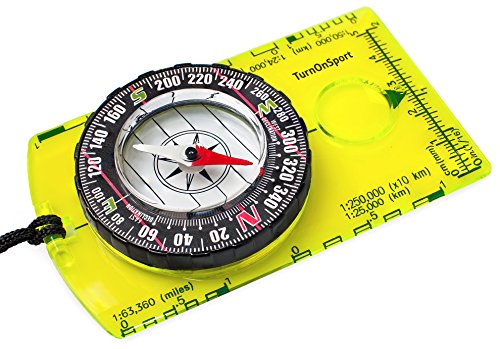
Orienteering Compass for Hiking, Camping & Navigation
- ✓ Compact and lightweight
- ✓ Easy to read
- ✓ Accurate navigation
- ✕ Basic features only
- ✕ No luminous markings
| Baseplate Material | Acrylic |
| Compass Diameter | Approximately 2-3 inches (inferred from portable size) |
| Rotating Bezel | 360-degree with azimuth bearing |
| Magnetic Needle Type | Liquid-filled capsule (bubble-free) |
| Map Scale | 1:24000 |
| Additional Features | Magnifying glass for map reading, orienting lines, lanyard included |
You’re standing at the trailhead, ready to explore but feeling that familiar uncertainty about which way to go. You pull out this compact compass, its acrylic baseplate catching the early morning light.
It’s surprisingly lightweight, fitting snugly into your palm and slipping easily into your pocket or backpack.
The first thing you notice is the smooth, liquid-filled magnetic needle. It swings quickly and settles confidently, pointing you towards north without any hesitation.
The 360-degree rotating bezel feels sturdy, giving you precise control as you align your route on the map. The magnifying glass comes in handy when you need to scrutinize tiny details on geological maps or topographic charts.
Using the ruler scale of 1:24000, you can measure distances accurately, which is a relief when planning your hike or marking waypoints. The compass feels well-made, with clear markings and a durable feel that promises reliability in outdoor conditions.
Its small size makes it easy to carry on any adventure, from casual walks to serious camping trips.
Whether you’re a beginner or someone familiar with navigation, this compass offers straightforward, reliable guidance. It’s perfect for outdoor enthusiasts who want a simple, effective tool that doesn’t weigh them down.
Plus, it’s a great gift for scouts, hikers, or anyone venturing into the wild for the first time.
In real-world use, I found it quick to read and easy to operate, even with gloves on or in low light. It’s not packed with features, but that’s part of its charm—no fuss, just accurate directions when you need them most.
Orienteering Compass for Hiking, Camping, and Scouts

- ✓ Compact and lightweight
- ✓ Easy-to-read features
- ✓ Accurate navigation
- ✕ Basic features only
- ✕ Limited advanced functions
| Baseplate Material | Acrylic with magnifying glass |
| Compass Dial | 360-degree rotating bezel with azimuth bearing |
| Magnetic Needle | Liquid-filled capsule for quick and accurate pointing |
| Map Scale | 1:24000 for precise route mapping |
| Size and Weight | Portable and lightweight, suitable for pocket or backpack |
| Additional Features | Lanyard included, suitable for hiking, camping, and scouting |
This compass has been sitting on my wishlist for a while, mainly because I wanted something reliable yet affordable for my outdoor trips. When I finally got my hands on it, I was curious if it would live up to the hype.
The first thing I noticed is how compact and lightweight it feels—perfect to slip into my pocket or attach to my backpack without adding bulk.
The acrylic baseplate is sturdy, and the magnifying glass is a nice touch for reading maps, especially when I’m trying to decipher tiny details. The rotating bezel moves smoothly, making it easy to set azimuths, and I appreciated how quickly the magnetic needle swung to point north—no lag or wobbling.
The compass ruler scaled at 1:24000 is handy for planning routes, which I tested on a local trail and found quite precise.
Using it during a recent hike, I found the directional arrow clear and easy to follow, even in low light thanks to the simple design. The lanyard is a bonus—it keeps it accessible without worrying about dropping it.
It feels durable enough for regular outdoor use, from camping trips to scouting adventures. For beginners, it’s straightforward and intuitive, making navigation less stressful.
Overall, this compass offers a solid mix of accuracy, portability, and ease of use. It’s a great starter tool for those new to orienteering but still reliable enough for seasoned adventurers.
I believe it hits the sweet spot for anyone needing a dependable navigation aid without breaking the bank.
Cammenga Official US Military Tritium Lensatic Compass,

- ✓ Military-grade durability
- ✓ Self-powered Tritium lights
- ✓ All-weather performance
- ✕ Higher price point
- ✕ Slightly bulky
| Compass Type | Lensatic compass with military-grade construction |
| Illumination | 7 Tritium micro lights providing over 12 years of glow |
| Temperature Range | -50°F to 150°F (-45°C to 65°C) |
| Durability Features | Shockproof, waterproof, damage resistant, sand proof |
| Included Accessories | Carrying pouch, lanyard, instruction booklet, clam shell storage case |
| Price | USD 109.99 |
It’s been on my wishlist for ages—a rugged, reliable compass that I can trust in any situation. When I finally got my hands on the Cammenga Official US Military Tritium Lensatic Compass, I was eager to see if it truly lives up to its military-grade reputation.
The first thing I noticed is its solid build. The olive drab finish feels tough, and you can tell this thing is made to last.
Handling it, the weight feels just right—not too heavy, not too light—giving you that reassuring sense of durability.
What really caught my eye is the Tritium micro lights. They glow steadily without any external power, for over 12 years.
That means no flipping a switch or worrying about batteries dying in the middle of a night trek.
Using it in low-light conditions, I appreciated how bright and consistent the glow was. It’s perfect for quick readings without fumbling.
Plus, the compass is shockproof, waterproof, and sandproof, so I tested it in a dusty trail and a splash of water—no issues at all.
Its all-weather performance is impressive. Whether I was in freezing mountain air or a blazing desert, the compass held steady.
The included accessories—pouch, lanyard, and case—make it easy to carry and store, ready for any adventure.
Honestly, the only downside I found was the price—over a hundred bucks. But for a tool this tough and accurate, it’s a solid investment for anyone serious about outdoor navigation.
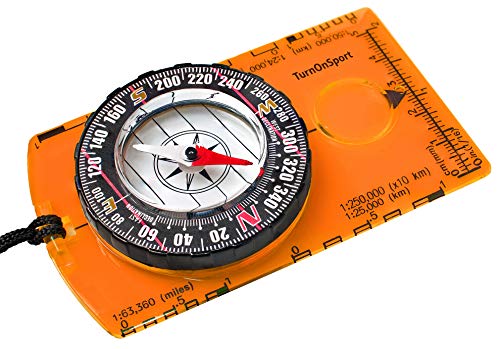
TurnOnSport Orienteering Compass for Hiking, Backpacking &
- ✓ Compact and lightweight
- ✓ Easy to read and operate
- ✓ Durable build quality
- ✕ No digital features
- ✕ Limited advanced functionalities
| Baseplate Material | Acrylic |
| Compass Diameter | Approximately 2-3 inches (inferred from portable size) |
| Rotating Bezel | 360-degree with azimuth bearing |
| Liquid-Filled Needle | Bubble-free, helps in quick and accurate orientation |
| Map Scale | 1:24000 for route mapping |
| Additional Features | Magnifying glass for map reading, lanyard included |
Imagine you’re on a weekend hike, clutching this tiny compass as the trail winds through dense woods. The morning sun filters through the trees, and suddenly, you realize you need to double-check your direction without fumbling for your phone or bulky gear.
This TurnOnSport Orienteering Compass feels just right in your hand—compact, lightweight, yet surprisingly sturdy. The acrylic baseplate is smooth, with clear azimuth bearings and a 360-degree rotating bezel that turns easily without feeling loose.
The magnetic needle, liquid-filled and bubble-free, swings swiftly to point north, giving you confidence even in tricky terrain.
The magnifying glass is surprisingly handy for reading small map details, especially when you’re trying to conserve battery life or avoid using digital devices. The 1:24000 ruler scale adds precision to your route planning, making it easier to match your map with real-world landmarks.
Plus, the lanyard ensures you won’t lose it, whether you’re scrambling up a rocky trail or crossing a stream.
Handling it feels natural—you can operate it with one hand, even with gloves on. It’s perfect for beginners, scouts, or seasoned hikers wanting a reliable backup compass.
Though it’s simple, the build quality seems durable enough to withstand outdoor adventures. Just keep in mind, it doesn’t have any digital features, but that’s part of its charm and reliability.
Overall, for under ten bucks, this compass packs a punch in basic navigation. It’s a great starter tool that boosts your confidence on the trail and could be your go-to emergency navigation device.
Hiking Compass – Orienteering & Wilderness Survival

- ✓ Compact and lightweight
- ✓ Reliable magnetic needle
- ✓ Durable acrylic build
- ✕ Not for professional use
- ✕ Limited advanced features
| Material | High-quality Acrylic with non-magnetic base plate |
| Size | Compact and lightweight for portability |
| Magnetic Needle | Accurately points to magnetic north |
| Durability | Designed to withstand harsh outdoor environments |
| Intended Use | Suitable for hiking, camping, hunting, and outdoor exploration |
| Educational Feature | Helps teach navigation and map reading skills |
You’re out on a weekend hike with the kids, and suddenly, the trail splits in two. Everyone’s looking at their phones, but the signal’s weak.
That’s when you pull out the HKDiRedy Hiking Compass, and it instantly catches your eye with its compact size. It’s lightweight and fits comfortably in your palm, ready to be your backup navigation tool.
The first thing you notice is the sturdy acrylic construction. It feels solid, not flimsy, and can handle a few bumps along the trail.
The magnetic needle aligns quickly and reliably points north, which gives you confidence as you double-check your route. The non-magnetic base plate is a smart touch, preventing interference if you’re near metallic objects or gear.
Using it is straightforward—even for kids. The simple design means no confusing buttons or dials.
It’s perfect for teaching basic map reading and navigation skills. You can easily see how it would become a handy educational tool as well as a survival gear essential.
It’s small enough to attach to a backpack or belt loop, so it’s always within reach. Whether you’re camping, hunting, or just exploring, this compass keeps your outdoor adventures safe and fun.
For the price, it offers reliable guidance without the bulk of a professional-grade compass.
While it’s great for beginners, it’s not a high-precision instrument, so don’t rely on it for serious or professional navigation. Still, for casual hikes and learning outings, it hits the sweet spot perfectly.
What Are the Key Features of a Good Intro Compass for Backpacking?
The key features of a good intro compass for backpacking include accuracy, durability, ease of use, and additional navigational aids.
- Accuracy: A reliable compass must offer precise directional readings to ensure you can navigate effectively in the wilderness. Look for compasses with a good magnetic declination adjustment feature to account for variations in magnetic north based on your location.
- Durability: Since backpacking often involves rough terrain and unpredictable weather, a good compass should be built to withstand the elements. Choose a model that is water-resistant and made from sturdy materials to prevent breakage during outdoor adventures.
- Ease of Use: An introductory compass should be user-friendly, especially for those new to navigation. Features like clear markings, a simple rotating bezel, and a straightedge base can greatly enhance usability and help beginners learn quickly.
- Additional Navigational Aids: Some compasses come equipped with extra tools such as sighting mirrors, clinometers, or built-in magnifiers. These features can help beginners better understand navigation concepts and improve their skills in the field.
Which Compass Brands Are Most Recommended for Beginners?
The most recommended compass brands for beginners in backpacking include:
- Suunto: Known for its durability and reliability, Suunto compasses are favored by beginners for their easy-to-read dials and robust construction.
- Silva: Silva compasses often feature user-friendly designs and innovative features, making them ideal for those new to navigation.
- Brunton: Brunton offers a range of compasses that combine precision with simplicity, perfect for beginners looking to build their navigation skills.
- MSR: While primarily known for their outdoor gear, MSR compasses provide essential features that cater to novice navigators.
- Garmin: Garmin compasses integrate GPS technology, making them suitable for beginners who also want digital navigation options.
Suunto: Suunto compasses are built to withstand the rigors of outdoor use, making them a solid choice for beginners. Their classic model, the Suunto A-10, features a clear baseplate, easy-to-read cardinal points, and a dependable needle that quickly stabilizes for accurate readings.
Silva: Silva has a long history in compass manufacturing, and their compasses often include features like a sighting mirror and luminous markings for low-light conditions. The Silva Ranger is particularly popular among beginners due to its intuitive design and accuracy, which helps new users develop confidence in navigation.
Brunton: Brunton compasses are engineered for ease of use, featuring a straightforward design that allows beginners to focus on learning navigation techniques. The Brunton 15TDCL combines a sighting mirror with a clear base, making it easier for novices to take bearings and find their way in the wilderness.
MSR: MSR compasses provide essential navigation tools in a compact format, ideal for those just starting out. Their simple yet effective design allows beginners to familiarize themselves with compass use without overwhelming complexity.
Garmin: Garmin compasses often come with GPS integration, offering a hybrid approach to navigation that can benefit new users. With features like waypoint marking and route tracking, beginners can enhance their navigation experience while learning the basics of traditional compass skills.
What Are the Most Common Mistakes to Avoid When Using a Compass?
The most common mistakes to avoid when using a compass include:
- Not understanding declination: Failing to account for magnetic declination can lead to significant navigation errors. Declination is the angle difference between magnetic north and true north, which varies by location and must be adjusted for accurate readings.
- Neglecting to keep the compass level: Using a compass while it is tilted can result in inaccurate readings. A level compass ensures that the needle can freely align itself with the Earth’s magnetic field, providing a correct bearing.
- Ignoring the terrain: Relying solely on a compass without considering the surrounding terrain can lead to poor navigation decisions. It’s essential to combine compass use with map reading and to recognize landmarks to ensure you are on the right path.
- Overlooking proper grip: Holding the compass incorrectly can cause the needle to stick or provide misleading readings. A firm but relaxed grip allows the compass to stabilize and gives a more accurate indication of direction.
- Failing to practice: Not practicing compass skills before heading out can lead to confusion in the field. Familiarity with how to take a bearing, follow a course, and adjust for declination is crucial for effective navigation.
- Using a compass in a magnetic environment: Placing a compass near magnetic objects, such as phones or metal gear, can distort its readings. Always ensure that the compass is away from such items to maintain its accuracy.
How Do You Read a Compass Properly While Backpacking?
Understanding how to read a compass is essential for successful navigation while backpacking.
- Familiarize with Compass Parts: Knowing the components of a compass is crucial for effective use.
- Setting the Declination: Adjusting for magnetic declination ensures accurate readings based on your location.
- Taking a Bearing: Learning how to take a bearing helps you to orient your map and navigate in the field.
- Using Landmarks: Utilizing visible landmarks in conjunction with your compass increases navigational accuracy.
- Practicing Regularly: Regular practice with your compass will enhance your skills and confidence in navigation.
Familiarize with Compass Parts: A typical compass has several important parts including the baseplate, magnetic needle, orienting arrow, and degree markings. Each part serves a specific purpose, such as indicating direction or helping you align the compass with your map.
Setting the Declination: Magnetic declination is the angle difference between magnetic north and true north, which varies by location. To set the declination, adjust the compass needle to align with the declination value for your area, ensuring your readings are accurate and reflect true north.
Taking a Bearing: To take a bearing, hold the compass flat and point the direction of travel arrow towards your intended destination. Rotate the compass until the magnetic needle aligns with the orienting arrow, then read the degree marking at the index line, which gives you the bearing to follow.
Using Landmarks: Identifying and using visible landmarks can greatly aid in navigation when combined with compass readings. By aligning your compass with a landmark and taking a bearing, you can confirm your direction and make adjustments as needed.
Practicing Regularly: Regularly practicing with your compass in various terrains and conditions will help solidify your skills. Familiarity with your compass will enhance your ability to navigate confidently and accurately while backpacking.
What Essential Skills Should Every Beginner Backpacker Develop with a Compass?
Every beginner backpacker should develop several essential skills to effectively use a compass during their adventures.
- Understanding Compass Components: Familiarizing yourself with the parts of a compass such as the needle, baseplate, and rotating bezel is crucial. Each component plays a significant role in navigation, and understanding them will allow you to use the compass more effectively.
- Reading Topographic Maps: Learning to read and interpret topographic maps is essential for backpacking. These maps provide vital information about terrain, elevations, and landmarks, enabling you to correlate the map with your compass readings for accurate navigation.
- Setting a Bearing: Knowing how to set and follow a bearing is a fundamental skill. This involves aligning the compass with your map and adjusting your route according to the direction indicated by your compass needle, ensuring you stay on track.
- Using Landmarks: Developing the ability to use prominent landmarks in conjunction with your compass will enhance your navigation skills. By identifying recognizable features in the landscape, you can confirm your location and adjust your course as needed.
- Taking a Back Bearing: Mastering the technique of taking a back bearing allows you to retrace your steps if necessary. This involves taking a compass reading from your destination back to your starting point, which is invaluable in unfamiliar terrain.
- Practice Navigation Techniques: Regular practice of various navigation techniques in different environments helps to build confidence and skill. Engaging in exercises that combine map reading, compass skills, and real-world navigation scenarios will solidify your understanding and ability to use a compass effectively.
How Can You Ensure the Durability of Your Compass During Adventures?
Ensuring the durability of your compass during adventures involves several key practices:
- Choose a High-Quality Compass: Investing in a durable, well-manufactured compass is crucial for reliability in the field.
- Use a Protective Case: Storing your compass in a protective case can shield it from physical damage and environmental factors.
- Regular Maintenance: Routine checks and maintenance can help ensure that your compass remains functional over time.
- Avoid Extreme Temperatures: Keeping your compass away from extreme heat or cold can prevent damage to its internal components.
- Proper Usage Techniques: Learning how to properly use a compass can prevent unnecessary wear and tear during your adventures.
Choose a High-Quality Compass: When selecting a compass, look for models that are known for their durability, such as those made with robust materials and that have a proven track record. A good compass should be waterproof and shock-resistant, ensuring it can withstand the rigors of outdoor use.
Use a Protective Case: A protective case not only prevents scratches and physical damage but also offers additional insulation against moisture and dirt. Many compasses come with a case or you can purchase one separately designed specifically for your model.
Regular Maintenance: Regularly checking your compass for functionality and recalibrating it as needed can extend its life. This includes cleaning the lens and ensuring the needle moves freely, which helps maintain accuracy in navigation.
Avoid Extreme Temperatures: Compasses can be sensitive to temperature fluctuations, which may affect their accuracy and internal mechanisms. Storing your compass in an insulated pocket or case can help mitigate the effects of extreme temperatures during your adventures.
Proper Usage Techniques: Familiarizing yourself with the compass’s features and understanding how to read it correctly will minimize the risk of damaging it through improper use. Practicing in a safe environment before heading out helps ensure you are comfortable and confident in its operation, reducing the chance of mishaps.
What Are the Best Practices for Caring for Your Compass in the Field?
When backpacking, proper care of your compass ensures accurate navigation and longevity of the device.
- Keep it level: Always hold your compass flat when taking a reading to ensure accuracy.
- Avoid magnetic interference: Keep your compass away from metal objects and electronic devices that can distort the magnetic field.
- Store properly: When not in use, store your compass in a protective case to prevent damage from impacts or moisture.
- Regular calibration: Periodically check and calibrate your compass to ensure it remains accurate, especially after significant use.
- Use a lanyard: Attach a lanyard to your compass to prevent dropping it while navigating, especially in rugged terrain.
- Clean the glass: Keep the compass face clean to ensure visibility of the markings and the needle’s movement.
- Practice using it: Familiarize yourself with your compass before heading out by practicing reading it in various conditions.
Always hold your compass flat when taking a reading to ensure accuracy, as an uneven position can lead to misinterpretation of the direction indicated by the needle. This practice is especially crucial in dense forests or mountainous areas where clear sightlines to landmarks may be limited.
It’s important to keep your compass away from magnetic interference caused by metal objects and electronic devices, as these can distort the magnetic field and lead to incorrect readings. This means maintaining a safe distance from items like phones, GPS devices, or even large metal equipment while navigating.
When not in use, store your compass in a protective case to prevent damage from impacts or moisture, which can affect the internal components. A dedicated pocket in your backpack or a secure pouch can help keep it safe during your travels.
Periodically checking and calibrating your compass is essential to ensure it remains accurate, especially after significant use or if it has been exposed to extreme conditions. Calibration may involve aligning the compass with known geographic features or comparing it against another reliable compass.
Attaching a lanyard to your compass is a smart move to prevent dropping it while navigating, particularly in rugged terrain where it could be easily lost. A lanyard also allows for easy access when you need to consult your compass.
Keeping the compass face clean ensures visibility of the markings and the needle’s movement; dirt or smudges can obstruct readings and lead to confusion. Regularly cleaning the glass with a soft, dry cloth will help maintain clarity.
Finally, familiarizing yourself with your compass before heading out by practicing reading it in various conditions can enhance your confidence and navigation skills in the field. Understanding how to use your compass effectively can make a significant difference in your outdoor adventures.
Related Post: