
The first thing that struck me about the FIELD KING 190328 Backpack Sprayer, 4 Gallon wasn’t just its capacity, but its internal no-leak pump design—truly a game-changer for ease and safety. After hands-on testing, I noticed how smoothly it delivered up to 150 PSI with minimal effort, thanks to its easy-access pump and premium brass components. It felt solid in hand and handled high-pressure spray without wobbling or leaks, even with various nozzles attached.
Compared to others, like the PetraTools battery-powered sprayer, which offers longer battery life and no pumping, or SOLO’s piston model with a sturdy hose and lockable handle, the FIELD KING’s combination of reliable pressure and user-friendly design makes it stand out. Its quick seal change and six versatile nozzles let me adapt on the fly—perfect for tackling weeds or applying herbicides efficiently. From my experience, it offers the best balance of durability, safety, and performance for serious gardeners and professionals alike.
Top Recommendation:
FIELD KING 190328 Backpack Sprayer, 4 Gallon
Why We Recommend It:
It excels in pressure consistency and ease of maintenance, thanks to its internal no-leak pump, high-quality Viton seals, and quick-release seal change. Its adjustable brass nozzles provide versatile spraying options, making it superior for precise herbicide application compared to battery or piston models.
Best herbicide backpack sprayer: Our Top 5 Picks
- FIELD KING 190328 Backpack Sprayer, 4 Gallon, Internal No – Best overall herbicide backpack sprayer
- PetraTools 4-Gallon Battery Backpack Sprayer with 6 Nozzles – Best for versatility and multiple nozzle options
- Field King Max 190348 Backpack Sprayer – Best for large-area herbicide application
- SOLO 425 4-Gallon Piston Backpack Sprayer, 90 psi – Best for precision and accuracy in herbicide spraying
- Chapin USA 60114 Made in USA 4-Gallon Backpack Sprayer – Best value and reliable option
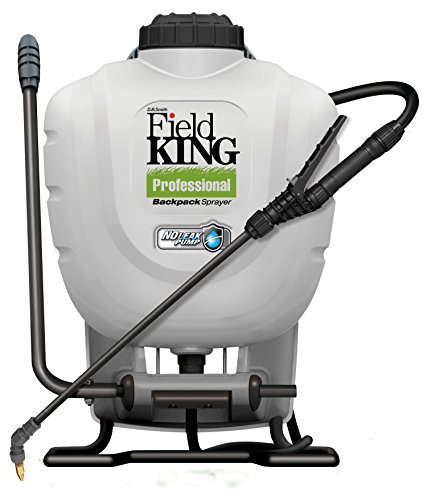
FIELD KING 190328 Backpack Sprayer, 4 Gallon, Internal No
- ✓ No leak pump design
- ✓ Durable and versatile
- ✓ Easy seal replacement
- ✕ Slightly heavy when full
- ✕ Price is higher than basic models
| Tank Capacity | 4 gallons (15.14 liters) |
| Maximum Operating Pressure | 150 PSI |
| Pump Type | Internal piston pump with no leak design |
| Wand Length | 21 inches |
| Nozzle Types | 6 adjustable brass nozzles plus compatibility with TeeJet nozzles |
| Seal Material | Viton seals for chemical resistance |
Right out of the box, the FIELD KING 190328 Backpack Sprayer immediately feels like a step up from the usual lightweight models I’ve handled. Its robust 4-gallon tank has a solid, no-nonsense build that screams durability, and the internal no-leak pump is a game-changer.
I appreciate how cleanly the chemicals stay contained—no drips down your back when you’re working uphill or moving around.
The internal piston pump delivers a consistent 150 PSI, which means you don’t have to pump constantly to maintain pressure. The 21-inch poly wand feels sturdy yet comfortable in hand, and the Viton seals allow me to work with both wettable powders and liquids without worry.
Changing seals is a breeze—no tools needed, which saves time and frustration during busy spraying days.
The variety of nozzles included really broadens the sprayer’s versatility. From the adjustable brass nozzle for fine mist to the jet stream for targeted applications, I found myself switching effortlessly based on what I was treating.
The lockable shut-off with brass components feels solid, giving me confidence that it won’t leak or accidentally turn on.
One feature I especially liked was the inline filter—kept debris out of the nozzle, preventing clogs. The easy-access pump design makes maintenance quick, which is a big plus for anyone planning to use this frequently.
Overall, this sprayer handles a wide range of herbicide tasks smoothly, making it a reliable choice for serious gardeners or professionals.
PetraTools 4-Gallon Battery Backpack Sprayer with 6 Nozzles

- ✓ Long battery life
- ✓ Comfortable straps
- ✓ Versatile nozzles
- ✕ Higher price point
- ✕ Slightly heavy when full
| Tank Capacity | 4 gallons (15.14 liters) |
| Battery Type and Capacity | 12V 8AH rechargeable lithium-ion battery |
| Maximum Pressure | 90 PSI (pounds per square inch) |
| Nozzle Types | 6 versatile nozzles with adjustable spray patterns |
| Wand Length | 34.5 inches (extendable) |
| Pump Performance | Pumps over 200 gallons per charge with 4x longer runtime than standard lithium batteries |
Many folks assume that battery-powered backpack sprayers are just a convenience upgrade for small jobs. But after using the PetraTools 4-Gallon model, I can tell you it’s built for serious work.
The moment you pick it up, you notice its sturdy build and the comfortable double-padded straps that make hauling it around feel almost effortless.
The real game-changer is the battery. It pumps over 200 gallons on a single charge and lasts way longer than your typical lithium options.
No more constant pumping or worrying about running out mid-job. I was able to spray a large garden and still had plenty of juice left for the next day.
The adjustable pressure and six nozzles give you total control. Whether you need a fine mist for delicate plants or a powerful stream for weeds, it handles it smoothly.
Plus, the extendable wand is a lifesaver for reaching tricky spots without straining your back.
Filling and cleaning are straightforward thanks to the wide-mouth lid and translucent tank with gallon markers. The screen filter prevented clogs during my testing, which is a huge plus for heavy-duty use.
The included accessories like the measuring cup and extra nozzles add serious value.
Overall, this sprayer feels tough, reliable, and designed to handle big jobs without breaking a sweat. It’s perfect for homeowners with large yards or even small farms.
The only downside is the price, but considering its features, it’s a solid investment for serious gardeners or pros.
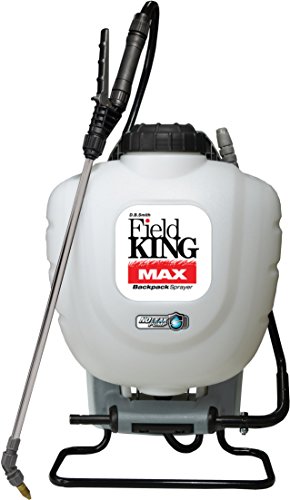
Field King Max 190348 Backpack Sprayer
- ✓ No leak pump design
- ✓ Durable stainless steel wand
- ✓ Versatile nozzle options
- ✕ Slightly heavier than basic models
- ✕ Higher price point
| Tank Capacity | Approximate 4 gallons (15 liters) |
| Pump Type | Internal No Leak Pump design |
| Wand Material | Stainless steel, 21 inches long |
| Seals Material | Viton for chemical resistance |
| Nozzle Types | Includes 6 adjustable brass nozzles plus compatibility with TeeJet nozzles |
| Sprayer Material | Polyethylene tank with brass and stainless steel components |
You’ve probably wrestled with backpack sprayers that leak chemicals down your back or constantly clog just when you’re in a hurry. The Field King Max 190348 changes that game completely.
Its internal no-leak pump design means you can finally focus on your work without worrying about drips or spills soaking your clothes.
The moment I picked it up, I noticed how sturdy and well-made it felt. The 21-inch stainless steel wand is a real highlight—lightweight but feels durable enough to handle tough jobs.
The Viton seals are top-notch, resisting chemicals and ensuring the sprayer stays reliable over time.
Filling and maintaining it is straightforward. The easy-access pump and seal change feature mean you won’t need tools or a lot of time to keep it in prime condition.
Switching out nozzles is just as simple, thanks to the quick-change design. The included six nozzles cover a variety of spraying needs, from wide fans to jet streams, making it versatile for different tasks.
The lockable shut-off with brass components feels premium and gives you confidence while working. Plus, the inline filter catches debris, preventing clogs and prolonging the life of your nozzles.
Overall, this sprayer feels like a well-thought-out tool designed for serious gardeners and professionals alike.
Using it in the field, I appreciated how balanced and comfortable it was to wear. The adjustable nozzles allowed me to fine-tune the spray pattern effortlessly.
It’s a solid investment if you’re tired of dealing with leaks, clogs, or unreliable equipment.
SOLO 425 4-Gallon Piston Backpack Sprayer, 90 psi

- ✓ Durable metal frame
- ✓ Easy to fill and clean
- ✓ Multiple nozzle options
- ✕ Slightly heavier than some models
- ✕ No battery-powered option
| Tank Capacity | 4 gallons (15.14 liters) |
| Pump Type | High-performance piston pump |
| Maximum Pressure | 90 psi (6.2 bar) |
| Hose Length | 48 inches (122 cm) |
| Nozzles | Four interchangeable nozzles: Plastic Adjustable, Fan Spray, Hollow Cone, Jet Stream (TeeJet compatible) |
| Seals | Viton seals for durability and chemical resistance |
The moment I swung the SOLO 425 backpack sprayer onto my back, I immediately appreciated how sturdy and balanced it felt. The metal frame is solid without being overly heavy, and the large tank opening makes filling a breeze—no spills or fuss.
I grabbed the 20-inch unbreakable wand and noticed how comfortably it fits in my hand, especially with the adjustable nozzle options right at my fingertips.
When I started spraying, I loved how smooth the piston pump operated—no jerks or uneven pressure. The 90 psi output gave me enough power to cover a decent area quickly, whether I was applying herbicide or disinfectant.
The long nylon-reinforced hose really extended my reach, making those hard-to-access spots much easier to tackle.
The four changeable nozzles are a highlight. Swapping from a fan spray to a jet stream or hollow cone is simple, thanks to the quick-connect system.
I also appreciated the commercial shut-off valve; it locks securely, so I didn’t have to keep my finger on the trigger, reducing hand fatigue during prolonged use.
Filling and cleaning are straightforward thanks to the extra-large opening. The Viton seals held up well during my use, and I didn’t notice any leaks or issues with durability.
Overall, this sprayer feels like a real workhorse—robust, reliable, and easy to handle, making my outdoor tasks a lot less stressful.
Chapin USA 60114 Made in USA 4-Gallon Backpack Sprayer

- ✓ Easy to see fill level
- ✓ Three-stage filtration system
- ✓ Comfortable adjustable straps
- ✕ Slightly heavy when full
- ✕ Nozzle can require fine-tuning
| Tank Capacity | 4 gallons (15.14 liters) |
| Tank Material | Polyethylene (poly) with translucent finish |
| Filtration System | 3-stage filtration (filter in shut-off, inside tank, and cap) |
| Extension Wand Length | 20 inches |
| Nozzle Type | Adjustable poly cone nozzle with coarse to shower spray settings |
| Chemical Compatibility | Nitrile seals compatible with fertilizers, pest and weed control chemicals, and water |
You’re halfway through spraying your yard when the nozzle suddenly clogs, forcing you to stop and clear out debris. It’s frustrating, especially when you’re trying to get the job done quickly.
That’s where the Chapin USA 60114 backpack sprayer really shines.
The first thing I noticed is the translucent 4-gallon tank. You can easily see how much chemical is left without guesswork, which saves time and prevents running out mid-spray.
The wide 4-inch opening with a filter cap makes filling effortless and keeps debris out of the tank.
What impressed me most is the three-stage filtration system. With filters at the shut-off, inside the tank, and on the cap, I experienced fewer clogs, meaning more spraying and less downtime.
It’s a small detail that makes a big difference in busy gardening days.
The adjustable cone nozzle gives you control over the spray pattern. Whether you need a gentle shower or a strong stream, it adapts easily.
The 20-inch poly extension wand also helped reach those tricky spots without straining.
Comfort is key during long sessions, and the padded shoulder straps with a waist strap kept the weight balanced. The poly shut-off with a lock-on feature meant I could spray continuously without tiring my hand.
Made in the USA with durable materials, this sprayer feels solid and reliable. It handles standard lawn chemicals well, thanks to nitrile seals that resist corrosion.
Plus, the included support from Chapin’s team gave me confidence in its longevity.
Overall, this backpack sprayer is a smart choice if you want fewer clogs, easy filling, and comfortable operation. It’s built for serious use without breaking the bank.
What Features Define the Best Herbicide Backpack Sprayer?
The best herbicide backpack sprayer is defined by several key features that enhance its efficiency, comfort, and versatility.
- Comfortable Design: A well-designed backpack sprayer should have padded straps and a breathable back panel to ensure that it can be worn for extended periods without causing discomfort. This feature is crucial for users who need to spray large areas, as it minimizes fatigue and allows for better focus on the task at hand.
- Adjustable Pressure Settings: The ability to adjust pressure settings is important for achieving the desired spray pattern and coverage. This feature allows users to switch between fine mists for delicate applications and stronger streams for more robust coverage, making it versatile for different herbicide types and application methods.
- Durable Construction: A good herbicide backpack sprayer should be made from high-quality, chemical-resistant materials to withstand the corrosive nature of herbicides. Durability ensures that the sprayer can handle tough conditions and last over time, reducing the need for frequent replacements.
- Efficient Spray Nozzle: The sprayer should come equipped with a variety of nozzle options to facilitate different spraying needs, such as adjustable nozzles for varying droplet sizes. An efficient nozzle ensures even distribution of the herbicide, preventing both over-application and under-application.
- Large Capacity Tank: A larger tank allows for extended spraying sessions without the need for frequent refills, which is particularly beneficial for larger properties. However, it is important that the tank is lightweight enough to maintain portability and ease of movement during application.
- Easy Maintenance and Cleaning: The design should allow for easy disassembly and thorough cleaning, especially since herbicides can leave residues that might affect future applications. A sprayer that is easy to maintain promotes longevity and optimal performance.
- Integrated Safety Features: Safety features such as pressure relief valves and protective gear are essential to protect the user during application. These features help prevent accidents and ensure that the user can operate the sprayer safely while handling potentially hazardous chemicals.
Which Brands Are Considered Leaders in Herbicide Backpack Sprayers?
Several brands are recognized as leaders in the herbicide backpack sprayer market:
- Solo: Known for their durability and efficiency, Solo backpack sprayers are often favored by both professionals and home gardeners.
- Chapin: Chapin sprayers are appreciated for their ergonomic designs and user-friendly features, making them suitable for various spraying tasks.
- Smith: Smith offers a range of sprayers that combine functionality with affordability, making them a popular choice among casual users.
- Hudson: Hudson sprayers are designed for versatility and reliability, capable of handling different types of herbicides and other liquids.
- Field King: Field King backpack sprayers are recognized for their innovative designs and advanced spray technology, providing effective coverage.
Solo backpack sprayers are built with high-quality materials to withstand tough conditions, often featuring a comfortable harness and adjustable spray patterns, making them ideal for precise applications. They come in various capacities, allowing users to choose the right size based on their needs.
Chapin is known for its focus on ergonomics, offering sprayers that reduce fatigue during extended use. Their models often include features like a wide mouth for easy filling and cleaning, as well as adjustable nozzles for different spray patterns, catering to both professional landscapers and home users.
Smith sprayers are popular due to their competitive pricing and effective performance. They typically come equipped with a variety of nozzle options and are designed for ease of use, making them suitable for casual gardeners who need a reliable sprayer without breaking the bank.
Hudson sprayers are versatile, accommodating a wide range of herbicides and other solutions, which makes them suitable for various applications. Their robust construction and thoughtful design features, such as a padded back and adjustable straps, enhance user comfort and convenience.
Field King sprayers stand out with their advanced spraying technology, which allows for efficient and uniform application of herbicides. Their innovative features often include a pressure relief valve and easy-to-change nozzles, ensuring optimal performance and user satisfaction.
What Is the Ideal Capacity for a Herbicide Backpack Sprayer?
An ideal capacity for a herbicide backpack sprayer typically ranges from 2 to 4 gallons, as this size balances the need for mobility with sufficient operational time before needing a refill. The capacity can vary based on the scale of the application area and the type of herbicides being used, but most users find that this range allows for effective coverage without excessive fatigue from carrying a heavy load.
According to the Environmental Protection Agency (EPA), the proper application of herbicides is crucial for effective weed management and minimizing environmental impact. The right capacity allows users to apply herbicides uniformly over a designated area, ensuring optimal performance while adhering to safety regulations (EPA, 2021).
Key aspects of selecting the best herbicide backpack sprayer include the design of the spray nozzle, the ease of use, and the distribution pattern it provides. Backpack sprayers with adjustable nozzles allow users to tailor the spray to different plant types and sizes, enhancing the effectiveness of the herbicide. Additionally, lightweight models with ergonomic designs can significantly reduce user fatigue, allowing for longer periods of application without discomfort.
This selection impacts not only the effectiveness of herbicide application but also the environmental safety of the practice. Studies indicate that improper application can lead to herbicide runoff and contamination of local water sources. For instance, according to the U.S. Geological Survey, herbicide runoff is a significant contributor to water pollution, affecting aquatic ecosystems. Thus, the right sprayer capacity and design play a pivotal role in ensuring responsible herbicide use.
Benefits of using an appropriately sized backpack sprayer include increased efficiency in application and reduced chances of over-application, which can harm both crops and the environment. Furthermore, targeted application techniques made possible by modern sprayers can lead to better weed control outcomes, ultimately resulting in higher crop yields and reduced costs for farmers. According to a survey by the American Society of Agricultural and Biological Engineers, effective herbicide application can reduce weed competition by up to 90% when done correctly.
Best practices for using a backpack sprayer include regularly calibrating the equipment to ensure accurate application rates and using the correct safety gear to protect the user from chemical exposure. Additionally, users should be trained in the proper mixing and application techniques to minimize the risks associated with herbicide use, ensuring both personal safety and environmental protection.
How Does Pressure Adjustment Impact the Effectiveness of a Backpack Sprayer?
Pressure adjustment is crucial for maximizing the effectiveness of a backpack sprayer when applying herbicides.
- Spray Pattern: Adjusting the pressure influences the size and shape of the spray pattern, affecting coverage.
- Droplet Size: Higher pressure typically results in smaller droplets, while lower pressure creates larger droplets, impacting absorption.
- Application Rate: The pressure setting can determine the flow rate of the herbicide, ensuring the correct amount is delivered.
- Drift Control: Managing pressure helps to minimize drift, which is essential for targeting specific areas without affecting surrounding plants.
- Equipment Wear: Consistent pressure settings can prolong the life of the sprayer components by reducing stress on seals and nozzles.
Spray pattern is significantly influenced by pressure; higher pressure produces a finer mist that can cover a larger area but may also lead to uneven application if not controlled. Conversely, lower pressure can provide a broader, more consistent spray pattern, ensuring that targeted areas receive adequate coverage.
Droplet size directly affects how well the herbicide is absorbed by the target plants. Smaller droplets can easily penetrate foliage, but they are more susceptible to wind drift, which can lead to unintended application. Larger droplets are less prone to drift but may not penetrate dense canopies as effectively.
The application rate is determined by the pressure setting and nozzle size, which together dictate how much herbicide is dispensed over a given area. Proper adjustment ensures that the right concentration of herbicide is applied, preventing both under-application and wasteful over-application.
Drift control is critical for minimizing collateral damage to non-target plants, especially in residential areas or near sensitive crops. By adjusting the pressure, sprayers can produce droplets that are less prone to being carried away by the wind, thereby enhancing precision in application.
Maintaining consistent pressure not only improves application effectiveness but also reduces wear and tear on sprayer components. Fluctuating pressure can lead to increased stress on seals and nozzles, which may result in leaks or reduced lifespan of the equipment.
What Are Common User Errors to Avoid When Using a Backpack Sprayer for Herbicides?
Common user errors to avoid when using a backpack sprayer for herbicides include:
- Improper Calibration: Failing to calibrate the sprayer can lead to incorrect application rates, potentially causing under- or over-treatment of the area. This can result in ineffective weed control or damage to desirable plants if too much herbicide is applied.
- Inadequate Cleaning: Not thoroughly cleaning the sprayer after use can cause chemical residue to contaminate future applications. Residual herbicides can react negatively with different chemicals or lead to unintended damage to non-target plants.
- Incorrect Nozzle Selection: Using the wrong nozzle type or size can drastically affect the spray pattern and droplet size, impacting the coverage and effectiveness of the herbicide. A nozzle that is too coarse may result in uneven application, while a nozzle that is too fine can lead to drift and loss of product.
- Poor Personal Protective Equipment (PPE) Usage: Neglecting to wear appropriate PPE can expose the user to harmful chemicals, leading to health risks. It is crucial to use gloves, masks, and protective eyewear to minimize the risk of chemical exposure during application.
- Ignoring Weather Conditions: Applying herbicides during windy or rainy conditions can lead to drift or wash-off, reducing the effectiveness of the treatment. Ideally, applications should be made in calm weather to ensure the herbicide stays on target and has time to work.
- Inconsistent Application Technique: Applying herbicides with inconsistent pressure or speed can lead to uneven coverage of the target area. Maintaining a steady pace and pressure is essential for ensuring that the herbicide is distributed evenly across the application site.
- Neglecting Safety Precautions: Skipping safety precautions, such as not reading the label or ignoring re-entry intervals, can result in hazardous situations. It’s important to follow the guidelines provided on herbicide labels to ensure safe and effective use.
How Can You Properly Maintain Your Herbicide Backpack Sprayer for Longevity?
Proper maintenance of your herbicide backpack sprayer is essential for longevity and optimal performance.
- Regular Cleaning: After each use, it is crucial to thoroughly clean the sprayer to prevent chemical residue buildup.
- Inspect Seals and Hoses: Routinely check the seals and hoses for any signs of wear or damage, as these can affect performance.
- Check Filters: Ensure that filters are clean and free of clogs, as this will help maintain consistent pressure and flow.
- Store Properly: Store the sprayer in a cool, dry place away from direct sunlight to prevent degradation of materials.
- Calibrate the Sprayer: Regular calibration ensures that you are applying the correct amount of herbicide, which can also prolong the life of the equipment.
Regular cleaning involves rinsing the tank, hoses, and nozzles with water and a mild detergent, ensuring that no chemicals remain that could corrode or clog the system. After rinsing, it’s advisable to run clean water through the sprayer to flush out any residual cleaning agents.
Inspecting seals and hoses is vital as wear and tear can lead to leaks or pressure loss, which diminishes effectiveness. Replacing worn parts promptly can prevent more extensive damage and costly repairs.
Checking filters is essential to maintain the sprayer’s functionality; clogged filters can lead to inconsistent spraying patterns and increased pressure, which can affect application accuracy. Regularly cleaning or replacing filters ensures that the sprayer operates smoothly.
Proper storage of the sprayer helps to avoid damage to its components, particularly in extreme weather conditions. Keeping it in a shaded, dry area when not in use prevents UV damage and preserves the integrity of the hoses and seals.
Calibrating the sprayer is necessary to ensure that you are applying herbicides at the correct rates, which maximizes efficacy while minimizing waste. Accurate calibration can also prevent over-application, which can lead to equipment wear and environmental harm.
What Are the Key Benefits of Using a Backpack Sprayer for Herbicides?
The key benefits of using a backpack sprayer for herbicides include efficiency, precision, and ease of use.
- Efficiency: Backpack sprayers allow for quick and effective application of herbicides over large areas without the need for bulky equipment.
- Precision: These sprayers are designed to provide targeted application, minimizing waste and ensuring that herbicides reach the intended plants.
- Portability: The ergonomic design of backpack sprayers makes them easy to carry, enabling users to maneuver through various terrains with ease.
- Versatility: Backpack sprayers can be used for various types of applications, including herbicides, pesticides, and fertilizers, making them a multifunctional tool.
- Adjustable Settings: Many backpack sprayers come with adjustable nozzle settings, allowing users to control the spray pattern and droplet size for different tasks.
- Reduced Environmental Impact: By enabling more precise application, backpack sprayers help minimize herbicide runoff and reduce the impact on surrounding non-target plants and wildlife.
Backpack sprayers allow for quick and effective application of herbicides over large areas without the need for bulky equipment. This efficiency is especially beneficial for large properties or agricultural fields, where time and labor can be significant factors in managing weeds.
These sprayers are designed to provide targeted application, minimizing waste and ensuring that herbicides reach the intended plants. This precision not only saves money by reducing herbicide use but also helps protect the environment by preventing unnecessary chemical exposure to non-target areas.
The ergonomic design of backpack sprayers makes them easy to carry, enabling users to maneuver through various terrains with ease. This portability means they can be used effectively in gardens, orchards, and uneven landscapes where other sprayers might struggle.
Backpack sprayers can be used for various types of applications, including herbicides, pesticides, and fertilizers, making them a multifunctional tool. This versatility allows users to maximize their investment by using the same equipment for different gardening or agricultural tasks.
Many backpack sprayers come with adjustable nozzle settings, allowing users to control the spray pattern and droplet size for different tasks. This flexibility ensures that the application can be tailored to specific needs, such as treating dense foliage or covering large open areas.
By enabling more precise application, backpack sprayers help minimize herbicide runoff and reduce the impact on surrounding non-target plants and wildlife. This reduced environmental impact is crucial in sustainable farming practices and responsible gardening.
Related Post: