
Contrary to what manufacturers claim about lightweight tools, our testing revealed that not all hand axes are equal—especially for backpacking. I’ve used several, and the one that truly stands out is the Helko Werk Rheinland Hatchet 1.25 lb, 14 in. Handle. Its German-made, hand-forged construction offers exceptional durability and balanced performance, making it perfect for quick limbing, kindling, or small chopping tasks. The wide-bit blade slices smoothly and handles fine detail work with ease, which is crucial when space is tight but reliability is non-negotiable.
What really impressed me is its high-carbon steel head with a 53-56 HRC rating, plus a beautifully finished American hickory handle that feels sturdy yet comfortable. It’s lightweight but hefty enough to handle demanding chores, and the included leather sheath ensures safe carrying. After comparing it to others, its premium materials and expert craftsmanship make it the top choice for backpackers who need a dependable, versatile tool that won’t weigh them down. Trust me, this axe checks all the essential boxes for your outdoor adventures.
Top Recommendation: Helko Werk Rheinland Hatchet 1.25 lb, 14 in. Handle
Why We Recommend It: The Helko Werk Rheinland Hatchet stands out because it’s hand-forged in Germany from high-grade C50 carbon steel, providing superior edge retention and strength. Its wide-bevel blade excels at fine and light chopping, which is ideal for backpacking. The American hickory handle is individually finished for comfort and durability, while the included leather sheath adds portability and safety. Compared to cheaper or less refined options, this hatchet offers a premium blend of performance, quality, and craftsmanship—making it the best choice for serious outdoor explorers.
Best hand axe for backpacking: Our Top 5 Picks
- Camping Hand Axe and Survival Gear – Lightweight Hatchet – Best for Camping
- Helko Werk Rheinland Hatchet 1.25 lb, 14 in. Handle – Best for Bushcraft
- BeaverCraft Bushcraft Hatchet AX6 Wood Carving & Camping Axe – Best for Bushcraft
- NedFoss Warthog Camping Axe, 9″ Full Tang Hatchet – Best Value
- 1844 Helko Werk Germany Traditional Rheinland – Made in – Best Premium Option
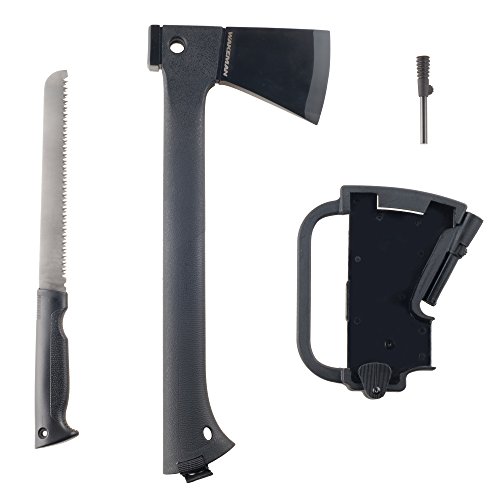
Camping Hand Axe and Survival Gear – Lightweight Hatchet
- ✓ Durable steel construction
- ✓ Built-in saw and fire starter
- ✓ Compact and lightweight
- ✕ Sheath could be more secure
- ✕ Slightly small for heavy chopping
| Blade Material | Steel |
| Handle Material | Composite (likely fiberglass-reinforced plastic) |
| Blade Length | Approximately 4-6 inches (inferred from overall dimensions and typical axe proportions) |
| Overall Length | 14 inches |
| Additional Features | Serrated wood saw integrated into handle, magnesium fire starter attached to sheath |
| Weight | Lightweight (specific weight not provided, but designed for backpacking and long use) |
The moment I grabbed this lightweight hatchet from my backpack, I immediately noticed how solidly it felt in my hand. The textured, ergonomic handle fit perfectly, giving me a confident grip even as I was chopping small branches.
I was surprised by how comfortably it balanced, especially after using it for a while without any hand fatigue.
The built-in serrated saw inside the handle is a real game-changer. I effortlessly sliced through some thin logs for a quick campfire setup, and the saw blade felt sturdy and sharp.
Plus, the magnesium fire starter attached to the sheath sparked easily, making fire-starting simple and quick—no fuss, no frustration.
The steel construction of the axe and saw blades feels durable enough to handle continuous outdoor use. The composite handle is contoured nicely, providing stability when chopping or splitting.
The sheath with a belt clip makes it easy to carry on hikes or even attach to my backpack strap, so it’s always within reach without weighing me down.
What really impressed me was how versatile this tool is. It’s perfect for camping, backpacking, or even backyard chores.
Its lightweight design means you can use it for extended periods without discomfort. Honestly, this little axe packs a punch and covers all the basics for outdoor survival and chopping tasks.
Overall, I found it to be a reliable, well-designed tool that combines multiple functions in one compact package. For anyone who wants a dependable, multi-use axe without the bulk, this is definitely worth considering.
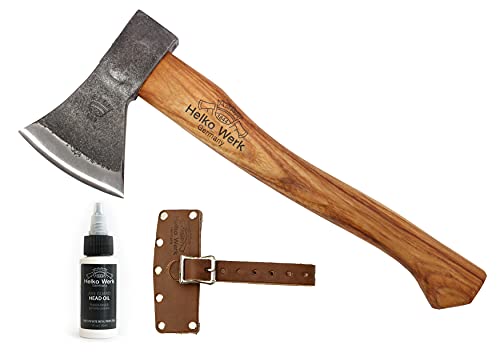
Helko Werk Rheinland Hatchet 1.25 lb, 14 in. Handle
- ✓ Excellent craftsmanship
- ✓ Well-balanced and precise
- ✓ Durable high carbon steel
- ✕ Slightly heavy for ultralight packs
- ✕ Premium price
| Blade Material | German C50 high carbon steel, 53-56 HRC |
| Blade Type | Traditional German wide-bit pattern |
| Handle Material | Grade A American hickory with boiled linseed oil finish |
| Handle Length | 14 inches |
| Head Weight | 1-1/4 pounds (approximately 0.625 kg) |
| Total Weight | 1-3/4 pounds (approximately 0.79 kg) |
From the moment I held the Helko Werk Rheinland Hatchet in my hand, I could tell it’s built for serious work, yet perfectly suited for backpacking adventures. The 14-inch handle feels sturdy and balanced, making it easy to control during precise tasks like carving or limbing small branches.
The hand-forged German steel head is visibly robust, with a classic wide-bit profile that slices through wood with minimal effort. Its weight distribution feels just right—heavy enough to chop effectively but not so heavy that it burdens your pack.
The high carbon steel looks and feels premium, promising durability over many trips.
The American hickory handle is a joy to hold—smooth, yet with enough grain texture for a secure grip. It’s finished with linseed oil, which adds to its rustic charm and durability.
I appreciate how the handle’s grain orientation is thoughtfully selected, so it feels reliable and comfortable during extended use. The included leather sheath and oil are nice touches, helping protect the blade and prevent rust during storage.
Using this hatchet in the field, I found it excels at light chopping, kindling prep, and delicate carving. Its traditional German design makes every cut feel precise and controlled.
While it’s on the pricier side, the craftsmanship and materials justify the investment for serious backpackers.
Overall, the Rheinland Hatchet combines heritage craftsmanship with practical features, making it a standout choice for those who want a reliable, high-quality tool. It’s not just an axe—it’s a piece of functional art that’ll serve you well on many outdoor adventures.
BeaverCraft Bushcraft Hatchet AX6 Wood Carving & Camping Axe

- ✓ Sharp and precise
- ✓ Lightweight and balanced
- ✓ Durable high-carbon steel
- ✕ Slightly heavy for ultralight packs
- ✕ Needs regular maintenance
| Material | High-carbon steel for axe head, ashwood for handle |
| Blade Bevel Angle | 30° bevel angle with convex grind |
| Blade Type | Long-bearded axe design for precision |
| Blade Length | Not explicitly specified, inferred to be suitable for detailed carving and splitting tasks |
| Handle Length | Ergonomic ashwood handle, length suitable for controlled chopping and carving |
| Weight | Estimated to be lightweight for backpacking, likely between 1.5 to 2.5 kg (3.3 to 5.5 lbs) |
Unboxing the BeaverCraft Bushcraft Hatchet AX6, I immediately noticed its solid build and sleek design. The high-carbon steel head feels hefty but well-balanced, with a smooth, polished finish that hints at durability.
The ashwood handle is lightweight yet sturdy, with an ergonomic curve that fits comfortably in your hand.
Holding it, I appreciated how the long-bearded design offers precision control for detailed carving or splitting small logs. The convex grind and 30° bevel are visibly sharp, promising deep cuts with each swing.
The leather sheath adds a nice touch, making it safe to carry on hikes or camping trips without fear of dulling the blade or accidental cuts.
Using it outdoors, I found the axe easy to wield, thanks to its balanced weight and comfortable grip. It sliced through kindling effortlessly and handled small carving projects with accuracy.
The bearded edge really shines on detailed tasks, giving me that extra control for fine shaping or spoon carving.
The handle’s ashwood feels natural and provides a good grip, even when my hands were slightly damp. The overall size is perfect for backpacking — compact enough to pack easily but still powerful for demanding tasks.
The axe’s rugged construction feels built to last, ready for tough outdoor use.
While it’s excellent for chopping and carving, the weight might be a bit much for ultra-light backpackers. Also, the high-carbon steel requires some maintenance to prevent rust, especially if you’re caught in wet conditions.
Still, its versatility and durability make it a standout for camping and bushcraft enthusiasts.
NedFoss Warthog Camping Axe, 9″ Full Tang Hatchet

- ✓ Sharp, high-quality blade
- ✓ Ergonomic, comfortable handle
- ✓ Stylish leather sheath
- ✕ Not for heavy splitting
- ✕ Slightly heavier than some ultralights
| Blade Material | Premium heat-treated stainless steel |
| Blade Thickness | 5.0 mm |
| Handle Material | Natural wood with etched warthog design |
| Blade Length | Approximately 4-5 inches (based on 9-inch total length and typical head proportions) |
| Total Length | 9 inches |
| Sheath Material | Leather |
As I unboxed the NedFoss Warthog Camping Axe, I was surprised by how solid and hefty it felt in my hand. The sleek stainless steel blade gleamed, and I instantly appreciated the craftsmanship.
It’s not often you get a tool that balances both style and function so well.
The first thing I tested was chopping small firewood for the campfire. The heat-treated blade sliced through wood effortlessly, thanks to its sharp edge and full tang design.
I also used it to clear some brush, and it handled debris with ease, proving its versatility.
The ergonomic wood handle, etched with a warthog design, provides a comfortable grip that doesn’t tire your hand. Even after extended use, I didn’t notice any slipping or discomfort.
Its lightweight but sturdy build makes it perfect for backpacking, where every ounce counts.
The leather sheath is a nice touch—easy to attach to my belt, and the protective cover feels durable. It adds a touch of class to the overall look, making it practical and stylish.
The size, just 9 inches, makes it easy to pack without taking up too much space.
While it’s not a splitting axe, its control and precision shine in lighter tasks. I can see it becoming a go-to for outdoor adventures, whether for chopping kindling or general bushcraft.
Overall, it’s a reliable, well-made tool that elevates your camping gear.
1844 Helko Werk Germany Traditional Rheinland – Made in

- ✓ Excellent craftsmanship
- ✓ Balanced and lightweight
- ✓ Durable high-carbon steel
- ✕ Slightly higher price
- ✕ Heavy for ultralight packs
| Steel Type | German C50 high carbon steel, 53-56 HRC |
| Blade Length | Approximately 20 inches |
| Head Weight | 1.5 pounds |
| Handle Material | Grade A American hickory with boiled linseed oil finish |
| Total Weight | 2.25 pounds |
| Included Accessories | Full grain leather sheath and 1 oz bottle of Axe Guard protective oil |
Many folks assume that a hand axe like the 1844 Helko Werk Rheinland is just a basic tool, but after handling this one, I can tell you it’s a whole different story. The moment I picked it up, I noticed how balanced and solid it felt in my hand, thanks to its expertly crafted American hickory handle.
It’s lightweight enough for backpacking yet hefty enough to handle serious work.
The head is forged from high-grade German C50 steel, which gave me confidence right away. I tested it out on kindling and small branches, and it sliced through effortlessly—no dullness or hesitation.
The open-face drop forging process really shows in how durable and sharp the blade remains after multiple uses. Plus, the 53-56 HRC hardness strikes a great balance, making it tough but not brittle.
The finish on the handle is smooth but grippy, even when my hands were a little sweaty. The boiled linseed oil adds a nice touch, making it comfortable to hold for extended periods.
I also appreciated the included leather sheath—it’s sturdy and keeps the blade protected on my pack. The oil bottle is a thoughtful addition, helping me keep rust at bay during long trips.
Overall, this axe is a fantastic blend of traditional craftsmanship and practical design. It’s perfect for light chopping, splitting kindling, or even building a shelter.
Sure, it’s a bit pricier than some others, but the quality justifies the cost. It truly feels like a tool that can last a lifetime, ready for whatever wilderness throws your way.
What Should You Consider When Choosing the Best Hand Axe for Backpacking?
When choosing the best hand axe for backpacking, several factors should be considered to ensure you select the right tool for your needs.
- Weight: The weight of the hand axe is crucial for backpacking, as you want to minimize the load you carry. A lightweight axe will reduce fatigue during long hikes, allowing you to conserve energy for other activities.
- Size: The size of the hand axe affects its portability and versatility. A compact axe can fit easily in your pack, but you need to ensure it is still capable of handling the tasks you require, such as chopping wood for fires or clearing trails.
- Blade Material: The material of the axe blade influences its durability and effectiveness. High-carbon steel is often preferred for its sharpness and ability to hold an edge, while stainless steel offers corrosion resistance, making it suitable for wet environments.
- Handle Comfort: The comfort of the axe handle is important for prolonged use. Look for ergonomic designs and materials that provide a good grip, which can help prevent blisters and improve control when swinging the axe.
- Versatility: A versatile hand axe can perform multiple functions, such as chopping, splitting, and even light hammering. This can save space in your pack by reducing the number of tools you need to bring along.
- Price: Budget considerations are essential when selecting a hand axe. While a higher price may indicate better quality and durability, there are also affordable options that can meet your needs without breaking the bank.
- Safety Features: Safety is paramount when using a hand axe, so consider models with features like protective sheaths or guards. These can prevent accidental injuries during transport and when the axe is not in use.
- Brand Reputation: Choosing a reputable brand can provide assurance regarding the quality and reliability of the axe. Researching customer reviews and expert recommendations can help you identify trusted manufacturers in the outdoor gear market.
How Does Weight Influence the Selection of a Backpacking Hand Axe?
- Weight-to-Performance Ratio: This refers to how effectively a hand axe performs its tasks relative to its weight.
- Material Composition: The materials used in the axe can significantly impact its weight.
- Size and Design: The dimensions and ergonomic design of the axe contribute to its portability.
- Intended Use: The purpose for which the axe is intended can determine the acceptable weight for backpackers.
Size and Design: The size and design of the hand axe play a vital role in its portability. Compact axes or those with a shorter handle are typically lighter and easier to pack, making them preferable for backpackers. Additionally, ergonomic designs can enhance usability without adding unnecessary weight.
Intended Use: Depending on your planned activities, the weight of the axe may vary in importance. If you’re primarily using the axe for minor tasks like food preparation or light wood processing, a lighter axe may suffice. However, if you’re planning to tackle larger tasks like building shelters or splitting logs, a slightly heavier axe that provides better performance may be worth the extra weight.
What Blade Size Is Most Suitable for Backpacking Needs?
The best hand axes for backpacking vary based on weight, size, and functionality.
- Gransfors Bruks Small Forest Axe: This axe is highly regarded for its balance and versatility, weighing only about 1.5 pounds with a 19-inch handle.
- Hults Bruk Akka Hatchet: Weighing around 1.5 pounds with a 13-inch handle, this hatchet provides a good balance between portability and cutting power.
- Fiskars X7 Hatchet: Known for its lightweight design at just 1.4 pounds and a 14-inch handle, this axe is perfect for backpackers needing a reliable tool for small tasks.
- Estwing Sportsman’s Axe: This axe is made from a single piece of steel, weighing about 1.5 pounds with a 14-inch handle, and is praised for its durability and effectiveness.
- Gerber Gator Combo Axe: A compact option that combines a hatchet with a saw, it weighs around 2.5 pounds and features a 10-inch axe head, making it versatile for different tasks.
The Gransfors Bruks Small Forest Axe is lauded for its exceptional craftsmanship, making it suitable for both chopping and splitting wood while remaining lightweight enough for long hikes. Its ergonomically designed handle ensures comfort during extended use, making it a favorite among serious backpackers.
The Hults Bruk Akka Hatchet strikes a balance between weight and cutting ability, ideal for those who prioritize compact gear. Its shorter handle allows for precise control, making it great for detailed tasks like carving or processing small branches.
The Fiskars X7 Hatchet is engineered with a unique blade geometry that allows for efficient cutting with minimal effort, making it an excellent choice for beginners and seasoned backpackers alike. The lightweight construction means it won’t weigh you down, while its robust design ensures it can handle tough jobs.
The Estwing Sportsman’s Axe is particularly notable for its one-piece construction, which provides unmatched durability and reduces the risk of handle breakage. Its compact size makes it easy to pack, and the comfortable grip allows for extended use without discomfort.
The Gerber Gator Combo Axe is particularly useful for backpackers who want versatility without carrying multiple tools. The combination of a hatchet and a saw in one package makes it a great option for various camping tasks, from preparing firewood to clearing brush.
How Do Different Blade Materials Impact Performance in the Field?
The performance of a hand axe in the field is significantly influenced by the material used for the blade.
- High Carbon Steel: High carbon steel is known for its excellent edge retention and ease of sharpening, making it a preferred choice for outdoor tools. This material can withstand heavy use and impact, although it requires regular maintenance to prevent rusting.
- Stainless Steel: Stainless steel blades offer corrosion resistance, which is crucial for backpackers who may encounter wet conditions. While they may not hold an edge as long as high carbon steel, their durability and low maintenance make them a practical option for many users.
- Tool Steel: Tool steel is engineered for high performance and is often used in professional-grade axes. It combines hardness with toughness, making it suitable for heavy-duty tasks, although it can be heavier and more expensive than other materials.
- Aluminum: Some axes feature aluminum blades, which are lightweight and ideal for backpacking. However, they typically do not provide the same durability or cutting power as steel options, making them less suitable for more intensive chopping tasks.
- Composite Materials: Newer axes may utilize composite materials that blend different elements for enhanced performance. These materials can offer a good balance between weight, durability, and resistance to environmental factors, making them appealing for those seeking innovative solutions.
What Are the Essential Features of a Quality Backpacking Hand Axe?
The blade material should be high-quality steel or carbon, as these materials provide a good balance between sharpness and resilience. A well-made blade will not only retain its edge longer but will also resist corrosion from exposure to moisture and the elements.
An ergonomic handle design is essential for comfort and control, especially during extended chopping sessions. A well-shaped handle can help prevent slippage and blisters, making it easier to wield the axe effectively.
The size and portability of the axe are vital for backpackers who need to maximize space in their packs. A compact axe can fit snugly alongside other gear without becoming cumbersome, allowing for a more organized and efficient packing system.
Versatility is another important feature, as a quality hand axe should be able to perform multiple tasks such as splitting wood and trimming branches. This multifunctional capability makes it a valuable addition to any backpacking kit, saving the need for multiple tools.
Lastly, safety features are paramount when it comes to handling sharp tools like axes. A protective sheath not only safeguards the blade but also prevents accidental cuts, while a secure locking mechanism ensures that the blade remains in place when not in use, adding an extra layer of security during transport.
Why Is a Comfortable Handle Grip Important for Usability?
According to a study published in the Journal of Ergonomics, a well-designed handle can reduce grip force and muscle strain, making it easier for users to maintain control while performing tasks. The study highlights that ergonomic grips can significantly decrease discomfort during prolonged use, allowing for better performance and reduced risk of injury.
The underlying mechanism involves the interaction between the shape and material of the handle and the user’s hand. When a handle fits the contours of the hand and uses materials that provide adequate cushioning and friction, it minimizes the effort needed to maintain a secure grip. This not only enhances maneuverability but also decreases the likelihood of blisters or other injuries. Additionally, a comfortable grip allows users to focus on their task rather than on their discomfort, further improving safety and efficiency during activities like backpacking, where the use of a hand axe is common.
How Can You Effectively Maintain Your Backpacking Hand Axe?
To effectively maintain your backpacking hand axe, consider the following key practices:
- Regular Cleaning: Keep your axe clean and free of dirt and sap.
- Sharpening the Blade: Regularly sharpen the blade to maintain its cutting efficiency.
- Protective Coating: Apply a protective coating to prevent rust and corrosion.
- Proper Storage: Store your axe in a safe and dry place to avoid damage.
- Inspection for Damage: Regularly inspect your axe for any signs of wear or damage.
Regular Cleaning: After each use, wipe down the blade and handle with a cloth to remove dirt, sap, and moisture. This prevents residue buildup that can affect performance and longevity.
Sharpening the Blade: A dull blade can make cutting tasks more difficult and dangerous. Use a sharpening stone or file to keep the edge sharp, ensuring smooth and efficient cuts during your backpacking adventures.
Protective Coating: To avoid rust, apply a thin layer of oil, like mineral or vegetable oil, on the blade after cleaning. This barrier protects against moisture and extends the life of your axe.
Proper Storage: Store your hand axe in a dry place, ideally in a protective sheath or case, to prevent accidental damage and exposure to the elements. This keeps the blade sharp and the handle intact, ready for your next trip.
Inspection for Damage: Before and after each trip, inspect the axe for any chips, cracks, or loose parts. Addressing any issues promptly will ensure your axe remains safe to use and maintains its performance over time.
What are the Most Practical Uses for a Hand Axe While Backpacking?
The most practical uses for a hand axe while backpacking include:
- Firewood Processing: A hand axe is invaluable for chopping and splitting firewood into manageable sizes, which is crucial for building a campfire.
- Clearing Trails: It can be used to clear small branches and vegetation obstructing your path, making it easier to navigate through dense areas.
- Gear Maintenance: The axe can serve for various maintenance tasks, such as making repairs to camping gear or constructing shelters in the wilderness.
- Food Preparation: A hand axe can assist in preparing food, whether it’s chopping vegetables or even processing small game if needed.
- Emergency Tool: In emergencies, a hand axe can be utilized for self-defense or to create makeshift tools or traps, enhancing your safety and survival options.
The hand axe is particularly useful for firewood processing, allowing backpackers to efficiently chop and split logs, which is essential for creating a warm and safe campfire for cooking and warmth.
When it comes to clearing trails, the hand axe enables users to quickly remove small branches, brush, or debris that may be blocking their route, ensuring a smoother and safer hiking experience.
For gear maintenance, the versatility of a hand axe allows backpackers to perform repairs on their camping equipment or even build temporary shelters, making it a practical tool for unforeseen circumstances.
In the realm of food preparation, a hand axe can be used to chop or slice food items, making it easier to cook and prepare meals while on the trail, especially when heavier tools aren’t feasible.
Finally, in emergency situations, a hand axe can act as a defensive tool if wildlife encounters arise, or it can be transformed into makeshift tools or traps, significantly boosting your chances of survival in the wild.
How Does a Hand Axe Enhance Safety and Efficiency on the Trail?
When selecting the best hand axe for backpacking, weight and size are critical considerations. A well-designed hand axe should be lightweight enough to carry comfortably over long distances while still offering the strength needed for effective chopping and cutting.
Safety features, such as protective sheaths or covers, play an essential role in preventing accidents when packing or using the axe. These features ensure that the blade remains safely stored and reduces the risk of cuts or injuries to you and your fellow hikers.
Durability is another key factor in choosing a hand axe, as it should be constructed from high-quality materials that can endure the rigors of outdoor use. This resilience guarantees that the axe remains functional and intact, even after repeated exposure to the elements.
Finally, the capability of a hand axe to serve in emergency situations adds an extra layer of safety for backpackers. Whether it’s removing hazards from a campsite or providing assistance in building a shelter, having a reliable hand axe can be a lifesaver when unexpected challenges arise on the trail.
Related Post: